
University of Tubingen, Kunsthistorisches Institut, Alte Burse, Bursagasse 1, Raum X, 72070 Tübingen, Germany, February 18 – 20, 2016
Registration deadline: 15 févr. 2016
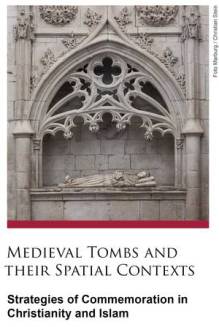
The idea that the shaping of tombs and funeral places goes beyond aspects of personal welfare and mirrors social functions and meanings of commemoration up to political claims is very popular in medieval research and leaves its mark on examples from Christian and Islamic contexts likewise. Beside an enhanced interest in ritual integration, recent investigations show a wider perspective on concrete location and spatial situation as main factor for the understanding of tombs and their function. As a result, space is interpreted beyond physical boundaries and frames as a relational definition based on social construct in the sense of collective perception, use and appropriation. The conference will give the opportunity to discuss these approaches within comparative perspectives on medieval objects, buildings and places of commemoration in Christianity and Islam. The focus lies on the relevance and the integration of tombs as places and spaces of formative and constitutive character in both religious cultures.
Registration now open: http://www.transculturalstudies.ch/en/index/conferences/conference-tuebingen/registration.html
Programme :
Thursday, 18.02.2016
13.45 : Francine Giese, Zürich / Kristina Seizinger, Jens Brückner, Markus Thome, Tübingen – Opening remarks
Section I – Workshop des Graduiertenkollegs „Religiöses Wissen im vormodernen Europa“
Grabmaltopographien: Konstruktion und Wahrnehmung sakraler Orte und sozialer Distinktion
14.00 : Jens Brückner, Tübingen – „Deus in cuius miseratione animae fidelium requiescunt…“ – die liturgische Inszenierung von Grabmälern in Dom und Stadt Augsburg
14.45 : Sebastian Scholz, Zürich – Totengedenken, Selbstdarstellung und Frömmigkeitspraxis im Spiegel der Inschriften vom 6. bis zum 15. Jahrhundert
15.30 : Coffee break
16.00 : Kristina Seizinger, Tübingen – Wer erhielt ein Denkmal in der Kirche? Standortwahl und Visualisierungsstrategien sozialer Gruppen zwischen Tradition und Wandel
16.45 : Markus Hörsch, Leipzig – Die Zisterzienserabteikirche Heilsbronn – Hohenzollern-Grablege und Abbild höfischer Hierarchie
18.15 : Keynote Lecture : Tanja Michalsky, Rom – “Napoli (…) che é pietosissima verso li suoi passati, ali quali ogn’hora edifica sepolcri, fabrica sepolture, inalza marmi, statue et colossi …“.Die historiographische Erfassung der Grabmalstopographie im Neapel der Frühen Neuzeit
19.30 : Apéro
20.45 Night visit: Die Tübinger Stiftskirche als Begräbnisort
Friday, 19.02.2016
Section II – Location of the sepulchral monument: appropriaton and construction of commemoration places
09.00 : Xenia Stolzenburg, Marburg – Sieben Kirchen für ein Stiftergrab. Santo Sepolcro in Mailand im Spiegel des Stiftungsdokumentes um 1030
09.30 : Richard McClary, Edinburgh – On a Holy Mountain? Remote and Elevated Funerary Monuments in Medieval Islam
10.00 : Patricia Blessing, Stanford – Urban Space Beyond the Walls: Siting Islamic Funerary Complexes in Konya
Coffee break
11.00 : Susanna Blaser, Zürich – Die programmatische Einbindung der Königinnen-Grabmäler in die dynastische Nekropole in Saint-Denis bis zur Mitte des 15. Jahrhunderts
11.30 : Eva Leistenschneider, Ulm – Aux piez et au plus près de la sepulture de nostre corps… – Die Gräber von Familienmitgliedern und Höflingen des Königs in der Herrschergrablege Saint-Denis
12.00 : Fozia Parveen, Harrogate – Mythmaking, Symbols and Topography: The Ottoman Tombs of Selim I, Suleiman I and Selim II
Lunch break
Section III – Shaping concepts: construction of meaning through formal, spatial and ritual reference frames
14.00 : Francine Giese, Zürich – The Capilla Real in Córdoba. Transcultural Exchange in Medieval Spain
14.30 : Antje Fehrmann, Berlin – Das Grabmal als Prozess: Form, Raum, Liturgie und Rezeption am englischen Königs- und Königinnengrabmal
Coffee break
15.30 : Jessica Barker, London – Voices from the Grave: Tomb Monuments and Sound in Late-Medieval England
16.00 : Sami L. De Giosa, London – The crosses of the Sultan: Sultan Qaytbay’s complex (1472-1474) and the mystery of two decorative elements carved in stone
16.30 : Stefan Bürger, Würzburg – Zu den lokalen, liturgischen, historischen, genealogischen, baukulturellen und bautechnischen Kontexten der Grablege Bischof Thilo von Throtas im Merseburger Dom
18.15 : Keynote lecture – Doris Behrens-Abouseif, London – Between written and unwritten testimonies: The Christian influences on the mausoleum of Sultan Qalawun in Cairo
19.30 Conference dinner
Saturday, 20.02.2016
09.00 : Markus Thome, Tübingen – Kathedralen als Gedächtnisräume. Das Bischofsgrabmal und die Visualisierung liturgischer Gemeinschaft im Spätmittelalter
09.30 : Jörg Richter, Hannover – Eine Kathedrale ohne Bischöfe? Memorialtopographie und Memorialkalender am Halberstädter Dom im 15. Jahrhundert
Coffee break
Section IV – Political strategies: Power issues and sepulchral monuments as means of formation of identity
10.30 : Barbara Franzé, Lausanne – Das Grabmosaik der Abtei von Saint-Bertin in Saint Omer (1109): Der Ausdruck der gräflichen Autorität zur Zeit der gregorianischen Reform
11.00 : Christina Vossler-Wolf, Tübingen – Von Stiftern und Mönchen – Grablegen und monastische Raumkonzepte am Beispiel des ehemaligen Zisterzienserklosters Bebenhausen
11.30 : Claudia Jentzsch, Berlin – „Florentiner Bescheidenheit“? Raumordnungen und Regulierungen der Begräbniskultur in spätmittelalterlichen Florentiner Sakralräumen
Lunch break
13.30 : Sara Mondini, Venedig – A widespread ‘taste for the macabre’, apotropaic or political marks? Urbanism, landscapes and funerary architecture in the Indian Sultanates
14.00 : Anna Pawlik, Köln – Ort des Gedenkens, Ort der Repräsentation. Das patrizische Grabmal im Spätmittelalter
14.30 : Peyman Eshaghi, Karaj – From a Familial Grave to a National Shrine: Fundamental Changings in the Position of Safi-ad-din Ardabili’s tomb during the Safavid Dynasty in Iran
15.00 : Final discussion
Source : ArtHist





 L'Agenda des Médiévistes
Vous devez être connecté pour poster un commentaire.