Colloque – Dire et penser la marginalité au Moyen Âge

Les traditionnelles Journées d’études organisées par les Jeunes Chercheur·euses Médiévistes (JCM) se tiendront l’année prochaine les 12 et 13 mars 2026 à l’Université de Fribourg et seront, à cette occasion, multilingues (français, allemand, italien et anglais).

Le thème retenu est la marge, considérée dans son acception sociale aussi bien que spatiale. Les différentes sessions seront organisées de manière à rendre compte de la pluralité de cette notion. Elles seront supervisées à la fois par l’organisation et par des professeur·es de la CUSO. Une conférence destinée à un public large sera donnée par une invitée de calibre international qui interviendra également durant l’ensemble des journées.

Programme : ici

Affiche de la conférence plénière : ici

Informations pratiques :

Dates
12 et 13 mars 2026

Lieu
Mis 08 0101 (Güggi)
Mis 10 01.13

Contact 
jcm.unifr@gmail.com

Source : Université de Fribourg

Publié dans Colloque | Commentaires fermés sur Colloque – Dire et penser la marginalité au Moyen Âge

Offre d’emploi – 2 post-doc position at UCLouvain (Louvain-la-Neuve, Belgium) as part of the Synergy ERC project MOSAIC

2 post-doc position at UCLouvain (Louvain-la-Neuve, Belgium) as part of the Synergy ERC project MOSAIC, a six-year Synergy ERC project to be conducted from 2025 to 2031 by the four following PIs: Godefroid de Callataÿ (UCLouvain), Matteo Martelli (UniBo), Petra Schmidl (FAU) and Matt Melvin-Koushki (USC); additional partnership with Fatma Sinem Eryılmaz (UAB)

Offre 1 : ici

Offre 2 : ici

Applications should be made electronically and sent to the following address: godefroid.decallatay@uclouvain.be

The application deadline is 10 June 2026

Candidates selected for the interview will be contacted by mid-June 2026, and asked to write a short research design on a topic to be announced at that moment.

Online interviews will be arranged between 25 June and 30 June 2026.

Employment should become effective from 1 September 2026.

Publié dans Offre d'emploi | Commentaires fermés sur Offre d’emploi – 2 post-doc position at UCLouvain (Louvain-la-Neuve, Belgium) as part of the Synergy ERC project MOSAIC

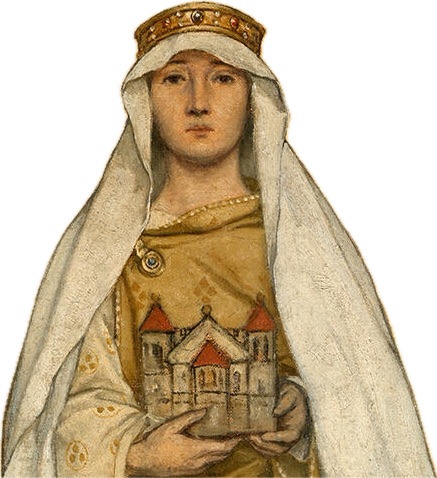
Exposition – Queen in Her Own Right. Urraca I of León (1109–1126) 

MUSEO DE LEÓN
6 MARCH — 7 JUNE 2026

We are pleased to announce that on 6 March the exhibition Queen in Her Own Right. Urraca I of León (1109–1126) will open at the Museum of León. The exhibition is organised by the City Council of León and co-funded by the Regional Government of Castile and León, with the participation of several other institutions (see attached document).

Conceived as a significant event within the national cultural agenda, the exhibition explores the multiple facets of a historical figure of exceptional importance. Through a carefully curated selection of objects drawn from twenty-seven national and international museums, institutions and collections, it offers a nuanced and well-grounded interpretation of political action and artistic production during the reign of the first female sovereign in Europe to rule in her own right.

The figure of Urraca I continues to attract contemporary interest due to her sustained determination to exercise power independently, without submission to any male authority, whether civil or ecclesiastical. This innovative political stance was developed consistently throughout a life marked by complexity and intense historical significance.

Curators: Gerardo Boto Varela and José Alberto Moráis Morán.

Publié dans Exposition | Commentaires fermés sur Exposition – Queen in Her Own Right. Urraca I of León (1109–1126) 

Journée d’étude – Time and Emotions in Premodern Europe

Wednesday 18 March 2026
University of Antwerp, City Campus (location will be communicated)

This workshop is part of the annual Raymond Van Uytven Chair in Urban History. In 2026, Prof. Dr. Miri Rubin is the chairholder. This Chair is coordinated by the Centre for Urban History at the University of Antwerp.

Session 1: Feeling Time

9:30 Melancholic Merchants. Future Thinking and Emotions in Late Medieval Italy – Nicolò Zennaro, University of Antwerp

10:10 Feeling the Strain? Emotions of Time in the Diary of David Beck – Gerrit Verhoeven, University of Antwerp

10:50 Coffee break

Session 2: Images of Emotional Time

11:00 The Virgin’s Foresight, Visualised – Miri Rubin, Queen Mary University of London

11:40 The Passions of the Sandglass – Matthew Champion, University of Melbourne

12:20 Lunch (for speakers only)

Session 3: Objects of Emotional Time

13:10 Moving in and out of time. Processional ornaments in the confraternity of the Holy Blood in Bruges (15th and 16th centuries) – Anne-Laure Van Bruaene, Ghent University

13:50 « Eating Saints and “translating” relics. Nunneries and Medicinal Cannibalism in the Spanish Netherlands in the 1630s. » – Marc Jacobs, University of Antwerp

14:30 Expression of Emotions and Feelings in Timekeeping. Instruments Preserved at the Royal Museums of Art and History (Brussels): A Few Singular Cases – Sophie Balace, Royal Museums of Art and History Brussels

15:10 Coffee break

Session 4: Rhythms and Regimes of Time

15:30 Is the Night Time the Right Time? Urban society, craft guilds and the night in the late medieval Low Countries – Peter Stabel, University of Antwerp

16:10 To Move or Be Moved? Early Modern Rhythms of Mobility and Emotions – Sanne Hermans, University of Antwerp

17:00 End

Publié dans Colloque | Commentaires fermés sur Journée d’étude – Time and Emotions in Premodern Europe

Conférence – Lucien Reynhout, « Les colophons : entre phénomène codicologique et marqueurs d’histoire culturelle »

18 mars 2026
Lucien Reynhout (KBR)
Les colophons : entre phénomène codicologique et marqueurs d’histoire culturelle

Informations pratiques :

Université de Namur
Centre PraME – Institut PaTHs

De 16h15 à 18h15 – Local L34 (Séminaire d’Histoire), 3e étage
Faculté de Philosophie et Lettres
61, rue de Bruxelles
B – 5000 Namur
Entrée libre

Contact : etienne.renard@unamur.be

Source : Université de Namur

Publié dans Colloque | Commentaires fermés sur Conférence – Lucien Reynhout, « Les colophons : entre phénomène codicologique et marqueurs d’histoire culturelle »

Publication – « Vox praedicatoris. Latin Patristic Sermons, Their Transmission, and Their Reception (4th-15th Centuries) », éd. Nicolas De Maeyer, Gert Partoens, Shari Boodts, Anthony Dupont

This volume presents the proceedings of the conference ‘Ministerium Sermonis. An International Colloquium on St. Augustine’s Sermons’ (8-10 December 2021). The nineteen articles collected here focus on the transmission, critical edition, interpretation, and reception of Latin Patristic sermons, and particularly the sermons of the African Church Father Augustine of Hippo. By combining philological, exegetical, theological, rhetorical, and historical approaches, this volume aims to demonstrate the value of these sermons as a key source for understanding the Early Christian Church. The volume forms a sequel to the proceedings of the previous three Ministerium Sermonis conferences (Leuven-Turnhout 2008, Rome 2011, Malta 2015), which have also been published in the series Instrumenta Patristica et Mediaeualia (subseries Ministerium Sermonis I, II, III).

Nicolas De Maeyer is Senior Postdoctoral Researcher of the FWO Vlaanderen at KU Leuven. His research focuses on the manuscript transmission, critical edition, and reception of Patristic literature, especially the writings of Augustine of Hippo.

Gert Partoens is Professor of Latin Literature at KU Leuven and director of the Latin series of Corpus Christianorum. His research is focused on the transmission of Latin Patristic texts in general and on that of Augustine’s sermons in particular.

Shari Boodts is Assistant Professor of Medieval History affiliated with the Chair of Ancient and Medieval History at the Faculty of Arts, Radboud University Nijmegen (Netherlands). She studies the medieval transmission and reception of Latin Patristic preaching using computational methods of analysis.

Anthony Dupont is Research Professor in Christian Antiquity affiliated with the Research Unit History of Church and Theology at the Faculty of Theology and Religious Studies, KU Leuven. His scholarly pursuits center on the concepts of divine grace and human freedom in the oeuvre of Augustine of Hippo.

Preface
Nicolas De Maeyer, Gert Partoens, Shari Boodts & Anthony Dupont

Augustine as Political Orator
Gillian Clark

Augustin admoneste ses fidèles après une émeute. Édition critique du s. 302 auctus
François Dolbeau

An Unidentified Fragment of a Lost Augustinian Sermon: De quattuor uirtutibus caritatis 9 (s. 73 ad fratres in eremo)
Clemens Weidmann

Quels sermons d’Augustin Isidore de Séville connaissait-il ?
Jacques Elfassi

Nouvelles hypothèses sur l’origine de la « collection » De bono coniugali
Jérémy Delmulle

The Octoginta homiliae Collection: A Witness of the Early Reception of Augustine’s Preaching
Matthieu Pignot

A Chapter in the Transmission of the Quinquaginta homiliae in Present-Day Belgium and Northern France
Gert Partoens

The Homiliary of Bellevaux (Città del Vaticano, BAV, Vat. Lat. 248): Analysis of the Sources, Structure, and Stemmatical Relations of its First Part (Items 1-32)
Nicolas De Maeyer

Augustine’s Sermons in the Hands of Medieval Compilers: Notes on the Role of Sermones ad Populum and Tractatus in Iohannem in the Customization of Liturgical Sermon Collections
Riccardo Macchioro

« Quid est quod dicunt christiani : “Crede, crede” ? ». Augustin en dialogue avec les païens dans le s. Dolbeau 25
Isabelle Bochet

« Sois attentif à ce qui t’est dit, pas à celui qui le dit » (en. Ps. 36, 3, 20). Sur la réponse augustinienne à la théologie donatiste de la prédication
Marie Pauliat

Homiletical Instruction and Communal Exegesis: Augustine and his Congregation in the Early Anti-Manichaean Sermons
Thomas Clemmons

Metaphilosophy in Augustine’s Sermons
Giovanni Catapano

The Personal Union of Christ and the Church in Augustine’s Sermons: Foundations, Applications, Implications
J. Patout Burns

Ambrosian Influence on Hippo’s Pulpit: Iob 14, 4 and Ps. 50, 7 in the Sermons of Augustine
Anthony Dupont

Towards a Better Ciuitas: A Rhetoric of Civic Values in the Preaching of Augustine of Hippo and Maximus of Turin
Merel De Bruin – Van de Beek

Praeclara pulchritudo uirtutis: Suffering, Endurance, and the Aesthetics of Manliness in De excidio urbis
Joshua Benjamins

Salvian the Homilist: A Fifth-Century Gallic Magister and his Audience
Christopher M. Blunda

El texto de Eph. 4, 3 en los Sermones ad populum de Agustín. Imágenes de la Iglesia en un contexto antidonatista
Enrique A. Eguiarte

Indices
Nicolas De Maeyer, Gert Partoens & Wendy Frère

Informations pratiques :

Vox praedicatoris. Latin Patristic Sermons, Their Transmission, and Their Reception (4th-15th Centuries), éd. Nicolas De Maeyer, Gert Partoens, Shari Boodts, Anthony Dupont, Turnhout, Brepols, 2025 ; 1 vol., 736 p. (Instrumenta Patristica et Mediaevalia, 98). ISBN : 978-2-503-61325-3. Prix :€ 185,00.

Source : Brepols

Publié dans Publications | Commentaires fermés sur Publication – « Vox praedicatoris. Latin Patristic Sermons, Their Transmission, and Their Reception (4th-15th Centuries) », éd. Nicolas De Maeyer, Gert Partoens, Shari Boodts, Anthony Dupont

Appel à contribution – Revue « Circé. Histoire, savoirs, sociétés » – Varia (n°19)

Circé. Histoire, Savoirs, Sociétés est une revue scientifique historienne ouverte à l’interdisciplinarité qui publie des articles touchant toute période historique et tout thème de recherche, et mobilisant procédés, méthodes et traditions disciplinaires variés. Soucieuse d’inscrire la diversité qu’elle présente au-delà des frontières nationales, la revue publie également des articles en anglais permettant ainsi de mieux appréhender l’état de la recherche à l’étranger. Créée et animée par de jeunes chercheurs, la revue leur est particulièrement destinée. Elle privilégie la publication d’articles issus des premières années de recherche, c’est-à-dire après une soutenance d’un mémoire de Master 2, pendant la préparation d’un doctorat, ou après la soutenance d’une thèse.

Modalités de contribution

Les auteurs pourront faire parvenir une première version de leur article sous format électronique, en fichier attaché (format .doc de préférence), à l’adresse suivante : larevuecirce@gmail.com avant le 28 juin 2026.

Elle sera accompagnée d’un abstract (500 à 1 000 signes, espaces compris), ainsi que de 5 mots-clés et d’une courte notice biographique (700 signes maximum, espaces compris) qui précisera notamment les fonctions officielles, les principaux objets de recherches et l’adresse électronique de l’auteur. Il est recommandé aux auteurs de fournir un article entre 30 000 et 60 000 signes (ce décompte comprend les notes de bas de page). Les normes éditoriales à suivre sont celles indiquées dans la charte éditoriale de Circé consultable sur le site de la revue.

Processus éditorial

Après une première relecture en interne effectuée par les éditeurs de la revue puis de premiers échanges avec les auteurs, chaque article anonymisé est soumis à la relecture en double aveugle de chercheurs, spécialistes des thématiques concernées. Ils sont choisis soit parmi les membres du comité scientifique de Circé, soit contactés personnellement par les éditeurs en charge de l’article.

Comité scientifique

  • Anne-Claude AMBROISE-RENDU, Professeure des universités en histoire contemporaine | Université de Versailles Saint-Quentin-en-Yvelines
  • Susan BADDELEY, Professeure en civilisation britannique et langue anglaise | Université de Versailles Saint-Quentin-en-Yvelines
  • Delphine CARRANGEOT, Maître de conférences en histoire moderne | Université de Versailles Saint-Quentin-en-Yvelines
  • Pierre CHASTANG, Professeur en histoire médiévale | Université de Versailles Saint-Quentin-en-Yvelines
  • Anaïs FLÉCHET, Maître de conférences en histoire contemporaine | Université de Versailles Saint-Quentin-en-Yvelines
  • Lampros FLITOURIS, Maître de conférences en histoire européenne | Université d’Ioánnina
  • Corinne FRANÇOIS-DENÈVE, Professeure des universités en littérature comparée | Université de Haute-Alsace
  • Pauline LEMAIGRE GAFFIER, Maître de conférences en histoire moderne | Université de Versailles Saint-Quentin-en-Yvelines
  • Gilles MALANDAIN, Professeur des universités en histoire contemporaine | Université de Versailles Saint-Quentin-en-Yvelines
  • Caroline MOINE, Professeure des universités en histoire contemporaine | Université de Versailles Saint-Quentin-en-Yvelines
  • Jean-Yves MOLLIER, Professeur émérite en histoire contemporaine | Université de Versailles Saint-Quentin-en-Yvelines
  • Vincent PUECH, Maître de conférences en histoire ancienne | Université de Versailles Saint-Quentin-en-Yvelines
  • Catherine RIDEAU-KIKUCHI, Maître de conférences en histoire médiévale | Université de Versailles Saint-Quentin-en-Yvelines
  • Anne ROCHEBOUET, Maître de conférences en littérature médiévale | Université de Versailles Saint-Quentin-en-Yvelines
  • Giovanni VITALI, Maître de conférences en humanités numériques | Université de Versailles Saint-Quentin-en-Yvelines
  • Evelyne SAMAMA, Professeure des universités en histoire ancienne | Université de Versailles Saint-Quentin-en-Yvelines
  • Jean-Claude YON, Directeur d’études | École Pratique des Hautes Études
  • Alessia ZAMBON, Maître de conférences en histoire des arts et patrimoines | Université de Versailles Saint-Quentin-en-Yvelines

Source : Calenda

Publié dans Appel à contributions | Commentaires fermés sur Appel à contribution – Revue « Circé. Histoire, savoirs, sociétés » – Varia (n°19)

Offre d’emploi – Research Fellowships, Institut National d’Histoire de l’Art, Paris

The Institut national d’histoire de l’art (INHA), in Paris, is a public research institute and library specifically dedicated to art history. For the year 2027, in order to encourage national and international exchanges, the National Institute of Art History (INHA) will host researchers for a period of between 1 and 3 months.

Researchers residing in metropolitan France are not eligible for this call. Priority will be given to senior researchers (having defended their thesis for at least 5 years) or history of art professionals having acquired equivalent professional experience, whether they are affiliated with an institution or independent.

Award procedures

The proposals will be reviewed by the INHA general Director, the Director of the Research Department (Département des études et de la recherche), the Director of the Library, the Scientific Director of the Festival de l’histoire de l’art, a member of INHA’s Scientific Council and a qualified expert. The main selection criterion is the excellence of the project, the innovative nature of the approach.

INHA will cover the researcher’s travel (one round-trip to Paris) and accommodation expenses (up to €1300 per month). INHA will provide a workstation, a privileged access to the INHA library and access to the computer and documentary resources offered by the documentation service of the INHA library. An additional monthly scholarship of 1300 € will be offered to researchers from a country ranked “medium” or “low” in the UN Human Development Index.

In addition, the priority areas listed in the INHA strategic project are Africa, Latin America, Asia, Eastern Europe and the Middle East. Applications from these priority regions are strongly supported by INHA.

Application requirements

– A curriculum vitae with a list of publications already published (or confirmed by the publisher)
– A research project specifying the state of the art on the issue to be dealt with, the expected methodology and timeframe
– A cover letter (specifying, if applicable, the need for an additional monthly scholarship)

If you have any questions that are not covered in the list of frequently asked questions (FAQ), please contact the direction des études et de la recherche of INHA.

Applications must be submitted online HERE : https://candidature.inha.fr/
Application deadline: 31 March, 2026

The results will be announced at the end of April, 2026.

Source : Blog de l’ApAhAu

Publié dans Offre d'emploi | Commentaires fermés sur Offre d’emploi – Research Fellowships, Institut National d’Histoire de l’Art, Paris

Colloque – Matériaux « non chronologiques » dans les chroniques universelles. Raisons et méthodes

Nous analyserons la dimension « encyclopédique » de nombreuses chroniques universelles médiévales, qui dépassent la simple succession chronologique des faits par l’intégration de « digressions » issues de sources historiques, théologiques, exégétiques, poétiques, hagiographiques et scientifiques. Il s’agira d’examiner les modalités de cette intégration de matériaux hétérogènes, d’en comprendre les motivations, d’identifier les bibliothèques mobilisées par les auteurs et d’en analyser les enjeux éditoriaux, notamment au regard des révisions successives d’une œuvre par son auteur et en dialogue avec le reste de sa production. Souvent considérés comme accessoires et non historiques, ces matériaux apparaissent en réalité centraux pour comprendre l’horizon intellectuel des chroniqueurs, leur conception du métier d’historien et les stratégies narratives ayant façonné ce champ – encore trop négligé – de l’historiographie médiévale.

Lundi 2 mars

  • 14h30 : introduction   
  • 14h50 : David Floch (Université Paris-Nanterre, MéMo), « Matière arthurienne et genre de la chronique universelle : insertion, historicisation, fictionnalisation  (France, XIIe-XIVe siècles) »
  • 15h30 : Xavier Hermand, Jean-François Nieus, Nicolas Ruffini-Ronzani (Université de Namur, PraME),« Écrire l’histoire de l’église de Liège au XIIIe siècle. Gilles d’Orval et ses Gesta episcoporum Leodiensium »
  • 16h30 : discussion et pause
  • 17h10 : Anne Rochebouet (Université de Versailles Saint-Quentin-en-Yvelines, Institut Universitaire de France), « Le Manuel d’histoire dit de Philippe VI de Valois, additions, digressions et histoire universelle »
  • 17h50  Marco Maulu (Università degli Studi di Sassari), « De l’annalistique à l’encyclopédie : la Mer des histoires et la reconfiguration du savoir »
  • 18h30 : discussion

Mardi 3 mars

  • 10hGabriele Passabì (German Historical Institute, London), « Sigebert’s Chronicon and political discourse in the twelfth century »
  • 10h40 : Fabio Mantegazza (Università degli Studi del Molise), « The scientific organization of Godfrey of Viterbo’s Pantheon from a philological point of view »
  • 11h20 : discussion et pause
  • 12h : Antoni Grabowski (Tadeusz Manteuffel Institute of History, Polish Academy of Sciences),« The place of law in the philosophy of history: the case of Alberic of Trois-Fontaines »
  • 12h40 : discussion et pause déjeuner
  • 15h : Elisa Lonati (École nationale des chartes – PSL, Centre Jean-Mabillon),« Historien ou encyclopédiste ? Hélinand de Froidmont, Vincent de Beauvais et l’invention d’un nouveau “genre” »
  • 15h40 : Marco Petoletti (Università Cattolica del Sacro Cuore, Milano),« Riccobaldo de Ferrare (sec. XIIIe-XIVe) et les sources de ses Historie »
  • 16h20 : discussion et pause
  • 17h : Rino Modonutti (Università degli Studi di Padova),« The world of history. Encyclopaedic diversions in Giovanni de’ Matociis’s Ystorie imperiales »
  • 17h40 : discussion

Mercredi 4 mars

  • 9h30 : Jakub Kujawiński (Adam Mickiewicz University, Poznań),« Annotatio temporum ab origine mundi ou le sommet de l’œuvre de Nicolas Trevet »
  • 10h10 : Francesca  Occhipinti (Università degli Studi di Milano),« Towards a critical edition of Galvano Fiamma’s Chronicon Maius in a comparative analysis within the author’s corpus »
  • 10h30 : discussion et pause
  • 11h10 : Alessio Marziali Peretti (Université de Montréal),« Les Neuf Preux dans la Chronique anonyme universelle »
  • 11h50 : Roxane Bougrelle (Université Lumière Lyon 2, CIHAM),« Intégrer Salluste dans une chronique universelle : devenir des discours tirés de La Conjuration de Catilina et de La Guerre contre Jugurtha dans la Chronique dite de Baudouin d’Avesnes »
  • 12h10 : discussion et fin
  • École nationale des chartes – PSL, 65, rue de Richelieu, Paris 2e (salle Delisle)
  • Accessible en visioconférence
  • 2 mars : 15h-18h30 | 3 mars : 9h30-18h30 | 4 mars : 9h30-12h30

Source : École nationale des chartes

Publié dans Colloque | Commentaires fermés sur Colloque – Matériaux « non chronologiques » dans les chroniques universelles. Raisons et méthodes

Appel à contribution – The Purple and the Book. Precious Manuscripts from Late Antiquity to the Renaissance

International Conference, Turin, November 18-20, 2026
Deadline: February 28, 2026

Purple manuscripts represent a distinctive genre in Western bookmaking production, holding significant artistic and cultural value. Known since Late Antiquity, the purple colour imparts a high symbolic worth: a mark of imperial authority, it later became, with the advent of Christianity, a symbol of the blood of Christ, of martyrs, and of the authority of the Church. After a revival during the Carolingian era, which influenced Ottonian and Romanesque illumination, these manuscripts experienced renewed prominence during the Humanist and Renaissance periods.

Two people working with computer and book.Two people working with computer and book.

This international conference, as the concluding event of the PURple Parchment LEgacy project (PRIN 2020; https://purpleproject.it/), brings together scholars from various fields, time periods, and traditions of book decoration. The aim of the meeting is to offer a comprehensive and multidisciplinary overview of purple manuscripts and the use of purple in manuscript decoration. In addition to invited keynote talks, there will be an open session dedicated to more focused themes and case studies.

Proposals are invited for papers (maximum 15 minutes) addressing, but not limited to, the following research areas, covering periods from Late Antiquity to the Renaissance:

  • case studies on single works or small groups of manuscripts, with a particular focus on their historical-artistic context
  • in-depth studies of techniques and materials (dyes, writing supports, bindings, etc.)
  • research on written sources that contribute to the reconstruction of historical-artistic, documentary, and technical aspects
  • the history of purple manuscripts, with attention to their provenance and collecting histories

Submissions from PhD students, postdoctoral researchers, and early-career scholars are especially encouraged, as well as presentations of ongoing research or projects.

Proposals should be submitted in a single document (Word or PDF format) by February 28, 2026 to: convegno.purple@unito.it. Submissions should include:

  • Full name, email address, and current affiliation
  • Paper title
  • Abstract (maximum 2,000 characters, including spaces)
  • Short CV (maximum 1,000 characters, including spaces)

Proposals may be submitted in Italian, French, English, or German, and will be reviewed by the organizing committee. The outcome of the selection process will be communicated by March 2026.

The conference will take place in person in Turin. Accommodation expenses will be covered by the organization (travel expenses will be the responsibility of the participants). The conference proceedings will be published following a peer-review process.

Source : Blog de l’ApAhAu

Publié dans Appel à contributions | Commentaires fermés sur Appel à contribution – The Purple and the Book. Precious Manuscripts from Late Antiquity to the Renaissance