
The early Middle Ages is not a period traditionally associated with free speech. It is still widely held that free speech declined towards the end of Antiquity, disappearing completely at the beginning of the Middle Ages, and only re-emerging in the Renaissance, when people finally learned to think and speak for themselves again. Challenging this tenacious image, Irene van Renswoude reveals that there was room for political criticism and dissent in this period, as long as critics employed the right rhetoric and adhered to scripted roles. This study of the rhetoric of free speech from c.200 to c.900 AD explores the cultural rules and rhetorical performances that shaped practices of delivering criticism from Antiquity to the Middle Ages, examining the rhetorical strategies of letters and narratives in the late antique and early medieval men, and a few women, who ventured to speak the truth to the powerful.
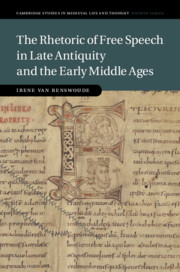
Table des matières :
Introduction
Part I:
1. The steadfast martyr
2. Hilary of Poitiers
3. The detached philosopher
4. Ambrose of Milan
5. The silent ascetic
Part II:
6. The frank holy man
7. Gregory of Tours
8. The wise adviser
9. Agobard of Lyon
10. Pope Gregory
Epilogue.
Informations pratiques :
Irene van Renswoude, The Rhetoric of Free Speech in Late Antiquity and the Early Middle Ages, Cambridge, Cambridge University Press, 2019. 288 p., 235 x 158 x 21 mm. ISBN : 9781107038134. Prix : 75 £.
Source : Cambridge University Press






 L'Agenda des Médiévistes
Vous devez être connecté pour poster un commentaire.