
Medieval memoria – the commemoration of the dead – was both a form of collective memory and a social practice present in every sphere of life. It shaped identities and constituted groups, and thus the study of commemorative practices can tell us a great deal about medieval communities. This study shows the importance of memoria as a form of collective memory for different groups and institutions: city government and guilds, the Teutonic Order, bishops and cathedral chapters, and monastic communities, in late medieval Livonia (present-day Latvia and Estonia).
Gustavs Strenga (PhD) is a post-doctoral researcher at University of Greifswald. The history of medieval Livonia, memory studies, remembrance of medieval heroes, ethnicity in the Middle Ages, gift giving as a historical phenomenon, and book history are his main academic interests.
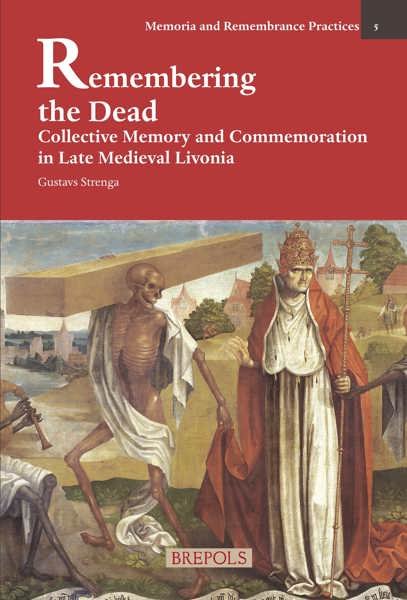
Table des matières :
Introduction
Chapter 1. Remembering Origins
Chapter 2. Commemoration of a Group and its Leaders
Chapter 3. Networks of Memory – Livonia and Beyond
Chapter 4. Conflict and Memory
Chapter 5. Memoria and Urban Elites
Chapter 6. Memoria and the Non-elites
Chapter 7. Reformation and Memoria
Conclusion
Informations pratiques :
Gustavs Strenga, Remembering the Dead. Collective Memory and Commemoration in Late Medieval Livonia, Turnhout, Brepols, 2023 ; 1 vol., 318 p. (Memoria and Remembrance practices, 5). ISBN : 978-2-503-59119-3. Prix : € 89,00.
Source : Brepols





 L'Agenda des Médiévistes
Vous devez être connecté pour poster un commentaire.