
In Norman England, Mathilda’s unique practice of queenship was robustly public. It was characterized by an unapologetic embrace of both new and traditional institutions: military lordship, royal justice, monastic foundation and ecclesiastical reform, documentary initiatives and cultural networks. Although she may appear only glancingly in the chronicle « story sources » of her day, she is everywhere else: governing in documents and charters, articulating her identity in architecture, expressing her authority through innovative custom-made liturgies, handing down juridical sentences and participating in the most fundamental theological issues of her day. However, unlike her husband William « the Conqueror », her impact and influence have not ensured her a place of centrality in modern memory. This book redresses that imbalance. Moving away from the traditional chronological approach to a woman’s life, its thematic chapters use the metaphor of Mathilda’s body to center her actions, creations and speech, showing how Mathilda embodied power in a world often construed as primarily masculine. It thus brings back into focus the policies she championed, the strategies she pursued and the shape of her authority.
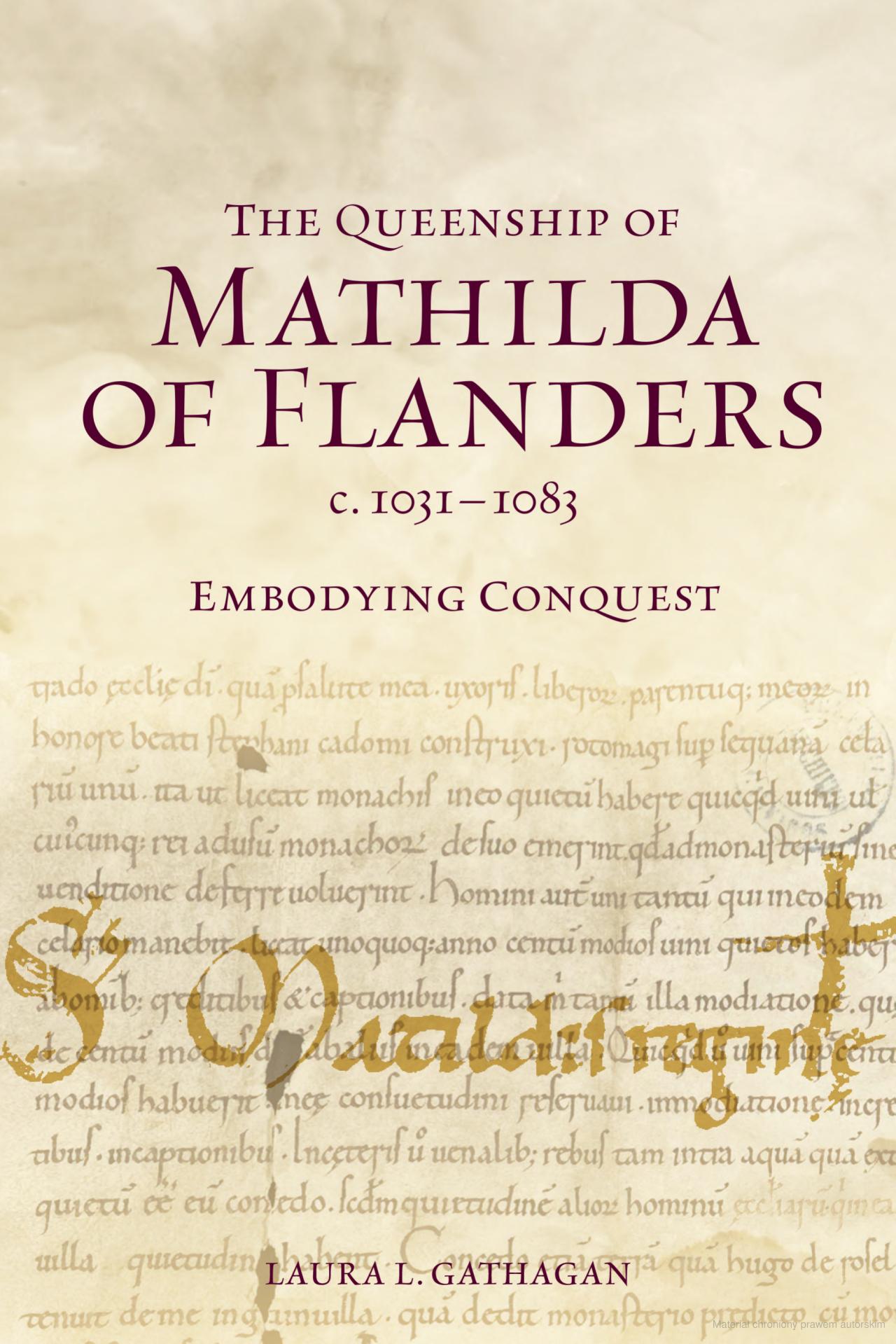
Table des matières :
List of Illustrations
Acknowledgements
Chronology
List of Abbreviations
Introduction
- Blood
- Hands
- Fingers
- Head
- Womb
- Flesh
- Mouth
- Corpse
Select Bibliography
Index of Persons and Places
LAURA L. GATHAGAN is an Associate Professor of History at the State University of New York, College at Cortland. She has published widely on medieval women’s power. She is a Fellow of Antiquaries of London and a member of the Royal Society of Arts.
Informations pratiques :
Laura L. Gathagan, The Queenship of Mathilda of Flanders, c. 1031-1083. Embodying Conquest, Woodbridge, The Boydell Press, 2025 ; 1 vol., 280 p. (Gender in the Middle Ages, 24). ISBN : 978-1-83765-068-2. Prix : GBP : 85,00.
Source : Boydell and Brewer






 L'Agenda des Médiévistes
Vous devez être connecté pour poster un commentaire.