
Aguilar de Campoo (Palencia)
10-12 octubre de 2025
Programme : ici
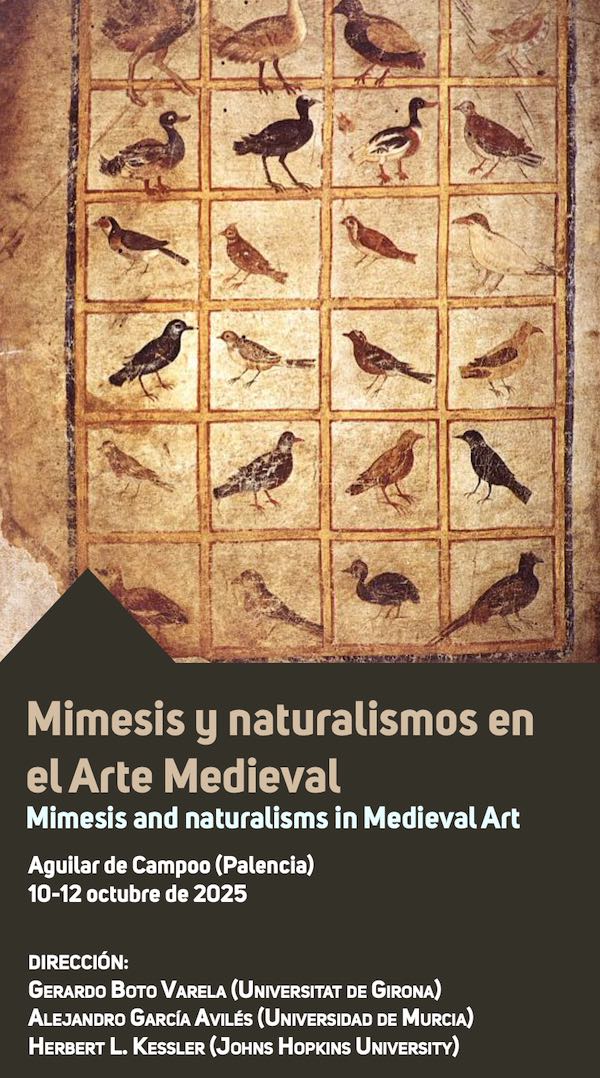
In antiquity, mimesis functioned as both an artistic procedure and an aesthetic objective, while also serving as a conceptual framework for interpreting the world and a foundational principle in the representation of images. Although it has often been asserted that medieval art was detached from this interpretative model and its associated mechanical techniques, the production of cult images that adhered strictly to archetypal forms constituted a distinct mode of Christian mimesis.
From the late twelfth century onward, artistic descriptions began to adhere to formal principles that re-engaged with Flavian and Antonine artistic traditions, aiming to create works informed by an emerging naturalism. This development marked the evolution of mimetic forms in art, which resulted not only from a renewed engagement with classical artistic legacies but also from a more refined observation of the manifestations of created reality. However, this heightened attentiveness did not diminish the devotional function of religious imagery. On the contrary, it facilitated an increasingly precise delineation of divine creation. But going further, by turning images into paradoxical duplications of the world, a new question was introduced: the greatest naturalness was perhaps the gateway to a consummate artificiality. The veracity illustrated as well as confused, because the aspiration of all fiction is to achieve a similarity that is difficult to distinguish from perceptible reality.
Source : Arteceha






 L'Agenda des Médiévistes
Vous devez être connecté pour poster un commentaire.