
Researchers and archivists have spent decades digitizing and cataloguing, but what does the future hold for book history? This book explores the potential of network analysis as a method for medieval and early modern book history. Presented through case studies of the Cotton Library, the Digital Index of Middle English Verse, and the Pforzheimer Collection, this book offers a blueprint for drawing on extant scholarly resources to visualize relationships between people, text, and books. Such visualizations serve as a new form of reference work with the potential to offer new, broad insights into the history of book collecting, compilation, and use. This volume gives a realistic look at the decision-making involved in digital humanities work, and emphasizes the value of so-called « mechanical » labour in scholarship.
Liz Fischer is an independent scholar whose research interests include medieval book history, digital humanities, antiquarianism, and craftsmanship.
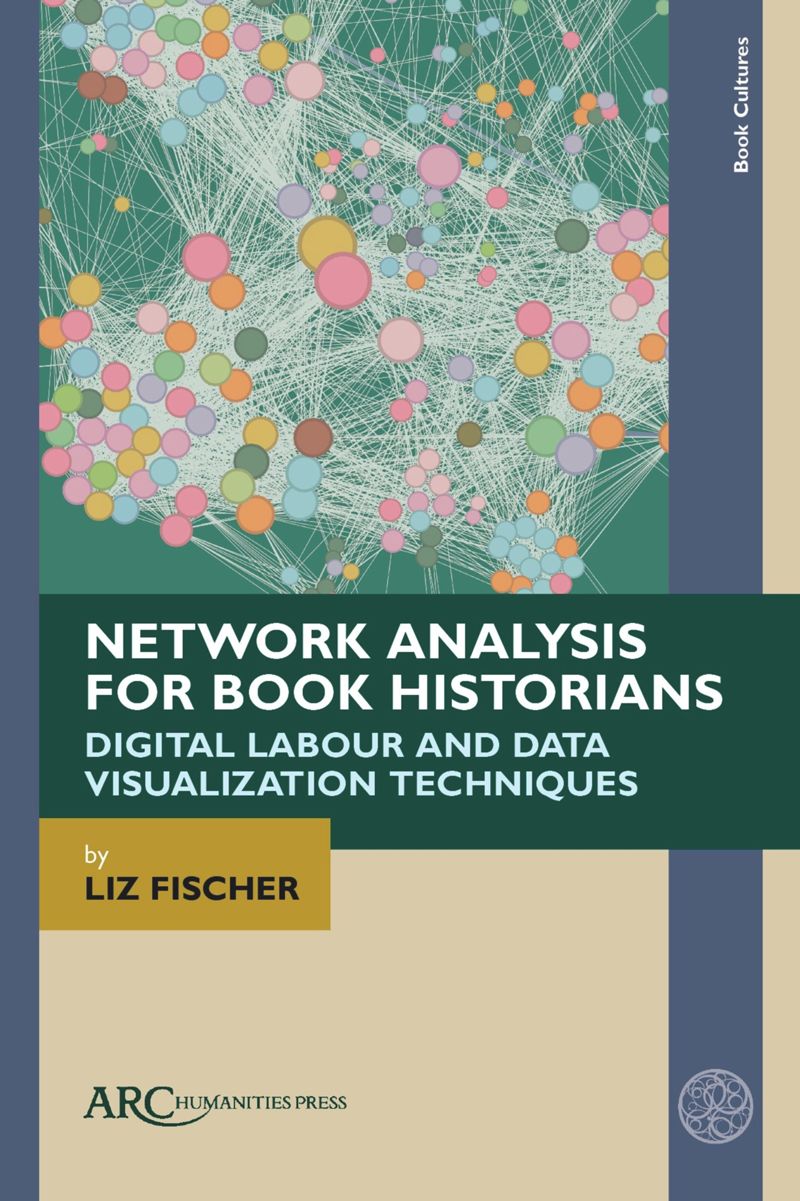
Table des matières :
List of Illustrations
Part One
Read Me
Where Are We Now? Or, Networked Humanities
How to Network
Part Two
Case Study 1. The Digital Index of Middle English Verse
Case Study 2. The Cotton Library
Case Study 3. The Pforzheimer Collection Where to Next?
Glossary
Bibliography
Index
Informations pratiques :
Liz Fischer, Network Analysis for Book Historians. Digital Labour and Data Visualization Techniques, Leeds, ARC Humanities Press, 2025 ; 1 vol., 157 p. (Book Cultures). ISBN : 9781802702682. Prix : GBP 104,00.
Source : ARC Humanities Press






 L'Agenda des Médiévistes
Vous devez être connecté pour poster un commentaire.