
Organisers: Julia van Leeuwen (University of Amsterdam) and Sieben Feys (Ghent University)
Sponsors: Dutch Research Council (NWO); Bijzonder Onderzoeksfonds (BOF), Ghent University
This session explores the ways in which noble families used urban space to represent their lineage, propagate the legitimate continuation of their authority and consolidate their seigneurial rule. It builds upon scholars such as Henri Lefebvre, who have shown that space is never a fixed given but is constantly being reshaped by an interplay of physical characteristics, conceptual visions, and subjective experiences. This session explores the strategic use of urban space in Medieval Europe.
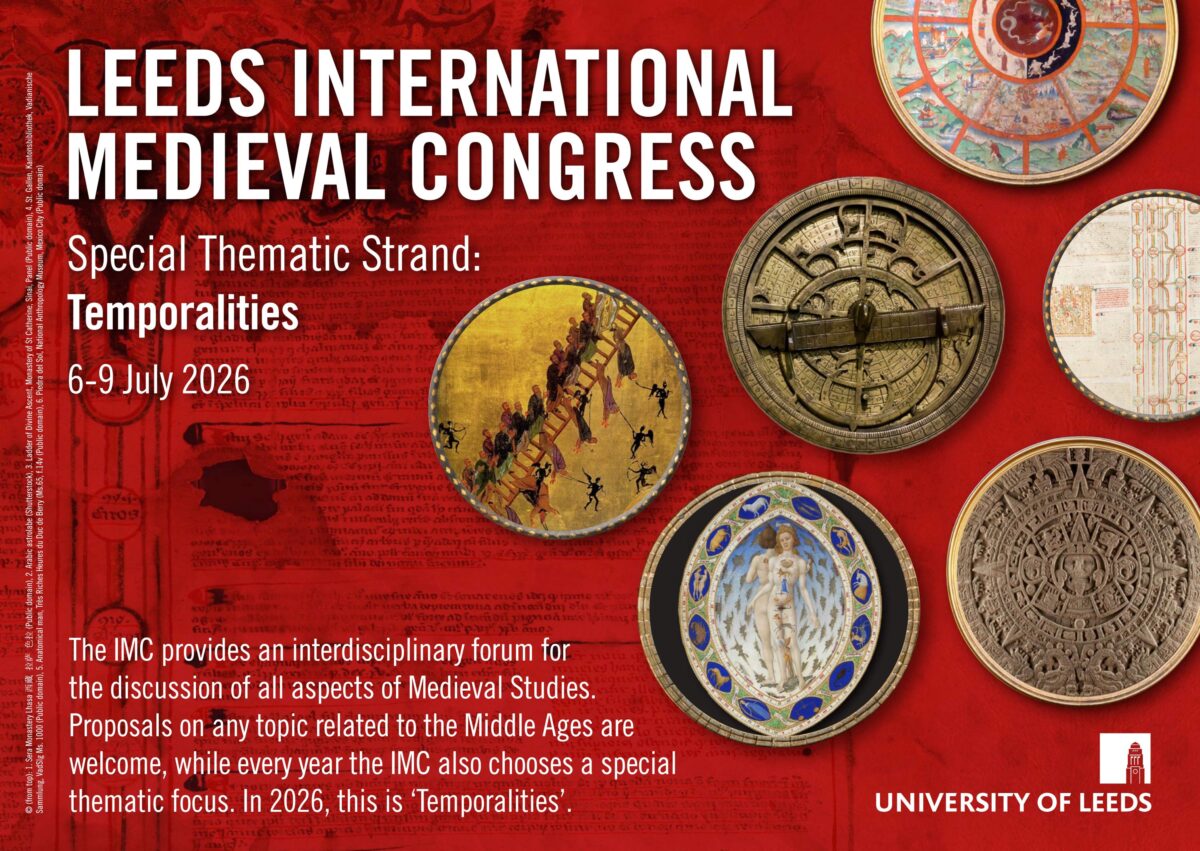
It focuses on how the noble families’ commissions and building practices physically shaped and redefined public space, in relation to underlying visions and ideas that were inextricably linked to an awareness of time. This session perfectly fits the special thematic focus of the IMC in 2026, ‘Temporalities’, and the IMC suggested key topics such as ‘Temporality in political, economic, and socio-cultural relations’, ‘Time, memory, and commemoration’ and ‘Artistic representations of time and temporality’.
We invite proposals for papers for one or multiple sessions at the International Medieval Congress, bringing together historians, architectural and art historians working on case studies in different European regions, with a variety of sources and in an interdisciplinary context. Scholars are encouraged to engage with questions of memorial culture, female agency in commemorative practices and foundations, representation of noble identity, seigneurial rule and dynastic continuity, and in particular urban space as a site of political performance. We welcome topics including (but not limited to):
• Material representation of status and power, such as heraldic symbols, the building of suitable noble residences and the commissioning of luxury objects for churches and urban institutions
• Intergenerational commemorative practices
• Religious foundations in urban space by noble men and women
• Objects and written sources related to the remembrance of noble families
• Objects used in public spaces to propagate the continuity of rule (from funerary monuments and stained-glass windows to statues on the façades of town halls)
Discussant and panel chair: Mario Damen, University of Amsterdam
To apply, please send a title and abstract (100 words max.) for your paper proposal to Julia van Leeuwen (j.vanleeuwen2@uva.nl) or Sieben Feys (s.feys@uva.nl) by September 15th, 2026. We aim to inform you before September 22.






 L'Agenda des Médiévistes
Vous devez être connecté pour poster un commentaire.