
The city of Rome had a remarkable and complex urban continuity even after antiquity and it provided a model of urban living for other cities throughout the Middle Ages. Much existing research has nevertheless focused instead on Rome as the seat of papal power or as an influential idea rather than a real place. This volume radically refocuses our attention on Rome’s inhabitants, their identities, relationships, institutions, experiences, agencies, and spaces, and on how these local aspects interacted with the city’s universal character. It also bridges two periods of the history of Rome that are typically separated, namely late antiquity and the early Middle Ages, through a unique design of mirrored essays on key themes of Rome’s urban history. This volume brings to an Anglophone audience new scholarship from scholars across Europe and America.
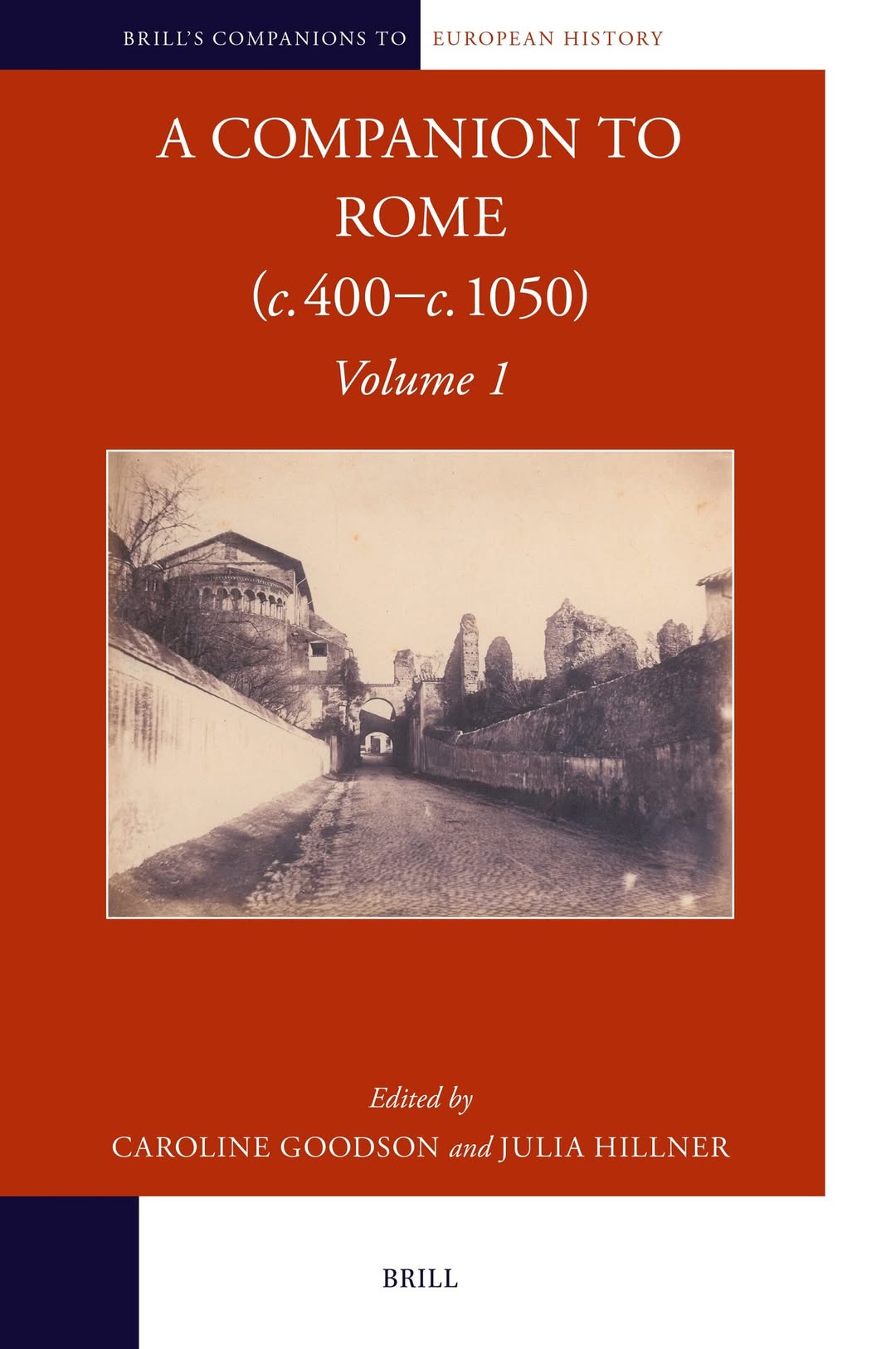
Table des matières :
VOLUME 1
Introduction — Caroline Goodson, Julia Hillner
Part 1. External Forces
Mark Humphries — Coming to Rome in Late Antiquity
Francesca Tinti — Coming to Rome in the Early Middle Ages
Kristina Sessa — War upon Rome in Late Antiquity
Sarah Whitten — War upon Rome in the Early Middle Ages
Part 2. Internal Forces
Massimiliano A. Vitiello — Late Antique Romans
Andrea A. Verardi — Early Medieval Romans
Silvia Orlandi — Urban Administration in Late Antique Rome
Clemens Gantner — Urban Administration in Early Medieval Rome
Samuel Cohen — Social Conflict in Late Antique Rome
Shane Bobrycki — Social Conflict in Early Medieval Rome
Julia Hillner — Law and Justice in Late Antique Rome
François Bougard — Law and Justice in Early Medieval Rome
Part 3. Economies, Materialities, and Environment
Paul S. Johnson — Welfare in Late Antique Rome
Francesca Romana Stasolla — Welfare in Early Medieval Rome
Giulia Bordi — Artisans in Rome: Textile Craft and Trade
Caroline Goodson — Plants and Animals in Rome
Federico Marazzi — The Suburbium of Rome in the Transition from Antiquity to the Middle Ages
VOLUME 2
Part 4. Identity and Belief
Maijastina Kahlos — Religious Communities in Late Antique Rome
Marios Costambeys — Religious Communities in Early Medieval Rome
Robert Heffron — Women in Collective Spaces, Places, and Rituals of Late Antique Rome
Joseph Dyer — Laity and Clergy in Collective Spaces, Places, and Rituals of Early Medieval Rome
Markus Löx — Saints and Their Cults in Late Antique Rome
Maya Maskarinec — Saints and Their Cults in Early Medieval Rome
Part 5. Living and Dying in the City
Margaret M. Andrews — Neighborhoods in Late Antique Rome
Veronica West-Harling — Neighborhoods in Early Medieval Rome
Carlos Machado — Domestic Spaces in Late Antique Rome
Riccardo Santangeli Valenzani — Domestic Spaces in Early Medieval Rome
Dennis Trout — Education, Literacy, and Literature in Late Antique Rome
Giorgia Vocino — Education, Literacy, and Literature in Early Medieval Rome
Lucrezia Spera — Death in Late Antique Rome
Michela Stefani — Death in Early Medieval Rome
Part 6. Conclusion
Paolo Liverani — From Ancient to Medieval Rome: A Tale of Two Cities
Informations pratiques :
A Companion to Rome (c. 400–c. 1050), éd. Caroline Goodson, Julia Hillner, Leyde–Boston, 2025 ; 2 vol. (Brill’s Companions to European History, 32). ISBN : 978-90-04-73877-5, 978-90-04-74176-8. Prix :€ 152,00, € 152,00.
Source : Brill






 L'Agenda des Médiévistes
Vous devez être connecté pour poster un commentaire.