
Conceptions of age in medieval times — childhood, youth, adulthood, and old age — were for long shaped by modern views of the human life cycle. The pioneering studies of Philippe Ariès (1914–1984) set the agenda by framing age primarily as a social construct. This approach prompted an extensive body of research and criticism (see, for example, B. A. Hanawalt, S. Shahar, J. A. Schultz). Since the late twentieth century, researchers have aimed to reconstruct medieval notions of age “from within” the period itself, avoiding anachronistic interpretations.
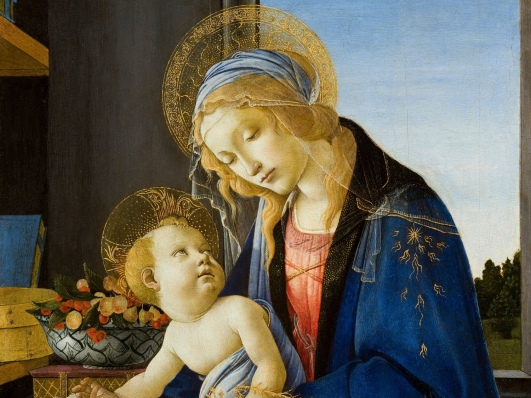
Medieval society possessed a rich system of age categorisations, in which the life cycle was invested with symbolic meaning. For instance, Isidore of Seville and Albert the Great reworked ancient notions about age and spiritual obligations associated with each stage of life. Research on childhood and upbringing in monastic and urban communities, along with studies of old age among the clergy and the nobility, has demonstrated the diversity of cultural models that shaped an individual’s life path. Understandings of age stages depended on social and cultural context, as well as on time and region.
Anthropological approaches have also significantly impacted interpretations of these stages by drawing attention to the rituals that accompany the human life cycle. The ritual naming of a newborn, the incorporation of a child into the ecclesiastical community, initiation into knighthood, and the recognition of an elder as a spiritual or social authority have all served as sources for a renewed understanding of age as a symbolic and social category.
One key issue remains the relationship between the biological and the social. How did people in the Middle Ages define the beginning and end of life stages, and to what extent did these boundaries differ across cultures? Another issue drawing special interest concerns the continuity of age-related concepts between the Middle Ages and the Renaissance. How did humanist ideas about the individual and human nature transform perceptions of medieval stages of life?
The journal Vox medii aevi welcomes submissions devoted to various stages of the human life course in the Middle Ages, within the following thematic areas:
• Concepts of age in medieval Europe: variations and interpretations;
• Methodological approaches to the study of age in the Middle Ages;
• Childhood and youth: initiation rites, new legal capacities, behavioural norms, and forms of deviance;
• Maturity: social and gender aspects;
• Ageing and old age in the Middle Ages: ideas of wisdom and folly, and limits of legal capacity;
• Age in legal sources: normative definitions of majority, responsibility, and marriage age;
• Medieval conceptions of the life cycle and their transformation in the Renaissance.
In addition, the editorial board welcomes reviews of books on this topic published no earlier than three years ago, as well as translations of key texts on age in the Middle Ages — from foreign languages into Russian and from Russian into English. The choice of text for translation must be approved by the editorial board in advance.
Deadline: 1 June 2026
Responsible editor of the volume: Ellina Donets
Email: voxmediiaevi@gmail.com
Source : Vox Medii Aevi



 L'Agenda des Médiévistes
Vous devez être connecté pour poster un commentaire.