
WHAT NEW TOOLS AND METHODS CAN SUPPORT SCHOLARS IN STUDYING, EDITING, AND INTERPRETING TEXTS IN THE DIGITAL AGE?
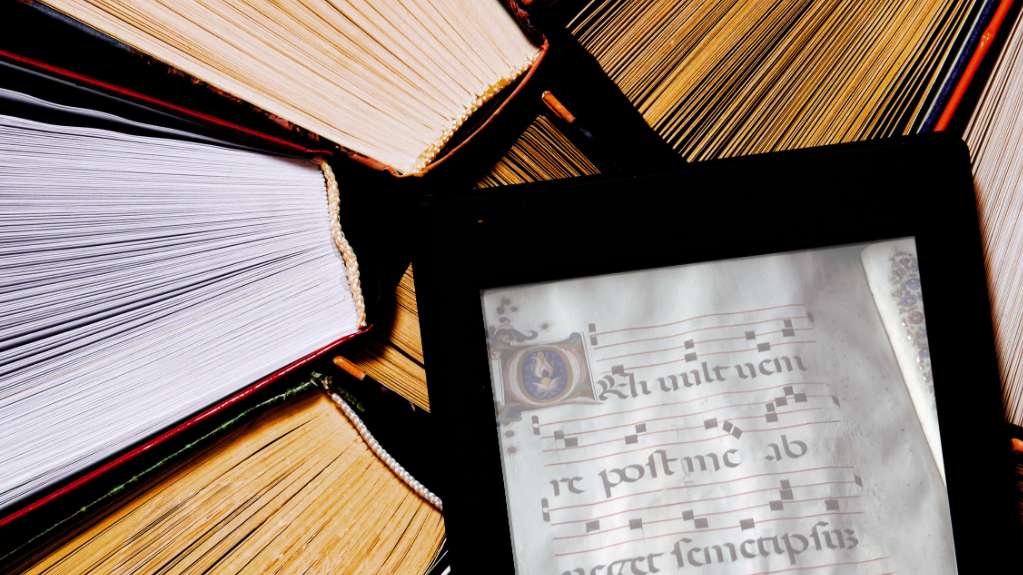
Promoted by the EELISA Digital Philology Community, this five-day Summer School offers Master’s students, PhD candidates, and early-career researchers a unique opportunity to explore current innovations in digital philology through a combination of lectures, practical workshops, and collaborative discussion.
Participants will engage directly with digital tools recently released or still under development within three international research groups based at the Scuola Normale Superiore in Pisa, the École nationale des Chartes in Paris, and the Friedrich-Alexander-Universität Erlangen-Nürnberg. Alongside hands-on experimentation, the Summer School will introduce the research perspectives that inform these projects and encourage reflection on the future of philological scholarship in the age of AI. The programme also includes a guided visit to the Biblioteca Medicea Laurenziana in Florence, offering the opportunity to examine a selection of significant manuscripts from its collections.
The Summer School is designed to provide a solid grounding in the tools currently used in digital philology, while also offering insight into emerging protocols that go beyond the current state of the art. Particular attention will be devoted to approaches that combine the computational potential of AI with the effectiveness of the qualitative analysis typical of traditional philological methods, within an open, collaborative, and FAIR-oriented research framework. While the focus will be on medieval texts, the theoretical framework and methodological approaches presented will be relevant to a much broader range of textual traditions.
PROGRAMME
Sessions will run daily from 9:00 to 18:00, and the working languages will be English, Italian, and French.
Check the programme for details: [link].
The hands-on workshops may focus on texts proposed by the speakers (in medieval Italian and French) or chosen by the participants. Those wishing to work on their own texts are required to prepare in advance a transcription of a few pages of a manuscript, together with materials documenting textual variants. Attendees are asked to bring their own laptop.
FINANCIAL SUPPORT
Travel expenses to and from Pisa, accommodation, and lunches will be fully covered for participants affiliated with EELISA university partners.
For participants external to the EELISA network (please verify whether your university is a member via the following [link]), registration is free of charge; however, travel and accommodation expenses are not eligible for reimbursement.
ENROLLMENT
A total of 45 places are available, with the option to participate either in person or online. Selection will be made based on applicants’ backgrounds and with attention to gender balance.
Applications are open until 30 April 2026.
Please follow the procedure below:
1. Register in the EELISA Digital Philology Community [link];
2. Complete the following application form, attaching a CV together with a short motivation letter:
[Application form for EELISA pariticipants]
[Application form for non EELISA pariticipants]
3. Finally, click “Apply” (at the top right of this page) and agree to the terms and conditions.
Participants will be awarded 1 ECTS credit and an EELISA Badge upon completion..
For further information: stefano.benenati@sns.it
Source : EELISA




 L'Agenda des Médiévistes
Vous devez être connecté pour poster un commentaire.