Journée d’étude – Medieval Studies as Academic Discipline

When : 28-05-2015, from 10:00 to 18:30
Where : Zebrastraat 32, Gent
Language : English
Contact Name : Marjolein Stern
Contact Email : Marjolein.stern@gmail.com
The Pirenne Consortium for Medieval Studies warmly invites you to a study day about the academic discipline of Medieval Studies.

Programme :

10:00 Registration with coffee/tea

10:30 Welcome: Prof. Koen Goethals
10:40 Introduction: Prof. Jeroen Deploige

10:50 Panel 1: Cross-cultural Research
12:20 Lunch

13:30 Panel 2: Multi-Period Research
15:00 Coffee/tea break

15:30 Panel 3: Medievalisms and Heritage

17:00 Conclusion: Dr. Marjolein Stern

17:15 Reception & Research Infrastructure Projects
Panel discussions

Cross-cultural Research
Keynote speaker: Dr. Michele Campopiano (University of York)

Cross-cultural research, Empire and Translatio imperii

The popularity of studies on empires since the 1990s has recently been labelled as the “imperial turn” in humanities and social sciences. Political scholars have moved their attention from the nation state to new transnational forms of power. This has led historians to problematize the study of political organizations and the assumptions about this that are based on the post-Westphalian system of states. The economic and administrative structures of past polities have been scrutinized from new points of view. This tendency has also brought the notion of Empire into the research agendas of historians. Empires are polities with an imperial vision of themselves, of the nature of their hegemony and its legitimacy. One of the recurring elements in the self-definitions of political legitimacy by imperial powers has been their use of and reflection upon the past, more specifically their reference to continuation or transfer of a previous universal hegemony. The concept of translatio imperii, defining the movement of world history as a transfer from one imperial hegemony to another, has allowed the replacement of the spatial organization of empire with a principle of movement of imperial authority through the ages. A comparison with different, but interwoven, cultures in Europe and the Middle East will investigate the presence of similar concepts of imperial transfer and enable us to understand how uses of the past shaped concepts of universal hegemony in these societies.

Panel members: Dr. Maria Conterno (UGent: Post-Imperial Historiography of Late Antiquity), Hilmi Kaçar (UGent: Ottoman State Formation and Ideology), Prof. Giovanna Lelli (UGent: Arab-Islamic Sciences), Prof. Peter Stabel (University of Antwerp: Market institutions, economic performance and social organisation)
Moderator: Prof. Jan Dumolyn

Multi-Period Research
Keynote speaker: Prof. Philippe Buc (University of Vienna)

Multi-period research in European History

Comparing across time-spans in the so-called longue durée is both dangerous and fruitful. In itself this form of comparative history is not unlike the trans-cultural history that will also be discussed during the Ghent conference. The danger lies in the pitfalls of faux-amis, since long underlined by the German Begriffsgeschichte. Terms, notions and ideas developed in the more recent past cannot be immediately employed on data produced by the farther past, which too had its own vocabulary and historical concepts. These initial limits to at least emic analyses that would take past grammars seriously do however open up the possibility of subtler hermeneutics shuttling between past and present. The approach is fruitful because of the harvests — either that they allow one to observe a society passing over major watersheds, or that they reveal often surprising similarities between historical moments separated in time from one another. The question then becomes how to account for these similarities. Are they the result of anthropological universals or invariants, such as those posited by rational choice models or evolutionary psychology? Or are they culturally specific, and can one then speak partly of cultural essences or substances? If so, how did they travel across time?

Panel members: Prof. Berber Bevernage (UGent: Methodology and Theory of History), Dr. Jelle De Rock (UGent: City and Society), Prof. Koen De Temmerman (UGent: Novel Saints), Prof. Erik Thoen (UGent: CORN), Prof. Wim Verbaal (UGent: History of Latin Literature: Theories and Applications)
Moderator: Prof. Youri Desplenter

Medievalisms and Heritage
Keynote speaker: Dr. Axel Müller (University of Leeds)

The Future is Medieval: The Coming Together of Impact, Heritage, and Academic Research

This lecture will be aimed at three main points:

Medieval Studies and its role in society – mainly in the UK
How are the Middle Ages viewed? What are the trigger points of where the Middle Ages become interesting or not, and where do opportunities arise to build on this?
Impact and the Public – a concept which has been emerging in the UK’s Research Evaluation Framework Exercise in the last few years – and which is mainly concerned with the impact of academic research on the wider society and community. How does this new concept relate to an older tradition of ‘public history’?

The pitfalls and opportunities that arise when dealing with changes in the British heritage sector and engaging with a heritage community, touch on transferable issues for Heritage and Medieval Studies, e.g. Impact is entering very aggressively into EU funding systems drawing on the experience of the British roll-out. The underlying issue with all of this is ‘how relevant is Medieval Studies’ and ‘how relevant can it become’ all over Europe.

Panel members: Fien Danniau (UGent: Public History), Prof. Wim De Clercq (UGent: Archaeology), Dr. Hendrik Defoort (UGent Library: Collections), Prof. Max Martens (UGent: Art history), Elien Vernackt (Bruggemuseum: MAGIS Brugge)
Moderator: Prof. Steven Vanderputten

Research Infrastructure projects

The following databases and digital editions will be showcased:

Byzantine Book Epigrams. Prof. Kristoffel Demoen and Dr Floris Bernhard
Diplomata Belgica: The diplomatic sources from the medieval Southern Low Countries. Prof. Els De Paermentier
Late Antique Historiography. Dr. Maria Conterno and Prof. Peter Van Nuffelen
Magis Brugge. Prof. Jan Dumolyn and Elien Vernackt
Narrative Sources: The narrative Sources from the medieval Low Countries. Prof. Jeroen Deploige

Registration

The event is free of charge, but registration is required. Registration is now closed, but you can contact Marjolein Stern for any last-minute registrations.
Publié dans Colloque | Laisser un commentaire

Appel à contribution – The Silence of Images

The Silence of Images (Rome, 11-12 Dec 15) MAXXI – Museo Nazionale delle Arti del XXI secolo, Rome, December 11 – 12, 2015

Deadline: May 31, 2015

International Conference The silence of images. Theories and processes of artistic invention co-organized by the Sapienza University in Rome, the MAXXI Museo Nazionale delle Arti del XXI secolo, and the Vatican Museums, in collaboration with the Kunsthistorisches Institut in Florenz – Max-Planck-Institut and the Gabinetto Disegni e stampe degli Uffizi, and under the patronage of Comité International d’Histoire de l’Art (CIHA)

The conference proposes a reflection on art and image focusing on their essential primary elements, which has informed the theoretical and critical debate of art history: from Leon Battista Alberti’s theories to the transformations and breaks with artistic languages in subsequent centuries, up to the most recent research of contemporary artists. In De Pictura Leon Battista Alberti identified the invention of painting in composition as a space defined by the outline drawn by the artist, observing the colours through variations in the light on the surface. The role of the composition of images, linked to the relationship between line and surface and the effects of colour through light variations, as well as the movement « of the body and the soul, » implies a spatial orientation within the picture plane or viewing screen as in the space of sculpture, architecture, installations or performances in order to infer the semantic value, in addition to what the image narrates, what the image expresses and what we reflect on today. The aim of this reflection is to develop, through key studies, the theoretical and historical-artistic aspects of the various image construction processes, based on artistic literature, historiography, writings by artists, production and artistic experimentation, the role of images and artistic languages according to the cultural modalities linked to the different contexts.

The conference aims to focus on the theoretical and procedural aspects through the following avenues:

– The role of the composition of images between representation and the search for new languages and new viewing modes (visual media) requires a reflection on the different outcomes of experimentation, production and artistic achievement in relation to the space-time dimension. From the origin of the modern conception of composition based on space in perspective and narrative sequencing to the break with spatiality and temporality in contemporary artistic research.

– Drawing-line-mark: literature on this topic is extensive and includes both the theoretical reflection on drawing and its different values in relation to design and invention, and the role of the line as the characterisation of style, as the definition of the image in artistic practice, as well as the sign/mark as an expression of thought, the action of the artist and calligram, between drawing, brushstroke and writing.

– Light-colour: from artistic studies on the rendering of light, chiaroscuro and colour in sixteenth-century treaties to scientific experimentations, the aim is to reflect on the role of colour as a subject, in terms of its significance (agency), even temporal, to be appreciated also through light effects, transparencies, and reflections, and to be verified in perceptual outcomes and symbolic values. The avenues set forth are all interrelated and therefore the aim is not only to analyse and verify them, possibly through specific cases focusing on their characteristics and historical-artistic, historiographic and theoretical developments, but also to get them to act on and interact with each other in order to investigate the ‘meanings’ reflecting on the present, and from the present on the past.

The conference aims to trace a common thread, or better still a voltaic arc that connects the two ends – the Campidoglio, the symbol of Roman and Renaissance classicism, where an exhibition will be held entitled: « Raphael Parmigianino Barocci. Dialectics of the gaze and metaphors of vision », and the MAXXI, Museum of the twenty-first century, in the heart of the new cultural centre of the city – between which cultural tension is produced due to the effect of contact.

Proposals concerning historiographic, theoretical and historical-artistic aspects, with reference to different temporal and geographic areas, works and individual artists, in order to reflect on and develop the theoretical potential of the conceptual avenues proposed, will be taken into consideration.

How to participate:

To apply send the following documentation by and no later than 31 May 2015:

A project of no more than 1000 words in one of the official languages of CIHA (French, English, Italian, Spanish, German).

A summary of the project in English not exceeding 250 words.

A selected curriculum vitae. These documents will be sent to the following address: ilenia.dascoli@fondazionemaxxi.it

Source : Blog de l’ApAhAu

Publié dans Appel à contributions | Laisser un commentaire

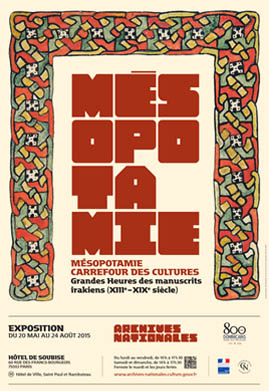
Exposition – Mésopotamie, carrefour des cultures. Grandes Heures des manuscrits irakiens

Exposition à Paris – Hôtel de Soubise
Du 20 mai – 24 août 2015

Exposition "Mésopotamie, carrefour des cultures" Exposition du 20 mai au 24 août 2015 à l'hôtel de Soubise - site de Paris. Illustration © Elio di Raimondo

Exposition « Mésopotamie, carrefour des cultures »
Exposition du 20 mai au 24 août 2015 à l’hôtel de Soubise – site de Paris. Illustration © Elio di Raimondo

Terre de civilisation antique, la Mésopotamie a livré de précieux témoignages sur les origines de l’écriture et les premiers récits de la genèse du monde. Du Moyen Âge à nos jours, les échanges intellectuels et de multiples traditions religieuses n’ont cessé d’y prospérer. Penseurs, auteurs et copistes ont alors procédé à la confection de milliers de manuscrits qui circulent et s’échangent.

Partis en Orient dans la foulée de la fondation de leur Ordre, les frères dominicains ont contribué eux aussi à écrire une page de l’histoire de cette région. Missionnaires, ambassadeurs, scientifiques et curieux du monde qui les entourait, ils ont constitué une collection méconnue de manuscrits arabes et syriaques dans leur couvent de Mossoul. La commémoration de leur 8e centenaire est l’occasion d’évoquer ce dialogue entre Orient et Occident.

Commissariat de l’exposition :
Ghislain Brunel directeur des Publics des Archives nationales et Jacques-Charles Gaffiot Comité du VIIIe centenaire des Dominicains

Horaires :
Du lundi au vendredi de 10h00 à 17h30
Samedi et dimanche de 14h00 à 17h30
Fermée le mardi et les jours fériés

Tarifs
Plein tarif / 6 euros
Tarif réduit / 4 euros

Adresse
Archives nationales – Hôtel de Soubise
60 rue des Francs-Bourgeois 75003 Paris
Métro Hôtel de Ville, Saint-Paul et Rambuteau

Contact presse
Maud Cerci
maud.cerci.ext@culture.gouv.fr
01 75 47 23 83 et 06 82 36 95 38

Source : Archives nationales

Publié dans Le réseau | Laisser un commentaire

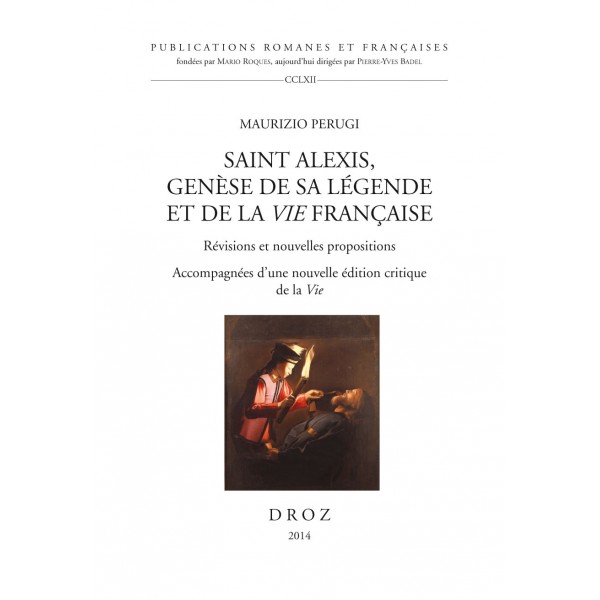
Publication – Maurizio Perugi, « Saint Alexis, Genèse de sa légende et de la Vie française. Révisions et nouvelles propositions Accompagnées d’une nouvelle édition critique de la Vie »

Il était urgent de consacrer une réflexion neuve au Rythme latin sur saint Alexis, dont l’auteur a abrégé un texte proche de BHL 292, soit une Vie latine qui circulait dans la région austro-bavaroise. On sait que le Rythme et la Vie française de saint Alexis ont plusieurs points en commun, dont la disparition du nom d’Edesse au profit d’Alsis. Comme les documents historiques ne mentionnent cette ville arménienne qu’à partir de 1112-1114 au plus tôt, c’est après cette date que les deux poèmes ont dû être composés. Par ailleurs la relation très étroite entre le prologue du Rythme et le début d’un poème carolingien, les versus de Ioseph, nous amène à conclure que le Rythme précède le poème vernaculaire, duquel il faudra par conséquent abaisser la datation. D’autres chapitres portent sur l’archétype grec à l’origine de la plupart des Vies grecques et latines connues ainsi que sur l’identité syriaque d’Alexis. Grâce à l’activité de personnages tels que Léon IX, Otloh de St. Emmeram, et Gerhoch de Reichersberg, au XIIe siècle saint Alexis a été intégré de plein droit au sanctoral de la réforme bénédictine émanant de l’abbaye d’Hirsau.

saint-alexis-genèse-de-sa-légende-et-de-la-vie-françaiseTable des matières :

Préface

I. Préhistoire de la légende d’Alexis

Traces de spiritualité pré-grégorienne dans la tradition latine de la ‘vie de saint Alexis’
Le miracle du tome refusé et le culte de ste-Euphémie
Le monachisme syrien et saint Jean Calybite
La nouvelle Rome et le ‘Pater universalis’
Conclusions

II. L’archétype grec et les « vies » latines

L’archétype grec
La ‘vie’ espagnole Md
Conclusions
La ‘vie’ latine Ct
L’homélie d’Adalbert de Prague ‘in natali sancti Alexii confessoris’
Le sermon XXVIII de Pierre Damien

III. La « Vie » latine BHL 292

BHL 292 : Syricius, Arsène
Texte de BHL 292
Explicit Vita Sancti Alexii confessoris

IV. Sources du rythme, Pater Deus Ingenite

Les latinismes dans le rythme ‘pater deus ingenite’
Les sources du prologue
Le Rythme : texte et commentaire
BHL 292 comme témoin tardif de la source du Rythme

V. Le dossier versifié de saint Alexis

Du côté de la paléographie
Le ‘codex Admontensis’ en tant que passionnaire
Le dossier versifié sur saint Alexis
Le problème de la datation du Rhytme

VI. Édesse, Alsis

Du Rythme au poème vernaculaire
La lettre au prêtre Jean comme ‘double’ contemporain de la vie de Saint Alexis
Littérature apocalyptique
Les deux épées
Datation du poème vernaculaire (VSA)

VII. Stratification de BHL 292 : la couche originaire (Σ) et les ajouts (Sy)

La stratification de Sy par rapport à Σ, source du Rythme
Les Ministeriales
La tradition romaine et la création de la commune
Pise dans l’échiquier politique au XIIe siècle
La vie d’Alexis en ancien allemand (MHD)
Origine et chronologie de Sy

VIII. Le maniérisme latin dans la « Vie de saint Alexis »

La tmèse dans les littératures latine et médiolatine
La tmèse dans VSA
La composante latine dans la langue de VSA

IX. VSA : questions textuelles

La stratigraphie du poème
La double conclusion (str. 108-110 et 123-125)
Les strophes 51-52
Deux autres strophes rajoutées (str. 84 et 87)
Les doubles rédactions de A
Le stemma a l’épreuve
L’âge d’Alexis
VSA : établissement du texte

X. Texte et critique de VSA avec apparat génétique

Sigles des manuscrits de la vie de saint Alexis
Apparat génétique
Leçons de L rejetées et autres modifications par rapport à l’édition précédente(2000)

Bibliographie
Éditions et traductions de textes
Études

Informations pratiques :
Maurizio Perugi, Saint Alexis, Genèse de sa légende et de la Vie française. Révisions et nouvelles propositions Accompagnées d’une nouvelle édition critique de la Vie, Genève, Droz, 2014 (Publications Romanes et Françaises, 262). 800 pages, 152 x 222 mm. ISBN : 978-2-600-01792-3. Prix : 69,50 euros.

Source : Droz

Publié dans Publications | Laisser un commentaire

Web – Colour ConText: une base de données de recettes d’artistes

Les livres de recettes d’atelier constituent une source fondamentale pour la connaissance des techniques artistiques anciennes en Europe.

La base de données Colour ConText, en ligne depuis tout récemment, constitue un formidable outil de recherche pour les historiens d’arts, historiens et restaurateurs. Elle répertorie, transcrit et traduit plus de 6.500 recettes d’atelier (pigments, matières colorantes, colles, encres …), issues de plus de 500 sources manuscrites et imprimées de l’époque médiévale aux temps modernes, conservées dans des dizaines de bibliothèques, archives et musées en Europe et Outre-Atlantique.

ms_wittert3_ulgEnrichie d’images numérisées, de transcriptions et traductions des recettes, et d’un glossaire des ingrédients et matières, Colour ConText offre aussi une occasion au grand public de découvrir des usages insoupçonnés d’ingrédients quotidiens.

Colour ConText est un projet conjoint de l’Institut Max Planck d’histoire des Sciences et du groupe de recherche ‘Transitions’ – FNRS/Université de Liège, coordonné par Sylvie Neven (ULg-FNRS).

Accès : ici

Projet Coordinator & Editor
Dr. Sylvie Neven
Université de Liège
Quai Roosevelt, 1B (bât. A4)
B-4000 Liège
Tel +32 (0) 4 366 54 43
Email sylvie.neven@ulg.ac.be

Project Director
Prof. Dr. Sven Dupré
Max Planck Institute for the History of Science
Boltzmannstraße 22, 14195 Berlin
Tel. +49 30 22 667-280

Fax +49 30 22 667-281
E-mail dupre@mpiwg-berlin.mpg.de

Source : Université de Liège

Publié dans Banque de données, Web | Laisser un commentaire

Base de données – FAMA : Œuvres latines médiévales à succès

L’IRHT publie une nouvelle base de données, FAMA, consacrée au repérage des œuvres latines à succès. Elle recense à l’heure actuelle 1062 fiches d’œuvres et 9704 fiches de manuscrits.

Il est souvent assez difficile d’évaluer l’impact d’un texte médiéval, l’un des critères pour le faire étant le nombre de témoins conservés, qui donne, pour le moins, une idée approchée de l’audience d’un ouvrage, et semble pouvoir fournir une base moins aléatoire que d’autres à une évaluation de la réception des textes de culture.

La présente base consiste ainsi à rassembler des renseignements sur le nombre de témoins subsistants des ouvrages les plus lus du Moyen Âge latin, pour permettre de les regrouper non seulement par le nombre d’exemplaires, mais aussi par genre, par pays, par date. Cette base relative aux textes latins complète les données déjà accessibles pour les textes français de la fin du Moyen Âge et fournira un point d’appui aux recherches en cours pour une approche globale des phénomènes culturels.

Accès : http://fama.irht.cnrs.fr

Source : IRHT

Publié dans Banque de données, Web | Laisser un commentaire

Colloque – What do we lose when we lose a library

A conference about the future challenges of libraries
KU Leuven
9 – 10 – 11 September 2015

A collaboration of the University of Leuven, Goethe-Institut Brüssel & British Council Brussels
Location: KU Leuven, University Hall & University Library

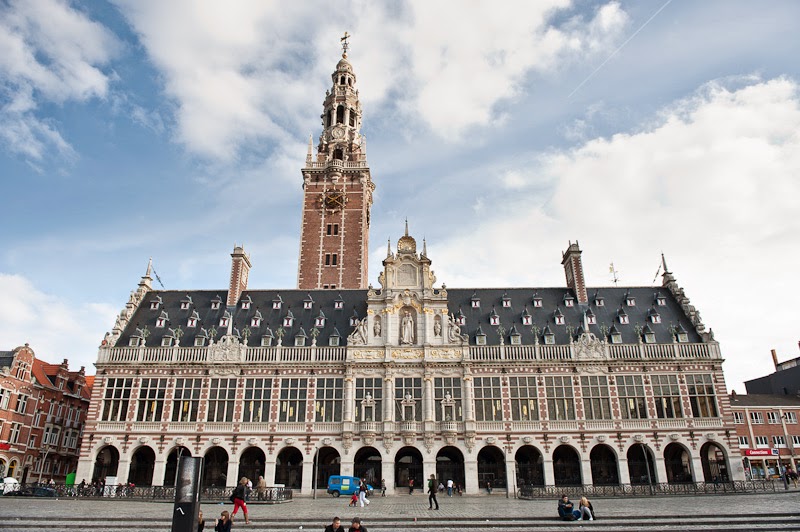
To commemorate the centenary of the destruction of the Library in 1914, the Goethe-Institut Brüssel, the British Council Brussels and the University of Leuven (KU Leuven) are organising a three day international conference on the challenging topic: What do we lose when we lose a library?

The fragility of libraries in their material and digital dimension remains, 100 years after the fire, one of the greatest challenges for the transmission of human knowledge. The two conference themes Library & Heritage and Library & Digital Challenge will shed light on the vision and approach to the past and the future of libraries. The conference is addressed to scholars as pioneers of organising cultural memory through expertise and knowledge. The aim is to raise worldwide public consciousness of the important task of sharing collective and cultural memory, and to raise awareness of the challenges libraries face in performing this task.

Important deadlines
Monday January 5, 2015: Abstract submission opens
Monday January 26, 2015: Early bird registration opens
Monday March 16, 2015: Deadline abstract submission
Monday March 30, 2015: Abstract acceptance announced
Friday May 15, 2015: Deadline early bird registration
Monday August 31, 2015: Registrations closed

Background on the fire of the library in the Great War

100 years ago, during the Great War, in the night of 25-26 August 1914, soldiers set the fourteenth-century University Hall and its eighteenth-century library wing of the University of Leuven (Belgium) ablaze. This was part of The Sack of Louvain, which made a tremendous impression on international public opinion. There was no hesitation in denouncing this act with powerful words and historical comparisons. The plundering of Leuven could clearly be compared with the sacking of Rome in 1527 and the Leuven Library fire with that of Alexandria.

To commemorate the Anniversary of the Library’s destruction, the Goethe-Institut Brüssel, the British Council, Brussels and the University of Leuven (KU Leuven) are organizing a three day international conference on the challenging topic: What do we lose when we lose a library? The fragility of libraries in their material and digital dimension remains, 100 year after the fire, one of the great challenges for the transmission of human knowledge. Repositories with books and data files all over the world are developing strategies and generating research to pass on library and archival materials. The three day conference in Leuven aims to create a platform for cutting edge research and disseminations of ideas in the field of library, information and knowledge preservation. Moreover, it aims to reflect on the importance and the value of the ‘library’ as an institution guaranteeing transmission of knowledge to the next generations.

A General Session on the conference theme What do we lose when we lose a library? and two Special Sessions: Library & Heritage and Library & Digital Challenge [working Titles] will shed light on the vision and approach on the past and the future of libraries. The conference is addressed to librarians and scientist as pioneers of organizing cultural memory via expertise and knowledge. The meeting intends to raise public consciousness concerning this important task of sharing collective and cultural memory, and to raise awareness concerning the challenges libraries face in performing this task. The international conference is hosted by the University of Leuven (KU Leuven)

Organisation board

Mel Collier, KU Leuven
Sonja Griegoschewki, Goethe-Institut Brüssel
Andrew Murray, British Council
Hilde Van Kiel, KU Leuven
Garrelt Verhoeven, KU Leuven
Lieve Watteeuw, Chair, KU Leuven

Supporting Libraries and Institutions
Goethe-Institut Brüssel, Brussels
British Council, Brussels
British Library, London
Lambeth Palace Library, London
Trinity College, Cambridge
Staatsbibliothek zu Berlin
Herzog August Bibliothek, Wolfenbuttel
Bayerische Staatsbibliothek, München
Library of Congress, Washington
Georg-August-Universität, Göttingen
University of Antwerp
Bibliothèque de l’Université catholique de Louvain
Flanders Heritage Library
Unesco Belgium
Trinity College Library, Dublin
KU Leuven organization
Central Library; University Archives; Tabularium; Art Collection
Maurits Sabbe Library, Faculty of Theology; Illuminare, Centre for the Study of Medieval Art; Digital Humanities Summer School, Faculty of Arts; Digital Lab

Source de l’information : KU Leuven Congres

Publié dans Colloque | Laisser un commentaire

Appel à contribution – Historiens et littéraires : les frontières disciplinaires au pays des médiévistes

Journée d’étude du réseau Ménestrel Boulogne-sur-Mer
Vendredi 2 octobre 2015
Université du Littoral Côte d’Opale

Assemblée générale du réseau Ménestrel Saint-Omer
Samedi 3 octobre 2015
Bibliothèque d’Agglomération de Saint-Omer

La journée d’étude annuelle et l’assemblée d’automne du réseau Ménestrel se tiendront entre Boulogne-sur-Mer et Saint-Omer, villes qui abritent deux structures partenaires du réseau : le laboratoire HLLI et la Bibliothèque d’Agglomération de Saint-Omer. Le HLLI (UR 4030, Université du Littoral Côte d’Opale) est un laboratoire pluridisciplinaire qui réunit historiens, linguistes et littéraires : il compte quatre médiévistes, deux au sein de l’axe « Centre de recherche en histoire atlantique et littorale » (Alban Gautier et Christine Jéhanno), et deux au sein de l’axe « Modalités du fictionnel » (Jean Devaux et Matthieu Marchal). La Bibliothèque de Saint-Omer possède un riche fonds de manuscrits médiévaux ; elle est partenaire de plusieurs programmes pédagogiques et scientifiques, en particulier avec l’École nationale des Chartes et l’IRHT (projet coordonné par Dominique Stutzmann et, à Saint-Omer, par Rémy Cordonnier).

Ces caractéristiques de nos deux institutions nous ont amenés à proposer pour thème de la journée d’étude du vendredi 2 octobre une réflexion sur les frontières disciplinaires entre histoire et littérature médiévales. Même si des évolutions ont eu lieu au cours des dernières décennies, les dites frontières nous empêchent trop souvent de coopérer, de définir des objets d’étude communs, de nous intéresser aux procédures scientifiques qui font la spécificité de chacune de nos disciplines. Nous proposons donc aux Ménestrels de s’y atteler et de proposer des communications qui développeront, à partir d’exemples concrets, une réflexion s’inscrivant dans un des trois thèmes suivants :

  1. Les questions proprement institutionnelles. On examinera l’impact que peut avoir la structuration institutionnelle de la recherche (laboratoires transdisciplinaires ou disciplinaires), de l’enseignement (UFR de lettres et sciences humaines, ou au contraire séparation entre disciplines) et de la médiation (bibliothèques spécialisées ou généralistes, etc.) sur le maintien ou le dépassement des frontières entre histoire et lettres.
  2. Une réflexion épistémologique sur la pertinence de cette frontière. Il ne s’agira en aucun cas, lors de cette journée, de répéter que ces frontières doivent à tout prix et en toutes circonstances être franchies, mais de s’interroger sur la spécificité des disciplines et sur les occasions où les interactions seraient bénéfiques.
  3. Les cas concrets d’approche ou de franchissement des frontières disciplinaires. On questionnera la façon dont historiens et littéraires approchent et critiquent les travaux de leurs collègues, mais aussi la manière dont chaque discipline peut se saisir des sources qui constituent traditionnellement le domaine de l’autre : fiction, poésie ou théâtre d’un côté ; chroniques et documents d’archive de l’autre.

L’assemblée générale se tiendra le samedi 3 octobre après-midi à la Bibliothèque de Saint-Omer. Un transfert sera organisé par autocar depuis Boulogne le samedi matin, et en fin de matinée nous visiterons l’exposition « Jeux de mains. Portraits de scribes dans les manuscrits de Saint-Omer », à la Bibliothèque d’Agglomération, qui donnera l’occasion à Rémy Cordonnier de nous présenter quelques-uns des trésors du riche fonds de la bibliothèque.

La journée d’étude est organisée par Jean Devaux, Christine Ducourtieux, Alban Gautier, Christine Jéhanno, Aude Mairey et Matthieu Marchal.

L’inscription à la journée d’étude et à l’assemblée est gratuite. Le déjeuner du vendredi et le transfert entre Boulogne et Saint-Omer seront offerts aux communicants et aux participants grâce au soutien de l’Institut universitaire de France.

Merci d’envoyer vos propositions de communication avant le 1er juillet à Alban Gautier, alban.gautier@univ-littoral.fr.

Source : Ménestrel

Publié dans Appel à contributions | Laisser un commentaire

Publication – Hannah Skoda, « Medieval Violence Physical Brutality in Northern France, 1270-1330 »

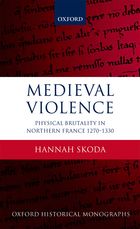
Medieval Violence provides a detailed analysis of the practice of medieval brutality, focusing on a thriving region of northern France in the late thirteenth and early fourteenth centuries. It examines how violence was conceptualised in this period, and uses this framework to investigate street violence, tavern brawls, urban rebellions, student misbehaviour, and domestic violence. The interactions between these various forms of violence are examined in order to demonstrate the complex and communicative nature of medieval brutality. What is often dismissed as dysfunctional behaviour is shown to have been highly strategic and socially integral. Violence was a performance, dependent upon the spaces in which it took place. Indeed, brutality was contingent upon social and cultural structures. At the same time, the common stereotype of the thoughtlessly brutal Middle Ages is challenged, as attitudes towards violence are revealed to have been complex, troubled, and ambivalent. Whether violence could function effectively as a form of communication which could order and harmonise society, or whether it inevitably degenerated into chaotic disorder where meaning was multivalent and incomprehensible, remained a matter of ongoing debate in a variety of contexts. Using a variety of source material, including legal records, popular literature, and sermons, Hannah Skoda explores experiences of, and attitudes towards, violence, and highlights profound contemporary ambiguity concerning its nature and legitimacy.

9780199670833_140Hannah Skoda is Tutorial Fellow in History at St John’s College, Oxford. She has published on the subject of concepts of the law in medieval France, co-editing an interdisciplinary volume on legalism with the anthropologist, Paul Dresch, and she is currently embarking on research into the misbehaviour of students in fifteenth-century Oxford, Paris and Heidelberg. Other publications have ranged from Dante to the experience of disability in the Middle Ages. She is particularly interested in the relationship between constructions of deviance, and the ways in which those thus labelled react to these stereotypes.

Table des matières :

Introduction
1: Grammars of Violence
2: Violence on the Street in Paris and Artois
3: ‘Oés comme il fierent grans caus !’: Tavern violence in thirteenth- and early fourteenth-century Paris and Artois
4: Student Violence in Thirteenth- and Early Fourteenth-Century Paris
5: Urban Uprisings
6: Domestic Violence in Paris and Artois
Conclusion

Informations pratiques :
Hannah Skoda, Medieval Violence Physical Brutality in Northern France, 1270-1330, Oxford, Oxford University Press, 2015 (Oxford Historical Monographs). 304 pages, 4 black and white figures, 216x138mm. 978-0-19-873787-2. Price: £24.99.

Winner of the 2014 Society for Medieval Feminist Scholarship

Source : Oxford University Press

Publié dans Publications | Laisser un commentaire

Colloque – Langages politiques populaires à la fin du Moyen Âge. Reprise, réappropriation, création

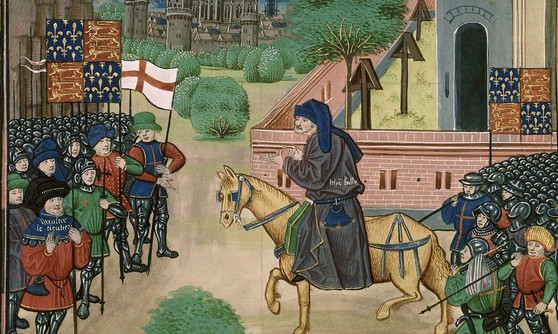
L’objectif de cette rencontre est d’évaluer l’impact des mobilisations populaires sur le système politique, c’est-à-dire leur capacité à modifier les axes majeurs de la politique et le système politique en lui-même. Ceci nécessite de se demander dans quelle mesure le discours politique populaire parvient à modifier les paramètres de référence de la société politique dans laquelle il s’inscrit et à transformer le langage qui lui donne vie. En d’autres termes, il s’agit d’analyser dans quelles circonstances le discours politique populaire reproduit un langage acquis, sous quelles conditions il est capable de le réélaborer et, en définitive, en quelles circonstances les protestations populaires parviennent à se faire elles-mêmes productrices de langage, donnant naissance à un nouveau langage politique ou modifiant de manière substantielle celui déjà existant.

csm_John_Ball-_fragment_5292544284Durée des communications : 25 minutes

Programme : ici

Informations pratiques :
Roma, 26-28 maggio 2015
École française de Rome
Piazza Navona, 62
00186 – Roma

Vincent Challet (Université Paul-Valéry Montpellier III)
Jan Dumolyn (Ghent University)
Hipólito Rafael Oliva Herrer (Universidad de Sevilla)
Fabrizio Ricciardelli (Kent State University)
Andrea Zorzi (Università di Firenze)

Contacts :
École française de Rome
Stéphane Gioanni
Directeur des études médiévales
Grazia Perrino
Secrétariat des études médiévales
secrma@efrome.it

Source : École française de Rome

Publié dans Colloque | Laisser un commentaire