Le Pôle Quadrivium de l’IRHT propose cette formation en humanités numériques pour l’édition scientifique des textes. Le cursus proposé sur toute l’année universitaire vise à donner toutes les bases et les clefs pour utiliser le format LaTeX (notamment le package Ekdosis, mais aussi ArabLuaTeX pour la gestion de l’arabe et autant que possible les outils permettant de travailler sur les langues méditerranéennes non latines) afin de produire des éditions scientifiques de grande qualité aussi bien en format pdf pour l’impression que pour une publication numérique avec une sortie XML-TEI. La formation inclura également le logiciel Chrysocollate développé par Sébastien Moureau à l’Université Catholique de Louvain afin de produire des cahiers de collation et apparats critiques numériques. Enfin une introduction au système de contrôle de version “git” sera proposée. Ce système permet non seulement de suivre son travail de manière sûre dans une ou plusieurs versions simultanées mais aussi de pouvoir retrouver les versions antérieures des fichiers enregistrés.
Les séances seront divisées en deux parties : une première partie destinée aux débutants dans l’utilisation de LaTeX afin d’en maîtriser les bases et fondamentaux, une deuxième partie, plus spécialisée, pour l’utilisation des packages répondant aux besoins spécifiques des travaux universitaires sur les aires, langues et civilisations non-latines (bien entendu, les spécialistes de textes en langues latines désireux de se former en LaTeX sont les bienvenus).
L’idée de cette formation est partie du constat que, malgré les progrès des outils numériques notamment dans la gestion des alphabets non-latins, bien peu d’arabisants sortent du domaine apparemment confortable et limité des formats doc ou odt, alors que LaTeX et XML offrent bien plus de possibilités, de souplesse et d’adaptabilité par rapport aux besoins d’une édition scientifique. Ces formats demandent un investissement de départ qui peut être décourageant au premier abord, surtout en l’absence de collègues ou d’une communauté francophone d’usagers de LaTeX et XML en sciences humaines, a fortiori dans des langues non latines. Afin de conjurer ce cercle vicieux, cette formation vise à montrer tout le potentiel souvent ignoré de ces formats et de donner toutes les clefs pour s’y plonger, en tirer tout le bénéfice dans des travaux universitaires et former une communauté d’utilisateurs.
La première séance se tient le jeudi 16 octobre 2025 (9h-12h) au Campus Condorcet.
La formation vise initialement un public utilisant les langues non latines dans un projet d’édition (arabe, mais aussi grec, hébreu, etc.), mais les utilisateurs de langues en alphabet latin sont également les bienvenus dans la limite des places disponibles.
Public : Master 1, Master 2, Doctorat, post-Doctorat, chercheurs et enseignants-chercheurs
Prérequis : maîtriser la bureautique de base (créer un dossier, enregistrer un document, savoir utiliser LibreOffice ou Word, etc.).
Publié dansSéminaire|Commentaires fermés sur Séminaire – LaTeXdotique en études aréales : initiation à LaTeX et à l’édition numérique en langues arabe et méditerranéennes
À travers les manuscrits de l’une des plus importantes collections au monde, ce séminaire qui s’adresse aussi bien au grand public qu’aux spécialistes vise à aborder des questions cruciales et débattues de la tradition dans les domaines de la littérature, de la philosophie et de l’art grecs et byzantins. La discussion s’organisera autour des manuscrits qui seront exposés dans la salle.
Programme :
Mardi 30 septembre, 17h-18h30 Un luxueux Dioscoride illustré, entre la Syrie gréco-arabe et l’Italie méridionale : Paris. gr. 2179 (IXe s.) Marie Cronier (IRHT-CNRS)
Mardi 7 octobre, 17h Byzance, IXe siècle : retour à la philosophie Didier Marcotte (Sorbonne Université)
Mardi 25 novembre, 14h Le Tractatus Coislinianus, vestige du livre II de la Poétique d’Aristote ? Christine Mauduit (ENS)
Mardi 9 décembre, 17h Fragment antique d’une tragédie perdue d’Euripide (titre provisoire) Gianfranco Agosti (Université de Pise)
Informations pratiques :
site Richelieu, Salle des conférences – 5, rue Vivienne Paris, France (75002)
Entrée libre dans la limite des places disponibles.
Contacts : christian.forstel@bnf.fr et morgane.cariou@sorbonne-universite.fr
Publié dansSéminaire|Commentaires fermés sur Séminaire – Trésors de l’hellénisme : regards croisés sur les manuscrits grecs de la bibliothèque nationale de France. Un luxueux Dioscoride illustré, entre la Syrie gréco-arabe et l’Italie méridionale : Paris. gr. 2179 (IXe siècle)
Durham University – Department of History – Historical and Philosophical Studies Closes: 28th September 2025
Contracted Hours per Week: 35
We are looking for a scholar of exceptional ability to join our internationally renowned Department of History as Assistant Professor in Histories of the Islamicate World (Medieval/Early Modern). The Department seeks to appoint a talented historian to the role of Assistant Professor in Histories of the Islamicate World (Medieval/Early Modern). We are particularly eager to hear from applicants with expertise relating to any or all of the following themes: Creativity, Culture and Heritage; Environmental Humanities; Medical or Science Humanities; Social Justice; Communities and Policy; or Digital Humanities. These themes are pivotal to the Department’s research, funding and education agenda and reflect themes that the Faculty of Arts and Humanities has identified as strategically important in responding to urgent global challenges. They are also themes with real resonance in the Medieval and Early Modern Islamicate World, and we look forward to hearing how applicants make these connections in their own work.
The Department of History is widely recognized as a leading centre of historical research and teaching, consistently ranked among the top history departments in the UK and internationally (4th in the UK according to the Complete Universities Guide for 2025, 36th in the world according to the QS World University Rankings for 2025.) The Department has particular strengths in global history, modern history, medieval and early modern history, as well as in a wide range of thematic areas reflected in its dynamic research clusters. The post holder will join Durham colleagues whose work focuses on the Islamicate World, including Christopher Bahl, Daisy Livingston and Christina Riggs. The University’s Institute of Medieval and Early Modern Studies and Institute for Middle East and Islamic Studies offer significant opportunities for interdisciplinary collaboration and research support with and beyond the University’s own museum and archival collections.
Academic colleagues are supported to publish excellent research in their area of interest with a focus on high quality outputs (including monographs and journal articles), rather than quantity. We aim to support your research needs, including practical help such as resources to attend conferences and to fund research activities, as well as a generous research leave policy and a designated mentor. This post offers an exciting opportunity to make a major contribution to the development of internationally excellent research and teaching while allowing unrivalled opportunities to progress and embed your career in an exciting and progressive institution. It would make an ideal first open-ended post for an early career researcher.
We welcome and encourage applications from those who are currently under-represented in our work force, including people with disabilities and from racially minoritised ethnic groups.
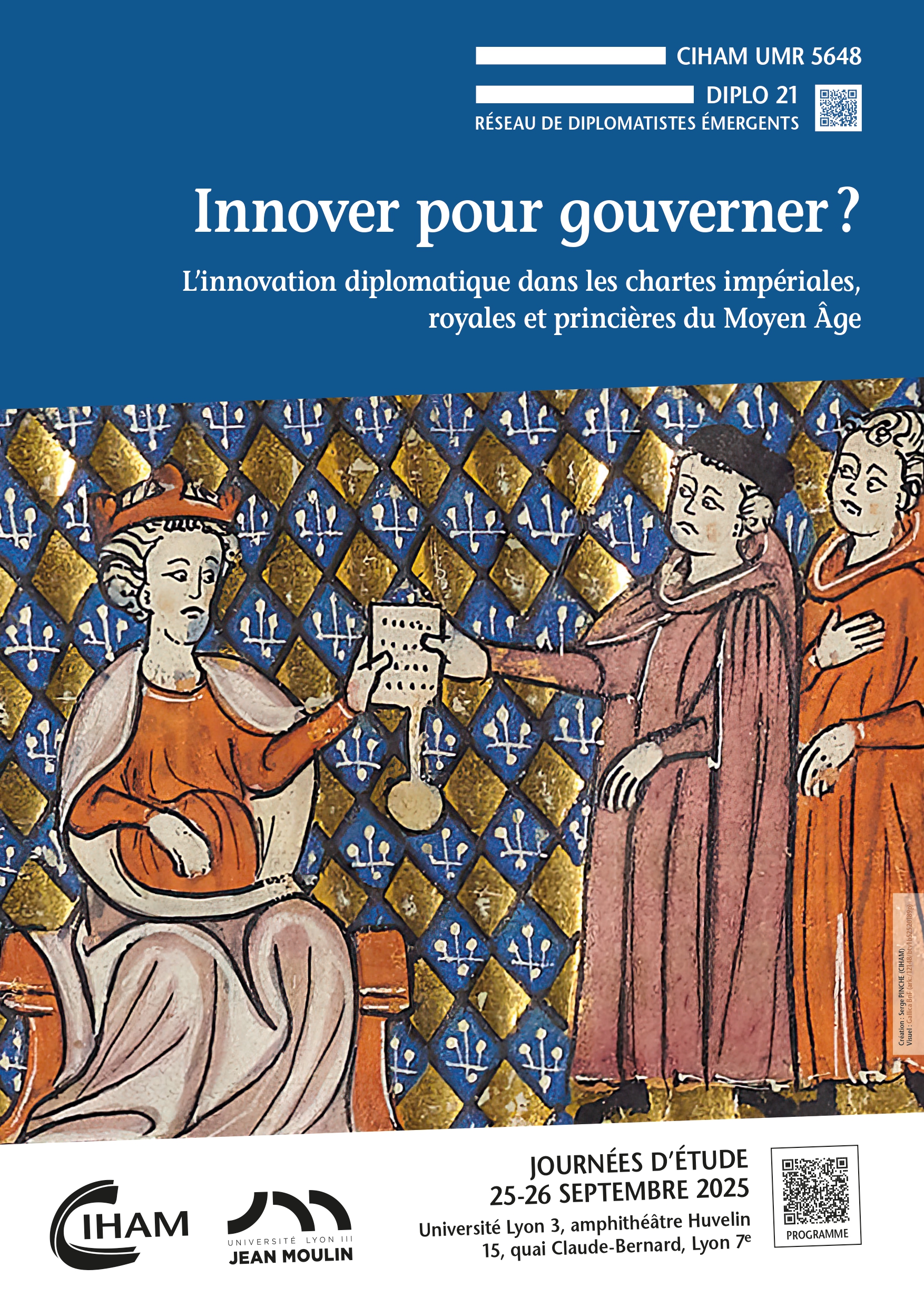
Ces deuxièmes journées d’étude du réseau Diplo 21 sont organisées par le CIHAM, sous le patronage de la Commission internationale de diplomatique (CID).
L’innovation dans la diplomatique des empereurs, des rois et des princes du Moyen Âge concerne à la fois l’évolution des caractères externes, du formulaire et du mode de validation des chartes, celle des titulatures des souverains et des princes, le déclin ou l’abandon, temporaires ou plus durables, de formes traditionnelles et l’apparition de nouvelles formes d’actes. Les confirmations des chartes de leurs prédécesseurs, sous la forme parfois de vidimus/inspeximus, les copies de ces chartes au sein de cartulaires de chancellerie firent aussi l’objet d’innovations. Ces dernières firent rarement table rase du passé, si bien qu’il s’agira aussi de considérer la dialectique entre innovation et tradition au sein des chancelleries.
Les changements dans la manière d’enregistrer les chartes au sein des chancelleries ou encore leurs archivages dans les trésors des chartes ne sera pas pris en considération dans le cadre de cette rencontre lyonnaise.
L’enjeu de ces journées d’étude est d’interroger les conséquences de ces innovations diplomatiques sur la politique des souverains et des princes, à savoir sur leur gouvernement, leur administration et leur capacité d’affirmation ou de puissance, et d’évaluer non seulement leur efficacité, mais aussi leur durabilité. De même, il s’agit d’envisager la manière dont ces innovations reflètent l’imaginaire et les ambitions du pouvoir, la Herrschaftsauffassung des historiens allemands.
L’impact des évolutions politiques sur la diplomatique des empereurs, des rois et des princes doit aussi être interrogé. L’avènement d’un nouveau souverain ou la nomination d’un nouveau chancelier peuvent avoir directement entraîné des innovations diplomatiques. De même, l’annexion ou l’acquisition d’un nouveau territoire ou bien les crises de pouvoir peuvent faire évoluer la diplomatique, au sens large du terme, des souverains et des princes. Celles-ci peuvent aussi avoir évolué avec les changements de pratiques gouvernementales et administratives (accroissement et circulation du personnel au sein des cours, hôtels et chancelleries ; développement des bailliages, prévôtés ou équivalents ; « genèse de l’État moderne » …).
Enfin, il faudra se poser la question de la diffusion de certaines innovations diplomatiques d’un détenteur du pouvoir à un autre, sans négliger les innovations au sein de la diplomatique des souverains et des princes qui furent influencées par un acteur ecclésiastique (l’influence de la diplomatique pontificale sur celle des souverains et des princes, par exemple). La diffusion de ces innovations peut alors se faire de manière descendante (d’un suzerain à son vassal) ou inversement, mais aussi entre détenteurs d’un niveau de pouvoir similaire (d’un comte à un autre comte). Cela revient à poser la question de la capacité d’influence diplomatique et des voies ou modalités de celle-ci (imprégnation, transferts, circulations…). Au contraire, des empereurs, des rois et des princes purent résister face à certaines innovations diplomatiques et les refuser, temporairement ou de manière pérenne. Là encore, ces refus d’intégrer des innovations diplomatiques peuvent avoir une portée politique.
Programme :
25 septembre 2025
13h Accueil
Mot d’accueil du CIHAM, par Guido Castelnuovo (Avignon Université)
Présentation de Diplo 21, par Robin Moens (KU Leuven)
13h15-13h45 : Introduction, par Thomas Lacomme (Université Jean-Moulin Lyon 3) et Hannes Engl (Regesta Imperii, Tübingen)
13h45-14h30 Jean-François Moufflet (Archives nationales), « Évolutions de la forme des actes de chancellerie et de leur discours sous le règne de Louis IX : quelques observations »
14h30-15h15 Timothy Salemme (Université du Luxembourg), « Gouverner par l’écrit : innovations diplomatiques dans le comté de Luxembourg (fin XIIIe-XIVe siècles) ».
15h15-15h30 Pause
Session n° 2 : « Imiter, se démarquer », présidée par Marie-Céline Isaïa (Université Lyon 3)
15h30-16h15 Claire de Cazanove Hannecart (Université Paris 1 Panthéon-Sorbonne), « Les actes des fils de Louis le Germanique »
16h15-17h Christelle Balouzat-Loubet (Université de Lille), « Forme des actes et affirmation du pouvoir en Artois (1250-1329) ».
18h-19h30 Table ronde « Quelles méthodes et approches pour la diplomatique royale et princière en 2025 ? » avec Jean-François Moufflet (Archives nationales), Nicolas Perreaux (CNRS) et Laurent Ripart (Université Savoie Mont-Blanc), animée par Sebastian Gensicke (RWTH Aachen University) et Émilie Mineo (Université du Luxembourg)
26 septembre 2025
Session n° 3 : « Les marqueurs de l’innovation », présidée par Nicolas Carrier (Université Lyon 3)
9h-9h45 : Bruno Marques dos Santos (Universidade de Lisboa – École pratique des hautes études), « La place des enfants royaux dans les actes des rois de León et Castille (IXe-XIIe siècle) »
9h45-10h30 : Nicolas Ruffini-Ronzani (Archives de l’État – Université de Namur), « L’utilisation de la forme du chirographe dans la diplomatique princière en Flandre et en Basse-Lotharingie (XIIe-début XIIIe siècle) »
10h30-10h45 Pause
10h45-11h30 David Bardey (Université d’Orléans), « Quand le duc est devenu prince. De l’introduction des termes princeps et prince dans les chartes bourguignonnes (XIIIe siècle) »
11h30-12h15 Emmanuel Johans (Le Mans Université), « Approche comparée de la titulature des comtes d’Armagnac dans les actes princiers et royaux de 1360 à 1418, reflet d’un partage équilibré du pouvoir ? »
12h15-14h Déjeuner
Session n° 4 : « Des moments politiques propices à l’innovation », présidée par Didier Méhu (Université Lyon 2)
15h30-16h15 Maïté Billoré (Université Jean-Moulin Lyon 3), « Gouverner in absentia : l’utilisation des sceaux de substitution et de régence dans le royaume de France (XIIIe-XVe siècle) »
16h15-16h30 Pause
16h30-17h Conclusions, Laurent Morelle (École pratique des hautes études)
Informations pratiques :
Université Jean-Moulin Lyon 3, CIHAM 25 et 26 septembre 2025 Amphithéâtre Huvelin, Palais de l’Université, rez-de-chaussée ; 15 Quai Claude Bernard, 69007 Lyon
Ces deuxièmes journées d’étude du réseau Diplo 21 sont organisées par le CIHAM, sous le patronage de la Commission internationale de diplomatique (CID).
Publié dansColloque|Commentaires fermés sur Colloque – Innover pour gouverner ? L’innovation diplomatique dans les chartes impériales, royales et princières du Moyen Âge
Il commercio, il mercato del credito, le retribuzioni dei lavoratori risentono fortemente delle elaborazioni culturali prodotte nelle città medievali. Tra il XIII e il XV secolo, l’economia diventa un tema sempre più discusso dai teologi e raggiunge un ampio pubblico con l’attività dei frati mendicanti. Il libro analizza l’influenza che la predicazione esercita sulla società attraverso i sermoni di Remigio de’ Girolami, di Taddeo Dini e delle principali figure dell’Osservanza francescana, attingendo ai codici di lavoro e alle trascrizioni da parte del pubblico. Emerge una relazione tra omiletica e comunità cittadina che entra in contatto con la normativa e il diritto. L’evoluzione si coglie talvolta negli scostamenti dall’esegesi tradizionale, altrove si misura nei tratti di più decisa originalità, come nella predicazione di Bernardino da Siena. I casi considerati mostrano che il modo di pensare l’economia tra Duecento e Quattrocento, in un periodo di forte innovazione, è caratterizzato da nuove argomentazioni, lessici e metafore destinati a lasciare il segno nella tradizione occidentale.
È assegnista di ricerca in Digital Humanities all’Università di Genova. È stato assegnista di ricerca in Storia medievale all’Università di Siena e ha conseguito il dottorato all’Università di Firenze, all’Università di Siena e all’École des hautes études en sciences sociales (EHESS) di Parigi. I suoi principali ambiti di studio riguardano i linguaggi economici e la storia economica e religiosa nel medioevo e nella prima età moderna.
Table des matières :
Prefazione di Franco Franceschi Abbreviazioni Introduzione 1. Parlare la lingua dei mercanti Remigio de’ Girolami e le presenze animali nel mercato/Il salariato verso una identità discorsiva/L’interazione sociale secondo Taddeo Dini 2. La formazione dei sermoni di Bernardino da Siena Il laboratorio dell’attività omiletica/L’Apocalisse economica/La ferinità degli attori economici 3. Il commercio in una dimensione civica La predicazione come evento/«Commune damnum»: esercitare il commercio senza ledere la comunità/L’emergenza dei rigattieri nel discorso economico 4. Riscrivere il modello di Bernardino da Siena La circolazione degli schemi/La definizione di un modus praedicandi: Giovanni da Capistrano e Matteo d’Agrigento/La predicazione sul commercio di Giacomo della Marca Elenco delle fonti Indice dei nomi
Informations pratiques :
Luca Ughetti, Predicare l’economia. Il linguaggio del commercio nell’Italia del XIII-XV secolo, Rome, Carocci, 2025 ; 1 vol., 236 p. (Studi Storici Carocci). ISBN : 978-8-82902-995-2. Prix : € 25,00.
Publié dansPublications|Commentaires fermés sur Publication – Luca Ughetti, « Predicare l’economia. Il linguaggio del commercio nell’Italia del XIII-XV secolo »
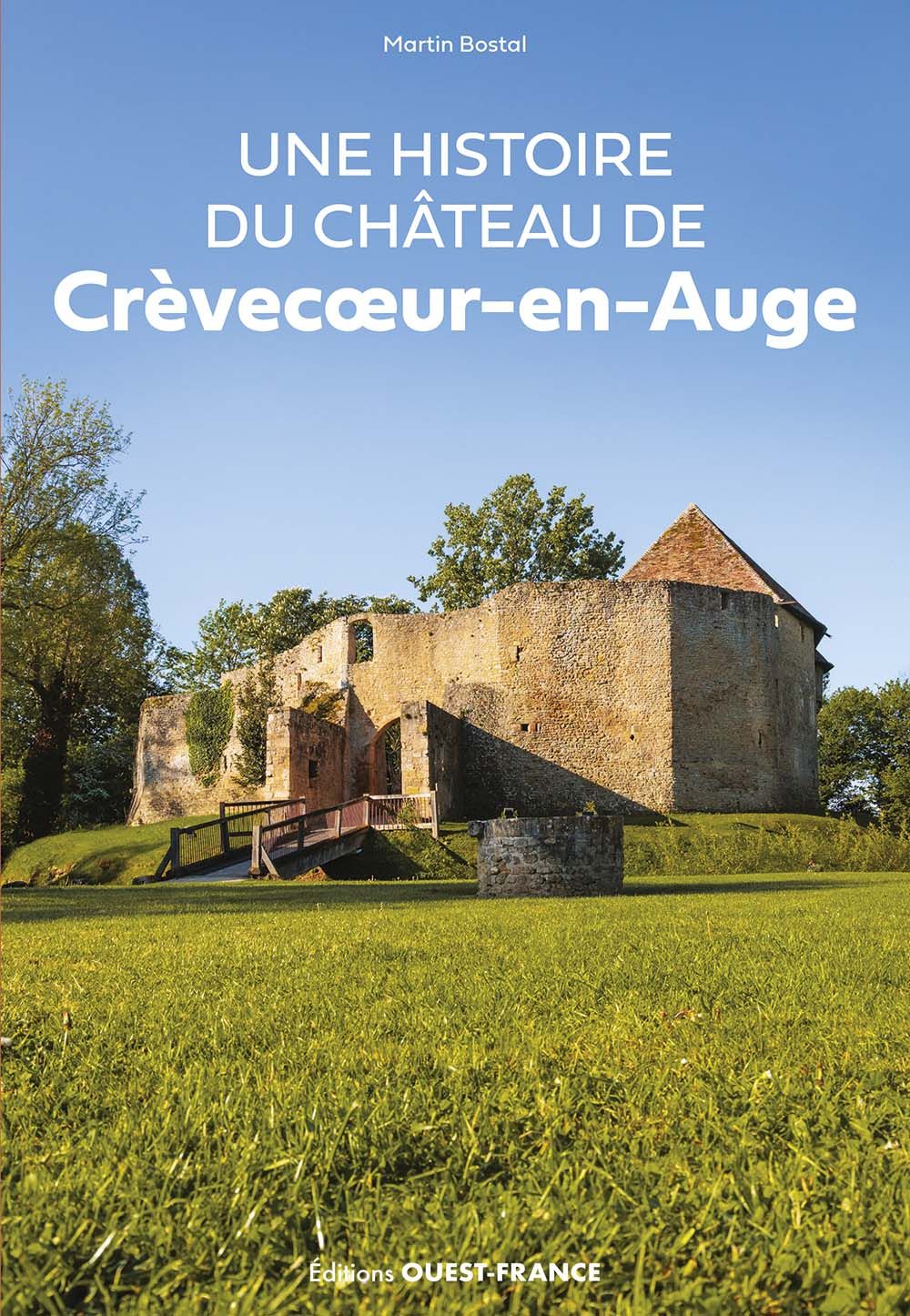
Héritier d’une riche histoire, le château de Crèvecœur-en-Auge trouve ses origines dans le monde anglo-normand du XIIe siècle. Au fil du temps, et des successions de ses seigneurs et de ses propriétaires, il fut le témoin de la guerre de Cent Ans et a été le théâtre en 1864 d’évènements pour le moins étonnants. Chaque époque a ainsi laissé ses marques sur ce monument unique du patrimoine du pays d’Auge et de la Normandie médiévale.
Informations pratiques :
Martin Bostal, Une histoire du Château de Crèvecœur-en-Auge, Rennes, Éditions Ouest-France, 2025 ; 1 vol., 32 p. ISBN : 978-2-73739-249-8. Prix € 7,50.
This introduction to Meister Eckhart is the result of decades of research on Meister Eckhart, starting with an interdisciplinary doctor dissertation about contemplative and active Life in Eckhart’s German sermons (1968, revised 2018). The author translated a compendium of Eckhart’s sermons in modern German (1979, last edition 2022) and he published a lot of contributions on Eckhart’s spiritual teaching with special interest on ethical implications: virtues, social behavior and Human dignity.
This book will inform about Eckhart’s practical metaphysics: (1) in his general teaching on creation, God’s timeless working, the relation between God and Human by processes of knowledge, grace, justice and liberty; (2) in his thinking on unity in wording, intellectual knowledge and using images which correct themselves; (3) in his combining of revelation in his biblical commentaries with abstraction, wisdom and life-learning, (4) in his teaching of becoming the “son” of God by the birth of God in the human soul, (5) in the important interconfessional and interreligious implications of the mystical immediacy in his teaching, (6) in defending Eckhart against some dogmatic objections concerning his vernacular teaching.
Dietmar Mieth, Meister Eckhart. An Introduction, Louvain, Peeters, 2025 ; 1 vol., XVI–277 p. (Eckhart. Texts and Studies, 17). ISBN : 978-9-04295-066-5. Prix : € 85,00.
Les villes médiévales françaises ont connu un développement remarquable à la fin du Moyen Âge. L’autonomie plus ou moins prononcée dont elles jouissaient s’est accompagnée d’une gestion rigoureuse des moyens financiers mis à leur disposition. Cet ouvrage présente les modalités de la gestion comptable de plusieurs villes de la vallée de la Loire (tenue des registres, compétences et activités du personnel municipal), dans une perspective comparatiste en confrontant la situation ligérienne à celle d’autres villes du royaume de France. Il accorde une importance particulière et inédite aux problèmes monétaires auxquels les cités furent confrontées notamment dans la première moitié du XVe siècle. Enfin, il propose une réflexion poussée sur les apports et les limites de l’étude des comptabilités urbaines pour des disciplines comme l’histoire économique, l’histoire de l’art ou l’archéologie.
Publié avec le soutien de l’université d’Orléans, des laboratoires IRAMAT et POLEN de l’université d’Orléans
Formes et enjeux des comptabilités urbaines médiévales. L’exemple ligérien dans l’espace européen médiéval, éd. Didier Boisseuil, Juliette Dumasy, Rennes, Presses universitaires de Rennes, 2025 ; 1 vol., 320 p. (Histoire). ISBN : 979-1-04130-010-5. Prix : € 28,00.
The kingdom of Alania was the most powerful polity in the medieval North Caucasus. It contained strategic mountain passes across the Caucasus mountains, as well as urban centres larger than any in contemporary Rus’. Its kings retained power from the mid-ninth to the late eleventh centuries, intermarried with the ruling families of Georgia and Byzantium, and led armies that terrorised the South Caucasus. In this, the first book to explore the subject in the English language, Latham-Sprinkle sheds light on how the kings of Alania came to embody ‘the power of the foreign’ – the status which accrued to individuals who could access the material and spiritual products of distant lands – thus rendering the development of a state structure unnecessary. Challenging existing narratives that centre elites and the state, Latham-Sprinkle provides an important contribution to the historiography of medieval state formation, Christianisation, and transregional connection. This title is part of the Flip it Open programme and may also be available open access. Check our website Cambridge Core for details.
John Latham-Sprinkle is a Postdoctoral Research Fellow at Vrije Universiteit Brussel. He is also co-ordinator of the Medieval Caucasus Network.
Table des matières :
List of illustrations List of maps Acknowledgements List of abbreviations Note on the text
Introduction: framing Alania 1. Forming the kingdom of Alania, c.800–880 2. Appropriating Christianity in Alania, c.800–932 3. The ‘Power of the Foreign’ and the political economy of the central north Caucasus in the tenth century 4. The Christian kingdom of Alania, c.960–1090 5. The Byzantine and Georgian courts and the kingdom of Alania, c.970–1090
Informations pratiques :
John Latham-Sprinkle, The North Caucasian Kingdom of Alania, 850–1240, Cambridge, Cambridge University Press, 2025 ; 1 vol. ISBN : 978-1-00937-348-7. Prix : GBP 95,00.
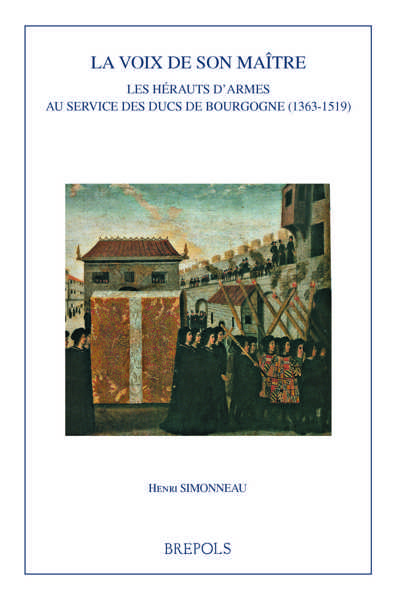
Le héraut d’armes est un personnage incontournable du Moyen Âge occidental. Spécialiste des tournois, présent au côté du prince lors des grandes cérémonies, constamment sur les routes pour porter des lettres aux différents souverains, il est aussi l’un des meilleurs connaisseurs de la noblesse occidentale.
L’émergence de ces officiers dans la société de cour est fulgurante. Apparus à la fin du XIIe siècle au sein du groupe des jongleurs et des ménestrels, ils se mettent dès la fin du XIVe siècle au service des grands seigneurs, des villes et des princes pour devenir au dernier siècle du Moyen Âge une véritable institution, en France, en Angleterre ou en Bourgogne.
Les Pays-Bas bourguignons offrent sans aucun doute un des meilleurs exemples de l’épanouissement de l’office d’armes au sein d’une cour médiévale. Véritables porte-voix du duc, chargés de prononcer les déclarations de guerre et de publier la paix, les hérauts sont omniprésents dans la conduite de la guerre ou dans la diplomatie de Philippe le Bon et de Charles le Téméraire. Baptisés du nom de provinces bourguignonnes, vêtus de leur cotte d’armes, ils représentent l’État bourguignon autant que le duc lui même, jusqu’à en devenir son avatar.
Programme :
Introduction 1. L’émergence d’un personnage dans l’historiographie 2. Les hérauts d’armes du XIIe au XIVe siècle : idiots, sales et cupides 3. Les sources
Première partie : l’émergence d’un office de cour
1. Les officiers d’armes au sein de la cour de Bourgogne – L’émergence des hérauts sous Philippe le Hardi et Jean sans Peur – L’âge d’or des hérauts bourguignons au milieu du XVe siècle – Les difficultés de l’office sous les souverains Habsbourg
2. L’organisation de l’office
– Poursuivants, hérauts et roi d’armes – Les officiers d’armes de l’hôtel – Les officiers d’armes des grands seigneurs bourguignons – Les hérauts des villes
3. L’ordonnance de 1497 ou l’échec de l’institutionnalisation de l’office
– Le modèle anglais – Les tentatives de réforme de Thomas Isaac
Deuxième partie : les fonctions des officiers d’armes
1. La messagerie
– Les hérauts au service de l’information et communication princière – Des messagers exceptionnels ?
2. La diplomatie
– Un maillon indispensable du processus diplomatique – L’ordre de la Toison d’Or – La question de l’immunité
3. La guerre
– « Les seulz herauldtz doibvent pourter deffiance » – Le héraut, une estafette – Les dangers de l’office
4. Les cérémonies princières
– Les entrées ducales – Les cérémonies princières – Hérauts et tournois
Troisième partie : Le héraut, miroir du prince et de la noblesse ?
1. Un avatar du prince
– Un officier au plus près du prince – La voix de son maître : la parole du héraut
2. Une cartographie imaginaire des États bourguignons
– Les noms d’office – Les visitations
3. Quel rôle joue l’office d’armes dans la société médiévale ?
– Le conservateur des us et coutumes de la noblesse – Une mémoire vivante – L’honneur, valeur centrale de l’office
Quatrième partie : Des vies de hérauts
1. L’ascension sociale des officiers d’armes
– Le statut social des hérauts d’armes – Les revenus liés à l’office – Quelques exemples de carrière emblématiques
2. Le cas particulier de Toison d’Or
– La place de Toison d’Or à la cour de Bourgogne – Lefebvre de Saint-Rémy, le chroniqueur – Thomas Isaac, le réformateur
3. La culture des hérauts
– Les compendia des hérauts bourguignons – Chroniques, récits de voyage et généalogies – L’héraldique et les hérauts
4. La perception du héraut dans la société médiévale
– Un office mineur – Des ambitions élevées – Le héraut dans la littérature : un parangon de chevalerie
Informations pratiques :
Henri Simonneau, La Voix de son maître. Les hérauts d’armes au service des ducs de Bourgogne (1363-1519), Turnhout, Brepols, 2025 ; 1 vol.? 426 p. (Burgundica, 37). ISBN : 978-2-503-57569-8. Prix : € 109,00.
Publié dansPublications|Commentaires fermés sur Publication – Henri Simonneau, « La Voix de son maître. Les hérauts d’armes au service des ducs de Bourgogne (1363-1519) »
Avec le soutien du FNRS, du CRHiDI (UCLouvain – Saint-Louis, Bruxelles), d'INCAL (UCLouvain), de PraME (UNamur), de sociAMM (ULB) et de Transitions (ULiège)











 L'Agenda des Médiévistes
Vous devez être connecté pour poster un commentaire.