Offre d’emploi – Research Collaborator (Kunsthistorisches Institut in Florenz – Max-Planck-Institut)

The Kunsthistorisches Institut in Florenz – Max-Planck-Institut (KHI) invites applications for the post of research collaborator at the pre-doctoral level (Wissenschaftliche Assistentin / Wissenschaftlicher Assistent) for three years in the department of Prof. Dr. Gerhard Wolf.

The position is intended for excellent young scholars interested in pursuing research for their dissertation at the institute as well as in collaborating in its ongoing or future projects. The KHI is a Max-Planck-Institute focused on investigating the history and theory of Italian and Mediterranean art, architecture and object culture in their global connections. Doctoral students from all disciplines engaging with these fields from Antiquity to the present are encouraged to apply. What is important is the quality and originality of the project proposal.

Part of the collaborator’s time will be committed to directed research in the projects and activities of Professor Wolf’s department (for a list, see: http://www.khi.fi.it/en/forschung/index.html#wolf). We seek an independent, creative-thinking scholar with an interest in collaborative research.

Requirements: Applicants must be enrolled in a Ph.D. program and demonstrate proficiency in two foreign languages. The research collaborator is expected to reside in Florence and fully participate in the activities and intellectual life of the KHI. The position is awarded without regard to nationality.

The application (in English, Italian, German) must include:

  • a cover letter, which includes goals and motives for applying
  • the names and contact details of two referees;
  • a dissertation proposal (max 100 words);
  • a curriculum vitae;
  • a summary of the master’s thesis (max 500 words)
  • two letters of referees

The Max Planck Society is an equal opportunity employer and encourages applications from disabled individuals.

Applicants are required to merge all the documents in a single PDF (max. 2 MB) and submit it via e-mail to dirwolf@khi.fi.it by 8 December 2014.

Source de l’information : Medieval Art Research

Publié dans Offre d'emploi | Laisser un commentaire

Appel à contribution – Buying and Selling. 7th St Andrews Annual Book Conference 2015

In 1472 the printers Sweynheym and Pannartz wrote a petition to Pope Sixtus VI: left with over 10,000 unsold printed books, they were now forced to ask for financial help or face utter failure. The advent of print changed the dynamics of supply and demand altogether. Some printers boomed while others quickly went bust. Pioneering merchants negotiated the book trade’s position within traditional labour market structures. Early printing entrepreneurial successes depended on the ability of printers and publishers to mould an author’s creation into a sellable article consumed by a wide community of readers.

This conference invites contributions on any facet of buying and selling in the early modern book trade: failures and successes of print ventures; strategies and ideas to increase the sales; rebinding, reprinting, reediting; cooperation and competition amongst booksellers; the day-to-day life of printing firms and bookshops; fairs and permanent markets; catalogues advertising stock and individual libraries being auctioned; taste and trends in the purchase of books; influence of censorship and regulations.

Co-organised by Shanti Graheli and Jan Alessandrini, the conference will take place 18-20 June 2015.

The papers given at this conference will form the basis of a volume in the Library of the Written Word.

The call for papers is now open and will also be available online on the USTC website: http://www.ustc.ac.uk. Those interested in giving a paper should contact Dr Jan Alessandrini (jla6@st-andrews.ac.uk) at St Andrews, offering a brief description of their likely contribution.

The call for papers will close on 30 November 2014.

Informations pratiques :
Veranstalter: Universal Short Title Project; Co-organised by Shanti Graheli and Dr Jan Alessandrini
Datum, Ort: 18.06.2015–20.06.2015, St Andrews, Scotland
Deadline: 30.11.2014

Kontakt:
Dr. Jan Alessandrini
School of History, University of St Andrews, GB – KY16 9AL
jla6@st-andrews.ac.uk

Source de l’information : H-Soz-u-Kult

Publié dans Appel à contributions | Laisser un commentaire

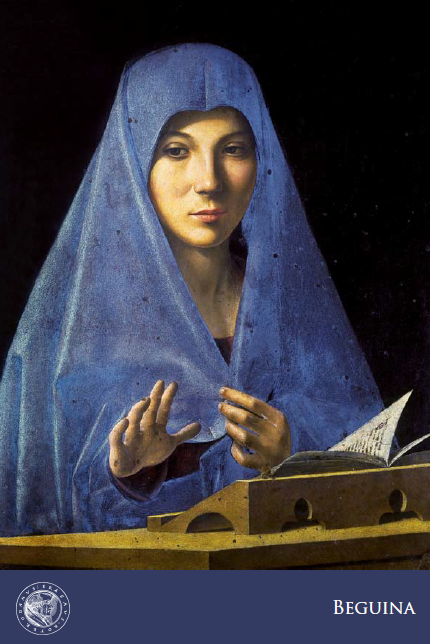
Conférence – Alessia Vallarsa, « Le mouvement béguinal : une histoire de liberté / De begijnenbeweging: een geschiedenis van vrijheid »

Donderdag 20 november 2014 om 20u
Le jeudi 20 novembre 2014 à 20h

Le mouvement béguinal : une histoire de liberté
Le mouvement béguinal, apparu à la jonction du douxième et du treizième siècle, est un récit de femmes. Les sources parlent d’une novitas : ces femmes ne voulaient ni se marier ni entrer dans un des cloîtres existants. Elles choisirent un nouvel état de vie. Dans la vie commune, les béguines, fidèles à une règle édictée par elles-mêmes, mènent une vie spirituelle sans voeux éternels et restent, par leur travail, présentes au monde. Bien qu’elles n’aient pas accès à l’université, les plus douées d’entre elles cherchent une nouvelle langue pour coucher sur papier leurs expériences spirituelles : la langue du peuple.

De begijnenbeweging: een geschiedenis van vrijheid
De begijnenbeweging, ontstaan eind twaalfde / begin dertiende eeuw, is een verhaal van vrouwen. De bronnen spreken van een novitas: deze vrouwen wilden geen man, noch traden ze in één van de bestaande kloosters in. Ze kozen voor een nieuwe levensvorm. In het gemeenschapsleven leidden de begijnen, trouw aan een zelfgemaakte regel, een spiritueel leven zonder eeuwige geloften en waren ze als werkenden aanwezig in de wereld. Hoewel ze geen toegang tot de universiteit hadden, zochten de meest begaafde onder hen een nieuwe taal om hun spirituele ervaringen op papier te zetten: de volkstaal.

Beguines - Maison d'érasmeAlessia Vallarsa
(Ruusbroecgenootschap – Universiteit Antwerpen)
montrera que les béguines furent, à leur insu, des actrices de premier plan dans le processus qui transforma la langue du commun en langue littéraire. Conférence en néerlandais.

zal aanduiden hoe de begijnen, zonder er bewust van te zijn, de protagonisten werden van het proces waarin de volkstaal tot literaire taal werd omgevormd.

La conférence est organisée à l’occasion de l’installation au musée du Béguinage du film « All om all » de Silvana Panciera sur l’histoire du mouvement béguinal, grâce au soutien de la Commission communautaire flamande.

De lezing wordt georganiseerd ter gelegenheid van de installatie in het Begijnhofmuseum van Silvana Panciera’s film over de geschiedenis van de begijnhofbeweging, met de steun van de Vlaamse Gemeenschapscommissie.

Informations pratiques :
Donderdag 20 november 2014 om 20u
Le jeudi 20 novembre 2014 à 20h

Musée de la Maison d’Érasme – Erasmushuis
Rue du Chapitre 31 Kapittelstraat, Bruxelles 1070 Brussel
Tel. (+32) 02.521.13.83 – info@erasmushouse.museum
http://www.erasmushouse.museum

Toegang gratis mits reservatie / Entrée libre sur réservation
02.521.13.83 – info@erasmushouse.museum

Op initiatief van burgemeester Éric Tomas en het schepencollege van Anderlecht, in samenwerking met het Masereelfonds en met de steun van de Vlaamse Gemeenschapscommissie. Une initiative d’Éric Tomas, Bourgmestre, et du Collège échevinal d’Anderlecht, en collaboration avec le Masereelfonds et avec le soutien de la Commission communautaire flamande.

Publié dans Colloque | Laisser un commentaire

Appel à contribution – Object Emotions, Revisited: An Interdisciplinary Conference

Yale University, New Haven, CT, February 20-21, 2015
Deadline: 15 November 2015

Keynote speaker: Spyros Papapetros (Princeton U)
Organizing Committee: Padma Maitland (UC Berkeley); Christopher P. Miller (UC Berkeley); Marta Figlerowicz (Yale U); Ksenia Sidorenko (Yale U); Emma Natalya Stein (Yale U)

“Object Emotions” continues a critical dialogue about new directions in humanities research and theory that began at UC Berkeley in 2013. This conference is inspired by the recent heightened attention to objects and emotions as new points of entry into history, literature, art, architecture, area studies, and the social sciences. We aim to foster interdisciplinary reflections about the critical uses of thing theory, affect theory, the histories of emotions, and new materialism. We also want to study how these discourses might benefit from being set in conversation with each other.

Last year, these questions inspired papers on, among many other topics, forms of animism in fourteenth-century England, the role of tiles in Taiwanese architecture, representations of churches in Willa Cather, oral accounts of labor in factories in India, and the songs of Kylie Minogue. This coming conference seeks to be similarly diverse and experimental in the kinds of approaches it brings together. By exploring emotions and objects in conjunction with each other we hope to bring out the shared stakes of these scopes of critical inquiry, as well as the divergences among the ways feelings and things are studied in particular disciplines.

Questions we want to ask include, but are not limited to, the following: How is the task of describing emotions within the context of a poem different from describing them within the context of a painting or a temple? How do the current fields of affect theory, thing theory, and the history of emotions participate in the much longer history of debates about the subjective and the objective? How do emotions and the bodies experiencing them relate to each other? Are there cultural differences in the way objects and emotions are defined and assessed? What does it mean to attribute feelings to an inanimate object, or even to describe this object as the cause or inspiration of a feeling? Do feelings have an animating force? How does the critical framing of scale—the microscopic, the individual, the human, the social, the global—change the way we pursue questions about objects and emotions?

The conference will take place at Yale on February 20th and 21st, 2015. Participants will include both graduate students and faculty members. We welcome papers that address any of the questions described above, or related ones, with reference to the bodies of theory shared across disciplines or to individual works of literature, art, or architecture. Please submit 250-word abstracts to Padma Maitland at padmamaitland@berkeley.edu by November 15, 2014.

Source de l’information : Medieval Art Research

Publié dans Appel à contributions | Laisser un commentaire

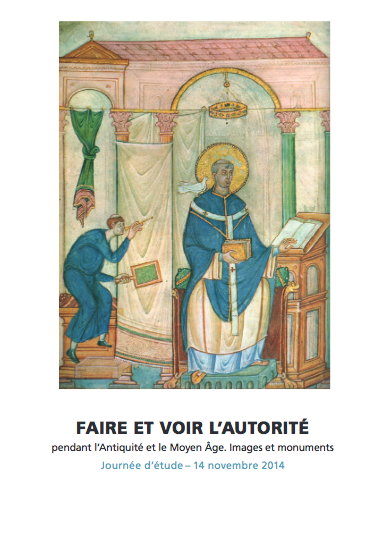
Journée d’étude – Faire et voir l’autorité pendant l’Antiquité et le Moyen Âge. Images et monuments

Comment rendre visible l’idée d’autorité dans l’art antique et médiéval ? Notion centrale des cultures politique et religieuse de ces périodes, l’autorité s’exprime également dans des processus spécifiquement visuels. Cette journée d’étude entend mettre en lumière comment les langages plastiques et symboliques des images et des monuments parviennent à traduire cette notion subtile, qui renvoie aussi bien à la nature et à la légitimité d’un pouvoir temporel ou spirituel qu’aux modalités de son action dans le monde. Le mode de représentation d’un personnage, la présence et l’aspect d’un bâtiment, certains signes spécifiques, des mises en scène iconographiques ou architecturales sont autant de moyens permettant d’ordonner l’espace du visible selon des catégories hiérarchiques issues de conceptions du monde articulées par une pensée politique, scientifique, théologique ou même eschatologique.

Pour cerner les enjeux de cette question, relevant aussi bien de la forme, du style, que du symbolisme iconographique, les communications réunies ici interrogeront une grande diversité de phénomènes artistiques, concernant l’architecture, de la figuration monumentale, peinte et sculptée, les sceaux des images accompagnant les textes savants et sacrés. S’en dégageront plusieurs axes thématiques s’intéressant à l’expression visuelle de l’autorité des maîtres et des savants, à la représentation d’autorités temporelles dépositaires d’une mission céleste, d’autorités épiscopales puis aristocratiques et urbaines dont les signes se déploient dans les villes.

Cette journée d’études est organisée dans le cadre du programme de recherche « Penser en images : le figuré et ses discours, de l’Antiquité au Moyen Âge », à l’HiCSA – EA 4100.

Faire et voir l'autoritéProgramme :

9h00 : Accueil et introduction – Anne-Orange Poilpré

Marquer la ville : présences aristocratiques et royales
Modérateur : Carles Mancho (Université de Barcelone)

9h30 : Marius Dumas (Université Paris 1 Panthéon-Sorbonne) – Les salles polyabsidées du Proche-Orient protobyzantin.
10h00 : Philippe Plagnieux (Université de Franche-Comté) – Saint-Pierre de Montmartre comme manifeste capétien
10h30 : Cécile Bulté (Université Paris Sorbonne) – Le portrait sculpté du roi de France : mise en scène d’une figure de l’autorité dans la maison commune à la fin du Moyen Âge
11h00 : Pause

L’empreinte de l’autorité épiscopale dans la ville chrétienne : jeux d’échelle
Modérateur : Philippe Plagnieux

11h15 : Carles Mancho – Pascal Ier : autorité pontificale et création artistique à Rome au début du IXe siècle
11h45 : Ambre Villain (INHA) – Figurer l’autorité épiscopale sur les sceaux au Moyen Âge
12h15 : Pause déjeuner

L’autorité des maîtres : le discours savant en images, en textes et en parole
Modérateur : Isabelle Marchesin (INHA)

14h00 : Antoine Destemberg (Université d’Artois) – Magister et maiestas. La contribution des images à la construction de l’auctoritas magistrale à la fin du Moyen Âge
14h30 : Arthur Hénaff (EPHE – Bayerische Akademie der Wissenschaften) – A l’atelier ou en famille : figures d’autorité et discours sur les sciences et les savants dans quelques manuscrits de la fin du Moyen Âge
15h00 : Pause

Figures d’autorités temporelles : généalogies terrestres et célestes
Modérateur : Anne-Orange Poilpré

15h30 : Dominique Alibert (Institut Catholique de Paris) – Majesté eschatologique et autorité dynastique à l’époque carolingienne
16h : André Descorps-Declère (Université Paris Sorbonne) – Figures d’autorité dans l’aula palatina du palais d’Ingelheim selon Ermold le Noir

16h30 : Conclusions – Dominique Alibert

Informations pratiques :
Vendredi 14 novembre 2014
INHA, Galerie Colbert, Salle Vasari, 1er étage
Entrée 2 rue Vivienne ou 6 rue des Petits-Champs, 75002 Paris
Métro : Bourse ou Palais Royal
Contacts : anne-orange.poilpre@univ-paris1.fr

Responsable scientifique :
Anne-Orange Poilpré
HiCSA (Histoire culturelle et sociale de l’Art) – EA 4100 / Université Paris 1 Panthéon-Sorbonne

Source de l’information : Calenda

Publié dans Colloque | Laisser un commentaire

Appel à contribution – Sister Act: Female Monasticism and the Arts across Europe

The Courtauld Institute of Art, Somerset House, Strand, London WC2R 0RN, March 13 – 14, 2015
Deadline-CFP: 10 déc. 2014

Keynote speaker: Professor Dr. Carola Jäggi, University of Zürich (CH)

This conference seeks to compare, contrast and juxtapose scholarly approaches to the art of Medieval and Renaissance religious women that have emerged in recent decades. Seeking to initiate a broader conversation, which is long overdue, we invite papers that examine female monastic art in terms of patronage, space, devotional practice, spiritual identity or material history, spanning all of Europe and bridging the gap between the Middle Ages and the Renaissance.

Over the last three decades, within a broader scholarly effort to recover women’s history, art historians have explored the role of gender in the form, function and patronage of monastic art and architecture. It has become evident that the institutionalisation of late medieval and renaissance religious women developed under very different conditions from that of their male counterparts. Monastic foundations for women are repeatedly revealed as having been idiosyncratic, rarely adhering to a set of norms. There are many examples of stable and flourishing institutions performing functions of dynastic memoria for wealthy, aristocratic or royal families. Equally, female convents could be fluid and metamorphic during the course of their history: many instances demonstrate shifting ecclesiastical allegiances, mutable types of monastic life, movement between patrons, and even communities changing order. Such varied historical circumstances shaped the architecture for female religious communities, ranging from large complexes erected in the most fashionable styles of their time, to basic dwellings within converted secular buildings. Diversity can also be observed in the commissioning and use of works of art, from second-hand or adapted paintings to specially commissioned, lavish monuments and vast cycles of wall paintings. In short, artworks in the female religious context escape generalisation.

Idiosyncrasies are found not only when investigating the female monastic complex and its art, but also in the scholarship itself, which has primarily focused on chronologically and geographically specific material, often without engaging in dialogue with adjacent fields.

North of the Alps, scholars tend to gravitate towards the rich Cistercian and Dominican material, and to concentrate on the interplay between visual culture and devotional practice. The 2005 exhibition ‘Krone und Schleier: Kunst aus mittelalterlichen Frauenklöstern’, and the accompanying conference, bore witness to the vibrant wealth of artworks preserved in the German-speaking areas of Europe, and should foster scholarly exchange with other European regions.

On the Italian peninsula, the patchy archival record and damage to physical convent spaces has led to a proliferation of case studies. Renaissance and early modern scholarship has also focused on biographies of individual nuns or specific convent chronicles as means of investigating nunneries within the urban fabric of the Italian city-states from a socio-economic perspective.

Meanwhile, the abundance of surviving artistic material in Spain, Portugal, Scandinavia and Eastern Europe has recently started to receive attention. The art of women who lived in a semi-religious context, such as tertiaries, widows, anchoresses and beguines, has also been brought to the fore. This abundance of recent work now invites comparison and wider interpretation.

We welcome proposals for 20-minute papers exploring material across the stated time span, in all artistic media and throughout Europe, that deal with either case studies or broader methodological questions. Papers, which take a comparative approach, breaking the traditional regional or chronological boundaries, are particularly welcome. We intend to arrange the papers into panels that present contrasting approaches and/or differing time periods or places, to stimulate comparative discussion.
Topics may include, but are not limited to:

  • The topography of female religious settlements (e.g. within a city or a region)
  • Female monastic architectural space (social aspects, interaction, hierarchies etc.)
  • The commemorative function of art and architecture in female religious communities
  • The relationship between lay patrons and female religious communities
  • Artworks and liturgical/devotional practice
  • Religious women as artistic practitioners
  • Second-hand or relocated artworks
  • The importance of written sources (chronicles, regulations, etc.) for understanding the artistic choices of religious women
  • Comparisons between the art of female and male communities
  • Artworks for female tertiaries and other semi-monastic groups, comparisons with the art of their second order counterparts
  • Patronage networks between individual patrons and/or female religious communities
  • Representing collective and individual identity
  • The influence of female monastic art beyond the nunnery

Please send your abstracts of 250 – 300 words and a short biography of 100 words to Laura Llewellyn (laura.llewellyn@courtauld.ac.uk) and Michaela Zöschg (michaela.zoschg@courtauld.ac.uk) by 10 December 2014 at the latest.

Unfortunately, we cannot offer travel subsidies. Applicants from outside London are therefore encouraged to apply to other funding bodies for travel bursaries to attend the conference.

Organised by Laura Llewellyn and Michaela Zöschg (The Courtauld Institute of Art)

Source de l’information : blog de l’ApAhAu

Publié dans Appel à contributions | Laisser un commentaire

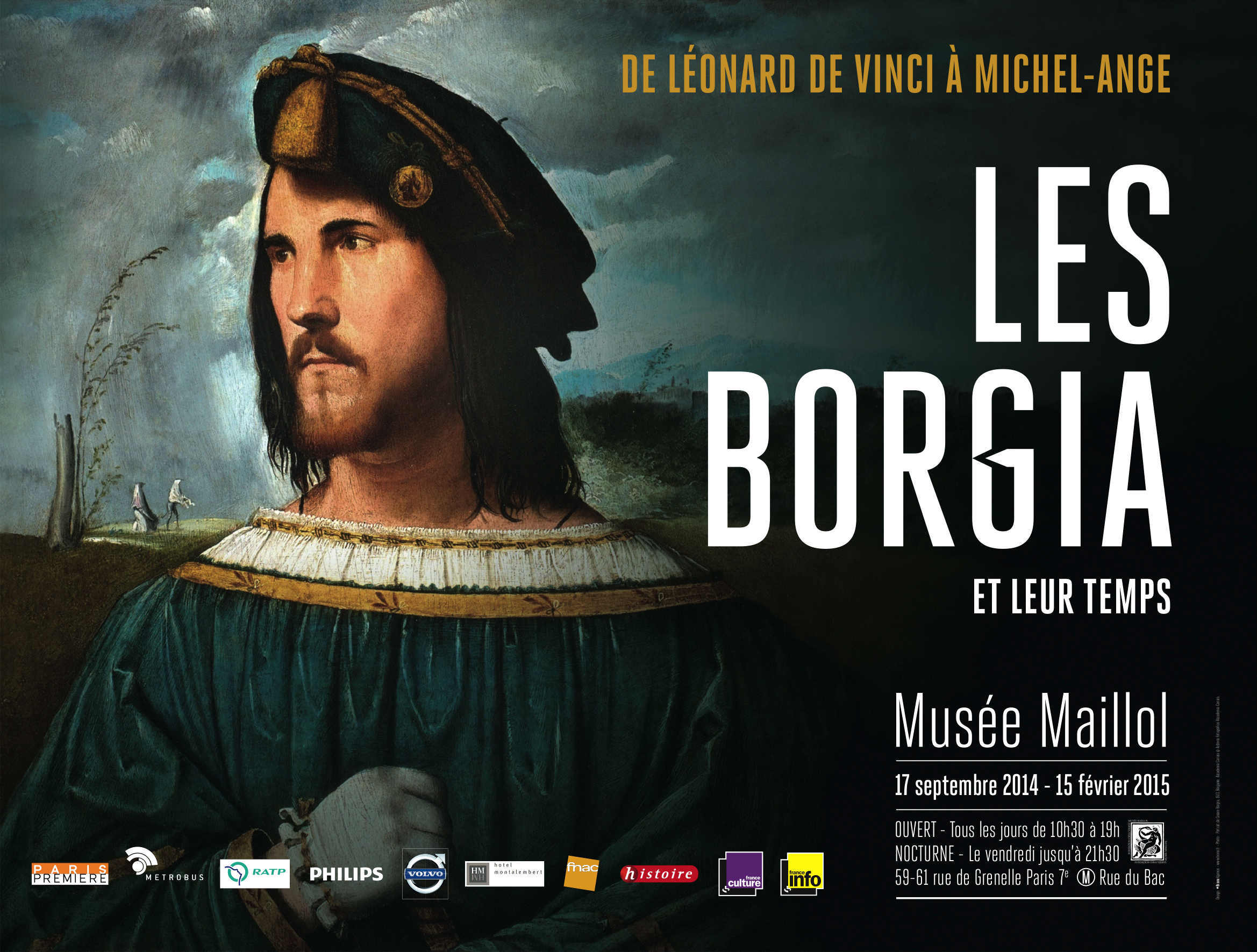
Exposition – Les Borgia et leur temps. De Léonard de Vinci à Michel-Ange

Dans l’imaginaire collectif, les Borgia représentent l’incarnation des vices les plus abominables. Ils exprimeraient ainsi tous les excès d’une société de la Renaissance interprétée dans un sens entièrement négatif.

L’exposition propose de pénétrer au cœur de cette famille qui a marqué la seconde moitié du XVe siècle en Italie et en Europe, afin de révéler leur véritable visage et de restituer leur environnement qui voyait le monde se transformer avec la découverte de l’Amérique, l’invention de l’imprimerie, la Réforme engagée par Luther et l’épanouissement d’une scène artistique sans précédent.

BORGIA

Informations pratiques :
L’exposition « Les Borgia et leur temps », aura lieu du 17 septembre 2014 au 15 février 2015.

Adresse : 59/61, rue de Grenelle
75007 Paris
Métro : Rue du Bac
Bus : 63, 68, 69, 83, 84, 94, 95
Vélib : bd Raspail

Tél. : 01 42 22 59 58
Fax : 01 42 22 46 44
E-mail : contact@museemaillol.com

Horaires d’ouverture de 10h30 à 19h00. Vente des billets jusqu’à 18h15
Nocturne le vendredi jusqu’à 21h30. Vente des billets jusqu’à 20h45

Le billet d’entrée coupe-file pour l’exposition “Les Borgia et leur temps” vous donne également accès à l’exposition “Kakabadzé » et à la collection permanente du Musée Maillol.

Source de l’information : Musée Maillol

Publié dans Exposition | Laisser un commentaire

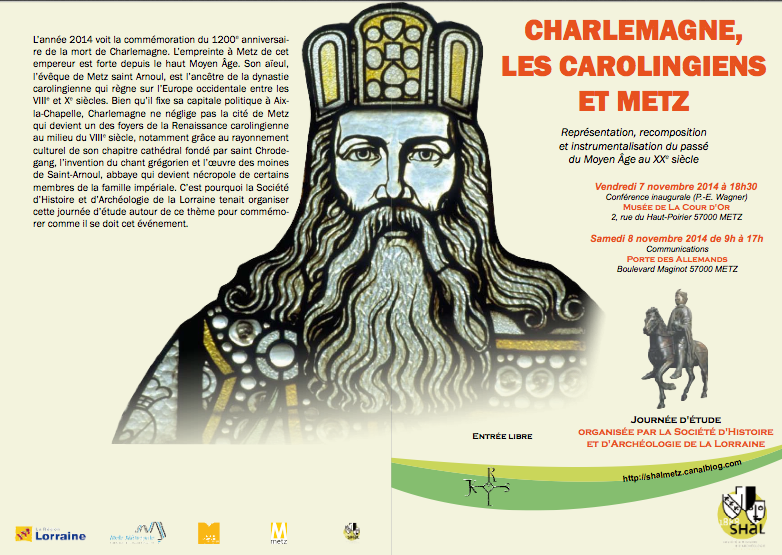
Colloque – Charlemagne, les Carolingiens et Metz

L’année 2014 voit la commémoration du 1200e anniversaire de la mort de Charlemagne. L’empreinte à Metz de cet empereur est forte depuis le haut Moyen Âge. Son aïeul, l’évêque de Metz saint Arnoul, est l’ancêtre de la dynastie carolingienne qui règne sur l’Europe occidentale entre les VIIIe et Xe siècles. Bien qu’il fixe sa capitale politique à Aix-la-Chapelle, Charlemagne ne néglige pas la cité de Metz qui devient un des foyers de la Renaissance carolingienne au milieu du VIIIe siècle, notamment grâce au rayonnement culturel de son chapitre cathédral fondé par saint Chrodegang, l’invention du chant grégorien et l’œuvre des moines de Saint-Arnoul, abbaye qui devient nécropole de certains membres de la famille impériale. C’est pourquoi la Société d’histoire et d’archéologie de la Lorraine tenait organiser cette journée d’étude autour de ce thème pour commémorer comme il se doit cet événement.

Charlemagne et les CarolingiensProgramme :

Vendredi 7 novembre 2014
Musée de La Cour d’Or (2, rue du Haut-Poirier 57000 METZ)

18h30 : Conférence inaugurale : « Metz à l’époque carolingienne », P.-E. Wagner (Conservateur en chef – Bibliothèques-Médiathèques de Metz)
19h30 : Verre de l’amitié

Samedi 8 novembre 2014
Porte des Allemands (Boulevard Maginot 57000 METZ)

8h30 : Accueil des participants

9h00 : F. Héber-Suffrin – Maître de conférences en Histoire de l’Art – Université Paris-X – L’architecture religieuse à Metz aux VIIIe-IXe siècles
9h30 : A. Adrian – Conservateur du Patrimoine – Musée de La Cour d’Or – Le trésor de Saint-Arnoul : des redécouvertes
10h00 : S. Mösch – Doctorante en Histoire médiévale – King’s College de Londres – Les Annales Mettenses Priores et Alcuin d’York : Le discours politique sur l’accession de Charlemagne au pouvoir
10h30 : Pause

10h45 : M. Gaillard – Professeure en Histoire médiévale – Université de Lille-3 – La construction du passé carolingien à Metz à partir des sources diplomatiques
11h15 : A. Wagner – Maître de conférences en Histoire médiévale – Université de Franche-Comté – La construction du passé carolingien à Metz à partir des sources hagiographiques
11h45 : Discussion
12h15 : Déjeuner libre

14h00 : M. Chazan – Professeure émérite d’Histoire médiévale – Université de Lorraine – Charlemagne dans l’Image du monde de Gossuin de Metz
14h30 : N. Pascarel – Doctorante en Histoire de l’Art – Paris IV-Sorbonne – La représentation de Charlemagne à la fin du Moyen Âge à travers l’iconographie
15h00 : J. Léonard – Maître de Conférences en Histoire moderne – Université de Lorraine – L’abbaye Saint-Arnoul de Metz au XVIIe siècle : francisation, Réforme catholique et mémoire carolingienne
15h30 : Pause

15h45 : C. Pignon-Feller – Docteure en Histoire de l’Art – Université de Nancy 2 – Les habits neufs de l’empereur : Images de Charlemagne à Metz du Second Empire au Deuxième Reich
16h15 : J. Trapp – Assistant principal de conservation du Patrimoine – Musée de La Cour d’Or – Les Carolingiens et l’archéologie pendant la première Annexion. La fouille de l’abbaye Saint-Arnoul (1905-1906)
16h45 : Discussion
17h15 : Clôture de la journée

Informations pratiques :
Musée de La Cour d’Or
Porte des Allemands – 2, rue du Haut-Poirier
Boulevard Maginot
Metz, France (57000)

7-8 novembre 2014

Source de l’information : Calenda

Publié dans Colloque | Laisser un commentaire

Offre d’emploi – Assistant pédagogique (Musée de la Famenne)

Musée de la Famenne
rue du Commerce, 17
6900 Marche-en-Famenne
tel :084/327061 – musee.famenne@marche.be

Profil :
– Diplôme supérieur de type long, historien de l’art , archéologue ou équivalent exigé
– Capacité rédactionnelle (conception de dossiers pédagogiques et dossiers de présentation)
– Capacité à gérer un projet de sa conception à sa mise en œuvre concrète
– Sens du contact, aimer s’adresser à un public varié
– Faire preuve de créativité
– Capacité à travailler tant de manière autonome qu’au sein d’une équipe
– Expérience souhaitée dans le monde muséal
– Un master à finalité didactique/l’agrégation est un atout
– Une pratique orale et écrite du néerlandais est un plus
– Permis de conduire (B)

Conditions de recrutement :
– CDI, mi-temps : 19h/semaine, horaire variable
– envoyer CV et lettre de motivation- entrée en fonction au plus tard en janvier 2015
– candidature à adresser au Musée de la Famenne, rue du Commerce, 17 – 6900 Marche-en-Famenne à l’attention de Monsieur Jean Lanners, Président du Conseil d’Administration- rémunération statutaire (CP 329), chèques repas
– dépôt des candidatures jusqu’au 15 novembre

Offre d’emploi complète : Administration communale de Marche-en-Famenne

Publié dans Offre d'emploi | Laisser un commentaire

Appel à contribution – Fortifier sa demeure aux XVIe et XVIIe siècles

Cinquième colloque international au château de Bellecroix (Chagny),
du 16 au 18 octobre 2015,
organisé par le centre de castellologie de Bourgogne (CeCaB),
sous la direction de Nicolas Faucherre, Delphine Gautier et Hervé Mouillebouche

L’habitat aristocratique médiéval est généralement étudié sous l’angle de la défense, et la résidence des temps modernes sous celui du confort et de la distribution. Pourtant, les demeures élitaires, rurales ou urbaines, conservent souvent des éléments de fortification (fossés, canonnières, bretèches, pont-levis…) et des capacités défensives (armement, position, droit), jusqu’aux XVIe et XVIIe, voire XVIIIe siècle.

Ce colloque propose donc d’étudier les formes et les causes de la permanence et de la disparition de la fortification privée à l’époque moderne :

  • formes symboliques, décoratives, dissuasives…
  • manifestation d’une idéologie, d’une domination sociale (aristocratique ou financière), ou d’un droit féodal…
  • cadre institutionnel, légal, historique ; insécurité réelle ou supposée, reprise en main des fonctions régaliennes…
  • archaïsme ou modernisme des formes de défense, efficacité, adaptation ou non aux progrès balistiques…

Les intervenants s’efforceront d’éviter la stricte monographie de site et privilégieront plutôt les synthèses chronologiques, typologiques, régionales, thématiques ou institutionnelles. Le colloque permettra de croiser des approches historiques, archéologiques, architecturales, iconographiques et littéraires, à l’interface de l’Europe médiévale et moderne.

Propositions de communications à envoyer accompagnées d’un court résumé et éventuellement de documents iconographiques à H-Mouillebouche@Wanadoo.fr, avant le 31 janvier 2015.

Publié dans Appel à contributions | Laisser un commentaire