This sourcebook serves both as an introduction and a wide-ranging reference work for human attitudes to nonhuman animals in Latin Europe during the Middle Ages. Under twelve headings, it includes numerous translated passages from Latin and vernacular texts that reflect human conceptions and uses of other animals during the period 300-1520. Theologians, philosophers, encyclopaedists, bestiarists, hagiographers, chroniclers, huntsmen and writers of agricultural manuals, cookbooks and plague treatises all had something to say about the place of nonhuman animals in their world and their interaction with humans, or simply recorded incidentally what they did in their writings. All are represented here.
Philip Line, Ph.D. (2003), University of Leeds. He now works as an independent researcher on human-animal relations. His most recent publication is « The elephants who appealed to the gods: Animal agency in the Roman arena » ( Trace: Journal for Human-Animal Studies, 2022).
Philip Line, Humans and Other Animals in the Middle Ages. An Introduction and Reader, Leyde–Boston, Brill, 2025 ; 1 vol., XVIII–736 p. (Explorations in Medieval Culture, 27). ISBN : 978-90-04-72170-8. Prix : € 174,00.
Publié dansColloque|Commentaires fermés sur Conférence – Alessio Fiore, « Documentare il conflitto. Le querimoniae in Italia centro-settentrionale tra XI e XII secolo »
Pour transmettre votre candidature, envoyez votre dossier complet par mail à candidature@eveha.fr en spécifiant impérativement le poste à pourvoir et la référence dans le sujet de votre mail, avant le25 avril 2025.
Sous la responsabilité des responsables scientifiques d’opération et de l’encadrement régional, le spécialiste des études historiques et documentaires mène des recherches approfondies dans diverses sources écrites, cartographiques et iconographiques. Il évalue la pertinence et le potentiel des documents analysés, tout en proposant des méthodologies de travail adaptées.
À l’aide de techniques avancées de collecte, d’exploitation et de traitement des données, il assure le déchiffrement, la transcription et l’analyse critique des documents anciens. Son travail contribue à l’enrichissement des recherches archéologiques et à la valorisation du patrimoine historique.
Post-fouille
participer avec le responsable d’opération à la définition des problématiques et des objectifs de l’étude qui permettent de répondre aux éléments de la prescription ;
participer à l’estimation du temps et des moyens nécessaires en fonction des problématiques et des objectifs de l’étude ;
proposer et mettre en œuvre des stratégies de recherches dans les fonds documentaires ;
participer aux réunions de post-fouille avec les différents intervenants et maintenir des contacts réguliers avec le responsable d’opération ;
réaliser et rédiger les études scientifiques intégrées aux RFO en mettant en lumière les incertitudes subsistantes et les apports pour la fouille et la discipline. Mettre en forme l’étude selon les attendus du responsable d’opération et les normes de présentation. Valorisation scientifique
participer aux échanges et aux travaux internes qui concernent sa discipline ;
assurer la représentation Éveha auprès des instances scientifiques (SRA, CTRA, UMR, laboratoires) ;
assurer la restitution et la diffusion des résultats auprès de la communauté scientifique (colloques, publications scientifiques) ;
intégrer les groupes de recherche régionaux et nationaux ;
s’investir dans la veille scientifique ;
participer à la restitution et à la diffusion des résultats à tous les niveaux (médiation, colloques, publications scientifiques).
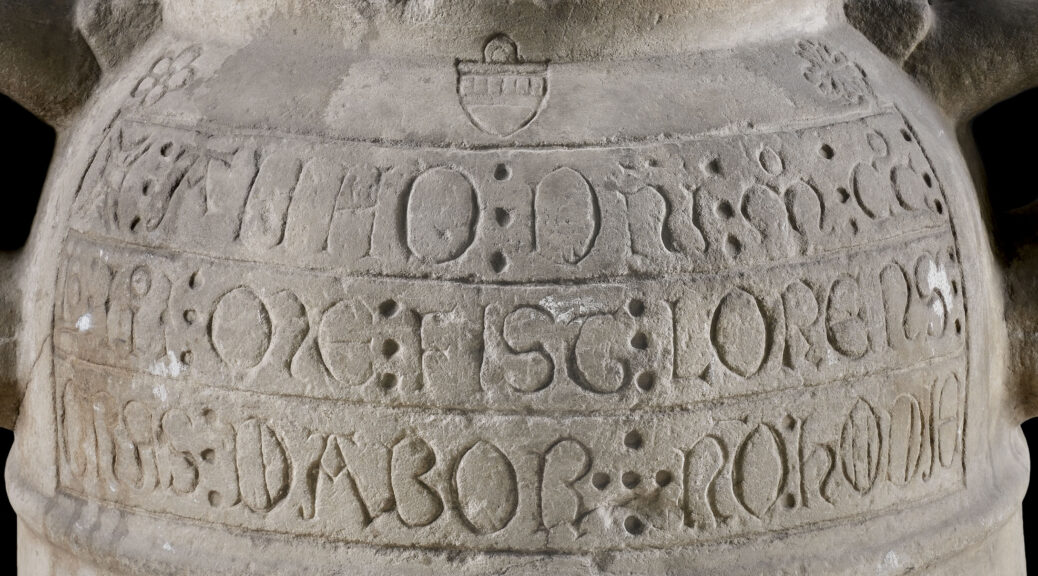
Maints auteurs se sont intéressés aux découvertes réalisées au siècle dernier Place Saint-Lambert, lors de fouilles et travaux divers entrepris sur le site de la cathédrale disparue. L’Archéoforum inauguré il y a vingt ans permet au visiteur d’observer une partie importante des vestiges archéologiques antiques et médiévaux dont certains y affleurent. Quant aux nombreuses pierres récoltées, quelques-unes sont exposées sur place, tandis que d’autres furent transférées au Musée Grand Curtius, alors que le plus grand nombre est conservé au dépôt lapidaire de la Région wallonne à Alleur. Outre les témoins de nature architectonique, d’autres présentent un intérêt stylistique, voire esthétique, iconographique et/ou chronologique. Certains ont été évoqués ou illustrés sporadiquement, indépendamment d’une perspective analytique et générale en rapport avec l’histoire et les états successifs de la cathédrale. Les quelques morceaux préromans significatifs furent négligés et restèrent confidentiels. Les témoins romans antérieurs à l’incendie de 1185 n’ont jamais suscité d’approche raisonnée, approfondie et globale en tenant compte du cadre architectural. Le présent travail s’applique à combler cette lacune.
Docteur en Histoire de l’Art et Archéologie de l’Université de Liège, Jean-Claude Ghislain collabora au Musée Art & Histoire à Bruxelles. Ses recherches, son concours à diverses expositions et ses publications en Belgique et à l’étranger sont largement consacrées à l’art roman et ses affinités. Il privilégie les rapprochements entre les différentes branches artistiques, ce qui contribue à éclairer l’origine, le cheminement, la filiation stylistique et la datation de œuvres.
Table des matières :
Préface par Madame Jacqueline Leclercq-Marx
Avant-propos
Chapitre I. Le cadre architectural préroman et ottonien Chapitre II. L’apport roman Chapitre III. Les pierres sculptées romanes
Annexe. Chronique historique de la cathédrale Saint-Lambert (800-1200)
Conclusion Bibliographie
Informations pratiques :
Jean-Claude Ghislain, Les pierres sculptées préromanes et romanes de l’ ancienne cathédrale Saint-Lambert à Liège (VIIIe–XIIe siècle). Le cadre architectural et les fouilles, Turnhout, Brepols, 2025 ; 1 vol., 92 p. (Art & Histoire du Pays de Liège, 4). ISBN : 978-2-503-61222-5. Prix : € 75,00.
Publié dansPublications|Commentaires fermés sur Publication – Jean-Claude Ghislain, « Les pierres sculptées préromanes et romanes de l’ ancienne cathédrale Saint-Lambert à Liège (VIIIe–XIIe siècle). Le cadre architectural et les fouilles »
Katechismen sind in ihrer jahrhundertelangen Bedeutung für die Vermittlung religiösen Elementarwissens, für den sittlich-moralischen Unterricht und nicht zuletzt für das konfessionelle Selbstverständnis kaum zu überschätzen. Ihre primäre Funktion ist es, die Gläubigen in Fragen des Glaubens, des Gebets und in ethischen Normen zu unterweisen und so zu einem gottgefälligen Leben zu befähigen. Gleichzeitig wohnt ihnen ein enormes disziplinierendes Potenzial inne, das weit in die intimen Bereiche des familiären Zusammenlebens, der Lebensführung und der Sexualität eingreift.
Unter dem Einfluss der spätmittelalterlichen Frömmigkeitstheologie setzt im 14. und 15. Jahrhundert eine verstärkte Produktion katechetischer Medien in den Volkssprachen ein. Dabei lässt sich eine Pluralisierung ihrer Formen sowie ein Experimentieren mit katechetischen Inhalten, ihrer Gewichtung und ihrer Anordnung beobachten. Das Spektrum spannt sich von simplen Übersichten des zu Erlernenden über Einzelauslegungen und bildliche Darstellungen bis hin zu breit ausgearbeiteten Traktaten, in denen die Gesamtheit der katechetischen Lehrstücke nicht nur detailliert und strukturiert erfasst, sondern auch erläutert, exemplifiziert und hierarchisiert wird.
Trotz ihrer entscheidenden Mittlerfunktion wurden Katechismen des Spätmittelalters bislang nur randständig erforscht. Damit einhergehende Fragen etwa nach dem religiösen Wissen breiter Bevölkerungsschichten oder nach dem Zusammenspiel von Katechese, Rhetorik und Literatur sind noch zu großen Teilen unbeantwortet. Die Tagung setzt hier an und nimmt katechetische Medien des späten Mittelalters sowie ihre Transformation in Konfessionskatechismen am Übergang zur Frühen Neuzeit in den Blick. Im Zentrum stehen dabei katechetische Traktate, aber auch Predigten, Lyrik, religiöses Schauspiel und bildliche Darstellungen. Ziel der Tagung ist es erstens, anhand prägnanter Beispiele exemplarisch zu erarbeiten, an welche Medien und Formen, Inhalte und Funktionen katechetische Unterweisung im Spätmittelalter gebunden war. Zweitens soll ein Beitrag zur interdisziplinären Erschließung katechetischer Medien und ihrer diskursiven Bandbreite geleistet werden. Zu fragen ist drittens nach der Persistenz spätmittelalterlicher katechetischer Inhalte und Vermittlungsformen in Katechismen des 16. Jahrhunderts.
Programme :
Donnerstag, 10. April
13.00–13.15 Magdalena Butz: Begrüßung und Eröffnung
Moderation: Marco Heiles 13.15–14.00 Sabine Griese: Einfache Formen der Katechese im 15. Jahrhundert. Zehn Gebote und Ägyptische Plagen als ABC der Menschenpflichten
14.00–14.45 Kristina Domanski: Katechese im Bild. Die Zehn-Gebote-Tafel des Johannes Lupi und ihr mediales Umfeld
Moderation: Paul Schweitzer-Martin 15.15–16.00 Gunther Wenz: ‘Meus Dominus’. Die Auslegung der drei ersten Hauptstücke in Luthers Katechismen
16.00–16.45 Isabelle Mandrella: Visuelle Belehrung im Frauenkloster: Der Philosophieteppich von Heiningen
Moderation: Susanne Reichlin 16.45–17.30 Klaus Wolf: Multimediale Katechese für ‘illitterati’. Zum fakultätsübergreifenden frömmigkeitstheologischen Programm der spätmittelalterlichen Wiener Schule
19.00 Volker Leppin: Katechismen rund um Luther. Reformatorische Transformationen einer Gattung 1500–1535
Freitag, 11. April
Moderation: Julia Burkhardt 09.00–09.45 Pavlína Rychterová: Nach dem Sturm: Neue Konzepte der religiösen Erziehung im hussitischen Böhmen in der 2. Hälfte des 15. Jahrhunderts
09.45–10.30 Rita Voltmer: Katechese im Kontext polit-theologischer Reform. Johannes Geiler von Kaysersberg und die ‘correctio’ der Straßburger Stadtgemeinde
Moderation: Michael Waltenberger 11.00–11.45 Magdalena Butz: ‘lernen’ und ‘bîhten’. Zur Rolle der Beichtpflicht in spätmittelalterlichen Katechismen
11.45–12.30 Lydia Wegener: ‘Ach hertzen liben kint, huttent euch mit fleis vor vns beichtiger’. Die Problematik des unzuverlässigen Ratgebers in der spätmittelalterlichen Katechese
Moderation: Agnes Rugel 14.00–14.45 Jonathan Reinert und Isabell Väth: ‘Adonay, gewaltiger herre’: Eine spätmittelalterliche Vaterunserauslegung als Handbuch des geistlichen Lebens
14.45–15.30 Jana Jürgs: Katechese durch Paränese – ein lübisches Stundenbuch für den Hansekaufmann, Mohnkopfoffizin 1508
Moderation: Beate Kellner 16.00–16.45 Stefan Abel: ,Gelegenheits-ʻ und ,Stellvertreter-Katechese‘ – die Tradition geistlicher Fürstenunterweisung bei Johannes (Rothuet) von Indersdorf
16.45–17.30 Klaus Unterburger: Die Katechismen des Petrus Canisius zwischen spätmittelalterlicher Frömmigkeit und antiprotestantischer Abgrenzung
Samstag, 12. April
Moderation: Hannah Michel 09.00–09.45 Pia Fuschlberger: Der katechetische Prolog zwischen Sicherheit und Herausforderung: Wieviel Katechese ist genug? [Gemeinsame Lektüresitzung]
09.45–10.30 Michael Lebzelter: Katechese performativ: Katechetische Unterweisung im religiösen Schauspiel vor und nach der Reformation
Moderation: Matthias Knallinger 11.00–11.45 Maximilian Kinder: Glaube und vertraue! Transformationen einer katechetischen Kollokation bis Martin Luther
11.45–12.30 Nikolina Hatton: A Readerʼs Response: Anne Southwellʼs Seventeenth-Century Decalogue Poetry
12.30–13.00 Abschlussdiskussion
Informations pratiques :
10.– 12. April 2025
Exerzitienhaus Schloss Fürstenried Forst-Kasten-Allee 103, 81475 München
« Dans les quinze dernières années, les médiévistes ont fait avancer le féminisme […] au même titre que les théoriciens contemporains »[1] : après les propos de Madeline Caviness en 2009, et aux côtés des apports scientifiques anglo-saxons, en particulier américains, quels sont aujourd’hui dans la pensée européenne les relations des littératures du Moyen Âge avec les approches féministes, entre études de genre, études queer, études intersectionnelles et savoirs situés ? Cette réflexion, que Perspectives Médiévales avait choisi d’engager en 2024, a rencontré en France avec le colloque rennais « Les littératures médiévales dans l’atelier du genre » et la journée d’étude parisienne « Les corpus médiévaux dans l’atelier du genre » une riche actualité scientifique. Il a donc semblé opportun d’accueillir dans ce numéro une partie des communications données lors de ces deux événements, pour une réflexion théorique et transversale sur l’incidence réciproque des études féministes et des textes médiévaux. Exceptionnellement double, le n°45-46 de la revue donne ainsi à lire et à entendre sous des formats variés (articles, tables rondes, enregistrements, ateliers d’écriture) les voix de chercheur·euses de toutes les générations, pour une réflexion qu’il espère stimulante sur les questions de sexe, de sexualité et d’identité de genre dans les textes anciens. Ces travaux et études sont autant d’invitations à un dialogue fécond et tolérant entre les acteur·rices de la recherche scientifique, pour une saisie des féminismes contemporains éclairée par la plongée dans le Moyen Âge et ses représentations.
Table des matières :
Littérature médiévale et féminisme(s)
Partie thématique dirigée par Véronique Dominguez-Guillaume et Sébastien Douchet
Féminisme(s), questions de genres et littératures médiévales, éd. Sophie Albert, Fabienne Pomel, Véronique Dominguez-Guillaume, Sébastien Douchet, Perspectives médiévales, t. 45-46, 2024. En ligne. DOI : https://doi.org/10.4000/13bqz
The 2025 EHS Conference theme will be ‘Creeds, Councils and Canons’, held in Edinburgh on 15-17 July 2025.
Keynote speakers:
Professor David Fergusson, University of Cambridge
Professor Emma Wild-Wood, University of Edinburgh
Professor Alberto Camplani, Sapienza Università di Roma
Dr Sara Parvis, University of Edinburgh
2025 is the 1700th anniversary of the Council of Nicaea, widely recognised as the Church’s first Ecumenical Council. This drew on and popularised a tradition which has been widely adopted by churches throughout the world, of church leaders and/or representatives meeting to deal with matters doctrinal, ethical, disciplinary, missionary and liturgical, and documenting them in creeds and canons. The recognition or not of councils and their documents has also become a way in which churches tell their own institutional history, and situate themselves with regard to one another.
The development of distinct linguistic traditions of Christianity in Asian and African languages from the fourth century onwards can be traced by the reception or not of the documents of Nicaea and of the Ecumenical Councils of Constantinople, Ephesus and Chalcedon which followed it. Conciliar material translated from Greek into Latin, Syriac, Coptic, Ethiopic, Armenian and Georgian led to new literary expressions of World Christianity based on gathered collections which often broke free from their original contexts. These became both textual witnesses to their own transmission, and sources in their turn for further theological and legal reflection and prescription.
The collecting and weighing up of different conciliar and canonical traditions became a means whereby local churches and monasteries across the world could demonstrate to one another the quality of their libraries and their level of erudition, catholicity and historical knowledge. Medieval women writers also often show knowledge of conciliar pronouncements: their engagement with these often reveals their level of interest in being accepted on a broader ecclesiastical political stage, and also in avoiding accusations of heresy. Conciliarism became one of the main drivers of ecclesiastical reform in the late medieval period.
In Africa and Asia, the relationship of the existing Christian churches to the early Ecumenical Councils often shaped encounters with organised missions from Europe. In Europe itself, theological and ecclesiological debates in the Early Modern period, including at the Council of Trent, drew heavily on the early Councils and Creeds. Erudite debates on these sometimes served the forces of violence and coercion, but also sometimes performed a hidden role of facilitating ecumenism and peace-making.
In the modern period, the ancient councils have continued to be used throughout the world as agreed authorities for otherwise divergent Church traditions, or else as starting points for creatively discussing difference. New councils of different sorts have become themselves a means of ecclesiastical renewal. The Edinburgh 1910 missionary conference, which led to the World Council of Churches, established a fresh sense of Protestant Christian unity for the twentieth century. The Second Vatican Council refreshed Catholic thinking on ecclesiology, Scripture, Tradition, liturgy, ecumenism, inter-faith dialogue and the role of the Church in the modern world. Feminist critiques, meanwhile, can fruitfully be raised against the male-centred concerns of a conciliar tradition in which women often appear as more legislated against than legislating.
The Call for Papers for this conference is now open. Submission deadlines: 10 January 2025 (for those who need visas), 15 April 2025 (final). To apply, please fill out the following form and send it to ehseditorial@gmail.com.
The EHS offers a number of generous bursaries to allow postgraduate students to attend its Summer Conferences. If you are eligible, and would like to be considered for a bursary, please complete this application form and send to the email address provided, along with a reference. The deadline for bursary applications is the same as that for proposals for communications (15 April 2025).
Il volume ripercorre in modo organico la storia dei giochi e degli spettacoli in Sicilia dall’età normanna alla fine del Quattrocento, alla luce della concezione del tempo libero propria dell’età medievale, attraverso fonti documentarie, edite e inedite, cronache, fonti iconografiche e archeologiche. Si dedica ampio spazio alla disamina delle attività ludiche proibite, censurate e controllate (in primo luogo il gioco d’azzardo e il ballo) che furono sottoposte alle critiche di pensatori cristiani e predicatori, attenzionate nei capitoli delle confraternite e nei confessionali, disciplinate dalle costituzioni regie e dai bandi comunali. Si rintracciano, poi, le testimonianze sulla diffusione del gioco degli scacchi nei diversi strati della società. Incoronazioni regie e cerimonie funebri, tornei e palii mostrano le tante sfaccettature del potere regio e viceregio che spettacolarizzavano eventi gioiosi e tragici per rinsaldare il legame tra i diversi ceti sociali, disposti in spazi ben delimitati secondo una precisa scenografia. Inoltre, è riservata speciale attenzione al ruolo della musica nella corte regia, alla presenza di suonatori indipendenti che, in occasione di matrimoni e feste, allestivano concerti in città grandi e piccole e si esibivano anche sul mare, e all’arte come fonte iconografica fondamentale per ricostruire la storia degli strumenti musicali. Si analizzano anche le attività ludiche degli ebrei, sottoposte alla gabella della iocularia, pagata in occasione delle nozze e delle nascite. Nell’isola, che annoverava la presenza di comunità consistenti e particolarmente attive sotto il profilo economico, gli artigiani ebrei si distinguevano nel campo della fabbricazione di strumenti musicali. Spettacoli e giochi potevano diventare luogo d’incontro tra cristiani ed ebrei che convivevano fianco a fianco nelle città siciliane, o palesarne la distanza.
Patrizia Sardina, professoressa ordinaria di storia medievale presso l’Università degli Studi di Palermo, si è occupata delle città siciliane nelle monografie Tra l’Etna e il mare (1995), Palermo e i Chiaromonte: splendore e tramonto di una signoria (2003) e Il labirinto della memoria (2011). In seguito, i suoi studi si sono concentrati sulla storia dei monasteri femminili, ai quali ha dedicato i libri Il monastero di Santa Caterina e la città di Palermo (2016) e Per gli antichi chiostri (2020). Dirige la rivista «Mediaeval Sophia» e coordina la rete internazionale di ricerca Consensus and Dissent in the Political, Religious and Social Life of Medieval Europe (11th-15th centuries). È, inoltre, responsabile, per l’unità di Palermo, del PRIN 2022 Truce as damage limitation in violent conflicts: language and practices of “treuga” in Medieval Italy (XII-XV Centuries).
Informations pratiques :
Patrizia Sardina, Scherza coi fanti e lascia stare i santi. Giochi proibiti e divertimenti leciti nella Sicilia medievale, Milan, Vita e Pensiero, 2024 ; 1 vol., 256 p. (Ricerche. Storia – Ordines). ISBN : 978-8-83435-849-8. Prix : € 28,00.
Ce livre raconte, à partir d’archives inédites, l’histoire de la rencontre entre deux figures emblématiques des sciences humaines du XXe siècle, Pierre Bourdieu (1930-2002) et Erwin Panofsky (1892-1968). Rien de commun, en apparence, entre le jeune sociologue français, œuvrant au milieu des années 1960 à la refondation de sa discipline dans un monde intellectuel dominé par le structuralisme, et le vieil historien d’art allemand reconnu internationalement, émigré aux États-Unis après avoir fui le nazisme. Et pourtant, c’est dans la collection « Le sens commun », dirigée par Bourdieu aux Éditions de Minuit, que paraît la première traduction française de Panofsky, Architecture gothique et pensée scolastique, au printemps 1967, en même temps que les Essais d’iconologie chez Gallimard.
L’édition d’Architecture gothique et pensée scolastique est minutieusement préparée par Bourdieu qui, fait unique dans sa carrière, réalise lui-même la traduction. Il y joint une longue postface qui deviendra célèbre : c’est là qu’apparaît sous sa plume la première théorisation du concept d’habitus.
En s’appuyant sur des sources multiples – dont la correspondance des deux savants reproduite en annexe –, cette enquête retrace pas à pas une aventure éditoriale et intellectuelle unique, moment clé dans la réception d’Erwin Panofsky, mais aussi dans la carrière d’un Pierre Bourdieu en pleine construction des outils qui lui permettront de s’imposer dans les décennies suivantes comme l’auteur d’une œuvre capitale.
Informations pratiques :
Étienne Anheim, Paul Pasquali, Bourdieu et Panofsky. Essai d’archéologie intellectuelle, suivi de leur correspondance inédite, Paris, Les Éditions de Minuit, 2025 ; 1 vol., 288 p. (Le sens commun). ISBN : 978-2-70735-636-9. Prix : € 25,00.
Publié dansPublications|Commentaires fermés sur Publication – Étienne Anheim, Paul Pasquali, « Bourdieu et Panofsky. Essai d’archéologie intellectuelle, suivi de leur correspondance inédite »
Using archaeological, archaeobotanical, and written evidence, this book explores what gardens meant in northern Spain and northern Portugal in the early middle ages – a question asked here for the first time.
Dealing with a vast area of the Iberian peninsula that lay beyond Muslim al-Andalus, with great geographical diversity and wide variation in climate, this books spans the sixth to tenth centuries, showing that gardens might lie beside houses or scattered among arable fields or grouped together in garden zones. Gardens are difficult to recognize archaeologically but excavation suggests that many were terraces, as it also suggests that indicators of intensive use – through fertilization or irrigation or characteristic weed species – may be more useful for identifying garden activity than looking for a distinctive shape. The strongest indications of garden produce are that fruit was always important and so were legumes; and some gardens, especially those owned by monasteries, may have grown herbs.
The most striking trend across the tenth century is that peasants sold gardens to monasteries, although there are regional differences, Catalonia having a more diverse land market. Peasants sold in order to get food and monasteries bought partly to provide garden produce, including herbs, for expanding communities but partly to use and increase garden space for textile plants—flax, hemp, and dye plants—for commercial reasons, especially urban supply. Gardens were vital for the supply of clothes.
By scrutinising the logistics of small- and medium-scale ownership, the relations of owners with large-scale land-holders, especially institutions, and the ins-and-outs of those economic and social interactions, this wide-ranging book adds a new dimension to the environmental history of western Europe, in addition to contributing to an understanding of the social, economic, and cultural history of the period more generally.
Wendy Davies is an emeritus professor of history at University College London and an associate member of the History Faculty, University of Oxford. She retired in 2007, until when she taught medieval European history and held administrative posts such as Head of the History Department, Deans of Arts and of Social and Historical Sciences, and Pro-Provost (Europe). For research she has worked successively on early medieval Wales, Brittany, and Iberia, often working across disciplines and collaborating with other scholars. She has run several interdisciplinary projects which explore the interaction between text and field evidence. In the last twenty years her focus has been on northern Iberia.
Table des matières :
1:The problematic 2:The challenges of evidence 3:Locations: The perspective from parchment 4:The archaeology of gardens 5:What were they growing? 6:Proprietors 7:Production, supply, and distribution 8:Questions remaining
Informations pratiques :
Wendy Davies, Gardens in Northern Iberia in the Early Middle Ages. Practice, Product, and Sale, Oxford, Oxford University Press, 2024 ; 1 vol., 240 p. ISBN : 978-0-19889-584-8. Prix : GB P 99,00.
Publié dansPublications|Commentaires fermés sur Publication – Wendy Davies, « Gardens in Northern Iberia in the Early Middle Ages. Practice, Product, and Sale »
Avec le soutien du FNRS, du CRHiDI (UCLouvain – Saint-Louis, Bruxelles), d'INCAL (UCLouvain), de PraME (UNamur), de sociAMM (ULB) et de Transitions (ULiège)
Vous devez être connecté pour poster un commentaire.