Appel à contribution – Faire mémoire : les arts sacrés face au temps

Ce colloque vient clore deux années de travaux consacrés à la thématique « Faire mémoire », qui a permis l’approche du phénomène mémoriel dans sa relation avec la création artistique, au sein de l’édifice sacré. L’ambition de ces trois jours à Chartres est de confronter, dans l’espace et dans le temps, les formes diversifiées que la mémoire peut revêtir pour les artistes et les commanditaires, et leur réception par le public.
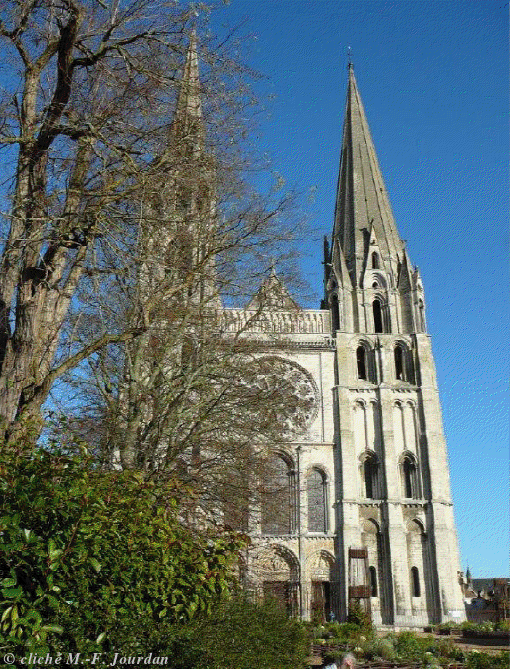
« Mémoire »… Un terme polysémique. L’édifice religieux, les arts sacrés sont tous orientés autour de la mémoire et des mémoires. La mémoire par excellence, c’est celle du Christ. Tout l’art sacré occidental est organisé de façon à perpétuer le sacrifice du Christ. Mais l’église, comme l’Église, est le corps du Christ. Faire mémoire, c’est donc être.
L’art sacré agit comme un prodigieux catalyseur. Les mémoires offrent un champ immense à l’art sacré:
  • les mémoires des traditions locales, qui sont la mémoire des lieux ;
  • les mémoires des hommes, à travers les pratiques et les monuments funéraires ;
  • les mémoires des objets, transmis de génération en génération (objets sacrés, reliques, etc.)
Quel autre lieu que Chartres pour explorer un tel domaine ? Sa cathédrale est un résumé vivant de tout ce qui précède. Elle est un immense mémorial de l’histoire sainte, de celle de la Nation, de celle de la cité. Elle attire encore les pèlerins par ses reliques mémorielles. Elle fascine les visiteurs en quête de beauté. Pendant trois jours, c’est à son ombre qu’historiens et historiens de l’art proposeront des pistes pour éclairer ce terme si évident et si complexe : « faire mémoire ».
Les thématiques suivantes seront abordées et déclinées pendant les trois jours du colloque : 
Jeudi 3 octobre : 
La mémoire des pierres : l’édifice sacré comme structure mémorielle (architectures, systèmes d’images)
Vendredi 4 octobre :
La mémoire du sacré : l’édifice sacré réceptacle des mémoires (reliques et pèlerinages, sépultures
Samedi 5 octobre :
L’édifice de culte comme lieu mémoriel (à l’échelle de la ville, à l’échelle de la Nation)
Concernant les propositions, le format attendu est d’une à deux pages en .doc., .rtf. ou .pdf. Leur contenu devra énoncer clairement le propos qui sera développé lors de la communication orale. La durée de celle-ci est par ailleurs fixée à 1/2 heure.
Elles doivent être envoyées à : Olivier Geneste (inventaire.cfg36@yahoo.fr)
Echéance : 15 juin 2013
Renseignements : 
02.54.38.74.57
Centre François-Garnier
10, place du Marché
36700 Châtillon-sur-Indre
Publié dans Appel à contributions | Laisser un commentaire

Bourse – Chercheurs résidents 2013 (Casa de Velázquez)

La Casa de Velázquez met en place un nouveau dispositif d’aide à la mobilité des chercheurs. Ce dispositif s’adresse aux personnels titulaires des universités et des grands établissements de recherche français et étrangers. Il consiste en une résidence au siège de l’établissement, à Madrid, pour une durée qui ne sera pas inférieure à un mois. Les candidats retenus bénéficient de la gratuité de l’hébergement. Ils perçoivent, en outre, une indemnité mensuelle destinée à couvrir les dépenses liées à l’éloignement de leur lieu de travail. Le projet du candidat doit relever des sciences humaines et sociales et porter sur la péninsule Ibérique, le Maghreb ou l’Atlantique ibéro-américain.
Le dossier doit comporter une lettre de candidature où est exposé le projet qui motive la demande de résidence, un curriculum vitæ et un certificat administratif attestant la nature du contrat de travail du candidat avec son établissement de rattachement. Il doit être parvenu par voie électronique avant le 31 mai 2013 minuit à l’adresse suivante : secdir@cvz.es.
Pour la campagne 2013, la durée maximale de la résidence est fixée à trois mois, à compter du 15 septembre. L’appel à candidatures pour l’exercice 2014 sera publié avant le 31 juillet 2013. La durée maximale de la résidence sera portée à dix mois.
Pour plus de détail, cliquer ici.
Les demandes de renseignement doivent être adressées à l’adresse suivante : secdir@cvz.es.

Source de l’information : Casa de Velázquez
Publié dans Bourse | Laisser un commentaire

Appel à contribution – Gouverner, négocier, punir. Pouvoirs publics, recrutement militaire et insoumission à la fin du Moyen Âge (Méditerranée-Région alpine XIIIe-XVIe s.)

Gouverner, négocier, punir. 
Pouvoirs publics, recrutement militaire et insoumission à la fin du Moyen Âge (Méditerranée-Région alpine XIIIe-XVIe s.) 
Journée d’études 
LabexMed/Telemme UMR 7303 – Université d’Aix-Marseille 
Maison Méditerranéenne de Sciences de l’Homme, Aix-en-Provence 
Novembre 2013 
Dans le cadre des activités du LabexMed – « Les sciences humaines et sociales au cœur de l’interdisciplinarité pour la Méditerranée » – cet appel à communication concerne une journée d’études qui aura lieu en novembre 2013, à la Maison Méditerranéenne de Sciences de l’Homme (MMSH) d’Aix-en-Provence, intégrée au calendrier du laboratoire Telemme – UMR 7303. 
La journée d’études examinera la construction des rapports institutionnels entre pouvoir central et sujets à la fin du Moyen Âge, par le biais de la question du recrutement militaire et de l’insoumission. 
L’historiographie a bien éclairé les liens entre le développement de l’organisation militaire – avec une attention particulière portée aux questions liées à son financement – et l’évolution institutionnelle des monarchies et des états régionaux entre les derniers siècles du Moyen Âge et le début de l’époque moderne. À partir de ces données historiographiques et méthodologiques – et notamment des deux récents ouvrages Quand gouverner c’est enquêter : les pratiques politiques de l’enquête princière, T. Pécout (dir), Paris, 2009 et Tecniche di potere nel tardo medioevo, M. Vallerani (a cura di), Rome, 2010 –, nous nous pencherons sur une série d’exemples rendant compte de cette évolution parallèle. Ces pratiques politiques, institutionnelles, judiciaires ou encore documentaires, se traduisent sur le terrain du recrutement militaire par des mesures de prévention et de sanction. Les travaux antérieurs ont concentré leurs analyses sur les techniques du recrutement de l’armée, sur sa composition et son équipement, sur le financement de la guerre et enfin sur les rapports entre les groupes sociaux et la participation aux activités militaires. Il s’agira ici d’aborder la question sous un autre angle, en lien avec l’histoire sociale et institutionnelle, et de s’inscrire dans l’histoire des systèmes de pouvoir d’un point de vue pragmatique : quelles formes de domination les autorités publiques mettent-elles en place pour gouverner les communautés et les territoires placés sous leur contrôle ? 
Cette problématique sera posée pour un espace géographique s’étendant, dans le cadre de cette première manifestation, de l’aire nord-méditerranéenne aux régions alpines occidentales, pour permettre la comparaison entre des contextes sociaux et politiques différents (monarchie, seigneuries territoriales, dominations urbaines). Une deuxième journée est envisagée pour l’année 2014, qui étendra la comparaison à Byzance et aux espaces européens septentrionaux. 
Les propositions de communication devront s’inscrire dans l’une des thématiques suivantes : 
1. Dans quel cadre de légitimité les pouvoirs souverains/centraux formulent-ils aux sujets leurs exigences d’ordre militaire ? (recrutement, financement de la guerre). Sont-elles une expression de l’autorité publique (exprimée par les termes novitas–periculum–necessitas) ou se réfèrent-elles à un ensemble de devoirs ordinaires, que les sujets devaient accomplir ? Comment et dans quels contextes s’expriment les discours de légitimation ? 

2. Quels outils administratifs, juridiques et techniques les autorités utilisent-elles pour exprimer leurs demandes d’ordre militaire ? Par quels acteurs sont-elles mises en place ? De quelle manière le contexte influence-t-il ces techniques ? 

3. Quel est le sens politique de l’insoumission ? Qui sont les déserteurs ? Pourquoi désertent-ils ? Font-ils la part entre les risques encourus et les bénéfices escomptés ? L’insoumission est-elle un instrument du discours politique reconnu par les acteurs sociaux ? 

4. Comment se construit la catégorie pénale de l’insoumission ? Quels sont les pratiques et le lexique de la sanction ? Qui sont les acteurs des procès ? Quels sont les instruments utilisés : procédures, sentences judiciaires (émises par des tribunaux locaux ou centraux), compositio, instruments infrajudiciaires ? Comment est décrit le crime, de quelle façon (comme un délit ordinaire, contre le publicum, le bien commun) ? Constate-t-on des ressemblances avec d’autres formes de désobéissance (proditio, rebellio, crimen maiestatis, violence privée ordinaire) ? Quel est le langage technique employé par les parties ? Un langage commun entre acteurs sociaux se met-il alors en place ? 

5. De quelle manière ce crime est-il concerné par la grâce et la rémission ? 

6. Les questions militaires suscitent-elles la production d’un type particulier de documentation ? La nature des sources sera interrogée : documents notariaux, procès verbaux, écritures monumentales, pragmatiques, actes judiciaires, registres comptables, écritures administratives, etc. On envisagera également la diffusion de ces sources : publique ou limitée par les autorités ? Sont-elles le lieu d’un discours rhétorique ou idéologique ? Quelles sont leurs modalités de production et de conservation ? Peut-on mettre en parallèle l’évolution des écritures et celle de l’organisation militaire ? Quelles éventuelles références intertextuelles entre écritures d’origines différentes constate-t-on ? 

Les propositions de communication seront envoyées par courrier électronique exclusivement aux adresses suivantes : mmagnani@mmsh.univ-aix.fr ; mfj.magnani@gmail.com

Elles comprendront le titre de l’intervention, la thématique dans laquelle elle s’inscrit ainsi qu’un résumé de 1000 espaces-signes maximum. 

La date limite d’envoi des propositions est fixée au 31 juillet 2013. 

Organisateurs de la journée d’études : Matteo Magnani (Université d’Aix-Marseille, Telemme UMR 7303), Paolo Buffo (Université de Turin), François Otchakovsky-Laurens (Université d’Aix-Marseille, Telemme UMR 7303)

Publié dans Appel à contributions | Laisser un commentaire

Séminaire – A decoração nos códices medievais: tipologia e funções. O caso dos manuscritos jurídicos portugueses

Doutora Maria Alessabdra Bilotta
(Instituto de Estudos Medieval, Uni. Nova de Lisboa)

A decoração nos códices medievais: tipologia e funções
O caso dos manuscritos jurídicos portugueses
15 de maio de 2013 às 14h30
Sala do Departamento de Filosofia
Decoração e iuminura nos códices medievais
A decoração dos códices jurídicos existentes em bibliotecs portuguesas.

Maria Alessandra Bilotta is a post-doc researcher at the Instituto de Estudos medievais (faculdade de Ciências Sociais e Humanas – Universidade Nova de Lisboa). She holds a doctorate in Medieval Art History from the Università di Pisa, with a dissertation entitled, I Libri dei Papi. La Curia, il Laterano e la produzione manoscritta ad uso del Papato medievale (secoli VI-XIII), currently being published in the collection “Studi e testi” of the Biblioteca Apostolica Vaticana.

She has been selected as a visiting teacher at the Institut Nacional d’Histoire de l’Art (INHA) in Paris, to collaborate with the research program Transferts artistiques dans l’Europe gothique. Currently she works at the Université d’Avignon, where she teaches courses on medieval art history, including «L’enluminure et la production des livres juridiques dans le Sud de la France entre XIIIe et XIVesiècles»; «Méthodologie pour l’étude des manuscrits enluminés du Moyen Âge»; «Les manuscrits enluminés dans le Midi de la France». She is also a member of the research team studying medieval iconography at the Universisté Lille 3, of the Società Internazionale di Storia della Miniatura, and of the Centre Européen d’études bourguignonnes.

Her research interests include manuscript production and illumination, particularly of liturgical and legal manuscripts in the South of France, the production of manuscripts by the papacy in the middle ages in Rome, and the iconography of the Atlantiques Bibles.

Selected publications:

BILOTTA, Maria Alessandra. “Il manoscritto e il suo apparato illustrativo” in Commentario al facsimile del Codice VE 411 della Biblioteca Nazionale di Roma. Firenze, 2009. p. 87-122.

BILOTTA, Maria Alessandra. “Immagine e memoria liturgica nei manoscritti miniati duecenteschi ad uso della Cappella papale” in QUINTAVALLE, A.C. (ed.), Medioevo: immagine e memoria. Atti dell’XI Convegno internazionale di Studi(Parma, 23–28th September 2008). Milan, 2009. p. 62-68.

BILOTTA, Maria Alessandra. “Arnaldo di Villanova e Avignone: decorazione e localizzazione del codice 40.E.3 della Biblioteca dell’Accademia Nazionale dei Lincei e Corsiniana” in HAMESSE, J. La vie culturelle, intellectuelle et scientifique à la Cour des Papes d’Avignon, (Fédération Internationale des Instituts d’Études Médiévales, Textes et études du Moyen Âge, 28). Turnhout: Brepols, 2006. p. 49-64.

BILOTTA, Maria Alessandra. “Produzione libraria di frontiera nella Francia Meridionale: il De mysterio cymbalorum ecclesiae di Arnaldo di Villanova (40.E.3), conservato nella Biblioteca dell’Accademia Nazionale dei Lincei e Corsiniana di Roma” in MERISALO, O. Frontiers in the Middle Ages. Proceedings of the Third European Congress of Medieval Studies (Jyväskylä, 10–14th June 2003). (Fédération Internationale des Instituts d’Études Médiévales, Textes et études du Moyen Âge, 35). Turnhout: Brepols, 2006, p. 417-439.

BILOTTA, Maria Alessandra. “Note al programma iconografico del Libro d’ore Pal. lat. 537 della Biblioteca Apostolica Vaticana”. Miscellanea Bibliothecae Apostolicae Vaticanae, nº 8 (2001), p. 7-44.

Organization: Heurística e fontes para o estudo da Filosofia Medieval RG

Gabinete de Filosofia Medieval / Instituto de Filosofia
Faculdade de Letras da Universidade do Porto
Via Panorâmica s/n
4150-564 Porto
Portugal
Publié dans Séminaire | Laisser un commentaire

Conférence – Ingrid Falque (ULeiden), "Mit bildgebender wise". Images as Instruments in Henry Suso’s "Exemplar"

Ingrid Falque (ULeiden)
« Mit bildgebender wise ». Images as Instruments in Henry Suso’s Exemplar

In his Exemplar (the famous compilation of his German texts that is extant in several manuscripts and printed copies), Henry Suso develops a deep reflection on the place of images in spiritual experience, as well as on the role of images in mystical discourse, and notably on their capacity to express the ineffable nature of God. This image theory relies on a rich vocabulary based on the term bild and its derivatives (entbilden, überbilden, bildgebend, bildlos, bildrich,…), but also on a key phrase (Daz man bild mit bilden ûs tribe) on which we need to take a fresh look. Furthermore, the most striking aspect of the Exemplar lies in the presence of actual drawings in many manuscripts. Although we cannot know for certain that Suso designed this iconographical programme himself, there are arguments that suggest that it is well the case. These drawings, not only illustrating the text but also completing it, make the Exemplar a unique example of the complex relationship between texts and images in the field of spiritual literature of the Late Middle Ages. As Jeffrey Hamburger has shown, this compilation shows a complex pattern of imitation/model where not only the text, but also the images help the reader to imitate Suso in his quest to the spiritual perfection.

For a long time, scholars have acknowledged that medieval theologians and mystics – beginning with Bernard of Clairvaux – advocated an aniconic spiritual ideal: necessary during the first steps of the meditative process, images were only considered as tools that had to give way to an imageless contemplation, which was devoid of sensible things. By affirming that “images must drive out images”, Suso offers a more subtle vision of the place and the role of images in mystical transformation. Indeed, it appears that he did not mean that images need to be dispensed with entirely but that each image must be replaced by another one so as to complete and correct each other. In doing so, he offers a continually changing, flexible, and dynamic alternation of images which fundamentally modifies our understanding of the meditative image theory in the Exemplar.
In this paper, I propose to focus on Suso’s discourse on images and on the drawings (more precisely on the complex depiction of Eternal Wisdom) in order to show that Suso conceived images as instruments that allow the reader to attain the best understanding of the ineffable nature of God. I will thus show that these images are not simple illustrations meant to bring his teaching within a larger audience’s reach by simplifying it. On the contrary, they are entirely embedded to his discourse, make it denser and can be considered as a visual discourse on mystical experience.


Informations pratiques :
Universiteit Antwerpen – Stadscampus – Lokaal Annexe – Rodestraat 14 – 2000 Antwerpen
Vrijdag 24 mei
Telkens van 14.00 tot 16.00 uur.
Info en inschrijvingen: ingrid.deruyte@ua.ac.be
www.ua.ac.be/ruusbroec onder ‘nieuws’

Source de l’information : Ruusbroecgenootschap
Publié dans Colloque | Laisser un commentaire

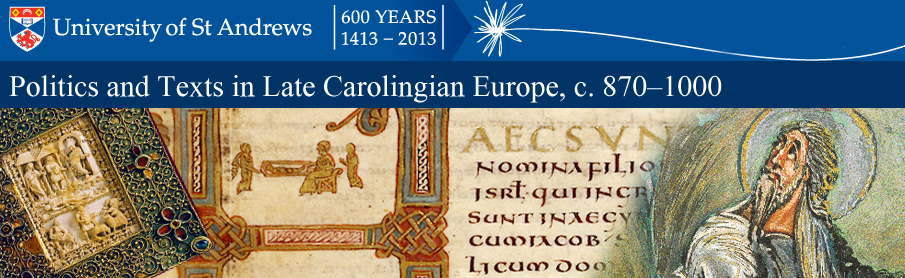
Colloque – Politics and Texts in Late Carolingian Europe, c. 870–1000

Politics and Texts in Late Carolingian Europe, c. 870–1000
Monday 8th – Tuesday 9th July 2013
University of St Andrews
The Carolingian dynasty (751–987) ruled the last pan-European empire of the middle ages, a territory spanning over one million square kilometres at its height. In the late ninth century, however, this empire began to disintegrate, and the tenth century has long been depicted as a period of cultural and political decline. This two-day conference will explore the relationship between political authority and textual production in Europe during the late ninth and tenth centuries. It aims to contribute to a body of research which is increasingly bringing into question traditional notions and assumptions about the collapse of the Carolingian empire. This will be the first British conference devoted specifically not only to this subject, but also to this period. It will provide a forum for leading specialists, young researchers and postgraduate students from around the world to share ideas and forge new contacts in a friendly yet rigorous intellectual environment. By drawing together recent research about the interaction between written texts and attempts to exert political authority from across the late/former Carolingian world, this event promises to make a significant contribution to our understanding of this formative but neglected period of European history.
Programme :
Monday 8th July
9h00-9h50 : Registration / coffee
9h50-10h00 : Welcome
10h00-11h30 – Session 1
Shane Bobrycki – Gangs and Bands in Late Carolingian West Francia between Politics and Texts
Warren Brown – Traveling disputes: changing images of conflict in Carolingian formula books
Matthew Innes – Who made it ‘eine Quellenarme Zeit’? Textual production, interpretative control and the documentary sources of late Carolingian and post-Carolingian history
11h30-12h00 – Coffee
12h00-13h30 – Session 2
Roberta Cimino – An empress and her “wills”: Royal widowhood and political struggles in post-Carolingian Italy (c. 898 – 923)
Giacomo Vignodelli – Politics, prophecy and cryptic text: Atto of Vercelli’s Perpendiculum
Ross Balzaretti – Representations of Hugh of Arles (c. 885-948) and his family
13h30-14h30 – Lunch
14h30-16h00 – Session 3
Robert Evans – Politics, warfare, and morality in Abbo of Saint-Germain-des-Prés’ Bella Parisiacae Urbis
Christopher Heath – Audite omnes fines terre orrore cum tristitia: Louis II and the Rythmus de Captivitate
Charles West – The Lost Kingdom and the lost manuscript: the ‘Collection’ of Bishop Adventius of Metz
16h00-16h30 – Coffee
16h30-18h00 – Session 4
Fraser McNair – The politics of being Norman in the reign of Richard the Fearless
Edward Roberts – Justifying proprietary claims: Flodoard, Conrad the Red and the Remigiusland dispute
Geoffrey Koziol – Sacred History, Written Texts, and Young Girls’ Visions in Flodoard’s Histories
18h00-19h30 – Wine reception
20h00 – Conference dinner
Tuesday 9th July
9h00-9h45 – Coffee
9h45-11h15 – Session 5
Megan Welton – Three Emperors, Thirty Years, One Constant: Political Networks and Ottonian Charters for Venice, 967-992
Rob Houghton – The balance of power in tenth century Italy: A charter of Lothar II
Levi Roach – The Diplomas of Otto III and the Politics of Reform in the Regnum Italicum
11h15-11h45 – Coffee
11h45-13h15 – Session 6
Giovanni Isabella – Building the kingship: the legitimation of Otto I in Ottonian narrative sources (c. 955-975)
Paul Fouracre – Revisiting the Vita Dagoberti III
Philippe Depreux – Title TBC
13h15-14h15 – Lunch
14h15-15h45 – Session 7
Giorgia Vocino – From “Doctor Ambrose” to “Apostle Barnabas”. Strategies of legitimation and hagiographic literature in Late Carolingian Milan (9th-11th c.)
Frederik Keygnaert – Political Discourse on the Bishop’s Corrective Authority in Carolingian and Post-Carolingian Normative Texts
Conrad Leyser – Church without Empire: the Tenth-Century Take Off
15h45-16h15 – Closing remarks
Source de l’information : University of St Andrews
Publié dans Colloque | Laisser un commentaire

Appel à communication – Art and its Classes

Annual Renaissance Society of America
New York, 27-29 mars 2014
For the panel « Art and its Classes » speakers are invited to explore how social mobility (or lack thereof) influenced patronage, creation and study of art during the Renaissance, and/or address the wider question of elitism in art history.
Topics could include but are not limited to :
  • How Giorgio Vasari’s position at court influenced his Lives
  • Karel van Mander’s nobility and his Het Schilderboek
  • Group patronage among the lower and emerging middle classes
  • Ennobling of artists (Michelangelo, Titian, Giambologna among others)
  • Social mobility expressed through display at French, English, Italian or German courts
  • Early modern/contemporary distinctions between « high” and « low” art
  • Collecting « exotic” art and objects from outside Europe (and vice versa) as class markers
  • Current diffusion of and /or « dumbing down” of Renaissance art history via television, video games, social media and public history.
Please send 150 word abstracts and a short c.v. to Meghan Callahan and David Boffa (meghan.a.callahan@gmail.com,davidboffa@gmail.com) by May 30.
Publié dans Appel à contributions | Laisser un commentaire

École d’été – Sites of Knowledge: Space, Locality, and Circulation between Asia and Europe

Veranstalter: Cluster of Excellence « Asia and Europe in a Global Context », Heidelberg University
Datum, Ort: 04.08.2013-08.08.2013, Heidelberg, Heidelberg University
Deadline: 31.05.2013

The Cluster of Excellence « Asia and Europe in a Global Context » at Heidelberg University welcomes applications for its Summer School 2013 « Sites of Knowledge: Space, Locality, and Circulation between Asia and Europe. » It will take place from August 4 to 8 in Heidelberg, Germany.

This year´s Summer School will explore the significance of space and locality for the generation and circulation of knowledge. Starting from the premise that space and place shape the social interactions in which knowledge is made and remade, the Summer School will address questions such as: Is all knowledge local? Does the situatedness of knowledge preclude claims to ‘truth’ and ‘universality’? And how can we best conceptualize the liminal spaces in which knowledge is traded or transmitted? Individual sessions will focus on selected places involved in circulations of knowledge between and within early modern Asia and Europe, ranging from courts, schools, academies, temples, and observatories to print shops, bazaars, roadhouses, ports and ships.

The Summer School addresses graduate students in humanities and social sciences with an interest in theories and practices of knowledge production in Asia and Europe. The academic program combines informal lectures with more interactive elements such as reading groups and writing workshops. The invited scholars represent a wide range of backgrounds and share an interest in engaging in critical dialogue across regional and disciplinary boundaries. Confirmed speakers include Christian Jacob (Paris), Dhruv Raina (Delhi), Ruth Rogaski (Vanderbilt), Stephan Günzel (Berlin), Fan Fa-ti (Binghamton) Henrique Leitao (Lisbon), Martin Dusinberre (Newcastle), Eric Hayot (Penn State) and, from Heidelberg University, Frank Grüner, Rui Magone and Joachim Kurtz.

In addition to the academic program, a range of excursions and leisure activities in and around the city of Heidelberg is on offer.

The application form can be found on our website and is to be sent together with a letter of motivation by May 31. For more information see http://www.asia-europe.uni-heidelberg.de/en/summerschool. 
Programme :

Sunday, August 4

Arrival of participants 
Welcome Reception


Monday, August 5

Opening 
Welcome (Acting Director of the Heidelberg Cluster) 
Introduction (Joachim Kurtz, Martin Hofmann)

Session One – Sites of Production 
Presentation by Dhruv Raina (JNU, Delhi) 
Presentation by Ruth Rogaski (Vanderbilt)

Group Work I – Delineating Sites 
Readings with Martin Hofmann and Pablo Blitstein (Heidelberg) 
Project Discussions with Martin Hofmann and Pablo Blitstein (Heidelberg)

Keynote Address 
Christian Jacob (EHESS/CNRS, Paris)


Tuesday, August 6

Session Two – Sites of Reproduction 
Presentation by Rui Magone (Heidelberg) 
Presentation by Joachim Kurtz (Heidelberg)

Group Work II – Knowing Practices 
Readings with Martin Hofmann and Pablo Blitstein (Heidelberg) 
Project Discussions with Martin Hofmann and Pablo Blitstein (Heidelberg)

Special Session I 
Stephan Günzel (BTK, Berlin)

Evening Programme: 
Guided tour through the historic town of Heidelberg


Wednesday, August 7

Session Three – Sites of Transfer 
Presentation by Henrique Leitao (Lisbon) 
Presentation by Martin Dusinberre (Newcastle/Heidelberg)

Special Session II 
Presentation by Eric Hayot (Penn State)

Group Work III – Writing Sites 
Project Discussions with Martin Hofmann and Pablo Blitstein (Heidelberg)


Thursday, August 8

Session Four – Sites of Exchange 
Presentation by Frank Grüner (Heidelberg) 
Presentation by Fan Fa-ti (Binghamton)

Group Work IV – Presentations 
Presentations of Group Work

Concluding Discussion, Evaluation of Summer School

Farewell
Source de l’information : Asia and Europe in a Global Context
Publié dans École d'été | Laisser un commentaire

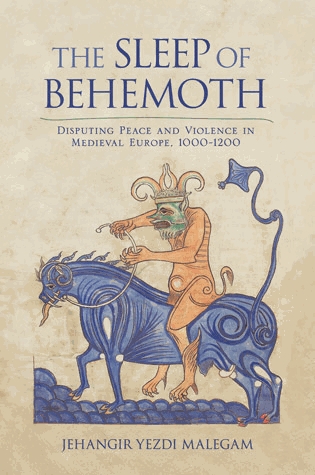
Publication – Jehangir Yezdi Malegam, "The Sleep of Behemoth. Disputing Peace and Violence in Medieval Europe, 1000-1200"

In The Sleep of Behemoth, Jehangir Yezdi Malegam explores the emergence of conflicting concepts of peace in western Europe during the high Middle Ages. Ever since the early Church, Christian thinkers had conceived of their peace separate from the peace of the world, guarded by the sacraments and shared only grudgingly with powers and principalities. To kingdoms and communities they had allowed attenuated versions of this peace, modes of accommodation and domination that had tranquility as the goal. After 1000, reformers in the papal curia and monks and canons in the intellectual circles of northern France began to reimagine the Church as an engine of true peace, whose task it was eventually to absorb all peoples through progressive acts of revolutionary peacemaking. Peace as they envisioned it became a mandate for reform through conflict, coercion, and insurrection. And the pursuit of mere tranquility appeared dangerous, and even diabolical.

As Malegam shows, within western Christendom’s major centers of intellectual activity and political thought, the clergy competed over the meaning and monopolization of the term « peace, » contrasting it with what one canon lawyer called the « sleep of Behemoth, » a diabolical “false” peace of lassitude and complacency, one that produced unsuitable forms of community and friendship that must be overturned at all costs. Out of this contest over the meaning and ownership of true peace, Malegam concludes, medieval thinkers developed theologies that shaped secular political theory in the later Middle Ages. The Sleep of Behemoth traces this radical experiment in redefining the meaning of peace from the papal courts of Rome and the schools of Laon, Liege, and Paris to its gradual spread across the continent and its impact on such developments as the rise of papal monarchism; the growth of urban, communal self-government; and the emergence of secular and mystical scholasticism.
Table des matières :
Introduction
1. Revising Peace: Reform and the Millennium
2. The Papal Reform: Peace Espoused and Repudiated
3. False Sacraments: Violence, Captivity, and Insurrection
4. Dueling Sacraments: The Communion of Judas Iscariot
5. Inner Peace: Discord, Discretion, and Discipline
6. Exporting Peace: Ecclesiology and Evangelism
7. Communes: Inversions of Peace
8. Disciplining Behemoth: Provisions for Secular Peace
Epilogue

Bibliography
Index
Informations pratiques :
Jehangir Yezdi Malegam, The Sleep of Behemoth. Disputing Peace and Violence in Medieval Europe, 1000-1200, Ithaca, 2013. Hardcover, 352 p., ISBN : 978-0-8014-5132-4. Prix : 55,00 $.

Source de l’information : Cornell University Press
Publié dans Publications | Laisser un commentaire

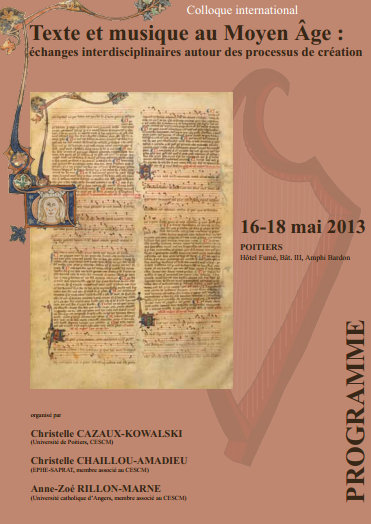
Colloque – Texte et musique au Moyen Âge : échanges interdisciplinaires autour des processus de création

Le colloque a pour objectif d’explorer la multiplicité des pistes auxquelles mène la réflexion sur les relations entre la parole chantée et le discours musical. Comment la musique constitue-t-elle un vecteur essentiel du processus de création poétique ? Loin de se réduire à un support ornemental pour le discours, elle participe pleinement à l’art de dire, de communiquer une pensée. Les intervenants exploreront ces rapports sous les aspects les plus divers, selon une perspective interdisciplinaire, à la croisée de la musicologie, de la littérature, de la philologie, de l’histoire et de l’histoire de l’art. L’ensemble du répertoire musical médiéval est susceptible d’être concerné par cette réflexion sur les liens entre texte et musique. 
Le colloque tentera plus particulièrement de répondre aux questions suivantes :
  • Qui sont ces hommes, poètes et compositeurs, d’où tirent-ils leurs savoirfaire et dans quelles circonstances les mettent-ils à profit ?
  • La composition lyrique comme construction d’un discours : quels sont les rapports entre rhétorique et création musicale ? 
  • Langue poétique et langage musical : rythme, métrique, prosodie sont des éléments communs à la poésie et à la mélodie. Comment interagissent-ils? 
  • L’oralité a-t-elle des incidences sur les procédés de création ?
  • Les traités musicaux et littéraires : quelle est la part de la théorie dans la réflexion sur les processus de création ?
  • L’écrit : comment les discours littéraires et musicaux cohabitent-ils dans les manuscrits ? 
  • Quel éclairage apporte cette cohabitation sur la création ?
  • Quelles sont les interactions avec les autres productions artistiques, comment représente-ton ces processus, quelle forme matérielle leur donner pour la postérité (collections, chansonniers, représentations…) ?
Programme et informations pratiques : ici
Source de l’information : CESCM
Publié dans Colloque | Laisser un commentaire