Bruges
Sint-Janshospitaal
Ouvert tous les jours de 09:30 à 17:00 | Fermé le lundi
€ 8 (indiv.) | € 6 (réd.) | € 1 (jeunes 6-25 ans) | Gratuit jusqu’à 5 ans
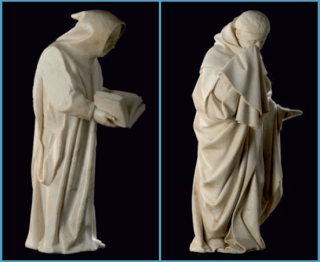
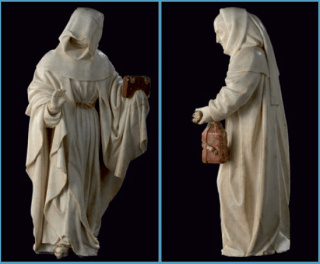
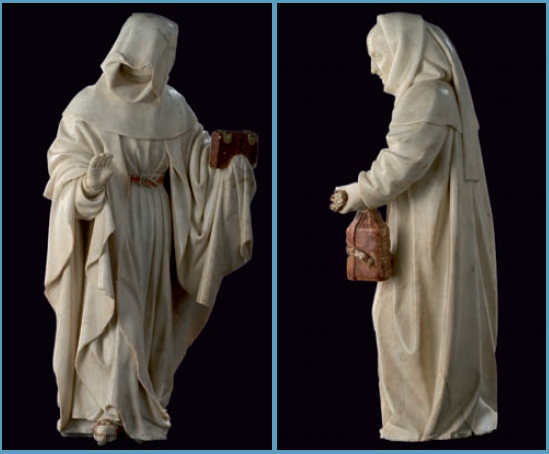
L’exposition est conçue en fonction de la présence exceptionnelle à Bruges des Pleurants du tombeau du duc de Bourgogne et comte de Flandre Jean sans Peur et de son épouse Marguerite de Bavière. Ces chefs-d’oeuvre de l’art de la sculpture du 15ème siècle ont été exécutés aux alentours de 1443-1456 par Jean de la Huerta et Antoine Le Moiturier. Outre la remarquable qualité esthétique et narrative de l’ensemble, qui mérite de facto toute notre attention, c’est également la façon dont furent exprimés, à différents moments de l’histoire, des sentiments aussi universels que la perte lors d’un décès, la sensation de vide, de manque, la douleur et le chagrin qui en résultent. Avec le deuil, c’est aussi la thématique de l’absence qui frappe dans les oeuvres exposées, ce sentiment auquel chacun de nous est confronté un jour avec la disparition d’un être cher. Ou encore un questionnement sur l’essence même de notre existence et de ses deux inéluctables extrémités : la naissance et la mort.
C’est dans cet d’esprit qu’il nous faut constater que l’amour qui nous habite change lors de cette ultime phase touchant nos proches et que sa forme varie selon l’état de vie ou de mort. Comment faisons-nous face à l’inconnu de cette terrible épreuve qui modifie en profondeur nos relations avec les hommes, les femmes et les enfants ? Ce sentiment inévitable de solitude – ou mieux encore, d’intense abandon – est incarné par les cinq sculptures d’Alberto Giacometti, personnages isolés, debout mais sans lien entre eux, de la taille des ‘Pleurants’.
L’exposition propose aussi une longue série de 101 photos de Hans-Peter Feldmann qui, en représentant des hommes, des femmes et des enfants dans leurs premières semaines d’existence jusqu’à l’âge de 100 ans, symbolise avec acuité la vie de la naissance à la mort. A côté de ce tourbillon de l’existence qui passe, des boîtes et coffrets, dans lesquels on a caché de tout temps ce qui revêt à nos yeux de l’importance: notre argent, nos documents, nos souvenirs … pour en arriver finalement à la dernière « boîte », notre cercueil, dans lequel nous nous retrouverons tous un jour et qui est ici illustré par une magnifique tombe peinte du 15ème siècle.
D’autres oeuvres évoquent la solitude des individus qui semblent se perdre dans un groupe où il ‘manque’ quelqu’un. Une vidéo de Nicolas Gruppo montre comment le visage de personnes anonymes s’illumine à la pensée d’un être cher. Une oeuvre peu connue de Giuseppe Penone illustre la variété de récits que peut engendrer un même sujet, jusqu’à la dimension sacrée qui s’y ajoute lorsque l’artiste s’interroge sur sa nature et sa signification.
Dans l’oeuvre de David Claerbout, le moment où le soleil se lève dans la brume matinale réjouit les mines des spectateurs. A l’opposé de cette lumière qui éblouit le monde se situe la peinture de Joseph Suvée. Elle met en scène la fille du potier Butadès qui, entourant d’une ligne l’ombre de son bien-aimé pour le garder auprès d’elle durant son absence, serait ainsi à l’origine du ‘premier’ dessin. La conclusion est évidente : la lumière toujours brillante produit aussi l’ombre et l’évanescence causées par l’absence de l’être cher et donne ainsi naissance à l’oeuvre d’art.
L’exposition se termine par une ultime réflexion philosophique : une vidéo de David Claerbout, ‘Long Good Bye’, dans laquelle l’artiste lie la sensation du temps qui passe à celle d’une présence insistante, qui petit à petit s’évanouit dans de lointains souvenirs pour échapper ainsi à la dimension temporelle. Ainsi, lorsqu’on parvient à faire le lien entre l’amour et la mort, le mystère qui les entoure se dissipe quelque peu.
Dossier de presse disponible : ici
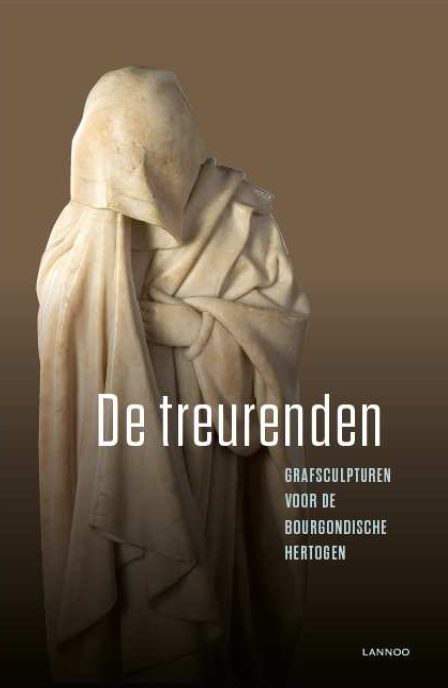
Catalogue d’exposition, édité chez Lannoo
Les pleurants, par Sophie Jugie
ISBN 978 90 209 5827 0
Relié
128 pages
€ 29,99
Le livre est disponible en néerlandais, français et allemand
À la fin du Moyen Âge, les ducs de Bourgogne étaient les princes les plus riches et les plus puissants du nord de l’Europe, contrôlant un vaste territoire qui incluait la Belgique et les Pays-Bas actuels et une grande partie due nordest de la France. C’est pour embellir et célébrer leur splendide cour à Dijon que les ducs sollicitèrent des sculpteurs de haute renommée. OEuvrant au sein d’un atelier dirigé par Jean de Marville puis par Claus Sluter et Claus de Werve, ces artistes créèrent pour la famille ducale des monuments somptueux.
Dans cet ouvrage richement illustré, le lecteur découvrira une étude approfondie de deux chefs-d’oeuvre de ces artistes – les tombeaux de Philippe le Hardi (1342-1404) et de son fils Jean sans Peur (1371-1419). Dans ces deux monuments impressionnants, taillés dans le marbre et dans l’albâtre, les gisants des ducs reposent sur une dalle soutenue par des arcatures finement sculptées, semblables à celles d’un cloître médiéval. Sous celles-ci, un cortège de moines et de pleurants individualisés semble déambuler et prier pour les défunts. Ne mesurant guère plus de 40 centimètres de haut, chaque personnage est l’incarnation miniature de la dévotion de la fin du Moyen Âge.
Représentés dans différentes attitudes de deuil, ils forment une éternelle procession sous le corps de marbre de leurs souverains. Accompagnant la première exposition d’envergure de ces sculptures récemment restaurées, Les Pleurants explore le contexte historique et religieux de ces oeuvres évocatrices et illumine leur remarquable raffinement artistique et le
savoir-faire de leurs créateurs.
Sophie Jugie est directrice du musée des Beaux-Arts de Dijon (France).
Dans la prolongation de cette expo :
> QNX1, la maison des pierres qui gouttent Installation, un lieu de silence et de rituels
du 20 mars jusqu’au 12 mai 2012
Burg, Bruges (porche à côté de l’entrée principale de l’Hôtel de Ville)
les mardi, jeudi, vendredi et samedi de 12 à 15 h. L’ouverture de l’installation commence chaque fois avec le rituel de 12 à 13 h. Gratuit.
QNX contient les consonnes du mot équinoxe, le moment de l’année où le soleil est au zénith sur l’équateur, si bien que la durée du jour équivaut à celle de la nuit. Projet de 3 ans avec l’écrivain Peter Verhelst et la sculptrice-calligraphe Maud Bekaert. Une organisation de Brugge Plus. Plus d’information: www.qnx.be.
> Concerts ‘Triste Plaisir et Douloureuse Joye’
25 concerts au thème de l’amourdu 3 au 12 août 2012 à Bruges et à LissewegeOrganisation: MAfestival Brugge, www.mafestival.be










Vous devez être connecté pour poster un commentaire.