Publication – « Historians on Robin Hood. The Outlaw’s Legend in the Later Middle Ages », éd. Stephen H. Rigby

By the fifteenth century, churchmen were complaining that laypeople preferred to hear stories about Robin Hood rather than to listen to the word of God. But what was the attraction of this outlaw for contemporary audiences?

The essays collected here seek to examine the outlaw’s legend in relation to late medieval society, politics and piety. They set out the different types of evidence which give us access to representations of Robin and his men in the pre-Reformation period, ask whether stories about the outlaw had any basis in reality and explore the many different purposes for which his legend was adapted.

The volume is divided into six parts: the sources for the medieval legend of Robin Hood and its origins; social structure; social conflict; kingship, law and warfare; piety and the church; and the outlaw’s legend in Wales and Scotland. Key issues addressed by its essays include the dating of the surviving tales, attitudes to social hierarchy, representations of gender and masculinity, the extent to which the tales drew upon or shaped contemporary attitudes towards law and justice, the development of Robin Hood plays and games, and whether the legend emerged from or appealed to particular social groups. It not only sheds new light on a character who, whether « real » or not, is one of the most important and memorable figures in the history of medieval England but also explores the extent to which the outlaw became popular in Scotland and Wales.

STEPHEN H. RIGBY is Emeritus Professor of Medieval Social and Economic History at the University of Manchester, UK.
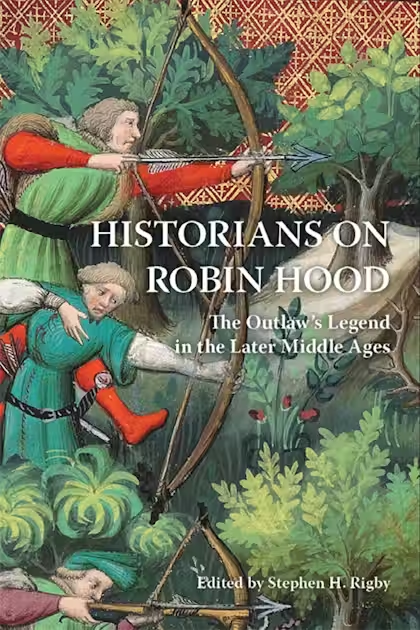
Table des matières :

List of Illustrations
List of Contributors
Preface
Acknowledgments
A Note on References to Robin Hood Ballads and Plays
PART I: SOURCES AND ORIGINS
1. The Medieval Legend of Robin Hood: The English Sources – Stephen H. Rigby
2. Dating the Gest of Robyn Hode – Stephen H. Rigby
3. The Robin Hood Names and the Origins of the Outlaw Legend – David Crook
PART II: SOCIAL HIERARCHY AND SOCIAL ORDERS
4. Robin Hood: Social Hierarchy and Social Mobility – Alex T. Brown
5. Robin Hood: Yeoman Status and Yeoman Service – Louisa Foroughi
6. Robin Hood: Mercantile Hero? – Stephen H. Rigby
7. Robin Hood: Gender, Masculinity and Homosociality – Katherine Lewis
PART III: SOCIAL CONFLICT
8. Robin Hood: Social and Political Protest – Shannon McSheffrey
9. Robin Hood: Social Bandit? – Stephen H. Rigby
PART IV: KINGSHIP, LAW AND WARFARE
10. Robin Hood: Kingship – Andrew Spencer
11. Robin Hood: Law and Justice – Anthony Musson
12. Robin Hood: Warfare and Weapons – Anne Curry
PART V: PIETY AND THE CHURCH
13. Robin Hood: Piety, Anticlericalism and the Church – Martin Heale
14. Robin Hood: Plays and Games – John Marshall
PART VI: WALES AND SCOTLAND
15. Robin Hood and the Welsh Outlaw Tradition – Helen Fulton
16. Robin Hood in Scotland – Helen Phillips
Appendix: Stephen H. Rigby, The Medieval Ballads of Robin Hood
Select Bibliography
Index

Informations pratiques :

Historians on Robin Hood. The Outlaw’s Legend in the Later Middle Ages, éd. Stephen H. Rigby, Woodbridge, D.S. Brewer, 2024 ; 1 vol., 498 p. ISBN : 978-1-84384-669-7. Prix : GBP 125,00.

Source : Boydell and Brewer
Publié dans Publications | Laisser un commentaire

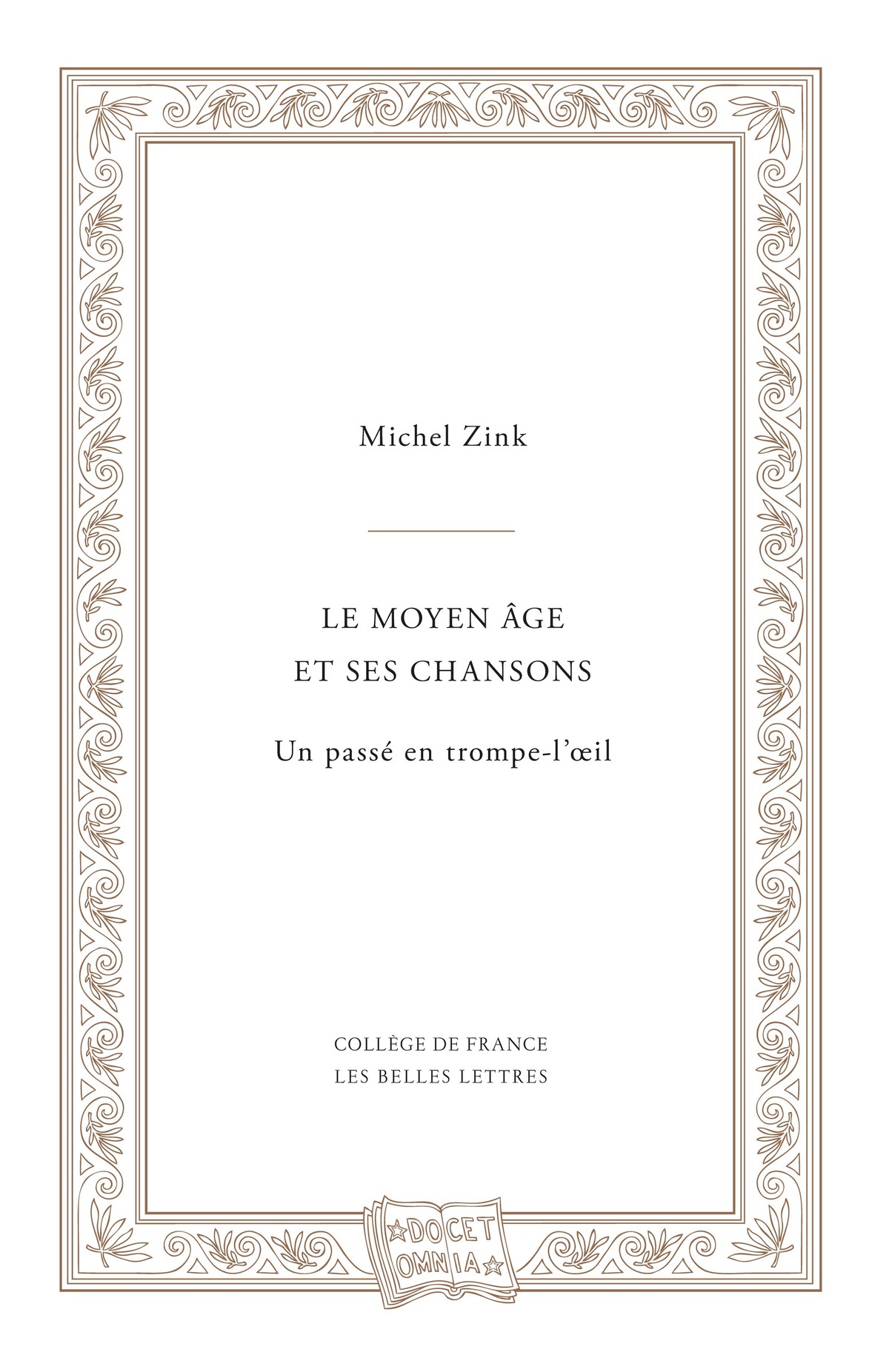
Publication – Michel Zink, « Le Moyen Âge et ses chansons. Un Passé en trompe-l’oeil »

Les chansons dites populaires ne sont ni aussi anciennes ni aussi naïves qu’elles le paraissent. On le sait, mais on ne peut s’empêcher de leur chercher des ancêtres, chez qui ces caractères seraient authentiques. On remonte ainsi jusqu’au Moyen Âge et on constate que les chansons médiévales entretiennent la même illusion, aimant à se faire passer pour anciennes ou populaires, même quand elles ne le sont pas.
Pourquoi sommes-nous sensibles à la séduction d’une poésie qui se donne pour enracinée dans les profondeurs du passé et dans l’enfance des individus et des peuples ? Pourquoi la poésie de toutes les époques, même les plus reculées, équilibre-t-elle ses productions nouvelles et savantes par d’autres marquées artificiellement des signes de l’ancienneté et de la simplicité ? En quoi ce trait appartient-il à la nature même de la littérature ?

Ces questions sont étudiées ici à travers l’exemple des chansons, particulièrement parlantes en la matière. Ce corpus enchanteur est l’occasion pour Michel Zink de proposer une promenade dans un paysage sonore qui a su traverser les époques et s’inviter dans la littérature jusqu’à la période contemporaine.

Cet ouvrage comprend la leçon inaugurale de Michel Zink au Collège de France et le cours qui l’a prolongée.

Michel Zink a suivi une carrière universitaire qui l’a conduit de l’École normale supérieure au Collège de France, où il a occupé de 1994 à 2016 la chaire de Littératures de la France médiévale, et à l’Académie des inscriptions et belles-lettres, dont il est le Secrétaire perpétuel. Mais il est aussi l’auteur de romans et de contes. Il a été élu en 2017 à l’Académie française.`

Leçon inaugurale
Les chansons du du moyen âge sont-elles de vieilles chansons ?
Préliminaires

« La fée des légendes éternellement jeune » chansons populaires, vieilles chansons
Gascons et cannibales
De Marot à Nerval
Chansons populaires et chansons médiévales
Où est le peuple ?
La Villemarqué et le Moyen Âge
La tentation d’une préhistoire
Des médiévistes, des chansons et des femmes
Belle Aiglentine
La source fraîche des chansons
Chanson ancienne, chanson nouvelle
Les chansons du XVe siècle et leur écho dissonant
Bibliographie
Index des noms de personnes

Informations pratiques :

Michel Zink, Le Moyen Âge et ses chansons. Un Passé en trompe-l’œil, Paris, Les Belles-Lettres, 2024 ; 1 vol., 192 p. (Docet omnia, 9). ISBN : 978-2-25145-630-0. Prix : € 21,90.

Source : Les Belles-Lettres

Publié dans Publications | Laisser un commentaire

Colloque – Records of Care: informing approaches to the conservation of Britain’s wall paintings

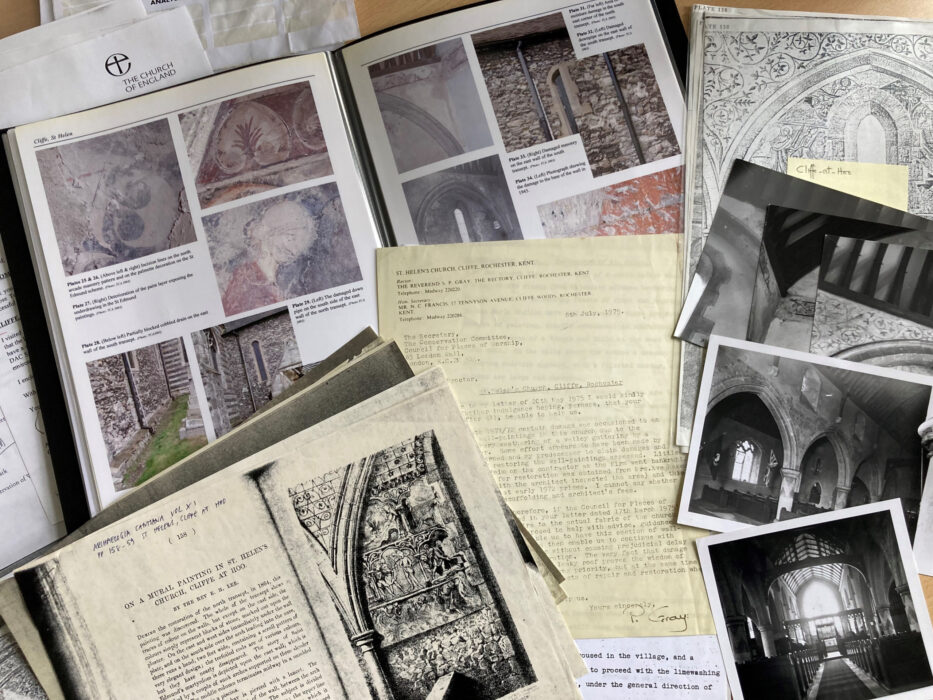
Hosted in partnership with colleagues at The Church of England, Icon, and English Heritage, this symposium marks the culmination of the first major phase of a grant-funded digitisation project to make the National Wall Paintings Survey publicly accessible through a dynamic new online database.

Begun by Professor David Park at The Courtauld in 1980, the Survey has grown into a vast and internationally important resource, comprising records of all known British medieval wall paintings as well as extensive material on post-medieval schemes of painted decoration. Encompassing photographic records, conservation reports, annotated publications and previously unpublished research, the archive documents the UK’s most lavish courtly and ecclesiastical murals alongside paintings in more humble contexts. Incorporating material bequeathed from the archives of some of the UK’s earliest pioneering conservators, the Survey constitutes an exceptional record of the condition of Britain’s wall paintings and forms an essential point of reference, both for scholars of art history and for those charged with the ongoing care of these works.

This interdisciplinary study day is an opportunity for those working across the field of British wall paintings to reflect upon the evolution of approaches to their study and conservation, and to explore collaborative endeavours which might better inform their future care. Comprising three sessions of short papers from a diverse and engaging line-up of scholars and heritage professionals, the day will conclude with an informal panel discussion around the theme of collaboration.

Organised by Emily Howe (Project Lead, National Wall Paintings Survey at The Courtauld) with Tracy Manning (Cathedral & Church Buildings Department, Church of England), Sarah Pinchin (Chair, Icon Stone & Wall Paintings Group) and Sophie Stewart (Collections Conservation, English Heritage).

9.30 – 10.00: Registration opens
Coffee and tea provided

10.00 – 11.15: Session I – Emerging Approaches
Chaired by Caroline Babington, formerly Palace of Westminster 

Emily Howe, National Wall Paintings Survey Project,
Towards a national repository for the documentation of wall paintings
Tracy Manning, Cathedral & Church Buildings Department, Church of England,
Managing the care of wall paintings in churches: following the rules and finding good advice
Sophie Stewart, English Heritage,
From the Ministry of Works to English Heritage: conserving the nation’s wall paintings
Mark Perry, Perry Lithgow Partnership,
Wall painting conservation in private practice

11.15 – 11.45: Break
Coffee and tea provided

11.45 – 13.00: Session II – Improving Approaches
Chaired by Jane Spooner, The Courtauld

Kate Giles, Centre for the Study of Christianity and Culture, University of York,
Writing on the walls: locating and using historical sources to inform understanding of past conservation practices
Tobit Curteis, Tobit Curteis Associates,
Working with others: wall painting conservation in building projects
Lizzie Woolley, Opus Conservation,
Imaging techniques for the conservator’s toolbox
Stephen Rickerby, Rickerby & Shekede
Focusing conservation aims and requirements

13.00 – 14.00: Lunch 
Provided for all attendees with ticket purchase

14.00 – 15.30  Session III – Interdisciplinary Approaches
Chaired by Alixe Bovey, The Courtauld

Miriam Gill, University of Leicester,
Variations and identifications: intersections between conservation and art history
Andrea Kirkham, Andrea Kirkham Conservation,
Recording domestic wall paintings
Florence Eccleston, The Courtauld,
Navigating the challenges of researching wall paintings
Jane Rutherfoord, Rutherfoord Conservation,
‘The Conservator as Art Historian’ and the approach to the wall paintings at Llancarfan
Sophie Godfraind, Historic England,
The role of Historic England in the care of wall paintings

15.30 – 16.00: Break
Coffee and tea provided

16.00 – 17.00  Session IV – Collaborative Approaches
Chaired by Sarah Pinchin, Icon/Historic Royal Palaces

Discussion session, led by a panel of heritage professionals, conservators and conservation scientists.

Participants include:

Jonathan Deeming, Heritage Architect, Purcell,
Helen Howard, Scientific Department, National Gallery,
Katy Lithgow, Formerly Head of Conservation, National Trust,
Peter Martindale, Peter Martindale Conservation
Ruth McNeilage, McNeilage Conservation,
Nigel Walter, Archangel Architects

17.00 to 18.00: Drinks reception

Source : Courtauld

Publié dans Colloque | Laisser un commentaire

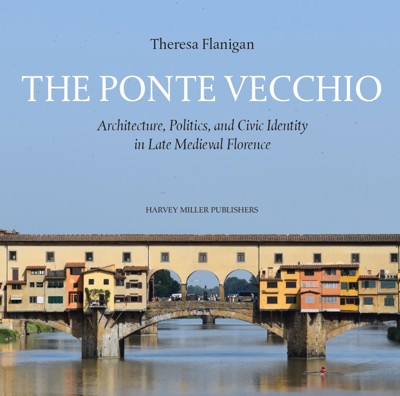
Publication – Theresa Flanigan, « The Ponte Vecchio. Architecture, Politics, and Civic Identity in Late Medieval Florence »

Famous today for the shops lining its sloped street, the Ponte Vecchio is the last premodern bridge spanning the Arno River at Florence and one of the few remaining examples of the once more prevalent urbanized bridge type. Drawing from early Florentine chronicles and previously unpublished archival documents, this book traces the history of the Ponte Vecchio, focusing on the current bridge’s construction after the flood of 1333. Much of the Ponte Vecchio’s original fourteenth-century appearance is now obscured beneath later accretions, often mistakenly interpreted as original to its medieval character. To the contrary, as argued in this book and illustrated by new reconstruction drawings, the mid-trecento Ponte Vecchio’s vaulted substructure was technically advanced, its urban superstructure was designed in accordance with contemporary Florentine urban planning strategies, and its « beautiful and honorable » appearance was maintained by government regulations. The documents also reveal new information about the commission and rental of its famous shops. Relying on these sources, this study offers a more complete history of the Ponte Vecchio, adding significantly to what is currently known about the bridge’s patronage and construction, as well as the aims of civic architecture and urban planning in late medieval Florence.

Introduction

Chapter One
From Origins to Contested Site: The Ponte Vecchio and Villani’s ‘Myth of Florence’

Chapter Two
The Politics of Bridge Building: Civic Patronage and Post-Flood Repair, 1333–1339

Chapter Three
The Commission and Building History of the Ponte Vecchio, 1339–1346

Chapter Four
Modo et Forma: The ‘Manner and Form’ of the Ponte Vecchio’s Construction

Chapter Five
‘A Beautiful and Honorable Bridge’: The Ponte Vecchio, Medieval Aesthetics, and the Politics of Urban Design

Chapter Six
‘For the Honor and Value of the People and Commune of Florence’: The Shops on the Ponte Vecchio and Their Well-Regulated Order, 1346–1495

Epilogue
The Ponte Vecchio after 1495

Appendices
I Chronicle Accounts of the Flood of 4 November 1333
II Ponte Vecchio Documents, 972 to Flood of 1333
III Ponte Vecchio Documents, 1333 Flood to 1495
IV Accounts of the Completion of the Ponte Vecchio

Bibliography

Index

Informations pratiques :

Theresa Flanigan, The Ponte Vecchio. Architecture, Politics, and Civic Identity in Late Medieval Florence, Turnhout, Brepols, 2024 ; 1 vol., 260 p. (Architecture and the Arts in Early Modern Italy, 5). ISBN : 978-1-912554-68-3. Prix : € 150,00

Source : Brepols

Publié dans Publications | Laisser un commentaire

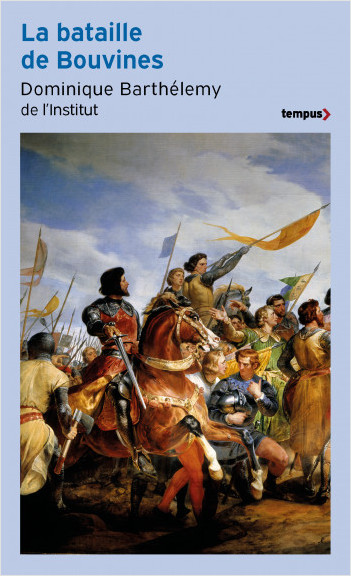
Publication – Dominique Barthélemy, « La bataille de Bouvines »

Un épisode fondateur de la nation France et du roman national : la victoire des chevaliers de Philippe Auguste lors de la bataille de Bouvines.

La bataille de Bouvines, remportée le 27 juillet 1214 par Philippe Auguste, près de Lille, sur un empereur allemand, un comte de Flandre et d’autres coalisés que finançait tous le roi d’Angleterre, a été l’un des événements les plus célébrés de l’histoire de France. Du XIIIe au XXe siècle, elle a été considérée comme un succès décisif, obtenu au terme de combats difficiles qui avaient mis à l’épreuve le roi, sa chevalerie et ses communes. Elle couronnait ainsi l’un des règnes les plus constructifs de notre histoire, et son « souvenir », mêlant l’histoire aux légendes, pouvait à la fois galvaniser la France dans ses guerres nationales et alimenter le débat politique sur la royauté, la noblesse, l’armée populaire.
Dominique Barthélemy approfondit et réoriente la critique historique au terme d’enquêtes serrées sur les chevaliers présents au front et sur l’élaboration et la réécriture des récits de Bouvines. Il commence par raconter la bataille en l’inscrivant dans son contexte féodal et en suggérant qu’elle a été dramatisée à dessein par la propagande capétienne. Il entraîne ensuite son lecteur, avec vivacité, dans un tourbillon de récits sélectifs et d’affabulations médiévales et modernes dont il tente à chaque fois de lui expliquer les enjeux. L’ouvrage de référence.

Agrégé et docteur en histoire, membre de l’Académie des inscriptions et belles-lettres, Dominique Barthélemy est professeur émérite d’histoire médiévale à l’université Paris-Sorbonne et directeur d’études émérite à l’École pratique des hautes études. Il est notamment l’auteur de L’An mil et la Paix de Dieu. La France chrétienne et féodale, 980-1060 et, chez Perrin, de La Chevalerie.

Informations pratiques :

Dominique Barthélemy, La bataille de Bouvines, Paris, Perrin, 2024 ; 1 vol., 720 p. (Tempus). ISBN : 978-2-26210-906-6. Prix : € 13,00.

Source : Perrin

Publié dans Publications | Laisser un commentaire

Colloque – Shaping and Living Norms in Medieval Monasticism

11th-15th December 2024
Università Cattolica del Sacro Cuore – Milano
Abbazia di Chiaravalle – Chiaravalle Milanese

Organizing committee
Guido Cariboni – Università Cattolica del Sacro Cuore
Nicolangelo D’Acunto – Università Cattolica del Sacro Cuore
Fiona Griffiths – Stanford University
Gert Melville – Technische Universität Dresden
Steven Vanderputten – Ghent University

11th December, 7.30 PM

Arrival, welcome reception and dinner


12th December, 10.00 – 12.30 AM

Università Cattolica del Sacro Cuore, Largo Gemelli 1 – Milan
Excursion to the Basilica of Sant’Ambrogio and guided visit

12th December, 2.30 – 6.00 PM
Sala Negri da Oleggio – Università Cattolica del Sacro Cuore, Largo Gemelli 1 – Milan
Institutional greetings
Prof.ssa Elena Beccalli – Rettrice dell’Università Cattolica del Sacro Cuore
Mons. Claudio Giuliodori – Assistente Ecclesiastico Generale dell’Università Cattolica del Sacro Cuore
Padre Stefano Zanolini – Abate di Chiaravalle, Vicepresidente Fondazione Grana Padano ETS
Prof. Andrea Canova – Preside della Facoltà di Lettere e Filosofia dell’Università Cattolica del Sacro Cuore
Prof. Umberto Longo – Direttore Istituto Storico Italiano per il Medio Evo
Prof. Andrea Zorzi – Giunta storica nazionale, Università degli Studi di Firenze

Session 1: Welcome and Keynote Lecture 1
Session chair: Steven Vanderputten – University of Ghent

Introduction and objectives of the conference – Nicolangelo D’Acunto – Università Cattolica del Sacro Cuore
GARMon – a new initiative for global research collaboration in the field of vita religiosa – Mirko Breitenstein – TU Dresden/FOVOG

Keynote lecture : Defining norms in medieval monasticism. First approaches – Gert Melville – TU Dresden/FOVOG
Discussion

13th December, 9.30 – 12.30 AM

Sala Negri da Oleggio – Università Cattolica del Sacro Cuore, Largo Gemelli 1 – Milan
Session 2: The Origins and Validity of Norms

Session chair: Mirko Breitenstein – TU Dresden/FOVOG
Norms of Creating Norms – Hans-Joachim Schmidt – Universität Freiburg
Charismatic leadership and normativity: Francis of Assisi – Maria Pia Alberzoni – Università Cattolica del Sacro Cuore
Didactical and parenetical approaches to monastic rules: Pier Damiani’s rules for Fonte Avellana – Umberto Longo – Sapienza Università di Roma
Discussion

13th December, 3.00 – 4.30 PM /5.00 – 6.30 PM

Abbey of Chiaravalle – Via Sant’Arialdo, 102, Milan
Excursion to the Abbey of Chiaravalle and guided visit

Session 2: The Origins and Validity of Norms and Keynote Lecture 2
Institutional greetings

Padre Stefano Zanolini – Abate di Chiaravalle, Vicepresidente Fondazione Grana Padano ETS

Session chair: Chris Ocker – University of California, Berkeley

Keynote lecture 2 – Monastic norms and gender – Fiona Griffiths – Stanford University
Discussion

Meeting of GARMon members – 6.30 PM

14th December, 9.00 – 12.00 AM
Abbey of Chiaravalle – Via Sant’Arialdo, 102, Milan

Session 3: The Universal Embeddedness of Monastic Norms
Session chair: Bruno Klein – TU Dresden

Biblical influences on monastic norms – Volker Leppin – Yale University
The secular Church and its influence on monastic norms – Guido Cariboni – Università Cattolica del Sacro Cuore
Building Trust on the Mendicant Frontier – Chris Ocker – University of California, Berkeley
Discussion

14th December, 3.00 – 6.00 PM
Abbey of Chiaravalle – Via Sant’Arialdo, 102, Milan

Session 4: Symbolic and Didactic Dimensions
Session chair: Lilian Larsen – University of Redlands

The Normativity of Rituals and Symbols in Medieval Religious Life – Jörg Sonntag – TU Dresden/FOVOG
Communal approaches to norm-making in Observant settings – James Mixson – University of Alabama
Norms of preaching in mendicant settings – Yuichi Akae – Keio University
Discussion

15th December, 9.00 – 12.00 AM
Abbey of Chiaravalle – Via Sant’Arialdo, 102, Milan

Session 5: Keynote lecture 3 and Conclusions
Session chair: Nicolangelo d’Acunto – Università Cattolica del Sacro Cuore

Keynote lecture : Modern concepts of normativity – Kazuhisa Takeda – Meiji University

Conclusions: Boundless Norms and Boundless Freedoms in Medieval Monasticism – Steven Vanderputten – University of Ghent
Conferimento premio Biancardi – Edizione 2024

Publié dans Colloque | Laisser un commentaire

Appel à contribution – Carrières monastiques et méritocratie scientifique dans l’Église séculière du XIIIe siècle

Jean de Tolède, un des membres les plus influents du collège des cardinaux entre 1244, date de son accession au cardinalat et 1275, date de sa mort, reste un personnage encore mal connu malgré sa notoriété et son influence au XIIIe siècle. Le lien récemment établi avec Jean, premier abbé de l’Épau, auquel on peut l’identifier, révèle à la fois la richesse du parcours du personnage et l’intérêt qu’il peut y avoir à s’intéresser de près à cette figure et à son parcours, ainsi qu’au milieu intellectuel et politique au sein duquel elle évolue.

Anglais de naissance, il suivit un cursus universitaire qui le mena jusqu’à la dignité de docteur en théologie, sans que sa présence ne soit pour l’instant attestée à Oxford ou à Paris. Médecin reconnu, arabisant et hébraïsant, alchimiste et astrologue, il avait peut-être acquis son savoir auprès des ouvrages spécialisés arabes conservés en nombre dans les bibliothèques de la ville de Tolède, ce qui expliquerait l’origine de son surnom, même si les circonstances de son éventuel séjour ne sont pas connues.

Moine cistercien, il passa par l’abbaye de Clairvaux avant d’être élu vers 1230 premier abbé de l’Épau, la fondation mancelle de la reine douairière d’Angleterre, Bérengère de Navarre. Il déploya à partir de ce moment une importante activité au sein du chapitre général de Cîteaux, ce qui le conduisit à échanger avec la Curie romaine, puis à être appelé en Italie en 1241 pour participer au concile. Promu à la pourpre cardinalice par Innocent IV en 1244, il fut à la fois un fervent défenseur de l’ordre cistercien, gagnant le surnom de « cardinal blanc », et de l’Église anglaise.

Ce parcours interroge les mécanismes permettant une telle ascension et ce basculement du monde des réguliers vers les hautes sphères ecclésiastiques au XIIIe siècle. Cette rencontre vise donc à éclairer la trajectoire qui le conduisit de sa naissance en Angleterre au rôle important qu’il joua à la Curie pendant plus de trente ans, à un moment crucial de l’évolution politique et intellectuelle de l’Occident médiéval.

Les contributions examineront donc les milieux et les institutions traversées par Jean de Tolède, afin de comprendre les liens qu’ils pouvaient entretenir. Elles pourront notamment traiter :

  • Le lien entre les Universités, et en particulier les études en théologie, le monde monastique et les hautes sphères ecclésiastiques de la première moitié du XIIIe siècle. Dans quelle mesure les ordres monastiques poussaient-ils leurs membres vers ce sommet des études ? Quels bénéfices la présence de théologiens offrait-elle à la Curie romaine ?
  • Le rôle du savoir scientifique, et notamment de la médecine, dans la promotion au sein des ordres réguliers et du haut clergé.
  • Le fonctionnement du Chapitre Général cistercien et les mécanismes du choix de ses intermédiaires pour échanger avec Rome.
  • Le rôle de « protecteur de l’ordre cistercien » au sein du collège cardinalice : existait-il des lobbies des ordres réguliers dans la Curie ?
  • Le rôle de défenseur de l’Église d’Angleterre dans la même institution : en quoi les origines géographiques déterminaient-elles le positionnement politique des cardinaux ?

Les communications dureront 25 à 30 minutes (en fonction du programme établi). 

Les propositions de communications, de 1500 à 2000 signes, espaces compris, sont attendues

pour le 3 février 2025. 

Elles seront envoyées à l’adresse colloquejeandetolede@univ-lemans.fr

Dans la mesure du possible, les frais de mission en Europe seront pris en charge.

Le colloque donnera lieu à un volume collectif dont les textes seront attendus pour le printemps 2026.

Langues de travail : français, anglais

  • Emilia Jamroziak, professor, University of Leeds
  • Dominique Stutzmann, directeur de recherche, IRHT
  • Claude Andrault-Schmitt, professeur émérite, Université de Poitiers – CESCM
  • Bénédicte Fillion-Braguet, Université de Poitiers – CESCM
  • Florent Cygler, maître de conférences, Nantes Université – CRHIA
  • Ghislain Baury, maître de conférences, Le Mans Université – TEMOS
  • Vincent Corriol, maître de conférences, Le Mans Université – TEMOS

Source : Calenda

Publié dans Appel à contributions | Laisser un commentaire

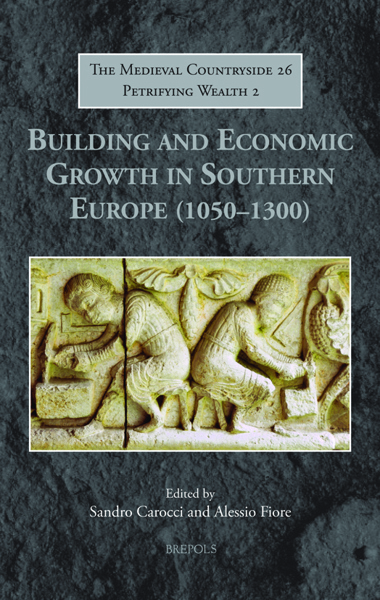
Publication – « Building and Economic Growth in Southern Europe (1050–1300) », éd. Sandro Carocci, Alessio Fiore

The four-volume sub-series ‘Petrifying Wealth’ explores the sudden ubiquity of masonry construction between 1050 and 1300 in Southern Europe and its profound effect on the European landscape. New questions about wealth, society, and medieval building are explored, which highlight the link between construction in durable materials and the shaping of individual, collective, and territorial identities: the birth of a new, long-lasting panorama, epitomising the way we see the space and territory of Europe nowadays.

Volume 2 of the ‘Petrifying Wealth’ series focuses on economic growth in Southern Europe between 1050 and 1300, discussing investments on buildings connected with production and trade. It examines buildings that served a primarily economic purpose, in various aspects: agricultural activity and the conservation and processing of its products, crafts, and exchanges and their material infrastructures. The growth in this period resulted in a multiplication of material structures closely linked with economic activity, such as mills, barns, canals, workshops, and arsenals. Focusing on the dynamics connected with these buildings thus offers a vantage point to better understand the contexts and characteristics of the ‘economic take-off’ in Southern Europe in this period.

Sandro Carocci is Professor of Medieval History at the University of Roma – Tor Vergata (Italy) and is one of the Principal Investigators of the ERC-Advanced Grant Project Petrifying Wealth. He has written and edited numerous books on medieval Italy, including Lordships of Southern Italy (2018) and Social Mobility in Medieval Italy (2018).

Alessio Fiore is Professor of Medieval History at the University of Turin. He has written or edited several books on medieval societies; among them Signori e sudditi (Spoleto, 2010), and The Seigneurial Transformation (Oxford, 2020).

Table des matières :

Introduction: Building Economic Growth in Southern Europe
ALESSIO FIORE

Part I. Farming

Storing for the Economy? Landed Estates and their Buildings in Northern and Central Italy, Twelfth and Thirteenth Centuries
LORENZO TABARRINI

El mansus de la Cataluña Vieja medieval. La implantación de un señorío constructivo
VICTOR FARÍAS ZURITA

Reflections on the Archaeology of Cereal Storage in Medieval Italy
GIOVANNA BIANCHI

Extrahere cequiam: Irrigation Canal Building and Agricultural Hydraulics in the Crown of Aragon (1170–1300)
JOSEP TORRÓ

Canal-Digging in the Age of Economic Expansion (Northern Italy, Eleventh–ThirteenthCenturies)
FABRIZIO PAGNONI

Part II. Manufacturing

La expansión de la molinería hidráulica en Cataluña (siglos XI-XIII): acerca de la construcción de molinos y sus promotores
JORDI MORELLÓ BAGET

Productive Buildings and Economic Growth: Iron-Working in Central and Northern Italy (Eleventh–Thirteenth Centuries)
ELENA MARIA CORTESE

Building for the Market: Residential Real Estate in Medieval Italy (c. 1070–1250)
ALESSIO FIORE

Part III. Connecting

Petrified Nodes: Bridges and Economic Growth (Tuscany, 1050–1200)
PAOLO TOMEI

Porti, cantieri e arsenali
PINUCCIA F. SIMBULA

Conclusions
SANDRO CAROCCI

Index

Informations pratiques :

Building and Economic Growth in Southern Europe (1050–1300), éd. Sandro Carocci, Alessio Fiore, Turnhout, Brepols, 2024 ; 1 vol., 268 p. (The Medieval Countryside, 6). ISBN : 978-2-503-60541-8. Prix : € 80,00.

Source : Brepols

Publié dans Publications | Laisser un commentaire

Publication – « Worlds of Byzantium. Religion, Culture, and Empire in the Medieval Near East », éd. Elizabeth S. Bolman, Scott Fitzgerald Johnson, Jack Tannous

Worlds of Byzantium offers a new understanding of what it means to study the history and visual culture of the Byzantine empire during late antiquity and the Middle Ages. Arguing that linguistic and cultural frontiers do not always coincide with political ones, it suggests that Byzantine studies should look not only within but also beyond the borders of the Byzantine empire and include the history of Christian populations in the Muslim-ruled Middle East and neighbouring states like Ethiopia and Armenia and integrate more closely with Judaic and Islamic studies. With essays by leading scholars in a wide range of fields, it offers a vision of a richly interconnected eastern Mediterranean and Near East that will be of interest to anyone who studies the premodern world.

Elizabeth S. Bolman, Case Western Reserve University, Ohio
ELIZABETH S. BOLMAN is Elsie B. Smith Professor in the Liberal Arts and Professor of Art History at Case Western Reserve University. She engages with the visual culture of the eastern Mediterranean in the late antique and Byzantine periods and is best known for her work in Egypt.

Scott Fitzgerald Johnson, University of Oklahoma
SCOTT FITZGERALD JOHNSON is Associate Professor of Classics and Letters at the University of Oklahoma. He is the author of numerous studies on late antique and Byzantine history and literature and has held fellowships at Harvard University, Dumbarton Oaks, and the Library of Congress and received a Guggenheim Fellowship in 2018.

Jack Tannous, Princeton University, New Jersey
JACK TANNOUS is Associate Professor of History and Hellenic Studies at Princeton University, where he is also Director of the Program in Hellenic Studies. His research focuses on the Greek, Syriac, and Arabic-speaking Christian communities of the Middle East in the late antique and medieval periods.

Table des matières :

  • Table of Contents
  • Preface Elizabeth S. Bolman, Scott Johnson and Jack Tannous
    1. Worlds of Byzantium: problems, frameworks, and opportunity in the Byzantine near east Scott Fitzgerald Johnson
    Part I. Patterns, Paradigms, Scholarship:
    2. East of Byzantium revisited: the study of the Byzantine near east, past and present Columba Stewart
    3. Byzantium and the turn to the east Averil Cameron
    4. The classical near east Kevin T. van Bladel
    5. Alternatives to commonwealth: modes of connectivity between Byzantium and Medieval Eastern Europe Christian Raffensperger
    Part II. Images, Objects, Archaeology:
    6. Movement and creation: a reassessment of early Byzantine visual culture Elizabeth S. Bolman
    7. Letters from the edge: mapping Pseudo-Arabic between Byzantium and the near east Alicia Walker
    8. Antioch after dark: archaeology and the ‘Dark Ages’ in North Syria Michael J. Decker
    9. Ars Sacra in the east and after Byzantium Cecily J. Hilsdale
    10. The church of the virgin in Dayr al-Suryān (Wadi al-Natrun): architecture, art, and history between Coptic and Syriac Christianity Karel C. Innemée, Lucas Van Rompay and Dobrochna Zielińska
    11. Three questions concerning Armenian and Byzantine art Christina Maranci
    12. Makurian visual culture: between Byzantium and Africa Włodzimierz Godlewski
    Part III. Languages, Confessions, Empire:
    13. Byzantine Syriac: language and religious community in the middle east Jack Tannous
    14. Greek identity in the Sinai Hieromonk Justin of Sinai
    15. Patriarchs, caliphs, monks, scribes, and the Byzantinization of Jerusalem’s liturgy Daniel Galadza
    16. Byzantine Judaism in early Islamic Palestine: rethinking the Gaonic model Eve Krakowski
    17. Ethiopia: Christianity, language, and identity George Hatke
    18. Armenia and Byzantium: simultaneously at the center and on the periphery Robin Darling Young
    19. Byzantine Georgia/Georgian Byzantium Stephen Rapp Jr.
    20. Conclusion: ends and means Jack Tannous
    Index.

Informations pratiques :

Worlds of Byzantium. Religion, Culture, and Empire in the Medieval Near East, éd. Elizabeth S. Bolman, Scott Fitzgerald Johnson, Jack Tannous, Cambridge, Cambridge University Press, 2024 ; 1 vol., 726 p. ISBN : 978-1-10849-209-6. Prix : GBP 150,00.

Source : Cambridge University Press

Publié dans Publications | Laisser un commentaire

Colloque – À quoi sert d’étudier le Moyen Âge aujourd’hui ?

Chaque année, l’Institut d’Études Médiévales de l’Institut Catholique de Paris réunit des médiévistes de diverses disciplines. On a souhaité cette année-ci soulever une question insolite : Quel est le fruit des études médiévales aujourd’hui ? Quelle utilité, pour nous-même et nos contemporains, trouvons-nous à travailler sur les périodes à la fois si lointaines et familières qui forment le millénaire médiéval ? Quel plaisir, quel profit, quelles lumières particulières recevons-nous de notre métier de médiéviste ?

Programme : ici

Informations pratiques :

Institut Catholique de Paris, Rue d’Assas, Paris, France
Jeu. 05 déc. 2024 à 09h00 au ven. 06 déc. 2024 à 18h00

Ouvert à tous, sur inscription obligatoire

En présentiel : Salle des Actes à l’Institut Catholique de Paris, 74 rue de Vaugirard Paris 6e

En distanciel : un lien

Source : Institut catholique de Paris

Publié dans Le réseau | Laisser un commentaire