Publication – James T. Palmer, « Merovingian Worlds »

The Merovingian Kingdoms (c. 450–751) dominated much of what is now France, Belgium, and Germany, and were the most powerful and long-lived of the states that transformed the inheritance of Rome after the Crisis of the Fifth Century. Yet they often remain representative of an imagined ‘Dark Age’, in which civility was eroded by migration, violence, illiteracy, superstition, and a retreat from globality. Through a deep exploration of manuscripts, charters, and burials, Merovingian Worlds offers a fresh account of the period, outlining its complexities, diversity and creativity. This was a world built on dynamic political, socio-economic, cultural, and religious interactions, and shaped by its wide-ranging connections from Britain and Ireland to Byzantium and beyond. The book provides a critical introduction to the rich source material and the modern debates that shaped our perception of Western Europe after the Fall of Rome.

James T. Palmer is Professor of History at the University of St Andrews. His previous books include Anglo-Saxons in a Frankish World 690–900 (2009), The Apocalypse in the Early Middle Ages (2014), and Early Medieval Hagiography (2018).

Introduction

  1. History and its historians
  2. Identities and status
  3. Power in the early Merovingian world (c. 450–613)
  4. The rise of the shadow kings (613–751)
  5. Economies, people and nature
  6. Literacy and culture
  7. The Frankish churches
  8. Religions and the wider world
    Epilogue.

Informations pratiques :

James T. Palmer, Merovingian Worlds, Cambridge, Cambridge University Press, 2024 ; 1 vol., 312 p. ISBN : 978-1-10873-759-3. Prix : GBP 23,99.

Source : Cambridge University Press

Publié dans Publications | Laisser un commentaire

Appel à contribution – Carmina Burana – From / Carmina Burana – Vom Kodex zum Klang Source to Sound

Basel, Schola Cantorum Basiliensis / FHNW, 20-22 November 2025

Since its rediscovery in 1803, the Codex Buranus (Munich, Bayerische Staatsbibliothek, Clm 4660-4660a) has continued to captivate scholarly audiences, becoming one of the most studied manuscripts of the Middle Ages. It stands at a cultural crossroad of Latin and Germanic linguistic tradition, combining the richest surviving anthology of Latin lyric poetry, an invaluable repository of liturgical drama, and the oldest source of Minnesang.

Despite extensive research on the literary content of the Codex Buranus, much remains to be explored, particularly concerning its musical aspects. These present significant challenges for scholars and performers.

Of the 254 items within the manuscript, only around sixty are notated using adiastematic neumes. They thus provide melodic contours but do not precise pitches. Parallel sources with staff notation do exist for some pieces, yet they may not accurately reflect the particularities of the melodies as they appear in this
Codex. As a result, a long-standing perception has arisen which considers the Codex’s melodies to be largely inaccessible or « untranslatable » within conventional musicological frameworks. This, in turn, led to a relative analytical neglect of the music compared to that of the texts it sets.

The conference “Carmina Burana: From Source to Sound” is organised as part of the project Carmina Burana Online, funded by the Swiss National Science Foundation and hosted at the Schola Cantorum Basiliensis / FHNW. It seeks to promote innovative methodologies and foster interdisciplinary approaches to explore this iconic manuscript in new ways, especially for interpreting and reconstructing its melodies.

The conference aims to foster new insights into the kind of song repertoire transmitted by the Codex Buranus and other comparable sources, paving the way for a more comprehensive understanding of its musical heritage and its place within medieval European culture.

We welcome proposals that engage with topics such as but not limited to:

  • New methodologies for accessing the musical content of the Carmina Burana and Latin or
    multilingual song repertoires more widely.
  • Computational approaches to neumatic notation and digital encoding (TEI/MEI) for medieval
    music manuscripts.
  • The historical and cultural context of the Codex, with attention to its multilingual and multicultural
    setting.
  • The role of the Codex Buranus in the broader landscape of medieval performance practice, lyric
    traditions, and liturgical drama
  • Codicological, palaeographical and iconographical aspects of the main Codex (Clm 4660) and the
    Fragmenta Burana (Clm 4660a)
  • New insights on how material and textual aspects interact within the Codex Buranus
  • Practical and theoretical challenges of editing, interpreting and performing the music of the
    Carmina Burana.

Submission Guidelines

Individual papers (typically 30’ + 10’ for discussion), with or without a performance practice aspect, as well as alternative formats are welcome. The conference will include performances by Schola students, and we can offer taylor-made, live sound- examples if required by the speakers. Proposals (in English or German) should include: Full name(s) of the speaker(s) Institutional affiliation(s)

Email address(es) Paper title(s) and abstract(s) (300 words / paper)

Proposals should be submitted to: christelle.cazaux@fhnw.ch.

They will be anonymized before being evaluated by the Program Committee (made up of the team and partners of the project). Deadline for submission: 15 January 2025

Notification of acceptance: End of February 2025. Please send any questions to christelle.cazaux@fhnw.ch

Publié dans Appel à contributions | Laisser un commentaire

Publication – « Le discours mystique entre Moyen âge et première modernité », t. 4, « Aspects de la révélation », dir. Véronique Ferrer, Marie-Christine Gomez-Géraud, Jean-René Valette

Dans la période qui mène du XIIe siècle au seuil des Lumières, le discours mystique s’offre comme un véritable carrefour, dont l’intelligibilité se déploie autour de quatre pôles pour former ce que Pierre Gire nomme un carré mystique. Après le langage (2019), le sujet (2019), l’institution (2021), le présent volume s’intéresse à la révélation suivant un double point de vue, celui de Dieu qui communique le mystère, celui de l’homme qui l’expérimente. Dans leur structure d’ensemble, les études ici réunies épousent le mouvement menant du geste divin de dévoiler à l’expérience humaine de l’absolu, de l’événement pour ainsi dire à son appropriation intérieure. Au cœur de ce processus dynamique, la Bible occupe une place nodale : elle constitue non seulement le mode privilégié par lequel Dieu se révèle aux hommes, mais elle est aussi ce « livre ouvert » à l’interprétation et à la méditation, à partir duquel s’amorce l’aventure individuelle et collective de la révélation.

Véronique Ferrer est professeure à l’université Paris Nanterre, spécialiste de la littérature des réformes (XVIe-XVIIe siècles). Marie- Christine Gomez-Géraud est professeure émérite à l’université Paris Nanterre, spécialiste de la littérature de pèlerinage au XVIe siècle et de la Bible de Castellion. Jean-René Valette est professeur à la Sorbonne, spécialiste des liens entre littérature des XIIe-XIIIe siècles et histoire des idées.

Outre une introduction, le volume rassemble vingt-sept contributions rédigées par Dan Arbib, Jean-Robert Armogathe, Alessandro Benucci, Louis-Patrick Bergot, Chrystel Bernat, Sylviane Bokdam, Jean-Pierre Bordier, Christophe Bourgeois, Michèle Clément, Frédéric Cousinié, Mireille Demaules, Axel Fouquet, Alberto Frigo, Marielle Lamy, Frank Lestringant, Florent Libral, Olivier Marin, Olivier Millet, Sébastien Morlet, Frédéric Nef, Catherine Nicolas, Annie Noblesse-Rocher, Dominique Poirel, Josiane Rieu, Jean-Yves Tilliette, Marc Vial, Thierry Victoria.

Table des matières : ici

Informations pratiques :

Le discours mystique entre Moyen âge et première modernité, t. 4, Aspects de la révélation, éd. Véronique Ferrer, Marie-Christine Gomez-Géraud, Jean-René Valette, Paris, Honoré Champion, 2024 ; 1 vol., 748 p. (Mystica). ISBN : 978-2-74536-217-9. Prix : € 95,00.

Source : Honoré Champion

Publié dans Publications | Laisser un commentaire

Publication – Hannah Weaver, « Experimental Histories. Interpolation and the Medieval British Past »

In Experimental Histories, Hannah Weaver examines the medieval practice of interpolation—inserting material from one text into another—which is often categorized as being a problematic, inauthentic phenomenon akin to forgery and pseudepigraphy. Instead, Weaver promotes interpolation as the signature form of medieval British historiography and a vehicle of historical theory, arguing that some of the most novel concepts of time in medieval historiography can be found in these altered narratives of the past.

For Weaver, historiographical interpolation constitutes the traces of active experimentation with how best to write history, particularly the history of Britain. Historians in twelfth- and thirteenth-century Britain recognized the difficulty of enfolding complex events into a linear chronology and embraced innovative textual methods of creating history. Focusing on the Brut tradition but also analyzing the long history of interpolated historiography, including the Bayeux Embroidery, Experimental Histories offers a new interpretation of generic remixing in medieval writing about the past. Drawing on both manuscript studies and the new formalism, it shows that the practice of inserting materials from romance and hagiography allowed creative revisers to explore how lived events relate to passing time. By embracing interpolation, Weaver provides lively insights into the ways that time becomes history and human actors experience time.

Hannah Weaver is Assistant Professor of English and Comparative Literature at Columbia University. She is the coeditor of a special issue of the Medieval Globe titled Medieval Re-Creation.

Informations pratiques :

Hannah Weaver, Experimental Histories. Interpolation and the Medieval British Past, Ithaca (NY), Cornell University Press, 2024 ; 1 vol., 246 p. ISBN : 978-1-50177-620-5. Prix : USD : 46,95.

Source : Cornell University Press

Publié dans Publications | Laisser un commentaire

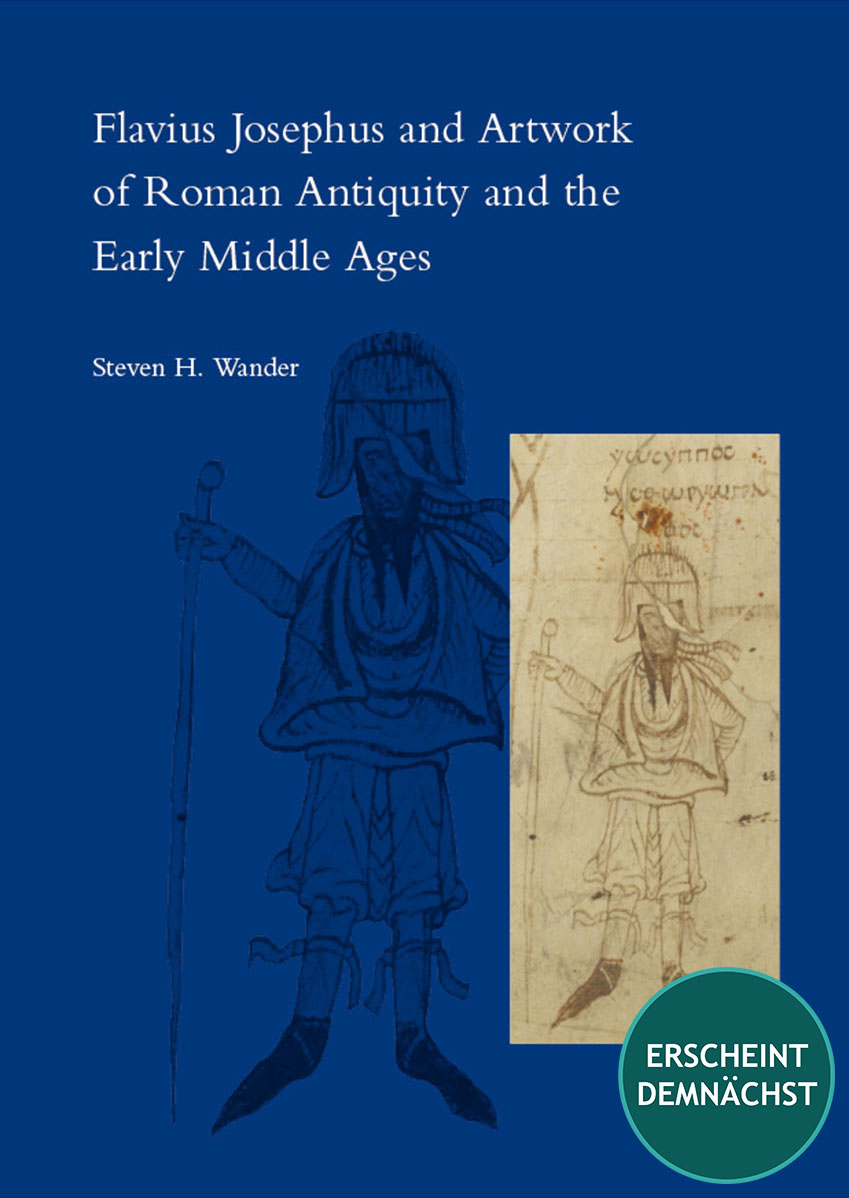
Publication – Steven H. Wander, « Flavius Josephus and Artwork of Roman Antiquity and the Early Middle Ages »

Flavius Josephus and Artwork of Roman Antiquity and the Early Middle Age demonstrates how the writings of the first-century Judaean historian influenced the genesis, nature and design of major monuments of the first millennium: 1) The frieze of the Spoils from the Temple in Jerusalem, Arch of Titus: 2) the Portrait of Josephus in Bern, Burgerbibliothek, Cod. 50, fol. 2r; 3) The Sack of Jerusalem on the Franks (Auzon) Casket 4) The Lost Portico Mosaics at S. Giovanni in Laterano, Rome; Illuminations in 5) the Christian Topography of Kosmas Indikopleustes. 6) the Codex Amiatinus; and 7) The Paris Psalter.

Table des matières : ici

Informations pratiques :

Steven H. Wander, Flavius Josephus and Artwork of Roman Antiquity and the Early Middle Ages, Wiesbden, Reichert Verlag, 2024 ; 1 vol., 238 p. ISBN : 978-3-75200-791-6. Prix : € 129,00.

Source : Reichert Verlag

Publié dans Publications | Laisser un commentaire

Publication – « Death and Dying in the Middle Ages. Proceedings of the 2022 Harlaxton Symposium, Harlaxton Medieval Studies XXXIII », éd. Christian Steer, Jenny Stratford

A fine new copy. ere are thirteen peer-reviewed essays by leading historians exploring the subject of death and dying in the middle ages. The essays explore some of the many ways in which death in its practical and devotional aspects impinged on the lives of medieval people, men and women, rich and poor, both in England and in continental Europe. Underlying and linking the papers is the medieval preoccupation with the transitory nature of life and the fear of sudden death. A study of the text and illumination of the famous 11th-century Tiberius Psalter in the British Library begins the book. Two essays follow about sudden death, mainly murder, in London and Bologna. In the first of three literary papers, purgatory is discussed in the context of the Compileison, an influential but little-known prose treatise; the second concentrates on the diverse ways death is treated in late medieval English verse, and the third on ?Laments?, verse elegies for eminent people in manuscript and print. In his last Harlaxton paper, the late Clive Burgess proposed a new perspective on English parish chantries, suggesting that as well as caring for the salvation of individual souls, chantries meant extra priests, vessels and vestments, benefitting the Church as a whole. On a different scale, written and visual sources allow for a close look at the richly endowed perpetual chantries established by Isabella of Portugal, third wife of Philip the Good, duke of Burgundy, in Carthusian houses. Funerals and wills are illustrated by the state funeral in Florence of the condottiere, Niccolò da Tolentino, by the funeral palls of Henry VII, and by the complex and exceptionally well-documented story of the execution of the will of Sir Thomas Lucy of Charlecote in Warwickshire, who died in 1525. Monuments commemorating the medieval dead are represented by a splendid but now lost tomb in Bruges, and by a chantry chapel in Hexham Abbey.

The authors of the essays in order of appearance are T. A. Heslop, Henry Summerson, Trevor Dean, Nicholas Watson, Julia Boffey, A. S. G. Edwards, Clive Burgess, Nicholas Flory, Jane Bridgeman, Lisa Monnas, Richard Asquith, Ann Adams and Julian Luxford. The book is indexed and has 62 pictures. 259pp. Seller Inventory # 061810.

Informations pratiques :

Death and Dying in the Middle Ages. Proceedings of the 2022 Harlaxton Symposium, Harlaxton Medieval Studies XXXIII, éd. Christian Steer, Jenny Stratford, Donington, Shaun Tyas, 2024 ; 1 vol., 259 p.

Publié dans Publications | Laisser un commentaire

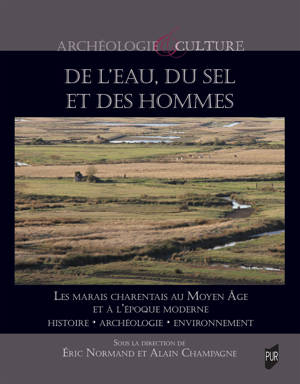
Publication – « De l’eau, du sel et des hommes. Histoire, archéologie, environnement », éd. Éric Normand, Alain Champagne

Depuis 2011, une vingtaine de chercheurs, venus de tous horizons géographiques, disciplinaires et institutionnels se penchent sur un territoire commun, le marais de Brouage ou marais charentais. Ils partagent leurs compétences respectives pour tenter de percer le fonctionnement et les évolutions de ce vaste territoire de 16 000 ha.

En se centrant sur les époques médiévales, modernes et contemporaines, archéologues, environnementalistes, géographes et historiens ont choisi de se pencher sur la période qui a vu le marais que nous connaissons se combler lentement avec la mise en place des salines, qui ont fait la richesse de ce territoire, et la fondation du port de Brouage. Toutefois, la glorieuse période de « l’or blanc » se terminera par la reconversion de ce territoire vers une nouvelle activité, l’agriculture et particulièrement l’élevage, conférant au territoire sa physionomie actuelle, tout en gardant dans le paysage les traces de son activité primitive.

Avec le soutien du ministère de la Culture, DRAC Nouvelle-Aquitaine et du laboratoire CESCM (CNRS / Université de Poitiers).

Table des matières : ici

Informations pratiques :

De l’eau, du sel et des hommes. Histoire, archéologie, environnement, éd. Éric Normand, Alain Champagne, Rennes, Presses universitaires de Rennes, 2024 ; 1 vol., 256 p. (Archéologie et culture). ISBN : 978-2-75359-648-1. Prix : € 35,00.

Source : Presses universitaires de Rennes

Publié dans Publications | Laisser un commentaire

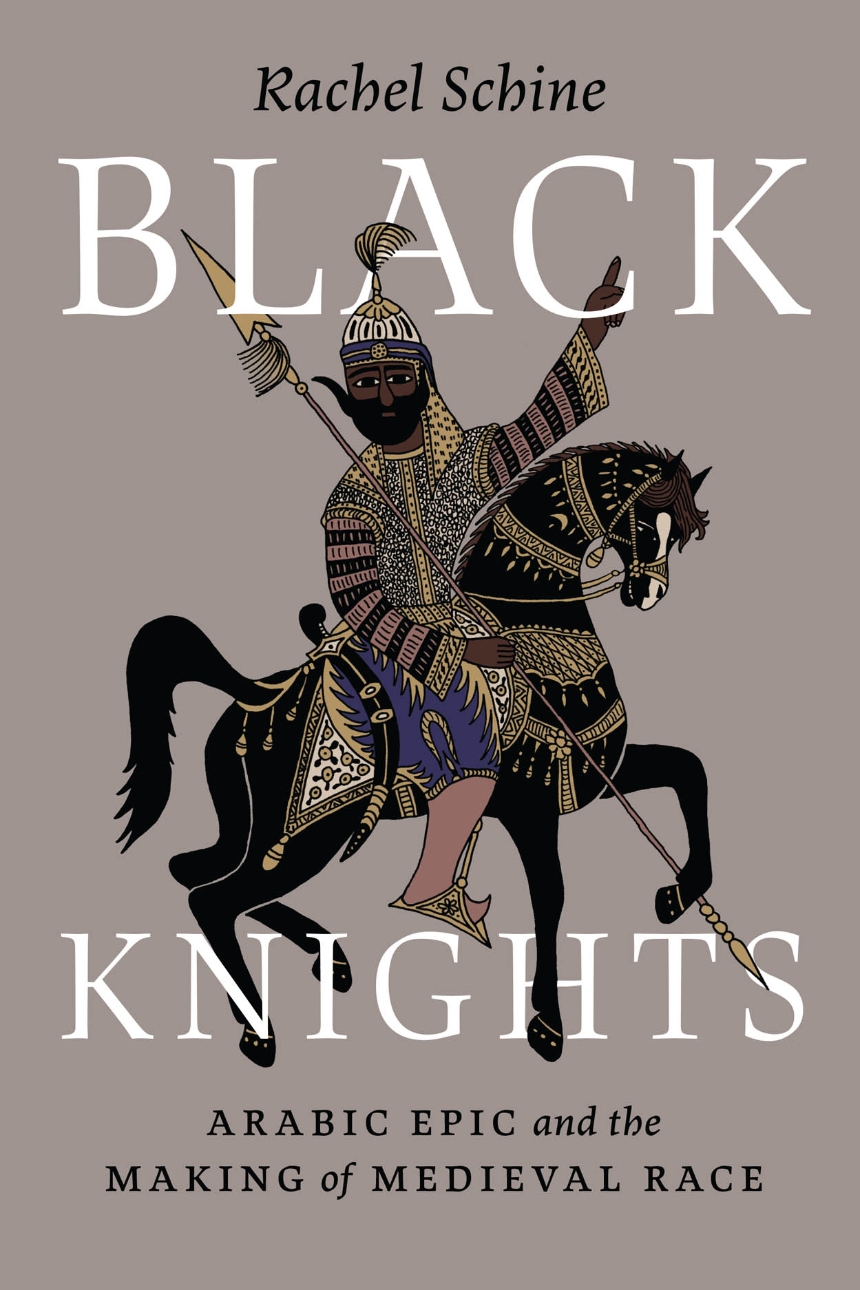
Publication – Rachel Schine, « Black Knights. Arabic Epic and the Making of Medieval Race »

A new account of racial logics in premodern Islamic literature.

In Black Knights, Rachel Schine reveals how the Arabic-speaking world developed a different form of racial knowledge than their European neighbors during the Middle Ages. Unlike in European vernaculars, Arabic-language ideas about ethnic difference emerged from conversations extending beyond the Mediterranean, from the Sahara to the Indian Ocean. In these discourses, Schine argues, racialized blackness became central to ideas about a global, ethnically inclusive Muslim world.

Schine traces the emergence of these new racial logics through popular Islamic epics, drawing on legal, medical, and religious literatures from the period to excavate a diverse and ever-changing conception of blackness and race. The result is a theoretically nuanced case for the existence and malleability of racial logics in premodern Islamic contexts across a variety of social and literary formations.

Table des matières :

Introduction

Part One: Making Race

  1. Origin Stories of the Black-Arab Hero
  2. Conceiving ʿAbd al-Wahhāb
  3. The (Popular) Science of Difference

Part Two: Race through Time

  1. The Past
  2. The Present

Part Three: Race through Space

  1. Venturing Abroad
  2. Returning Home

Conclusion

Acknowledgments
Appendix
Bibliography
Index

Informations pratiques :

Rachel Schine, Black Knights. Arabic Epic and the Making of Medieval Race, Chicago, The University of Chicago Press, 2024 ; 1 vol., 328 p. ISBN : 978-0-22683-617-1. Prix : USD 38,00.

Source : The University of Chicago Press

Publié dans Publications | Laisser un commentaire

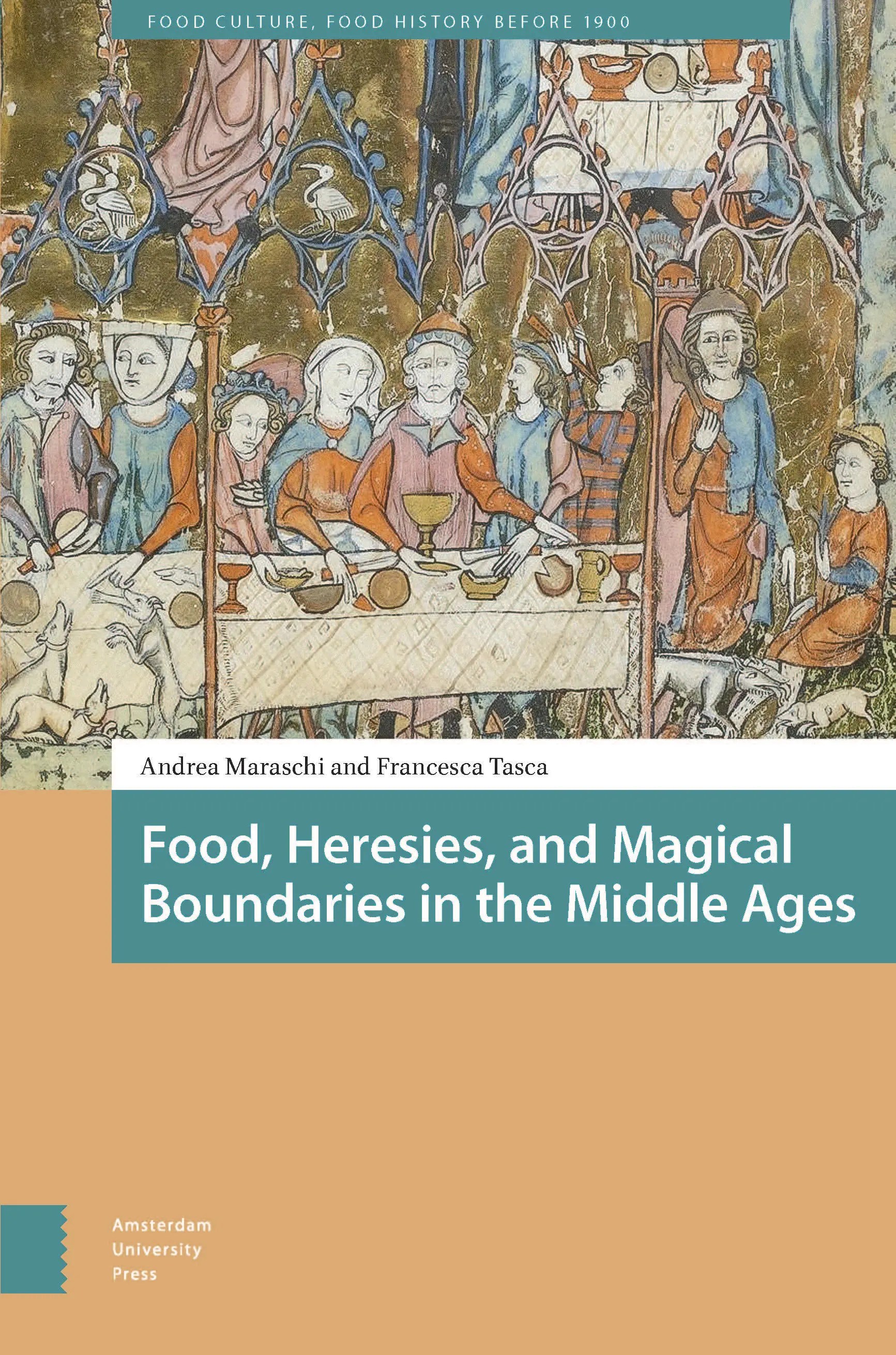
Publication – Andrea Maraschi, Francesca Tasca, « Food, Heresies, and Magical Boundaries in the Middle Ages »

In this book readers will find stories about medieval heresies and “magic” from an unusual perspective: that of food studies. The time span ranges from Late Antiquity to the Late Middle Ages, while the geographical scope includes regions as different as North Africa, Spain, Ireland, continental Europe, the Holy land, and Central Asia. Food, heresies, and magical boundaries in the Middle Ages explores the power of food in creating and breaking down boundaries between different groups, or in establishing a contact with other worlds, be they the occult sides of nature, or the supernatural. The book emphasizes the role of food in crafting and carrying identity, and in transferring virtues and powers of natural elements into the eater’s body. Which foods and drinks made someone a heretic? Could they be purified? Which food offerings forged a connection with the otherworld? Which recipes allowed gaining access to the hidden powers within nature?

Andrea Maraschi has a PhD in Medieval History (University of Bologna), and has been a postdoctoral fellow at the University of Iceland and at the University of Bari. He teaches Anthropology of Food at the University of Bologna. His research interests touch, among other things, the history of food, the history of magic, and the history of medicine.

Andrea Maraschi has a PhD in Medieval History (University of Bologna), and has been a postdoctoral fellow at the University of Iceland and at the University of Bari. He teaches Anthropology of Food at the University of Bologna. His research interests touch, among other things, the history of food, the history of magic, and the history of medicine.

Introduction. On food and boundaries: New trends in Food History
Part I. Religious boundaries
Chapter 1: Religious Identities and Consuming Differences in Augustine’s De haeresibus
Chapter 2: Dinner with the Heretic: The Story of an Ordal Meal in the De Gloria Martyrum by Gregory of Tours
Chapter 3: Consuming Heresy according to Walter Map: How to restate the boundaries of the status quo
Chapter 4: Kumiss in William of Rubruck’s Itinerarium: A Mongolian Beverage of Apostasy
Part II. Magical boundaries
Chapter 5: Saint Brigit and Milk from the Otherworld
Chapter 6: A Pagan Counter-Cuisine: Food and the Supernatural in Burchard of Worms’s Corrector
Chapter 7: Cannibalism and natural magic: Human flesh as a gate to the hidden powers of nature in the Picatrix
Chapter 8: Niccolò da Poggibonsi and the “Magical” Bread of Bethlehem
Concluding remarks: Boundary foods and boundaries of food
Index

Informations pratiques :

Andrea Maraschi, Francesca Tasca, Food, Heresies, and Magical Boundaries in the Middle Ages, Amsterdam, Amsterdam University Press, 2024 ; 1 vol., 254 p. (Food Culture, Food History before 1900). ISBN : 978-9-46372-796-9. Prix : € 123,99.

Source : Amsterdam University Press

Publié dans Publications | Laisser un commentaire

Publication – Michael Edward Moore, « Continuity and Rupture in the Long Middle Ages. Religion, Law and Interpretation »

The “Long Middle Ages” indicates a span of time extending from Antiquity, across the Middle Ages, to the Early Modern period. The author tries to understand factors of historical continuity binding this period together and the periodic scenes of violent change that disrupted societies and traditions. The Long Middle Ages were established on classical and biblical foundations, while each generation interpreted and expanded on those origins. The cohesion of the Long Middle Ages was brought about by continuous acts of reflection and renascence. Scholarly practices and ideas of Antiquity were taken up in the monasteries and cathedral schools of the Middle Ages, while during the Renaissance, and then the Baroque period, thinkers looked back to Antiquity and to the Middle Ages.

Continuity and Rupture in the Long Middle Ages is an interdisciplinary approach to intellectual history, which puts the history of ideas in the context of cultural, political, religious, and legal history. Medieval history is the central moment, while continuity and change are found in traditions extending from the Lord’s Prayer (AD 30) to Jean Mabillon (AD 1632–1707) and onward to moderns like Ernst Cassirer and Paul Ricoeur. Readers will discover new significance in historical figures like the Venerable Bede, Boniface of Mainz, Charlemagne, and Pope Formosus – in the laws of medieval kings and bishops – and institutions like the monastery of Cluny.

These essays, gathered together for the first time in this Variorum volume, offer powerful new interpretations for students and researchers in the fields of medieval studies, legal and literary interpretation, legal history, and the history of European intellectual life from ancient to modern times.

Michael Edward Moore is Emeritus Associate Professor of Medieval and European History, University of Iowa. He has published numerous essays on political culture and European intellectual history. He is the author of A Sacred Kingdom: Bishops and the Rise of Frankish Kingship and Nicholas of Cusa and the Kairos of Modernity. Born in Nuremberg, Germany, Moore was raised in New England and later among the woods and farmland of his native Michigan. He received his Ph.D. from the University of Michigan where he studied with Hans Küng and Czeslaw Milosz. He enjoys canoeing and hiking in the wilderness.

Part I: Religion

1. Demons and the Battle for Souls at Cluny

Originally published as: “Demons and the Battle for Souls at Cluny.” Studies in Religion / Sciences réligieuses 32.4 (2003): 485-497.

Reprinted by permission of Sage Journals.

2. Bede’s Devotion to Rome: The Periphery Defining the Center

Originally published as: “Bede’s Devotion to Rome: The Periphery Defining the Center.” Bède le Vénérable entre tradition et postérité. Edited by Stephane Lebecq, Michel Perrin et Olivier Szerwiniack. Lille: CEGES, 2005. 199-208.

Reprinted by permission of Université Lille, CEGES.

3. The Frankish Church and Missionary War in Central Europe

Originally published as: « The Frankish Church and Missionary Warfare in Central Europe. » Between Sword and Prayer: Warfare and Medieval Clergy in Cultural Perspective. Edited by Radoslav Kotecki, Jacek Maciejewsky, Jon S. Ott. Leiden: E.J. Brill, 2017. 46-87.

Reprinted by permission of E.J. Brill – Leiden.

4. The Attack on Pope Formosus: Papal History in an Age of Resentment

Originally published as: « The Attack on Pope Formosus: Papal History in an Age of Resentment (875-897). » Ecclesia et Violentia: Violence Against the Church and Violence Within the Church in the Middle Ages. Edited by Radoslav Kotecki and Jacek Maciejewski. Newcastle-upon-Tyne: Cambridge Scholars Publishing, 2014. 184-208.

Reprinted by permission of Cambridge Scholars Publishing.

5. The Body of Pope Formosus

Originally published as: “The Body of Pope Formosus.” Millenium. Jahrbuch zu Kultur und Geschichte des ersten Jahrtausends n. Chr. / Yearbook on the Culture and History of the First Millenium C.E., 9 (2012): 277-297.

Reprinted by permission of Walter de Gruyter Academic Publishing.

Part II: Law

6. Carolingian Monarchy and Ancient Irish Models of Kingship

Originally published as: “La Monarchie carolingienne et les anciens modeles irlandais.” Annales – Histoire, Sciences Sociales, 51 (1996): 307–324. Translated into French by Alain Boureau.

Reprinted by permission of Éditions de l’EHESS, Paris.

7. The Ancient Fathers: Christian Antiquity, Patristics and Frankish Canon Law

Originally published as: « The Ancient Fathers: Christian Antiquity, Patristics and Frankish Canon Law. » Millenium. Jahrbuch zu Kultur und Geschichte des ersten Jahrtausends n. Chr. / Yearbook on the Culture and History of the First Millenium C.E., Vol.7 (2010): 293-342. Reprinted by permission of Walter de Gruyter Academic Publishing.

8. Canon Law and Royal Power in the Councils and Letters of St. Boniface

Originally published as: “Canon Law and Royal Power in the Councils and Letters of St. Boniface.” The Bulletin of Medieval Canon Law 28 (2008) [2010]: 1-30.

Michael Edward Moore, Continuity and Rupture in the Long Middle Ages. Religion, Law and Interpretation, Lodnres, Routledge, 2024 ; 1 vol., 308 p. ISBN : 978-1-03250-241-0. Prix : GBP 130,00.

Source : Routledge

Publié dans Publications | Laisser un commentaire