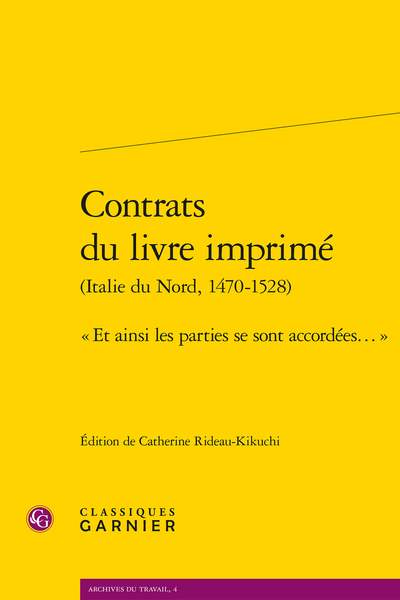
Publication – Contrats du livre imprimé (Italie du Nord, 1470-1528). « Et ainsi les parties se sont accordées… », éd. Catherine Rideau-Kikuchi

Dans la seconde moitié du XVe siècle en Italie du Nord, des contrats documentent les relations entre les acteurs de la production et du commerce du livre. Ces contrats organisent et transforment les relations entre les hommes et les femmes au travail dans l’imprimerie naissante.

Table des matières : ici

Informations pratiques :

Contrats du livre imprimé (Italie du Nord, 1470-1528). « Et ainsi les parties se sont accordées… », éd. Catherine Rideau-Kikuchi, Paris, Classiques Garnier, 2024 ; 1 vol., 183 p. (Archives du travail, 4). ISBN : 978-2-406-17383-0. Prix : € 25,00.

Source : Classiques Garnier

Publié dans Publications | Laisser un commentaire

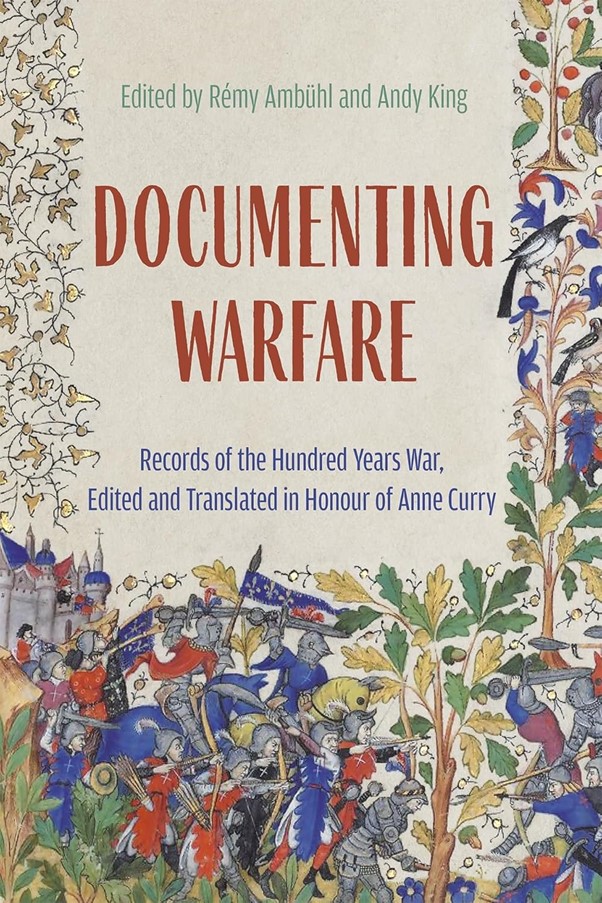
Publication – « Documenting Warfare. Records of the Hundred Years War, Edited and Translated in Honour of Anne Curry », éd. Rémy Ambühl, Andy King

Documentary sources for the Hundred Years War are many and varied, yet given the number that exist, comparatively few have been published, and even fewer translated. The contributors to this volume, celebrating the work of Professor Anne Curry, provide a wide selection of these sources, edited and translated, and accompanied with detailed analysis and commentaries, by experts in the field. They include contracts, inventories, letters of grace, depositions and wills, and shed new light across a range of themes, from recruitment, violence, ransoms and peace, to gunpowder, shipping, dress, and stray horses. An introductory essay gives a wider perspective on the sources for the Hundred Years War, taking a comparative view from both sides of the Channel.

Les sources documentaires relatives à la guerre de Cent Ans sont nombreuses et variées. Pourtant, compte tenu de leur nombre, peu d’entre elles ont été publiées et encore moins traduites. Les auteurs de ce volume, qui célèbre le travail du professeur Anne Curry, proposent une large sélection de ces sources, éditées et traduites, et accompagnées d’analyses et de commentaires détaillés, par des experts en la matière. Elles comprennent des contrats, des inventaires, des lettres de grâce, des dépositions et des testaments, et jettent une lumière nouvelle sur toute une série de thèmes, tels que le recrutement, la violence, les rançons et la paix, la poudre à canon, la navigation, la tenue vestimentaire et les chevaux errants. Un essai introductif offre une perspective plus large sur les sources de la guerre de Cent Ans, en adoptant un point de vue comparatif des deux côtés de la Manche.

Introduction: Documenting France and England at War (1337-1453): Comparative Perspectives
Rémy Ambühl and Andy King

1. Lordship and Garrisons on the Anglo-Scottish Marches: The Custody of Lochmaben Castle, 1346
Andy King

2. Mure Causit’s Castles: Female Inheritance, Mercenaries, and Royal Government in the Mid-Fourteenth Century
Justine Firnhaber-Baker

3. It’s Not What You Use but The Way That You Use It: The Role of Lionel of Clarence’s Arms Armour, and Equipment in Ireland, 1361-9
Malcolm Mercer

4. A Licence to Conquest: The Indenture of War between Sir Robert Knolles and Edward III, 1370
Rémy Ambühl

5. A Ship and its Owner in War and Peace: Geoffrey Starling and the Magdaleyn of Ipswich, 1372-5
Andrew Ayton

6. Enguerrand de Coucy, Princess Isabella and the Order of the Garter: Evidence from a Great Wardrobe Livery Roll
Chloë R. McKenzie

7. The Ransom Agreements between Juan I de Castile and Florimont de Lesparre, 1381-2
Guilhem Pépin

8. Soldier and Speaker: Sir Richard Waldegrave’s Interactions with the Court of Chivalry and the Peasants’ Revolt
Adrian R. Bell, Herbert Eiden and Helen Killick

9. Preparing to Invade England: The Missions of Jean de Blaisy to the Duchy of Brittany in 1386 and 1387
Michael Jones

10. Rape in Wartime: Welsh Mercenaries in the Kingdom of France, 1385
Valérie Toureille

11. The Testament of William, Lord Botreaux, and the Costs of the Hundred Years War, 1415-53
Michael Hicks

12. After the Battle of Agincourt: A Horse Auction in the Town of Aire, 1416
Bertrand Schnerb

13. The League of Aire, 1418
Pierre Courroux

14. Crime and Non-Punishment in Lancastrian Normandy: The Interesting Case of William de Hallifax, Esquire, 1420
David Simpkin

15. A Grant of Arms in an Age of Heraldic and Linguistic Transition
Adrian Ailes and Marianne Ailes

16. Philip the Good’s Appointment as King’s Lieutenant in Anglo-Burgundian France, 1429
Aleksandr Lobanov

17. Wildfire and Incendiary Gunshot: A Demonstration by German Gunners for Henry VI in 1438
Dan Spencer

18. Taking Earl Rivers to Gascony: The Transport Fleet that Never Sailed, 1450-1
Craig Lambert

Anne Curry, Medieval Historian
Michael Jones (with a note by Tony Pollard)

Anne Curry and the History of Medieval Normandy: A French Perspective
Véronique Gazeau

Informations pratiques :

Documenting Warfare. Records of the Hundred Years War, Edited and Translated in Honour of Anne Curry, éd. Rémy Ambühl, Andy King, Wppdbridge, The Boydell Press, 2024 ; 1 vol. 428 p. (Warfare in History, 54). ISBN : 978-1-83765-024-8. Prix GBP 110,00.

Source : Boydell and Brewer

Publié dans Publications | Laisser un commentaire

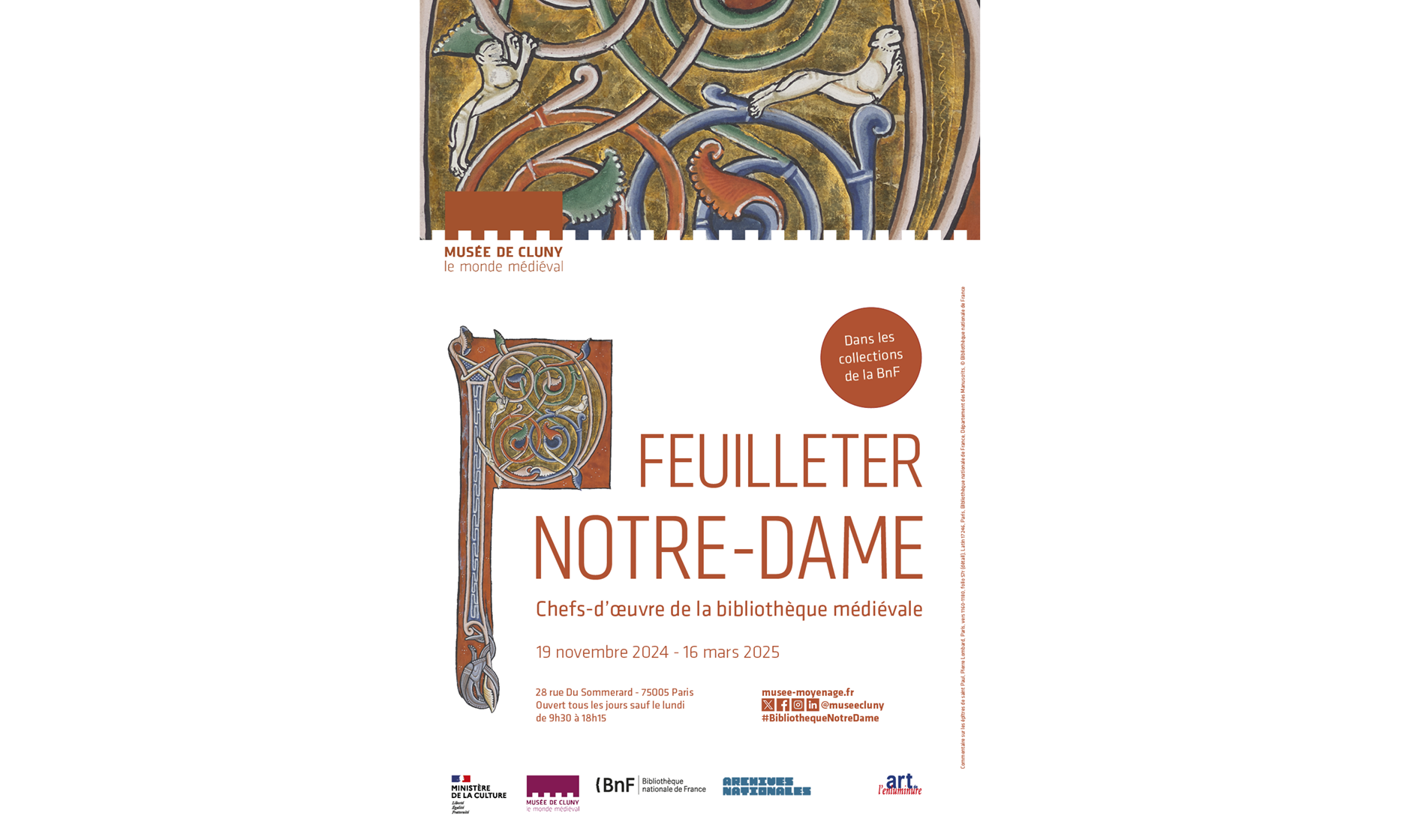
Exposition – Feuilleter Notre-Dame. Chefs-d’œuvre de la bibliothèque médiévale 

Du 19 novembre 2024 au 16 mars 2025
Paris

Depuis 1756, la Bibliothèque nationale de France conserve la majeure partie des manuscrits médiévaux de Notre-Dame, soit quelque 300 manuscrits. À travers la présentation d’une sélection d’une quarantaine de pièces, mais aussi de feuillets enluminés provenant du musée de Cluny et de prêts extérieurs, l’exposition dévoile toute la richesse de la vie intellectuelle, artistique et religieuse de la cathédrale au cours du Moyen Âge.

Commissariat :
Charlotte Denoël, conservatrice en chef, cheffe du service des manuscrits médiévaux à la Bibliothèque nationale de France
assistée scientifiquement par Éric Landgraf, responsable du service de la documentation du musée de Cluny – musée national du Moyen Âge 

L’exposition « Feuilleter Notre-Dame. Chefs-d’œuvre de la bibliothèque médiévale » est organisée par la Bibliothèque nationale de France (BnF) au musée de Cluny dans le cadre du programme « Dans les collections de la BnF » avec la participation des Archives nationales.

  • Droit d’entrée plein tarif : 12€
  • Droit d’entrée tarif réduit : 10€

Source : Musée de Cluny

Publié dans Exposition | Laisser un commentaire

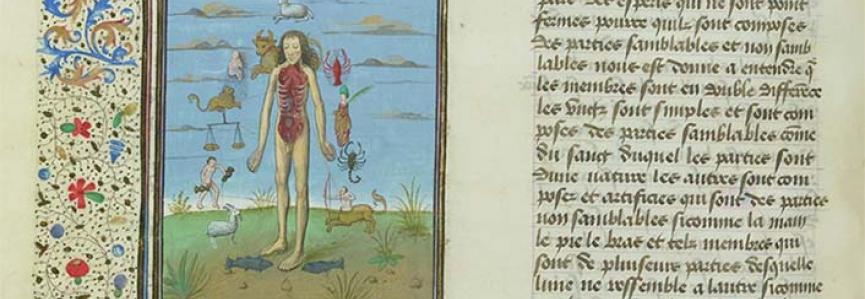
Journée d’étude – Pratiques divinatoires et corps humain au Moyen Âge (Orient-Occident)

La journée d’étude «Pratiques divinatoires et corps humain au Moyen Âge (Orient-Occident)» aura lieu jeudi 28 novembre 2024 (10h-17h30) à l’université d’Orléans (UFR LLSH, salle du Conseil J. Magnoux).

Cette journée est la première du cycle d’ateliers «La divination du manuscrit à l’imprimé : une histoire des textes de divination et pronostication», organisée par Jean-Charles Coulon (IRHT-CNRS) et Julien Véronèse (Université d’Orléans, POLEN).

Programme :

10h – Accueil des participants

  • 10h15-10h30 – Avant-propos par Jean-Charles Coulon (IRHT-CNRS) et Julien Véronèse (Université d’Orléans, POLEN)
  • 10h30-11h – Korshi Dosoo (Julius-Maximilian-Universität Würzburg), La “scène du banquet” dans la divination de l’Antiquité au XXe siècle
  • 11h-11h45 – Robert Alessi (CNRS, Orient & Méditerranée, UMR 8167) et Isabel Grimm-Stadelmann (Ludwig-Maximilians-Universität München / Bavarian Academy of Sciences), Divination and Ritual Healing in Byzantine and Arabic Sources
  • 11h45-12h15 – Discussion

12h15-14h – Déjeuner

  • 14h-14h30 – Petra Schmidl (Friedrich-Alexander-Universität Erlangen-Nürnberg), al-Ashraf ʿUmar’s Tabṣira: Chapter XLI.1. Convulsion Tables in an Example from 13th Century Yemen
  • 14h30-15h – Eleonora Andriani (IRHT-CNRS), Out of the Astrologer’s Mouth: Sneezes as Predictive Signs in Michael Scot’s Liber introductorius

15h-15h45 – discussion et pause

  • 15h45-16h30 – Jean-Patrice Boudet (Université d’Orléans, POLEN) et Laurence Moulinier-Brogi (Université Paris Nanterre, MéMo), Nicolas Monnel, auteur du Livre des passions astrologiques, et son procès 
  • 16h30-17h – Donato Verardi (Ca’Foscari University of Venice), Astrology and Celestial Physiognomy : Giambattista della Porta and the Artificial Divination of the Future
  • 17h-17h30 – discussion et fin des travaux

Informations pratiques :

Université d’Orléans (UFR LLSH, salle du Conseil J. Magnoux)
10 Rue de Tours, 45065 Orléans

28 novembre 2024

Source : IRHT

Publié dans Colloque | Laisser un commentaire

Colloque – Immured Relics – Display, Signs and Memory

This workshop is to explore the relation between relics and architecture. First and foremost, cases of relics physically built into the architectural fabric of churches and chapels will be addressed, such as columns whose capitals have been equipped with relics, triumphal arches or the apse’s semi-dome with relic depositories, “secret chambers” or even foundations and walls fortified by holy material.

In order to capture the variety of the phenomenon the “standard case” of relics in direct relation to the Christian altar, mandatory since the 8th/9th century, as well as relics kept in sacristies or treasury chambers in which all the relics and reliquaries owned by a given church are kept, are generally excluded. Particular attention is given to the mise-en-scène of specific relics in a fixed and architectonically defined surrounding. Since no systematic overview documenting this phenomenon is available, the aim is to establish a taxonomy of immured relics, in order to ask, in a next step, why these and not other places in the sacred space were chosen to house a relic.

Another important aspect that will be investigated is the question of presence, visibility and signalization or indication of immured relics. The act of immuring can be considered both as a way of incorporating relics permanently into the architectural fabric as well as hiding and securing relics from theft. In which cases was such presence signaled? Is there a shift in the value of the visibility of relics over their mere presence (or some exclusive knowledge of their presence) that can be explained by changing customs with regard to relic veneration? Do some typologies of immured relics occur only at certain moments in time and at certain places or are the adopted solutions rather indifferent to chronology and geography? The conference includes examples ranging from Late Antiquity to the High Middle Ages (until 1300) on a global scale and although the main focus is on Christian relics, practices of other religious contexts are included in order to investigate the respective specificities of relic deposition in architecture. Also, phenomena of persistence of practices of immuring relics, both as a legacy of Antiquity and as a tenacity of the medieval tradition in the Modern Age, are considered.

Wednesday, 27.11.2024

14:00
greetings (Tanja Michalsky)
introduction (Adrian Bremenkamp and Maddalena Vaccaro)

Chair: Norbert Zimmermann (Deutsches Archäologisches Institut Rom)
14:30-15:15
Vladimir Ivanovici (Accademia di architettura di Mendrisio-Università della Svizzera italiana)
“Enclosing Divine Power: Living-Rock Relics in Late Antique Palestine and Beyond”

15:15-16:00
Muhamed Riyaz Chenganakkattil (Indian Institute of Technology, Delhi)
“From Blackstone to Golden Waterspout: On Immuring the Objects of Veneration in the Sacred Architecture of the Kaaba”

coffee break

16:30-17:15
Antonino Tranchina (Università degli Studi di Udine)
”Architettura analogica. Una rilettura di fonti per alcuni casi di reliquie murate nel Mediterraneo orientale”

17:15-18:00
Carlo Ebanista (Università del Molise)
“Il ‘venerevol sepolcro marmoreo’ di San Felice nel santuario di Cimitile: la risalita delle reliquie dalla tomba al deposito nella parete retrostante l’altare

18:00-18:45
Simone Piazza (Università Ca’ Foscari Venezia)
“Reliquie in grotta: nuove riflessioni sullo sciamito purpureo dipinto nell’eremo farfense di monte Acuziano (VIII–IX secolo)”

Thursday, 28.11.2024

Chair: Tanja Michalsky (Bibliotheca Hertziana – Max-Planck-Institut für Kunstgeschichte)
9:00-9:45
Luigi Carlo Schiavi (Università degli Studi di Pavia)
“Del problematico rapporto dei Milanesi con le reliquie. I corpi santi nella tradizione ambrosiana tra liturgia e occultamento”

9:45-10:30
Manuela Gianandrea (Sapienza Università di Roma)
« Reliquie (‘variamente’) murate e “camere” per corpi santi nel Medioevo romano: riflessioni su un fenomeno polisemico »

coffee break

11:00-11:45
Giulia Bordi (Università Roma Tre)
“Il cuore di S. Saba. L’abside e le sue memorie della Terra Santa (VII–IX secolo)”

11:45-12:30
Antonio Iacobini (Sapienza Università di Roma) and Anna Maria D’Achille (Sapienza Università di Roma)
“Il cardinale Gerardo Caccianemici e la reliquia del Titulus Crucis: il rilancio di S. Croce in Gerusalemme nel XII secolo”

12:30-13:15
Adriano Amendola (Università degli Studi di Salerno)
“’Sono state trasportate ne le nicchie, dentro la cuppola’. La seconda vita delle reliquie vaticane e la loro metamorfosi per la devozione”

lunch break

Chair: Maddalena Vaccaro (Università degli Studi di Salerno)
14:15-15:00
Teresa Martínez Martínez (Università di Padova)
A Wood Bone in a Body of Stone. The Wooden Column of San Millán de Suso and Pilgrims’ Sensorial Experiences in the Middle Ages”

15:00-15:45
Maja Zeman (Sveučilište u Zagrebu / University of Zagreb)
“Stored but Exposed, Hidden but Traceable – Modes of Display and Signaling Relics through the architecture on the Island of Lopud (Elaphites, Dubrovnik)”

coffee break

16:15-17:00
Xavier Barral i Altet (Institut national d’histoire de l’art, INHA, Paris)
“Reliquie murate nei chiostri medievali: topografia, contesto, religiosità”

17:00-17:45
Pierre Martin (Université Grenoble Alpes)
“Staging an Antique-Style Tomb: The Martyrium of Saint-Aignan d’Orléans”

17:45-18:30
Nicoletta Usai (Università degli Studi di Cagliari)
« Un caso di persistenza del Medieovo in Età Moderna? Le reliquie murate nel Santuario dei Martiri della Cattedrale di Santa Maria a Cagliari »

Friday, 29.11.2024

Chair: Adrian Bremenkamp (Bibliotheca Hertziana – Max-Planck-Institut für Kunstgeschichte)
9:00-9:45
Wilfried E. Keil (Ruprecht-Karls-Universität Heidelberg)
“The Presence and Efficacy of Relics Embedded in Capitals in Medieval Sacred Spaces”

9:45-10:30
Giulia Anna Bianca Bordi (Università Ca’ Foscari Venezia)
“Dalle reliquie murate al muro-reliquia: storia e venerazione del ‘pilastro del miracolo’ di San Marco a Venezia »

10:30-11:15
Christopher Sprecher (Universität Regensburg)
“Blood, Sweat, and Tears: Manuel I Komnēnos and the Double Translation of the Holy Stone”

coffee break

11:45-12:30
Kateřina Kubínová (Akademie věd České republiky / Czech Academy of Sciences)
“Immured Relics at Karlštejn Castle”

12:30-13:15
Maria Carolina Campone (Scuola Militare « Nunziatella ») and Saverio Carillo† (Università della Campania Luigi Vanvitelli)
“Palladio/Palladi: il paesaggio culturale dei talismani urbici nel Medioevo”

13:15
conclusion

Source : Bibliotheca Hertziana

Publié dans Colloque | Laisser un commentaire

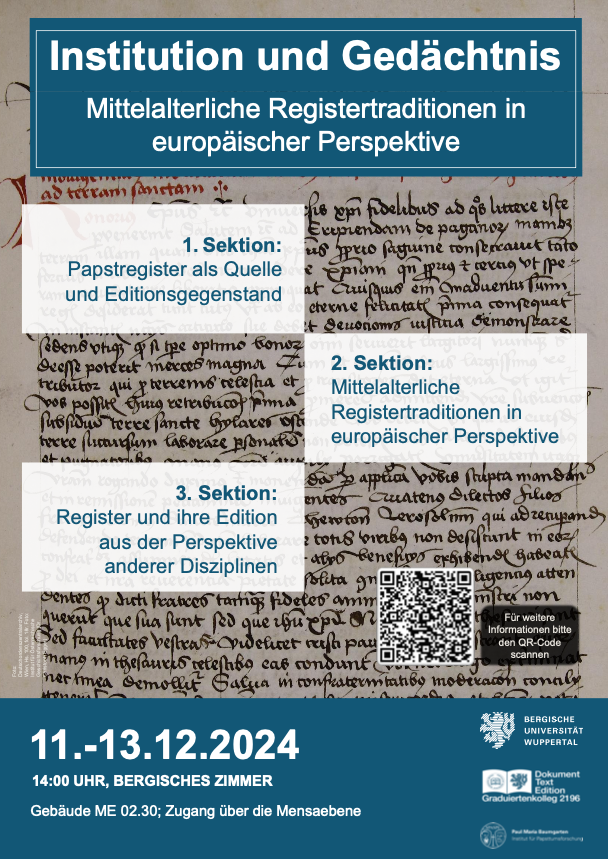
Colloque – Institution und Gedächtnis – Mittelalterliche Registertraditionen in europäischer Perspektive

Die Erforschung mittelalterlicher Register haben länderspezifisch – etwa in Frankreich – sowie gesamteuropäisch in der Papsttumsforschung Tradition. Dabei haben sich verschiedene Ansätze in der Auswertung und Edition herausgebildet, die einerseits durch das Material und seine jeweiligen Kontexte, andererseits durch unterschiedliche Zugangsweisen in den einzelnen Ländern bedingt sind. Dies betrifft zum einen Editionen, wie die in Kürze abgeschlossene Edition der Kanzleiregister Innocenzʼ III., zum anderen Ausgaben und Studien zu Registern geistlicher und weltlicher Herrscher, zu solchen von Städten, Orden und anderen Gemeinschaften im Reich, Italien, Frankreich, England und der Iberia. Ziel der Tagung ist es, das mittelalterliche europäische Registerwesen durch die Zusammenführung verschiedener nationaler Forschungstraditionen und Disziplinen im Spannungsfeld von lokalen, regionalen und ‚globalen‘ Entwicklungen besser verstehen zu lernen und zugleich weitere interdisziplinäre Forschungen anzuregen.

Eine zentrale Rolle spielt dabei das Verhältnis von Registerführung zur Ausbildung von institutionellen Strukturen und ihrem internen und nach außen sichtbar gemachten Selbstverständnis. Inwiefern liefern Register Anhaltspunkte für das „Gedächtnis“ der päpstlichen oder einer landesfürstlichen Kanzlei und der dahinterstehenden Institution? Welche Bedeutung haben sie für Städte und Ordensgemeinschaften? Sind sie Spiegel oder Konstituenten der Institutionalisierung von Wissen und Herrschaft, die dieses zur Voraussetzung hat? Welche überregionalen Einflüsse und Wechselwirkungen in Anlage, Verständnis und Nutzung von Registern lassen sich in Europa ausmachen? Und welchen Einfluss hat dies auf den Blick der Forschung und die Edition solcher Texte?

Ausgehend von diesen Fragen sollen in drei Sektionen – beginnend mit dem Phänomen der Papstregister und ihrer Edition als Fundgrube für gesamteuropäische Themen – vergleichend unterschiedliche Ausformungen des Registerwesens beleuchtet und abschließend die Potentiale für andere Disziplinen jenseits der Geschichtswissenschaft ausgelotet werden.

Mittwoch, 11.12.2024

Sektion I: Papstregister als Quelle und Editionsgegenstand

Jochen Johrendt/ Aaron Schwarz (Wuppertal): Einleitung

Werner Maleczek (Wien): Die Kanzleiregister Honorius’ III. Eine Annäherung

Rainer Murauer (Rom): Papstregister und Kanonistik: Erfahrungen und Perspektiven für die Edition der Register Honorius’ III.

Isabella Aurora (Vatikanstadt): Il Censimento Bartoloni – I registri papali nella prospettiva della tradizione originale

Matthias Thumser (Berlin): Neben der Spur? Vom Thronstreitregister Innocenz ’ III. bis zum Spezialregister Clemens’ IV.

Barbara Bombi (Canterbury): Registration and authority : The register of the anti-pope Peter of Corbario / Nicholas V (Reg. Vat . 118 / 118A)

Maria Magdalena Rückert (Ludwigsburg): Der Papst und die Frauen Register der Kurie als Quellen für weibliches monastisches Leben

Donnerstag, 12.12.2024

Iben Fonnesberg-Schmidt (Aalborg): The papal registers and the Early Baltic Crusades

Caterina Cappuccio (Rom): Die päpstliche Kapelle im 13. Jahrhundert anhand der päpstlichen Register. Ein Überblick

Jörg Voigt (Hannover): Spätmittelalterliche Papstregister als Fundgrube (und Aufgabe) Erfahrungen aus der Arbeit am Repertorium Germanicum

Sektion II: Mittelalterliche Registertraditionen in europäischer Perspektive

Roman Zehetmayer (St. Pölten): Zur Funktion von Traditionsbüchern

Christian Lackner (Wien): Prekäre Verwaltungspraxis? Die habsburgischen Kanzleiregister in der 2. Hälfte des 14. und zu Anfang des 15. Jahrhunderts

Pietro Silanos/Nicola Gadaleta (Bari): Contributo alla ricostruzione dei Registri Angioni: il fondo manoscritto di Eustachio Rogadeo

Riccardo Parmeggiani (Bologna): I registri nei comuni dellʼItalia settentrionale : lʼesempio di Bologna

Sebastian Roebert (Leipzig): Register überall? Zur Überlieferung und Praxis der Registerführung auf der Iberischen Halbinsel

Andreas Zajic (Wien): Quod non est in registris, non est in mundo. Oder: Welche Informationen dürfen wir in den Reichs bzw. Hofkanzleiregistern des 15. Jahrhunderts erwarten?

Aaron Schwarz (Wuppertal): Register an der Peripherie? Das Neumärkische Landbuch

David d’Avray (Oxford): Registrierung: Päpstliche und englische königliche Regierung im Vergleich

Freitag, 13.12.2024

Kristjan Toomaspoeg (Lecce): Registerführung im Deutschen Orden und Johanniterorden

Rolf Große (Paris): Französische Chartulare Formen und Funktionen

Sektion III: Register und ihre Edition aus der Perspektive anderer Disziplinen

Andrea Riedl (Regensburg): Papst und Mendikanten. Theologische Einordnungen der Papstregister als Quelle dominikanischer Geschichte

Marco Rainini (Mailand): La teologia in curia: osservazioni attraverso i registri papali fra Innocenzo III e Gregorio IX

Anja Grebe (Krems): Ordnung durch Bilder. Die Initiale als Gliederungselement im Kontext pragmatischer Schriftlichkeit und künstlerischem Anspruch

Bergische Universität Wuppertal, Bergisches Zimmer Gebäude ME 02.30, Gaußstraße 20

11.12.2024 – 13.12.2024

Bei Interesse wird um Anmeldung bis zum 30.11.2024 unter folgender Adresse gebeten: honorius@uni-wuppertal.de

Aaron Schwarz
Bergische Universität Wuppertal, GRK 2196 „Dokument – Text – Edition“
Gaußstr. 20, 42119 Wuppertal
honorius@uni-wuppertal.de
aaschwarz@uni-wuppertal.de

Source : H-Soz-Kult

Publié dans Colloque | Laisser un commentaire

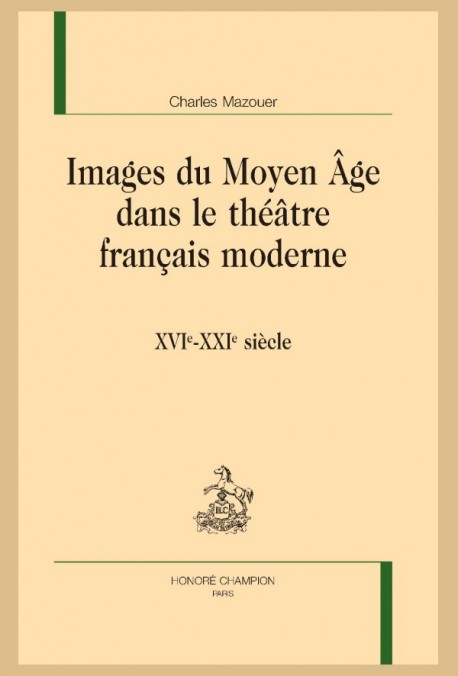
Publication – Charles Mazouer, « Images du Moyen Âge dans le théâtre français moderne, XVIe-XXIe siècle »

Tour à tour méprisé, objet de curiosité, vénéré, envisagé enfin de manière plus apaisée et plus juste, le Moyen Âge a fourni depuis cinq siècles des sujets à nos dramaturges, évidemment influencés par le contexte de ces jugements successifs. La visée du présent ouvrage est bien de dégager les différentes images que les dramaturges ont construites du Moyen Âge et d’examiner quelles représentations de cette période ils ont proposées à leurs spectateurs. Quatre étapes sont parcourues dans l’évolution d’un tel théâtre historique. Les XVIe et XVIIe classiques ne se montrent pas très curieux du Moyen Âge. Un réel goût de l’histoire médiévale s’affirme des Lumières au romantisme. C’est au XIXe siècle que s’épanouit pleinement le médiévalisme. Plus en retrait, le XXe siècle mêle admiration et irrespect, pour un Moyen Âge utilisé à la fois pour son histoire et pour les légendes et mythes véhiculés par sa littérature. Oui, le Moyen Âge n’a cessé de fasciner nos dramaturges, qui en ont donné des images plurielles – riches et justes souvent, contrastées toujours ; mais ont-ils révélé la vérité du Moyen Âge ?

Charles Mazouer, professeur honoraire à l’université de Bordeaux, a consacré une douzaine d’ouvrages à l’histoire du théâtre français du Moyen Âge au XVIIIe siècle. Ses derniers livres s’intéressent à la place du christianisme dans le théâtre ancien, et plus largement à celle de la transcendance, jusque dans les œuvres théâtrales de la modernité.

Table des matières : ici

Informations pratiques :

Charles Mazouer, Images du Moyen Âge dans le théâtre français moderne, XVIe-XXIe siècle, Paris, Honoré Champion, 2024 ; 1 vol., 248 p. (Convergences, 8). ISBN : 9782745362476. Prix : € 48,00.

Source : Honoré Champion

Publié dans Publications | Laisser un commentaire

Publication – Leila K. Norako, « Monstrous Fantasies. England’s Crusading Imaginary and the Romance of Recovery, 1300-1500 »

Monstrous Fantasies asks why medieval romances reimagining the crusades ending in a Christian victory circulated in England with such abundance after the 1291 Muslim reconquest of Acre, the last of the Latin crusader states in the Holy Land, and what these texts reveal about the cultural anxieties of late medieval England. Leila K. Norako highlights the impact that the Ottoman victory and subsequent massacre of Christian prisoners at the battle of Nicopolis in 1396 had on intensifying the popularity of what she calls recovery romance.

These two episodes inspired a sense of urgency over the fate of the Holy Land and of Latin Christendom itself, resulting in the proliferation of romances in which crusading English kings like Richard I and anachronistic legends like King Arthur not only reconquered Jerusalem but committed genocidal violence against the Muslims. These romances, which—as Norako argues—also influenced Geoffrey Chaucer’s Canterbury Tales, conjure fantasies of an ascendant global Christendom by rehearsing acts of conquest and cultural annihilation that were impossible to realize in the late Middle Ages. Emphasizing the tension in these texts between nostalgia and anticipation that fuels their narrative momentum, Monstrous Fantasies also explores how the cultural desires for European and Christian hegemony that recovery romances versified were revived in the wake of the so-called wars on terror in the twenty-first century in such films as Kingdom of Heaven and American Sniper.

Leila K. Norako is Assistant Professor of English at the University of Washington. She specializes in late Middle English literature and culture, with an emphasis on romance, crusades literature, and the works of Geoffrey Chaucer.

Informations pratiques :

Leila K. Norako, Monstrous Fantasies. England’s Crusading Imaginary and the Romance of Recovery, 1300-1500, Ithaca (NY), Cornell University Press, 2024 ; 1 vol., 342 p. ISBN : 978-1-50177-631-1. Prix : USD 59,95.

Source : Cornell University Press

Publié dans Le réseau | Laisser un commentaire

Colloque – Le mariage noble dans les terres du Nord (Artois, Flandre, Hainaut). Stratégies familiales et expérience individuelle au Moyen Âge

MONT-ST-AUBERT, Hôtel Le Panoramique / Floréal, jeudi 12 décembre 2024
(10h30’-15h30’) ; vendredi 13 décembre (9h30’-16h30’)

Sous l’égide de la Fondation Roger de le Pasture / Van der Weyden et de son président Serge Hustache, de l’Université de Paris-Est Créteil et de l’Université polytechnique Hauts-de-France (Valenciennes) aura lieu au Panoramique (Floréal), au Mont-Saint Aubert, un colloque dont le thème est le suivant : Le mariage noble dans les terres du Nord (Artois, Flandre, Hainaut). Stratégies familiales et expérience individuelle au Moyen Âge.

Jeudi 12 décembre

10h30 Accueil

11h Michelle BUBENICEK, directrice de l’École nationale des chartes, « Le mariage : un obstacle au pouvoir féminin ? Les deux unions de Yolande de Flandre, dame de Cassel (13261395) »

11h30 Jean-Luc PYPAERT, Fondation Roger de le Pasture, « Chassez le naturel, il revient au galop ! Philippe le Bon marie ses bâtards »

(Pause déjeuner)

13h30 Jean-Charles HERBIN, professeur, Université Polytechnique Hauts de France, « Le mariage noble dans la Geste des Loherains : un miroir diffus et évolutif de la société aristocratique (XIIe-XVe siècle) ? »

14h Sarah FOURCADE, maître de conférences, Université Paris-Est Créteil, « Jusqu’à ce que la mort nous sépare ? Veuvage et pratiques funéraires dans la noblesse du Nord »

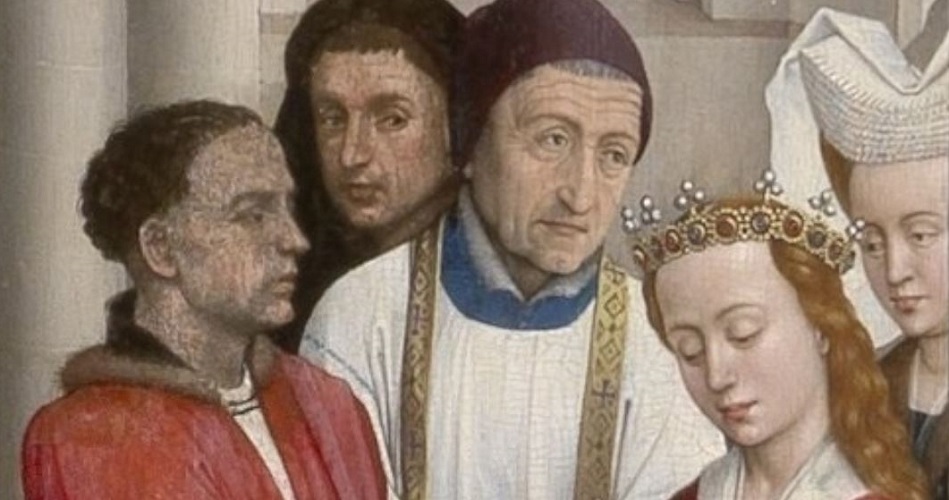
14h30 Ludovic NYS, professeur, Université Polytechnique Hauts de France, « Résonances liturgiques dans les scènes du mariage de la Vierge dans la peinture des anciens Pays-Bas au XVe siècle »

15h30 Visite de la cathédrale (dernière entrée au trésor 16h15), et de la ville

Vendredi 13 décembre

9h30 Véronique FLAMMANG, Hub. Brussels, « Stratégie matrimoniale de la noblesse en Hainaut à la fin du Moyen Âge »

10h Frederik BUYLAERT, professeur, Universiteit Gent, « Marriage and the definition of nobility : the evidence from Flanders in a comparative perspective »

Pause

10h45 Alain MARCHANDISSE, maître de recherches FNRS, professeur associé Université de Liège, et Bertrand SCHNERB, professeur émérite à l’Université de Lille 3, « Les trois mariages de Jeanne de Hondschoote (1400-1415) »

11h15 Céline BERRY, docteur de l’UPEC, enseignante agrégée Académie d’Orléans, « Le mariage dans la famille de Luxembourg-Ligny au XIVe-XVe siècle »

(Pause déjeuner)

14h Éric BOUSMAR, professeur, UCLouvain, « Autour des mariages des seigneurs de Haynin »

14h30 Ninon GAVAGE, Université de Liège, « Stratégies et réalités matrimoniales au sein des lignages Croÿ, Lalaing et Brimeu au XVe siècle »

15h Jacques PAVIOT, professeur émérite, Université Paris-Est Créteil, « Les Lannoy ont-ils eu une stratégie matrimoniale ? »

16h Conclusions

Du jeu. 12 décembre 2024 au ven. 13 décembre 2024

Place du Mont Saint-Aubert 2, 7542 Doornik, Belgique

Ceux qui souhaiteraient assister à ce colloque sont priés de s’inscrire au plus tard le vendredi 29 novembre en

(1) envoyant un mail de confirmation de leur présence le jeudi, le vendredi ou durant les deux journées à Pierre Decourcelle à l’adresse suivante : decourcelle.pierre@hotmail.com ;

(2) en payant le montant de 20,- € (pour l’ensemble du colloque) ou 10,- € (pour l’une des deux journées, en précisant laquelle) au n° de compte de l’association Roger de le Pasture : IBAN : BE80 1262 0604 8177.

Ce coût, outre la participation aux séances du colloque, couvre les frais du repas et des boissons de midi (sandwichs garnis).

Source : Je Culture en Hainaut

Publié dans Colloque | Laisser un commentaire

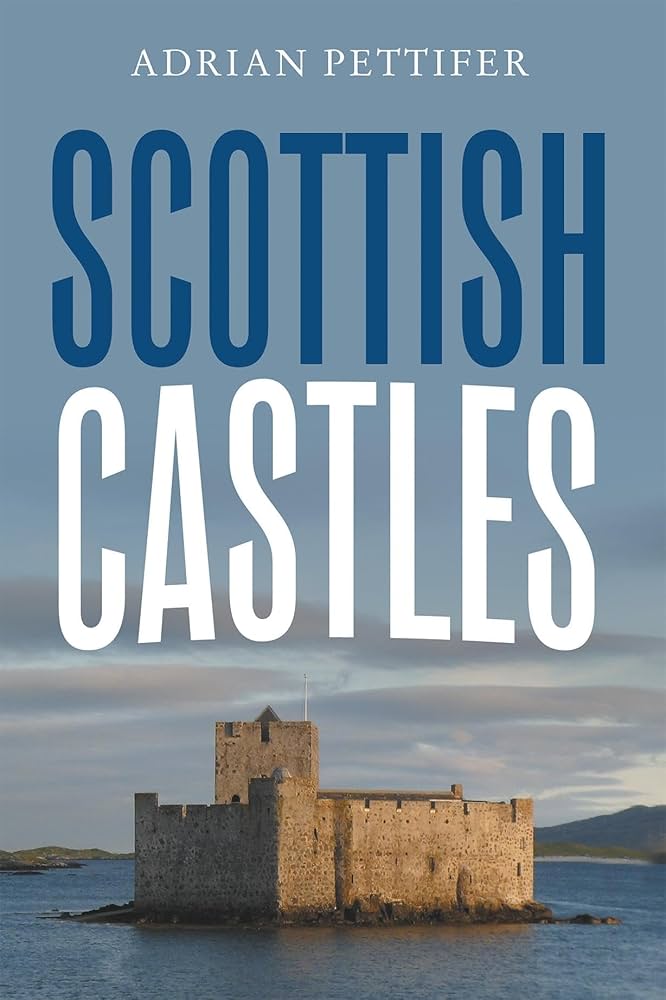
Publication – Adrian Pettifer, « Scottish Castles »

Discover the castles of Scotland, from early « motte and bailey » earthworks and impressive walled enclosures to the many tower houses that dot the landscape. Castles were built in increasing numbers from the 14th to the 17th century, as residences for the Scottish nobility. Some are still proudly occupied; others are well-maintained ruins; many others slowly decay in fields and farmyards.

Here, Adrian Pettifer provides a brief account of every Scottish castle to survive in a reasonable state of preservation, including such iconic sites as Edinburgh, Glamis and Cawdor. Each of the more than five hundred main entries provides a brief history and description of a castle, followed by advice on accessibility, sources for further reading and cross-references to related sites. An introduction supplies the historical background, while a glossary covers all aspects of Scottish castles in some detail. Ordnance Survey references are given in the index.

Adrian Pettifer gained his degree in ancient and medieval history from Birmingham University. He is an avid visitor of historic monuments.

Informations pratiques :

Adrian Pettifer, Scottish Castles, Woodbridge, The Boydell Press, 2024 ; 1 vol., 402 p. ISBN : 978-1-83765-204-4. Prix : GBP 25,00.

Source : Boydell and Brewer
Publié dans Publications | Laisser un commentaire