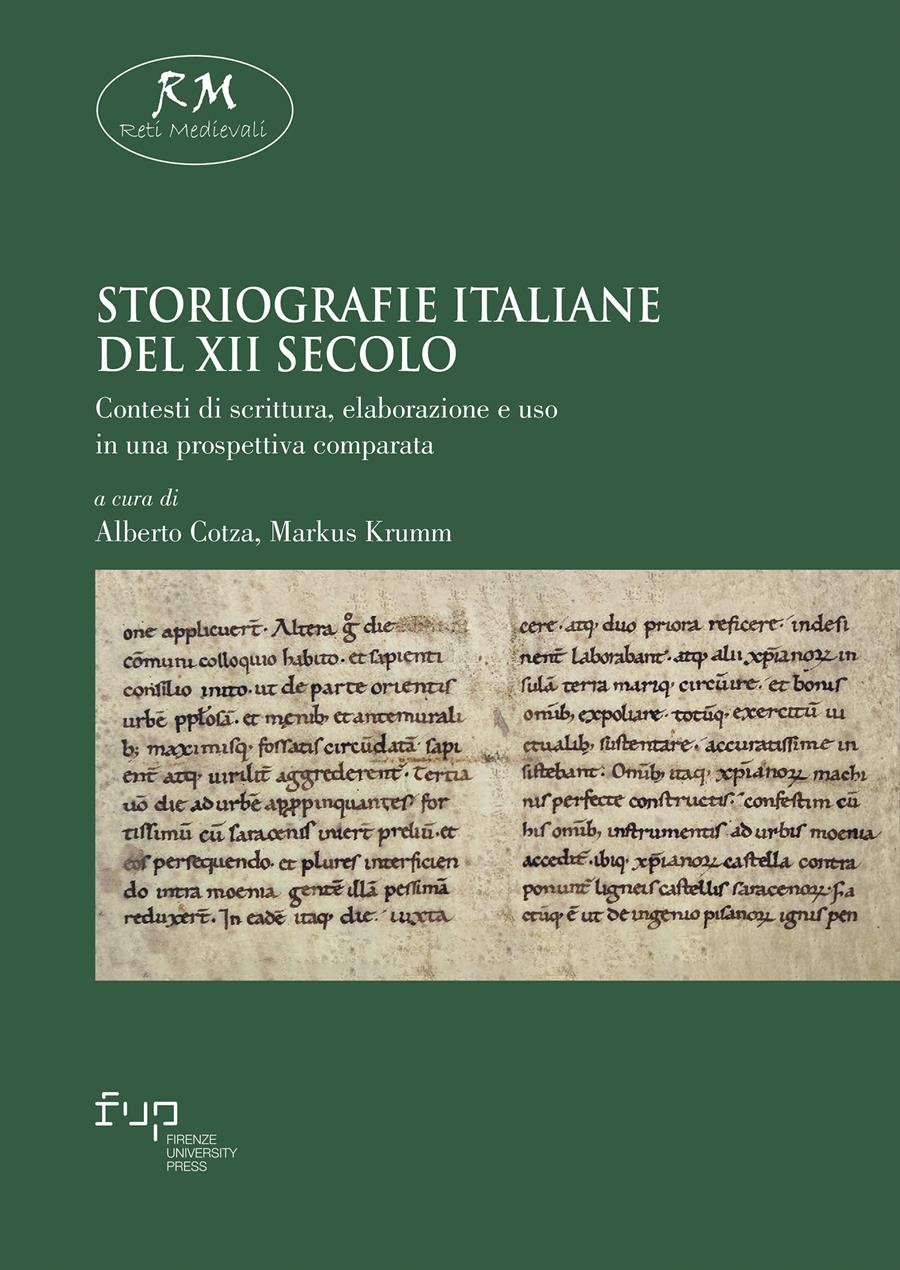
Publication – « Storiografie italiane del XII secolo. Contesti di scrittura, elaborazione e uso in una prospettiva comparata », éd. Alberto Cotza, Markus Krumm

The essays collected in this volume are dedicated to the pragmatic dimension of the writing of history in 12th-century Italy. All the contributions can be read by following a few guiding questions: why and by whom were chronicles written? In what spheres and with what objectives did they circulate? How were they used in the political arena? Through an innovative comparative perspective, which holds southern and central-northern Italy together, the main objective of the volume is to problematise, by means of concrete case studies, social and political significance of history writing in 12th-century Italy.

Alberto Cotza
University of Pisa, Italy – ORCID: 0000-0001-7834-8013

Markus Krumm
University of Munich Ludwig Maximilian, Germany – ORCID: 0009-0005-1553-7008

Table des matières : ici

Informations pratiques :

Storiografie italiane del XII secolo. Contesti di scrittura, elaborazione e uso in una prospettiva comparata« , éd. Alberto Cotza, Markus Krumm, Florence, Firenze University Press, 2024 ; 1 vol., 354 p. (Reti Medievali E-Book). DOI : 10.36253/979-12-215-0403-3

Source : Firenze University Press

Publié dans Publications | Laisser un commentaire

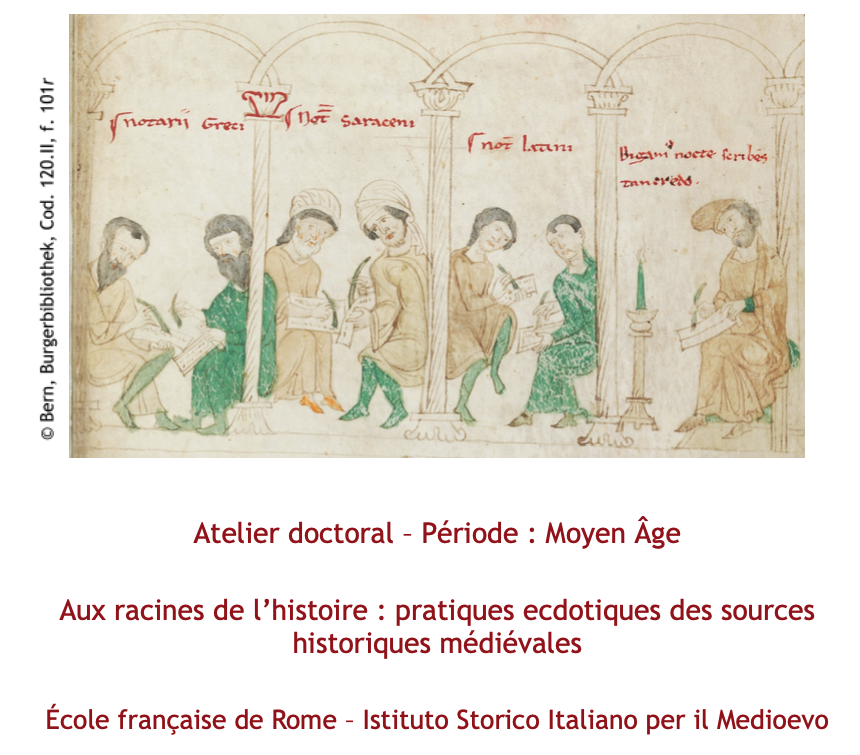
Appel à contribution – Aux racines de l’histoire : pratiques ecdotiques des sources historiques médiévales

Atelier doctoral – Période : Moyen Âge
Aux racines de l’histoire : pratiques ecdotiques des sources historiques médiévales
École française de Rome – Istituto Storico Italiano per il Medioevo
ORGANISATION Luca Farina (EfR) et Adriano Russo (EfR)

Date limite de candidature : 20 décembre 2024, 12h

La prise de conscience que les sources historiques ne constituent pas une réalité fixe et objective constitue une avancée fondamentale des études historiques des XIXe et XXe siècles. Dans le cas des sources textuelles (littéraires et documentaires), leur caractère fluide découle du fait qu’elles constituent elles-mêmes des objets historiques diachroniques, susceptibles d’évolution et de détérioration. Pour cette raison, elles doivent être saisies et étudiées dans cette dynamique même, et la philologie s’est imposée comme l’instrument privilégié pour rendre compte de l’unicité et de la complexité des sources textuelles. Son objectif premier est la production d’éditions critiques à la fois reconstructives (c’est-à-dire basées sur l’ambition de rétablir la forme originale d’un texte donné) et capables de rendre compte des modifications subies par les textes au fil du temps. Cette prise de conscience des historiens, à partir du XIXe siècle, s’incarne en quelque sorte dans l’institution des Monumenta Germaniae Historica, collection d’éditions critiques de textes relatifs à l’histoire de l’Empire d’Occident, fondées sur des principes ecdotiques rigoureux, entreprise fondatrice que suivirent bien d’autres entreprises éditoriales également méritoires. De cette prise de conscience découle que l’historien (ou à tout le moins le
spécialiste des époques antique ou médiévale) se doit d’être également philologue pour s’approprier pleinement les sources textuelles.

L ’ambition de cet atelier est, à la fois, d’initier les jeunes chercheurs à cette “fluidité” des textes et de leur fournir les outils méthodologiques nécessaires pour y faire face et produire des éditions critiques fondées sur des critères philologiques rigoureux.

La formation sera articulée en cinq journées thématiques, chacune dédiée à un aspect particulier de l’édition des textes médiévaux. Outre les cours donnés par des spécialistes du domaine, les doctorants présenteront leurs propres recherches (45 minutes) en mettant notamment en lumière les difficultés qu’ils rencontrent. Chaque session sera suivie d’un atelier pratique et d’une longue plage d’échanges au
cours de laquelle on cherchera à trouver des solutions aux problèmes soulevés et à suggérer des pistes d’enquête susceptibles d’aider les doctorants dans leur parcours de recherche.

Informations pratiques :

Bénéficiaires potentiels de l’atelier : doctorants en lettres classiques/humanités ou en histoire de toutes universités, sans limitations de nationalité. Une formation à la paléographie grecque et latine n’est pas nécessaire, mais une connaissance du grec et du latin est requise

Lieux : locaux de l’École française de Rome, Piazza Navona 62 et locaux de l’Istituto Storico Italiano per il Medioevo, Piazza dell’Orologio 4

Frais : inscription, déjeuners et hébergement gratuits ; transport etdîners à la charge des participants

Langue des conférences : français, anglais et italien.

Date limite de candidature : 20 décembre 2024

Admission

Les dossiers de candidature doivent comporter :

– un CV du candidat
– un résumé de thèse dans l’une des trois langues de l’atelier (italien, français, anglais)
– une lettre de motivation évoquant les projets futurs du candidat et les raisons de son intérêt pour l’atelier de formation

Les dossiers, sous forme d’un seul document PDF , doivent parvenir avant le 20 décembre 2024 à midi aux adresses suivantes : luca.farina@efrome.it ou adriano.russo@efrome.it. La sélection effectuée
par le comité de coordination de l’EFR et de l’ISIME sera communiquée au plus tard le 30 janvier 2025.

Les doctorants seront logés à l’École française de Rome (chambres doubles ou individuelles), place Navone, et leurs déjeuners seront pris en charge. En revanche, le déplacement vers Rome et les dîners seront à la charge des participants ou de leur université. Pour toute information pratique et logistique, écrire à secrma@efrome.it

Publié dans Appel à contributions | Laisser un commentaire

Publication – Kathryn Jasper, « Bounded Wilderness. Land and Reform at the Hermitage of Fonte Avellana, ca. 1035-1072 »

In Bounded Wilderness, Kathryn Jasper focuses on the innovations undertaken at the hermitage of Fonte Avellana in central Italy during the eleventh century by its prior, Peter Damian (d. 1072). The congregation of Fonte Avellana experimented with reforming practices that led to new ways of managing property and relations among clergy, nobles, and the laity.

Jasper charts how Damian’s notion of monastic reform took advantage of the surrounding topography and geography to amplify the sensory aspects of ascetic experiences. By focusing on monastic landscapes and land ownership, Jasper demonstrates that reform extended beyond abstract ideas. Rather, reform circulated locally through monastic networks and addressed practical concerns such as property boundaries and rights over water, orchards, pastures, and mills. Putting new sources, both documentary and archaeological, into conversation with monastic charters and Damian’s letters, Bounded Wilderness reveals the interrelationship of economic practices, religious traditions, and the natural environment in the idea and implementation of reform.

Kathryn Jasper is Associate Professor of History and Director of European Studies at Illinois State University.

Informations pratiques :

Kathryn Jasper, Bounded Wilderness. Land and Reform at the Hermitage of Fonte Avellana, ca. 1035-1072, Ithaca (NY), Cornell University Press, 2024 ; 1 vol., 288 p. ISBN : 978-1-501-77760-8. Prix : € 54,95.

Source : Cornell University Press

Publié dans Publications | Laisser un commentaire

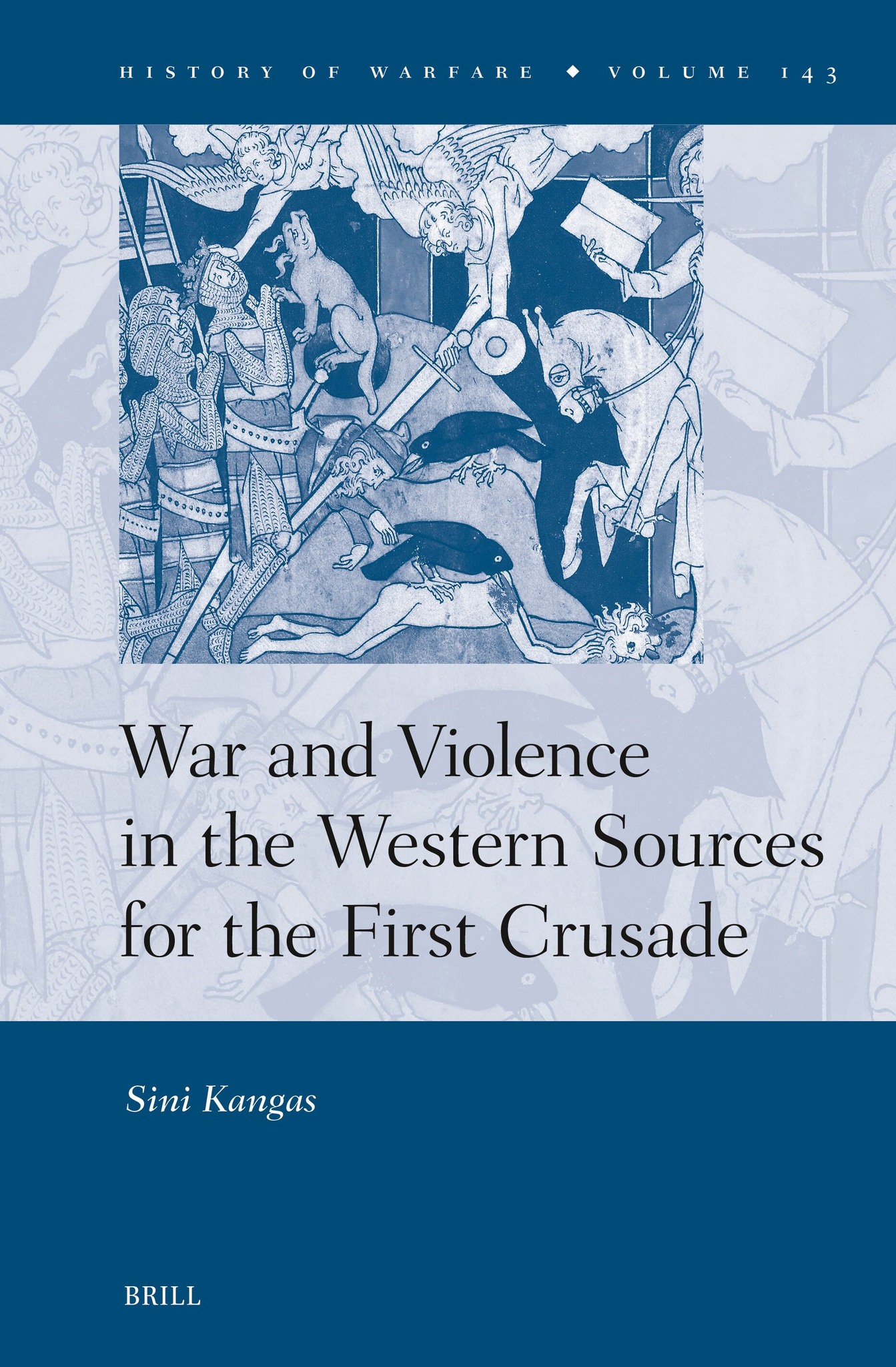
Publication – Sini Kangas, « Cover War and Violence in the Western Sources for the First Crusade »

Medieval Westerners accepted killing for religion and praised the outcome of the First Crusade (1096-1099). At the same time, their attitude to violence was ambivalent. Theologians shunned the practical use of force, while the warrior aristocracy valued the capacity for physical destruction. In the absence of theological doctrine on the practicalities of holy warfare, the first crusaders draw their ideas about killing from diverse and sometimes conflicting traditions. This book answers questions about how religious violence was described, justified and remembered in the sources of the First Crusade. What was the relation between faith, convention, and action?

Sini Kangas, Ph.D (1973), Tampere University, is a Researcher of the Crusades and Christian ideological warfare. She has published many articles on the history of the Crusades and edited monographs, including Authorities in the Middle Ages: Influence, Legitimacy, and Power in Medieval Society (with Mia Korpiola and Tuija Ainonen, Walter deGruyter, 2013).

Table des matières : ici

Informations pratiques :

Sini Kangas, Cover War and Violence in the Western Sources for the First Crusade War and Violence in the Western Sources for the First Crusade, Boston-Leyde, Brill, 2024 ; 1 vol., 480 p. (History of Warfare, 143). ISBN : 978-90-04-69033-2. Prix :€ 145,00.

Source : Brill

Publié dans Publications | Laisser un commentaire

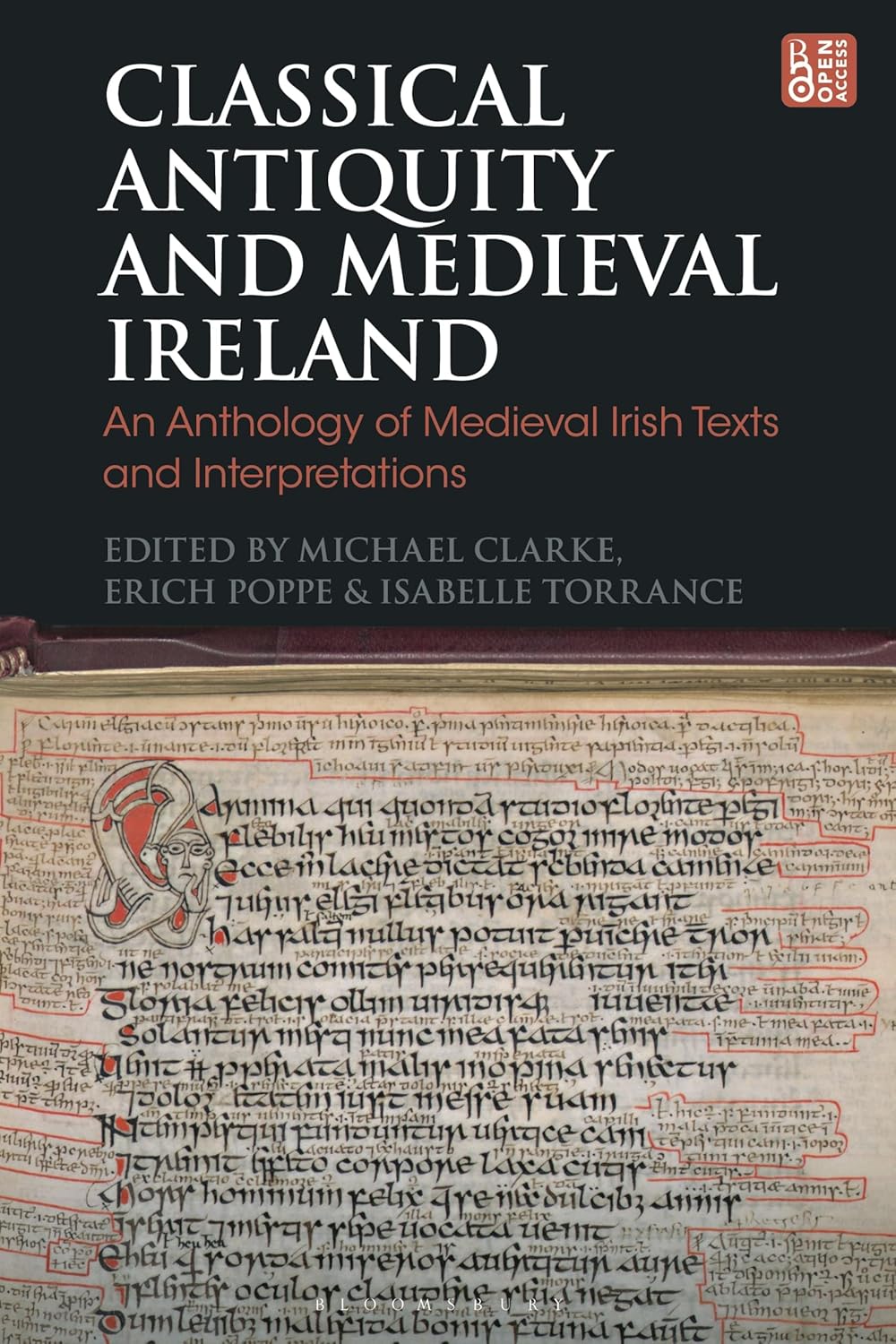
Publication – « Classical Antiquity and Medieval Ireland. An Anthology of Medieval Irish Texts and Interpretations », éd. Michael Clarke, Erich Poppe, Isabelle Torrance

Through an extensive series of extracts and accompanying interpretative and contextual essays, this volume showcases the expertise in classical learning that flourished in medieval Gaelic Ireland. Providing translations of all excerpts, it situates better known ‘antiquity sagas’ in the Middle Irish language, such as Togail Troí (The Siege of Troy, based on Dares Phrygius), Imtheachta Aeniasa (The Wanderings of Aeneas, based on Virgil’s Aeneid), In Cath Catharda (The Civil War, based on Lucan) and Togail na Tebe (The Siege of Thebes, based on Statius), within the broader constellation of medieval Irish literature that references and engages with classical antiquity.

Included are synchronistic poetry and world chronologies; lesser-known Irish poetry and prose recounting episodes from Graeco-Roman mythography and featuring, for instance, Jason and the Argonauts, Ulysses and Penelope, Agamemnon and Clytemnestra, Daedalus and the Minotaur; linguistic and metaphysical tracts; place-name lore; and medieval historiographies of Alexander the Great, Hercules, and warriors of Irish legend recast as classical heroes. Creating access to this body of texts and revealing the marked influences of classical concepts on the imaginative resources of medieval Ireland fills a conspicuous lacuna in our knowledge of classical reception in European literatures.

List of Illustrations
List of Contributors
Acknowledgements
A Guide to Editorial Practices for Middle Irish Texts, Michael Clarke (University of Galway, Ireland)

I. INTRODUCTION

  1. The Culture of the Book and Classical Learning in the Gaelic Middle Ages, Máire Ní Mhaonaigh (University of Cambridge, UK) and Michael Clarke (University of Galway, Ireland)
  2. The Irish Antiquity Sagas in Context, Ralph O’Connor (University of Aberdeen, UK)

II. CHRONOLOGY AND CORRELATION

  1. The First Fragment of the Annals of Tigernach, Patrick Wadden (Belmont Abbey College, USA)
  2. Gilla Cóemáin’s Annálad anall uile ‘All the annals heretofore…’, Peadar Mac Gabhann (Ulster University, UK)
  3. Flann Mainistrech’s Flaithius Rómán ríge glonn ‘The sovereignty of the Romans was a kingship of feats of prowess’, Peadar Mac Gabhann (Ulster University, UK)

III. THE TROJAN WAR

  1. Luid Iasón ina luing lóir ‘Jason went in his ample ship’, Michael Clarke (University of Galway, Ireland)
  2. Togail Troí ‘The Siege of Troy’, Recension 1, Brent Miles (University of Toronto, Canada)
  3. Togail Troí ‘The Siege of Troy’, Recension 2 from the Book of Leinster, Michael Clarke (University of Galway, Ireland)
  4. Togail Troí ‘The Siege of Troy’, Recension 3, Michael Clarke (University of Galway, Ireland)
  5. Don Tres Troí ‘On the Third Troy’, Brent Miles (University of Toronto, Canada)

IV. ADAPTATION OF LATIN EPIC

  1. Togail na Tebe ‘The Siege of Thebes’, Mariamne Briggs (Independent Scholar, UK)
  2. Riss in Mundtuirc ‘The Tale of the Necklace’, Brent Miles (University of Toronto, Canada)
  3. Imtheachta Aeniasa ‘The Wanderings of Aeneas’, Erich Poppe (University of Marburg, Germany)
  4. In Cath Catharda ‘The Civil War’: The Prologue, Brigid Ehrmantraut (University of Cambridge, UK)
  5. In Cath Catharda ‘The Civil War’: Literary Techniques, Maio Nagashima (University of Cambridge, UK)
  6. In Cath Catharda ‘The Civil War’: The Influence of Scholia, Cillian O’Hogan (University of Toronto, Canada)

V. MYTHOGRAPHY AND PSEUDOHISTORY

  1. ‘How Samson Slew the Gesteda’, Brigid Ehrmantraut (University of Cambridge, UK)
  2. Merugud Uilixis meic Leirtis ‘The Wandering of Ulysses son of Laertes’, Barbara Hillers (Indiana University, USA)
  3. Fingal Chlainne Tanntail ‘The Kin-Slaying of the Family of Tantalus’, Robert Crampton (Independent Scholar, UK)
  4. Sgél in Mínaduir ‘The Story of the Minotaur’, Barbara Hillers (Indiana University, USA)
  5. Scéla Alaxandair ‘The Saga of Alexander’, Cameron Wachowich (University of Toronto, Canada)
  6. Stair Ercuil ocus a Bás ‘The History of Hercules and his Death’, Gregory R. Darwin (Uppsala University, Sweden)

VI. WORLD KNOWLEDGE AND INDIGENOUS TRADITION

  1. Auraicept na nÉces ‘The Scholars’ Primer’, Nicolai Egjar Engesland (University of Oslo, Norway)
  2. Clann Ollaman uaisle Emna ‘The nobles of Emain Macha are Ollam’s descendants’, Michael Clarke (University of Galway, Ireland)
  3. Cogadh Gáedhel re Gallaibh ‘The War of the Irish against the Foreigners’, Máire Ní Mhaonaigh (University of Cambridge, UK)
  4. Lebor Gabála Érenn ‘The Book of Invasions of Ireland’, John Carey (University College Cork, Ireland)
  5. Dindshenchas Érend ‘Knowledge of Ireland’s Notable Places’: The River Boyne, Máire Ní Mhaonaigh (University of Cambridge, UK)
  6. Dindshenchas Érend ‘Knowledge of Ireland’s Notable Places’: The Origins of Tara, Marie-Luise Theuerkauf (University of Cambridge, UK)
  7. Suidiugud Tellaig Temra ‘The Establishment of Tara’s Dominion’, Daniel Watson (Dublin Institute of Advanced Studies)
  8. Scéla na Esérgi ‘Treatise on the Resurrection’, Elizabeth Boyle (National University of Ireland Maynooth, Ireland)

VII. EPILOGUE

  1. Classical Reception and Medieval Irish Texts, Isabelle Torrance (Aarhus University, Denmark)
  2. Table of the Principal Manuscript Sources Used, Michael Clarke (University of Galway, Ireland)

Notes
Bibliography
Index

Informations pratiques :

Classical Antiquity and Medieval Ireland. An Anthology of Medieval Irish Texts and Interpretations, éd. Michael Clarke, Erich Poppe, Isabelle Torrance, Londres, Bloomsbury Academic, 2024 ; 1 vol., 480 p. (Bloomsbury Studies in Classical Reception). ISBN : 978-1-35033-327-7. Prix : GBP 90,00.

Source : Bloomsbury

Publié dans Publications | Laisser un commentaire

Colloque – Journées d’Archéologie en Wallonie

Mer. 27 nov. 2024 à 08h00
au jeu. 28 nov. 2024 à 18h00
Beez, Namur, Belgique

Inscription : ici

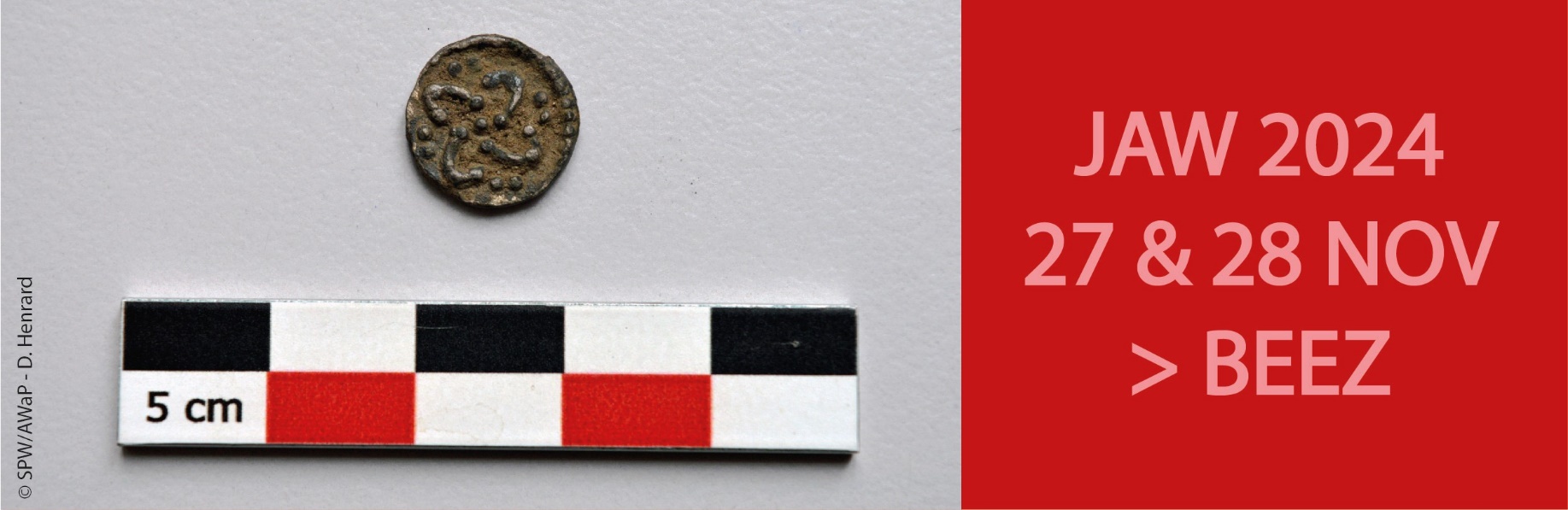
Chaque année, les Journées de l’Archéologie en Wallonie (JAW), organisée par l’AWaP, permettent de faire le point sur les dernières avancées et recherches dans le domaine, avec une approche thématique unique à chaque édition. Par exemple, en 2023, le thème portait sur la « Vaisselle et objets en terre cuite », explorant leur fabrication, usage et signification à travers les âges, tandis que 2021 s’intéressait aux mines et carrières souterraines et à ciel ouvert, illustrant l’importance de l’archéologie industrielle dans la région wallonne.

L’édition 2024 des Journées de l’Archéologie en Wallonie se tiendra les 27 et 28 novembre à Beez. Cette année, l’événement commence par une journée thématique intitulée « L’archéologie préventive de demain. Regards extérieurs à la Wallonie ». Nous avons invité des spécialistes de pays voisins à partager leur vision sur l’évolution de l’archéologie préventive dans les décennies à venir.

Avec des enjeux climatiques, environnementaux, sociaux et économiques qui ne cessent d’évoluer, plusieurs questions cruciales se posent : Quelle place pour l’archéologie préventive ? Quelles adaptations sont nécessaires pour protéger ce patrimoine ? Quelles menaces guettent l’avenir de cette discipline ? Et quels outils innovants pourrons-nous utiliser dans le futur ?

La seconde journée, fidèle à la tradition, sera consacrée au bilan annuel de l’activité archéologique en Wallonie. Cet aperçu de l’année passée permettra de mieux comprendre les découvertes, les défis rencontrés, et les projets en cours.

Programme du 27 novembre, « L’archéologie préventive de demain. Regards extérieurs à la Wallonie » : ici

Programme du 28 novembre 2024, « Bilan annuel de l’activité archéologique en Wallonie » : ici

Source : JAW

Publié dans Colloque | Laisser un commentaire

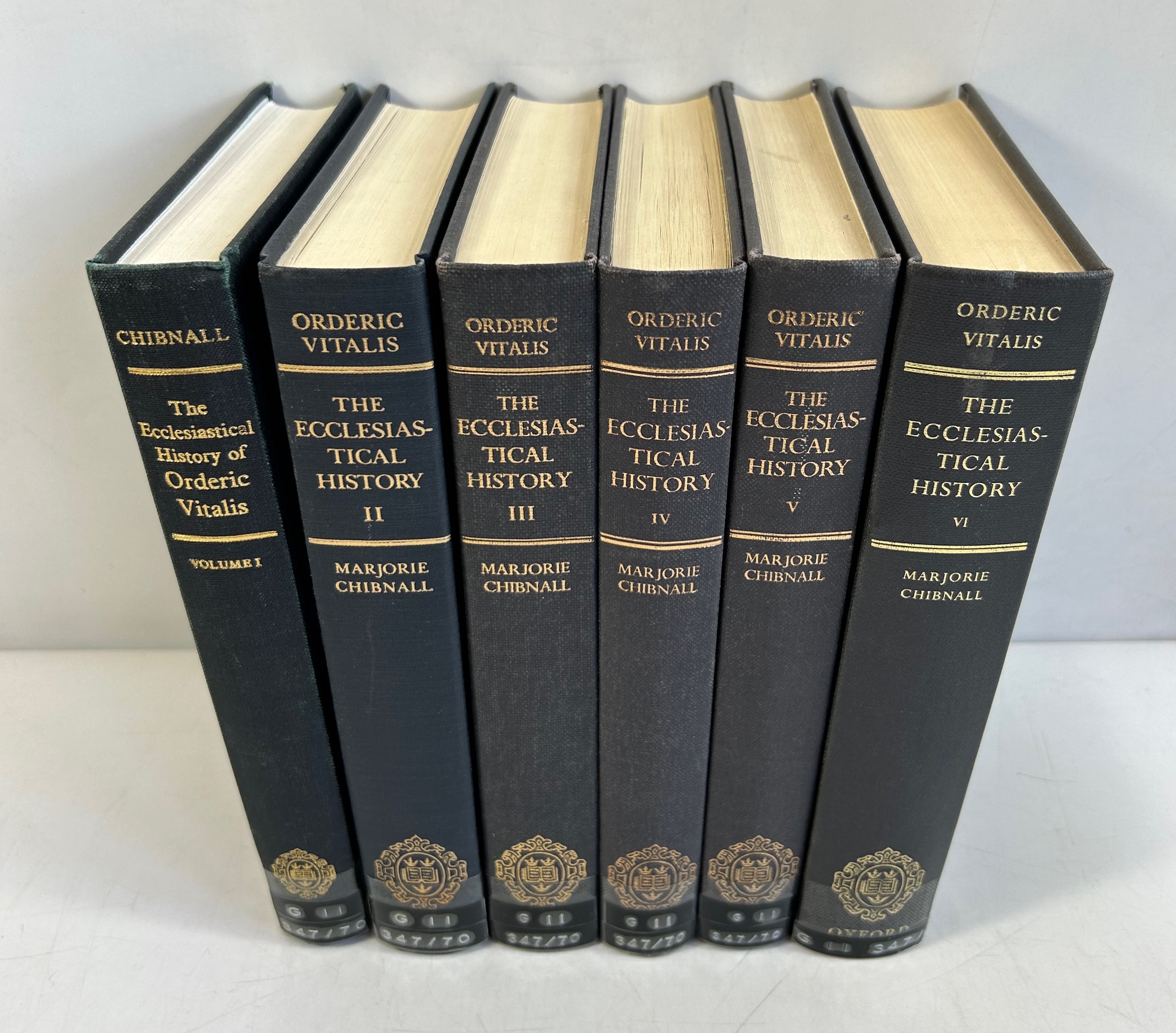
Prix – Marjorie Chibnall Prize 2025

The Marjorie Chibnall Essay Prize: call for submissions

The Marjorie Chibnall Essay Prize, offered in memory of the former director of the Battle Conference on Anglo-Norman Studies and co-founder of the Allen Brown Memorial Trust, is awarded for an unpublished scholarly paper based upon original research and relating to the study of the Anglo-Norman world, broadly defined, between c. 850 and c. 1250.

Candidates for the Prize are normally expected to be doctoral students in a recognised institution of Higher Learning, or within two years of having completed a doctorate (from the date the degree was awarded).

The winning paper will be awarded a place at the 2025 Battle Conference on Anglo-Norman Studies, to take place in Manchester from the 23 to 26 July; the conference registration fee and expenses to a certain level will be covered. It is a condition of the Prize that the paper should be delivered at the conference following its award, and be submitted for exclusive publication in Anglo-Norman Studies.

The paper should be written in English, up to 8000 words in length (including footnotes), and be prepared to a consistent form of citation.

Candidates should send a covering letter, an abstract (between 200 and 250 words) of their paper, and their entry itself, to the Hon. Secretary of the Allen Brown Memorial Trust, Prof. Leonie Hicks, via an email attachment with the three documents combined into one file. The letter should make a statement as to the originality of the work; an indication of how the candidate qualifies for entry to the competition; agreement to the terms of the Prize competition; and name, postal address, email address, and institutional details.

Entries must be submitted by 11 March 2025. Previously unsuccessful candidates may reapply, but must address a new topic.

The winner will be announced in April, the work having been judged by a selection committee made up of representatives of the Trust; their decision will be final and no correspondence will be entered into. The Trustees reserve the right not to make an award should no essay of sufficient quality be entered.

Poster session

In addition, the 2025 conference will include a poster session with a prize for the best postgraduate poster. We would also welcome posters from those who are now postdoctoral (whether for a short time of who have been for many years), but these will not be eligible for the prize. Those who wish to present a poster should contact Dr Laura Cleaver by 1 June 2025.

Publié dans Prix | Laisser un commentaire

Offre d’emploi – Storytelling as Pharmakon in Premodernity and Beyond: Training the New Generation of Researchers in Health Humanities

The StoryPharm project is pleased to announce 4 three-year Special Scientist PhD in Medieval Art History with a generous research allowance in an international, multi- partner EU project, employment beginning between June and August 2025.

The StoryPharm project, which is funded by the European Union’s Horizon Europe research and innovation programme under the Marie Skłodowska-Curie Action – Doctoral Networks – Grant Agreement 101169114, is announcing a total of 19 PhD fellowships within the training programme “Storytelling as Pharmakon in Premodernity and Beyond: Training the New Generation of Researchers in Health Humanities” (https://www.ucy.ac.cy/storypharm/).

The focus of the project will be on premodern narratives and images involving medicine, health, and healing. These will be studied from a transdisciplinary and comparative perspective, across linguistic and cultural borders. 

This international doctoral network, funded by the European Marie Skłodowska-Curie program, involves the universities of Cyprus (leading institution), Salerno, Bamberg, Lund, and Cardiff. It aims to recruit 19 medieval studies researchers with excellent salaries.

In particular, we would like to draw attention to the positions related to Medieval Art History:

StoryPharm Fellow 7: “Images of Christ’s Miraculous Healings between Medical Awareness and Social Inclusion (9th–11th c. CE)” (Salerno, Italy, Project 2).

  • The successful candidate will work under the supervision of Maddalena Vaccaro (Salerno) and Katharina Schüppel (Bamberg).

StoryPharm Fellow 11: “The Pictorial Narratives of Herbal Medicine in Dioscorides’ De materia medica” (Lund, Sweden, Project 2).

  • The successful candidate will work under the supervision of Christian Høgel (Lund) and Katharina Schüppel (Bamberg).

StoryPharm Fellow 14: “Ecologies of Healing: Visual Storytelling in Medieval Medical Manuscripts and Herbals” (Bamberg, Germany, Project 3).

  • The successful candidate will work under the supervision of Katharina Schüppel (Bamberg) and Maddalena Vaccaro (Salerno).

StoryPharm Fellow 15: “The Healthy Place: Architecture and Images for Healing Devotional Experiences in Southern Italy in a Mediterranean Context” (Salerno, Italy, Project 3).

  • The successful candidate will work under the supervision of Maddalena Vaccaro (Salerno) and Maria Parani (Cyprus).

Applications, including the submission of a research proposal on the indicated topics, will be accepted from October 15 to December 15, 2024, according to the guidelines in the calls.

Source : Medieval Art Research

Publié dans Offre d'emploi | Laisser un commentaire

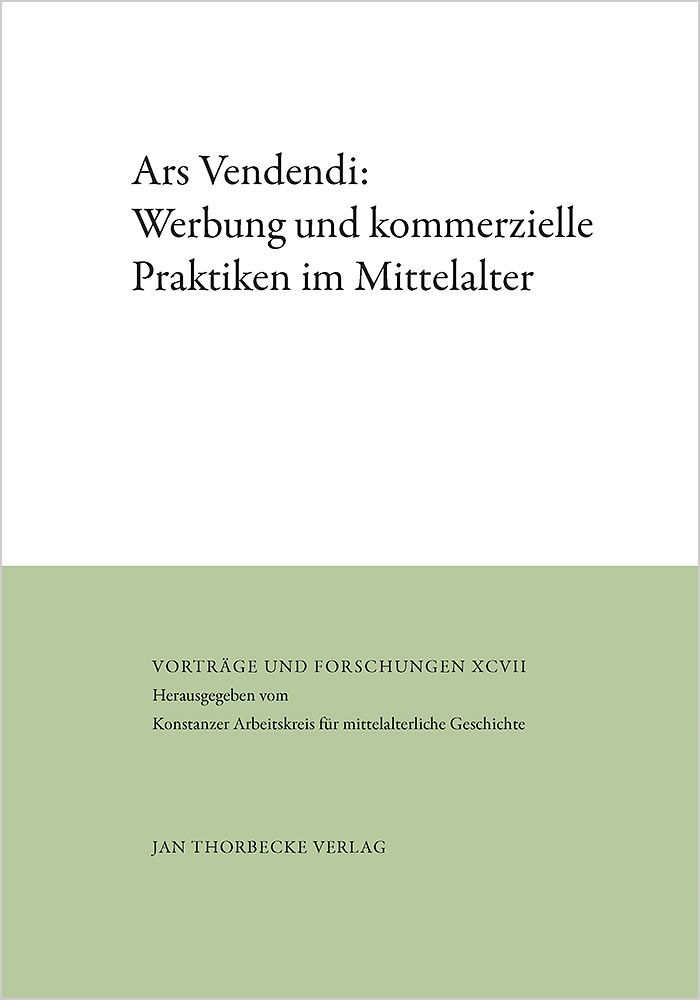
Publication – « Ars Vendendi: Werbung und kommerzielle Praktiken im Mittelalter », éd. Thomas Ertl

Die »Kunst des Verkaufens« war bereits auf mittelalterlichen Märkten wichtig, da Anbieter und Anbieterinnen von Waren und Dienstleistungen miteinander konkurrierten und ihre Produkte anpriesen. Daher enthalten archäologische, schriftliche und bildliche Quellen zahlreiche Hinweise auf die Rhetorik und Praktiken des Verkaufens und Werbens: Zur Schau gestellte Waren, Handwerks- und Wirtshauszeichen, Marktschreier und Weinrufer sowie Markennamen, Warenmuster und Buchkataloge dienten sowohl der Information der Konsumentinnen und Konsumenten als auch der Absatzsteigerung. In Traktaten und Predigten wurde über diese Techniken bereits im Mittelalter kritisch oder satirisch reflektiert. Die Autorinnen und Autoren der in diesem Band versammelten Beiträge präsentieren unterschiedliche Facetten dieser mittelalterlichen Ars Vendendi und stellen sie in einen größeren Kontext.

The ›art of selling‹ was already important at medieval markets, as vendors and suppliers of goods and services competed with each other. Therefore, archaeological, written and pictorial sources contain numerous references to the rhetoric and practices of selling even before 1500: goods displayed on market tables, trades and inn signs, market and wine criers as well as brand names, samples of goods, book catalogues and much more served both to inform consumers and to increase sales. As early as the Middle Ages, tracts and sermons reflected on these techniques theoretically, critically or satirically. The contributions in this volume present a wide range of facets of this medieval Ars Vendendi and place them in a wider context.

Prof. Dr. Thomas Ertl ist Professor für die Geschichte des hohen und späten Mittelalters an der Freien Universität Berlin. Seine Forschungsschwerpunkte umfassen die Sozial- und Wirtschaftsgeschichte sowie die Globalgeschichte des Mittelalters.

Table des matières : ici

Informations pratiques :

Ars Vendendi. Werbung und kommerzielle Praktiken im Mittelalter, éd. Thomas Ertl, Sigmaringen, Jan Thorbecke Verlag, 2024 ; 1 vol., 508 p. (Vorträge und Forschungen, 97). ISBN : 978-3-7995-6899-9. Prix : € 65,00.

Source : Patmos

Publié dans Publications | Laisser un commentaire

Publication – Jérôme, « Commentarius in Zachariam », éd. Roger Gryson

Le commentaire sur Zacharie est le seul, parmi ceux des Douze prophètes, pour lequel la principale source d’inspiration de Jérôme est conservée. Pour les autres, ce sont les commentaires d’Origène, aujourd’hui perdus. Comme ils ne couvraient pas l’ensemble des Douze, Jérôme, de passage à Alexandrie en 386, demanda à Didyme de commenter pour lui Osée et Zacharie.

Un exemplaire du commentaire de Zacharie figurait parmi les papyrus découverts à Toura en 1941. Son éditeur a présenté le commentaire de Jérôme comme une « copie conforme » de celui de Didyme. En réalité, la confrontation fait plutôt ressortir la profonde originalité de Jérôme et sa position unique dans l’histoire de l’exégèse patristique. Contrairement à son devancier, il se soucie d’abord d’établir exactement la lettre du texte et d’en préciser le sens, en le situant dans son contexte et en recourant, si nécessaire, aux exégètes hébreux. Alors que l’Alexandrin se complaît dans des allégories dont le rapport au texte est souvent lointain et cultive une exégèse en quelque sorte hors sol, Jérôme prend soin de poser solidement le fondement de l’histoire avant d’exposer le sens spirituel qui s’en dégage. Il n’hésite pas à critiquer Didyme et se montre réservé à l’égard de l’allégorie, qu’il juge superflue là où le sens de la prophétie est manifeste. Il constate que ceux qui donnent à croire ainsi qu’ils en savent plus que les autres en affaiblissent souvent la portée en compliquant inutilement les choses.

Quant à la tradition manuscrite, complexe et mouvante, elle est ici plus souvent en faute que dans les six commentaires précédemment édités. Cela tient sans doute pour une part à l’état précaire des exemplaires de l’antiquité tardive que les copistes carolingiens ont reproduit, et pour une part au fait que Jérôme a dû travailler vite pour remettre son ouvrage au messager chargé de le faire parvenir à son dédicataire.

Monseigneur Roger Gryson, professeur émérite à l’Université catholique de Louvain, ancien directeur du Vetus Latina Institut de Beuron, est connu notamment par ses travaux sur l’histoire des institutions ecclésiastiques dans l’antiquité, l’arianisme latin et la critique textuelle de la Bible latine. Il a édité entre autres les anciennes versions latines du livre d’Isaïe et de l’Apocalypse johannique, ainsi que le commentaire de Jérôme sur Isaïe et la plupart des commentaires latins de l’Apocalypse antérieurs à l’époque carolingienne.

Table des matières :

Avant-propos
Sigles et abréviations
Note préliminaire: Jérôme témoin du texte biblique

EXPLANATIONES IN ZACHARIAM
Introduction
Stemma codicum
Conspectus siglorum
Incipit in Zachariam

Table des citations scripturaires

Informations pratiques :

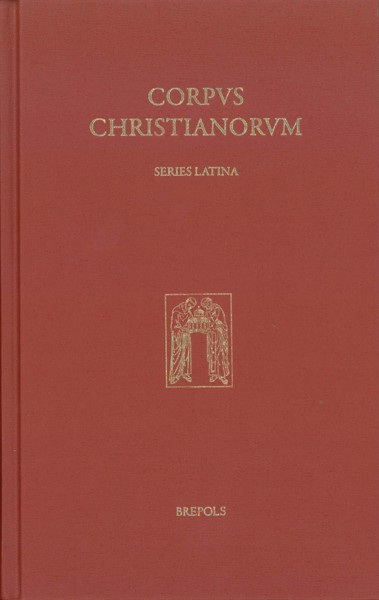
Jérôme, Commentarius in Zachariam, éd. Roger Gryson, turnhout, Brpeols, 2024 ; 1 vol., 316 p. (Corpus Christianorum Series Latina, 76A bis 4). ISBN : 978-2-503-61464-9. Prix : € 230,00.

Source : Brepols

Publié dans Publications | Laisser un commentaire