Appel à contribution – Religion and the Book in Medieval Europe: Between Manuscripts and Print

A special issue of Religions (ISSN 2077-1444).
Deadline for manuscript submissions: 30 November 2025

Prof. Dr. Lucie Doležalová
Guest Editor
Institute of Greek and Latin Studies, Faculty of Arts, Charles University, Prague, Czech Republic
Interests: medieval manuscripts; transition from manuscripts to print; reception of the bible; biblical mnemonics; medieval scribe

Today, as we navigate the transition between print and digital culture, we can clearly see that the mode of transmission always influences the use, interpretation, and social role of particular texts. This influence is especially significant in the case of texts connected to religion. The invention of print in the mid-fifteenth century has often been linked to the spread of the Protestant Reformation and considered a major factor in its success. However, the story is far more complex. Even as print technology gradually expanded in the latter half of the fifteenth century, manuscript production actually experienced an unprecedented boom, and continued to play a significant role. For some texts, print enabled a wider and faster spread; for others, it signaled their decline. Notably, books intended for personal devotional practice—such as books of hours—continued to thrive in their deluxe manuscript form well into the late 16th century. The reasons behind these varying outcomes—particularly the impact of media change on religious communities and practices—remain unclear and warrant further investigation.

We invite you to contribute your original research studies to this Special Issue, which explores the character of media change in the fifteenth century—“one of the most curious and confused periods in recorded history” (Curt F. Bühler, The Fifteenth-Century Book: The Scribes, the Printers, the Decorators, p. 15)—and its impact on religious communities and practices. We welcome research that examines the production of manuscripts and printed books, as well as their uses and roles in religious, social, and cultural contexts. While studies covering later periods are also welcome, the primary focus of this Special Issue is 1450–1500.

Potential research areas include, but are not limited to, the following:

  • Transmission of specific texts or text types between manuscripts and print (e.g., Bibles, catechisms, prayer books, sermons, manuals, treatises, religious polemics) and their impact on religious communities.
  • Scribes and printers of religious texts (textual adjustments, rewritings, and appropriations by scribes and printers; paratexts such as colophons, prologues, epilogues, and explanatory notes)—individuals and communities behind religious production.
  • Uses of religious texts in manuscripts and print (readers, owners, collectors, libraries; book promotion and dissemination, book burnings).
  • Materiality of devotional texts—the “matter” of religious practices (layout, composition, miscellaneity, illuminations and illustrations, tables, readers’ aids).

We ask that interested authors submit a proposed title and an abstract (200–300 words) summarizing their intended contribution before submitting a full manuscript. Please send your abstract to the Guest Editor (lucie.dolezalova@ff.cuni.cz) or to the Assistant Editor (clare.chai@mdpi.com) of Religions. Abstracts will be reviewed by the Guest Editor to ensure their fit within the scope of the Special Issue. Full manuscripts will undergo double-blind peer review.

We look forward to receiving your contributions.

Reference

  • Curt F. Bühler, The Fifteenth-Century Book: The Scribes, the Printers, the Decorators, University of Pennsylvania Press: Philadelphia, PA, USA, 1960; p. 15.

Prof. Dr. Lucie Doležalová
Guest Editor

Manuscript Submission Information

Manuscripts should be submitted online at www.mdpi.com by registering and logging in to this website. Once you are registered, click here to go to the submission form. Manuscripts can be submitted until the deadline. All submissions that pass pre-check are peer-reviewed. Accepted papers will be published continuously in the journal (as soon as accepted) and will be listed together on the special issue website. Research articles, review articles as well as short communications are invited. For planned papers, a title and short abstract (about 100 words) can be sent to the Editorial Office for announcement on this website.

Submitted manuscripts should not have been published previously, nor be under consideration for publication elsewhere (except conference proceedings papers). All manuscripts are thoroughly refereed through a double-blind peer-review process. A guide for authors and other relevant information for submission of manuscripts is available on the Instructions for Authors page. Religions is an international peer-reviewed open access monthly journal published by MDPI.

Please visit the Instructions for Authors page before submitting a manuscript. The Article Processing Charge (APC) for publication in this open access journal is 1800 CHF (Swiss Francs). Submitted papers should be well formatted and use good English. Authors may use MDPI’s English editing service prior to publication or during author revisions.

Keywords

  • manuscripts
  • scribes
  • early print
  • bible
  • sermons
  • devotional literature
  • catechism
  • religious reform
  • polemic
  • media transformation

Benefits of Publishing in a Special Issue

  • Ease of navigation: Grouping papers by topic helps scholars navigate broad scope journals more efficiently.
  • Greater discoverability: Special Issues support the reach and impact of scientific research. Articles in Special Issues are more discoverable and cited more frequently.
  • Expansion of research network: Special Issues facilitate connections among authors, fostering scientific collaborations.
  • External promotion: Articles in Special Issues are often promoted through the journal’s social media, increasing their visibility.
  • e-Book format: Special Issues with more than 10 articles can be published as dedicated e-books, ensuring wide and rapid dissemination.

Further information on MDPI’s Special Issue policies can be found here.

Published Papers

This special issue is now open for submission.

Source : MDPI
Publié dans Appel à contributions | Commentaires fermés sur Appel à contribution – Religion and the Book in Medieval Europe: Between Manuscripts and Print

Publication (en ligne) – « Églises, monachisme, agglomérations et territoires en Bourgogne Franche-Comté entre l’Antiquité tardive et le haut Moyen Âge », éd. Sébastien Bully, Morana Čauševič-Bully, Damien Martinez

À la mémoire d’Yves Jeannin (1935-2020) Archéologue médiéviste, conservateur du patrimoine au Service régional de l’archéologie de Franche-Comté, enseignant à l’université de Franche-Comté.

Églises, monachisme, agglomérations et territoires en Bourgogne Franche-Comté entre l’Antiquité tardive et le haut Moyen Âge, éd. Sébastien Bully, Morana Čauševič-Bully, Damien Martinez, Auxerre, Centres d’études médiévales d’Auxerre, 2025 (BUCEMA. Hors-série, 15). En ligne. DOI : https://doi.org/10.4000/13jxi

Source : BUCEMA

Publié dans Publications | Commentaires fermés sur Publication (en ligne) – « Églises, monachisme, agglomérations et territoires en Bourgogne Franche-Comté entre l’Antiquité tardive et le haut Moyen Âge », éd. Sébastien Bully, Morana Čauševič-Bully, Damien Martinez

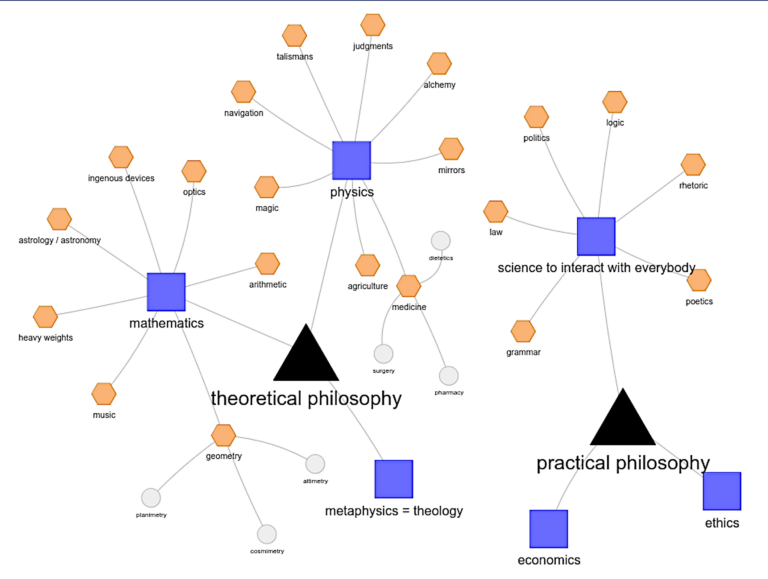
Web – M-CLASSI. A new digital tool in the field of knowledge organization.

M-Classi is a new digital tool in the field of knowledge organization. It is conceived primarily as a means of cataloging and interrogating the classifications of the sciences in Islam and those of the cultures with which the Islamicate world came into contact from antiquity to the pre-modern era. Practically, M-Classi is focused by priority on Arabic, Persian, and Turkish classifications, but for comparative purposes it also integrates taxonomies in languages such as Syriac, Greek, Latin, or Hebrew.  

M-Classi’s beta version (https://www.m-classi.eu/), created at UCLouvain in 2023, is available on simple request by contacting me at godefroid.decallatay@uclouvain.be.

A thorough presentation of M-Classi and its main functionalities will be given in: G. de Callataÿ – R. Baranx – H. Naets, ‘M-Classi, a New Digital Tool for the Classification of the Sciences, in Islam and Beyond’, in G. de Callataÿ – S. Moureau (ed.), Micrologus. Nature, Science and Medieval Societies 33 (2025). Special Issue: Power, Religion, and Wisdom: Orthodoxy and Heterodoxy in al-Andalus and Beyond (forthcoming).

Source : UCLouvain

Publié dans Web | Commentaires fermés sur Web – M-CLASSI. A new digital tool in the field of knowledge organization.

Appel à contribution – Minor Characters in Medieval History Writing

In narratives, some characters invariably occupy more prominent roles than others. It would be almost impossible to narrate anything complicated if every single character received exactly the same amount of space in the story as every other. In medieval history writing, the unevenness with which attention, space, and importance are distributed throughout texts is strongly correlated with type. Emperors, kings, clergymen, and other elite men, tend to receive a greater proportion of narrative attention than labourers, women, eunuchs, slaves, soldiers, and foreigners. The narrative hierarchies of medieval historiographical corpora are often reflected in the modern historiographical narratives, which deploy them as source material. This remains true today, even after multiple waves of revisionist historiography have sought to decentre the lives and deeds of ‘great men’.

Although the composition of and hierarchies within historiographical casts of characters are of central importance to medieval history writing, it has rarely been delineated as the explicit object of analysis. This conference aims to bring different types of scholars and approaches to historiographical texts in the discussion of the casts of characters in medieval history writing. Particular emphasis will be placed on the types of characters which tend to be marginalised within historiography, medieval and modern, whilst acknowledging that such characters can only be studied within a wider systematic frame.

This call for papers invites contributions concerning specific medieval historiographical narratives, corpora, and minor characters from any medieval tradition. It also welcomes theoretical papers that draw on the narratology, the philosophy of history, or other critical traditions to think more systematically about minor characters in (medieval) historiographical narrative. Papers that combine both medieval and theoretical considerations and/or extend their contributions to consider the reception or transformation of minor characters in modern historiography are particularly welcome.

Questions and topics could include, but are in no way limited to:

  • Which types of characters are prioritised and which are marginalised in specific narratives, corpora, and traditions?
  • How do specific characterisations reinforce or subvert typological expectations concerning their narrative centrality or marginality?
  • Comparison between the character systems and narrative hierarchies of different medieval historiographical traditions
  • How can narrative theory change the study of medieval historiography? How does the study of medieval historiography challenge modernist narrative theories of character?

Short papers (c. 20 minutes) will be combined with roundtable discussions. The travel expenses and accommodation of participants will be covered by the project [pending final confirmation of funds].

Please send an abstract (max 300 words) and brief professional bio, including name and affiliation, (max 100 words) to matthew.kinloch@ifikk.uio.no by 17 April 2025.

Organizer

Matthew Kinloch and Research Research projects Narrative Hierarchies: Minor Characters in Byzantine and Medieval History Writing

Source : University of Oslo

Publié dans Appel à contributions | Commentaires fermés sur Appel à contribution – Minor Characters in Medieval History Writing

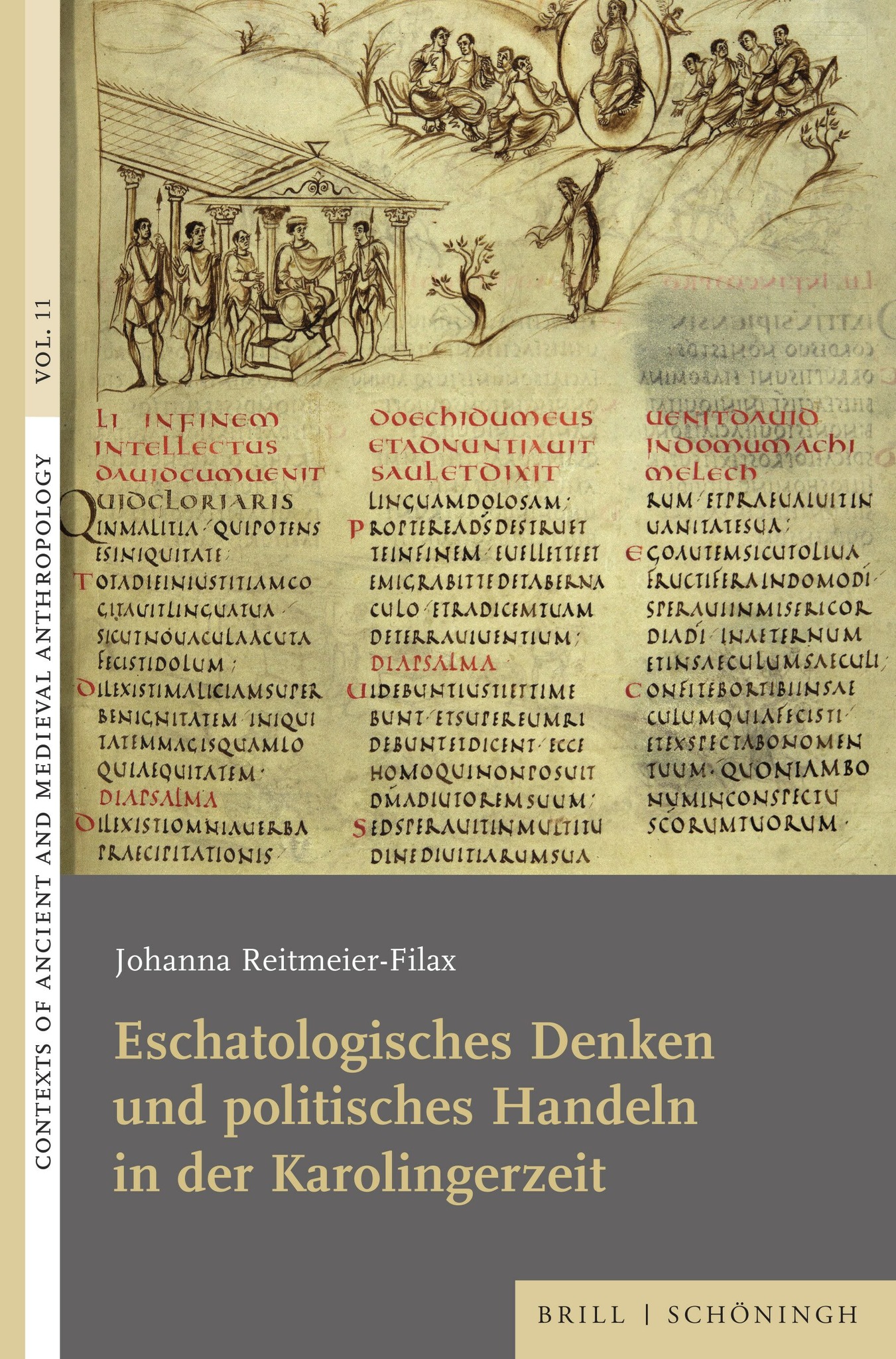
Publication – Johanna Reitmeier-Filax, « Eschatologisches Denken und politisches Handeln in der Karolingerzeit »

Die Aussicht auf den individuellen Tod, die universale Endzeit und das Jüngste Gericht stiftete in der Karolingerzeit den Sinn dafür, die eigene Gegenwart kritisch zu betrachten, Zustände auf ihre Korrekturbedürftigkeit hin zu überprüfen und reformorientiert zu regieren. Die Absicherung des jenseitigen Heils war für das politische Handeln Antriebskraft und Bewertungsmaßstab zugleich. Unter besonderer Berücksichtigung der Herrschaftszeit Karls des Großen (768–814) und Ludwigs des Frommen (814–840) untersucht der vorliegende Band die Bedeutungen und Wirkungen eschatologischen Denkens in Zeitvorstellungen und Geschichtsdeutungen, in Herrschaftsidealen, Bischofsprofilen und Gesellschaftskonzepten sowie nicht zuletzt bei der Beurteilung des karolingischen Herrschers und der Qualität seiner Herrschaft.

Johanna Reitmeier-Filax studierte in Leipzig und in Halle (Saale) Evangelische Theologie und promovierte anschließend an der Theologischen Fakultät der Martin-Luther-Universität in Halle (Saale). Derzeit ist sie als Vikarin in der Evangelischen Kirche in Mitteldeutschland tätig.

Table des matières : ici

Informations pratiques :

Johanna Reitmeier-Filax, Eschatologisches Denken und politisches Handeln in der Karolingerzeit, Leyde–Boston, Brill–Schöningh, 2025 ; 1 vol., XII–275 p. (Contexts of Ancient and Medieval Anthropology, 11). ISBN : 978-3-506-79686-8. Prix : € 116,90.

Source : Brill

Publié dans Publications | Commentaires fermés sur Publication – Johanna Reitmeier-Filax, « Eschatologisches Denken und politisches Handeln in der Karolingerzeit »

Offre d’emploi – Archéologue (m/f/x) pour l’Archéoforum de Liège

Passionné(e) d’archéologie et d’histoire, venez rejoindre l’équipe dynamique de l’Archéoforum de Liège !

SPW Territoire Logement Patrimoine Énergie
Agence wallonne du Patrimoine
Direction de la Promotion du Patrimoine
Place Saint Lambert
4000 Liège

Spécifiquement pour la direction de la Promotion du Patrimoine :

  • vous assurez des visites guidées du site archéologique pour tout public (famille, groupe, individuel, scolaire)
  • vous dynamisez la promotion du site archéologique via notamment la communication digitale du site (réseaux sociaux…)
  • vous proposez et mettez en place l’organisation d’expositions, de conférences, de débats… 
  • vous créez et entretenez des partenariats avec les différents acteurs locaux, régionaux et internationaux muséaux
  • vous participez à la gestion administrative du site archéologique (outil informatisé)
  • vous gérez les marchés publics nécessaires à la politique événementielle du site archéologique (lancement et attribution).

Votre profil

Diplôme requis : diplôme de base de 2e cycle (licence/master) ou de 3e cycle (doctorat) en histoire de l’art et archéologie délivré par une université belge.

OU

Certification professionnelle requise : certifications professionnelles positionnées au niveau 7 au moins d’un cadre de certification belge (vous pouvez notamment consulter le site suivant : https://cfc.cfwb.be) correspondant à la fonction à pourvoir.

Compétences techniques :

  • avis technique – émettre des avis techniques argumentés et pertinents
  • utilisation de matériels techniques – utiliser les appareils, les équipements et/ou les outils spécifiques
  • dispositions légales et normatives – appliquer et faire respecter les dispositions légales, les procédures, les normes et/ou les réglementations en vigueur
  • rédaction – s’exprimer par écrit dans un langage précis, grammaticalement correct et compréhensible pour le destinataire
  • vulgarisation – adapter des notions, des termes techniques ou scientifiques de manière à les rendre accessibles à un public non spécialisé
  • base de données – développer, optimiser et administrer des bases de données
  • expression orale – s’exprimer oralement dans un langage précis, grammaticalement correct et compréhensible pour le destinataire
  • gestion de l’information – capitaliser des informations, des procédures et de la documentation, les exploiter et les diffuser
  • gestion de projets – identifier les acteurs, les outils méthodologiques, les ressources nécessaires et les risques potentiels inhérents à un projet, le mettre en œuvre et en gérer les différentes phases de vie
  • informatique – utiliser les fonctionnalités de base d’outils web de communication.

Compétences comportementales :

  • intégrer l’information – établir des liens entre diverses données, concevoir des alternatives et tirer des conclusions adéquates
  • autonomie – accomplir son travail sans supervision directe
  • travailler en équipe – créer et améliorer l’esprit d’équipe en partageant ses avis et ses idées et en contribuant à la résolution de conflits entre collègues
  • communication – communiquer avec autrui en s’assurant de la compréhension de l’information reçue et transmise
  • agir de manière orientée service – accompagner des clients internes et externes de manière transparente, intègre et objective, leur fournir un service personnalisé et entretenir des contacts constructifs
  • collaboration – coopérer avec des acteurs internes et/ou externes en favorisant les échanges et en étant attentif aux objectifs communs
  • polyvalence – passer aisément d’une activité et/ou d’un projet à un autre en fonction des besoins du service.

Condition d’accès au poste : le permis B sera exigé à l’entrée en fonction.

Pour être recevables, les actes de candidature doivent :

  • répondre aux exigences communes et aux exigences reprises dans le profil de la fonction postulée
  • être adressés pour le 06-04-2025 au plus tard par mail à Madame Valérie CLOSSET, à l’adresse suivante : valerie.closset@awap.be
  • comprendre :
    • un CV à jour
    • une LETTRE DE MOTIVATION spécifique à la fonction, avec la référence : AWaP/DPP/Archéologue
    • une COPIE DU DIPLOME requis pour la fonction.

Offre d’emploi complète : ici

Publié dans Offre d'emploi | Commentaires fermés sur Offre d’emploi – Archéologue (m/f/x) pour l’Archéoforum de Liège

Publication – « Annales de Saint-Bertin. La continuation des Annales du royaume des Francs (830-882) », trad. Warren Pezé, Régine Le Jan, Adrien Bayard

Les Annales de Saint-Bertin, continuation des Annales du royaume des Francs, sont la principale source historiographique sur la période carolingienne finissante et sur les débuts du futur royaume de France. Rédigées de 830 à 882, elles relatent les vicissitudes d’un empire en crise, avec la pénitence de Louis le Pieux en 833, la guerre civile de 840-843 et le partage de Verdun, puis retracent les premières décennies d’existence du royaume de Charles le Chauve, scandées par les conflits fratricides et les attaques normandes. Le récit s’interrompt brutalement en décembre 882, lorsqu’un raid viking chasse de sa ville le dernier rédacteur, le vieil Hincmar de Reims, qui part s’éteindre à Épernay. C’est peu dire que les Annales de Saint-Bertin offrent au lecteur une histoire en action, à la fois vivante et frappée du sceau de la Renaissance carolingienne. Dans cette première traduction des Annales en français depuis le début du XIXe siècle, les lecteurs, guidés par un riche apparat de notes, découvriront le regard volontiers critique que les Francs ont porté sur les transformations de leur société à l’aube de la féodalité.

Warren Pezé est maître de conférences en histoire médiévale à l’Université Paris-Est Créteil et membre de l’IUF.

Régine Le Jan est professeure émérite d’histoire médiévale à l’Université Paris 1 Panthéon-Sorbonne. Elle a récemment publié Amis ou ennemis ? Émotions, relations, identités au Moyen Âge (2024).

Adrien Bayard est maître de conférences en archéologie et histoire médiévale à l’Université d’Artois.

Table des matières :

AVANT-PROPOS
INTRODUCTION (W. Pezé)

1. Les transformations de l’empire carolingien au miroir des Annales (830‑882)
2. Le genre des Annales
3. La tradition manuscrite et l’établissement du texte
4. Les auteurs
5. Le style des Annales et ses transformations
6. Circulation et publicité des Annales
7. L’écriture de l’histoire dans l’espace public carolingien
8. Les grands conflits hincmariens dans les Annales
9. Remarques sur la présente traduction
ANNALES DE SAINT-BERTIN
NOTES SUR LE TEXTE
CARTES (A. Bayard)
Carte des résidences royales carolingiennes
Carte du partage de Meersen (870)
BIBLIOGRAPHIE
Sources
Bibliographie secondaire
INDEX DES NOMS DE PERSONNES
INDEX DES NOMS DE LIEUX

Informations pratiques :

Annales de Saint-Bertin. La continuation des Annales du royaume des Francs (830-882), trad. Warren Pezé, Régine Le Jan, Adrien Bayard, Paris, Les Belles Lettres, 2024 ; 1 vol., 380 p. (La roue à livres, 104). ISBN : 978-2-25145-687-4. Prix : € 29,50.

Source : Les Belles Lettres

Publié dans Publications | Commentaires fermés sur Publication – « Annales de Saint-Bertin. La continuation des Annales du royaume des Francs (830-882) », trad. Warren Pezé, Régine Le Jan, Adrien Bayard

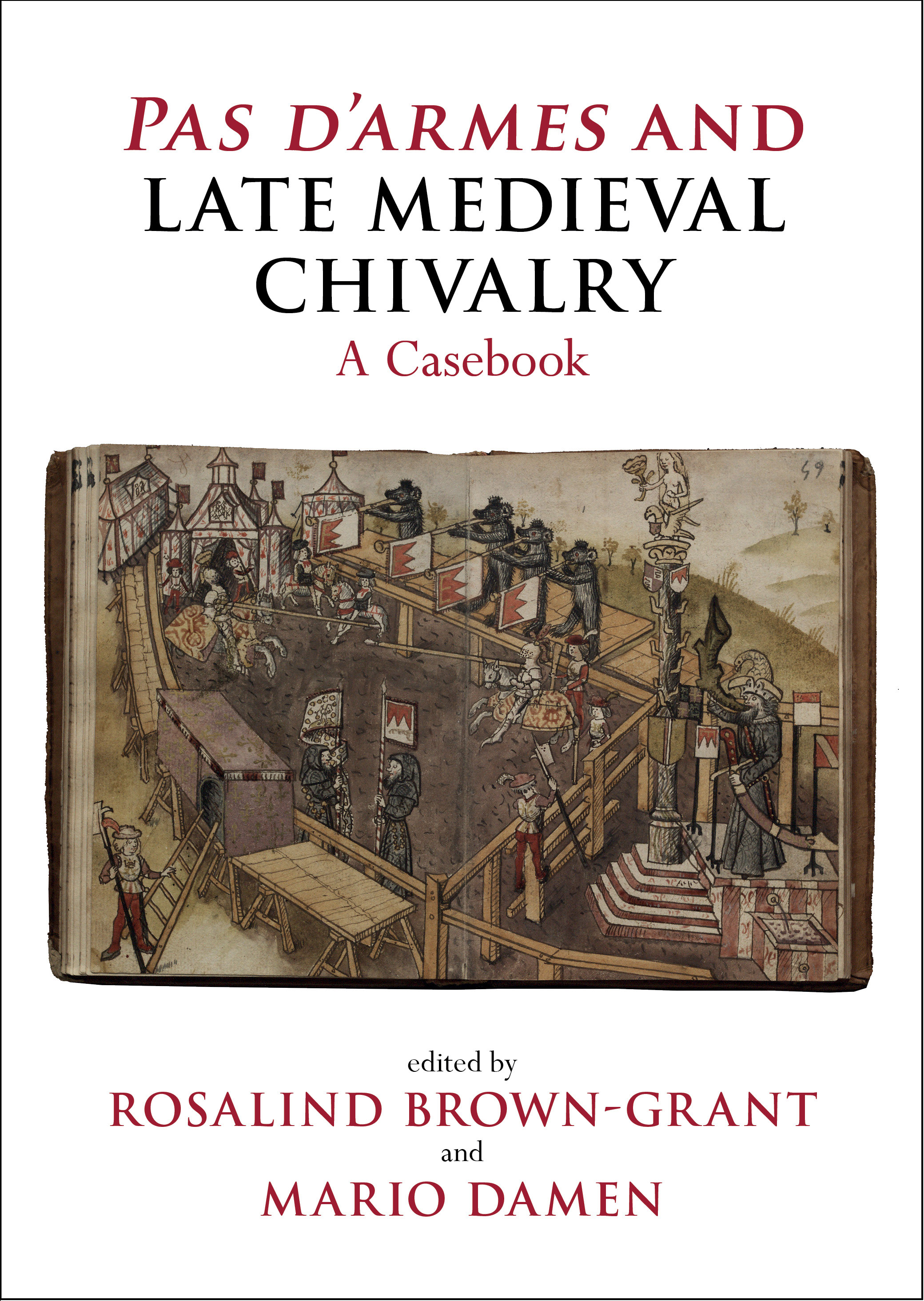
Publication – « Pas d’armes and Late Medieval Chivalry. A Casebook », éd. Rosalind Brown-Grant Mario Damen

This Casebook features the work of an international, interdisciplinary research group entitled ‘The Joust as Performance: Pas d’armes and Late Medieval Chivalry’ and funded by the UK’s Arts and Humanities Research Council. Its focus is on the pas d’armes (English: ‘passage of arms’), a highly ritualised form of tournament and elite entertainment that was popular principally in Anjou, the Burgundian lands, France and Iberia in the fifteenth and early sixteenth centuries. Part I of the volume provides a representative selection of sixteen translated and contextualised sources on the pas d’armes that includes narrative texts, administrative accounts and illuminated images. Part II, which comprises seven new scholarly essays on the pas d’armes, addresses the issue of how this type of tournament evolved through cultural transfer from court to court, offers in-depth analyses of a chronological and geographical range of pas d’armes from the perspective of text-image relations, heraldry, urban-court relations and manuscript commissioning, and focuses on broader themes such as the construction of masculinity and the representation of chivalric and non-chivalric bodies at these events. The Casebook also provides a map and table of all such tournaments known to have taken place between c. 1420 and c. 1520, some of which have been identified for the first time as pas d’armes, as well as a glossary of arms and armour, clothing and textiles typically featured at this type of event. It will be of interest to both specialist scholars and students of late medieval chivalric and tournament culture.

In addition to the sixteen translated sources provided in the Casebook itself, two further sources based on important manuscripts that have only recently come to light are also available to download via the Liverpool University Press Digital Collaboration Hub. Supplementary Source 1 concerns four pas d’armes that took place in 1446-47 in the courtly milieu of Anjou under the aegis of Duke René, whilst Supplementary Source 2 features two pas d’armes that were held in 1484 in Paris at the court of the newly crowned King Charles VIII.

Rosalind Brown-Grant is Professor Emerita of Late Medieval French Literature, University of Leeds. She has published on Christine de Pizan, late medieval romance and historiographical works, and text-image relations in medieval manuscripts; she has also edited and translated several Middle French texts.

Mario Damen is Associate Professor in Medieval History, University of Amsterdam. He has published widely on the cultural and socio-political history of the late medieval Low Countries in general, and on the nobility and tournaments in particular.

Table des matières : ici

Informations pratiques :

Pas d’armes and Late Medieval Chivalry. A Casebook, éd. Rosalind Brown-Grant Mario Damen, Liverpool, Liverpool University Press, 2025 ; 1 vol., 624 p. ISBN : 978-1-83553-766-4. Prix : GBP : 35,00.

Source : Liverpool University Press

Publié dans Publications | Commentaires fermés sur Publication – « Pas d’armes and Late Medieval Chivalry. A Casebook », éd. Rosalind Brown-Grant Mario Damen

Exposition – Quoi de neuf au Moyen Âge ? Tout ce que l’archéologie nous révèle

Fruit d’une collaboration entre la Cité des Sciences et de l’Industrie et l’Inrap, l’exposition itinérante Quoi de neuf au Moyen Âge présentée à la Chartreuse de Mélan, brosse un portrait novateur d’une époque médiévale aussi dynamique qu’inventive.

Châteaux assiégés, chevaliers secourant des princesses en détresse, épidémies de peste et terribles famines : tels sont les lieux communs généralement véhiculés sur le Moyen Âge. Or, les récentes découvertes archéologiques révèlent que cette période de mille ans est bien plus complexe qu’elle n’était envisagée précédemment.

Les élites au Moyen Âge, les villes médiévales, les voyages et les échanges… l’exposition est
composée de six îlots thématiques qui proposeront repères temporels, maquettes,
cartes, jeux, vidéos et multimédias interactifs. L’on y apprendra que lunettes et boussoles ont été inventées au Moyen Âge, que nous lui devons les prémices de l’industrie, ou encore que c’est à cette époque que l’on a commencé à penser à l’aménagement des territoires !

Du 05 avril au 02 novembre 2025
Chartreuse de Melan, Taninges (Auvergne-Rhône-Alpes)

Entrée libre et gratuite – Visites guidées sur réservation 10h30 et 15h, pour les groupes contacter l’équipe référente.

Source : Département de Haute-Savoie

Publié dans Exposition | Commentaires fermés sur Exposition – Quoi de neuf au Moyen Âge ? Tout ce que l’archéologie nous révèle

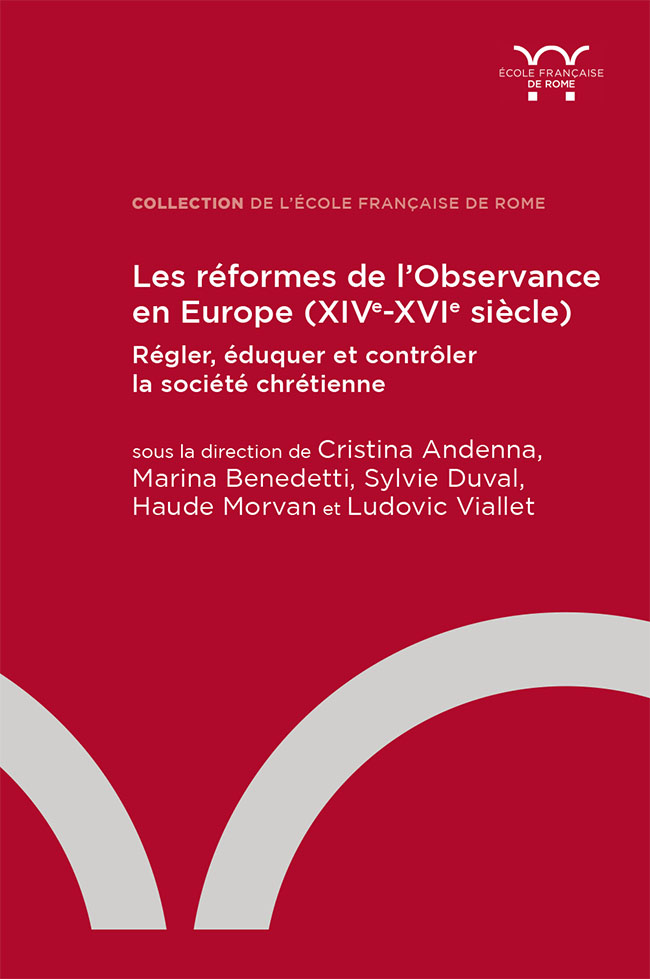
Publication – « Les réformes de l’Observance en Europe (XIVe-XVIe siècle). Régler, éduquer et contrôler la société chrétienne », éd. Cristina Andenna, Marina Benedetti, Sylvie Duval, Haude Morvan, Ludovic Viallet

À partir de la fin du XIVe siècle, des mouvements de réforme ont traversé presque tous les ordres religieux au nom d’une plus grande observance de leurs règles. Des hommes et des femmes se revendiquant de cette volonté réformatrice se sont investis dans une pastorale conquérante ou un enseignement adapté à des publics ciblés, usant de la parole et de l’image de façon souvent novatrice, écrivant des traités et des lettres, conseillant les puissants. Face aux crises de l’Église romaine, aux profondes mutations sociales et aux attentes des fidèles, ils prônaient l’obéissance et des normes de comportement plus strictes à l’intérieur comme à l’extérieur des cloîtres, témoignant d’une culture partagée dont les influences se sont exercées jusque dans la création artistique. Qu’il se soit agi de piété quotidienne, de morale ou d’économie, peu d’aspects de la bonne vie chrétienne ont été ignorés, en une recherche conjuguée de consensus et de contrôle social. La rançon en fut toutefois lourde, entre lutte contre la déviance et l’hérésie, critiques violentes émanant de clercs ou de laïcs lettrés et germes de violentes ruptures. C’est à une exploration de ce phénomène constituant l’une des clefs de compréhension des sociétés de la Renaissance qu’invite cet ouvrage, fruit des échanges pluridisciplinaires d’une trentaine d’auteurs à l’échelle européenne.

Cristina Andenna est professeure d’histoire du Moyen Âge à l’université de la Sarre (Sarrebruck).

Marina Benedetti est professeure d’histoire du christianisme à l’Università degli Studi di Milano.

Ancienne membre de l’École française de Rome, Sylvie Duval est professeure associée en histoire médiévale à l’université de Bologne.

Ancienne membre de l’École française de Rome, Haude Morvan est maître de conférences en histoire de l’art médiéval à l’université Bordeaux Montaigne et rattachée à l’Institut Ausonius.

Ludovic Viallet est professeur d’histoire du Moyen Âge à l’université Clermont Auvergne (Clermont-Ferrand).

Table des matières : ici

Informations pratiques :

Les réformes de l’Observance en Europe (XIVe-XVIe siècle). Régler, éduquer et contrôler la société chrétienne, éd. Cristina Andenna, Marina Benedetti, Sylvie Duval, Haude Morvan, Ludovic Viallet, Rome, École française de Rome, 2025 ; 1 vol., 616 p. (Collection de l’École française de Rome, 623). ISBN : 978-2-7283-1827-8. Prix : € 38,00.

Source : École française de Rome

Publié dans Publications | Commentaires fermés sur Publication – « Les réformes de l’Observance en Europe (XIVe-XVIe siècle). Régler, éduquer et contrôler la société chrétienne », éd. Cristina Andenna, Marina Benedetti, Sylvie Duval, Haude Morvan, Ludovic Viallet