Publication – « Recipes and Book Culture in England, 1350–1600 », éd. Carrie Griffin Hannah Ryley

Recipes are not just instructions. They also embody culture, class, belief, linguistic and literary form, and even include celebrity endorsement. Medieval and early modern recipes can be short and simple but sometimes are not – sometimes they work, and sometimes they do not. They can also be remarkably performative, imaginative, and playful. These essays explore recipes 1350-1600 from a range of perspectives and are unified by an interest in the complexity and richness of these texts.

This volume is the first of its kind. It presents new critical perspectives on medieval and early modern recipes, moving beyond concerns with utility to reframe recipes as part of a dynamic textual and intellectual culture. Contributors build on the sustained scholarly interest in recipes and bring fresh approaches to them. The thirteen essays explore topics including medical, culinary and domestic recipes and charms, as well as how they relate more generally to, for instance, book history, art, astrology and social practices.

Collectively, the essays reveal a distinctive book culture by exploring the material forms, literary and scribal practices of recipe books. This book is a significant contribution to these areas of study, increasingly central to scholarship in recent years.

Open Access versions of the following chapters will be available on publication on the Liverpool University Press website: Hannah Bower, The Brickmaker, the Tavern Keeper, and the Knight: The Role of Obscurity and Imagination in Medieval Medical Recipes and Katherine Storm Hindley, Bodies in the Recipe Collection: Interacting with Manuscript Charms in Late Medieval England.

Carrie Griffin is Associate Professor of English at the University of Limerick, Ireland.

Hannah Ryley is Lecturer in Medieval English at Balliol College, Oxford. She is also Co-Executive Officer of the Society for the Study of Medieval Languages and Literature.

Introduction: Ways of Reading Recipes. Carrie Griffin & Hannah Ryley

“As the coke and the phisicion wyll agre & deuyse”: Language Cues and Potential Users of Medieval English Medical and Culinary Recipes. Francisco Alonso-Almeida

Astrological Questions as Recipes for Knowledge. Mari-Liisa Varila

Feasts, Menus and Provisioning in the Fifteenth-century: Evidence from the Porter Manuscript, Yale Center for British Art SK25 .T85 1450. Julia Boffey

John Shirley’s Recipes and Fifteenth-Century Celebrity Endorsement. Margaret Connolly

The Brickmaker, the Tavern Keeper, and the Knight: The Role of Obscurity and Imagination in Medieval Medical Recipes. Hannah Bower

The Luminescence of Medieval Media. Tom White

Late Medieval Book-Craft Recipes and Perceptions of the Material Text. Eleanor Baker

Domestic Wonder and the Medieval Home. Chelsea Silva

Practical Knowledge and Medical Recipes in Sixteenth-century English Travel Writing. Natalya Din-Kariuki

Bodies in the Recipe Collection: Interacting with Manuscript Charms in Late Medieval England. Katherine Storm Hindley

Latin Recipes in Medical Practitioner Handbooks. Peter Murray Jones

“Et melles en semble”: Literariness and a Trilingual Recipe Collection from Late Medieval England. John Colley

Recipes and Book Culture in England, 1350–1600, éd. Carrie Griffin Hannah Ryley, Liverpool, Liverpool University Press, 2024 ; 1 vol., 288 p. (Exeter Studies in Medieval EuropeMedieval Studies). ISBN : 978-1-80207-463-5. Prix : GBP 98,00.

Source : Liverpool University Press
Publié dans Publications | Laisser un commentaire

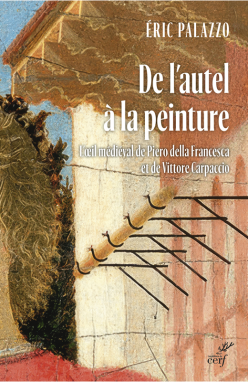
Publication – Éric Palazzo, « De l’autel à la peinture »

Ouvrons les yeux. Cessons d’opposer picturalement le Moyen Âge et la Renaissance. Apprenons à voir, précisément, comment l’oeil qui gouverne le premier commande la seconde car il ne cesse de quêter l’invisible.

S’emparant des deux peintres majeurs que furent Piero della Francesca et Vittore Carpaccio, Éric Palazzo montre, pièces en main, combien ces artistes novateurs se voulurent d’abord des légataires. Leur génie consista à tisser dans leurs oeuvres les objets ou sujets théologiques et liturgiques dont ils héritaient avec les innovations sur la perspective, la géométrie et la lumière qu’ils promouvaient.
Que nous dévoilent La Vision de saint Augustin de Carpaccio, La Flagellation du Christ, La Résurrection et La Vierge à l’Enfant de Piero della Francesca ? De la vision mystique du divin à la perception figurative de l’humain, l’autoportrait marque l’avènement d’une modernité qui ne se veut pas rupture mais continuité.

Une immersion inédite, pédagogique et jubilatoire dans l’histoire de l’art.

Professeur d’histoire de l’art du Moyen Âge à l’université de Poitiers, invité à enseigner dans diverses universités à l’étranger, membre du Centre d’études supérieures de civilisation médiévale, de l’Institut universitaire de France et de plusieurs institutions internationales de recherche, Éric Palazzo est l’auteur d’une oeuvre majeure, dont L’invention chrétienne des cinq sens dans la liturgie et l’art au Moyen Âge, Le Souffle de Dieu et Broder la splendeur, parus au Cerf.

Informations pratiques :

Éric Palazzo, De l’autel à la peinture, Paris, Éditions du Cerf, 2024 ; 1 vol., 272 p. ISBN : 9782204155069. Prix : € 36,00.

Source : Les Éditions du Cerf

Publié dans Publications | Laisser un commentaire

Exposition – Exceptional Picture Frames

The Museo Nacional Thyssen-Bornemisza is presenting a display of eleven paintings from its permanent collection dating from the fourteenth to seventeenth centuries with frames – three of them the original ones – that reveal the artistic importance of this element. Made in Spain, France, Italy, Germany and the Netherlands, they exemplify a wide variety of styles which reflect both the artistic period in which they were made and changing tastes, principally in relation to furniture, while contributing additional aesthetic value to the works they accompany, embellish and protect.

While the collection does not include a large number of the original frames, it does feature many old and important examples. Baron Hans Heinrich Thyssen-Bornemisza paid particular attention to this aspect of collecting and in the 1980s commissioned two scholarly studies of the frames in his collection. The examples chosen for the present exhibition are of a high technical and stylistic level, making them unique and valuable objects in themselves. They also provide additional information which assists in a more complete understanding of the historical and artistic context of the works they surround.

Of the eleven paintings on display, five are by Northern artists. These are by Pieter Jansz. Saenredam (The West Façade of the Church of Saint Mary in Utrecht, 1662), Michael Sweerts (Boy in a Turban holding a Nosegay, ca. 1658-1661), IDM Monogrammist / circle of Joos de Momper (View of a River Port with the Castel Sant’Angelo, 1590-1610), Jan van Eyck (The Annunciation Diptych, ca. 1433-1435) and Wolfgang Beurer (Figure with Coat-of-arms, reverse, 1487).

Informations pratiques :

Exhibition: 7 October 2024 – 21 January 2025

Museo Nacional Thyssen-Bornemisza
Paseo del Prado 8
28014 Madrid
Spain

Source : Codart

Publié dans Exposition | Laisser un commentaire

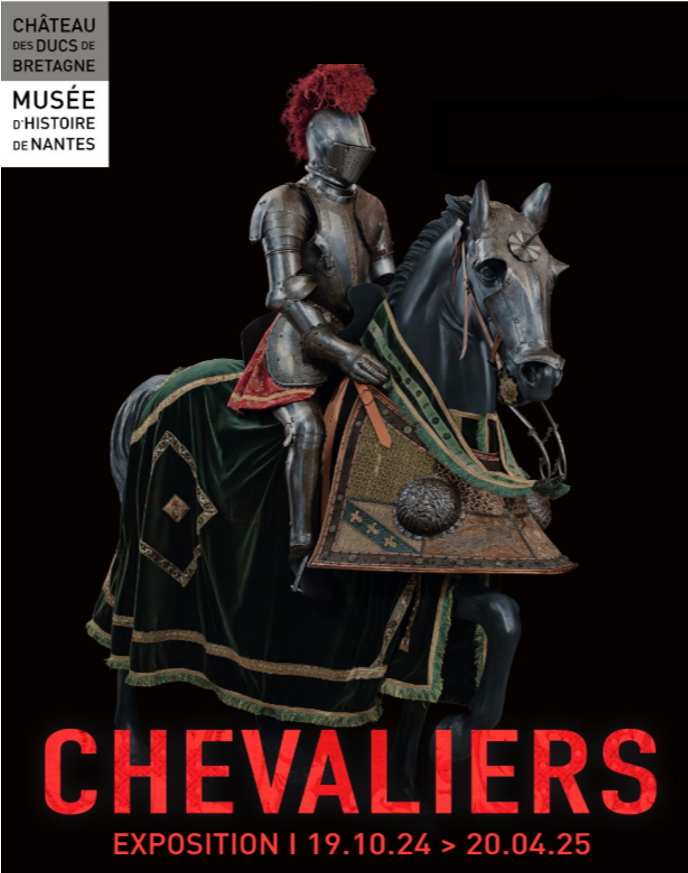
Exposition – Chevaliers

En collaboration avec le musée Stibbert (Florence, Italie)

Chevaliers est une exposition constituée d’un ensemble d’armes et d’armures européennes datant du Moyen Âge et de la Renaissance. La plupart sont des chefs-d’œuvre. L’exposition révèle ainsi la beauté incroyable de ces objets et le savoir-faire artistique des artisans de l’époque.

Le propos principal de l’exposition est d’illustrer et de faire revivre la figure emblématique du chevalier, le code de la chevalerie qui l’anime, sa relation à la guerre, sa place dans la société de l’époque et les formes de démonstration de son statut, comme la coutume des tournois et des joutes.

Le goût pour les objets de la chevalerie renaît au sein du courant du renouveau gothique romantique, qui caractérise l’Europe du 19e siècle. Frederick Stibbert (1838-1906), riche financier et collectionneur avisé, a consacré sa vie à la collection d’œuvres d’art, et en particulier à celle des armures et des armes européennes et extra-européennes. Son armurerie est considérée aujourd’hui comme l’une des plus belles d’Europe. Elle est exposée au musée qui porte son nom, à Florence (Italie).

Grâce à plus de 150 objets originaux, issus de la collection Stibbert, l’exposition permettra d’illustrer la figure du chevalier. Seront aussi abordés de nouveaux thèmes, comme la chevalerie française et bretonne, la place des femmes dans cet univers masculin et le mythe du chevalier dans les arts, la littérature, le cinéma aux 19e et 20e siècles.

Conçue à l’origine par le musée Stibbert, l’exposition a été présentée récemment aux États-Unis, elle sera pour la première fois montrée en Europe.

19 octobre 2024–20 avril 2025
Nantes, Château des ducs de Bretagne

La programmation d’octobre à décembre, liée à Chevaliers sera en ligne le 18 octobre.

La réservation d’un créneau horaire de visite pour découvrir l’exposition temporaire est fortement conseillée, afin de garantir un meilleur confort de visite.

Source : Château des ducs de Bretagne

Publié dans Exposition | Laisser un commentaire

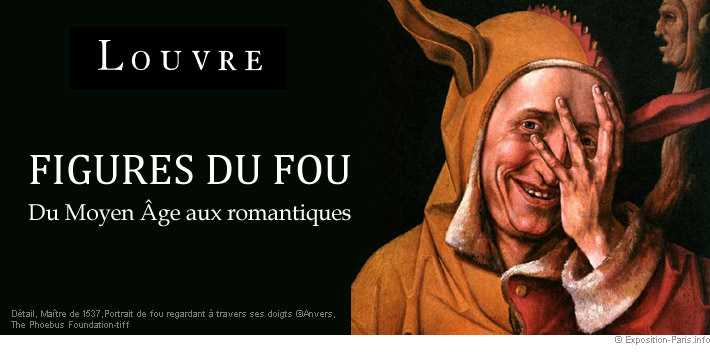
Exposition – Figures du Fou. Du Moyen Âge aux Romantiques

16 octobre 2024 – 3 février 2025
Musée du Louvre – Paris

Étudiée par l’histoire sociale et culturelle, la fascinante figure du fou, qui faisait partie de la culture visuelle des hommes du Moyen Âge, l’a rarement été du point de vue de l’histoire de l’art : pourtant entre le XIIIe et le milieu du XVIe siècle, la notion de folie a inspiré et stimulé la création artistique, aussi bien dans le domaine de la littérature que dans celui des arts visuels.

Cette exposition ambitieuse et stimulante entend aborder la figure typiquement médiévale du fou à travers ses représentations. Elle rassemblera au sein d’un parcours chronologique et thématique plus de 300 œuvres : sculptures, objets d’art (ivoires, coffrets, petits bronzes), médailles, enluminures, dessins, gravures, peintures sur panneau, tapisseries.

Pour le grand public, l’art médiéval est essentiellement religieux. Pourtant, c’est le Moyen Âge qui a donné corps à la figure subversive du fou. Si elle prend ses racines dans la pensée religieuse, elle s’est épanouie dans le monde profane pour devenir à la fin de la période un élément essentiel de la vie sociale urbaine.

Pour l’homme médiéval, la définition du fou est donnée par les Écritures, en particulier le premier vers du psaume 52 : « Dixit insipiens... » (L’insensé a dit en son cœur : « Il n’y a pas de Dieu ! »). La folie est avant tout méconnaissance et absence d’amour pour Dieu. Inversement, il existe aussi des « fous de Dieu », tel saint François. Au XIIIesiècle, la notion est donc inextricablement liée à l’amour et à sa mesure ou démesure, d’abord dans le domaine spirituel, puis dans le domaine terrestre.

Le thème de la folie de l’amour hante les romans de chevalerie (celle d’Yvain, de Perceval, de Lancelot ou de Tristan) et leurs nombreuses représentations, notamment dans les enluminures et les ivoires. Bientôt, le personnage du fou s’immisce entre l’amant et sa dame : il est celui qui dénonce les valeurs courtoises et met l’accent sur le caractère lubrique, voire obscène, de l’amour humain.

De mystique ou de symbolique qu’il était, le fou se « politise » et se « socialise » : au XIVe siècle, le fou de cour devient l’antithèse institutionnalisée de la sagesse royale et sa parole ironique ou critique est acceptée. Une nouvelle iconographie se met en place et on reconnaît le fou à ses attributs : marotte, habit rayé ou mi-parti, capuchon, grelots.

Le XVe siècle est celui de l’expansion formidable de la figure du fou, liée aux fêtes carnavalesques et au folklore. Associé à la critique sociale, le fou sert de véhicule aux idées les plus subversives. Il joue également un rôle dans les tourments de la Réforme : dans ce contexte, le fou c’est l’autre (catholique ou protestant). Au tournant du Moyen Âge et de la Renaissance, sa figure est devenue omniprésente, ainsi que le montre l’art de Bosch puis celui de Bruegel.

A l’époque moderne, la figure du fou institutionnel semble s’effacer progressivement, remplacé dans les cours d’Europe par le bouffon ou le nain. Dès le milieu du siècle des Lumières, la folie prend sa revanche pour apparaître sous d’autres formes, moins contrôlées. L’exposition se conclura par une évocation du regard porté par le XIXe siècle sur le Moyen Âge par le prisme du thème de la folie, mais avec l’éclairage tragique, voire cruel, que lui ont conféré les révolutions politiques et artistiques.

Commissaires

Elisabeth Antoine-König, conservatrice générale au département des Objets d’Art et Pierre-Yves Le Pogam, conservateur général au département des Sculptures, musée du Louvre.

Source : Le Louvre

Publié dans Exposition | Laisser un commentaire

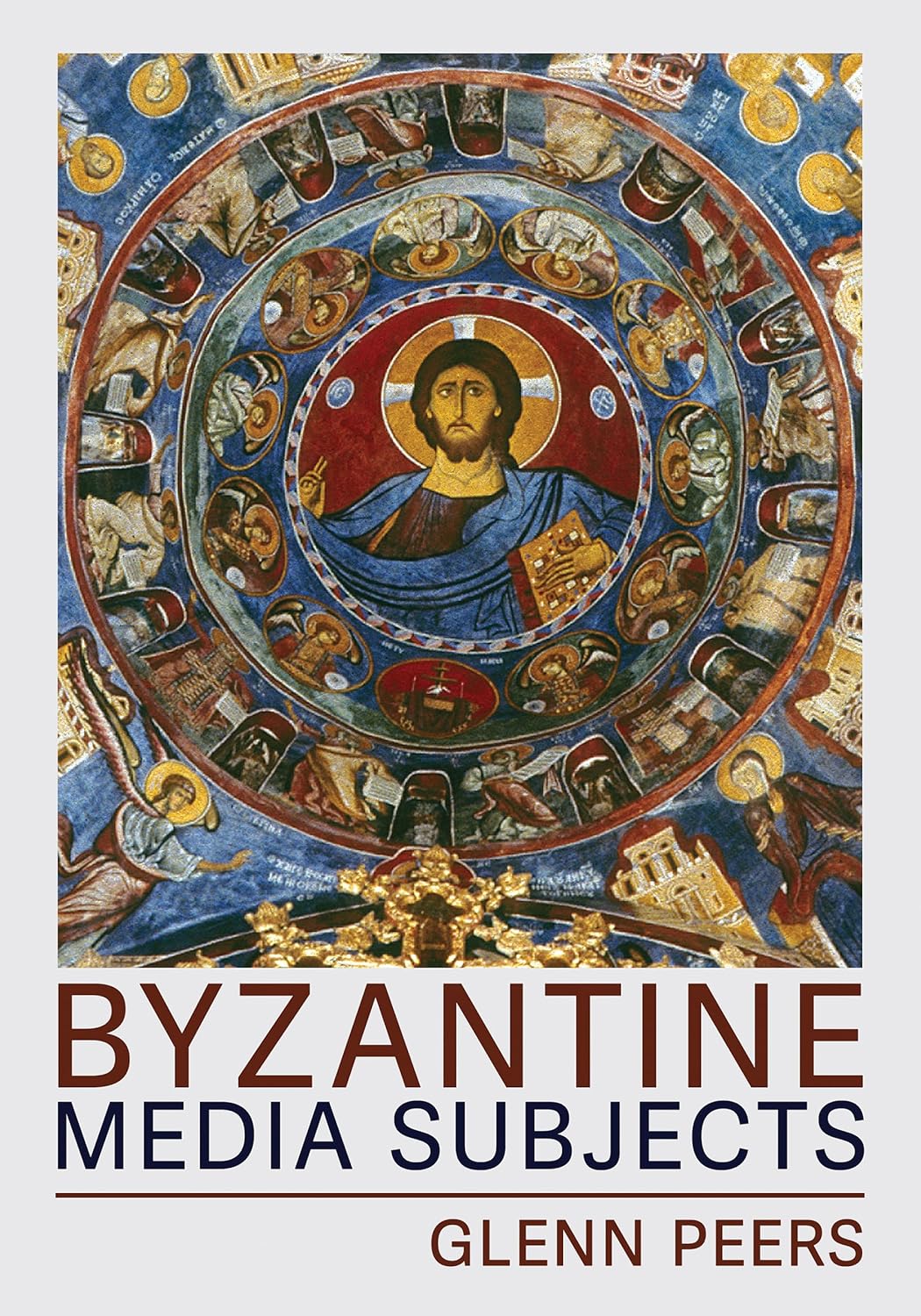
Publication – Glenn Peers, « Byzantine Media Subjects »

Byzantine Media Subjects invites readers into a world replete with images—icons, frescoes, and mosaics filling places of worship, politics, and community. Glenn Peers asks readers to think themselves into a world where representation reigned and humans followed, and indeed were formed. Interrogating the fundamental role of representation in the making of the Byzantine human, Peers argues that Byzantine culture was (already) posthuman.

The Byzantine experience reveals the extent to which media like icons, manuscripts, music, animals, and mirrors fundamentally determine humans. In the Byzantine world, representation as such was deeply persuasive, even coercive; it had the power to affect human relationships, produce conflict, and form self-perception. Media studies has made its subject the modern world, but this book argues for media having made historical subjects. Here, it is shown that media long ago also made Byzantine humans, defining them, molding them, mediating their relationship to time, to nature, to God, and to themselves.

Glenn Peers is Emeritus Professor of the History of Art at both Syracuse University and the University of Texas at Austin. Among his eight books are, as author, Animism, Materiality, and Museums and Sacred Shock, and, as editor, Byzantine Things in the World. He lives in Bennington, Vermont.

Informations pratiques :

Glenn Peers, Byzantine Media Subjects, Ithaca (NY), Cornell University Press, 2024 ; 1 vol., 320 p. ISBN : 978-1-50177-626-7. Prix : 32,95.

Source : Cornell University Press

Publié dans Publications | Laisser un commentaire

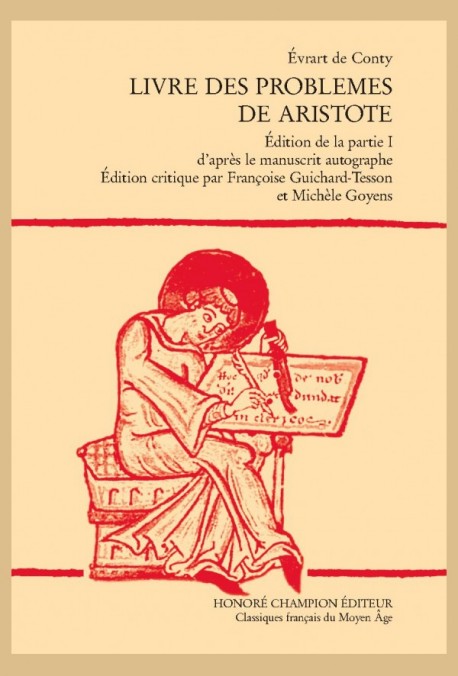
Publication – Évrart de Conty, « Livre des problèmes de Aristote. Édition de la partie I d’après le manuscrit autographe », éd. Françoise Guichard-Tesson, Michèle Goyens

Le Livre des Problemes de Aristote est une traduction réalisée vers 1380 par Évrart de Conty, médecin du roi Charles V et maître régent à la Faculté de médecine de Paris. Le texte est basé sur la traduction latine des Problemata physica pseudo-aristotéliciens par Barthélemy de Messine, datant de 1260, et son commentaire, intitulé Expositio Problematum, par le médecin padouan Pietro d’Abano. Ce volume édite la première des trente-huit parties (particulae) du traité, consacrée aux problèmes de médecine. La traduction d’Évrart de Conty est conservée dans huit manuscrits complets et quelques fragments, mais la présente édition est basée sur le manuscrit Paris, BnF, fr. 24281-24282 : celui-ci est en effet un autographe, particulièrement instructif du point de vue de la genèse du travail de traduction, montrant le traducteur au travail avec ses hésitations, ses corrections, ses mises au point.

Table des matières : ici

Informations pratiques :

Évrart de Conty, Livre des problèmes de Aristote. Édition de la partie I d’après le manuscrit autographe, éd. Françoise Guichard-Tesson, Michèle Goyens, Paris, Honoré Champion, 2024 ; 1 vol., 776 p. (Classiques français du Moyen Âge, 205). ISBN : 978-2-74536-167-7. Prix : € 55,00.

Source : Honoré Champion

Publié dans Publications | Laisser un commentaire

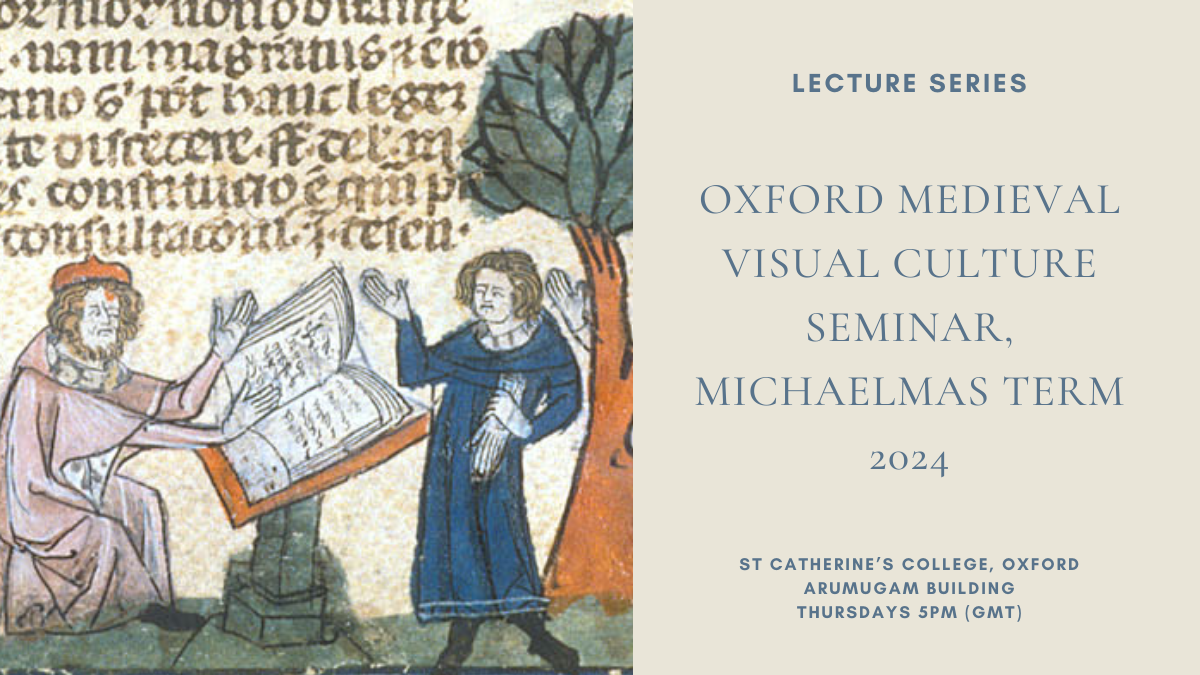
Séminaire – Medieval Visual Culture Seminar

St Catherine’s College, Oxford, Arumugam Building 1.2  |   Thursdays 5pm (GMT)  |   All welcome

Convenors: Nancy Thebaut, Associate Professor, History of Art & Fellow, St Catherine’s College (nancy.thebaut@history.ox.ac.uk)

Join the University of Oxford for their in-person Medieval Visual Culture Seminar Series this Michaelmas Term.

7 November 2024

Elena Lichmanova, DPhil student, University of Oxford, Religious Storytelling and the Rise of Marginalia

21 November 2024

Alixe Bovey, Professor and Dean, Deputy Director, & Head of Research, The Courtauld Institute of Art, Visual Storytelling in 14th-century London: Subtexts, Pretexts, Contexts

5 December 2024

Ben Tilghman, Associate Professor of Art History, Washington College & Visiting Research Fellow, University of Edinburgh, What Art Does When It’s Doing Nothing: Stillness, Perdurance, and Agency in Medieval Art

Source : Medieval Art Research

Publié dans Séminaire | Laisser un commentaire

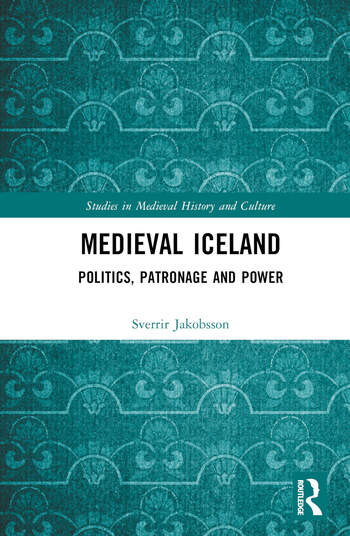
Publication – Sverrir Jakobsson, « Medieval Iceland. Politics, Patronage and Power »

In the ninth century, at the beginning of this account, Iceland was uninhabited save for fowl and smaller Arctic animals. In the middle of the sixteenth century, by the end of this history, it had embarked on a course that led to the creation of a small country on the periphery of Europe. The history of medieval Iceland is to some degree a microcosm of European history, but in other respects it has a trajectory of its own. As in medieval Europe, the evolution of the Church, episodic warfare, and the strengthening of the bonds of government played an important role.

Unlike the rest of Europe, however, Iceland was not settled by humans until the Middle Ages and it was without towns and any type of executive government until the late medieval period. Medieval Iceland is a review of Icelandic history from the settlement until the advent of the Reformation, with an emphasis on social and political change, but also on cultural developments, such as the creation of a particular kind of literature, known throughout the world as the sagas.

A view of medieval Icelandic history as it has never been told before from one of its leading historians, this book will appeal to students and scholars alike interested in Icelandic and medieval history.

Sverrir Jakobsson is Professor of Medieval History at the University of Iceland. He is the author and editor of numerous works, including Historical Dictionary of Iceland, 3rd edition (2016) and The Varangians: In God´s Holy Fire (2020), The Routledge Research Companion to the Medieval Icelandic Sagas (2017), Sturla Þórðarson. Skald, Chieftain and Lawman (2017) and The Making of the Eastern Vikings. Rus’ and Varangians in the Middle Ages (2024).

Introduction: Long-term economic and social trends

Part 1. Early Medieval Iceland

1.     Land-taking

2.     The Foundation of Society

3.     Christianisation

4.     The Settlement in Cultural Memory

Part 2. High Medieval Iceland

5.     Church and Society in the Twelfth Century

6.     The Creation of Domains

7.     Civil Strife

8.     Enter the Kingdom

Part 3. Late Medieval Iceland

9.     Pacification and Growth

10. Towards a New Era

11. Trade Wars and Social Anxiety

12. The Reformation

Conclusion: The Course of Icelandic Medieval History

Biographies

Informations pratiques :

Sverrir Jakobsson, Medieval Iceland. Politics, Patronage and Power, Londres, Routledge, 2024 ; 1 vol., 220 p. ISBN : 978-1-03234-894-0. Prix : GBP 135,00.

Source : Routledge

Publié dans Publications | Laisser un commentaire

Journée d’étude – Dévotion et émotions. L’évolution des affects dans la seconde moitié du Moyen Âge et les usages dévotionnels des images

Jeudi 7 novembre 2024
SHA, Université de Poitiers
8 rue René Descartes,
Salle 203 – Bât. E15

Session du matin

9h – Marcello Angheben (Université de Poitiers, CESCM) : Accueil et présentation de la journée

9h30 – Ingrid Falque (FNRS – UCLouvain) : Image de dévotion, « Andachtsbild », image de piété ? Approche historique et historiographique de l’image dévotionnelle à la fin du Moyen Âge dans le nord de l’Europe

10h20 – Pause café

10h40 – Pierre-Marie Joris et Pierre Levron (Université de Poitiers, CESCM) : Les mots de l’émotion

11h30 – Hélène Torcheboeuf (Université de Poitiers, CESCM) : Images écrites ou comment Dieu vient toucher l’homme, dans l’œuvre de Mechthild de Magdebourg

12h20 – Déjeuner

Session de l’après-midi

13h30 – Katherine Zieman (Université de Poitiers, CESCM) : Images affectives et sons affectifs : la poésie dévotionnelle de Richard Rolle dans BL Additional 37049

14h20 – Marcello Angheben (Université de Poitiers, CESCM) : Les dévots et l’objet de leur vision : images inertes, images vivantes, visions, rejeux et extases mystiques

15h10 – Pause

15h30 – Éric Palazzo (Université de Poitiers, CESCM ) : Liturgie et dévotion dans le livre de prière de saint Dominique

16h20 – Fuensanta Murcia Nicolás (Universidad de Oviedo) : Dévotion et émotion : nouvelles perspectives sur les recueils de miracles mariaux

17h10 – Marcello Angheben (Université de Poitiers, CESCM ) : Conclusions

VISIOCONFÉRENCE

Inscription préalable souhaitée

Lien de connexion : https://univ-poitiers.webex.com/meet/marcello.angheben

CONTACT

 marcello.angheben@univ-poitiers.fr

Publié dans Colloque | Laisser un commentaire