Offre d’emploi – Research Associate (Network Analysis/Manuscripts with Irish Association)

College of Arts, Social Sciences & Celtic Studies
School of Languages, Literatures and Cultures

Ref. No. 010535

Applications are invited from suitably qualified candidates for a full-time, fixed term position as a Research Associate (Network Analysis/Linked Data) with the discipline of Classics at the University of Galway, Ireland.

This position is funded through the Insight Centre for Data Analytics and is available from 1st November 2024 to contract end date of 31st December 2025.

The researcher will focus on the dataset MIrA (Manuscripts with Irish Associations, http://mira.ie), which contains descriptive information relating to c. 300 manuscripts of Irish origin or associated with Ireland. This project will aim to overcome two current limitations: 1) data has not yet been subjected to sophisticated data analysis; and 2) a lack of integration with other online resources means that data remains in silos.

Duties:

  • Evaluate what insights can be generated by the application of Network Analysis to MIrA.
  • Make a feasibility study and road map for linking MIrA to a number of other online datasets (see Databases of Early Latin Manuscripts).
  • Develop a pilot project linking MIrA to at least one other dataset and generating new analytics from the combined data.
  • Assist with the development of the MIrA web resource.
  • Regular collaboration with the project team, contributing ideas and helping to solve data-related project challenges.
  • Present the results of research at seminars and conferences.
  • Publish the results of research in quality peer-reviewed journals for Data Science and/or Digital Humanities research.
  • Any other duties assigned commensurate to this level of post.

Salary: Research Associate/Postdoctoral Researcher salary scale €44,346 – €56,764 per annum, (subject to the project’s funding limitations), and pro rata for shorter and/or part-time contracts.

The candidate will be a member of the University’s Data Science Institute and will be able to participate in seminars and other research events there. The researcher will also participate in Digital Humanities seminars and events in the College of Arts and join a network of Data Science and Digital Humanities researchers engaged in a variety of projects there.

Closing date for receipt of applications is 17:00 (Irish Time) on 29th August 2024. It will not be possible to consider applications received after the closing date.


Please review the full job description for further details and essential requirements: Full job description

To apply, see « Research Vacancies Type 2 » on the University’s Jobs page.

Source : Glossam
Publié dans Offre d'emploi | Laisser un commentaire

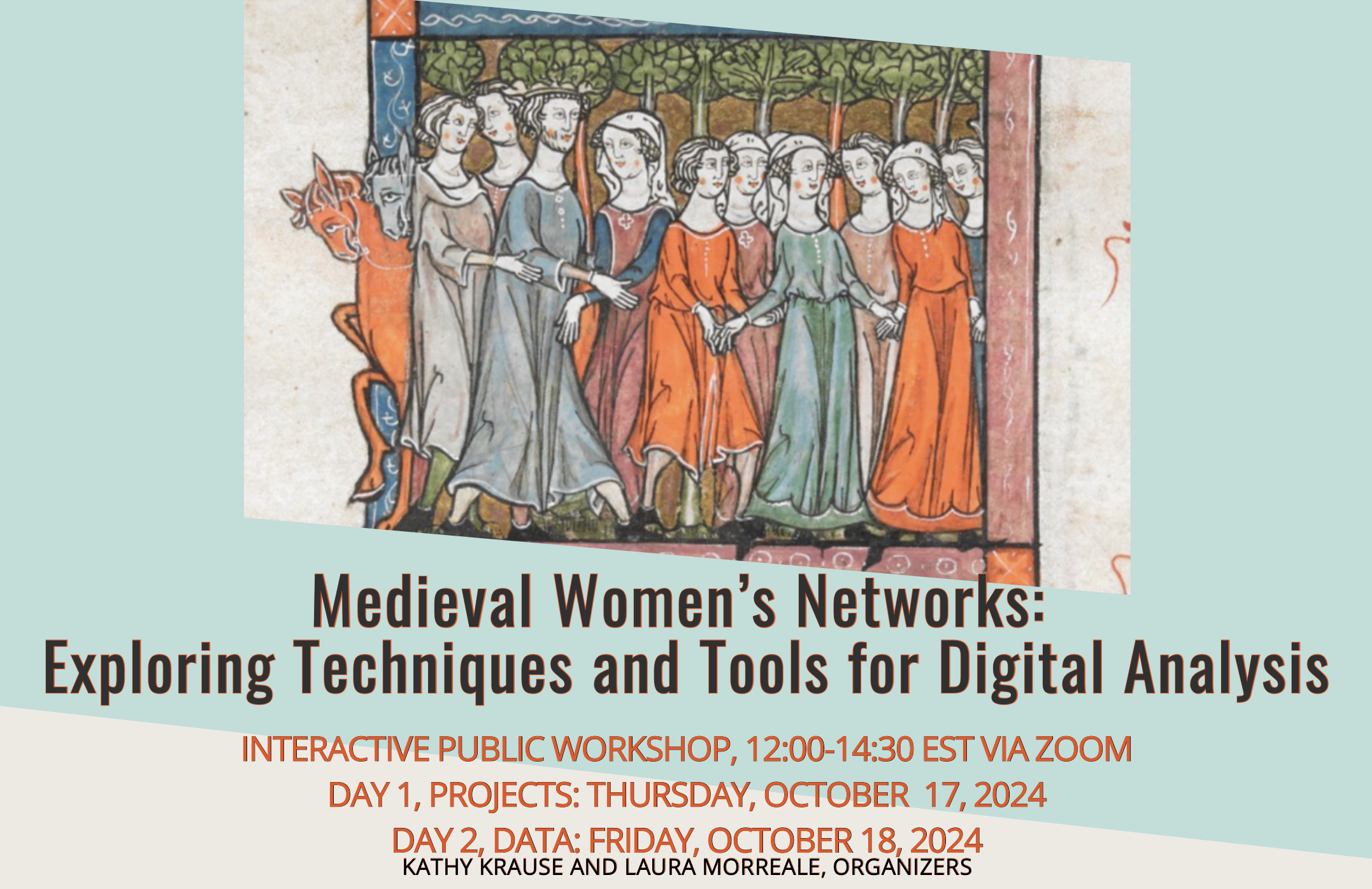
Colloque (en ligne) – Medieval Women’s Networks: Exploring Techniques and Tools for Digital Analysis

An online event sponsored by
Center for Digital and Public Humanities, University of Missouri-Kansas City,
Research Group on Manuscript Evidence, and 
Digital Medievalist

Registration : here

Thursday, October 17 & Friday, October 18, 2024 

12:00-14:30 EST

Participation is free and open to all; Registration required

Registration link (available after August 9, 2024)

Contact: 
Dr Kathy Krause, Professor Emerita, University of Missouri-Kansas City
KrauseK@umkc.edu

Dr Laura Morreale, Independent Scholar & Digital Medievalist
lmorreale3@gmail.com

  1. Rationale

The network analysis of large datasets has been a viable working methodology in the Social Sciences since the 1970s. Although its applicability within the Humanities has been explored more slowly, its use has increased in recent years in projects such as the mapping of letter writers’ networks in Early Modern Europe or the exploration of relationships among individual words and terms used in the Iliad. What these examples have in common is a large but uniform source base that can easily be converted into machine-readable OCR content. In contrast, when scholars of medieval women seek to explore the various networks that connect their research subjects, they encounter many of the same challenges that confront other pre-modern scholars wishing to use digital tools, as well as others unique to their sub-field. Difficulties inherent in working with pre-modern sources include the diversity of source types or the lack of either pre-existing or easily-accessible methods of source digitization, and pre-modern textual sources may be differentiated by language, scribal hand, or physical format (e.g.; codices with or without illuminations, charters, rolls, court proceedings, accounts). Questions of patronage networks also raise the issue of integrating images of physical art objects in a multiplicity of forms into the equation. Aside from these more common challenges, the sources and methods developed over the past fifty years to study medieval women’s lives present an even more complex data model than those used in other medieval sub-fields. This means that even the digital tools that work well for other types of pre-modern digital investigation may not translate easily to the study of medieval women’s lives and the networks that connected them. 

The goals of the webinar are:

  1. to identify the sources and methodologies scholars employ to study the lives of medieval women, and 
  2. to think collaboratively about how researchers might extract information from these same sources and build data models to harness the power of computer-enabled analysis to make the most of the information they find. 
  1. Methodology and Program

Thankfully, a growing number of feminist medievalists have already begun to explore the ways computer-based tools can help map the networks of medieval women. In this way, researchers can explore medieval women’s lived experiences as part of a set of overlapping communities that reveal their political activities or their cultural and religious patronage. The workshop is planned as a two day event:

  1. Day one will focus on presentations by scholars who research medieval women’s lives who have considered using network analysis for their computer-based research, or those who have already begun to do so.  Some of the key questions that should be addressed include:
  • What did they think network analysis would allow them to do?
  • What strategies have they tried?
  • What roadblocks have they experienced?

To remind the participants of the potential advantages of computer-enabled work, the first day’s program will include reporting from researchers who have successfully launched DH projects, and some of the techniques they used to do so. 

Schedule: 

12:00-13:30: Introduction and Scholar Presentations

Presenting scholars include Adrienne Williams Boyarin, Elena Brizio, Tracy Chapman-Hamilton, S.C. Kaplan, Samantha Katz-Seale, Mariah Proctor, & Yvonne Seale

13:30-14:30: Attendee Discussion (moderated)

  1. Day two will feature DH experts who will respond to what was presented the day before to recommend strategies, data platforms and/or appropriate DH technologies, and to facilitate discussions among participants.

Schedule: 

12:00-13:30: Introduction and Scholar Presentations
DH experts include Kalani Craig, Erin McCarthy, Jeffrey Rydberg-Cox, & Sébastien de Valeriola

13:30-14:30: Attendee Discussion (moderated)

All discussions will take place online and will be open to a public audience.

  1.   Desired Outcomes
  • A targeted introduction to digital methods for the study of medieval women;
  • Presentation of case studies and best practices;
  • Hands-on training on how to use DH tools to plot medieval women’s networks;
  • Networking opportunities and community building.

Source : et informations : Medieval Women DH Networks

Publié dans Colloque | Laisser un commentaire

Appel à contribution – Célébration des 600 ans de la Danse macabre des Saints-Innocents. Association Danses macabres d’Europe, XXIe congrès international

XXIe congrès international
Paris, 1er-4 octobre 2025 (dates prévisionnelles)
Célébration des 600 ans de la Danse macabre des Saints-Innocents
Congrès co-organisé avec la Bibliothèque historique de la ville de Paris, le Musée Carnavalet, le Laboratoire SAPRAT

L’association Danses macabres d’Europe (DME) a été créée en France en 1987 par Bertrand et Hélène Utzinger ; plusieurs groupes sont nés ensuite progressivement en Suisse, en Italie, aux Pays-Bas, en Allemagne et en Autriche. DME a ainsi organisé régulièrement plusieurs congrès internationaux en France et à l’étranger. Le premier congrès a eu lieu à Clusone (Lombardie) en 1987, puis sont venus les congrès de Chartres (1988), Kientzheim (Alsace) en 1990, Straubing (Bavière) en 1992, Füssen (Bavière) en 1995, Kassel (Hesse) en 1998, Vendôme en 2000, Rouen en 2003, Gand en partenariat avec l’université de la ville en 2005, Metnitz (Carinthie, Autriche) en 2007, Sibiu (Roumanie) organisé par l’Université de Bucarest en 2010, Chartres en 2012, Turin organisé par l’Université de la ville en 2014, Troyes, organisé par l’Université de Reims Champagne-Ardenne et la Médiathèque du Grand Troyes en 2016, Paris, en 2019, organisé en partenariat avec la Bibliothèque Mazarine, la Bibliothèque Sainte-Geneviève et l’École du Louvre, Bucarest (Roumanie) en 2021 organisé par l’Université de cette ville. Le XXe congrès eut lieu à Brest en 2023 en partenariat avec l’Université de Bretagne occidentale et permit de mettre en valeur le patrimoine macabre breton et les Danses macabres de la région.

Le choix de Paris pour le prochain congrès tient à l’exceptionnel anniversaire de la Danse macabre médiévale qui fut peinte au cimetière des Saints-Innocents en 1424-1425.

La Danse macabre de Paris de 1424-1425

Le cimetière des Saints-Innocents fut orné d’une Danse macabre peinte il y a 600 ans. L’œuvre a disparu mais elle est documentée par l’auteur du Journal d’un Bourgeois de Paris : Item, l’an mil CCCC XXIIII, fut faicte la Danse Macabre aux Innocens et fut commencée environ le moys d’aoust et achevée ou karesme ensuivant. Cette mention est capitale car elle livre la date mais ne donne pas de détails concernant l’œuvre elle-même. Il faut se tourner vers d’autres sources – textuelles et iconographiques – pour mieux saisir l’œuvre : notamment les témoignages d’auteurs contemporains de la peinture, les éditions imprimées de Guy Marchant et tout document des siècles suivants témoignant de l’histoire du cimetière et de ses œuvres. Le contexte historique, artistique et historiographique est déterminant pour comprendre l’emplacement de cette première œuvre monumentale de la Danse macabre.

L’ouvrage paru en 1990 sous la direction des historiens Michel Fleury et Guy-Michel Leproux faisait le point sur l’histoire du célèbre cimetière parisien des Saints-Innocents, au cœur de la capitale. Il sera un point de départ indispensable à une nouvelle réflexion sur la Danse macabre et sur les travaux récents qui permettent de la faire revivre.

Le futur congrès DME mettra à l’honneur cette œuvre fondamentale de l’art parisien. Il réunira les chercheurs intéressés par les Saints-Innocents et par sa Danse macabre ainsi que par l’histoire de Paris. Les rapports avec l’histoire de l’art et l’histoire seront privilégiés pour mieux révéler le contexte des représentations macabres de l’époque médiévale. Ce colloque permettra de faire connaître les apports des recherches récentes autour de la Danse macabre, en particulier dans les documents d’archives et les dossiers patrimoniaux.

AXES THÉMATIQUES DU XXIe CONGRÈS

Trois axes thématiques, relatifs à la Danse macabre de Paris sont proposés :

Naissance et évolution de la Danse macabre en France et ailleurs (XIVe–XVIe siècles).

Paris au XVe siècle et la Danse macabre des Saints-Innocents.

Le cimetière, les charniers, les ossuaires et les usages funéraires à Paris et en région
parisienne (XVe–XVIIe siècles) : lieux de la mort et de ses représentations.

LIEUX
Paris, lieux prévisionnels :

  • Bibliothèque historique de la ville de Paris (BHVP), 24 rue Pavée, 75004 Paris
  • Musée Carnavalet – Histoire de Paris, 23 rue de Sévigné, 75003 Paris
  • École du Louvre, place du Carrousel, 75001 Paris
  • Musée de Cluny, 6 place Paul Painlevé, 75005 Paris

DATES
1er-4 octobre 2025 (dates prévisionnelles).

RÉSUMÉS
Pour les personnes intéressées, un résumé de 500 mots maximum, accompagné de 5-7 mots clé et
une brève note biographique indiquant nom, prénom, statut et affiliation institutionnelle (rédigé
en format Word, Times New Roman, taille 12, interligne 1,5) sont à envoyer avant le 1er octobre
2024 à asso.dme@orange.fr

Merci d’indiquer dans quel axe de recherche s’intègre votre proposition.

CALENDRIER
Date limite de réception des résumés : 1er octobre 2024
Confirmation des propositions retenues par le comité scientifique : 1er novembre 2024
Les versions définitives des textes des communications sont attendues pour la date du 15 mai
2025 en vue de la diffusion des actes le premier jour du congrès.
La langue du congrès est de préférence le français mais les communications en allemand, anglais,
italien et espagnol sont acceptées.
Temps de communication : 20 minutes.
Les actes du congrès seront publiés en 2025 par Danses macabres d’Europe.

FRAIS
Les frais de déplacement et d’hébergement ne pourront pas être pris en charge par l’organisation du
colloque.

Coordonnées de l’association Danses macabres d’Europe
E-mail : asso.dme@orange.fr
LinkedIn : https://fr.linkedin.com/company/danses-macabres-d-europe
Site web : http://www.danses-macabres-europe.org/
Siège social : 13 bis, passage Verdeau, 75009 Paris

Publié dans Appel à contributions | Laisser un commentaire

Offre d’emploi – Duns Scotus Assistant Professor in Franciscan Studies

Durham University – Department of Theology and Religion
Closes: 27th August 2024

The Department of Theology and Religion at Durham University seeks to appoint a talented individual to a 5-year fixed term role of the Duns Scotus Assistant Professor in Franciscan Studies. We welcome applications from those with research and teaching interests in the broad field of Franciscan Theology and we are particularly eager to hear from applicants with a focus on the classical tradition of Franciscan Theology and its contemporary significance.

This post, made possible through generous benefaction, consolidates the long-term interests of the Centre for Catholic Studies (CCS), a research centre within the Department of Theology and Religion, to develop a research programme area in Franciscan Studies in liaison with global Franciscan communities. The post-holder will be expected to participate in academic leadership for and development of a Franciscan Studies programme within the CCS, delivering high-quality research and teaching in Franciscan Studies, focussing on classical Franciscan theology and its continuing significance.

The post-holder will carry a standard teaching load at undergraduate and postgraduate level, including supporting online distance learning modules. The appointee will also be committed to supervising students studying for a PhD.

Alongside the primary research and teaching responsibilities, the postholder will have an additional focus on organising occasional academic conferences, summer schools, and other outreach activities in Franciscan Studies, and on encouraging visiting scholars of Franciscan Studies.

The successful candidate will be fully involved in the life and work of the CCS through such means as: regular participation in and contribution to the Durham Catholic Theology Research Seminar, staff-student research conversations, and other such lectures, conferences, and public events organised by the CCS; participation in CCS planning meetings, and the annual Friends’ and Benefactors’ event; being an advocate for the CCS, and being prepared, on occasion, to meet with potential donors.

The successful applicant would be expected to be in post at the beginning of January 2025.

Durham’s Department of Theology and Religion is one of the very best UK departments in this field, with an outstanding reputation for excellence in teaching, research and employability of our students. It is held in high esteem across the globe, as reflected in the QS World Reputation rankings, which placed Durham’s department as 6th worldwide based on its most recent survey in 2023. In January 2024, in recognition of its commitment to equality, diversity and inclusion the department was awarded the Athena Swan Silver Award by Advance HE.

With its home in Abbey House, right next to Durham Cathedral, a UNESCO world Heritage site, it is a beautiful and immensely exciting place to study and to research in Theology and Religion.

This post offers an exciting opportunity to make a major contribution to the development of internationally excellent research and teaching while allowing unrivalled opportunities to progress and embed your career in an exciting and progressive institution. For more information, please visit our Department’s pages at www.durham.ac.uk/departments/academic/theology-religion and find out more about the Centre for Catholic Studies at www.dur.ac.uk/theology.religion/ccs

Source : Jobs.ac.uk

Publié dans Offre d'emploi | Laisser un commentaire

Journée d’étude – Heerlijkheden in de Lage Landen

Bijna vier jaar geleden ging het onderzoeksprojectLORD (Lordship and State Formation in the County of Flanders, 15th-18th c.) aan het Rijksarchief Gent en de Universiteit Gent van start. De bedoeling van het project was de weinig onderzochte instelling ‘heerlijkheid’ in het graafschap Vlaanderen in de spotlight te zetten. Eenvoudig gesteld omvat een heerlijkheid een bundel aan geprivatiseerde rechten uitgeoefend door een heer, vrouwe of rechtspersoon binnen een welbepaald territorium. Het landschap van het graafschap Vlaanderen was bezaaid met vele honderden heerlijkheden. LORD bekijkt deze Vlaamse heerlijkheden vanuit staatsvormingsprocessen. Met andere woorden: hoe interageerden Vlaamse heren met de vorst en met hun inwoners?

In het najaar van 2024 loopt het LORD-project af. Om het onderzoeksproject zinvol af te sluiten, organiseren het Rijksarchief Gent en de Universiteit Gent op maandag 9 september een contactdag waarop lopend onderzoek over heerlijkheden in de Lage Landen in de middeleeuwen en vroegmoderne tijd wordt gepresenteerd. Zowel academici als archivarissen zullen verschillende heerlijke thema’s belichten.

De contactdag wordt afgesloten met een receptie.

Programme :

9.30-10.00         Onthaal met koffie

10.00-11.10       Welkom door Kaat Cappelle (Rijksarchief Gent)

                          Sessie 1: Financiën

Tom De Waele (Universiteit Gent)
De ‘réaction seigneuriale’ in Vlaanderen? Breuklijnen en continuïteit van heerlijke surplusextractierechten benaderd via buitenpoorterij en beste hoofden (ca. 1450-ca. 1795)

Thijs Lambrecht (Universiteit Gent) & Joke Verfaillie (Rijksarchief Gent)
Heerlijke karweien in het graafschap Vlaanderen, 13de-18de eeuw

Erwin Van der Hoeven (historicus)
Herzele (1444-1502): De heerlijkheid als ruimte van onderhandeling

11.10-11.30      Koffiepauze

11.30-12.30      Sessie 2: Heren

Maarten J. Prins (historicus)
Heren van Holland. Onderzoek naar heerlijkheden en hun eigenaars in Holland, 1500-1795

Margreet Brandsma (Universiteit Gent) & Sieben Feys (Universiteit Gent/Universiteit van Amsterdam)
Heren zonder grenzen. Edingen/Enghien tussen Brabant en Henegouwen

Klaas Van Gelder (Vrije Universiteit Brussel/Rijksarchief Brussel)
Een heer, een dorp, een blijde intrede: de vele facetten van een onderbelicht ritueel in 18de-eeuws Brabant

12.30-13.30      Broodjeslunch

13.30-14.50      Sessie 3: Recht en justitie

              Rik Opsommer (Universiteit Gent/Stadsarchief Ieper)
              Over de grens, lenen en heerlijkheden in Frans-Vlaanderen, 14de-15de eeuw

              Niels Fieremans (Universiteit Gent)
              Beschermheren? De verdediging van heerlijke onderdanen voor de Brabantse prinselijke hoven

Reinder Klinkhamer (Universiteit Gent)
Heerlijke rechtspraak en agrarisch kapitalisme in het Land van den Bergh (Gelre, ca. 1460-1560)

Kaat Cappelle (Rijksarchief Gent)
Op zoek naar verwijzingen naar vorstelijke wetgeving in politiereglementen uit Vlaamse heerlijkheden, 13de-18de eeuw

14.50-15.20      Koffiepauze

15.20-16.15      Sessie 4: Verscholen archief

                          Alexandra Van den Berghe (Rijksarchief Brussel)
                          Sporen van heerlijkheden in familiearchief: de familie Lippens

             Kevin Dekoster (Rijksarchief Brugge)
             Heren en heerlijkheden in (het archief van) de kasselrij Ieper

             Slotwoord door Frederik Buylaert (Universiteit Gent)

16.15-17.00      Receptie

Informations pratiques :

09/09/2024
Rijksarchief Gent: Bagattenstraat 43, 9000 Gent

Openingsuren:

Van 9.30 tot 17.00 uur.

Tarieven: Gratis toegang

Contact :kaat.cappelle@arch.be – +32 (0)9 265 76 70

Source : Archives de l’État

Publié dans Colloque | Laisser un commentaire

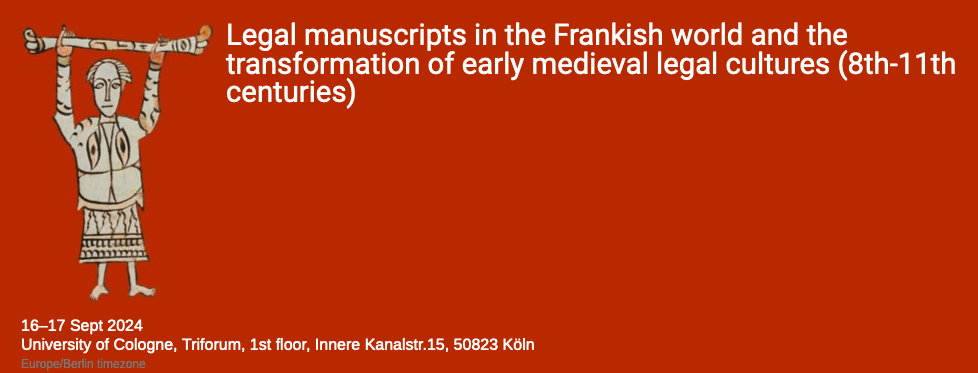
Colloque – Legal Manuscripts in the Frankish World and the Transformation of Early Medieval Legal Cultures (8th-11th Centuries)

The codicological turn has been a game-changer in studying early medieval legal cultures over the past 40 years. The pioneering work of Hubert Mordek, Rosamond McKitterick, and others has shown that legal manuscripts were unique collections of texts, sometimes fragmentary and marred by scribal errors, but always connected to specific interests and local production conditions. This shift has led historians to turn from studying texts presented in critical editions to studying texts transmitted in manuscripts. The enormous increase in digitized manuscripts has further reinforced this “whole-book approach” in recent years. Today, it is no longer possible to conduct research into the legal history of the early Middle Ages while ignoring where and when individual manuscripts were created and transmitted. The whole-book approach is a method that underpins our international research collaboration that lasted for four years and materialized in biannual Zoom meetings. In taking an interdisciplinary approach, historians, legal historians, and art historians from Germany, Austria, France, Italy, the U.S.A., and Japan have analysed individual early medieval law manuscripts of the Carolingian empire, where Roman, Frankish, and other legal traditions coexisted and became deeply influenced by ecclesiastical law. This conference is the second of two concluding events — the first having occurred at the University of Tokyo in March 2024 – and will try to enhance our understanding by working on a typology of early medieval legal manuscripts.

Monday, 16th September

9:00-9:10 Stefan Esders: Introduction. Towards a typology of early medieval law manuscripts

Session 1: The usefulness of ancient texts
9:10-10:00 François Bougard: Isidore of Seville: The toolbox of early medieval legal manuscripts
10:00-10:30 Coffee break
10:30-11:20 Luca Loschiavo: The medieval life of the Collatio legum Mosaicarum et Romanarum. Around the Possible (and Targeted) Sending of Roman Law Texts from Rome towards the Frankish Kingdom

Session 2: Legal Pluralism
11:20-12:10 Shigeto Kikuchi: King, law and ordeal: Paris, BnF, Lat. 4628 as a lawbook
12:10-13:30 Lunch
13:30-14:20 Helmut Reimitz: Patterns of legal pluralism: Histories of law in Paris, BnF, Lat. 10758

Transfer to Düsseldorf

17:30 Book presentation at the Academy of Sciences, Humanities and the Arts in Düsseldorf (for invited guest only)

Tuesday, 17th September

Session 3: Canon law manuscripts
9:30-10:20 Rosamond McKitterick: Einsiedeln, Stiftsbibliothek MS 191 and its implications
10:20-11:10 Till Stüber: From Carthage to Bavaria. Observations on the canonical mss. of Freising (Munich clm 6243) and Würzburg (M.p.th.f.146)
11:10-11:40 Coffee break

Session 4: Exceptional compilations
11:40-12:30 Osamu Kano: Tours or the royal court? On the origin of the manuscript Paris, BnF, Lat. 2718
12:30-13:30 Lunch
13:30-14:20 Britta Mischke: Lupus’ Liber legum in the Mainz legal compendium Gotha Memb. I. 84

Session 5: A case study from different angles: St Gall 731
14:20-15:10 Beatrice Kitzinger/Jennifer Davis: Integrating Text and Image: A Case Study of the Wandalgarius Codex
15:10-15:40 Coffee break
15:40-16:30 Grigorii Borisov: Revisiting the law book of Uuandalgarius: A paleographer’s point of view

16:30-17:00 Karl Ubl: Conclusion and final discussion

Informations pratiques :

16–17 Sept 2024

University of Cologne, Triforum, 1st floor, Innere Kanalstr.15, 50823 Köln

Organizers: Stefan Esders, Shigeto Kikuchi, Karl Ubl

Sponsored by: JSPS Fund for the Promotion of Joint International Research (Fostering Joint International Research (B)) (19KK0014); North Rhine-Westphalian Academy of Sciences, Humanities and the Arts

Source : University of Cologne

Publié dans Colloque | Laisser un commentaire

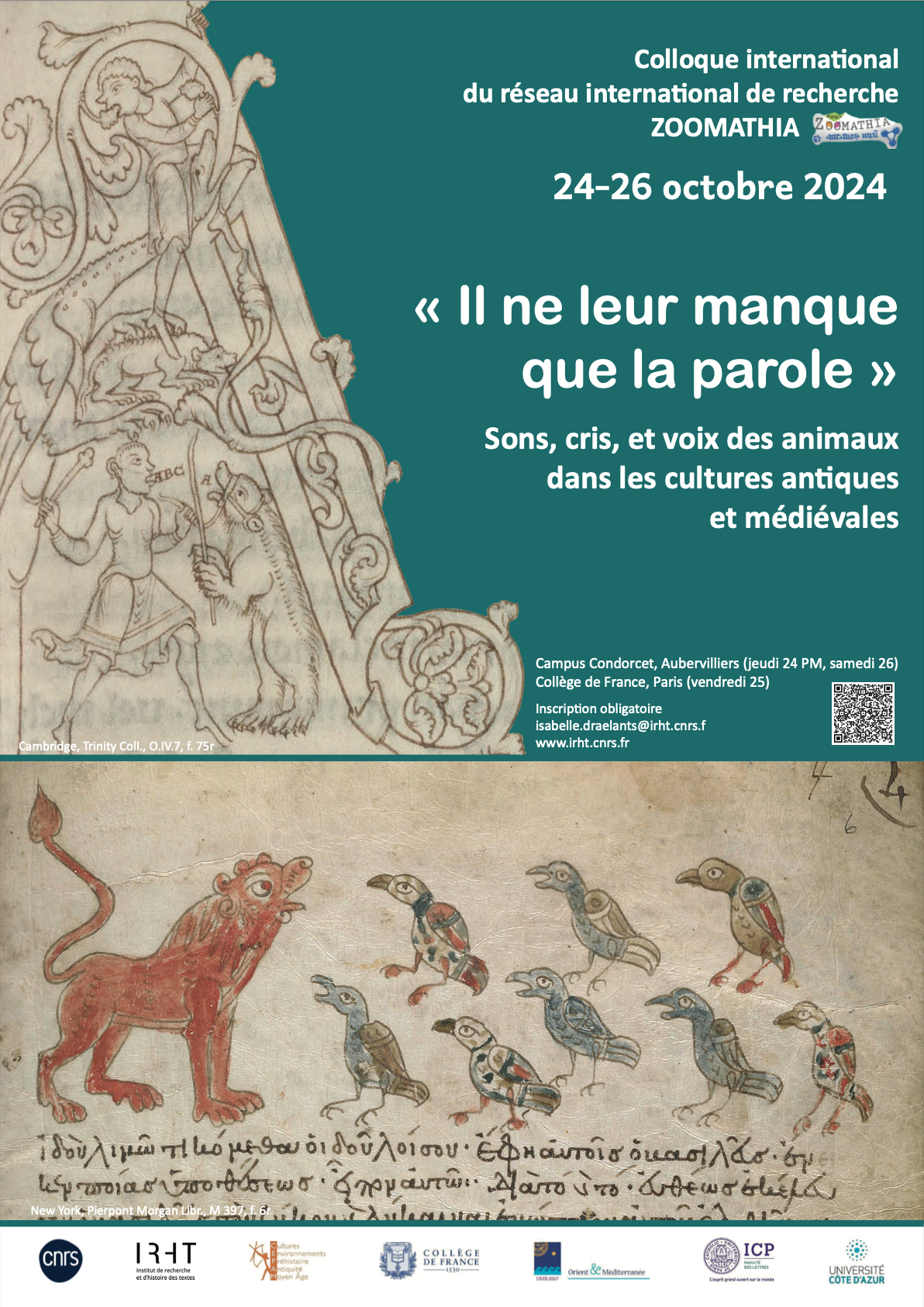
Colloque – « Il ne leur manque que la parole » : Sons, cris et voix des animaux dans les cultures antiques et médiévales

Colloque international du réseau international de recherche Zoomathia
24-26 octobre 2024

Dédié à la mémoire de François Poplin († 20 avril 2024), archéologue et vétérinaire

Organisation : 
Isabelle Draelants (CNRS-IRHT) – Jean-Charles Ducène (EPHE 4e section-UMR 7192) – Stavros Lazaris (CNRS-UMR 8167, ICP-EA 7403) – Arnaud Zucker (Univ. Côte-d’Azur-CEPAM)

Comité scientifique :
Santiago Aragon, Elisabetta Carpitelli, Christophe Chanzedon, Michel Kreutzer, Baudouin Van den Abeele

Lieu : Campus Condorcet, Aubervilliers (jeudi 24, samedi 26) – Collège de France (vendredi 25 AM) et Institut catholique de Paris (vendredi 25 PM)


De naturis animantium :
Leonum est fremere uel rugire, tigridum rancare, pardorum felire, pantherarum caurire, ursorum uncare uel saeuire, aprorum frendere, lyncum urcare, luporum ululare, serpentium sibilare, onagrorum mugilare, ceruorum rugire, boum mugire, equorum hinnire, asinorum rudere uel oncare, porcorum grunnire, uerris quiritare, arietum blatterare, ouium balare, hircorum miccire, haedorum bebare, canum latrare seu baubari, uulpium gannire
.      

Suétone, Prata, frag. 161  

(Les temps indiqués comprennent les discussions : 30 min. d’exposé + 15 min. de discussion)

Jeudi 24, Campus Condorcet (Aubervilliers), Bâtiment de recherche Nord, salle 0.010

Accueil : 9h00-9h30

9h30-10h00 Introduction

Session 1 : Antiquité gréco-latine

10h00-11h00 : Conférence inaugurale par Frédérique Biville (Univ. Lumière Lyon 2), Représenter les émissions sonores animalières dans les structures phoniques du langage humain. Le témoignage du monde romain

11h00-11h45 : Ben Broadbent (Michigan Univ.), The Solemnity of Animal Speech in Early Greek Epic Poetry

11h45-12h30 : Oliver Hellmann (Trier Univ.), Animal Sounds in Aelian’s De Natura Animalium

12h30-14h00 Déjeuner dans le patio

14h00-14h45 : Alessandra Scaccuto (Univ. de Siena, Univ. Côte d’Azur), ‘Ergo si varii sensus animalia cogunt /muta tamen cum sint, varias emittere voces’… (Lucrèce, 5.1087-1088) : les variations des chants des oiseaux dans les savoirs zoologiques latins

14h45-15h00 : Maud Pfaff-Reydellet (Univ. de Strasbourg), Le molosse et la corneille : explorer toute la gamme d’émissions sonores des animaux chez Lucrèce, Virgile et Ovide

15h15-16h00 : Thomas Galoppin (Univ. de Toulouse), Quand les chiens aboient, la divinité les entend. Communications animales dans des pratiques divinatoires et des incantations d’époque romaine

16h-16h15 : Pause

Session 2 : Patristique et Islam

16h15-17h00 : Errikos Maniotis (Masaryk Univ.), The interaction between animals and humans in Patristic Christian Theology

17h00-17h45 : Meyssa Ben Saad (Univ. de la Manouba, Tunis), Langage animal versus langage humain ou la distinction fasīḥ a‘ğam dans le Kitāb al-Ḥayawān d’al- Ǧāi (776-868)

17h45-18h30 : Nicolas Payen (Ecole normale de Lyon) : Le souffle et la production de sons chez les animaux en Islam médiéval

19h30 Dîner au Campus Condorcet

Vendredi 25 matin, Collège de France, Paris V, salle de conférence, 3 rue d’Ulm

Session 3 : Éthologie

9h00 : accueil

9h15-10h15 : Conférence inaugurale par Dominique Lestel (École normale supérieure, Paris), Qu’est-ce que l’éthologie philosophique ?

10h15-11h00 : Sébastien Deregnaucourt (Univ. Paris-Nanterre et Institut Francilien d’Ethologie) : Que disent les animaux ? L’approche éthologique

11h00-11h45 : Gérard Leboucher (Univ. Paris-Nanterre), À quoi les sons articulés par les animaux non-humains leur servent-ils ?

11h45-12h30 : Hélène Courvoisier (Univ. Paris-Saclay), La bioacoustique : étude scientifique des sons produits par les animaux

12h30-14h30 Déjeuner traiteur à l’Institut catholique de Paris 

Vendredi 25 après-midi, Institut catholique de Paris V, salle V20, 74 rue de Vaugirard

Session 4 : Moyen Âge et Renaissance

14h30-15h15 : Donovan Giraud (Univ. de Lyon 2), La voix des corbeaux au Moyen Âge : imitations et apprentissages interspécifiques

15h15-16h00 : Martha Beullens (Univ. libre, Bruxelles – ULB), Des oiseaux et des hommes : signifier par le chant chez Albert le Grand

16h00-16h45 : Jean-Marie Fritz (Univ. de Bourgogne), Écrire l’inarticulé : étude comparée des onomatopées animales en latin et dans les langues vernaculaires

16h45-17h00 : Pause

17h00-17h45 : Brigitte Gauvin (Pr. Univ. de Caen-Basse-Normandie), De brutorum loquela agere infructuosum non est… : le De brutorum loquela de Girolamo Fabrizio (1601)

17h45-18h30 : Irène Salas (École des Hautes études en Sciences Sociales), L’étrange « voix humaine » du perroquet : perspectives zoo-poétiques à la Renaissance

18h30 : Conclusions du colloque

19h45 Dîner libre

Publié dans Colloque | Laisser un commentaire

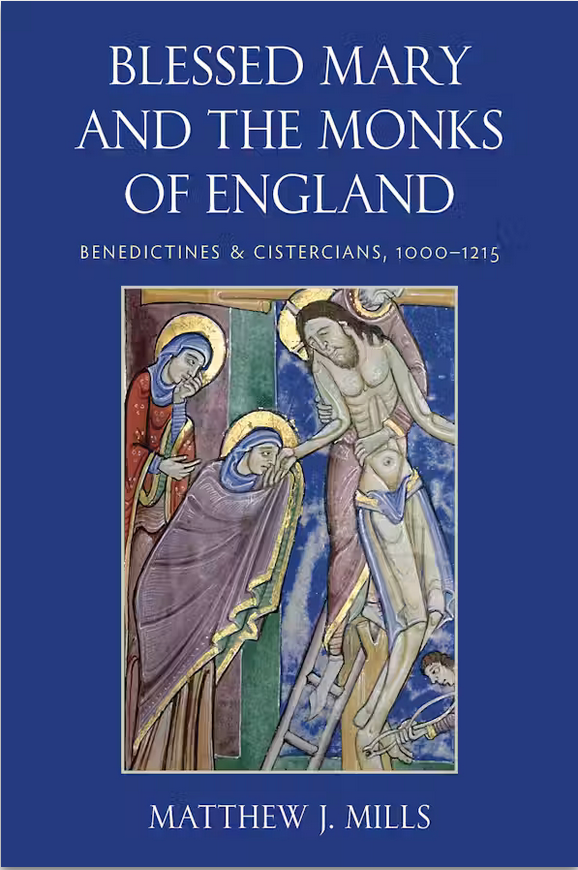
Publication – Matthew J. Mills, « Blessed Mary and the Monks of England. Benedictines and Cistercians, 1000–1215 »

In the study of historical Mariology, the monastic communities of England in the eleventh and twelfth centuries—the period so dramatically interrupted and reshaped by the Norman conquest of 1066—receive too little attention. This « monastic age » was a time of great flourishing for both religious life and Mariology, marked by new currents of prayer and thought.

In this volume, Matthew Mills uncovers and draws together vibrant contributions to Marian doctrine and devotion by some of those then living in England under the sixth-century Rule of St. Benedict: the Benedictines and their successors, the Cistercians. In a thematic unfolding of Mary’s life and identity, from conception to assumption and intercession, a picture emerges of a Mariology shaped by the constant of monastic liturgy, anchored in the biblical and patristic wisdom cherished and transmitted by the Venerable Bede, and animated by love. Towering figures, such as Anselm of Canterbury and Ælred of Rievaulx, are also placed within a wider landscape alongside lesser known but still significant others, including the Cistercian abbot, John of Forde, royal confessor and pioneer of Marian exegesis of the Song of Songs.

England’s monastic Mariology was colored by Greek as well as Latin influences and touched by key experiences of the contemporary church at large: apocalyptic disappointment, reform, sacramentalism, and intense yearning for salvation. In particular, Mills brings to light the significance of Mary for monks’ understanding of their own profession: their mother and their lady, Mary was also their icon and exemplar of life in St Benedict’s « school for the Lord’s service » ( Rule, Prol. 45).

Matthew J. Mills is Head of Development at Durham Cathedral and an honorary fellow in the Department of Theology and Religion, Durham. He has also held several lectureships within the University of Oxford and remains a senior member of Regent’s Park College.

Informations pratiques :

Matthew J. Mills, Blessed Mary and the Monks of England. Benedictines and Cistercians, 1000–1215, Washington DC, The Catholic University of America Press, 2024 ; 1 vol. ISBN : 978-0-81323-813-5. Prix : USD 85,00.

Source : The Catholic University of America Press

Publié dans Publications | Laisser un commentaire

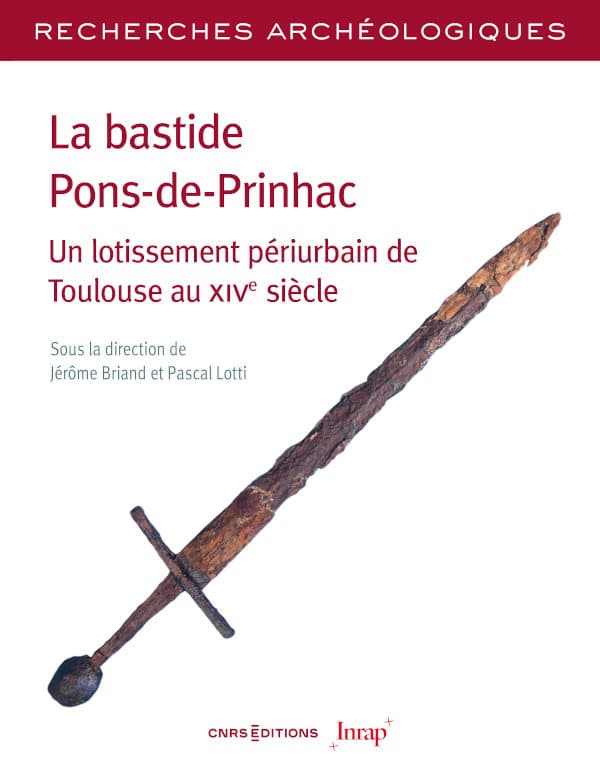
Publication – « La bastide Pons-de-Prinhac. Un lotissement périurbain de Toulouse au XIVe siècle », éd. Jérôme Briand, Pascal Lotti

Cet ouvrage présente la première mise en évidence archéologique, pour le XIVe siècle, de la fondation à l’initiative de propriétaires fonciers d’une bastide, un quartier d’habitation hors les murs aux abords d’un grand centre urbain. Ce fait n’était connu que par des documents d’archives. L’étude archéologique révèle les aspects concrets en matière d’architecture et d’urbanisme de cet ensemble qui s’étendait près de la porte Montgaillard, sous l’actuel muséum de Toulouse. L’étude des sources historiques a précisé le contexte politique et social.

L’étude archéologique a d’abord permis de préciser le plan d’urbanisme, les dimensions des parcelles alloties et le réseau de voirie construit pour desservir ce nouveau quartier. En outre, elle a été un des premiers cas d’observation d’un type d’architecture médiévale encore rarement observée, basée sur l’utilisation de la terre crue. Les maisons neuves se caractérisent en effet par des élévations de torchis sur clayonnage reposant sur des solins en terre compactée.

Détruit par un violent incendie, probablement dû à un épisode belliqueux, ce quartier fut abandonné, transformé en jardins et a été ensuite peu impacté par les constructions postérieures. Ces conditions ont permis la découverte d’un important mobilier céramique et métallique laissé sur place. Cet impressionnant corpus, abondant et très varié, constitue une base solide pour dresser un portrait social des habitants de ce quartier et de leurs activités domestiques.

Informations pratiques :

La bastide Pons-de-Prinhac. Un lotissement périurbain de Toulouse au XIVe siècle, éd. Jérôme Briand, Pascal Lotti, Paris, CNRS Éditions, 2024 ; 1 vol., 284 p. (Recherches archéologiques). ISBN : 978-2-27114-965-7. Prix : € 35,00.

Source : CNRS Éditions

Publié dans Publications | Laisser un commentaire

Colloque – Unequal Opportunities. Framework Conditions and Economic Change in the Middle Ages

In the last years, studies on inequality have flourished. New insights into the long-term distribution of wealth or income and new ways of proper measurement allow for a better understanding of the correlation between inequality and economic growth. Whereas debates on historical inequality focus predominantly on differences in income, wealth or legal status, other causes of (social and economic) stratification such as differences in economic scope for action and framework conditions are usually examined with less attention. The conference wants to change that by discussing unequal opportunities as factor for understanding economic change.

Programme :

Thursday, 5 September 2024

Get-Together
Meeting Point: Tiroler Landesarchiv, Michael-Gaismair-Straße 1

10:00–11:00: Guided tour in the TLA (Tyrolean Provincial Archive) with a focus on collections on the medieval economic history of Tyrol, followed by the opportunity to have lunch together

Annual Conference
Meeting Point: University of Innsbruck, Ágnes-Heller-Haus, Innrain 52a, Seminarraum 1

13:00–13:15: Stephan Nicolussi-Köhler (Innsbruck) and Lienhard Thaler (Vienna)
Welcome and Introductory Remarks

13:15–14:15: John Weisweiler (Munich)
Keynote 1: Inequality and the Fall of the Roman Empire

14:15–14:45: Coffee break

Panel 1: Unequal Chances of Political Participation and Economic Opportunities
Chair: Andreas Exenberger (Innsbruck)

14:45–15:30: Francesco Azzoni (Milan)
Inequality in the Early Middle Ages. Distribution of Wealth and Societal Changes in Lombard Northern Italy

15:30–16:15: Adelheid Krah (Vienna)
From Unequal Opportunities to a Better World. Soil Culture, Protection Money and Women’s Work in the Official Book of the ‘Censuales’ from the Diocese of Freising (10th–14th century) or: More than a Special Case

16:15–17:00: Alex Spike Gibbs (Mannheim)
A Medieval ‘Middling Sort‘? Wealth, Authority and Inequality in East Anglian Villages, c. 1350–c. 1550

19:00: Conference Dinner

Annual Conference of the Research Group for Late Medieval Economic History

Friday, 6 September 2024

08:30–09:30: Guido Alfani (Milan)
Keynote 2: Economic Inequality and Social Mobility in Preindustrial Europe: An Overview

09:30–10:00: Coffee break

Panel 2: Unequal Distribution of Resources
Chair: Annette Kehnel (Mannheim)

10:00–10:45: Grigori Simeonov (Vienna)
Pastoralism in the Medieval Balkans: ‘Unequal Opportunity’ or ‘Subsistence Strategy’?

10:45–11:30: Leonhard Engelmaier (Florence)
The Impact of Plague on Land Tenancy in St. Pölten and its Hinterland. 1324 and 1367

11:30–12:15: Sebastian Weil (Kassel)
Unequal Partners – Equal Dues. The Late Medieval Estate Surveys of Lordship Heideck

12:15–13:30: Lunch at UNI LOUNGE, Campus Innrain

Panel 3: Unequal Levies and Burdens
Chair: Tanja Skambraks (Graz) & Julia Bruch (Cologne)

13:30–14:15: Victoria Gierok (Oxford)
Taxation and Urban Revolts in Pre-Industrial Germany

14:15–15:00: Marco Conti (Bologna/Bordeaux)
Investing in the Res Publica. Bologna XIII–XIV c.

15:00–15:30: Coffee break

15:30–16:15: Tobias Fischer (Munich)
Introducing Inequality. The Emergence of Individual Imperial Taxation of Jews in the Holy Roman Empire

16:15–17:00: Naomi Beutler (Paris/Barcelona)
The Reproduction of Economic Power. An Illustration based on the Example of the Late Medieval Pound Duty Exemption

17:00–17:30: General Discussion

Informations pratiques :

05.09.2024 – 06.09.2024

Universität Innsbruck

Source : Wirtschaftsgeschichte

Publié dans Colloque | Laisser un commentaire