Publication – « Medievalisms in a Global Age », éd. Angela Jane Weisl, Robert Squillace

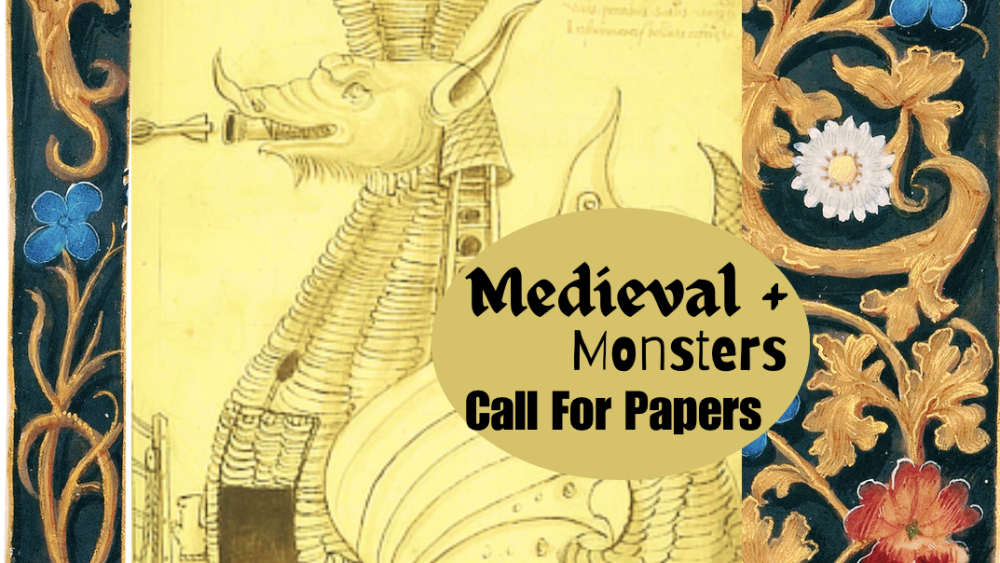
Across the world, revivals of medieval practices, images, and tales flourish as never before. The essays collected here, informed by approaches from Global Studies and the critical discourse on the concept of a « Global Middle Ages », explore the many facets of contemporary medievalism: post-colonial responses to the enforced dissemination of Western medievalisms, attempts to retrieve pre-modern cultural traditions that were interrupted by colonialism, the tentative forging of a global « medieval » imaginary from the world’s repository of magical tales and figures, and the deployment across borders of medieval imagery for political purposes. The volume is divided into two sections, dealing with « Local Spaces » and « Global Geographies ». The contributions in the first consider a variety of medievalisms tied to particular places across a broad geography, but as part of a larger transnational medievalist dynamic. Those in the second focus on explicitly globalist medievalist phenomena whether concerning the projection of a particular medievalist trope across borders or the integration of « medieval » pasts from different parts of the globe in a contemporary incarnation of medievalism. A wide range of topics are addressed, from Japanese manga and Arthurian tales to The O-Trilogy of Maurice Gee, Camus, and Dungeons and Dragons.

ANGELA JANE WEISL is Professor of English and Chair of the English Department at Seton Hall University.

ROBERT SQUILLACE is a Clinical Professor in Arts, Text, and Media and Educational Technology Liaison at New York University’s School of Liberal Studies.

Table des matières :

Introduction: Medievalisms: Local Spaces and Global Geographies

Part I: Local Spaces
1. Metamorphosis Metamorphosed: Fox Daemon, (Anti-)Colonialism, and Global Medievalism in Ken Liu’s ‘Good Hunting’ – Minjie Su
2. The Medievalist Simulacra of Kafka’s The Castle in Graphic Adaptations – Elizabeth Allyn Woock
3. Mangaesque Knights: Japan’s Path to Global Medievalism – Maxime Danesin & Manuel Hernández-Pérez
4. The Good, the Bad, and the Ugly in Maurice Gee’s The O Trilogy – Anna Czarnowus
5. Trading a Bow for a Machine Gun: Robin Hoods, Nationalism and the Personas of Philippine Politics – Stefanie Matabang
6. Tropical Templars? Medievalism and Pseudohistory in Brazil’s Largest City – Luiz Guerra
7. Plague Temporality and Chronicle in Camus’s La peste – Sara Torres
8. The Griot in Sunjata: A Paradigmatic Herald of an Afrofuturistic Messianic Age – Joseph Osei-Bonsu
9. Toward a Place-Based, North Pacific Medieval Studies: Medievalism, Pedagogy, Indigeneity – Daniel T. Kline

Part II: Global Geographies
10. Revolt: « Peasants » and Protest in the Twenty-First Century – Matthias D. Berger
11. « Taking a Step Back into the Thirteenth Century »: Reading the Globe through a Medieval Lens: In the Footsteps of Marco Polo – Kara L. McShane
12. A Pinch of Flour, a Cup of Tall Tales, and one Khaleesi: Getting Medieval Across Time and Space – Meriem Pagès
13. The Boys Are Back in Town: Capital One’s Propagandic Commercials for Alt-Right Nostalgic Imperialism – Carol Robinson
14. Memes, Covid-19, and Global Medievalism – Andrew B.R. Elliott
15. Dichotomies of Arthurian Medievalism: Dismantling and Reinforcing the Status Quo – Rachael Warmington
16. Thor versus Juracán: Premodern Storm Gods and Goddesses in Popular Culture – Marian E. Polhill
17. Geo-mapping the In-Betweens: Medieval Daoist Correlatives in Pokémon Go – Anne Giblin Gedacht
18. Worldbuilding Dungeons and Befriending Dragons: How the Global TTRPG Community Combats Western Hegemony – Miranda Hajduk
19. Marrying Medievalism, Post-Apocalypse, and the Global in Digital Games – Emily Price

List of Contributors
Index

Informations pratiques :

Medievalisms in a Global Age, éd. Angela Jane Weisl, Robert Squillace, Woddbridge, D.S. Brewer, 2024 ; 1 vol., 282 p. (Medievalism, 27). ISBN : 978-1-84384-703-8. Prix : GBP 80,00.

Source : Boydell and Brewer

Publié dans Publications | Laisser un commentaire

Publication – Amandine Postec, « Matthieu d’Aquasparta. Portrait d’un maître en théologie franciscain au miroir de ses Quodlibets »

Franciscain d’origine ombrienne, Matthieu d’Aquasparta (v. 1240-1302) est maître en théologie à l’université de Paris au moment de la censure de 1277. Il rejoint ensuite la Curie pontificale en 1279. Doté de talents politiques certains, il est brièvement ministre général de l’ordre franciscain avant d’être créé cardinal par Nicolas IV en 1288. Il obtient la charge de grand pénitencier et devient un soutien fidèle de Boniface VIII. Depuis le début du XXe siècle, la pensée du théologien avait surtout fait l’objet d’études construites à partir de l’édition progressive de ses Questions disputées. Cet ouvrage propose une biographie complète de Matthieu d’Aquasparta au prisme de ses textes universitaires grâce à l’analyse de sa bibliothèque personnelle, de ses manuscrits de travail, légués aux couvent d’Assise et de Todi et de ses Quodlibets, encore inédits.

Amandine Postec, archiviste paléographe, docteur en histoire de l’université de Lyon 2, conservateur des bibliothèques

Introduction

Chapitre I. Les origines italiennes

Chapitre II. Le cursus étudiant en theologie

Chapitre III. La bibliotheque du franciscain

Chapitre IV. Maitre en theologie a paris en 1277

Chapitre V. Matthieu d’Aquasparta face aux dissensions doctrinales

Chapitre VI. L’enseignement à la curie pontificale

Chapitre VII. Un franciscain au service de la papaute

Chapitre VII. Transmission des textes et heritage

Conclusion
Annexes
Sources

Amandine Postec, Matthieu d’Aquasparta. Portrait d’un maître en théologie franciscain au miroir de ses Quodlibets, Turnhout, Brepols, 2024 ; 1 vol., 433 p. (Bibliothèque d’histoire culturelle du Moyen Âge, 25). ISBN : 978-2-503-60929-4. Prix : € 110,00.

Source : Brepols

Publié dans Publications | Laisser un commentaire

Appel à contribution – Perceptions of Just War in the Middle Ages

The Research Training Group “Byzantium and the Euro-Mediterranean Cultures of War” invites scholars to submit paper proposals for a series of sessions on “Perceptions of Just War in the Middle Ages” at the International Medieval Congress in Leeds, taking place from 7th to 10th July 2025.

The Research Training Group “Byzantium and the Euro-Mediterranean Cultures of War” invites scholars to submit paper proposals for a series of sessions on “Perceptions of Just War in the Middle Ages” at the IMC 2025. These sessions aim to explore the diverse theological, philosophical, legal, and cultural perspectives on Just War in medieval Europe and beyond, focusing on the distribution and evolution of associated knowledge traditions.

We welcome contributions on, but not limited to, the following topics:

1. Theological and philosophical foundations
– Just War doctrines and comparable concepts in Western Christian thought and in the Orthodox tradition (Byzantium, etc.)
– Jewish, Islamic or Oriental Christian views and debates on war and justice/righteousness

2. Legal frameworks
– Rules and norms for warfare in legal traditions
– Comparative analyses of different legal systems

3. Cultural and literacy representations
– Narratives and symbolisms of Just War in literature and historiography
– Iconography of justice and war in the visual arts

4. Historical case studies
– Analyses of specific wars and their justifications
– Chroniclers and historiographers on Just Wars

5. Ethical and moral debates
– Ethical justifications and criticisms of Just War
– Concepts of peace and their interactions with war ideologies

Interested scholars are welcome to submit an abstract (no more than 150 words) along with a brief CV (including current affiliation and contact information) to the session organizers, Marco Büttner (marco.buettner@uni-mainz.de), Bart Peters (bart.peters@tu-braunschweig.de) and Johannes Pahlitzsch (pahlitzsch@uni-mainz.de), by 8 September 2024. Acceptance notifications will be sent out by 22 September 2024. Depending on the number of accepted proposals, each presentation will last 15 or 20 minutes.

Kontakt

marco.buettner@uni-mainz.de
bart.peters@tu-braunschweig.de
pahlitzsch@uni-mainz.de

Source : H-Soz-Kult

Publié dans Appel à contributions | Laisser un commentaire

Journée d’étude – La Chartreuse redécouverte : peintures murales et architecture

Vendredi 11 octobre 2024, de 9h à 17h
Sainte-Croix-en-Jarez / Pavezin

Lors de cette journée, quatre conférences seront proposées :

L’église médiévale sous l’angle de l’archéologie du bâti. Présentation des différentes phases de construction.
Intervenante : Mathilde Duriez, Archéologue INRAP 

Approche de la spiritualité des chartreux par l’art.
Intervenant : Alain Girard, Historien

Le décor funéraire de la Chartreuse : une mise en valeur de Thibaud de Vassalieu.
Intervenantes : Amaëlle Marzais, Maîtresse de conférences, Université Lyon 2 Lumière et Maëlle Métais, Doctorante Université Bordeaux-Montaigne. 

Les décors non figuratifs de l’ancienne nef ; les enjeux de la conservation.
Intervenante, Claire Bigand, Restauratrice, InSitu Conservation. 

Tarifs de la journée : 28 € plein tarif – 14 € étudiant. Ces tarifs incluent une visite du Site et le repas du déjeuner. Les inscriptions sont ouvertes ; rendez-vous sur notre billetterie en ligne ! Retrouvez le programme détaillé de la journée en cliquant sur l’affiche ci-dessous.

Publié dans Colloque | Laisser un commentaire

Publication – « The Illustrated Cairo Genizah », éd. Nick Posegay, Melonie Schmierer-Lee

We are very excited to announce that our new book, The Illustrated Cairo Genizah, is now available for pre-order! See https://linktr.ee/CambridgeGRU to order.

2024 marks 50 years since the founding of the Genizah Research Unit at Cambridge University Library. To celebrate our 50th birthday, we are publishing a large coffee-table style book to share the highlights of the Cambridge Genizah Collections. 320+ manuscript images are presented over 12 thematic chapters, accompanied by facts, background, and answers to frequently asked questions.

The book is available to pre-order in the UK – see the UK order link here – and these sales go directly to supporting the GRU’s research and education programming (did you know we’re funded almost entirely by outside grants and donations?). The UK copies are available at a greatly reduced shipping cost, but we have a limited supply. If you’re not in the UK, you can order directly from Gorgias Press to have the book shipped from the United States.

Informations pratiques :

The Illustrated Cairo Genizah, éd. Nick Posegay, Melonie Schmierer-Lee, Athens (GA), Gorgia Press, 2024 ; 1 vol., 340 p. ISBN : 978-1-4632-4772-0. Prix : USD 60,00.

Source : Gorgia Press

Publié dans Publications | Laisser un commentaire

Publication – Gerhard Fritz, « Wasserkraftnutzung im Mittelalter in Südwestdeutschland und angrenzenden Gebieten. Mühlen, Sägen, Hammerwerke und andere wassergetriebene Anlagen »

Mit Wasserkraft wurden im Mittelalter nicht nur Getreidemühlen, sondern auch zahlreiche Spezialmühlen angetrieben, in denen Holz gesägt, Eisen geschmiedet, Metall geschliffen, Schießpulver gemahlen, Gerberlohe gestampft oder Tuch gewalkt wurde. Für diese und weitere Funktionen wurde Wasser als Antriebskraft genutzt. Dies hatte weitreichende Folgen: Ohne Papiermühlen etwa wäre die Bildungs- und Wissensrevolution des ausgehenden Mittelalters nicht möglich gewesen.

Mit der Wasserkraftnutzung in Südwestdeutschland und den angrenzenden Gebieten vom frühen Mittelalter bis ins 16. Jahrhundert wird ein wichtiger Faktor der mittelalterlichen Wirtschaft auf breiter Quellenbasis untersucht, ohne dessen Kenntnis viele Entwicklungen im Agrar- und Gewerbesektor kaum nachvollziehbar wären. Im Zentrum stehen dabei nicht nur technikgeschichtliche Fragen, sondern vor allem auch sozial-, wirtschafts- und rechtsgeschichtliche Aspekte.

Prof. Dr. Gerhard Fritz stand über 20 Jahre lang im Schuldienst und leitete das Stadtarchiv Backnang, bevor er 2002 eine Professur für Geschichte und ihre Didaktik an der Pädagogischen Hochschule Schwäbisch Gmünd antrat.

Table des matières : ici

Informations pratiques :

Gerhard Fritz, Wasserkraftnutzung im Mittelalter in Südwestdeutschland und angrenzenden Gebieten. Mühlen, Sägen, Hammerwerke und andere wassergetriebene Anlagen, Sigmaringen, Jan Thorbecke Verlag, 2024 ; 1 vol., CX–1014 p. (Veröffentlichungen der Kommission für geschichtliche Landeskunde in Baden-Württemberg. Reihe B: Forschungen, 216). ISBN : 978-3-7995-9581-0. Prix : € 88,00.

Source : Jan Thorbecke Verlag

Publié dans Publications | Laisser un commentaire

Appel à contribution – Les datations « absolues » en archéologie. 8e séminaire scientifique et technique de l’Inrap

bât. 530 – Institut Pascal, rue André Rivière
Orsay, France (91400)

Les datations absolues sont devenues indispensables à la recherche archéologique. Leurs résultats permettent de caler les chronologies sur l’échelle du temps. Elles précisent la durée des phénomènes historiques en œuvre et situent dans le temps les événements du passé.

La découverte de la décroissance régulière au fil du temps de la radioactivité du carbone 14 et de son usage comme « chronomètre » pour estimer l’âge des matériaux soumis à datation a été une petite révolution à l’orée des années 1950. Combinées avec d’autres méthodes dites relatives comme la stratigraphie, la sériation et la typologie, la datation par le radiocarbone a en effet modifié profondément notre connaissance du passé. Depuis, la recherche a permis de considérablement affiner la fiabilité et la précision des résultats. Parallèlement, d’autres méthodes ont été développées en lien avec la diversification des matériaux mis au jour (dendrochronologie, Potassium-Argon, Uranium-Thorium, archéomagnétisme, thermoluminescence et luminescence stimulée optiquement…). Avec le développement de l’archéologie préventive, la masse de données accumulées est aujourd’hui considérable et nécessite de s’interroger sur la manière de gérer et de rendre accessible ces données. Par ailleurs, l’analyse d’un grand nombre de datations relatives à un phénomène culturel ou à la diffusion d’un type d’objet permet de traiter l’information à l’aide de la statistique et de manière géographique, offrant ainsi de nouvelles perspectives de recherche.

La mise en œuvre de ces méthodes, en archéologie, se traduit généralement par le recours à des chercheurs spécialisés dans d’autres disciplines (biologie, chimie, sciences de la Terre, physique nucléaire…) ou à des archéomètres formés dans les laboratoires. La multiplicité des acteurs et des compétences mises à contribution est grande, même au sein de la communauté archéologique, et il était donc important, pour l’Inrap, de proposer un lieu de rencontre interdisciplinaire, d’échanges d’expérience et de réflexion sur l’avenir de ces méthodes et des collaborations qu’elles impliquent.

Il s’agit de réfléchir, collégialement, sur l’évolution des protocoles de terrain (échantillonnage), les actions de sensibilisation ou de formation à entreprendre et la nécessité de centraliser et de partager les résultats. Enfin, ces rencontres seront l’occasion d’aborder les différentes approches méthodologiques et d’évaluer leurs atouts ou faiblesses.

Les présentations proposées pourront concerner les domaines et aspects suivants :

  • Les datations absolues : méthodes, évolutions, laboratoires
  • Que dater et dans quel objectif ?
  • Modalités d’échantillonnage et de traitement des échantillons
  • Gestion des données : archivage, bases de données
  • Traitement statistique des données
  • Échange, diffusion et réutilisation des résultats

Modalités de soumission

Les propositions de communications orales ou de posters doivent être envoyées, par courriel, à l’adresse : carine.carpentier@inrap.fr.

avant le 23 septembre 2024

Pour ce faire, merci de fournir les éléments suivants : titre de la présentation, nom et coordonnées du ou des auteurs, résumé et mots clés (au format texte).

Le comité scientifique vous fera part de son avis dans les plus brefs délais. Si votre présentation est acceptée, elle sera suivie d’une publication, sous forme d’article, dans le carnet de recherche Inrap dédié à la restitution de ses séminaires : https://sstinrap.hypotheses.org/. À noter que les communications feront l’objet d’une captation vidéo, ainsi que les discussions qui suivront.

Comité d’organisation

  • Beck Lucile (LMC14, UMR 8212 LSCE)
  • Bouiron Marc (Direction scientifique et technique, Inrap, UMR 7264 CEPAM)
  • Carpentier Carine (Direction scientifique et technique, Inrap)
  • Cottiaux Richard (Direction scientifique et technique, Inrap, UMR 8215 Trajectoires)
  • Delqué-Količ Emmanuelle (LMC14, UMR 8212 LSCE)
  • Féret Sophie (Direction scientifique et technique, Inrap, UMR 7041 ArScAn)

Comité scientifique

  • Beck Lucile (LMC14, UMR 8212 LSCE)
  • Bertran Pascal (Inrap, UMR 5199 PACEA)
  • Bouiron Marc (Direction scientifique et technique, Inrap – UMR 7264 CEPAM)
  • Delqué-Količ Emmanuelle (LMC14, UMR 8212 LSCE)
  • Féret Sophie (Direction scientifique et technique, Inrap, UMR 7041 ArScAn)
  • Girardclos Olivier (Université de Franche-Comté, UMR 6249 Chrono-environnement)
  • Griffiths Seren (Manchester Metropolitan University)
  • Hervé Gwenaël (CEA, UMR 8212 LSCE)
  • Lanos Philippe (UMR 6034 Archéosciences Bordeaux)
  • Lefèvre Jean-Claude (Université de Paris Saclay)
  • Oberlin Christine (Centre de datation par le radiocarbone – Université de Lyon I)
  • Pinçon Geneviève (MC / Sous-direction de l’archéologie – CNP – UMR Temps 8068)
  • Warmé Nicolas (Inrap)

Source : Calenda

Publié dans Appel à contributions | Laisser un commentaire

Publication – « Organising a Literary Corpus in the Middle Ages. The Corpus Nazianzenum and the Corpus Dionysiacum », éd. Caroline Macé

Through the word corpus, the metaphor of the body is applied to a collection of works by the same author that are transmitted together. These works not only share the same skin, the manuscript, but also function organically thanks to a complex system of paracontents. It is possible to see this system at work in the case of only a very few medieval authors throughout history, cultures and languages; the Corpus Nazianzenum and the Corpus Dionysiacum are such instances.

Both Gregory of Nazianzus and Dionysius the Areopagite are super-authors, who forged their own literary identity as much as they shaped the body of their writings. This sets both corpora apart from other collections of patristic works. They are also exceptional because of the large scale and enduring character of their cultural impact in the different cultures in which the corpora were translated, commented and annotated. By confronting these two exceptional cases, it is possible to gain some new light on the intellectual and book-historical aspects of literary creation and reception in Late Antiquity and the Middle Ages.

Caroline Macé is a researcher at the Göttingen Academy of Sciences and the Humanities in Lower Saxony.

Introduction

1. Caroline Macé: Living Bodies of Texts
2.  Ekkehard Mühlenberg: Das Akademievorhaben „Dionysius Areopagita“ in Göttingen
3. Bernard Coulie: Le Centre d’études sur Grégoire de Nazianze à Louvain-la-Neuve

I. Origins and Evolutions of the Corpora

1. Margherita Matera: Le palimpseste Parisinus graecus 1330, le plus ancien témoin manuscrit du Corpus Dionysiacum
2. Caroline Macé: Éléments d’une histoire ancienne de la tradition des discours de Grégoire de Nazianze: les variantes arméno-latines du discours 38
3. Alessandro Capone: Alle origini delle antiche versioni latine delle Orazioni di Gregorio di Nazianzo
4. Véronique Somers: Sur les traces d’une édition byzantine des Discours de Grégoire de Nazianze ?
5. Pierre-Marie Picard: Les divisions mauristes des œuvres poétiques de Grégoire de Nazianze, des sous-corpus évolutifs à interroger
6. Jost Gippert: Ephrem the Minor’s Preface Revisited
7. Maia Matchavariani: Books for Bibliophiles: Two Ancient Collections of the Georgian Translations of Gregory of Nazianzus’ Works – NCM  S-1696 and NCM A-87

II. Scholia and Commentaries

1. Chiara Faraggiana: Gehören παρατιθέναι, παραγράφεσθαι, παρακεῖσθαι zum literarischen oder zum kodikologischen Vokabular? Überlegungen über die spätantike Exegese als Paratext
2. Joseph Church: The Ancient Lexica to the Corpus Dionysiacum
3. Thomas Schmidt: Les Commentaires de Basile le Minime aux Discours de Grégoire de Nazianze: le cas particulier du Discours 38
4. Gaëlle Rioual: Basile le Minime, commentateur de quel texte de Grégoire de Nazianze? 
5. Jonathan Loopstra: Reading the Corpus Nazianzenum in Syriac by Way of the Margins
6. Emiliano Fiori: School and Scholia in the Syriac Miaphysite Tradition: The Syriacisation of Dionysius the Areopagite as a Collective Exegetical Effort
7. Sergio La Porta: Reading the Areopagite: The Armenian Scholia on the Corpus Dionysiacum and Their Use in the Medieval School Curriculum
8. Thamar Otkhmezuri: The Corpus Nazianzenum and the Corpus Dionysiacum in the Georgian Literary Tradition

Informations pratiques :

Organising a Literary Corpus in the Middle Ages. The Corpus Nazianzenum and the Corpus Dionysiacum, éd. Caroline Macé, Turnhout, Brepols, 2024 ; 1 vol., 700 p. (Instrumenta Patristica et Mediaevalia, 96). ISBN : 978-2-503-61096-2. Prix : € 115,00.

Source : Brepols

Publié dans Publications | Laisser un commentaire

Publication – Sophie Fendel, « Physiologus- und Bestiarienrezeption in Nordeuropa. Wege eines Kulturtransfers »

The widespread transmission of bestiaries and the Physiologus, with their allegorical animal narratives, demonstrates the interconnectedness of medieval Europe like few other corpuses. Text and image documents from this tradition spread to Northern Europe, bringing their potential for innovation to literary production there. This monograph focuses on the routes taken by the material heading north and its local cultural impact.

Sophie Fendel, LMU Munich, Germany.

Table des matières : ici

Sophie Fendel, Physiologus- und Bestiarienrezeption in Nordeuropa. Wege eines Kulturtransfers, Boston–Berlin, De Gruyter, 2024 ; 1 vol., VIII–434 p. (Ergänzungsbände zum Reallexikon der Germanischen Altertumskunde, 143). ISBN : 978-3-11134-205-4. Prix : € 119,95.

Publié dans Le réseau | Laisser un commentaire

Stage – Stage gratifié au département des Manuscrits de la Bibliothèque nationale de France

Stage gratifié au département des Manuscrits de la Bibliothèque nationale de France
(3 mois, octobre-décembre 2024)

Le département des Manuscrits de la BnF conserve une des collections de manuscrits à peintures les plus importantes au monde. En son cœur se trouve les collections royales de la Renaissance, elles-mêmes formées de plusieurs ensembles (biens familiaux des rois de Louis XI à François Ier ; acquisitions diverses ; saisies à Pavie et à Naples, lors des guerres d’Italie).

Le département conserve également une des collections de reliures précieuses (orfèvrerie, gemmes, émail, ivoire), la plus importantes au monde, du vie au xviiie siècle. Parmi elles figurent des pièces aux provenances prestigieuses (Sainte-Chapelle de Paris, abbaye de Saint-Denis, trésor de la cathédrale de Metz). Le département mène depuis plusieurs années une importante campagne de restauration et d’étude de cette collection en vue de sa valorisation. Cette collection fera l’objet d’une exposition à la BnF au printemps 2026.

Sous l’autorité du conservateur chargé de ces collections, le stagiaire sera amené à apporter son concours à leur mise en valeur :

Missions (à voir suivant profil et appétences)

Reliures précieuses :

  • Recherches documentaires (bibliothèques et / ou archives) sur des œuvres du département, constitution de dossiers
  • Recherches sur des reliures conservées dans d’autres établissements, en France et / ou à l’étranger
  • Recherches iconographiques (reliures précieuses représentées en peinture ou en enluminure)
  • Préparation des cartels de l’exposition, médiation

Manuscrits royaux :

  • Pointage des volumes non encore numérisés à partir des listes de l’inventaire royal de 1544 (ducs de Milan ; rois aragonais de Naples ; Bourbons)
  • Etablissement de listes de priorité de numérisation

Autres activités possibles

  • Découverte des collections du département et de ses missions
  • Participation ponctuelle à des recherches pour des lecteurs
  • Participation ponctuelle à certaines activités (prêts aux expositions, numérisation, chantiers de conservation, médiation scientifique)

Profil

  • Master 2 recherche ou doctorant (époque médiévale ou moderne)
  • Intérêt pour le monde patrimonial et la recherche
  • Intérêt pour la médiation scientifique
  • Maîtrise d’une langue étrangère
  • Autonomie, rigueur, respect de la confidentialité

Conditions d’exercice du stage

  • Département des Manuscrits, 58 rue de Richelieu, 75002 Paris
  • Durée : 3 mois (à temps complet), avec gratification selon la législation en vigueur
  • Accès au restaurant du personnel

Contact et informations : merci d’adresser un CV accompagné d’un e-mail à

maxence.hermant@bnf.fr 

Publié dans Bourse | Laisser un commentaire