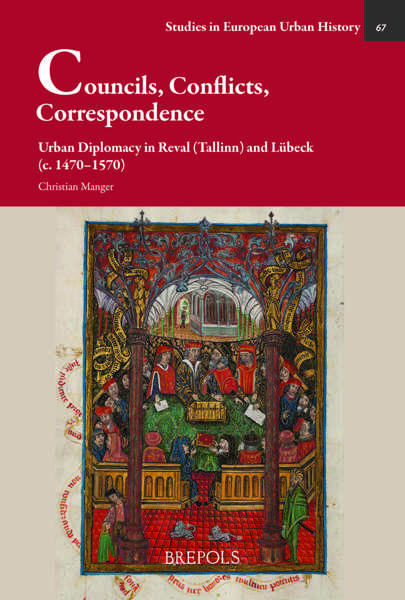
In the fifteenth and sixteenth centuries, the city councils of Hanseatic towns participated lively in the Northern European landscape of diplomacy. Often, it was conflict which lay behind the magistrates’ diplomatic activities. Discord among the members of the Hanse, intercity disputes between individual burghers, and large-scale “international” altercations, all required town councils to engage with actors and institutions beyond the town walls.
‘Councils, conflicts, correspondence’ examines how the magistrates of the Hanseatic towns Lübeck and Reval managed such conflicts which often exceeded the formal limits of their own jurisdiction and authority. Through a comparative study of two towns with markedly different access to political power and networks, this book analyses the scope of diplomatic action available to city councils. By placing the diplomacy of municipal governments in the broader frame of European urban political thought and practice, it shows how magistrates combined a flexible conception of the common good with a pragmatic notion of reciprocity to balance their relations to their own citizenry and overlords, as well as to the Hanse and foreign rulers. Furthermore, this book zooms in on practices of diplomacy and processes of negotiation, uncovering the variety of strategies and tactics employed by the councils and their diplomats in written correspondence as well as face-to-face meetings at regional and Hanseatic diets.
Christian Manger received his PhD-degree from the University of Amsterdam in October 2023. Currently, he works as a postdoctoral researcher in the department of Public Law and Governance at Tilburg University where he studies the role of professionals in late medieval towns. He specializes in the political and legal history of late medieval cities and urban institutions, with a particular interest in conflict management and urban diplomacy.
Table des matières :
List of illustrations
Abbreviations
Introduction
1. Hanseatic diplomacy: a conflict of interests
2. Bilateral relations: a politics of reciprocity
3. Conflicts beyond the city: urban diplomats at princely courts
4. Following the paper trail: diplomacy in the chancery
Conclusion
Appendix
Bibliography
Informations pratiques :
Christian Manger, Councils, Conflicts, Correspondence. Urban Diplomacy in Reval (Tallinn) and Lübeck (c. 1470–1570), Turnhout, Brpeols, 2026 ; 1 vol., 224 p. (Studies in European Urban History, 67). ISBN : 978-2-503-61290-4. Prix : € 94,00.
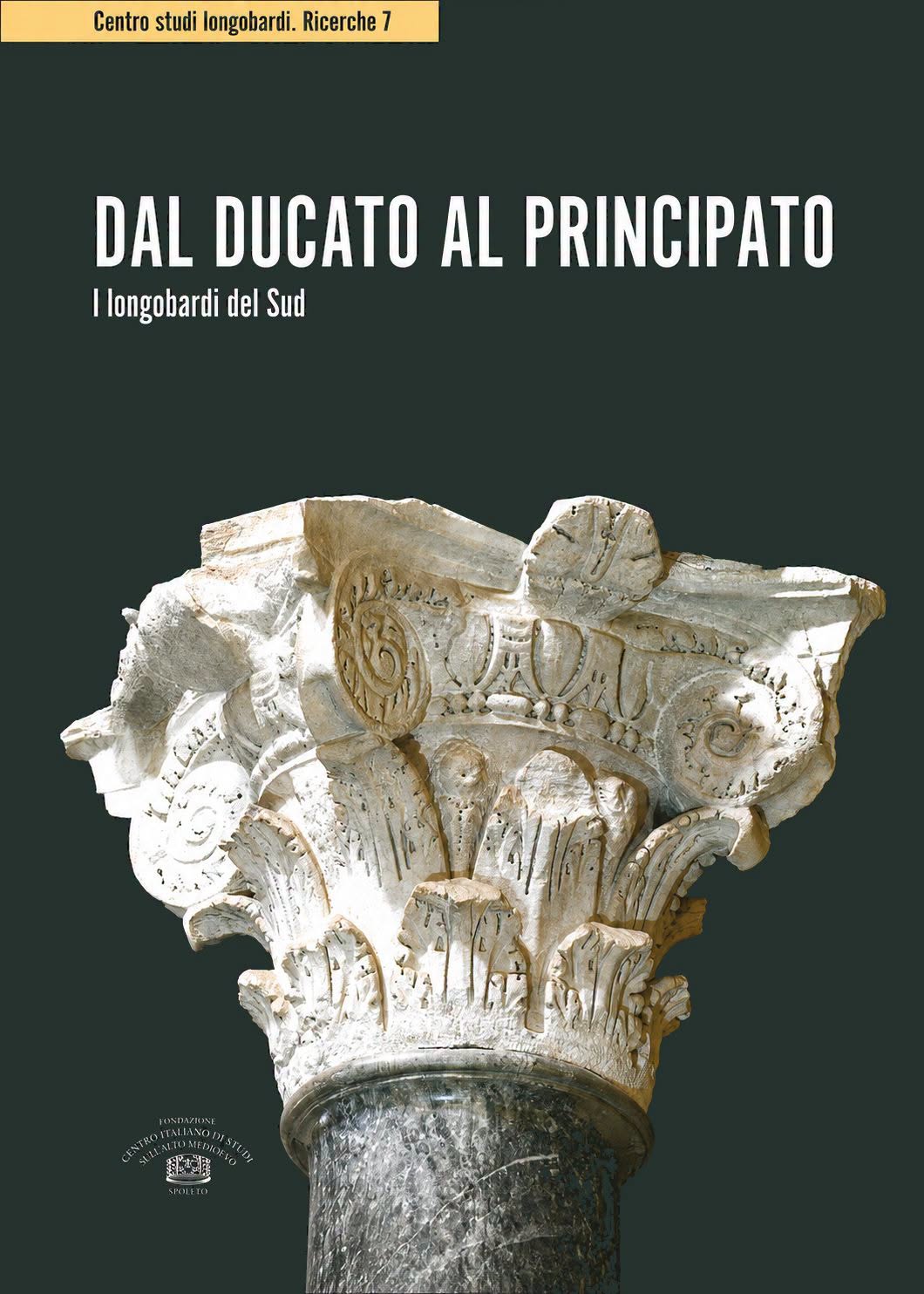
«La pubblicazione degli atti del convegno di Benevento del 2017 rappresenta un importante esito di indagini che permette di rileggere le dinamiche tra Langobardia meridionale e settentrionale al momento della caduta di Pavia e la trasformazione del ducato beneventano in principato. A raccogliere gli esuli e l’eredità longobarda, infatti, fu il duca Arechi II che re Desiderio aveva imposto alla guida di Benevento e a cui aveva dato in sposa Adelperga, sua figlia. Il matrimonio rafforzava non solo i rapporti politici tra il regno e il ducato, ma portò anche alla ricezione di modelli culturali, esperienze monastiche e dinamiche di governo esemplate su quelle regali. Ciò spiega perché, a pochi anni dalla scomparsa, il ricordo del principe e della consorte fosse quasi leggendario. Quando poi Arechi assunse il titolo di principe di tutti i longobardi, rendendosi indipendente nel 774 dal regno finito in mano ai franchi, la sua autorità si estendeva su un territorio molto vasto, comprendente all’incirca la Campania, il Molise, porzioni dell’Abruzzo, alcune roccaforti del Lazio meridionale, la Lucania, parte della Calabria settentrionale e del territorio pugliese fino a Taranto […] La collaborazione dell’Università degli Studi di Napoli l’Orientale, dell’Università degli Studi della Campania Luigi Vanvitelli, dell’Università Cattolica del Sacro Cuore e del Centro studi longobardi, corroborata dal patrocinio della Regione Campania, della Regione Lombardia, della Fondazione Centro italiano di studi sull’alto medioevo, del Centro europeo di studi normanni e del Cirtam della Federico II di Napoli, ha dato ai lavori un ampio respiro interdisciplinare. Merita semmai di essere rimarcata la feconda sinergia tra Nord e Sud, tra Lombardia e Campania, che rappresenta un esempio virtuoso nel segno di una storia comune. Il corposo volume si articola in quattro sezioni principali: i “longobardi tra Nord e Sud”, la “lingua, gli insediamenti e gli scambi”, gli aspetti “dell’organizzazione sociale e religiosa”, le “forme artistiche e culturali” […] Percorsi storici, territori e identità che nei secoli si sono incrociati formando la storia italiana, come mostra il volume. Averne consapevolezza contribuisce a dare senso all’unità del Paese che, attraverso il passato, compie passi decisivi nel riconoscimento delle sue peculiarità» dalla Prefazione di Aniello Cimitile.
Table des matières :
La Biennale di studi sulla Longobardia meridionale. Prefazione — A. Cimitile
Dal regno longobardo al principato beneventano — F. Caruso
Longobardi tra Nord e Sud
Longobardi e longobardi del Sud — M. Rotili
Tradizione tribale e modelli romani nelle istituzioni dei longobardi — C. Azzara
Legislazione e prassi nella Benevento longobarda. Fra tradizione nazionale, influenze esterne e prassi innovative — L. Loschiavo
I longobardi del ducato di Benevento nel Registrum di Gregorio Magno. L’espansionismo e le ricadute sull’organizzazione ecclesiastica e socio-economica — C. Urso
Dal ducato al principato: una transizione — J.-M. Martin
« De toutes pars sonne lo nom de Guaymere ». Genio e fallimento politico del principe di Salerno Guaimario IV (1038–1047) — A. Tagliente
Lingua, insediamenti e scambi
L’antroponimia dei longobardi nel regno e nel ducato di Benevento: sistema, semantica, tratti specifici — W. Haubrichs
La lingua dei longobardi in Italia — E. Morlicchio
Échanges et commerce à travers l’archéologie: le duché de Bénévent entre le VIe et le XIe siècle — P. De Vingo
Riflessioni sulla ceramica di X–XI secolo da contesti beneventani e irpini — S. Rapuano
Lo spettro del giuramento. Due giudicati longobardi a confronto — G. A. Nobile Mattei
Sistemi di risoluzione delle controversie giuridiche nella Longobardia meridionale (VIII–X secolo) — T. Indelli
Organizzazione sociale e religiosa
Calamità naturali, carestie ed epidemie: in età longobarda. Appunti per una ricerca — G. Albini
Cernitur (…) amplis consurgere moenibus urbem. A proposito della cinta altomedievale di Capua — N. Busino
Firmitatem et castellum facere. Insediamenti fortificati e religiosi nella bassa valle del Calore fra VIII e X secolo — L. Lonardo
L’organizzazione ecclesiastica della Longobardia minore tra ducati e principati — P. Dalena
Santuari e pellegrinaggi nella Langobardia meridionale: il contributo dell’archeologia — C. Ebanista
Il vescovo Orso e gli studi grammaticali a Benevento nel secolo IX — M. Iadanza
Forme artistiche e culturali
The Idea of an Early Medieval Monastery: The Example of San Vincenzo al Volturno — J. Mitchell
Immagini cosmologiche e opere agricole negli Exultet — F. Stroppa
Erchemperto e i franchi: spunti di riflessione dall’Ystoriola Langobardorum Beneventum degentium — E. Piazza
La biblioteca di Giovanni Visconti o dell’Historia Langobardorum di Paolo Diacono — S. Gavinelli
Longobardi in opere storiche di età comunale — R. Greci
Conclusioni
Hic erunt Langobardorum fines. Osservazioni conclusive — G. Archetti
Informations pratiques :
Dal Ducato al Principato. I Longobardi del Sud. Atti del Convegno internazionale di studio (Benevento, 23-25 novembre 2017), éd. Marcello Rotili, Gabriele Archetti, Silvana Rapuan, Spolète, CISAM, 2026 ; 1 vol., 576 p. (Centro di Studio Longobardi, Ricerche, 7). ISBN : 978-8-86809-375-4. Prix : € 80,00.
Publié dansPublications|Commentaires fermés sur Publication – « Dal Ducato al Principato. I Longobardi del Sud », éd. Marcello Rotili, Gabriele Archetti, Silvana Rapuan
Since its beginnings, art history has turned on the power of artists’ names. Exhibitions, galleries, and books revolve around them, and artists’ personas continue to captivate audiences. Medieval art, however, has long been cast as an exception—a world thought to lack known makers, where piety eclipsed personality and anonymous craftspeople served God rather than fame.
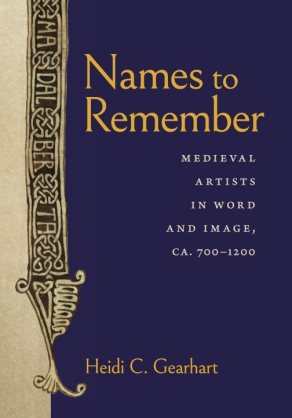
Names to Remember takes a new and nuanced look at this longstanding paradigm. Focusing on Europe from ca. 700 to ca. 1200, Heidi C. Gearhart uncovers a surprising abundance of names, stories, and images of artists and examines how they functioned within their cultural and material contexts. Drawing on inscriptions, saints’ lives, chronicles, and artworks, she shows that naming an artist was rarely a neutral act: it could invite contemplation, signal virtue, or shape social and spiritual identities.
By revealing how remembrance—and forgetting—helped define artistry itself, Names to Remember reimagines the place of the artist in medieval culture. Gearhart demonstrates how gender, status, and devotion determined whose names endured and whose were lost, offering a new understanding of authorship and artistic value in the Middle Ages. This study will engage art historians, medievalists, and scholars of gender and cultural memory seeking to understand how the very idea of the artist was formed.
Heidi C. Gearhart is Associate Professor of Art History at George Mason University. She is the author of Theophilus and the Theory and Practice of Medieval Art, also published by the Pennsylvania State University Press, which was awarded Honorable Mention for the 2018 International Center of Medieval Art Book Prize.
Informations pratiques :
Heidi C. Gearhart, Names to Remember. Medieval Artists in Word and Image, ca. 700–1200, University Park, Penn State University Press, 2026 ; 1 vol., 274 p. ISBN : 978-0-271-10135-. Prix : USD 79,99.
Publié dansPublications|Commentaires fermés sur Publication – Heidi C. Gearhart, « Names to Remember. Medieval Artists in Word and Image, ca. 700–1200 »
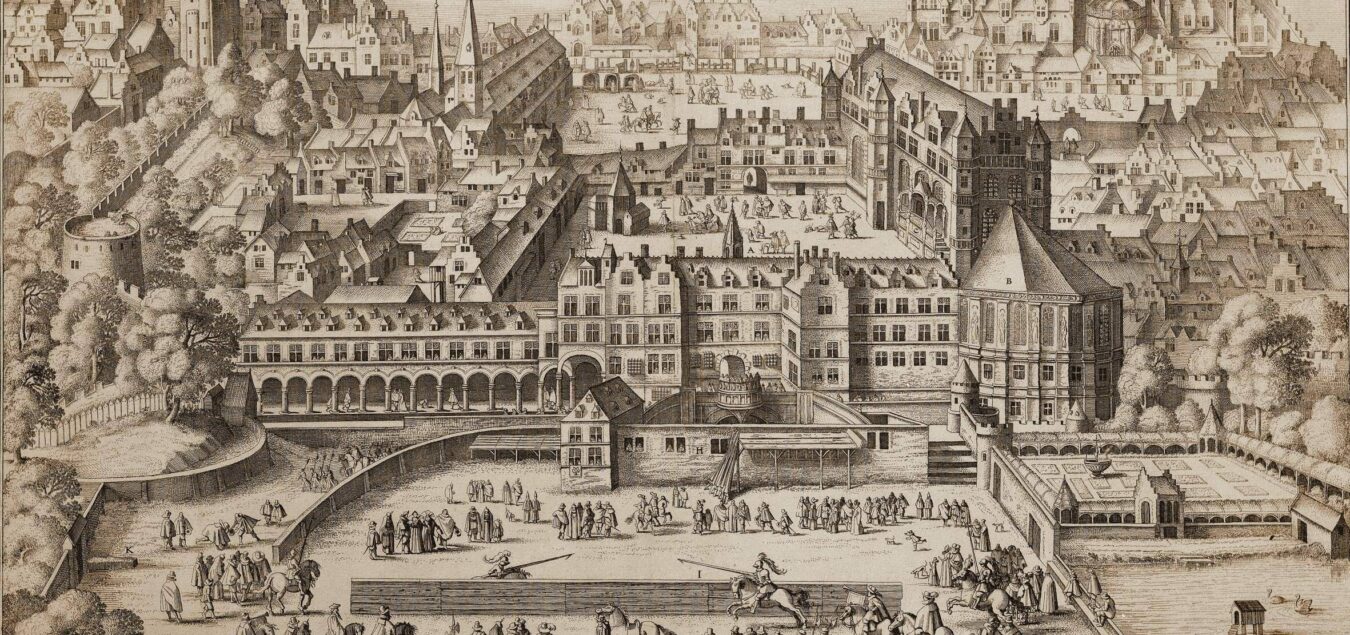
Plongez au cœur de l’histoire de Bruxelles lors d’une visite privilégiée du Palais du Coudenberg, ancien palais des ducs de Bourgogne et de Charles Quint. Cette exploration exclusive permettra aux amis du KBR museum de découvrir les vestiges fascinants de cette résidence princière tout en mettant en lumière les liens étroits entre le Coudenberg, la cour de Bourgogne et les collections du KBR museum. Une occasion unique de mieux comprendre le contexte politique, artistique et culturel dans lequel sont nés plusieurs des trésors conservés aujourd’hui à KBR.
Pour réserver vos places, veuillez envoyer un e-mail à development@kbr.be. Si vous n’êtes pas encore amis du KBR museum, inscrivez-vous ici.
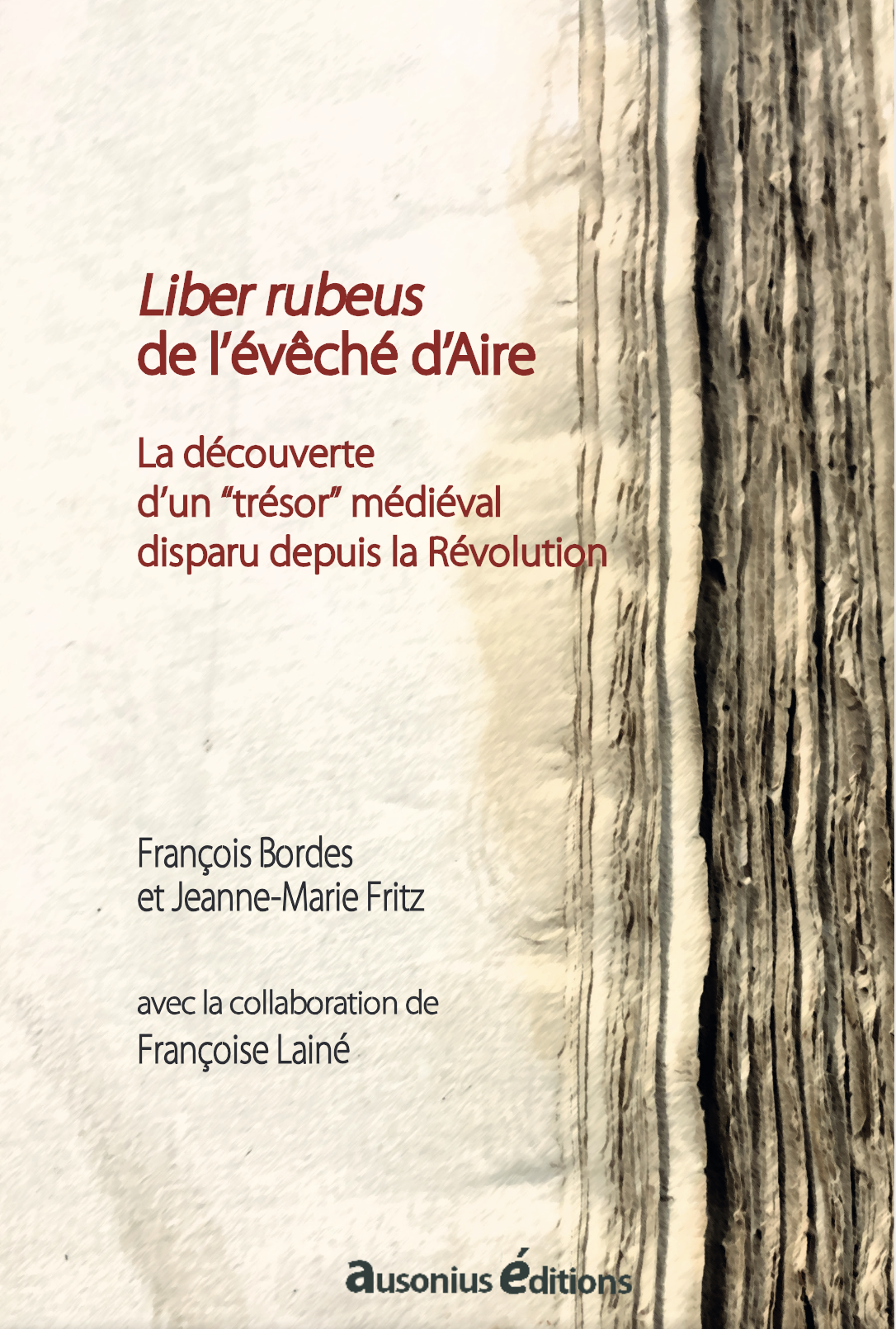
Retrouvé de manière fortuite en 2002, le “Livre rouge” de l’évêché d’Aire-sur-l’Adour disparu depuis la Révolution est aujourd’hui conservé aux Archives départementales des Landes. Ouvrage précieux par son contenu, il l’est également par la qualité de sa rédaction et de son ornementation. Elaboré vers 1335 sous l’épiscopat de Garsie du Fau, il constitue pour son commanditaire et son administration un outil de gestion et d’administration indispensable, tant dans le domaine spirituel que matériel. Outre plusieurs extraits de synodes et de conciles, il contient notamment le texte du synode de 1299, qui n’était pas connu des érudits ou des chercheurs. Ses quarante actes entre 1141 et 1501 nous éclairent également sur l’organisation du diocèse (pouillé), sur les relations parfois litigieuses, voire violentes, entre l’évêque, les maisons régulières et les seigneurs laïques, notamment dans le cadre de la perception des dîmes ou des patronages.
Liber rubeus de l’évêché d’Aire. La découverte d’un “trésor” médiéval disparu depuis la Révolution, éd. François Bordes, Jeanne-Marie Fritz, Pessac, Ausonius Éditions, 2026 ; 1 vol., 422 p. (Textes@quitains_3). ISBN : 978-2-35613-462-2. Open access.
Publié dansPublications|Commentaires fermés sur Publication – « Liber rubeus de l’évêché d’Aire. La découverte d’un “trésor” médiéval disparu depuis la Révolution », éd. François Bordes, Jeanne-Marie Fritz
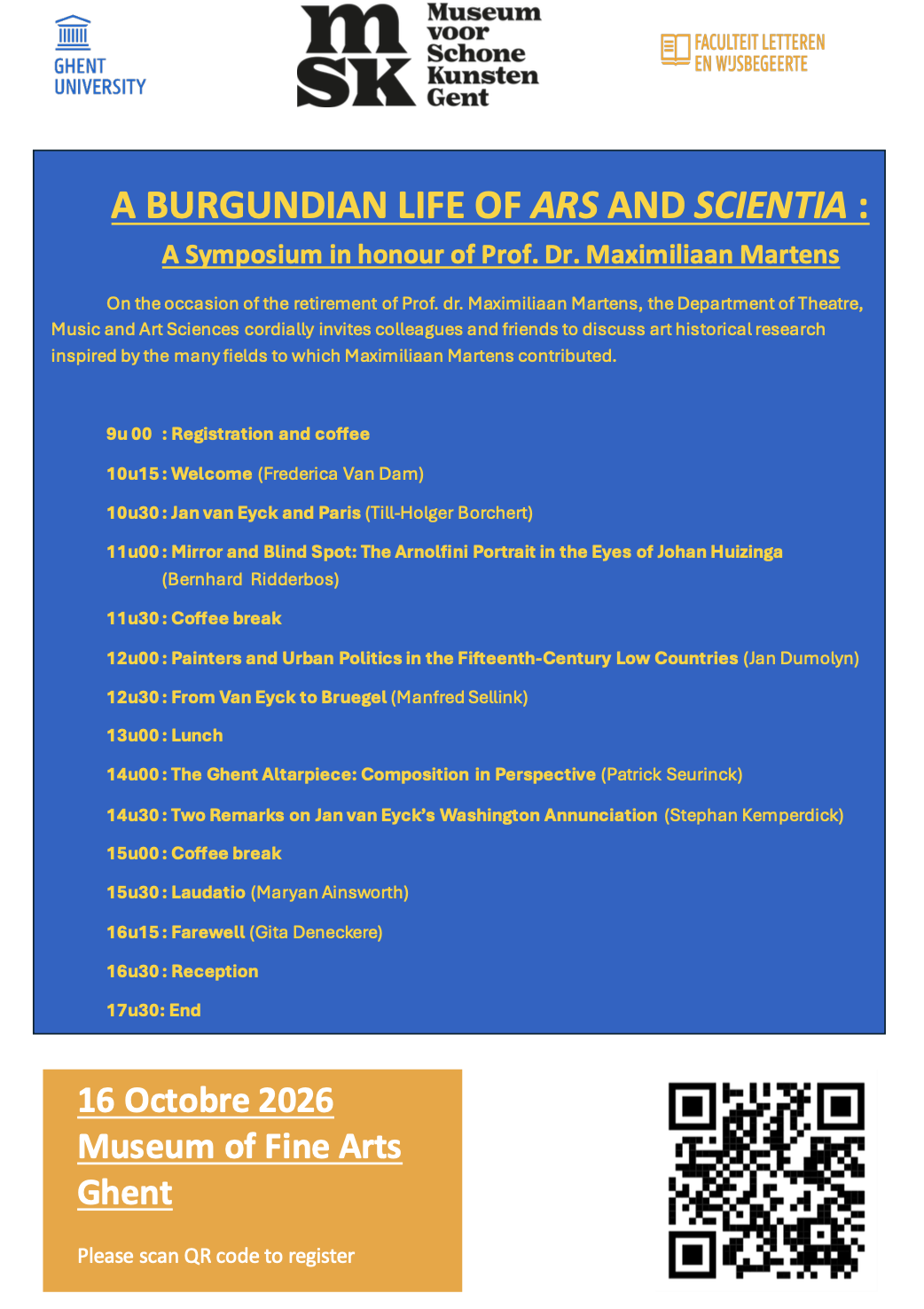
On the occasion of the retirement of Prof. dr. Maximiliaan Martens, the Department of Theatre, Music and Art Sciences cordially invites colleagues and friends to discuss art historical research inspired by the many fields to which Maximiliaan Martens contributed.
Programme :
9u 00 : Registration and coffee 10u15 : Welcome (Frederica Van Dam)
10u30 : Jan van Eyck and Paris (Till-Holger Borchert) 11u00 : Mirror and Blind Spot: The Arnolfini Portrait in the Eyes of Johan Huizinga (Bernhard Ridderbos) 11u30 : Coffee break
12u00 : Painters and Urban Politics in the Fifteenth-Century Low Countries (Jan Dumolyn) 12u30 : From Van Eyck to Bruegel (Manfred Sellink) 13u00 : Lunch
14u00 : The Ghent Altarpiece: Composition in Perspective (Patrick Seurinck) 14u30 : Two Remarks on Jan van Eyck’s Washington Annunciation (Stephan Kemperdick) 15u00 : Coffee break
Holy Grail, Batman? Expanding Knowledge of the Grail Legends in Popular Culture (Online)
62nd International Congress on Medieval Studies, Western Michigan University (Kalamazoo, MI), Thursday, 13 May, through Saturday, 15 May, 2026
Co-sponsored by Alliance for the Promotion of Research on the Matter of Britain, Association for the Advancement of Scholarship and Teaching of the Medieval in Popular Culture
Co-organized by Michael A. Torregrossa, Bristol Community College, and Carl B Sell, University of Pittsburgh
Rationale
The Holy Grail remains a powerful symbol in the post-medieval world; however, while its story continues to feature across popular culture, scholarship tracing its manifestations within mass media remains limited. Previous studies have concentrated predominantly on fiction and film, but the Grail legends extend into many other forms.
Using Richard Barber’s The Holy Grail: Imagination and Belief (2004), James B. Marino’s The Grail Legend in Modern Literature (2004), Juliette Wood’s Eternal Chalice: The Enduring Legend of the Holy Grail (2008) and Holy Grail: History and Legend (2012), and contributions to the collections The Grail: A Casebook (2000), Perceval/Parzival: A Casebook (2002), The Grail, the Quest, and the World of Arthur (2008), and The Holy Grail on Film: Essays on the Cinematic Quest (2015) as starting points, we seek in this session to expand our knowledge of the Grail’s presence in modern media.
Our objective is twofold. Linking past research and present texts, we ask panelists to share information about additional media (such as anime, bandes dessinées, comics, games, genre fiction, manga, memes, picture books, streaming video, and television programming) to help enlarge the corpus of Grail texts. In addition, we hope their presentations will also demonstrate a widening of the chronological and geographical scope of research on modern use of the Grail legends beyond the range of previous scholarship to illustrate the distribution of these stories across time and space, attesting to the prolonged global spread of these stories.
Topics might include representations of the Grail and/or legends about the Grail in any form of modern media, as well as depictions of Grail keepers (such as the Fisher King) and Grail seekers (including Bors, Galahad, Perceval, and Perceval’s sister, in addition to other questors) in similar texts.
We are especially interested in seeing submissions on the following:
Arvid Nelson’s Rex Mundi
Big Bang Comics’ Galahad and Kid Galahad
Colleen Doran’s Chivalry, adapted from the work of Neil Gaiman
Colleen Doran’s A Distant Soil
Elaine Lee’s Indiana Jones and the Spear of Destiny
Four Knights of the Apocalypse
Greg Weisman’s Gargoyles
The History Channel’s Knightfall
Hugo Pratt’s Corto Maltese: The Secret Rose
Image Comics
Jean-Pierre Pécau’s The Secret History
Jed MacKay’s Avengers
Kieron Gillen’s Once and Future
Lloyd Alexander’s The Black Cauldron and the Disney film adaptation
Malcolm Guite’s Galahad and the Grail
Marvel Comics
Matt Wagner’s Mage series
Merlin TV series
Mike Barr’s Camelot 3000
Mike Mignola’s Hellboy
Craig Russell’s Parsifal
Preacher comics
Sailor Moon
Stargate franchise
Tainted Grail
We are not currently seeking proposals on the Grail in the DC universe, Fate/stay night, Slaine, and vampire/zombie fiction, as well as representations of Galahad in Golden Age comics. (This list will be expanded as more submissions come in.)
For this event, individuals are invited to make ONE paper proposal to ONE session of papers: either the sponsored or special sessions OR the general sessions. You may propose an unlimited number of contributions to roundtables, but you will not be scheduled to actively participate (as paper presenter, roundtable discussant, poster author, presider, respondent, workshop leader, demonstrator, or performer) in more than six sessions. See the conference’s policies page for more information at https://wmich.edu/medievalcongress/policies-guidelines.
Please be aware that those accepted to the panel must register for the conference in order to present. Past registration costs can be viewed at https://wmich.edu/medievalcongress/registration. The International Congress on Medieval Studies does offer limited funding as travel awards and subsidized registration costs; details are available at https://wmich.edu/medievalcongress/awards.
For more information about the Alliance for the Promotion of Research on the Matter of Britain, do check out our website, King Arthur Forever: The Matter of Britain Lives: https://kingarthurforever.blogspot.com/.
For more information about the Association for the Advancement of Scholarship and Teaching of the Medieval in Popular Culture, do check out our website, Mass Mediævalisms: The Middle Ages of Popular Culture: https://medievalinpopularculture.blogspot.com/.
Publié dansAppel à contributions|Commentaires fermés sur Appel à contribution – Holy Grail, Batman? Expanding Knowledge of the Grail Legends in Popular Culture
L’objectif de cette manifestation est d’interroger la ou les places ainsi que les modalités du stockage au sein de l’ensemble castral, à partir des vestiges conservés, des sources textuelles et de l’iconographie. Les problématiques soulevées sont développées dans l’appel argumentaire. Il s’agit de faire se rencontrer les acteurs de la recherche autour des châteaux avec ceux autour de la question des paysages dans une perspective transdisciplinaire.
Les communications que nous souhaitons accueillir lors de ces journées qui se tiendront à la MSH de Dijon les 24 et 25 septembre 2026, porteront sur des travaux inédits (recherches historiques, rapports archéologiques, études spécialisées…) permettant d’éclairer une ou plusieurs des questions soulevées. En effet, la publication de ces journées est projetée.
Programme :
Jeudi 24 septembre 2026
Heures
événement
(+)
10:00 – 12:30
Des structures au sein des espaces castraux, à vocation de stockage ? – présidence : Pierre-Yves Laffont
Les grandes caves du château de Montbard – Emmanuel Laborier
10:45 – 11:15
Y a t-il des silos dans les châteaux auvergnats ? – Julie Charmoillaux, Mathilde Duriez
11:15 – 11:30
Pause café
11:30 – 12:00
La recherche des aires de stockage: petits châteaux troglodytiques et complexes castraux perchés – Marion Liboutet
12:00 – 12:30
Différents lieux de stockage à proximité du château de Montbellant (Tonnerre, Yonne) entre les XIe et XIVe siècles – Stéphanie Morel-Lecornué
12:30 – 14:00
Déjeuner
14:00 – 17:00
Une convergence d’indices archéologiques pour identifier les espaces ? – présidence : Stéphane Guyot
14:00 – 14:30
Les espaces de stockage des châteaux et manoirs bretons, première approche au regard des découvertes archéologiques récentes – Laurent Beuchet
14:30 – 15:00
Le souterrain aménagé du château de Marmande (Vienne) : un espace de stockage au sein du système castral – Eric Clavier, Luc Stevens
15:00 – 15:30
Les espaces de stockage du château d’Izaut (Haute-Garonne) au XIVe siècle, une enquête multidisciplinaire – Thibaut Lasnier
15:30 – 15:45
Pause
15:45 – 16:15
Stocker et conserver dans les châteaux des Alpes du nord : données archivistiques et réalités archéologiques – Loïc Benoit
16:15 – 17:00
Discussions
Vendredi 25 septembre 2026
Heures
événement
(+)
09:30 – 12:15
Architecture et monumentalité des espaces de stockages – présidence : Jean-Pierre Garcia
09:30 – 10:00
Les celliers monumentaux en contexte castral. Quelques exemples en Basse Provence – Sébastien Ziegler
10:00 – 10:30
Les espaces de stockage du palais épiscopal de Beauvais (Oise) d’après les textes et l’archéologie – Nicolas Bilot, Cyril Meunier
10:30 – 10:45
Pause
10:45 – 11:15
La tour Sarrasine de Saint-Sauveur-en-Puisaye (Yonne) : nouvelles hypothèses – Sylvain Aumard, Pierre Gouroux
11:15 – 11:45
Les espaces de stockage alimentaire dans le l’hôtel ducal de Dijon au Moyen Âge (Côte-d’Or) – Hervé Mouillebouche
11:45 – 12:15
Conclusion – Laurent Feller
12:15 – 14:30
Déjeuner
14:30 – 16:30
Visites de celliers urbains de Dijon – Celliers médiévaux ducaux et hôtels urbains
Informations pratiques :
MSH de Dijon 24 et 25 septembre 2026
Comité d’organisation : Université Bourgogne Europe / UMR 6298 ARTEHIS « Archéologie, Terre, Histoire, Sociétés » Mélinda Bizrimelinda.bizri@ube.fr, ingénieure d’études en archéologie, médiéviste et castellologue (CV) Gaëtan Koeniggaetan.koenig@laposte.net, docteur en histoire médiévale, spécialiste en construction des portes de villes et de châteaux Alix GiordanoAlix.Giordano@u-bourgogne.fr, doctorante en histoire médiévale
Organised with the support of the UP2Squared SynerBib and ANR PSalteRATIO project, by Vladimir Agrigoroeai (CESCM UMR 7302 – CNRS)
Programme :
27 august 2026
9h – Introduction to the conference.
Session I – Chair: Ana Maria Gînsac (‘Alexandru Ioan Cuza’ University of Iași)
9h30-10h – Andrés Enrique-Arias (University of the Balearic Islands, Palma) Adaptations of the Hebrew Bible for the Christian public in fifteenth-century Castilian Bibles
10h-10h30 – Pere Bescós (University Pompeu-Fabra, Barcelona) The Iberian Context of the Medieval Catalan Translation of 1 Chronicles from Hebrew
10h30-11h – Coffee break and open discussion
Session II – Chair: Freimut Löser (University of Augsburg)
11h-11h30 – Vladimir Agrigoroaei (CESCM UMR 7302—CNRS) Entangled Textual Lineages of Vernacular Scripture in the Wake of English-French Contact
11h20-12h – Elizabeth Solopova (University of Oxford) Wycliffite Lexicography: At the Intersection of English and Czech Traditions of Biblical Scholarship
Session III – Chair: Manfred Kern (University of Salzburg)
14h-14h30 – Kateřina Voleková (Charles University / Czech Language Institute, Prague) The Old Polish Dog and Sick Person: The Legacy of Inter-Slavic Biblical Translation in the Late Middle Ages
Katarzyna Jasińska (Polish Language Institute, Krakow) Coexistence, Conceptual Transfer, and Linguistic Interference: German–Polish Relations in Biblical Texts
15h-15h30 – Coffee break and open discussion
Session IV – Chair: Elizabeth Solopova (University of Oxford)
15h30-16h – Manfred Kern (University of Salzburg) The Wenceslas Bible and its Multilingual and Multiregional Relations
16h-16h30 – Freimut Löser (University of Augsburg) In Former Times or in Other Places’: Intertextual Strategies in the Defence and Use of the German Vernacular Bible and their Connections with Other Literary Tradition
28 august 2026
Session V – Chair: Vladimir Agrigoroaei (CESCM UMR 7302—CNRS)
9h-9h30 – Geert Classens (KULeuven) On complete vernacular Bible translations in the second half of the fourteenth century
12h30-13h – Wim François (KULeuven) Theology in Translation: Translating Theology: Luther’s German Bible and the Making of Dutch Editions in the Early Reformation Era
10h-10h30 – Coffee break and open discussion
Session VI – Chair: Kateřina Voleková (Charles University / Czech Language Institute, Prague)
10h30-11h – Martina Kramarić (Croatian Language Institute, Zagreb) Linguistic Crossroads: Czech and Italian Influences in Medieval Croatian Biblical texts Translations
11h-11h30 – Erma Ramić-Kunić (University of Sarajevo) The Bosnian Biblical Tradition between Cyrillic and Glagolitic Networks
11h30-12h – Coffee break and open discussion
Session VII – Chair: Katarzyna Jasińska (Polish Language Institute, Krakow)
12h-12h30 – Katarína Džunková (Slavic Institute, Prague) The First Hungarian Translation of the Gospel, the ‘Codex of Munich’ (1420s–1430s), and its Relationship to Medieval Czech and German Bible Translations. Translation Aids and the Latin Original
12h30-13h – Ágnes Korondi (HUN-REN–National Széchényi Library, Fragmenta et Codicum Research Group, Budapest) The Influence of Italian Observant Preaching on Old Hungarian and Old Polish Passion Narratives
Session VIII – Chair: Ágnes Korondi (hun-ren–National Széchényi Library, Fragmenta et Codicum Research Group, Budapest)
14h30-15h – Vittorio Springfield Tomelleri (University of Torino) Title forthcoming
15h-15h30 – Ana Maria Gînsac (‘Alexandru Ioan Cuza’ University of Iași) Interacting Textual Traditions in Early Romanian Biblical Translations
15h30-16h – Coffee break and open discussion
16h-17h – Round Table: presentation of the ERC Synergy Proposal and conclusions
Die SCRIPTO Summer School St. Gallen (SSSS) bietet eine Einführung in die Geschichte, die Formen und den kulturellen Wert der abendländischen Schrift vom 5. bis zum 15. Jahrhundert. Die unterschiedlichen Schriftepochen werden anhand der Schätze der Stiftsbibliothek vorgestellt und besprochen.
Ergänzt wird der Kurs durch Lehreinheiten zur Urkundenschrift im Frühmittelalter (im Stiftsarchiv St. Gallen). Der einwöchige Kurs wendet sich an alle Graduierte mediävistischer Fächer und findet in der Regel im zweijährigen Turnus statt. Die Teilnahmezahl ist auf jeweils 10 Personen begrenzt, die nach Bewerbung aufgenommen werden. Die Teilnehmerinnen und Teilnehmer erhalten die entsprechenden Kurs-Materialien im Voraus. Der Kurs wird vom Lehrstuhl für Lateinische Philologie des Mittelalters und der Neuzeit (Prof. Dr. Michele C. Ferrari) an der Friedrich-Alexander-Universität Erlangen-Nürnberg im Rahmen des SCRIPTO-Graduiertenprogrammes und von der Stiftsbibliothek St. Gallen (Dr. Cornel Dora) gemeinsam veranstaltet.
Die Teilnehmerinnen und Teilnehmer erhalten nach Abschluss des Kurses ein Teilnahme-Zertifikat der FAU Erlangen-Nürnberg, das einen Workload bescheinigt, der max. 10 ECTS entspricht.
Die Teilnahmegebühr beträgt 600 CHF (Unterkunft ist in der Gebühr enthalten). Bewerbungsschluss ist der 1. Februar 2027.
Avec le soutien du FNRS, du CRHiDI (UCLouvain – Saint-Louis, Bruxelles), d'INCAL (UCLouvain), de PraME (UNamur), de sociAMM (ULB) et de Transitions (ULiège)







Vous devez être connecté pour poster un commentaire.