Offre d’emploi – Curator of Ancient and Medieval Manuscripts, The British Library

Hours: Permanent – Full time
Grade: B
Salary: £33,600

The British Library holds an internationally renowned collection of manuscripts relating to the ancient and medieval world. As Curator of Ancient and Medieval Manuscripts, with a special responsibility for Classical, Biblical and Byzantine manuscripts, you will use innovative and traditional ways of interpreting and presenting these collections through online resources and engagement with academic and general users. You will also use your specialist knowledge to support the development, management and promotion of the ancient and medieval collections.

With a post-graduate degree, or equivalent, in a relevant subject, you will have extensive experience of research in Classical, Biblical and/or Byzantine Studies. Strong knowledge of Classical Latin and Ancient Greek, excellent written and oral communication skills in English, and the ability to promote the collections to a wide range of audiences are essential.

As one of the world’s great libraries, our duty is to preserve the nation’s intellectual memory for the future and make it available to all for research, inspiration and enjoyment. At present, we have well over 170 million items, in most known languages, with three million new items added every year. We have manuscripts, maps, newspapers, magazines, prints and drawings, music scores, and patents. We make our collections and programmes available to all. We operate the world’s largest document delivery service providing millions of items a year to customers all over the world. What matters to us is that we preserve the national memory and enable knowledge to be created both now and in the future by anyone, anywhere.

In return, we offer a competitive salary and a number of excellent benefits. Our pension scheme is one of the most valuable benefits we offer, as our staff can become members of the Alpha Pension Scheme where the Library contributes a minimum of 26.6% (this may be higher dependant on grade. Another significant benefit the Library provides is the provision of a flexible working hours scheme which could allow you to work your hours flexibly over the week and to take up to 5 days flexi leave in a 3 month period. This is on top of 25 days holiday from entry and public and privilege holidays.

Closing date: 7 April 2024

Interview date: 29 April 2024

We are unable to provide sponsorship under the UK Skilled Worker visa for this role, as it does not meet the eligibility criteria required for this immigration route

Source : Medieval Art Research

Publié dans Offre d'emploi | Laisser un commentaire

Offre d’emploi – PhD student position in Cultural Heritage Science at the University of Namur

The research project (entitled PHOENIX) that the PhD candidate is going to pursue will be funded by the Concerted Research Action program of the University of Namur. PHOENIX is a highly collaborative and interdisciplinary project in the field of Cultural Heritage Sciences, which brings together PIs of the Namur Institute of Structured Matter (NISM), the Namur Institute for Complex Systems (naXys) and the Institute Heritages, transmissions & inheritances institute (PaTHs).

The project focuses on two types of cultural heritage objects: parchments and coins. PHOENIX aims to develop a methodology based on physicochemical characterizations capable of addressing common objectives for these radically different artefacts. Three objectives will be the determination of date, provenance, and production chain of both artefacts by experimental techniques combined with automated machine learning procedures. The next objective will be to examine to which extent the results obtained by AI challenges existing methods used in historical sciences. Five complementary techniques (µ-Raman, UV/Vis/NIR, ATR-FTIR, IBA, ToF-SIMS) will be used to characterize the artefacts, with a fine tuning of the experimental parameters depending on the type of object. The measurements from each technique will be first analyzed (i.e., pre-screening) to obtain a physicochemical interpretation of the raw data. Then, these pre-screened datasets will be analyzed by various machine learning methods (dimensionality reduction, unsupervised clustering, artificial neural networks). The overall objective will be a critical assessment of the contribution of AI to historical studies, possibly showcasing the emergence of new paradigms in history.

The PhD student will develop his/her research project in the material analysis of parchments and coins. She/he will be trained into the main analytical techniques mentioned above, will carry out the experimental measurements on the artefacts, analyze and interpret the experimental data and interact with two postdoctoral researchers who will be hired on the project, one researcher with expertise in AI who will develop the algorithms, and one researcher in historical sciences who will take in charge the interpretation of the results from an historian’s perspective. The candidate will be supervised by Profs. Cecchet and Colaux and will work in close collaboration with the two postdoctoral researchers hired on PHOENIX and all the project PIs (Profs. Deparis, Flament, Houssiau, Mayer, Ruffini-Ronzani) and their teams.

Profile

We are looking for a highly motivated PhD candidate, who must have a master’s degree in physics, applied sciences, chemistry or assimilated.

The candidate is expected to:

  • have a background knowledge in spectroscopy and/or materials science;
  • be highly motivated by conducting a collaborative and interdisciplinary research project;
  • have good communications skills in English (reading, writing and speaking);
  • be autonomous;
  • be able to present clearly his/her research results.

Candidates are requested to send by e-mail to francesca.cecchet@unamur.be and julien.colaux@unamur.be  before June 10th 2024: an updated CV with a motivation letter and two reference letters from professors or previous supervisors.

The selection procedure will be based on the analysis of the applications, and on the audition of selected candidates.

Conditions of eligibility

Starting date: 01/10/2024

Contract : 2-year fixed-term contract, renewable once

Category : PhD student. CANDIDATES MUST NOT HAVE A PHD.

Net Salary per month: approx. 2400 € (PhD grant)

Hiring conditions: If you are not European, you will need a unique permit to work at the University of Namur. The single permit application procedure can take up to 4 months from the moment the application file is complete.

Scientific Environnement

The NISM Institute (https://nism.unamur.be/)

NISM teams work on various research topics in organic chemistry, physical chemistry, chemistry of materials, surface science, solid state chemistry and physics from theoretical and experimental points of view. It aims at exchanging and sharing skills and ideas in the field of synthesis and functionalization of molecular systems and innovative materials, of 0 to 3 dimensions.

It also aims at facilitating the rational design of solids with specific architectures and surface properties, while developing advanced techniques for the study of their physicochemical properties.

The naXys Institute (https://www.naxys.be/)

The main objective of naXys is the study of complex systems, by means of the analysis of real-world data, their modelling through mathematics and numerical simulations, and their control and optimization. Our belief is that a proper understanding of systems requires a modelling step, which allows to identify causal relationships between various parameters and to identify the mechanisms by which they operate. This abstraction must be based on empirical validation, but the mining of data alone is neither sufficient nor satisfactory. For this reason, a knowledge of the specific domain and the use of adequate tools in modelling, analysis and simulations are essential.

The PaTHs Institute (https://paths.unamur.be/)

The Heritages, Transmissions & Inheritances (PaTHs) Institute is a federation of research centres and groups that have emerged in and around the Arts Faculty of UNamur in recent years. Bringing together the researchers of those entities, it aims to encourage a diachronic approach to social and cultural phenomena in the broadest sense. It also aims to strengthen collaboration between several “human sciences” that are usually perceived as complementary, but whose subjects and research methods are in fact very heterogeneous.

FACILITIES

This PhD project will be pursued by using the technological platform of UNamur LOS, SIAM, and PTCI (https://platforms.unamur.be/)

Requirements

Research FieldChemistryEducation LevelMaster Degree or equivalentResearch FieldEngineeringEducation LevelMaster Degree or equivalentResearch FieldPhysicsEducation LevelMaster Degree or equivalent

Skills/Qualifications

We are looking for a highly motivated PhD candidate, who must have a master’s degree in physics, applied sciences, chemistry or assimilated.

The candidate is expected to:

  • have a background knowledge in spectroscopy and/or materials science;
  • be highly motivated by conducting a collaborative and interdisciplinary research project;
  • have good communications skills in English (reading, writing and speaking);
  • be autonomous;

be able to present clearly his/her research results.LanguagesENGLISHLevelGood

Additional Information

Work Location(s)

Number of offers available1Company/InstituteUniversity of NamurCountryBelgium

Source : Euraxess

Publié dans Offre d'emploi | Laisser un commentaire

Exposition – Chevaliers de la toison d’or: un mythe brillant dévoilé

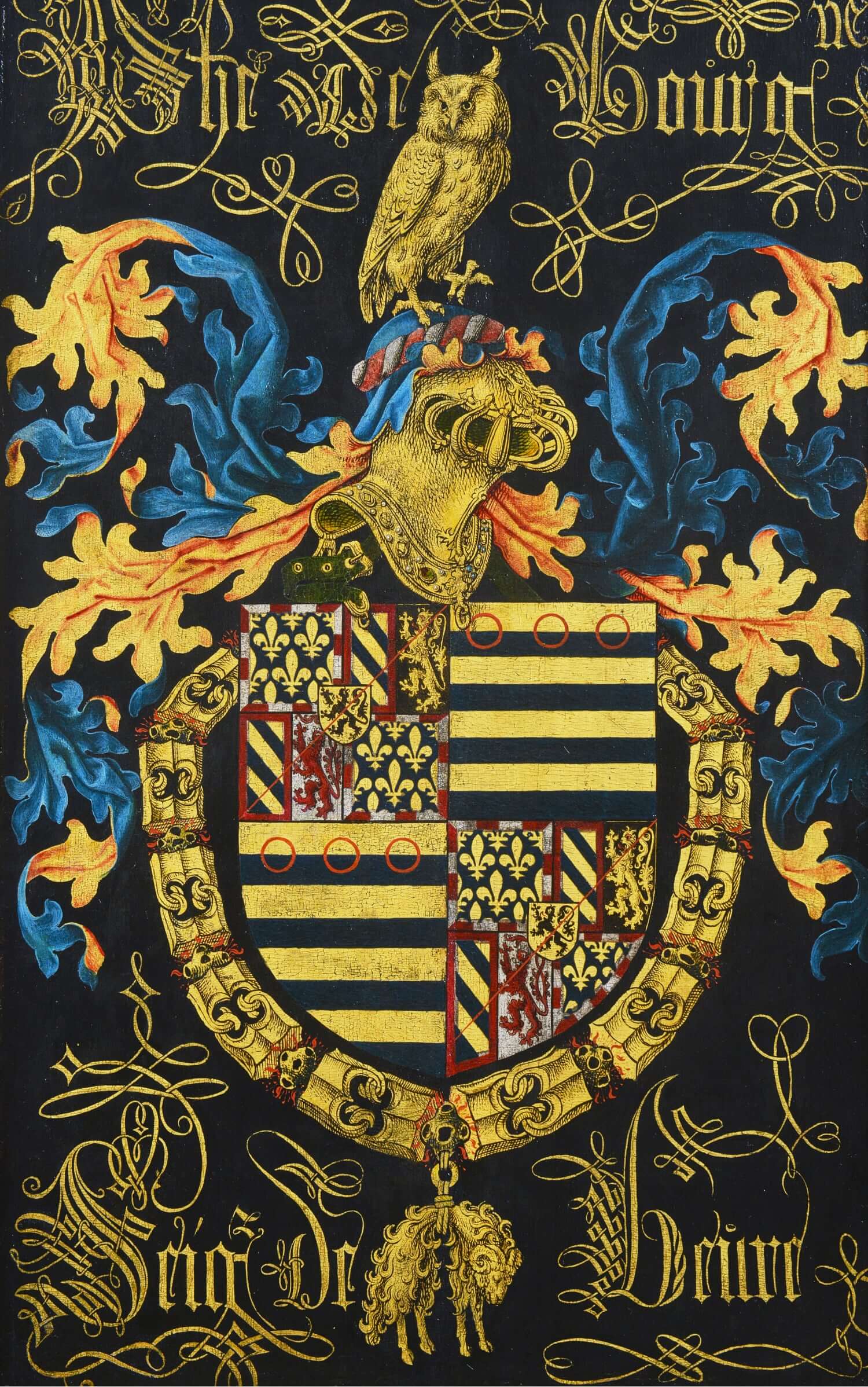
Des chevaliers traversent la grand-place de Malines sur leur monture en un cortège coloré. Nous sommes en 1491 et un rassemblement exceptionnel, le Chapitre de l’Ordre de la Toison d’Or, se tient dans la plus grande ville baignée par la Dyle. Le collier arborant la petite toison de bélier dorée scintille sous le soleil printanier. C’est le symbole d’un ordre chevaleresque qui frappe encore l’imagination aujourd’hui. Un symbole de pouvoir, mais aussi de pensée élitiste, de religion et d’allégeance politique.

Dans l’exposition Chevaliers de la Toison d’Or: un mythe brillant dévoilé, revivez le rassemblement des chevaliers en 1491, l’une des plus grandes et des plus importantes célébrations de l’histoire de Malines. Vous découvrirez le célèbre ordre des chevaliers bourguignons grâce à un ensemble unique d’armoiries du XVe siècle, spécialement élaborées pour le rassemblement de Malines. Ce sera la première fois depuis leur restauration que les 29 armoiries pourront être vues d’aussi près.

Cette exposition dévoile les intrigues et les conspirations politiques de l’une des premières alliances politiques européennes, que certains considèrent comme le précurseur de l’Union européenne. L’UE veut-elle ainsi s’inscrire dans la grande tradition des ducs bourguignons ? L’Ordre est peut-être un précurseur de la future Union européenne, mais voulons-nous en faire un modèle pour l’avenir ?

L’exposition Chevaliers de la Toison d’Or: un mythe brillant dévoilé est placé sous le du Haut Patronage de Sa Majesté le Roi. L’exposition est réalisée en collaboration avec la ville de Malines, la province d’Anvers, la cathédrale Saint-Rombaut, la Fondation Périer-D’Ieteren et les partenaires médias Knack, De Standaard et Klara. L’exposition se tiendra à l’occasion de la présidence belge de l’Union européenne (janvier-juin 2024) et fait partie du programme du festival de la ville Construct Europe 2024.

Informations pratiques :

24.02.2024 – 02.06.2024

Malines, Hof van Busleyden

Source : Hof van Busleyden

Publié dans Exposition | Laisser un commentaire

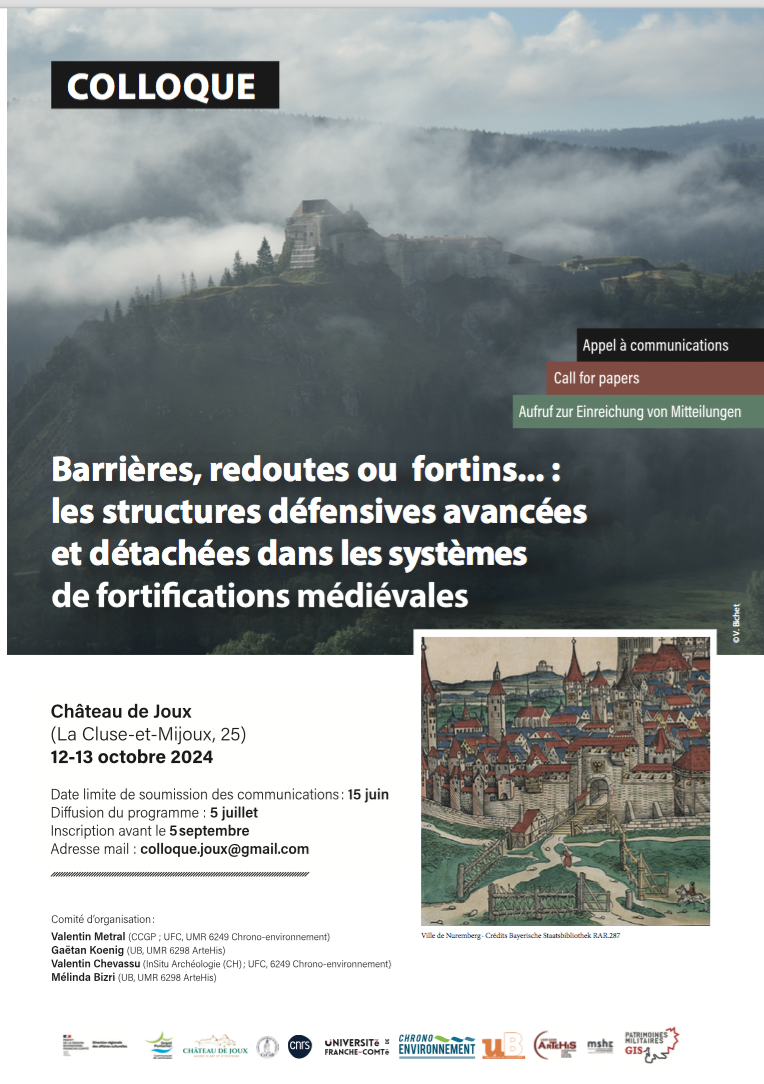
Appel à contribution – Barrières, redoutes ou fortins… : les structures défensives avancées et détachées dans les systèmes

Château de Joux
12-13 octobre 2024

English version below

Si les systèmes de fortifications détachés des XVIIe et XVIIIe siècles ont fait l’objet de nombreuses publications, leurs ancêtres médiévaux ont été souvent oubliés ou occultés, bien que plusieurs découvertes nationales ou européennes aient été réalisées depuis quelques années. Ces constructions méritent aujourd’hui une mise en lumière par des discussions organisées autour d’un colloque scientifique.

Genèse du projet

Ce projet de colloque fait suite aux découvertes réalisées depuis 2017 sur les abords du château de Joux (Doubs), et notamment sur un petit plateau situé au sud de la place : le Gérot. Le dépouillement des données LiDAR disponibles témoigne aujourd’hui d’une occupation militaire intensive de ce secteur, plusieurs dizaines de structures de toutes périodes et de tous usages ayant pu y être identifiées. Si la plupart de ces anomalies semblaient être des vestiges des deux guerres mondiales, le nord de ce plateau présente quatre structures pouvant s’apparenter à des fortins antérieurs à ces conflits contemporains. Un sondage, réalisé en 2021 sur l’un de ces fortins, associé à de larges prospections au détecteur de métaux achevées en 2023, mettent en évidence une contemporanéité de ces structures et d’habillement, ou à vocation militaire, indique une occupation s’étendant préférentiellement sur le dernier quart du XIIIe siècle.

Colloque

L’organisation et l’orientation de la défense de ces fortins s’e ectuent systématiquement vers le sud, en direction de la partie la plus vulnérable du plateau du Gérot. Ces dispositions semblent confirmer que ces structures, dirigées vers l’extérieur, font partie intégrante de la défense de la place. Les datations, associées à leurs positionnements parfaitement linéaires, tendent à indiquer la mise en place à la fin du XIIIe siècle d’une ligne de défense avancée, bien structurée, barrant l’accès à la place forte du château de Joux mais également très probablement à son bourg castral aujourd’hui disparu.

Face à ces découvertes inédites, à la fois par le nombre de fortins, leurs matérialisations et le mobilier mis au jour, l’organisation d’un colloque traitant des systèmes de fortifications détachés semble tout indiqué. Nous entendons par fortifications détachées les structures militaires présentes dans l’environnement proche des villes, villages, châteaux, maisons-fortes, monastères, etc., et participant à leurs défenses. Ces structures peuvent se présenter sous des formes diverses et variées : fortins, lignes de fossés, levées de terre, redoutes ou encore redan; à la fois éphémère, lié à un événement militaire ponctuel ; ou plus pérenne, ces structures s’intégrant alors dans l’organisation de la défense de la place forte sur le long terme. Une approche pluridisciplinaire est privilégiée dans le cas de ces journées d’échanges, les sources documentant ce phénomène pouvant être multiples: récits de sièges, compte de seigneurie ou de construction, visites et projets, iconographie, fouilles et prospections archéologiques, données LiDAR, etc.

Modalités

Les propositions de communication (résumé de 1 500 signes précisant le titre de la communication, l’argumentation et les sources mobilisées), accompagnées d’un court curriculum vitae (notice de 500 signes indiquant un numéro de téléphone, un courrier électronique, une affiliation institutionnelle et le laboratoire de rattachement le cas échéant), doivent être adressées avant le 15 juin 2024 à l’adresse suivante : colloque.joux@gmail.com

Les langues acceptées pour les communications sont l’anglais et le français.

Call for papers

Although the 16 and 17th century fortification outworks have been addressed by numerous publications, their medieval predecessors often stay forgotten or overshadowed. Nevertheless, several discoveries realised in France or in Europe these last years needs to be highlighted by a symposium.

Origins of the Project

This symposium project follows several archaeological discoveries made since 2017 around the castle of Joux, in eastern France, within the Jura Mountains and the Doubs department. A small plateau located south of the fortress, called Gérot, has in particular revealed many anomalies thanks to LiDAR data analyses. These structures of all times and purposes especially witness a strong military use of this area.

Most of these structures may be associated with the First and Second World Wars. Although, the northern part of the plateau shows four moated blockhouses, seemingly older. A 2021 test pit, associated in 2021–2023 with broad metal detector surveys, has revealed a same chronology for the four defensive structures. The artefacts, mainly constituted by clothing, weapons and adornment, clearly indicate that the occupation occurred around the last quarter of the 13th century. All of these blockhouses are oriented toward the south, where lies the most vulnerable part of the Gérot plateau. These structures, outwardly facing and distributed on a line, seem to be an integral part of the defence system of the castle. The archaeological study then indicates the setting of an outer line of defence, well organised and dated from the end of the 13th century, impeding the access both to the castle and to a nowadays disappeared castral village.

The organisation of the symposium attempt to answer these
discoveries, unusual by their numbers, topography and associated
artefacts.
By “outer fort systems” are meant every defensive structure located
in the near environment of towns, villages, castles, manors or
monasteries, and contributing to their protection. These structures
may adopt various morphologies such as blockhouses, ditches and
earthworks, redoubts or redans. They may be ephemeral and linked to a single military event, as well as long-lasting and integrated in the organisation of the fortification over the long term.

A pluridisciplinary approach of the phenomenon is encouraged, according to the multiplicity of documentary sources that may be exploited: sieges accounts, seigneuries or buildings account books, building visits and projects, iconography, archaeological excavations or surveys, LiDAR imagery, etc.

Call for papers

Paper proposals must be submitted before 15th June to the following address: colloque.joux@gmail.com Please send a presentation title with a 1500-sign abstract, as well as a 500 sign-notice presenting the authors and their contact information (phone number, e-mail address, institutional a iliation).
English and French are accepted for oral presentations.

Publié dans Appel à contributions | Laisser un commentaire

École d’été – Making the Ties Count. A Historical Network Analysis Workshop

as part of the project

Recovering Past Stories for the Future: A Synergistic Approach to Textual and Oral Heritage of Small Communities (ID:101132781)

10 – 12 June 2024
Cluj-Napoca

Sébastien de Valeriola (Université libre de Bruxelles), Nicolas Ruffini-Ronzani (Université de Namur & Archives de l’État à Namur), Guillaume Quintin (Université libre de Bruxelles)

Day 1 (Monday 10 June): Theory and Basic Principles

Network Analysis: Definitions and Concepts Introduction to the Gephi Network Analysis Software Introduction to the igraph Network Analysis R Library

Day 2 (Tuesday 11 June): Practical Work From Raw Data to Modelling Analysis: a Hands-on Workshop

Day 3 (Wednesday 12 June): Going Beyond

Opening the Hoods of Network Analysis Research Projects Bring-Your-Own-Data Workshop

Accommodation grant (Universitas Hotel BBU) available on request. Places are limited, so please register by filling the form (url or QRcode): https://forms.office.com/e/t2FDWta0p4

Publié dans École d'été | Laisser un commentaire

Offre d’emploi – Deux attachés au Service Edition de l’Académie royale de Belgique

2 poste(s) recherché(s) – Secrétariat général

Date limite de candidature le 10 avril 2024 l Référence : O2 HE ACADEMIE 2024 001 – 002

Description

Votre rôle

Le titulaire de la fonction a pour missions de :

En tant qu’agent en charge des travaux d’édition des publications de l’Académie royale de Belgique :

Vous participez directement aux travaux d’édition des ouvrages à publier:

  • Développer et entretenir des relations avec les auteurs, en assurant un service personnalisé sur une base régulière ;
  • Suivre les travaux de publication de la réception du manuscrit à la publication de l’ouvrage (y compris les relations avec les imprimeurs et appel d’offres) ;
  • Lorsqu’il échet,  coordonner le Comité éditorial ad hoc pour chaque publication ;
  • Relire et corriger les manuscrits/épreuves (vérification de  l’orthographe, de la grammaire et de la syntaxe) ;
  • Vérifier le respect des recommandations de la charte typographique et des normes de l’Académie royale (uniformisation des majuscules, mise en forme des caractères, présentation des notes, des citations et de la bibliographie…) ;
  • Vérifier la mise en forme et la mise en page des manuscrits ;
  • Rédiger des fiches de lectures à destination du Service communication de l’Académie royale de Belgique ;
  • Vérifier et valider les bons à tirer.

Vous assurez la gestion des Éditions (planning, liste d’auteurs, relation avec les imprimeurs..) 

Vous assurez la parution bisannuelle de  « La nouvelle Biographie Nationale », en collaboration avec le secrétariat de la Biographie Nationale et menez à bien le projet de version numérique interactive (wiki-BN).

En tant qu’agent en charge de la diffusion des publications de l’Académie royale de Belgique :

  • Vous gérez la diffusion des publications de l’Académie royale de Belgique, en ce compris les livres numériques auprès :
  • des diffuseurs-distributeurs belges et étrangers (développement et entretien des relations, gestion des stocks, facturation, tenue de la statistique des ventes, suivi du site web des publications…) ;
  • des libraires ;
  • des publics de l’Académie (développement des relations, communication…).

En outre, vous serez également amené à :

  • rédiger des  dossiers d’appels d’offres et de conduire des procédures des marchés publics ;
  • établir une proposition du budget prévisionnel du Service Éditions ;
  • procéder au Reporting dans le cadre du rapport d’activités (annuel).

Cette liste des tâches est non-exhaustive.

Vous avez une question sur la fonction ? anne-rose.gillard(at)academieroyale.be.

Rôle du service

L’Académie royale des Sciences, des Lettres et des Beaux-Arts de Belgique a pour mission :

  • de promouvoir les travaux de recherche et d’encourager les entreprises scientifiques et artistiques qui réclament son concours matériel ou moral ;
  • de veiller à la coopération entre les savants et artistes belges, de même qu’entre ceux-ci et les savants et artistes d’autres pays ;
  • de publier les travaux de ses membres et ceux des chercheurs, auxquels elle peut attribuer des prix et des subventions ;
  • d’exprimer, à la demande des pouvoirs publics ou de sa propre initiative, tous avis qu’elle estime de nature à servir les intérêts des Sciences, des Lettres, des Arts.

Au sein de l’Académie royale des Sciences, des Lettres et des Beaux-Arts de Belgique, le Service Éditions participe au rayonnement de cette Institution, en Belgique francophone ainsi qu’à l’étranger. 

Pour en savoir plus sur l’académie royale de Belgique : https://academieroyale.be

Profil


Diplôme(s)

Vous disposez d’un diplôme de type long (Master/Licence) de la catégorie des Sciences humaines et sociales ou de son équivalent reconnu par le Service de la reconnaissance académique et professionnelle des diplômes étrangers d’enseignement supérieur de la Communauté française au moment de la candidature.

Atout(s)

Les diplômes des domaines suivants seront considérés comme atout important :

  • Histoire, histoire de l’art et archéologie;
  • Information et communication;
  • Langues, lettres et traductologie;
  • Philosophie.

Expérience(s) professionnelle(s)

Requis

Aucune expérience n’est requise.

Atout(s)

Une expérience professionnelle de minimum 2 années dans le domaine de l’édition/des métiers du livre constitue un atout.

Compétences évaluées lors de l’entretien de sélection

Compétences techniques

  • Bonnes connaissances en gestion de projets (organisation, planification, contacts…) ;
  • Bonnes connaissances des institutions belges en lien avec les matières scientifiques et culturelles ;
  • Bonnes connaissances des stratégies/techniques éditoriales (papier et numérique) et des stratégies/techniques de diffusion des ouvrages (Eliminatoire) ;
  • Connaissances approfondies des techniques d’expression écrite (Pondérée);
  • Connaissances approfondies des techniques d’expression orale.

Compétences comportementales

  • Intégrer l’information : vous établissez des liens entre les diverses données, vous concevez des alternatives et tirez des conclusions adéquates ;
  • Agir de manière orientée service : vous accompagnez des clients internes et externes de manière transparente, intègre et objective, vous leur fournissez un service personnalisé et entretenez des contacts constructifs ;
  • Atteindre les objectifs : Vous vous impliquez et démontrez de la volonté et de l’ambition afin de générer des résultats et assumez la responsabilité de la qualité des actions entreprises (Pondérée).

Les compétences marquées d’un « Eliminatoire » sont essentielles pour l’exercice de la fonction et doivent impérativement être réussies avec minimum 60%. Sans quoi l’ensemble de l’entretien sera considéré en échec.
Les compétences marquées d’un « Pondérée » et la motivation sont considérées comme importantes pour la fonction. Elles ont donc une valeur plus importante dans le score final.

Vous avez une question sur la procédure ? catherine.fourneaux(at)cfwb.be.

Lieu de travail

Bruxelles

Contrat

Contrat à durée indéterminée

Salaire annuel

• Entre 43.523,88 € brut et 79.862,92 € brut
• Echelle barémique : 100/1

Avantages

• Télétravail possible à 50% (avec accord) et indemnité de télétravail
• Chèques-repas
• Pécule de vacances et allocation fin d’année
• Gratuité des transports en commun pour les déplacements domicile – lieu de travail
• Indemnité vélo
• Assurance hospitalisation de base gratuite
• 27 jours minimum de congé par an
• Pour les enfants du personnel : journées récréatives, chèque Saint-Nicolas, indemnités de stages, allocation de rentrée scolaire, …

Conditions de recevabilité

Votre dossier de candidature doit comporter :

• un CV actualisé et rédigé en français
• une lettre de motivation
• une copie du (ou des) diplôme(s) requis ou de l’attestation d’équivalence
• tout autre document demandé dans l’offre d’emploi (par exemple : la copie du permis de conduire)

Diversité et égalité

Le Ministère de la Fédération Wallonie Bruxelles promeut la diversité et l’égalité des chances.
Vous êtes une personne en situation de handicap, avec un trouble d’apprentissage ou une maladie ?
Vous pouvez bénéficier d’un aménagement de la procédure de sélection. Faites en mention dans votre acte de candidature en précisant les informations qui nous permettront d’adapter les conditions de l’entretien. Une question ? inclusion(at)cfwb.be

Cas particuliers

• Diplôme

Pour les diplômes obtenus dans une autre langue que le français, une attestation de votre connaissance de la langue française est requise. Pour l’obtenir : inscrivez-vous sur travaillerpour.be.
Pour les diplômes obtenus hors Belgique, une attestation d’équivalence du diplôme de la Communauté française est requise. Pour l’obtenir : introduisez une demande auprès de la Direction de la reconnaissance des diplômes étrangers

• Nationalité

Si vous êtes ressortissant d’un Etat faisant partie de l’Espace économique européen (ou de la Suisse), vous pouvez participer à la procédure de sélection sans démarches particulière.

Si vous êtes ressortissant hors Espace économique européen, vous pouvez participer à la procédure de sélection mais vous devez disposer d’un titre de séjour et d’un permis de travail valides.

Source : Fédération Wallonie – Bruxelles

Publié dans Offre d'emploi | Laisser un commentaire

Appel à contribution – Embodied Preaching: Multisensorial Preaching Performances in Medieval Europe

Padua, 24-25 October 2024

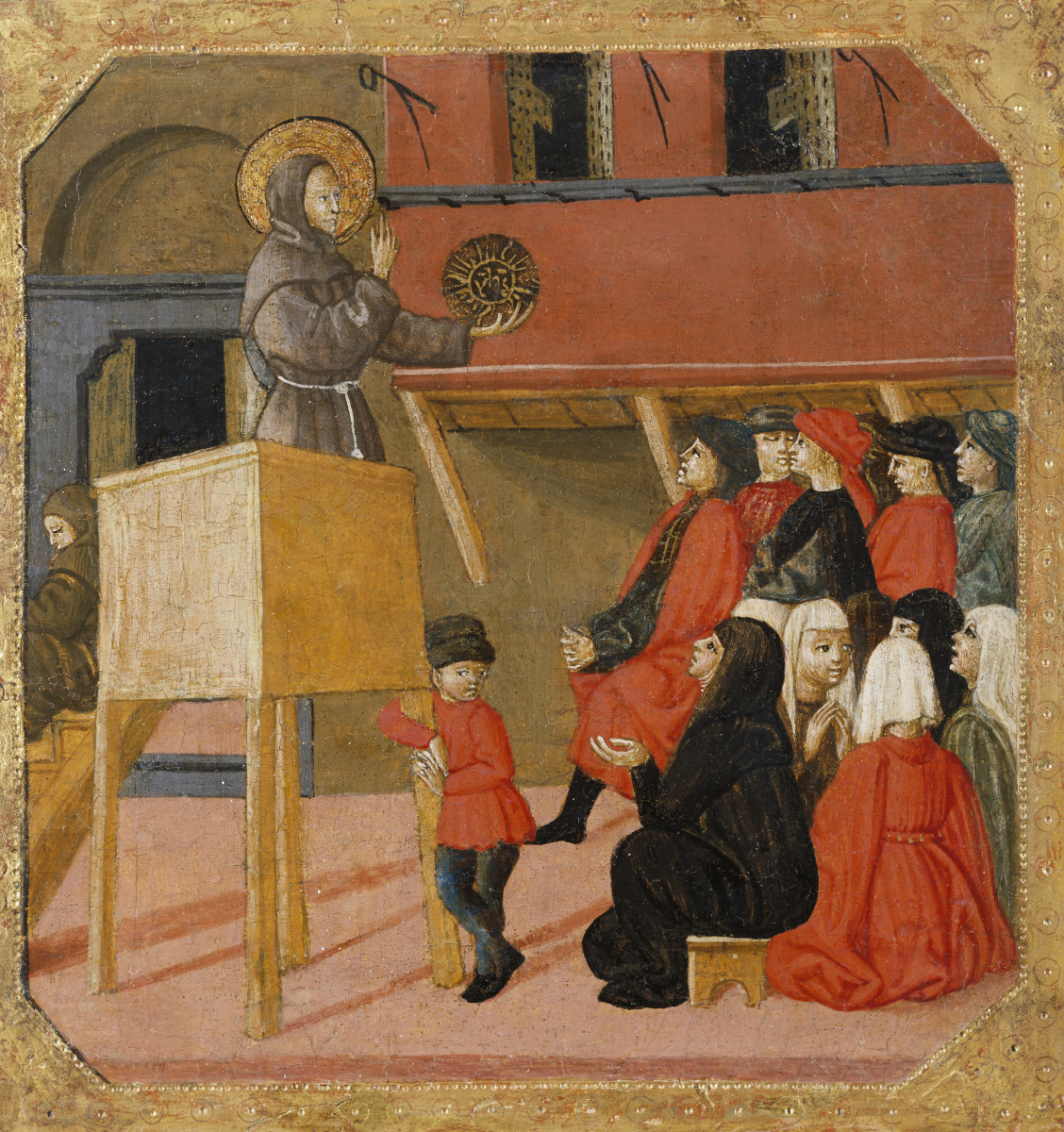
The crucial importance of preaching in medieval Europe has long been acknowledged, not only for religious culture, but also for cultural, political and social history, art history and history of material culture. An interconnected pan-European phenomenon, to be effective preaching needed to be at the same time tailored to local tastes and conventions, shaping the message to the circumstances at hand. With the term “preaching” we understand the public performance of a speech believed to be divinely inspired and meant for religious and moral education. Most importantly, medieval preaching was not the static transfer of a text from preacher to audience: rather, it was an inherently dynamic and interactive activity, involving multiple actors through time and space, communicating religious knowledge within embodied and spatialized networks. The conference will focus on the multisensorial dimension of preaching, which goes beyond the content and style of the textual sermon, to include the personal appearance of the preacher, their voice and gestures (the “embodied” dimension), the material environment in which the preaching took place (the “embedded” dimension) and the use of “special effects” (such as sounds or fire) and objects as an integral part of the performance. 

The role played by the material environment in which the preaching took place has received little attention, and mostly with reference to memory (Carruthers 1998, Bolzoni 2002). It has been pointed out that some late medieval religious leaders (such as Bernardino of Siena) referred in their speeches to specific elements of the material environment in which they were preaching (for example, artworks), presumably to help keep awake the attention of the audience and to “anchor” the teaching to material elements which could be seen by individuals on a daily basis. However, much remains to be done to understand whether and to what extent the specific material environment affected the overall experience of preaching (open vs closed space, specific environments such as churches, saint’s tombs, graveyards, squares and so on). Preachers operated amidst a visual network of objects and spaces, against a background of paintings, sculptures, and other images present within the same space where they performed, giving opportunity for the sermon to connect, contrast, or compete for attention. This also raises the question to what extent preachers adapted their preaching to the particular environment and planned the setting in which the preaching had to take place. 

A further element that deserves to be considered is that, as an act of communication, preaching was not a one-way interaction: the audience, through their attitude, verbal and non-verbal reactions to the preaching played an active role which affected the experience both of the individuals gathered to listen and of the preacher. Based on this, we propose to approach preaching an interactive performance where multiple actors and multiple elements played a role. For this purpose, we will approach audiences using the notion of “socio-sensory environment”, and assuming the existence of specific sensoria depending on social, cultural and geographical factors. Preaching relied on the various senses to be properly understood and make a lasting impact: the oral and aural performance of the sermon took place within a visually accessible space, with the preacher using both voice and body (gestures, facial expressions) to convey a message. From the sermon text, listeners are often invited to fully employ their senses as well and to imagine themselves present at religiously significant moments: to see the scene before their eyes, to hear what was occurring, to smell, taste, and feel, their internal or imaginary senses giving rise for meditation and devotion. Meanwhile, the experiences of pleasant or unpleasant smells or feelings of cold, heat, or discomfort can also be investigated from a sensory perspective. 

With a primary focus on Western Europe from the 12th to the 15th century, this conference aims to explore preaching in an innovative and holistic way, by considering the multisensorial dimension of the transmission and reception of the word of God in whichever form, verbal or non-verbal. By emphasising the range of activities aimed at communicating religious knowledge and devotional practice, and the multisensorial nature of such activities, this conference will explore new aspects of the multifaceted experience of medieval preaching.

We welcome abstracts for 20-minute papers in English. Scholars may address the topic with a broad approach but always considering the role of all the senses in the performance and reception of preaching. Paper topics may include, but are by no means limited to:

  • The role played by objects in the experience of preaching: for example objects and artworks used by preachers, devotional or practical items or other objects, such as hand warmers, used by the audience 
  • Unconventional ways of preaching reliant on the senses, for example through music or theatrical performances
  • The role played by the senses in the experience of preaching, including smell, taste, and the interior senses (such as thermoception or proprioception)
  • The link between preaching and art or architecture, including when preaching outside of the church
  • How preaching was experienced differently by different audiences, including audience responses and interactions during preaching
  • Sermons or preaching that encompass discussions of physicality, embodiment, or materiality

Please send a title and abstract of no longer than 300 words, together with a short CV and personal data (max. 300 words), to the following emails: zuleika.murat@unipd.it; pieterhendrik.boonstra@unipd.it; micol.long@unipd.it

The language of the conference is English. 

Deadline: 05 April 2024. Notifications of acceptance will be given by 26 April 2024.

Selected papers will be invited for publication in a collective volume.

This conference is organised by the ERC research project SenSArt – The Sensuous Appeal of the Holy. Sensory Agency of Sacred Art and Somatised Spiritual Experiences in Medieval Europe (12th-15th century), Grant Agreement nr. 950248, PI Zuleika Murat, Università degli Studi di Padova (https://sensartproject.eu/).

Organising Committee: 

Zuleika Murat (Associate Professor, Università degli Studi di Padova)
Pieter Boonstra (Post-Doctoral Research Fellow, Università degli Studi di Padova) Micol Long (Post-Doctoral Research Fellow, Università degli Studi di Padova)

Publié dans Appel à contributions | Laisser un commentaire

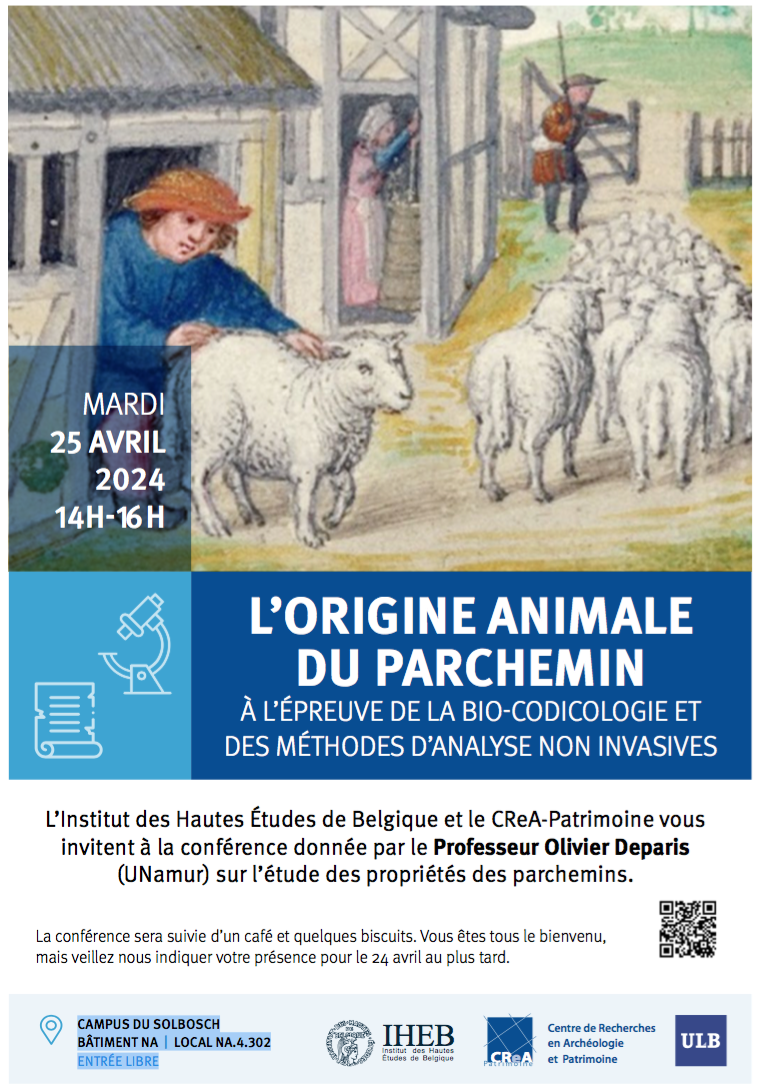
Conférence – Olivier Deparis, « L’origine animale du parchemin à l’épreuve de la bio-codicologie et des méthodes d’analyse non invasives »

L’Institut des Hautes Études de Belgique et le CReA-Patrimoine vous invitent à la conférence donnée par le Professeur Olivier Deparis (UNamur) sur l’étude des propriétés des parchemins.

La conférence sera suivie d’un café et quelques biscuits. Vous êtes tous le bienvenu, mais veillez nous indiquer votre présence pour le 24 avril au plus tard.

Mardi 25 avril 2024

CAMPUS DU SOLBOSCH
BÂTIMENT NA | LOCAL NA.4.302
ENTRÉE LIBRE

Publié dans Colloque | Laisser un commentaire

Appel à contribution – His verbis exprime luctum. Supports, style et usages de la poésie funéraire (IXe-XIIe siècles) / Media, Style, and Uses of Funerary Poetry (9th-12th Cent.)

Au détour d’un exemple d’amplification, Geoffroi de Vinsauf indique à ses lecteurs les mots appropriés à l’expression du deuil (« Temporibus luctus his verbis exprime luctum », Poetria nova, v. 367). De fait, le décès d’un individu suscite diverses productions écrites, notamment poétiques, à l’instar des plaintes funèbres (planctus), des épitaphes et des titres de rouleaux mortuaires. De prime abord, le trait distinctif de la poésie funéraire est d’ordre thématique : la mort en fonde l’unité. Malgré leur proximité discursive, les poèmes funéraires se démarquent par des critères formels (poésie métrique, rythmique, ou performance orale) et matériels (codex, rotulus, pierre).

Dès l’époque carolingienne, la poésie funéraire connait un développement considérable. Les raisons de son succès au cours du premier Moyen Âge restent encore à éclaircir. Traditionnellement, l’historiographie marque une rupture au tournant des XIIe et XIIIe siècles, entre autres en raison de la production croissante des textes vernaculaires et de l’amorce du macabre, avec la figure d’Hélinand de Froidmont. L’ambition des journées est d’étudier les expressions poétiques du deuil à l’aune de leurs supports, de leur style et de leurs usages. Il s’agira de questionner la notion de poésie funéraire par l’étude de ses diverses manifestations poétiques, tout en s’interrogeant sur sa production et sa réception : quels sont les éléments précurseurs ? Qu’est-ce qui se maintient aux siècles suivants ? En quoi sied-il de parler plutôt d’une transformation ou plutôt d’une rupture nette ?

La matière de la poésie funéraire (Université de Poitiers, CESCM ; 26-27 septembre 2024)

Tout au long du Moyen Âge, le décès peut déclencher la composition poétique et l’acte d’écriture. L’enjeu de cette première journée sera de caractériser la matière qui convient à l’expression du deuil : comment définir la poésie funéraire aujourd’hui et envisager la porosité entre ses différentes manifestations (planctus, épitaphes, titres de rouleaux mortuaires) ? Dans quels contextes (manuscrits comme monumentaux) apparaissent les différentes expressions poétiques funéraires ? À quels besoins répondent-elles (commémoratifs, cathartiques, panégyriques et liturgiques) et à qui s’adressent-elles ?

À cette diversité des manifestations poétiques répond une diversité d’usages. Il conviendra aussi de s’interroger sur les liens qui peuvent être établis entre le poème funéraire et son support. Quels facteurs suggèrent ou imposent la forme du poème funéraire ? Quelles pratiques de lecture assigne-t-on aux divers supports ? Quelles traces d’oralité subsistent dans les témoins écrits et quel est le statut de la composition musicale dans la poésie funéraire ?

La mort d’un individu est l’élément commun à tout poème funéraire. Toutefois, cette poésie s’inscrit dans un réseau intertextuel et emprunte des topoï attestés dans d’autres productions littéraires : ainsi, l’expression de la douleur, la prière et la glorification. Dès lors, quels topoï sont récurrents dans les différentes manifestations du deuil ? Sont-ils en tout ou en partie conditionnés par leur support ? Dans quel réseau intertextuel s’inscrivent-ils ? Font-ils l’objet d’un traitement spécifique selon leur contexte ?

Style et mise en scène de la poésie funéraire (Université Catholique de Louvain ; 28-29 novembre 2024)

L’objectif de la deuxième journée consistera à s’interroger sur l’existence d’une esthétique propre à l’expression du deuil. Cette question sera d’abord abordée du point de vue stylistique. Existe-t-il un langage ou une poétique spécifique à la matière funéraire ? Quels outils et quelles méthodes peuvent-être mobilisés (études stylométriques, humanités numériques, etc.) ? Quelles sont les caractéristiques formelles des poèmes funéraires (figures de prédilection, variations lexicales, constructions syntaxiques, etc.) et sont-elles conditionnées par leur support ? À quel(s) type(s) de versification s’adonnent les poètes ?

Ensuite, il faudra étudier les représentations de la poésie funéraire et la manière de la mettre en scène. La distance entre le texte et son support théorique a déjà été soulevée par l’historiographie, en particulier pour les épitaphes. Si toutes les épitaphes n’ont pas été gravées, comment évoque-t-on leur matérialité dans le discours poétique ? Quels codes visuels et quelles caractéristiques graphiques reprennent les scribes pour faire penser à une épitaphe lapidaire ? Quelles sont les fonctions des jeux graphiques adventices, et font-ils partie intégrante de la poétique funéraire ?

Enfin, il sera nécessaire de mieux définir les rapports que l’auteur entretient avec la matière poétique funéraire. Quelles attitudes développe le poète devant les contraintes qu’implique son sujet – le décès ? Si les arts poétiques du Moyen Âge ne se sont que très peu préoccupés de la question du genre littéraire, existe-t-il néanmoins des traces d’une codification plus ou moins consciente ? En quoi les modèles didactiques, les pastiches et les caricatures permettent-ils de mieux évaluer les traces de cette codification ?

Informations pratiques

Les journées d’études se tiendront respectivement à Poitiers (France) le 26 et 27 septembre 2024 et à Louvain-la-Neuve (Belgique) le 28 et 29 novembre 2024. Les présentations de 40 minutes seront suivies de 20 minutes de questions. Des sessions seront prévues sous le format de table ronde : des jeunes chercheurs et chercheuses présenteront des études de cas en 20 minutes. Un format numérique permettra de suivre l’ensemble des journées à distance au besoin.

Propositions

Les propositions d’études de cas (maximum 500 mots) sont à envoyer à eleonore.venturelli@uclouvain.be pour le 1 mai 2024, en français ou en anglais. Le transport, le logement et les repas des intervenants et intervenantes des journées seront pris en charge. La langue de la communication sera choisie avec le comité organisateur. Une publication des actes est prévue.

Comité organisateur

Julien De Ridder (Aspirant fnrs, UCLouvain et Université de Genève), Damien Strzelecki (Ingénieur d’études au CESCM, Université de Poitiers) et Eléonore Venturelli (Aspirante fnrs, UCLouvain et Université de Poitiers)

Comité scientifique

Paul Bertrand (UCLouvain), Estelle Ingrand-Varenne (Université de Poitiers), Cécile Treffort (IUF, Université de Poitiers) et Wim Verbaal (Université de Gand)

Through an example of amplification, Geoffrey of Vinsauf points to his readers the appropriate words to express mourning: (“Temporibus luctus his verbis exprime luctum”, Poetria nova, v. 367). Indeed, the passing of someone gives rise to a variety of written productions, especially poetic compositions: laments (planctus), epitaphs, and titles of mortuary rolls. At first sight, the distinctive feature of funerary poetry is thematic: death underpins its unity. Despite their discursive proximity, funerary poems distinguish themselves through the means of both formal (metrical, rhythmic poetry, or oral performance) and material criteria (codex, rotulus, stone).

From the Carolingian period onwards, funerary poetry experiences a major growth. The reasons for its success during the early Middle Ages are still unclear. Traditionally, historiography marks a breaking point at the turn of the 12th and 13th centuries. This is due in part to the increasing production of vernacular texts and the rise of the macabre, particularly with the figure of Helinand of Froidmont. The aim of these sessions is to study poetic expressions of mourning in the light of their medium, their style and their usage. Our purpose is to question the notion of funerary poetry through the study of its various poetic manifestations, while pondering its production and reception: what are the precursory elements? What remains the same over the course of the following centuries? Why is it more appropriate to talk about a transformation or a clear break?

The Material of Funerary Poetry (University of Poitiers, CESCM; September 26 and 27, 2024)

Throughout the Middle Ages, death could inspire poetic composition and the act of writing. The challenge of this first session will be to recognize and characterize the material considered appropriate in the expression of mourning: how can we define funerary poetry today and consider the porosity between its different manifestations (planctus, epitaphs, titles of mortuary rolls)? In what contexts (both manuscript and monumental) do the various expressions of funerary poetry appear? What needs do they meet (commemorative, cathartic, panegyric and liturgical) and for whom are they intended?

This diversity of poetic manifestations is matched by a diversity of uses. We will also look at the links that can be established between the funerary poem and its medium. What factors suggest or impose the form of the funerary poem? What reading practices are assigned to the various media? What traces of orality remain in the written testimonies, and what is the status of musical composition in funerary poetry?

The death of someone is the one common element in all funerary poems. However, this poetry is part of an intertextual network and borrows topoi attested in other literary productions, such as the expression of grief, prayer, and glorification. Which topoi are recurrent in the various manifestations of mourning? Are they wholly or partly conditioned by their medium? What intertextual network are they part of? Do they receive specific treatment depending on their context?

Style and Mise-en-scène of Funerary Poetry (Catholic University of Louvain; November 28 and 29, 2024)

The aim of the second session will be to examine the existence of an aesthetic specific to the expression of mourning. This question will first be addressed from a stylistic point of view. Is there a language or poetics that are specific to funerary subjects? What tools and methods can be mobilized (e.g. stylometric studies, digital humanities)? What are the formal characteristics of funerary poems (e.g. preferred figures, lexical variations, syntactic constructions), and are they conditioned by their medium? What type(s) of versification do poets use?

Then, we will study the representations of funerary poetry along with its staging. The distance between the text and its theoretical support has already been raised by historiography, especially with the case of epitaphs. If all the epitaphs were not engraved, how is their materiality evoked in poetic discourse? What visual codes and graphic features do scribes use to allude to a lapidary epitaph? What are the functions of the adventitious graphic plays, are they an integral part of funerary poetics?

Finally, we need to better define the author’s relationship with funeral poetry. What attitudes does the poet develop in the face of the constraints implied by his subject – death? Although the poetic arts of the Middle Ages paid very little attention to the question of literary genre, are there nonetheless traces of a more or less conscious codification? How can didactic models, pastiches and caricatures help us better assess the remains of this codification?

Practical information

The study days will be held respectively in Poitiers (France) on September 26 and 27, 2024, and in Louvain-la-Neuve (Belgium) on November 28 and 29, 2024. The sessions consist in 40-minutes presentations and will be followed by a 20-minutes question and answer session. Round-table sessions will feature young researchers presenting case studies within 20 minutes. A digital format will allow to follow the entire event remotely, if required.

Proposals

Case study proposals (maximum 500 words) should be sent to eleonore.venturelli@uclouvain.be by May 1st, 2024, in English or French. Transportation, accommodation, and meals will be provided for the day’s speakers. The language of the paper will be chosen in consultation with the organizing committee. A publication of the acts is planned.

Organizing committee

Julien De Ridder (fnrs, UCLouvain and University of Geneva), Damien Strzelecki (CESCM, University of Poitiers) and Eléonore Venturelli (fnrs, UCLouvain and University of Poitiers)

Scientific committee

Paul Bertrand (UCLouvain), Estelle Ingrand-Varenne (University of Poitiers), Cécile Treffort (University of Poitiers, IUF), Wim Verbaal (Ghent University)

Publié dans Appel à contributions | Laisser un commentaire

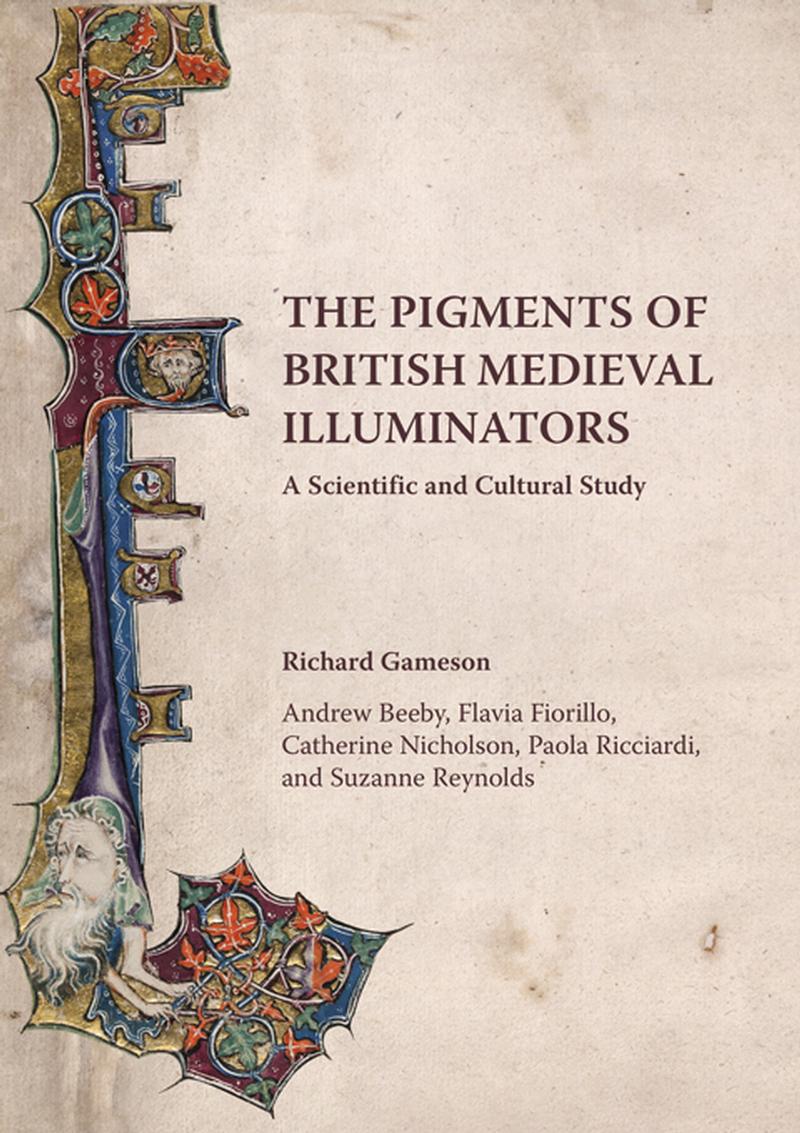
Publication – « The Pigments of British Medieval Illuminators. A Scientific and Cultural Study », éd. Richard Gameson

Written by Richard Gameson, Andrew Beeby, Flavia Fiorillo, Catherine Nicholson, Paola Ricciardi and Suzanne Reynolds. With contributions from Mila Crippa, Anna Mazzinghi and Lucia Pereira-Pardo

This comprehensive and richly illustrated volume is the first-ever history of British medieval illuminators’ pigments. It rests on first-hand investigation, with optimal scientific techniques, of a wide selection of manuscripts, ranging in date from the seventh century to the fifteenth. It provides an authoritative, engaging and accessible guide to this understudied field, for historians, art historians, librarians, conservators, heritage scientists, and anyone interested in the art, culture and techniques of book illumination.

Table des matières :

Contributors
Preface and Acknowledgements
Illustration Credits
Abbreviations and Acronyms
Introduction


I The Pigments, Dyes and Inks, and How Best to Identify Them
The techniques in outline
Pigments, dyes and inks, and their identification
Notes
II Conversion and Colour, c.600–c.900
Historical introduction
Northumbria
Kent
Mercia
Southumbria in general
Wales and Scotland
Conclusion
Summary of pigment identifications
Notes
III Conquests and Chromophores, c.900–c.1066
Historical introduction
The era of Alfred, Edward the Elder and Athelstan.
The era of monastic reform
From the Danes to the Normans, c.1000–c.1066
Conclusion
Summary of pigment identifications
Notes
IV Normans, Angevins, Plantagenets and Pigments, c.1066–c.1250
Historical introduction
From the Norman Conquest to c.1100
The first half of the twelfth century
The giant bibles
The second half of the twelfth century
The first half of the thirteenth century
Conclusion
Summary of pigment identifications
Notes
V A Time of Expansion: Colour c.1250–c.1360
Historical introduction
1250–1307: to the death of Edward I
1250–1307: colour in context
1307–1360: from Edward II to the Black Death
Conclusion
Summary of pigment identifications
Notes
VI Colour after the Black Death, c.1360–c.1485
Historical introduction
From c.1360 to c.1400
The first half of the fifteenth century
The second half of the fifteenth century
Conclusion
Summary of pigment identifications
Notes


Conclusion: The Chronology of Colour
Appendix I: The Earliest Recipe Collections in British Books
Appendix II: Illuminators’ Materials in Royal Household Accounts, 1289–1290
Appendix III: Instrumentation
Bibliography
Index of Manuscripts
Index of People and Places

Informations pratiques :

The Pigments of British Medieval Illuminators. A Scientific and Cultural Study, éd. Richard Gameson, Londres, Archetype, 2024 ; 1 vol., 490 p. ISBN : 978-1-90949-296-7. Prix : GBP 85,00.

Source : Archetype

Publié dans Publications | Laisser un commentaire