Offre d’emploi – Lecturer/Senior Lecturer in History of the Islamic World (The University of Manchester)

Job reference: HUM-022496
Salary: Lecturer £39,592 to £54,421 per annum Senior Lecturer £56,048 to £66,890 per annum (according to relevant experience)
Faculty/Organisational Unit: Humanities
Location: Oxford Road
Employment type: Permanent
Division/Team: History
Hours Per Week: Full time
Closing date: 31/07/2023
Contract Duration: Permanent
School/Directorate: School of Arts, Languages and Cultures

Applications are invited for the post of Permanent Lecturer/ Senior Lecturer in History of Islamic World at the University of Manchester.

We invite applications from candidates with historical expertise in any dimension of the Islamic World broadly defined from the 7th Century CE to the present. They will be expected to have expertise in one or several languages of the Islamic world (broadly conceived), which may also include languages spoken by non-Islamic groups, such as Armenian, Aramaic and so on. They should have a strong record of research and academic publication in the field of Islamic History with outputs appropriate to their career stage, as well as a track record in attracting external sources of research funding, and/or have a clear plan for future grant applications. The successful candidate will be expected to contribute to undergraduate and postgraduate teaching on the history of Islam and the Islamic World.

The 2021 Research Excellence Framework placed History at Manchester 5th nationally in overall terms. World history at Manchester is a particular strength of the History Department, with our scholars sustaining a strong international profile and record of participation in impact activities relating to world affairs and prominent exhibitions. Their published work has won prestigious prizes and their research continues to attract major Research Council awards. We particularly encourage applications that map onto one or more of our research groups: Radical Approaches from the Global South [RAGS], Race, Roots and Resistance, Histories of Humanitarianism, Embodied Emotions and the Cultural History of War.

What you will get in return:

  • Fantastic market leading Pension scheme.
  • Excellent employee health and wellbeing services including an Employee Assistance Programme.
  • Exceptional starting annual leave entitlement, plus bank holidays.
  • Additional paid closure over the Christmas period.
  • Local and national discounts at a range of major retailers.

As an equal opportunities employer, we welcome applicants from all sections of the community regardless of age, sex, gender (or gender identity), ethnicity, disability, sexual orientation and transgender status. All appointments are made on merit.

Our University is positive about flexible working – you can find out more here.

Hybrid working arrangements may be considered.

Please note that we are unable to respond to enquiries, accept CVs or applications from Recruitment Agencies.

Any recruitment enquiries from recruitment agencies should be directed to People.Recruitment@manchester.ac.uk.

Any CV’s submitted by a recruitment agency will be considered a gift.

Enquiries about the vacancy, shortlisting and interviews:
Name: Professor Anindita Ghosh, Head of History
Email: anindita.ghosh@manchester.ac.uk 

General enquiries:
Email: People.recruitment@manchester.ac.uk

Technical support:
https://jobseekersupport.jobtrain.co.uk/support/home

This vacancy will close for applications at midnight on the closing date.

Further particulars including job description and person specification are available on the University of Manchester website – click on the ‘Apply’ button above to find out more.

Source : Jobs.ac.uk
Publié dans Offre d'emploi | Laisser un commentaire

Séminaire – ‘Parler de foutre’. Dire le sexe dans les textes médiévaux (cycle 2023-2024)

Dans le cadre du programme « ‘Parler de foutre’. Dire le sexe dans les textes médiévaux », nous prévoyons 5 séances dans lesquelles nous aurons le plaisir d’entendre Nadia Pla (université Paris Nanterre), Marion Uhlig  (université de Fribourg), Marie Anne Polo de Beaulieu (EHESS), Camille Bellenger (Sorbonne université) et Maud-Perez (Sorbonne Nouvelle).

Sur place: Salle recherche UFR ALC les jeudis à 13h30
Hybride: lien à demander à fabienne.pomel@univ-rennes2.fr

Programme :12 octobre
Nadia Pla (universitéParis Nanterre)
Faire l’amour en période menstruelle, un extrême danger, d’après les textes de type “Secrets des femmes”, XIIIe-XVesiècles

30 novembre
Marion Uhlig (université de Fribourg)
‘G le v.i.t. ABC’ (j’ai le vit abaissé) :ducon (9), du cul (Q) et d’autres lettres obscènes

15 février
Marie Anne Polo de Beaulieu (EHESS)
Hagiographie, scatologie et adultère : la sainteté problématique de saint Gangulf

21 mars
Camille Bellenger (Sorbonne université)
La plaie qu’oten la nature: deux exemples de mutilations sexuelles chez Gautier de Coinci

4 avril
Maud-Perez (Sorbonne Nouvelle)
Faire voir le sexe au sein de l’espace domestique. Étude des plafonds peints languedociens (XIVe-XVe)

Publié dans Séminaire | Laisser un commentaire

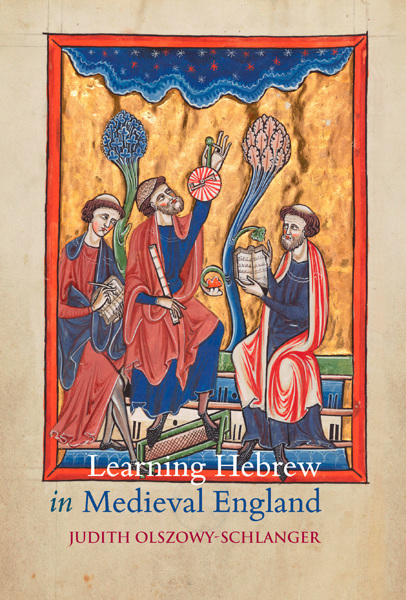
Publication – Judith Olszowy-Schlanger, « Learning Hebrew in Medieval England: Christian Scholars and the Longleat House Grammar »

For inquisitive Christian minds in the Middle Ages, there were many reasons to learn Hebrew. The rediscovery of classical sources and Aristotelian philosophy and the engagement with Graeco-Arabic sciences that marked the renaissance of the twelfth century also brought about an acute awareness of the need for a philological understanding of the Hebrew language. In England in particular, various factors combined to encourage and facilitate the study of Hebrew texts, not only among well-known writers but also among English scholars whose names have not been preserved. They nevertheless produced bilingual Hebrew-Latin manuscripts in collaboration with Jewish scribes, along with manuals, textbooks, and reference aids to facilitate access to the sources. This volume presents an edition and analysis of one such learning tool: a thirteenth-century grammar written in Hebrew, Latin, and Anglo-Norman French (the vernacular language of the Jews of England) in a complex combination of Hebrew and Latin alphabets.

Judith Olszowy-Schlanger is President of the Oxford Centre for Hebrew and Jewish Studies and a Fellow of Corpus Christi College and Professor of Hebrew Palaeography at the École Pratique des Hautes Études, Paris-Sciences-Lettres. She is the author of numerous publications, including Les manuscrits hébreux dans l’Angleterre médiévale: étude historique et paléographique (2003) and Hebrew and Hebrew-Latin Documents from Medieval England, in two volumes (2015). With Anne Grondeux et al., she is the editor of Dictionnaire hébreu-latin-français de la Bible hébraïque de l’abbaye de Ramsey (XIIIe s.) (2008); she has also co-edited several collections, among them Books within Books: New Discoveries in Old Book Bindings (2013), with Andreas Lehnardt, and A Universal Art: Hebrew Grammar across Disciplines and Faiths (2014), with Nadia Vidro and Irene E. Zwiep.

Table des matières :

Abbreviations
Tables
Preface

Facsimile of the Longleat House Grammar

Introduction

Chapter 1
The Manuscript: Its Structure, Texts and Scribes
The Codicological, Textual and Palaeographical Units of LH MS 21
The Codicological and Textual Composition of the Longleat House Grammar
The Scribes of LH MS 21
Palaeographical Remarks
Page and Text Layout

Chapter 2
The Longleat House Grammar and Hebrew Scholarship at Ramsey Abbey
The Longleat House Grammar Among the Bilingual Hebrew-Latin Manuscripts
The Longleat House Grammar and Ramsey Abbey

Chapter 3
The Longleat House Grammar and Different Linguistic Approaches to Hebrew in Medieval England
Through the Latin Lens
Christian Hebrew Grammar and Jewish Linguistic Traditions

Chapter 4
The Edition of the Longleat House Grammar
Grammar Textual Unit 1: The Hebrew Grammar in Latin Characters
Grammar Textual Unit 2: The Essay on Hebrew Vowels and Accents
Grammar Textual Unit 3: The Hebrew Grammar in Hebrew Characters
Grammar Textual Unit 4: The Hebrew Verb Paradigms in Latin Characters

Chapter 5
Contents and Sources of the Longleat House Grammar
Grammar Textual Unit 1: The Hebrew Grammar in Latin Characters
Grammar Textual Unit 2: The Essay on Hebrew Vowels and Accents
Grammar Textual Unit 3: The Hebrew Grammar in Hebrew Characters
Grammar Textual Unit 4: The Hebrew Verb Paradigms in Latin Characters

Conclusions

Bibliography
Index of Quotations
Index of Manuscripts
General Index

Informations pratiques :

Judith Olszowy-Schlanger, Learning Hebrew in Medieval England: Christian Scholars and the Longleat House Grammar, Turnhout, Brepols, 2023 ; 1 vol., 204 p. (Studies and Texts, 230). ISBN : 978-0-88844-230-7. Prix : € 98,00.

Source : Brepols

Publié dans Publications | Laisser un commentaire

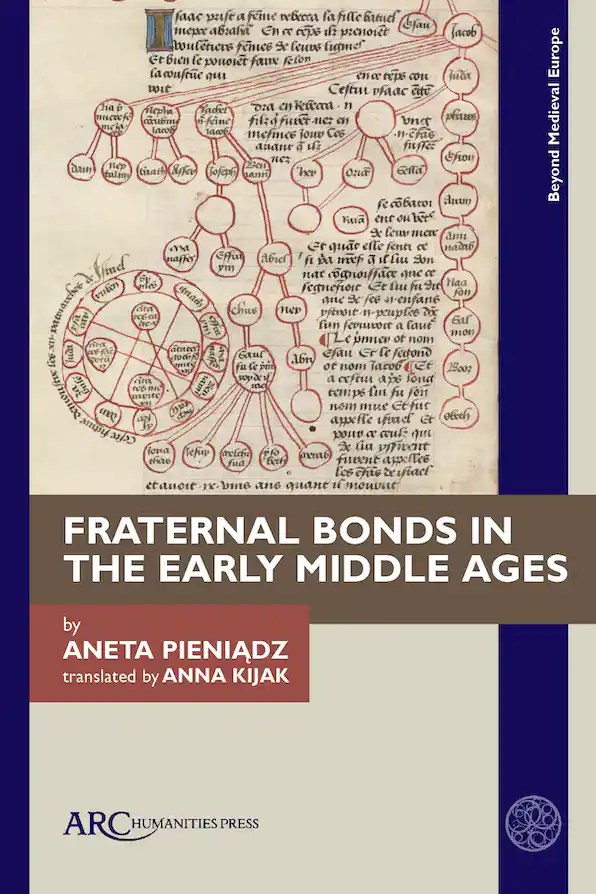
Publication – Aneta Pieniądz, « Fraternal Bonds in the Early Middle Ages »

The problem of fraternal relations in the early Middle Ages has not been hitherto studied in detail, especially in comparison with the multitude of studies dealing with the models of marriage, gender-based social roles, or the relations between generations. Historians have been often prone to assume that relations between siblings in European culture were naturally constant, based on loyalty, solidarity, and readiness to act in the common interest, stemming from blood ties. However, this conviction equates the category of brotherhood/fraternitas used by medieval authors with concepts associated with sources from later periods. This study does not concern narrowly defined family history, but is an attempt to examine fraternal relations in the early Middle Ages as a multidimensional cultural phenomenon. As the author seeks to demonstrate, it is difficult to speak of kinship in the ninth century and later without being aware of the religious and ideological implications of the transformations taking place at the time, even if direct traces of the impact of moralizing and theological teachings on the conduct of individuals are hard to capture in the sources.

Aneta Pieniądz is an associate professor in Medieval History at the University of Warsaw. She researches the social history of the early Middle Ages, family history, digital tools for medievalists, and is interested in pedagogy and outreach.

Table des matières :

Preface

Chapter 1: Introduction

Chapter 2: The Meaning of the Terms « Brother » and « Brotherhood” in Early Medieval Sources

Chapter 3: Equality and Fraternal Hierarchies

Chapter 4: Between Love and Hate: Models of Fraternal Relations

Chapter 5: Fraternal Relations in the Context of Law and Social Practice

Chapter 6: Paternal Uncles and Nephews

Chapter 7: Brothers and Their Wives

Chapter 8: Conclusion

Informations pratiques :

Aneta Pieniądz, Fraternal Bonds in the Early Middle Ages, Leeds, ARC Humanities Press, 2023 ; 1 vol., 262 p. (Beyond Medieval Europe). ISBN : 978-1-80270-099-2. Prix : GBP 115,00.

Source : ARC Humanities Press

Publié dans Publications | Laisser un commentaire

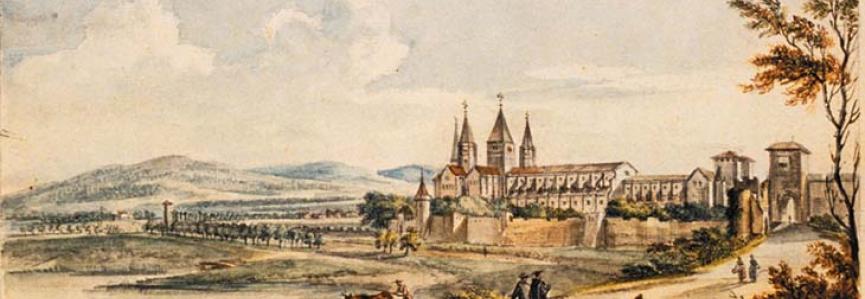
Appel à contribution – Cluny et l’économie. L’abbaye médiévale entre la Bourgogne et l’Europe

Dans le cadre du colloque «Cluny et l’économie. L’abbaye médiévale entre la Bourgogne et l’Europe» qui se tiendra du 20 au 22 juin 2024 à Cluny, un appel à contributions est lancé jusqu’au mercredi 5 juillet 2023.

Ce colloque est organisé par l’Université de Ratisbonne (Jörg Oberste) et l’IRHT-CNRS (Sébastien Barret, section diplomatique), en collaboration avec la ville de Cluny, la Bibliothèque Constable et le Centre des Monuments Nationaux. Ce colloque étant également l’occasion de commémorer le millénaire de la naissance de l’abbé Hugues le Grand (1024-1109), une section de cette journée sera consacrée au long règne de ce saint abbé.

Les organisateurs seront heureux de recevoir des propositions de contributions sur l’ensemble du champ thématique esquissé, et invitent expressément les jeunes chercheuses et chercheurs, doctorantes et doctorants, issus de différentes disciplines telles que l’histoire économique et sociale, l’histoire des ordres religieux, l’histoire de l’art ou l’archéologie à proposer une communication.

  • Une brève candidature accompagnée d’un CV et d’un exposé thématique doit être envoyée par courrier électronique avant le 5 juillet 2023 à : Pauline Ambrazé et Sébastien Barret.

L’abbaye de Cluny n’était pas seulement l’un des centres de réforme monastique les plus importants du Moyen Âge, mais elle était aussi profondément enracinée dans les conditions politiques, sociales et économiques de son époque. Du fait de l’énorme croissance du convent et de la congrégation des monastères clunisiens, l’abbaye devint elle-même au cours des Xe et XIe siècles un acteur économique de premier plan, qui influença aussi bien les conditions agricoles du Mâconnais que le comportement de la noblesse bourguignonne en matière de fondations pieuses, ou encore les relations commerciales entre la Bourgogne et les autres régions européennes. Au sein du réseau européen de prieurés et d’abbayes liés à Cluny, des redevances et des subsides étaient régulièrement versés à la maison mère. La papauté utilisait également ces ressources pour la perception de la dîme de la croisade. Alors que les grands chantiers de Cluny et d’autres maisons filles ainsi que les prestations matérielles croissantes dans le domaine de la commémoration des morts engloutissaient des sommes énormes, l’économie de Cluny se montrait vulnérable aux perturbations politiques et financières. Les mesures de réforme prises par l’abbé Pierre le Vénérable (1122-1156) reflétaient le poids écrasant des dettes et les problèmes d’efficacité dans l’approvisionnement agricole du monastère à l’époque suivant celle des saints abbés.

Source : IRHT

Publié dans Appel à contributions | Laisser un commentaire

Offre d’emploi – PhD-position in medieval studies (early urban history) at Ghent University’s history department

20-06-2023) Vacancy for four-year (1+3) PhD-position in medieval studies (early urban history) at Ghent University’s history department

Ghent University’s Department of History is hiring 1 PhD researcher (m/f/x) for an FWO Senior Research project on the pragmatic, socio-economic and legal historical context in which the oldest borough charters in the Low Countries and northern France were negotiated and codified (late 11th-early 13th centuries).

The original full title of the project is « A Pragmatic Reality: The Performance and Codification of Collective Agency in the ‘Age of Freedom’ of Urban Communities in the Southern Low Countries and Northern France (late 11th – early 13th Centuries)« .

The project is led from Ghent University (professors Els De Paermentier and Jan Dumolyn, Dept. of History and prof. Dirk Heirbaut, Dept. of Metajuridica, Private and Corporate Law) in collaboration with the Free University of Brussels (professors Georges Declercq and Bart Lambert, Dept. of History). The place of employment will be Ghent University (Sint-Pietersnieuwstraat 35, Ghent, Belgium).

Please note that starting date of employment will be decided in consultation with the selected candidate but will be no later than 1 November 2023. Hard deadline for candidates to apply is 12 September 2023. You can find the full job text here in English or Dutch.

Master’s students who will obtain their Master’s degree in September 2023 are encouraged to apply. Applicants will be informed about the results of the first selection shortly after the date of submission. The interviews with the selected candidates will take place in the week of 18-22 September 2023.
For more information and/or application, please contact Prof. Els De Paermentier (els.depaermentier@ugent.be)

Source : Henri Pirenne Institute for Medieval Studies

Publié dans Offre d'emploi | Laisser un commentaire

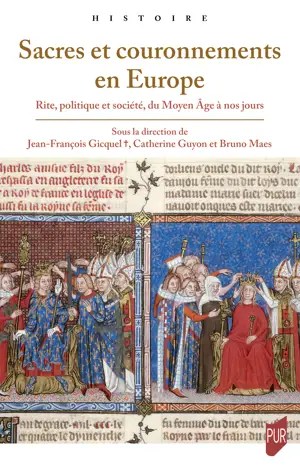
Publication – « Sacres et couronnements en Europe. Rite, politique et société, du Moyen Âge à nos jours », dir. Jean-François Gicquel, Catherine Guyon et Bruno Maes

Longtemps considérée en Europe comme la forme naturelle de gouvernement, la royauté a su évoluer dans la durée, comme le montrent les études réunies dans ce livre. Le roi n’exerçait un pouvoir légitime qu’après des rites de passage. Le sacre tirait sa force de ses racines bibliques (soulignant l’élection divine) et d’une conception eschatologique appelant le roi à conduire son peuple vers un royaume qui n’est pas de ce monde. Il a été longtemps une cérémonie mystique, dans le choeur clos d’une cathédrale, avant d’être « médiatisé » et de se prêter à la mise en scène fastueuse et festive. Si l’élection du roi n’a jamais totalement disparu, la succession

héréditaire s’est imposée, et la reine a été associée très tôt aux rites de l’onction et du couronnement. L’idée selon laquelle le roi tenait de ses sujets l’autorité qu’il avait sur eux, et non plus de Dieu, a été le grand retournement de la Révolution. Les monarchies constitutionnelles du XIXe siècle ont ainsi adopté des rites de substitution : serment devant les chambres représentatives, discours du trône. L’ouvrage fait ainsi l’histoire d’une monarchie sans cesse réinventée.

Avec le soutien de l’Université de Lorraine et du laboratoire CRULH.

Table des matières : ici

Informations pratiques :

Sacres et couronnements en Europe. Rite, politique et société, du Moyen Âge à nos jours, éd. Jean-François Gicquel, Catherine Guyon, Bruno Maes, Rennes, Presses universitaires de Rennes, 2023 ; 1 vol., 304 p. (Histoire). ISBN : 978-2-75358-783-0. Prix : € 25,00.

Source : Presses universitaires de Rennes

Publié dans Publications | Laisser un commentaire

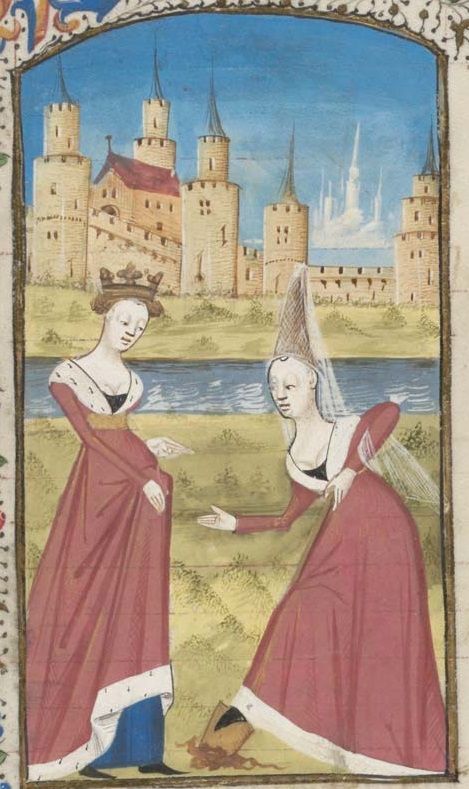
Appel à contribution – XIe congrès Christine de Pizan : « Ranger / déranger – Order and disorde »

Le XIe congrès Christine de Pizan, intitulé Ranger / déranger – Order and disorder, aura lieu à Genève et Lausanne, Suisse, les 19-22 juin 2024.

Trois axes de réflexion sont proposés.
Le premier « Rangement et dérangement, une polarité féconde » porte sur l’œuvre de Christine Pizan, en incitant à interroger les tensions entre les pulsions novatrices et transgressives des traités rédigés « pour la défense des Femmes » et la pensée politique de l’auteur qui se caractérise par une ferveur ordonnatrice dans un monde dérangé et subverti par les injustices.
L’axe « Postérités christiniennes : la longue vie d’une parole dérangeante »  s’inscrit dans la longue durée des prises de paroles féministes et invite à s’interroger sur la place qu’occupent ou que pourraient occuper les œuvres de Christine dans une généalogie littéraire des questions politiques suscitées par le féminisme sous toutes ses formes. 
Enfin, en proposant un axe intitulé « Appropriations contemporaines », nous aimerions susciter des interventions portant sur la portée contemporaine de l’œuvre de Christine de Pizan en accueillant des présentations sur des initiatives didactiques, des interventions artistiques basées sur l’œuvre de Christine, voire des performances artistiques inspirées par elles.

Les demandes d’inscription sont attendues pour le 1er juillet 2023.

Les propositions de titres accompagnées de résumés (150-200 mots) sont attendues pour le 30 octobre 2023 (chloe.gumy@unil.ch; estelle.doudet@unil.ch)

La Société internationale Christine de Pizan (https://societechristinedepizan.wordpress.com/la-societe/)  tient régulièrement des conférences rassemblant des spécialistes de l’autrice du XVe siècle ainsi que des chercheurs en littérature médiévale et renaissante. Une place importante est réservée aux présentations de travaux de jeunes chercheuses et chercheurs doctorant-e.s et postdoctorant.e.s.

The Eleventh Christine de Pizan World Congress, entitled Order and disorder  – ranger / déranger, will be organized in Geneva and Lausanne, Switzerland, June 19-22 2024.

It will propose three main perspectives.
The first one, « Tidying up and disturbing, a fruitful polarity », will focus on the work of Christine Pizan, encouraging us to question the tensions between the innovative and transgressive impulses of the treaties written « for the defense of women » and the political thought of the author, which is characterized by a fervor for order in a world disturbed and subverted by injustices. 
The axis Christine’s posterity: the long life of a disturbing work is part of the long duration of feminist statements and invites us to question the place that Christine’s works occupy, or could occupy, in a literary genealogy of the political questions raised by feminism in all its forms.  
Finally, by proposing an axis entitled « Contemporary appropriations », we would like to encourage interventions on the contemporary scope of Christine de Pizan’s work by welcoming presentations on didactic initiatives, artistic interventions based on Christine’s work, and even artistic performances inspired by them.


Registration before July 1 2023 (chloe.gumy@unil.ch; estelle.doudet@unil.ch)

Provisional titles and abstracts (150-200 words) expected before October 30 2023.

Source : Société Christine de Pizan

Publié dans Appel à contributions | Laisser un commentaire

Offre d’emploi – Lectureship in Later Medieval Archaeology (University of Reading)

Closes: 9th July 2023

We are seeking to appoint a Fixed Term 0.8 FTE Teaching Intensive Lecturer in Later Medieval Archaeology, to undertake teaching in the field of Later Medieval Archaeology, general teaching on our degree programmes (e.g. study skills and field classes) and associated academic administrative duties. This post is intended to run from 1st of September 2023 until 30th June 2026 (34 months). There are no specified hours of work but you will be required to work such hours as are necessary to carry out duties associated with the post. Overtime is not payable.

You will have:

  • Ability to effectively develop and deliver undergraduate and postgraduate modules on Later Medieval Archaeology and carry out associated assessment and administrative activities
  • Ability to supervise undergraduate and taught postgraduate research projects
  • Good organisational skills – able to manage and prioritise workload effectively
  • Good communication skills (written and oral), including ability to present in a clear and professional manner
  • Ability to use Microsoft Office (including MS Teams and/or equivalent)
  • PhD or equivalent in Archaeology or a related subject
  • Evidence of undertaking continuous professional development activities to enhance your professional skills and knowledge
  • Broad knowledge of Archaeology
  • Experience of undergraduate and postgraduate teaching in Archaeology
  • Experience of supervising undergraduate and taught postgraduate dissertation projects in Archaeology
  • Commitment to teaching and learning in Higher Education
  • Enthusiasm for enhancement and innovation in teaching and learning practice

You will be expected to have or be willing to work towards Fellow status with the Higher Education Academy.
The Department of Archaeology is part of the School of Archaeology, Geography and Environmental Science (SAGES). The School and the Department have an established reputation for delivering a diverse range of student-centred degree programmes at the cutting edge of disciplinary knowledge. Further information on the Department may be found at our web-site: http://www.reading.ac.uk/archaeology.

You will report to the Head of Department and also receive guidance from the Programme Directors, the Department Director of Teaching and Learning, the Head of School and the School Director of Teaching and Learning. You will be assigned a mentor who will provide support and guidance during the initial period of your appointment.

Interview date: 31/07/2023

Informal contact details 

Contact role: Head of Department
Contact name: Prof. Robert Hosfield
Contact phone: 0118 378 7632
Contact email: r.hosfield@reading.ac.uk

Alternative informal contact details

Contact role: Professor in Archaeology
Contact name:Prof. Aleks Pluskowski
Contact phone: +44 (0) 118 378 5267Contact email:a.g.pluskowski@reading.ac.uk

Applications from job seekers who require sponsorship to work in the UK are welcome and will be considered alongside all other applications. By reference to the applicable SOC code for this role, sponsorship may be possible under the Skilled Worker Route. Applicants should ensure that they are able to meet the points requirement under the PBS. There is further information about this on the UK Visas and Immigration Website.

The University is committed to having a diverse and inclusive workforce, supports the gender equality Athena SWAN Charter and the Race Equality Charter, and Champion LGBT+ rights organisation. Applications for job-share, part-time and flexible working arrangements are welcomed and will be considered in line with business needs.

Source : Jobs.ac.uk

Publié dans Offre d'emploi | Laisser un commentaire

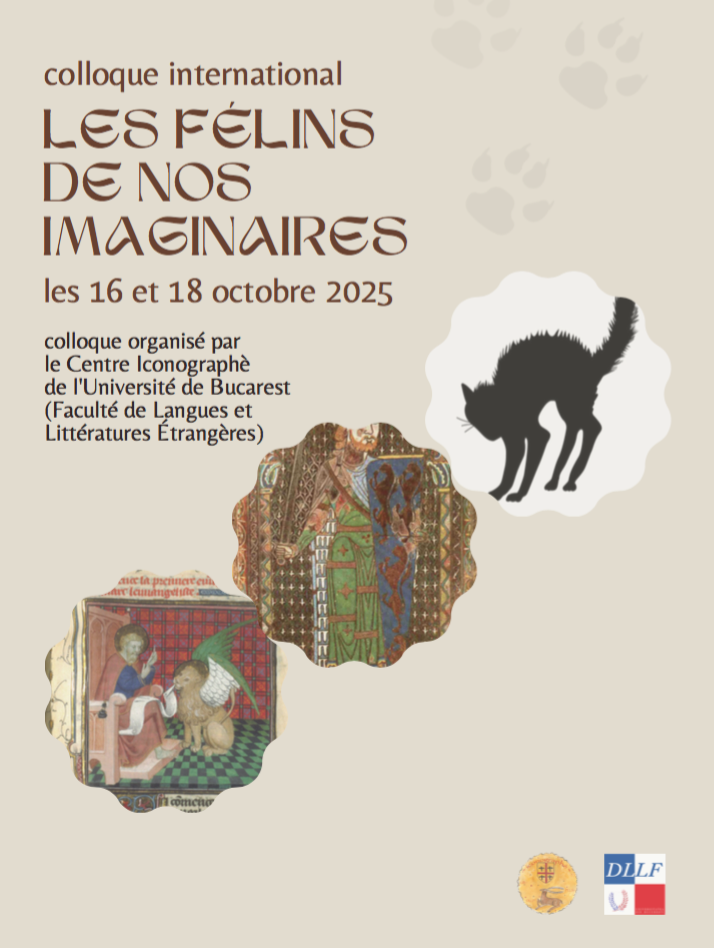
Appel à contribution – Les félins de nos imaginaires

colloque organisé par le Centre Iconographè de l’Université de Bucarest (Faculté de Langues et Littératures Étrangères)

LES 16-18 OCTOBRE 2025

L’imaginaire médiéval ménage aux félins une place de choix. Silhouettes marquantes de la fiction comme le lion, fidèle compagnon du chevalier arthurien Yvain, comme l’adroit chat Tibert du Roman de Renart ou enfin le diabolique Chat Palu, adversaire du roi Arthur, les félins occupent parfois le devant de la scène. Omniprésents aussi dans l’héraldique réelle ou imaginaire ils semblent être, entre autres, les signes identitaires préférés des rois angevins. Des léopards sur le bouclier avec lequel Geoffroy Plantagenêt est représenté sur sa plaque funéraire, premières armoiries occidentales stables connues à ce jour, en passant par la personnalité du roi Richard « Cœur de Lion » et par les décorations aux léopards sur le trône du roi-chevalier Erec, les félins semblent faire face subtilement au pouvoir Capétien ou bien l’accompagner de manière complémentaire.

Chargé de symbolique politique et sociale, le félin, et surtout le lion, se retrouve aussi dans la théologie médiévale christocentrique et les bestiaires dont la symbolique garde encore beaucoup de mystères à percer. Très importante dans les rêves prophétiques, qui fascinent aussi bien les chroniqueurs et les poètes, l’image du félin présente des particularités qui la détachent de celles des autres bêtes. Les représentations de ces animaux impressionnants et leur dimension symbolique sont encore à explorer pour le monde occidental mais aussi pour les espaces orientaux qui les ont vus naître et évoluer.

Ce colloque est consacré en priorité aux félins dans l’imaginaire du Moyen Âge et de la Renaissance, tels qu’ils apparaissent dans les textes et dans les images. Une section sera également consacrée à leur devenir pendant les siècles de l’Ancien Régime et à l’époque moderne. Leur réception dans la fiction et les films contemporains mérite aussi d’être explorée.

Le colloque aura lieu en format hybride. Pour les participants venant de l’étranger la prise en charge du voyage et du logement n’est pas garantie. Les propositions d’intervention, accompagnées d’un résumé de quelques lignes, sont à envoyer du 1er juin 2023 au 1er février 2024 aux adresses :

catalina.girbea@lls.unibuc.ro alexandra.ilina@lls.unibuc.ro alexandra.rizoiu@lls.unibuc.ro

Comité d’organisation : Catalina Girbea, Alexandra Ilina, Camelia Rizoiu (Université de Bucarest)

Comité scientifique : Martin Aurell (Université de Poitiers), Christine Ferlampin-Acher (Université de Rennes 2), Catalina Girbea (Université de Bucarest), Alexandra Ilina (Université de Bucarest), Alain Marchandisse (Université de Liège), Camelia Rizoiu (Université de Bucarest), Richard Trachsler (Université de Zurich)

Publié dans Appel à contributions | Laisser un commentaire