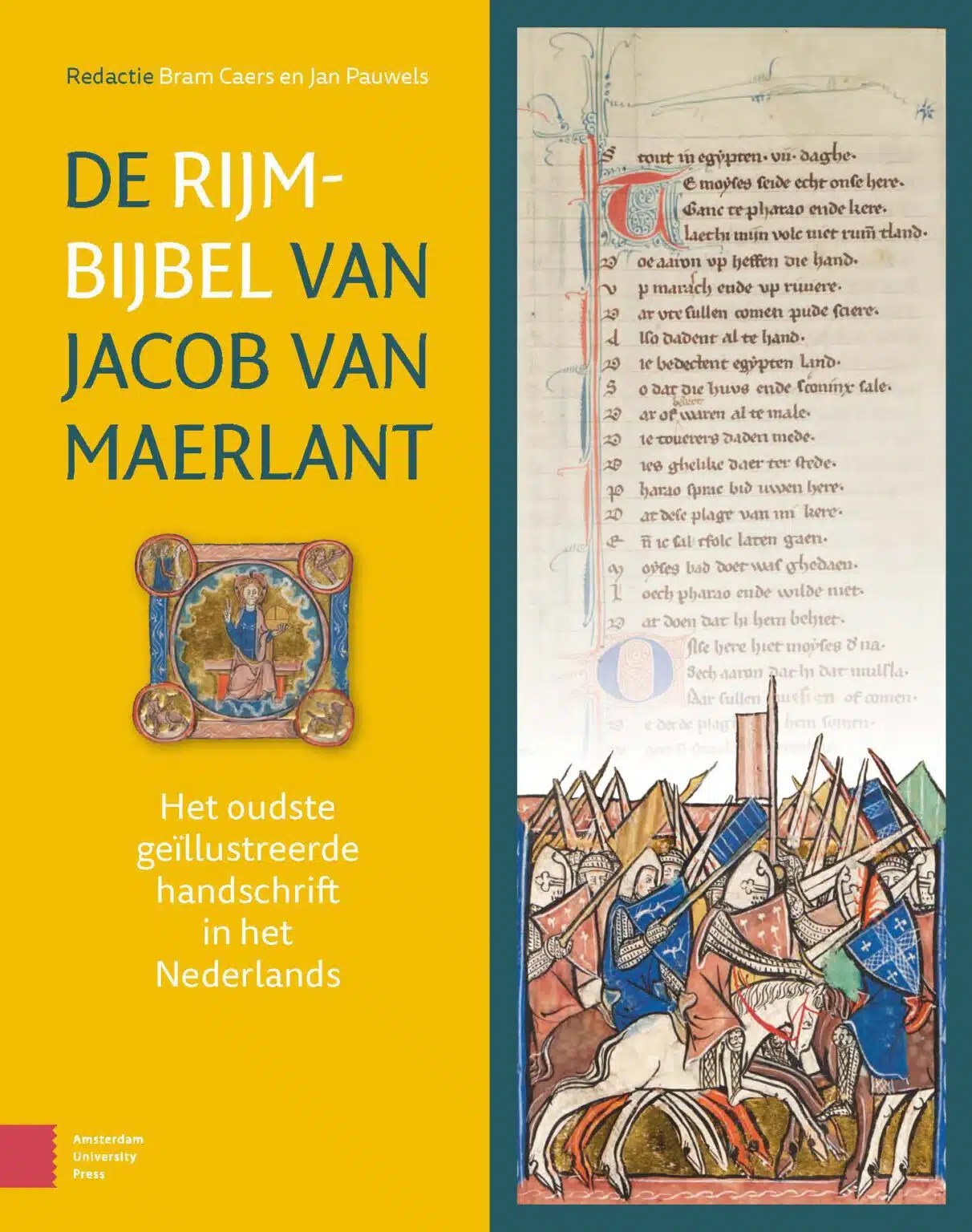
Journée d’étude – Jacob van Maerlant en mots et en images

Le mercredi 24 mai à 14h00

KBR – Auditorium, Mont des Arts 28, 1000 Bruxelles

Programme :

14:00 – Mot de bienvenue

Sara Lammens

14:10 – Vensters op en vanuit Maerlants Rijmbijbel [La Rijmbijbel de Maerlant : regards croisés]

Frits Van Oostrom avec réponse de Jozef Janssens

15:30 – Présentation du livre

Anja Van Leusden, Bram Caers & Jan Pauwels

15:45 – De Rijmbijbel in het KBR museum [La Rijmbijbel au KBR museum]

Ann Kelders

16:00 – Drink & visite libre du KBR museum

Source : Bibliothèque royale de Belgique

Publié dans Colloque | Laisser un commentaire

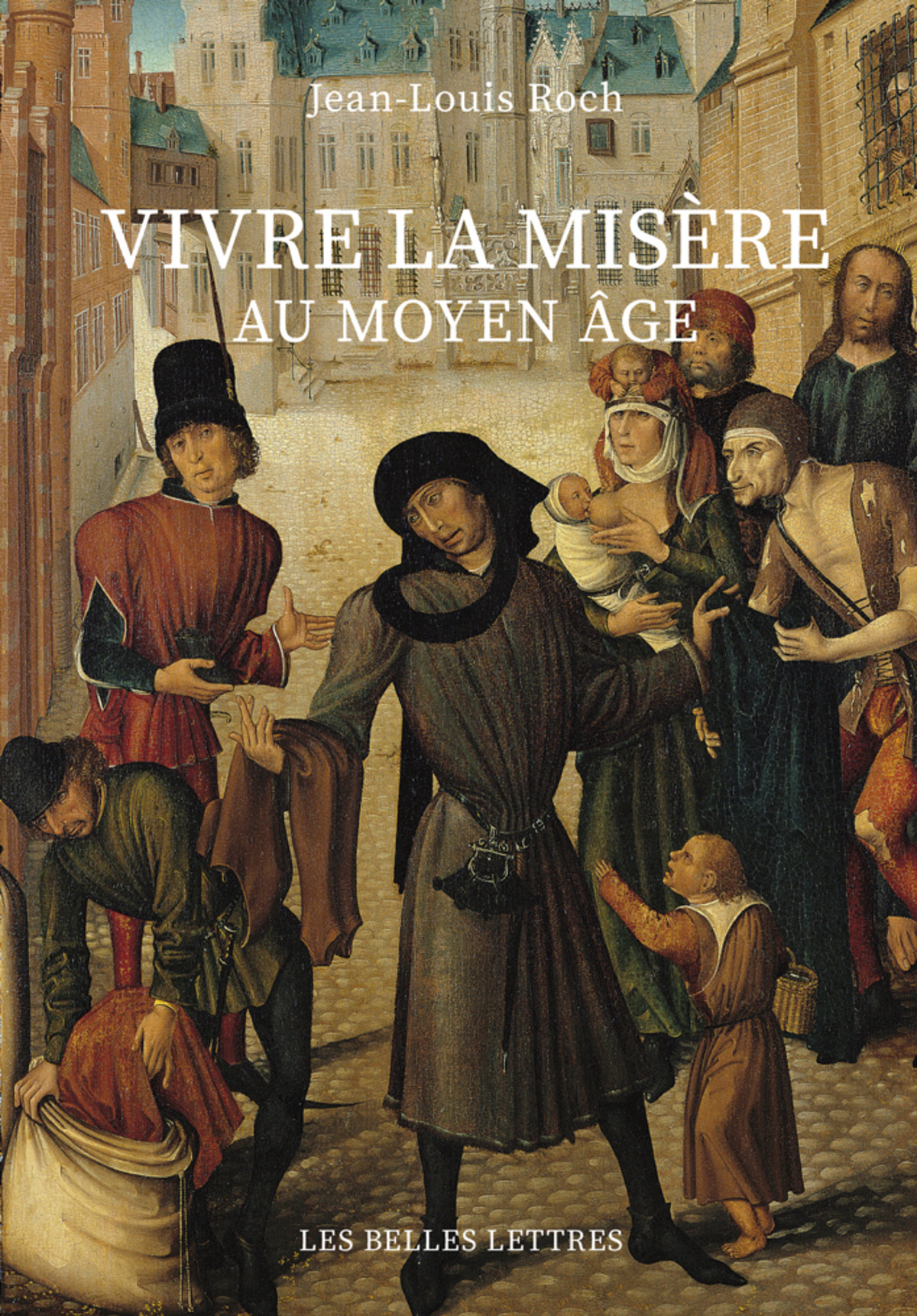
Publication – Jean-Louis Roch, « Vivre la misère au Moyen Âge »

Les sociétés anciennes vivaient sous la menace de la précarité, du chômage, des crises et des épidémies ; mais elles vivaient aussi le retour des famines et les rues des villes envahies de mendiants criant à la rage de la faim. Comment les hommes ont-ils vécu ces misères en France au Moyen Âge et à la Renaissance ?

Pour mener l’enquête, Jean-Louis Roch traque, recense et décrypte leurs mots : les lieux communs, les proverbes, et l’expression des sentiments, comme la honte ou la pitié. Il explore, à côté des archives, la littérature et en particulier le théâtre à destination populaire, les farces et les Mystères. Ce faisant, il multiplie les points de vue sur ces gueux sans souci, sans six sous : le travail précaire, l’obsession de la faim et de la ruse, la fraude et la violence, les mille et une stratégies de survie et les rêves de festins plantureux et du pays de Cocagne. Il raconte l’ambivalence du rapport aux pauvres, qui font rire au théâtre et que l’on chasse dans la rue : « truand », « maraud », « bélître », « gueux » ; des termes à l’étymologie mystérieuse.

En détaillant le vocabulaire de la misère à la fin du Moyen Âge, c’est l’ensemble de l’imaginaire social des humbles et un pan entier de la culture populaire qui se découvrent chemin faisant. Les mots des pauvres témoignent d’une très ancienne conception magique du monde, qui allait s’effacer lors de son désenchantement. Cela valait la peine d’aller voir à la fois du côté de la langue et du côté de l’histoire.

Maître de conférences honoraire, Jean-Louis Roch a enseigné l’histoire médiévale à l’université de Rouen.

Table des matières :

Introduction. Les mots aussi sont de l’histoire

Chapitre premier. Bons et mauvais pauvres au Moyen Âge
La révolution de la charité aux XIIe et XIIIe siècles
La fin du Moyen Âge : l’après peste

Chapitre II. Stratégies de survie et rêves des pauvres
Une économie d’expédients
L’omniprésence de la faim et de la ruse
La misère qui fabule
Le gueux sans souci et l’apologie de la pauvreté joyeuse

Chapitre III. La mélancolie et les pauvres
La tristesse et le désespoir
Les autres faces de la mélancolie
Le pauvre et la mélancolie
La maladie de faute d’argent
Comment sortir de la mélancolie

Chapitre IV. Le vocabulaire français de la pauvreté à la fin du Moyen Âge
La sphère du manque
La sphère de la douleur
La sphère de la pitié
La sphère de la Fortune
Meschant : le changement de sens
Triomphe et déclin de la Fortune
Du côté de la langue

Chapitre V. Aux marges de la nomenclature sociale : vrais et faux mendiants
Naissance d’un stéréotype
En ancien français (XIIe-XIIIe siècles)
Les truands mendiants et trompeurs
Les ribauds, les arlots et le pillage
Les coquins et la cuisine
En moyen français des termes plus spécifiques (XIVe-XVIe siècle)
Les hommes vagabonds
Les caymans fils de Caïn
L’ordre de bélître
Le maraud et le matou
Les bribeurs et leurs bribes
Les coquillards et les faux pèlerins
Les gueux
Les varigauds d’Amiens
Les caignardiers et le triomphe de la paresse
Les trucheurs : les mots de l’argot
L’évolution du paradigme du faux mendiant

Chapitre VI. Les mots et les gestes de l’aumône
Comment éconduire les mendiants importuns
De la bonne manière de faire l’aumône
La patience et l’inégalité
La moquerie rituelle
Un moment dans l’histoire de la pitié

Chapitre VII. L’Église et l’exclusion des pauvres
Au pays des sans-nom
Pauvreté volontaire et pauvreté involontaire
Le Mirouer des enfans ingratz
Conclusion

Chapitre VIII. Au-delà du Moyen Âge : lectures
Les fils de Caïn : les littératures de la gueuserie
Pauvreté masculine, pauvreté féminine
Conclusion. Des vocabulaires dans l’histoire

Lexique
Liste des locutions, maximes et proverbes
Bibliographie

Informations pratiques :

Jean-Louis Roch, Vivre la misère au Moyen Âge, Paris, Les Belles Lettres, 2023 ; 1 vol., 260 (Histoire, 156). ISBN : 978-2-25145-408-5. Prix : € 25,50.

Source : Les Belles Lettres

Publié dans Publications | Laisser un commentaire

Colloque – Religion and Economy in the Middle Ages

The annual conference of the « Arbeitskreis spätmittelalterliche Wirtschaftsgeschichte » intends to discuss the relationship between religion and economy in a global perspective. Apart from papers on the Christian Middle Ages, there will be contributions on Islamic and Jewish contexts, as well as comparative studies on economic contacts in the interreligious sphere. Three thematic complexes constitute the focus of interest: the role of religious norms, the interdependence between religious discourse and economic activities, and the role of the economy in interreligious contacts.

Registration until 2 May 2023 to Aileen Pilger (aileen.pilger@uni-muenster.de). It is possible to follow the conference via zoom.

Programme :

Thursday, 4 May

15:30 Colin Arnaud, Christian Scholl, (Münster): Introduction
16:00 Tommaso Vidal (Parma): Farming religion: Praxis and Ideology of Late-Medieval Assistance (North-eastern Italy, c. 1350-1450)
16:45 Ana Cláudia Silveira (Lisbon): The Franciscan Presence in a Medieval Port Town: Setúbal in the 15th and 16th Centuries

17:30 coffee break

Keynote Lecture:
18:00 James Davis (Belfast): A Pulpit in the Marketplace? The Influence of the Church on Medieval Retail Trade

Friday, 5 May

9:00 Tim Weitzel (Regensburg): Gebet als Kapital
9:45 Thomas Frank (Pavia): The Economy of the Miracle (Christian Middle Ages)

10:30: coffee break

11:00 Dieter Friedrichs (Duisburg-Essen): Ecclesia und Encomienda. Wirtschaftliche Ausbeutung unter religiöser Legitimation in der Conquista von Mexico-Tenochtitlan
11:45 Francesco Gusella (Münster): The “Spices and Christians” Dilemma: Economistic and Messianic Views on Indo-Portuguese Art (1890s-1990s)

12:30 lunch break

14:00 Jasid Abdul Kader (Vienna): Beispiele islamischer Normen in Bezug auf wirtschaftliche Handlungen (Maghreb, 9. bis 15. Jahrhundert)
14:45 Danny Grabe (Jena): What about the Cheese? Jewish-Christian Cooperation in Agriculture and Crafts in the 11th Century

15:30 coffee break

16:00 Christoph Cluse (Trier): Excommunication for Debt in the Middle Ages – Traces from the Dioceses of the Empire

Saturday, 6 May

9:00 Laura Righi (Bologna): Administering usury: Credit and interest rates between Canon law and civic legislation (12th-14th c.)
9:45 Norbert Oberauer (Münster): The Islamic prohibition of interest and its « circumvention »: On the history of a legal stratagem

10:30 Coffee break

11:00 Tanja Skambraks (Mannheim): The relationship between economic ethics, law and practice with a focus on late medieval microcredit
11:45 final discussion

Informations pratiques :

Christian Scholl and Colin Arnaud (WWU Münster) in cooperation with the Cluster of Excellence “Religion and Politics” and the « Arbeitskreis spätmittelalterliche Wirtschaftsgeschichte »

Cluster of Excellence “Religion and Politics”

Münster – 04.05.2023 – 06.05.2023

Source : H-Soz-Kult

Publié dans Colloque | Laisser un commentaire

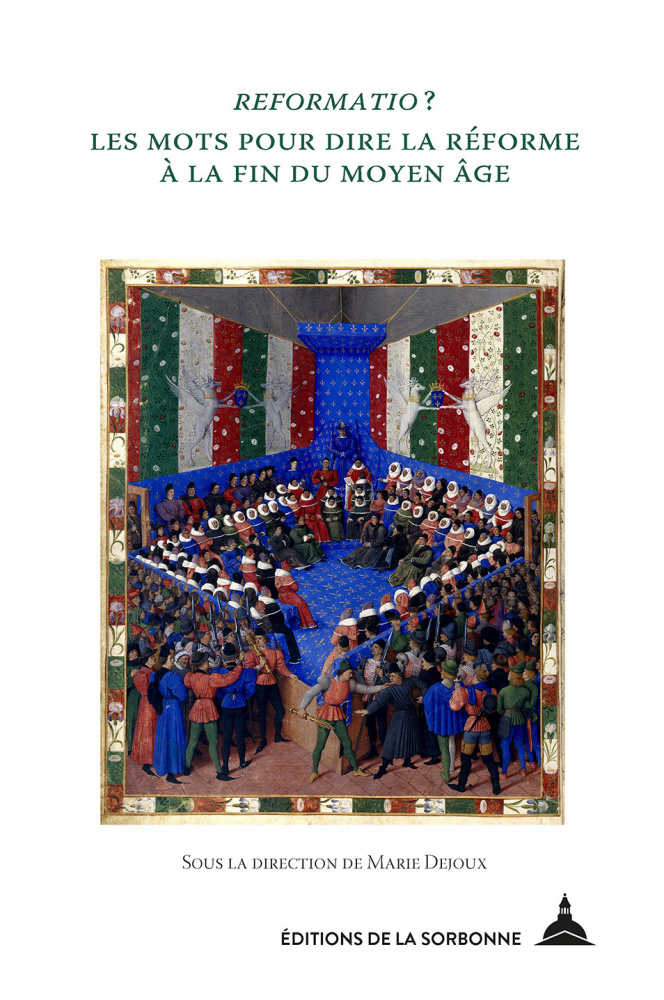
Publication – « Reformatio ? Les mots pour dire la réforme à la fin du Moyen Âge », dir. Marie Dejoux

Incantatoire, le terme « réforme » oriente et sature discours et représentations politiques actuels, à l’opposé du Moyen Âge qui semble avoir fait un usage extrêmement limité de la forme longue du terme prévalant à l’époque : la reformatio. L’histoire du Moyen Âge occidental est pourtant tout entière narrée selon une trame « réformiste » : rois, papes ou évêques plus ou moins « réformateurs », réformes carolingienne, clunisienne, grégorienne, cabochienne, etc. sont autant de formules qui ont connu, ou connaissent encore, un vif succès, sans que le mot « réforme » ne soit toujours clairement défini et presque jamais historicisé. Que bon nombre de « réformateurs » médiévaux se soient définis comme des conservatores, des conservateurs, devrait pourtant nous interroger, d’une part, sur l’imaginaire politique que nous projetons sur leurs expériences institutionnelles, et, d’autre part, sur la direction et le sens que ces derniers entendaient originellement donner à leur entreprise.

Régressive, la démarche qui sous-tend cet ouvrage collectif vise ainsi à retracer l’histoire d’un terme aujourd’hui à succès – la réforme – et à identifier un vocabulaire « réformateur » proprement médiéval. Sans verser dans l’écueil du nominalisme et en laissant sagement de côté la « réforme » comme phénomène historique, les contributions qu’il rassemble resteront plus résolument au ras des mots, et, partant, au plus près des représentations politiques médiévales, tout en interrogeant les usages (et les mésusages) de ce paradigme par les médiévistes.

Les auteurs : Alexandra Beauchamp, Gaëtan Bonnot, Marie Dejoux, François Foronda, Claude Gauvard, Anne Lemonde, Carole Mabboux, Aude Mairey, Gisela Naegle, Nicolas Perreaux, Émilie Rosenblieh, Amable Sablon du Corail.

Table des matières :

Introduction

Marie Dejoux

prologue

Une enquête de masse sur le vocabulaire réformateur avant le XIIIe  siècle

Après la Chute, reformer le monde. Réflexions sur la sémantique du lexique dit « réformateur »

Nicolas Perreaux

première partie

Reformatio, significations et contextes d’apparition d’un lemme rare

Au nom de la « réforme » ?

La réunion des assemblées dans la Couronne d’Aragon, fin XIIe-XIVe siècle

Alexandra Beauchamp

À la recherche de la reformatio regni dans les royaumes de France et d’Angleterre au XIIIe siècle

Marie Dejoux

La réforme antipontificale de l’Église dans le procès conciliaire d’Eugène IV (Bâle, années 1430)

Émilie Rosenblieh

Reformatio et vocabulaire réformateur dans la production écrite de l’Italie communale (XIIIe-XIVe siècle)

Carole Mabboux

« Pour la multitude d’officiers qui ont esté de par nous ordonnez ou temps passé… ». Discours royaux autour de la « réformation » du nombre des officiers aux XIVe et XVe siècles

Amable Sablon du Corail

deuxième partie

Par-delà la reformatio, quel vocabulaire pour dire la réforme au Moyen Âge ?

L’inscription de la « réforme » à l’ordre du jour politique du royaume de Castille

François Foronda

La principauté delphinale au XIVe siècle, laboratoire de la « réforme » ?

Anne Lemonde

« Advisé fust par les trois estatz que consideré l’estat ou le royaume est » Pouvoir royal et réforme dans les ordonnances consécutives aux états de langue d’oïl (1355-1358)

Gaëtan Bonnot

Reformatio in absentia. Quels champs lexicaux pour évoquer la réforme en Angleterre à la fin du Moyen Âge ?

Aude Mairey

épilogue

La réforme dans la tradition historiographique allemande

De la réformation à la Réforme : l’historiographie de la « Reichsreform »

Gisela Naegle

Conclusion

Claude Gauvard

Index des personnes et des lieux

Informations pratiques :

Reformatio ? Les mots pour dire la réforme à la fin du Moyen Âge, éd. Marie Dejoux, Paris, Éditions de la Sorbonne, 2023 ; 1 vol., 324 p. (Histoire ancienne et médiévale). ISBN : 979-10-351-0882-3. Prix : € 25,00.

Source : Éditions de la Sorbonne

Publié dans Publications | Laisser un commentaire

Offre d’emploi – Lecturer in Medieval Studies (Canterbury Christ Church University)

Closes: 5th May 2023

Applications are invited for a fixed-term Lectureship in Medieval Studies (24-month cover for a Leverhulme Major Research Fellowship).

The successful candidate will join the School of Humanities and Educational Studies, with its excellent track record of high-quality teaching, and of supporting a thriving research and postgraduate culture. The School places a strong emphasis on the further development of its collaborative working culture, on the design and delivery of cutting-edge, inclusive and interdisciplinary curricula, and on the strengthening of its relationships with external stakeholders – especially in the cultural and heritage sector – so as to enhance the student experience and its graduates’ employability.

For further details about the School, please visit: School of Humanities and Educational Studies – Canterbury Christ Church University

The role

The School of Humanities and Educational Studies seeks to appoint a Lecturer in Medieval Studies to contribute to the delivery and the development of our Humanities courses, both at undergraduate and postgraduate level. The ideal candidate will have research and/or teaching experience in Medieval Studies, preferably with a complementary specialism in Digital Humanities / Environmental Humanities / Global History. The successful candidate will be expected to convene and/or deliver modules at all levels in their area of expertise, as well as to contribute to team-teaching, as appropriate.

A Ph.D. in a Humanities subject, with suitable expertise / broad understanding of current developments in Medieval Studies, and relevant complementary specialism, are essential requirements, as is previous experience of HE teaching. An HE teaching qualification or fellowship of Advance HE would also be advantageous, along with the demonstrable ability to establish and develop connections with external stakeholders, especially in the cultural industries and heritage sector.

Canterbury Christ Church University truly welcomes fresh perspectives and new voices. We want you to bring the real you to work, so we are committed to building a genuinely inclusive working environment where everyone is welcomed and where everyone can have a true sense of belonging. Our spirit of community will help us to eliminate discrimination and will enable us all to thrive in a culture that is underpinned by fairness and justice. We therefore seek people to join us who will proactively support and shape this aim and contribute in their own unique way. If this is you, then we are waiting to hear from you …. #yourCCCU.

How to apply

Start date for applications:  5th April 2023
Interviews are to be held:   ASAP after close of application

Confidential informal enquiries may be made to Dr Stefania Ciocia on stefania.ciocia@canterbury.ac.uk (strictly no agencies, thank you) quoting reference number REQ04078

Please ensure you include contact details of two employment referees in your application, one of which must be your current/ most recent line manager.

Please note applications must be made online via the University website; details sent directly via email cannot be considered.

Source : Jobs.ac.uk

Publié dans Offre d'emploi | Laisser un commentaire

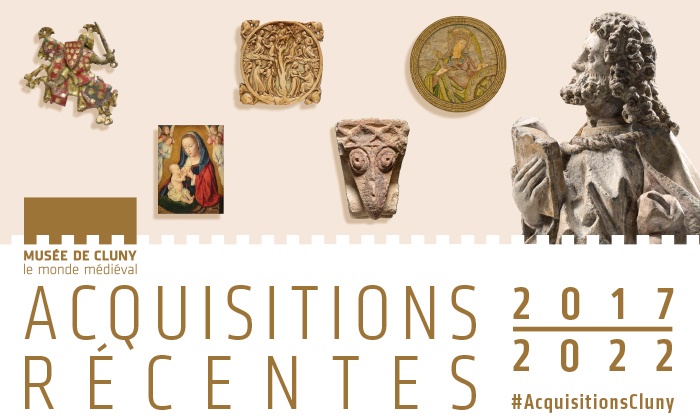
Exposition – Musée de Cluny : Acquisitions récentes : 2017 – 2022

Du 18 octobre 2022 au 25 juin 2023

L’enrichissement des collections est une mission essentielle du musée. Cette exposition, présentée dans la nouvelle salle d’actualités du musée, revient sur les 43 œuvres acquises au cours des six dernières années. La plupart de ces sculptures, peintures, enluminures ou encore œuvres textiles sont présentées pour la première fois ici. 

Pourquoi acquérir une œuvre plutôt qu’une autre ? Quels sont les moyens à la disposition d’un musée national pour compléter ses collections ? C’est à ces questions qu’entend répondre l’exposition. 

Elle est aussi l’occasion de présenter une œuvre exceptionnelle, reconnue d’intérêt patrimonial majeur et en cours d’acquisition par le musée. Ce Christ crucifié de Giovanni Pisano est un véritable chef d’œuvre de l’art italien des années 1270 et il est ici exposé pour la toute première fois en France.  

Retrouvez les dates de l’exposition et réservez votre billet ici.

Retrouvez nos anciennes présentations temporaires ici.

Informations pratiques :

Musée de Cluny, Musée national du Moyen Âge

Entrée du musée par le 28 rue Du Sommerard, 75005 Paris

Adresse administrative : 6 place Paul Painlevé, 75005 Paris

Tél : 01 53 73 78 00 – 01 53 73 78 16

Mail : contact.musee-moyenage [at] culture.gouv.fr

Le musée est ouvert tous les jours sauf le lundi de 9h30 à 18h15. Fermeture de la billetterie à 17h30. Début de l’évacuation des salles à 17h45.

Source : Musée de Cluny

Publié dans Exposition | Laisser un commentaire

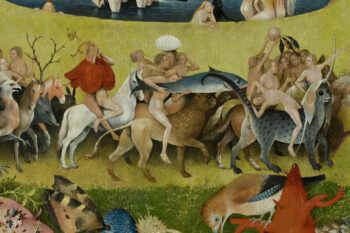
Colloque – Defining boundaries: Jheronimus Bosch, his workshop, and his followers

Jheronimus Bosch Art Center, ‘s-Hertogenbosch, Netherlands

May 11-13, 2023

For more information, please send an e-mail to conference@jheronimusbosch-artcenter.nl

Jheronimus Bosch remains an exceptionally popular painter and draughtsman. His death in 1516 was commemorated five years ago with major exhibitions in ‘s-Hertogenbosch and in Madrid, which together drew well over one million visitors, an astonishing success. The scholarly interest in the master from ‘s-Hertogenbosch typically focuses on the often-peculiar iconography of some of his works, which historians of art have tried to decipher since the late 19th century. Ever since, the literature on Bosch has grown exponentially. For the scholarly discourse of these paintings and drawings, whether focused on iconography, Bosch’s patrons, or his socioeconomic position in his hometown of ‘s-Hertogenbosch, the precise definition of the boundaries of the oeuvre remains a critically important foundation.

The total number of works attributed to Bosch has changed significantly through time. As was the case for many other artists, in early scholarship this group of works was deemed considerably larger than it is now. The often translated and reprinted monographs on Bosch by Charles de Tolnay (1937), Ludwig von Baldass (1943), and Jacques Combe (1946) accepted many more works as “autograph Bosch” than we do today. The monograph by Roger Marijnissen (1987) was an important turning point in this regard, in that it generally took a more critical stand and called for systematic technical research to provide clearer boundaries between the works by Bosch, by his workshop, and by followers. In 2012, Fritz Koreny only accepted 10 paintings and 11 drawings as autograph. The Bosch Research and Conservation Project, in 2016, published the findings from its six-year study in a two-volume monograph. The BRCP considers 21 paintings and 20 drawings to be by Bosch. But, as this conference will show, the discussions about attributions have not ceased since, and the boundaries between the works by Bosch and by his workshop, or between works by the workshop and by his followers, are sometimes hard to draw. In 26 presentations, the speakers at this conference will share the most recent scholarly insights on many of these topics. 

Defining boundaries: Jheronimus Bosch, his workshop, and his followers will be the fifth international conference organized by the Jheronimus Bosch Art Center (JBAC), after Jheronimus Bosch Revealed: The Painter and His World (2001); Jheronimus Bosch: His Sources (2007); Jheronimus Bosch: His Patrons and His Public (2012) and Jheronimus Bosch: His Life and His Work (2016). The conferenceis supported by the Jheronimus Bosch Art Center, the City of ’s-Hertogenbosch, Huis van Bosch, and Radboud University Nijmegen. The members of the Conference Committee (Prof. Dr. Ron Spronk, chair, Prof. Dr. Jos Koldeweij, and Dr. Eric De Bruyn) received critical assistance from Drs. Willeke Cornelissen and Mr. J. Timmermans, Chair of the Board of the Jheronimus Bosch Foundation. 

The proceedings of Defining boundaries: Jheronimus Bosch, his workshop, and his followers will be published by the Jheronimus Bosch Art Center. If you would like to be kept informed about the availability of this publication, please send an email to conference@jheronimusbosch-artcenter.nl.

Programme : here

Informations pratiques :

The full conference fee is €300 (€ 150 for students). 

In addition to access to all presentations, the conference fee includes the reception at City Hall on May 11, catered lunches on May 12 and 13, hot beverages during the breaks, the conference dinner on May 12, farewell drinks on May 13, and an (optional) exclusive visit to the House of Bosch.

Participants can also opt to attend single days:
May 11 € 50 (including reception at City Hall, students € 25)
May 12 € 150 (including lunch and conference dinner, students €75)
May 13 € 150 (including lunch and farewell drink, students €75)

Please register via emailing conference@jheronimusbosch-artcenter.nl.  

LocationThe international knowledge and experience center Jheronimus Bosch Art Center is a unique tribute to the artist Jheronimus Bosch, who was born around 1450 and died in ‘s-Hertogenbosch in 1516. Visitors can discover and explore the artist, his work and his life here.

Jheronimus Bosch Art Center
Jeroen Boschplein 2
5211 ML ’s-Hertogenbosch
(+31) (0)73 612 68 90
info@jheronimusbosch-artcenter.nl

Source : Jheronimus Bosch Art Center

Publié dans Colloque | Laisser un commentaire

Offre d’emploi – Associate Lecturer (Education Focused) in Middle Eastern and Islamic History, c. 600-1700 (University of St Andrews)

Closes: 24th April 2023

Start Date: 1 September 2023 Fixed term: 16 months (1 September 2023 to 31 December 2024)

We wish to appoint an Associate Lecturer (Education Focused) within the School of History. The position will be full-time (36.25 hrs per week), on a fixed term contract held from 1 September 2023 to 31 December 2024.  

You will be a scholar with a growing international reputation in the Islamic history of the Middle East (c. 600-1700) and a commitment to delivering high-quality teaching. The successful candidate will be expected to have a range of interests, to be active in research that strengthens or complements that of the School, and to be capable of teaching the subject to students from a wide range of backgrounds.   

Candidates should hold a PhD in a cognate discipline. Excellent teaching skills across a wide chronological range and an interest in promoting knowledge exchange are essential. In addition to near native-level proficiency in English, candidates should have an excellent command of Classical Arabic and/or Persian.  

Application Details

In addition to the application form, candidates are asked to submit: a covering letter detailing how their previous experience qualifies them for the post; a CV including a list of publications; and the names of three referees.  

The application must not exceed a total of 10 pages of A4.

Informal enquiries can be directed to the Chair of Middle Eastern History, Dr Dimitri Kastritsis, at dk19@st-andrews.ac.uk.  

Applications are particularly welcome from people from the Black, Asian, Minority or Ethnic (BAME) community and with other protected characteristics who are under-represented in academic posts at the University.  

We also welcome applications from candidates who have had recent career breaks or other non-linear career paths (we invite you to describe any such circumstances in your covering letter).  

Equality, diversity and inclusion are at the heart of the St Andrews experience. We strive to create a fair and inclusive culture demonstrated through our commitment to diversity awards (Athena Swan, Carer Positive, LGBT Charter, Race Charters and Stonewall). We celebrate diversity by promoting profiles of BAME, LGBTIQ+ staff and supporting networks including the Staff BAME Network; Staff with Disabilities Network; Staff LGBTIQ+ Network; and the Staff Parents & Carers Network. Full details available online: https://www.st-andrews.ac.uk/hr/edi/                             

Please quote ref: AOAC1954RXSB                             

Further Particulars: AOAC1954RXSB FPs.doc

Publié dans Offre d'emploi | Laisser un commentaire

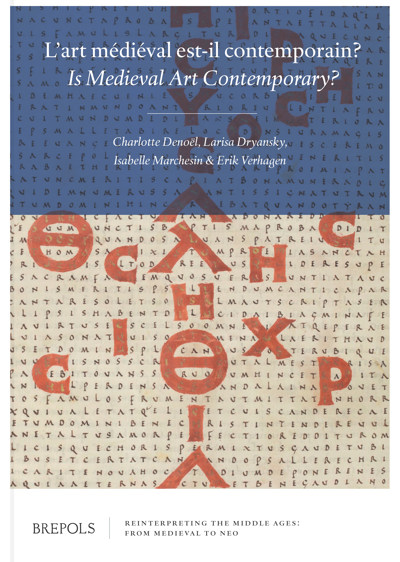
Publication – « L’art médiéval est-il contemporain ? / Is Medieval Art Contemporary? », dir. Charlotte Denoël, Larisa Dryansky, Erik Verhagen, Isabelle Marchesin

This publication brings together essays by scholars of both medieval and contemporary art, offering a cross-disciplinary approach of both periods. It investigates how contemporary artists and contemporary art historians perceive medieval art, and, reciprocally, how medieval art historians envisage the echoes of medieval artforms and esthetics in contemporary art. The volume follows on from the symposium organized in conjunction with the exhibition « Make it New: Carte Blanche à Jan Dibbets » that was held at the Bibliothèque Nationale de France (Paris) in 2019, and which presented side by side Hrabanus Maurus’s De Laudibus Sanctae Crucis (In Praise of the Holy Cross), a masterpiece of Carolingian art, with works by artists associated with conceptual art, mininimal art, and land art.

How and why has medieval art, and particularly early medieval art, inspired contemporary artists since the 1950s? What has medieval art contributed to contemporary art? How has medieval art’s treatment of figures, color, space, geometry, and rhythm provided inspiration for contemporary artists’ experiments with form? In what way does contemporary artists’ engagement with the topics of formatting, writing, semiosis, mimesis, and ornamentation draw inspiration from medieval models? To what extent and in what sense are the notions of authorship and performativity relevant for understanding conceptions of artmaking in both periods? Rather than focusing on medievalism and citational practices, or on the theory of images—both approaches having already produced an important body of comparative readings of medieval and contemporary art—the essays in this volume address the question of medieval art’s contemporaneity thematically, through three trans-chronological topics: authorship, semiosis and mathematics, and performance. Engaging the artists’ works as well as their writings, these studies conflate conceptual and esthetic perspectives.

Charlotte Denoël est archiviste paléographe, docteur en histoire de l’art et conservatrice en chef au Département des manuscrits de la Bibliothèque nationale de France où elle dirige le service des manuscrits médiévaux.

Larisa Dryansky est maître de conférences en histoire de l’art contemporain, Sorbonne Université.

Isabelle Marchesin, maître de conférence habilitée à diriger les recherches à l’Université de Poitiers, est détachée à l’Institut national d’histoire de l’art comme Conseillère scientifique pour l’art du IVe au XVe siècles.

Erik Verhagen est Professeur en histoire de l’art contemporain, Université Polytechnique Hauts-de-France.

Table des matières :

Préface
Charlotte Denoël, Larisa Dryansky, Isabelle Marchesin et Erik Verhagen

Partie 1. Introduction

Au-delà des périodisations : Parcours passés et futurs potentiels
Nancy Thebaut

Partie 2. Auctoritas/authorship

Qui était Jean Fouquet pour François Robertet ? Une question d’auctorialité dans l’art de la fin du Moyen Âge
Elliot Adam
L’artiste conceptuel à son pupitre
Valérie Mavridorakis
Art conceptuel et scolastique : le Chêne de Michael Craig-Martin est-il thomiste ?
Benjamin Riado

Partie 3. Signe et mathématiques

“All form is a process of notation”: Hrabanus Maurus’s exemplativist” art
Aden Kumler’
Les nombres de la forme et les formes du nombre. Essai sur les carolingiens et l’abstraction.
Isabelle Marchesin
Abstraction in Medieval Art: The Chiasm in Hagia Sophia
Bissera Pentcheva
Hollis Frampton, médiéval
Larisa Dryansky

Partie 4. Performance

La conversion du précieux sang : Gina Pane et la mystique médiévale
Janig Bégoc
Automata, Kineticism, and Automation: An Oblique History of Animacy in the Art of the Long 1960s
Roland Betancourt

Coda
Zoe Leonard’s Suitcases
Amy Knight Powell

Liste des contributeurs

Informations pratiques :

L’art médiéval est-il contemporain ? / Is Medieval Art Contemporary?, éd. Charlotte Denoël, Larisa Dryansky, Erik Verhagen, Isabelle Marchesin, Turnhout, Brepols, 2023 ; 1 vol., 247 p. (Reinterpreting the Middle Ages, 1). ISBN : 978-2-503-59973-1. Prix : € 85,00.

Source : Brepols

Publié dans Publications | Laisser un commentaire

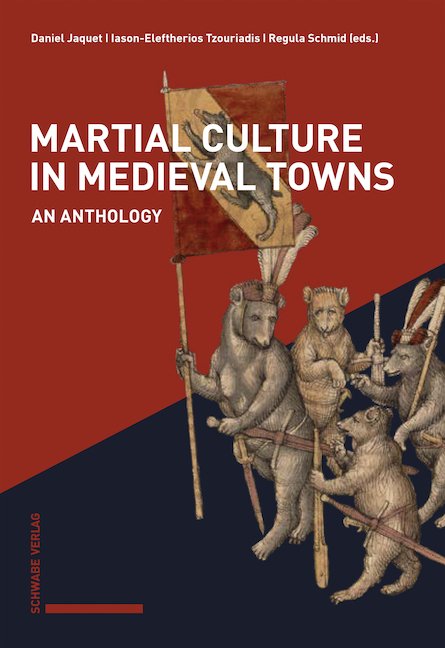
Publication – « Martial Culture in Medieval Towns. An Anthology », éd. Daniel Jaquet, Iason-Eleftherios Tzouriadis, Regula Schmid

Nineteen short essays introduce the reader to the multifaceted martial culture of the pre-modern European town. The stories in this richly illustrated anthology describe the ownership, handling, symbolism, use, and materiality of medieval weapons in their social, political, and cultural context. Originally contributions to the research blog “Martial Culture in Medieval Towns”, the selected and re-worked essays were edited to accompany the exhibition “Alarm! Culture, ownership, and use of weapons in the late medieval town” (Museum Altes Zeughaus / Old Arsenal Museum. Solothurn, 2022).

Daniel Jaquet is senior researcher at the University of Bern for the SNSF project Martial Culture in Medieval Towns. He holds a PhD in medieval history (University of Geneva, 2013) and specializes in cultural history of martial practices at the end of the Middle Ages.

Iason-Eleftherios Tzouriadis is the online blog editor for the «Martial Culture in Medieval Towns» project. His research examines arms and armour typologies, function and the perception of these objects as cultural artefacts in various martial contexts.

Regula Schmid is professor of medieval history at the Department of Medieval History at the University of Bern. She is the lead researcher of the SNSF project Martial Culture in Medieval Towns, and has published extensively on urban political, martial, and memorial culture. Her current research focuses on urban militias and the impact of war on society, politics, and everyday life in late medieval Switzerland.

Table des matières : ici

Informations pratiques :

Martial Culture in Medieval Towns. An Anthology, éd. Daniel Jaquet, Iason-Eleftherios Tzouriadis, Regula Schmid, Bâle–Berlin, Schwabe Velarg, 2023 ; 1 vol., 188 p. ISBN : 978-3-7965-4713-3. Prix : CHF 34,00.

Source : Schwabe Verlag

Publié dans Publications | Laisser un commentaire