Publication – Franziska van Buren, « Aristotle and the Ontology of St. Bonaventure »

Contemporary scholarship on Bonaventure has characterized him as the Neo-platonic foil to the Aristotelianism of his day. The present book, however, shows a Bonaventure who is highly enthusiastic about utilizing the philosophy of Aristotle and who centers much of his philosophical project around interpreting and understanding the texts of Aristotle. Two goals are central to this book. The first is to shed light on Bonaventure’s greatly understudied ontology and theory of forms, demonstrating how his philosophical system is an important and unique alternative to other medieval Aristotelian systems. The second is to establish, more broadly, how Bonaventure’s interpretation of Aristotle is a resource which should be mined for contemporary efforts in thinking about and reading Aristotle himself.
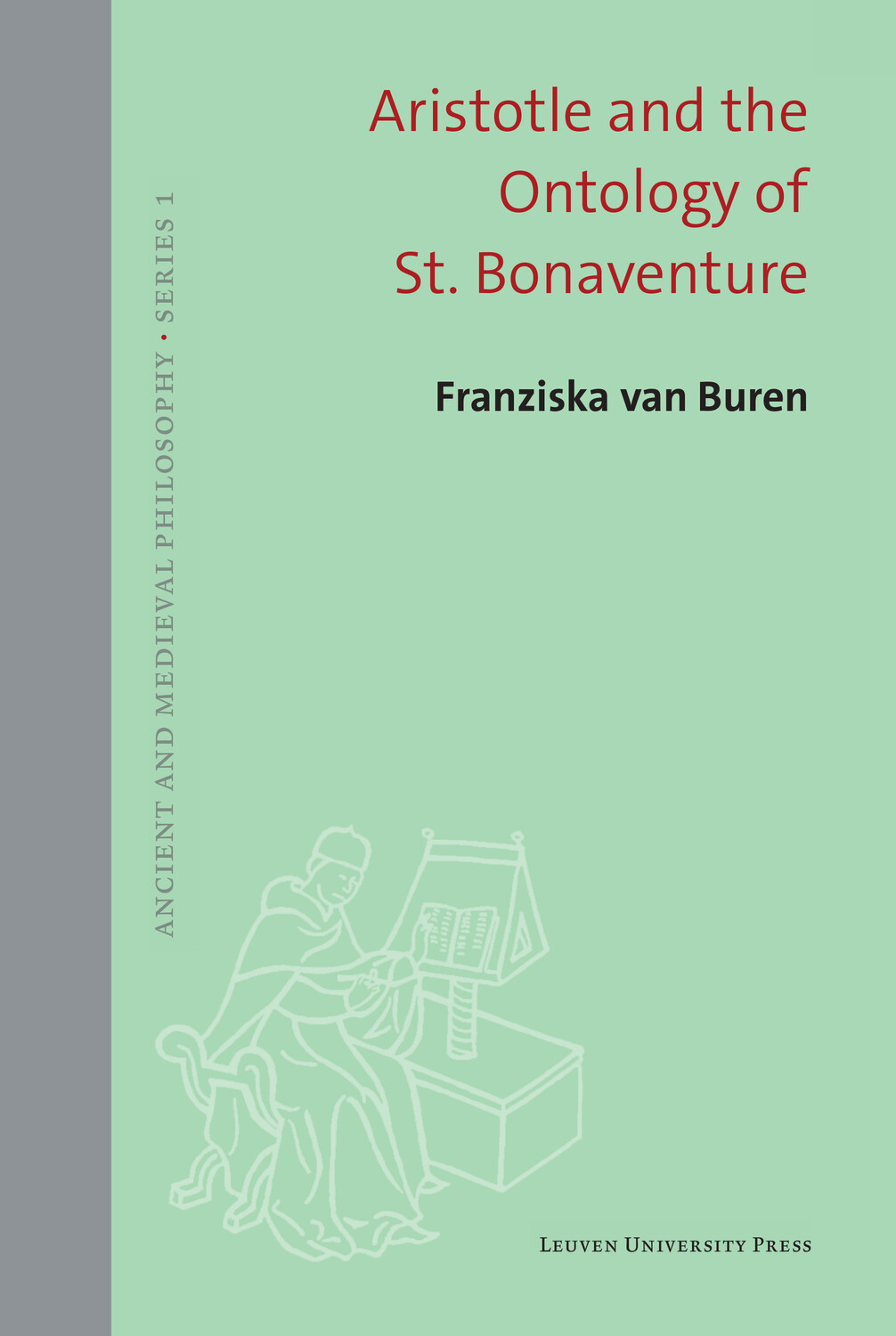
Table des matières :

Acknowledgements 

Abbreviations for Editions and Translations of Primary Texts

Introduction 

Chapter 1. Historical Background 

1. The Neoplatonic via Proclus: The One and the Many 

2. The Problem of Neoplatonism in the Christian Tradition 

3. Aristotle via Avicenna and the Early Franciscan Tradition, or What Exactly Is Aristotelianism? 

Chapter 2. The Theory of Forms in Thomas Aquinas 

1. The Structure of Creation 

2. Participation 

3. Participation in the Fourth Way? 

4. Participation in Exemplar Causes? 

5. Conclusion 

Chapter 3. The Controversy: Bonaventure and Aristotle

1. History of Scholarship on Bonaventure 

2. The “Anti-Aristotelianism” of the Collationes

Chapter 4. An Aristotelian Account of Universals 

1. Form, Esse, Actuality, Goodness 

2. Universal Forms and Seminal Reasons

3. Universals 

4. Conclusion 

Chapter 5. Forms as Caused by God

1. God Beyond Being 

2. Exemplar Causation 

3. A Multiplicity of Ideas? 

4. Conclusion 

Chapter 6. Forms in the Natural World 

1. Individuation 

2. Light and the Question of a Plurality of Substantial Forms 

3. Causation 

4. Evil 

5. Conclusion 

Conclusion 

Bibliography 

Primary Sources 

Secondary Sources 

Index 

Informations pratiques :

Franziska van Buren, Aristotle and the Ontology of St. Bonaventure, Louvain, Leuven University Press, 2023 ; 1 vol., 226 p. (Ancient and Medieval Philosophy. Series 1, 63). ISBN : 978-9-46270-356-8. Prix : € 49,50.

Source : Leuven University Press
Publié dans Publications | Laisser un commentaire

Publication – Clara Romani, « La réforme de Colette de Corbie (1381-1447). Méthodes et mécanismes »

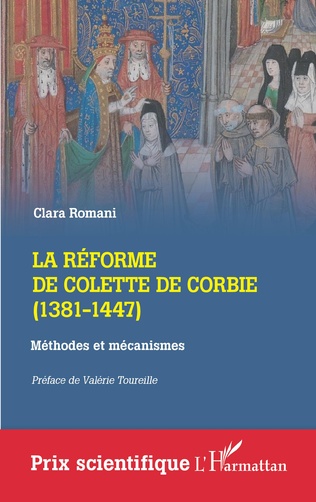
Au cours de la première moitié du XVe siècle, anachorète et abbesse Colette de Corbie (1381-1447) devint la première femme à réformer un ordre monastique contemplatif en fondant vingt-quatre maisons franciscaines en France, en Bourgogne et dans les Pays-Bas. Pendant son activité, la France était en guerre tant avec l’Angleterre qu’avec elle-même ; les papes siégeaient à la fois à Rome, à Avignon et à Pise ; même l’ordre franciscain était déchiré par le conflit entre Spirituels et Conventuels. Colette navigua dans ces eaux turbulentes de l’époque pour guider sa réforme à travers la violence, l’incertitude et l’instabilité. En maintenant ses fondations sous la pauvreté évangélique stricte et l’emprise encore plus stricte de ses propres systèmes de contrôle, Colette mena ses institutions farouchement indépendantes vers un large succès. Par l’étude des documents fondateurs, de la correspondance et des hagiographies de la future sainte et de son mouvement, ces pages explorent les stratégies employées par cette femme singulière pour parvenir à ses fins.

Née en Californie, Clara Romani a obtenu sa licence à Stanford, où elle a rédigé son mémoire sur la position socio-économique des femmes dans le Languedoc cathare du XIIIe siècle. Elle a déménagé à Paris en 2020 pour poursuivre son master à l’Université CY Cergy Paris avec le soutien du programme Fulbright.

Informations pratiques :

Clara Romani, La réforme de Colette de Corbie (1381-1447). Méthodes et mécanismes, Paris, L’Harmattan, 2023 ; 1 vol., 190 p. (Prix Scientifique). ISBN : 978-2-14-034018-5. Prix : € 21,00.

Source : L’Harmattan

Publié dans Publications | Laisser un commentaire

Publication – « Paris. The Powers that Shaped the Medieval City », éd. Alexandra Gajewski, John McNeill

Paris: The Powers that Shaped the Medieval City considers the various forces – royal, monastic and secular – that shaped the art, architecture and topography of Paris between c. 1100 and c. 1500, a period in which Paris became one of the foremost metropolises in the West.

The individual contributions, written by an international group of scholars, cover the subject from many different angles. They encompass wide-ranging case studies that address architecture, manuscript illumination and stained glass, as well as questions of liturgy, religion and social life. Topics include the early medieval churches that preceded the current cathedral church of Notre-Dame and cultural production in the Paris area in the late 12th and early 13th centuries, as well as Paris’s chapels and bridges. There is new evidence for the source of the c. 1240 design for a celebrated window in the Sainte-Chapelle, an evaluation of the liturgical arrangements in the new shrine-choir of Saint-Denis, built 1140–44, and a valuable assessment of the properties held by the Cistercian Order in Paris in the Middle Ages. Also, the book investigates the relationships between manuscript illuminators in the 14th century and representations of Paris in manuscripts and other media up to the late 15th century.

Paris: The Powers that Shaped the Medieval City updates and enlarges our knowledge of this key city in the Middle Ages.

Table des matières :

List of Contributors

Preface

  1. Notre-Dame in Paris before the Gothic Period
  2. Abbot Suger’s Paris
  3. The Power of the Saints: Architecture and Liturgy in Abbot Suger’s Shrine-Choir at Saint-Denis in the Twelfth and Thirteenth Centuries
  4. The King’s City: The Disciplinary ‘Sense-scape’ of Paris in the Thirteenth Century
  5. The Great Thirteenth-Century Chapels of Paris
  6. City of light: Picturing the translation of the Crownof Thorns to Paris in the Gothic glass of the Sainte-Chapelle
  7. Jean Pucelle, Mahiet, and the Fauvel Master: Relationships between Manuscript Illuminators in Fourteenth-Century Paris
  8. Building Paris on its Bridges
  9. Not so vast a Solitude: Cistercians in Medieval Paris
  10. Images of Paris in the late Middle Ages: The Great Monuments

RAPHAËLE SKUPIEN

Index

Informations pratiques :

Paris. The Powers that Shaped the Medieval City, éd. Alexandra Gajewski, John McNeill, Londres, Routledge, 2023 ; 1 vol., 260 p. (The British Archaeological Association Conference Transactions). ISBN : 978-1-03252-086-5. Prix : GBP 28,79.

Source : Routledge

Publié dans Publications | Laisser un commentaire

Publication – Alberto Virdis, « Colors in Medieval Art Theories, Matter, and Light from Suger to Grosseteste (1100–1250) »

Projected color saturates our world of images and screens, leading to a dissociation of color from material realities through its cultural attachment to light and the efflorescence of optics. Under these conditions, it is difficult to imagine a past where color was an eminently material, cultural, and social object. This book argues that color is and was a central « cultural object » within art history, a fact first elucidated through an examination of the debates and difficulties of color in language, theology, science, and philosophy. Following this overview of medieval aesthetical debates, the author pursues two pivotal case studies which span the twelfth and thirteenth centuries: the Basilica of Saint-Denis and the Cathedral of Lincoln, respectively connected to the figures of the abbot Suger and the bishop Robert Grosseteste. Prominent thinkers and concepteurs of sacred spaces and images, they both confronted existing theories of color and optics, and the theology of Pseudo-Dionysius the Areopagite. The case studies both center the art of stained glass, a revolutionary medium that blurs the boundaries between color, materiality, and light. Emerging strongly throughout this beautifully illustrated volume are traces of a central Middle Ages in which color played a fundamental yet groundbreaking role at the crossroads of aesthetic, intellectual, and theological issues.

Alberto Virdis is a researcher in Medieval Art at the Masaryk University, Centre for Early Medieval Studies, Brno. He is currently leading a project funded by the Czech Science Foundation on the origins of stainedglass art in the Early Middle Ages. His main research interests span from the history of colors in medieval art and their relation with the art of stained glass, to artistic and cultural interactions in the Mediterranean space in the High Middle Ages, with a special focus on mural paintings and studies on Medieval landscape.

Table des matières : ici

Informations pratiques :

Alberto Virdis, Colors in Medieval Art Theories, Matter, and Light from Suger to Grosseteste (1100–1250), Rome, Viella, 2023 ; 1 vol., 400 p. (Convivia, 3). ISBN : 979-1-25469-362-9. Prix : € 75,00.

Source : Viella

Publié dans Publications | Laisser un commentaire

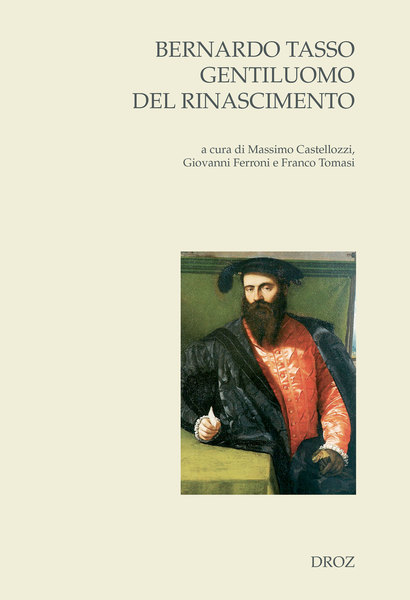
Publication – « Bernardo Tasso gentiluomo del Rinascimento », éd. Franco Tomasi, Giovanni Ferroni, Massimo Castellozzi

Bernardo Tasso (Bergamo, 11 novembre 1493 – Ostiglia, 5 settembre 1569) fu autore di libri di lettere, di poemi cavallereschi, di una vasta produzione lirica in stile ‘antico’ e ‘moderno’; ma fu anche segretario e ambasciatore d’orizzonti europei: dalla Francia a Venezia, da Napoli alle Fiandre. Di quest’opera multiforme e della molteplicità di ruoli che Tasso rivestì – di servitore e consigliere, di padre e sposo, di amante letterario, di uomo di fede – danno conto i diciotto contributi riuniti in questo volume. Si precisa così una biografia contraddistinta da molte zone d’ombra, si analizzano testi, dibattiti e generi letterari, indagando la cultura di questo gentiluomo ed intellettuale laico, formatosi alla scuola dell’estremo umanesimo quattrocentesco e vissuto fra le guerre d’Italia e il concilio di Trento. Lungamente trascurata dalla critica, la figura di Bernardo Tasso, emblematica della crisi del Rinascimento, viene per la prima volta rimessa al centro del suo mondo e del suo tempo.

Bernardo Tasso (Bergame, 11 novembre 1493 – Ostiglia, 5 septembre 1569) fut l’auteur de livres de lettres, de poèmes chevaleresques, d’une vaste production lyrique de style « ancien » et « moderne » ; mais il fut également un secrétaire et un ambassadeur d’envergure européenne, en France, à Venise, à Naples et dans les Flandres. Les dix-huit contributions réunies dans ce volume rendent compte de cette œuvre aux multiples facettes et de la variété de rôles que Bernardo Tasso recouvrit, à la fois de serviteur et de conseiller, de père et d’époux, d’amant littéraire, d’homme de foi. Une biographie caractérisée par des nombreuses zones d’ombre est ainsi éclaircie : nous retrouvons dans ce recueil l’analyse de textes, de débats et de genres littéraires, ainsi qu’un approfondissement sur la culture de ce gentilhomme et intellectuel laïc, qui a vécu entre les guerres d’Italie et le Concile de Trente et a été formé à l’école du dernier Humanisme. Longtemps délaissée par la critique, la figure de Bernardo Tasso, emblématique de la crise de la Renaissance, est pour la première fois placée au centre de son univers et de son temps. 

Table des matières :

INDICE

Introduzione

Prima parte LA BIOGRAFIA E LE LETTERE

Marcello SIMONETTA Le Lettere di Bernardo Tasso e il secolo dei segretari

Massimo CASTELLOZZI Le Lettere di Bernardo Tasso tra manoscritti e stampe. Appunti per un’edizione critica

Franco TOMASI Le Lettere di Bernardo Tasso tra progetto e allestimento tipografico

Valentina LEONE Geografie epistolari e stratigrafie temporali nel Primo Libro delle Lettere di Bernardo Tasso (1525-1527)

Mauro RAMAZZOTTI Note sugli anni parigini e ferraresi di Bernardo Tasso (1527-1532)

Paolo PROCACCIOLI Dalle lettere al cartello. Bernardo Tasso e l’Aretino

Stefano VERDINO « La mia continua guerra » : sulle tarde lettere (1552-1569) di Bernardo Tasso

Sergio BOZZOLA Bernardo Tasso epistolografo leggiadro

Seconda parte L’AMADIGI

Riccardo BRUSCAGLI Bernardo Tasso e Sperone Speroni : note da una polemica

Valeria DI IASIO « In questa maniera di volgari poemi in gran parte nuove » : ottava e narrazione nell’Amadigi

Giovanni VEDOVOTTO Presenze ovidiane nell’Amadigi

Terza parte LA LIRICA

Giorgio FORNI Figure e stagioni della lirica di Bernardo Tasso

Giacomo COMIATI Architetture compositive e fonti classiche nelle Odi di Bernardo Tasso

Ester PIETROBON Il classicismo polifonico dei Salmi tassiani

Giovanna ZOCCARATO I componimenti in metro sperimentale negli Amori di Bernardo Tasso

Quarta parte I LIBRI E LO SCRITTOIO

Maria Teresa GIRARDI Nota sui libri e sui postillati di Bernardo Tasso

Silvia D’AMICO Bernardo Tasso lettore di Omero : il postillato della traduzione dell’Iliade di Lorenzo Valla

Rosanna MORACE Bernardo Tasso e Vittoria Colonna tra le carte del Libro secondo degli Amori e l’autografo oliveriano

Indice dei nomi

Informations pratiques :

Bernardo Tasso gentiluomo del Rinascimento, éd. Franco Tomasi, Giovanni Ferroni, Massimo Castellozzi, Genève, Droz, 2023 ; 1 vol., 544 p. (Cahiers d’Humanisme et Renaissance, 193). ISBN : 978-2-600-06479-8. Prix : CHF 49,00.

Source : Droz

Publié dans Publications | Laisser un commentaire

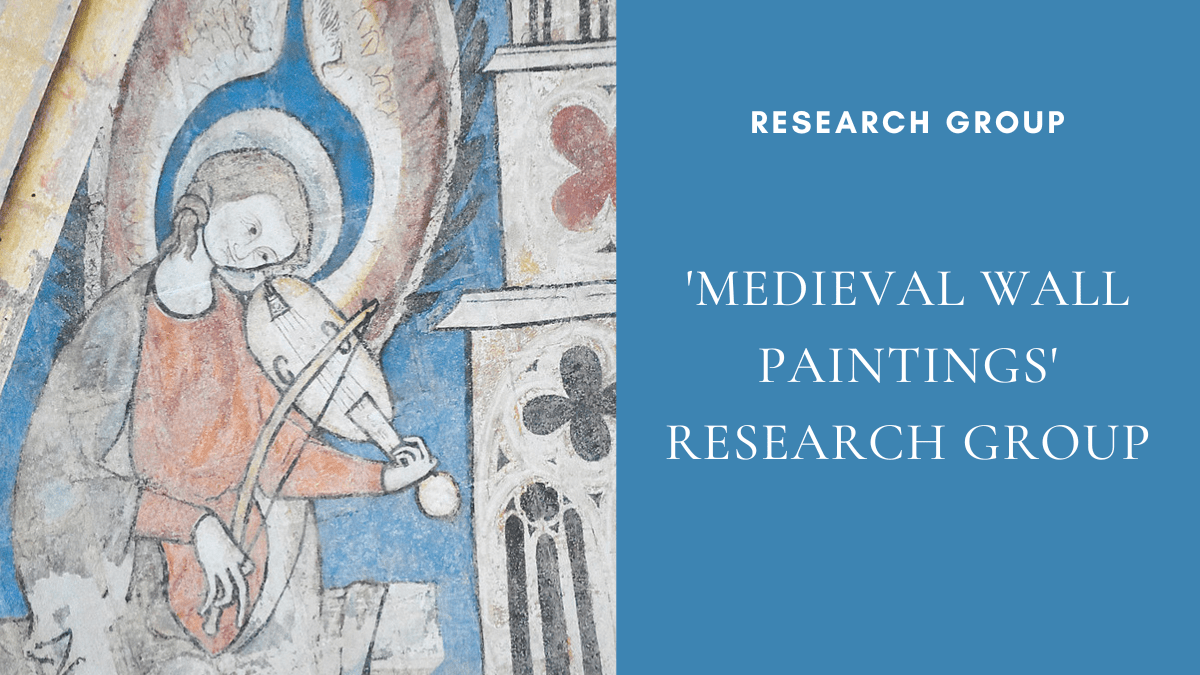
Appel à candidature – Invite to join the ‘Medieval Wall Paintings’ Research Group

Two PhD students (Florence Eccleston, Courtauld Institute of Art; and Katharine Waldron, University of Oxford and Hamilton Kerr Institute) are setting up a working group entitled the ‘Medieval Wall Painting’ Group to facilitate discussion, networking, and learning about wall paintings, and to promote research. They hope to be able to bring together both conservation and art historical approaches to encourage cross-disciplinary conversation and understanding. 

Please get in touch with them if you would like to be on the mailing list, and let others who might be interested know about this working group.

They are in the midst of organising future events on a biannual/ triannual basis with dates to follow soon, including a yearly workshop following on from Florence’s workshop ‘Researching Medieval Wall Paintings’ held at The Courtauld Institute of Art in May. 

In the meantime, please let them know if you have any ideas for future events or would like to be involved in planning in any way. They would love your help! 

Source : Medieval Art Research

Publié dans Le réseau | Laisser un commentaire

Publication – Benjamin Pohl, « Publishing in a Medieval Monastery. The View from Twelfth-Century Engelberg »

Accès : ici

This Element contributes to the burgeoning field of medieval publishing studies with a case study of the books produced at the Benedictine monastery of Engelberg under its celebrated twelfth-century abbot, Frowin (1143–78). Frowin was the first abbot of Engelberg whose book provision policy relied on domestic production serviced by an internal scribal workforce, and his tenure marked the first major expansion of the community’s library. This Element’s in-depth discussion of nearly forty colophons inscribed in the books made for this library during Frowin’s transformative abbacy offers a fresh perspective on monastic publishing practice in the twelfth century by directing our view to a mode of publication that has received only limited attention in scholarship to date.

Informations pratiques :

Benjamin Pohl, Publishing in a Medieval Monastery. The View from Twelfth-Century Engelberg, Cambridge, Cambridge University Press, 2023 ; 1 vol., en ligne (Elements in Publishing and Book Culture)). DOI:10.1017/9781009202541

Source : Cambridge University Press

Publié dans Publications | Laisser un commentaire

Publication – Spike Gibbs, « Lordship, State Formation and Local Authority in Late Medieval and Early Modern England »

Providing a new narrative of how local authority and social structures adapted in response to the decline of lordship and the process of state formation, Spike Gibbs uses manorial officeholding – where officials were chosen from among tenants to help run the lord’s manorial estate – as a prism through which to examine political and social change in the late medieval and early modern English village. Drawing on micro-studies of previously untapped archival records, the book spans the medieval/early modern divide to examine changes between 1300 and 1650. In doing so, Gibbs demonstrates the vitality of manorial structures across the medieval and early modern era, the active and willing participation of tenants in these frameworks, and the way this created inequalities within communities. This title is part of the Flip it Open Programme and may also be available Open Access. Check our website Cambridge Core for details.

Spike Gibbs is Junior Professor for the Economic History of the Middle Ages at the University of Mannheim. His writing on manorial officials, felony forfeiture and managing stray animals has been published in journals such as the Journal of British Studies and the English Historical Review. This is his first book.

Table des matières :

Introduction
1. The changing role of manorial officers and manor courts
2. Manorial officeholding and selection processes: participation or restriction?
3. Manorial officeholding and unfreedom
4. Manorial officeholding and village governance: misconduct and landscape control
5. State formation I: the parish
6. State formation II: vills, quarter sessions and constables
Conclusion
Appendix 1: Categorising presentments
Appendix 2: Identifying individuals
Appendix 3: Population estimates.

Informations pratiques :

Spike Gibbs, Lordship, State Formation and Local Authority in Late Medieval and Early Modern England, Cambridge, Cambridge University Press, 2023 ; 1 vol., 304 p. (Cambridge Studies in Medieval Life and Thought. Fourth Series). ISBN : 9781009311830. Prix : GBP 85,00.

Source : Cambridge University Press

Publié dans Publications | Laisser un commentaire

Publication – « Le bolle di Celestino V », éd. Ugo Paoli et Paola Poli

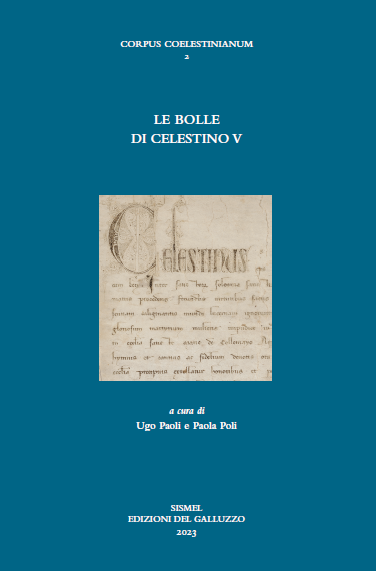
Il volume rappresenta il primo tentativo di «ricostruzione» del registro deperdito delle bolle di Celestino V (5 luglio – 13 dicembre 1294). Dell’esistenza di tale registro sono testimonianza dieci bolle originali che riportano a tergo la R di registrazione e il numero con cui il documento si trovava trascritto nel registro. Nel settembre 1294, Celestino V mise a capo della Cancelleria Giovanni da Castrocielo, arcivescovo di Benevento e già monaco di Montecassino. Le novanta bolle originali di Celestino V che sono state reperite risultano redatte nel pieno rispetto delle norme diplomatistiche della Cancelleria papale e attestano l’attività di trentuno scriptores. Certa è anche la presenza di quattro notai. Nel volume sono affrontati e discussi i problemi relativi alla ricerca, alla tipologia, alla cronologia e all’edizione dei testi e viene presentata una sintesi tematica delle bolle pubblicate.

Informations pratiques :

Le bolle di Celestino V, éd. Ugo Paoli et Paola Poli, Florence, SISMEL–Edizioni del Galluzzo, 2023 ; 1 vol., XI–441 p. (Corpus Coelestinianum, 2). ISBN : 978-88-9290-232-9. Prix : € 85,00.

Source : SISMEL

Publié dans Publications | Laisser un commentaire

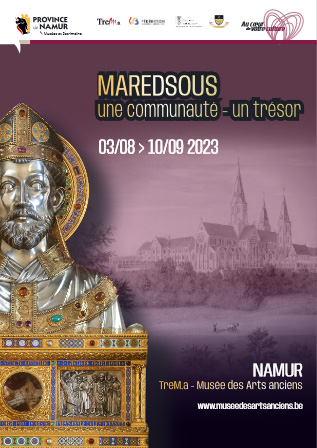
Exposition – Maredsous : une communauté – un trésor

Exposition organisée dans le cadre des 150 ans de l’abbaye de Maredsous.

Voilà plus de 150 ans que l’abbaye de Maredsous domine la vallée de la Molignée de toute sa splendeur, que ses deux tours élancées, surplombant la cime des arbres, signalent sa présence aux visiteurs.
À l’occasion de cet anniversaire, le TreM.a – Musée des Arts anciens vous invite à (re)découvrir cette abbaye remarquable, fleuron de l’architecture néogothique en Belgique, et à partir à la rencontre de sa communauté, entre passé et présent.

Venez admirer quelques-uns des trésors qu’elle abrite, dont certains quitteront l’enceinte de l’abbaye pour la toute première fois de leur histoire : des dessins, des manuscrits enluminés, des sculptures, mais aussi de nombreux chefs-d’œuvre d’orfèvrerie. 

À travers ces objets d’exception, l’exposition entend ainsi révéler la vision des fondateurs de l’abbaye et de son génial architecte, mettre en lumière le renouveau d’un art gothique rêvé dans une perspective militante, mais aussi dévoiler les aspects, parfois insoupçonnés, de la vie monacale à Maredsous, entre prière et labeur. 


À ne pas manquer :
3 lunchs autour de produits de Maredsous, proposés dans le jardin du musée, les 12, 16 et 26 août, à midi.
Un défilé-conférence de vêtements liturgiques, à l’église Saint-Joseph, le 25 août, à 18h.

TreM.a – Musée des Arts anciens du Namurois
Hôtel de Gaiffier d’Hestroy
Rue de Fer, 24
5000 Namur

Infos et réservations :  081/776.754.

Publié dans Exposition | Laisser un commentaire