The victory of Justinian, achieved after a lacerating war, put an end to the ambitious project conceived and implemented by Theoderic after his arrival in Italy: that of a new society in which peoples divided by centuries-old cultural barriers would live together in peace and justice, without renouncing their own traditions but respecting shared principles inspired by the values of civilitas. What did this great experiment leave to Europe and Italy in the centuries to come? What were the survivals and the ruptures, what were the revivals of that world in early medieval society? How did that past continue to be recounted and how did it interact with the present, especially in the decisive moment of the Frankish conquest of Italy? This book aims to confront these questions, and it does so by exploring different themes, concerning politics and ideology, culture and literary tradition, law, epigraphy and archaeology.
Between Ostrogothic and Carolingian Italy. Survivals, revivals, ruptures, éd. Fabrizio Oppedisano, Florence, Firenze University Press, 2023 ; 1 vol., 262 p. (Reti Medievali E-Book). ISBN : 978-88-5518-663-6. Open-access.
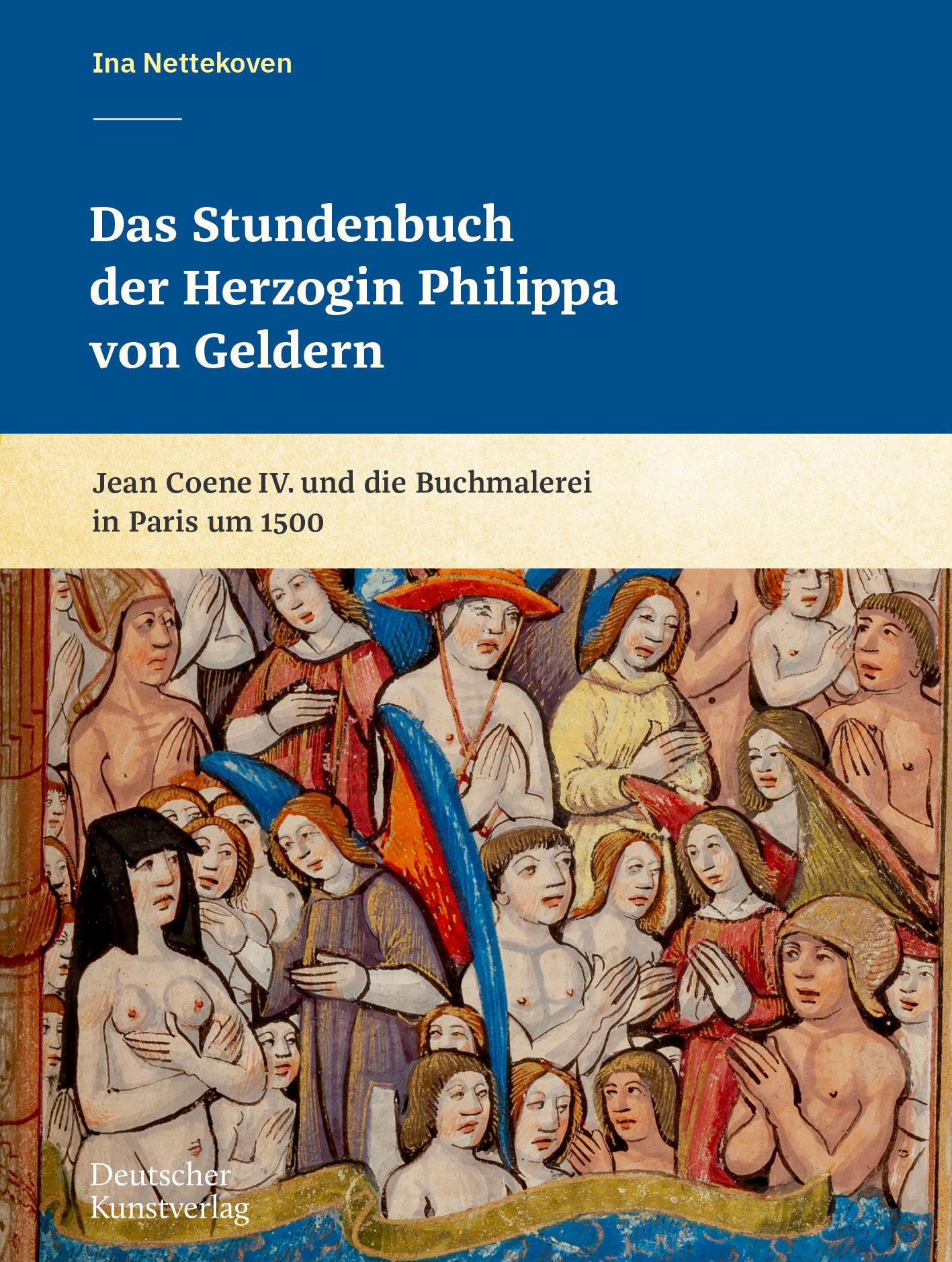
A richly illustrated book of hours was produced in the surroundings of the Parisian court at the beginning of the sixteenth century, presumably commissioned by Philippa von Geldern (1467– 1546), Princess of Lower Saxony and later Duchess of Lorraine. Jean Coene IV, one of the few illuminators of the time who is known by name, furnished the unusual work with a completely illustrated calendar and twenty-four — of formerly twenty-seven — large miniatures. The book of hours, which is privately owned, is now being presented to the public in its entirety for the first time — accompanied by an examination of the role of the client and of the classification of Jean Coene IV as an illuminator Roll within the context of Parisian book art around 1500.
Ina Nettekoven, freelance art historian, specialized in book illumination and book graphics of the 15th century, Bonn.
Informations pratiques :
Ina Nettekoven, Das Stundenbuch der Herzogin Philippa von Geldern. Jean Coene IV. und die Buchmalerei in Paris um 1500, Berlin, Deutscher Kunstverlag, 2022 ; 1 vol., 144 p. ISBN : 978-3-422-98695-4. Prix : € 38,00.
Nous avons le plaisir de vous adresser le programme des 14e rencontres du GRIM-IMAGO,
qui auront lieu le 8 juin 2023 à Paris
Direction scientifique : Charlotte Denoël (BnF), Isabelle Marchesin (INP), Anne-Orange Poilpré (Paris 1 Panthéon-Sorbonne), Cécile Voyer (Université de Poitiers)
INHA, 2 rue Vivienne, 75002. M° Bourse ou Palais Royal.
Salle Demargne (dans la Galerie Colbert)
Qu’est-ce que créer au Moyen Âge ? La culture de cette époque, où les mots « art » et « artiste » n’ont pas leurs significations modernes et où l’Église a longtemps généré l’essentiel des commandes, est marquée par des références permanentes aux autorités du passé. En outre, le seul geste authentiquement créateur est celui de Dieu à l’origine du monde et ne peut être égalé. S’appuyer sur une tradition, se prévaloir d’un héritage intellectuel ou esthétique explicite est ainsi revendiqué comme la seule manière de créer de la pensée : « des nains hissés sur les épaules de géants », selon la célèbre expression que Jean de Salisbury attribue à son maître, Bernard de Chartres. De nombreuses publications se sont penchées sur cette façon de faire naître du neuf à partir de l’ancien (Des nains ou des géants ? Emprunter et créer au Moyen Âge, éd. C. Andrault-Schmitt, E. Bozoky, Poitiers, 2016 ; Créer créateurs, créations, créatures au Moyen Âge, éd. F. Besson, V. Griveau-Genest, J. Pilorget, Paris, 2019 ; Les modèles dans l’art du Moyen Âge (XIIe-XVe siècles), éd. L. Terrier Aliferis, D. Borlée, Turnhout, 2018) et l’on souhaite ici poursuivre ce questionnement autour de l’image. La recherche récente dans ce domaine, réceptive aux apports de l’anthropologie historique, a montré combien ce versant de la production intellectuelle fait preuve d’une remarquable inventivité à exprimer, par les moyens du visuel, une conception du monde agencée par la cosmologie chrétienne en jouant de nombreux effets de continuité et de nouveauté.
Programme :
10h – Bertrand Cosnet (Université de Lille / IRHIS)
La vernacularisation de l’iconographie des traités de moralité au XIVe siècle : un héritage en mutation
Méthodes et enjeux de l’étude de la représentation des funérailles dans le décor des tombes du Sud-Ouest de la France (XIIIe-XVe siècles)
11h10 – Pause
11h30 – Thomas Guglielmo(Université de Poitiers / CESCM)
La peinture infamante de Rodolfo II da Varano : entre appropriation, réinterprétation et création.
12h00 – Alexis Minault (Université de Poitiers / CESCM)
Modus dimicandiet modus illuminandi. Le codex I.33 et les marginalia gothiques : substrat ou superstrat
12h30
Déjeuner
14h – Nicolas Sarzeaud (EHESS)
Copier, créer ? Remarques sur l’usage de la notion de ‘copie’ appliquée à l’image médiévale.
14h30 – Flora Muntrez (INP)
Les représentations topographiques dans les mosaïques tardo-antiques de Jordanie (VIe-VIIIe siècles) : la christianisation d’un topos iconographique.
15h – Pierre Charrey (FNRS / UC Louvain)
Le sceau et l’icône. L’analogie comme mécanisme de production des images dans l’empire protobyzantin.
15h30
Pause
16h – Max Hello (École nationale des chartes)
De l’ornement à l’image. Reconsidérer la notion de création artistique dans l’enluminure mérovingienne (VIIe-VIIIe siècle) : l’exemple de la formule de l’œil cerné.
16h30 – Adèle Charransol(Université Paris 1 Panthéon-Sorbonne)
La Seconde Bible de Charles le Chauve (Paris, BnF, lat. 2) et l’héritage insulaire au scriptorium de Saint-Amand : emprunter, réinterpréter, conjuguer.
17h – Aïda El Khiari (Sorbonne Université / INHA)
Mettre en image les fables de Kalila et Dimna : le rôle des procédés de reproduction mécanique dans la transmission et la création iconographiques.
Cette étude du monastère bénédictin anglais de Saint-Albans se penche sur les relations de la communauté et de ses membres avec les pouvoirs laïcs et ecclésiastiques à la fin du Moyen Âge. Elle s’intéresse à la façon dont ces liens s’exprimaient dans les productions intellectuelles du lieu.
Elisa Mantienne, Les Moines de Saint-Albans et le pouvoir (v. 1350 – v. 1440), Paris, Classiques Garnier, 2023 ; 1 vol., 524 p. (Histoire culturelle, 19). ISBN : 978-2-40614-268-3. Prix : € 54,00.
L’édition annuelle de la journée d’études des jeunes chercheurs et chercheuses (JEJC), organisée par l’association Chroniques chartistes en collaboration avec l’ENC, le centre Jean-Mabillon, les laboratoires IRHT et HTL du CNRS, et le Comité International de Paléographie Latine, aura lieu les 27 et 28 juin 2023 à l’École nationale des chartes. Cette journée est l’occasion pour les étudiant·e·s de master, doctorant·e·s et post-doctorant·e·s de se réunir autour d’une thématique commune. En hommage à Louis Holtz, les JEJC 2023 seront consacrées à l’exploration des liens entre grammaire, transmission des textes et des savoirs et humanités numériques.
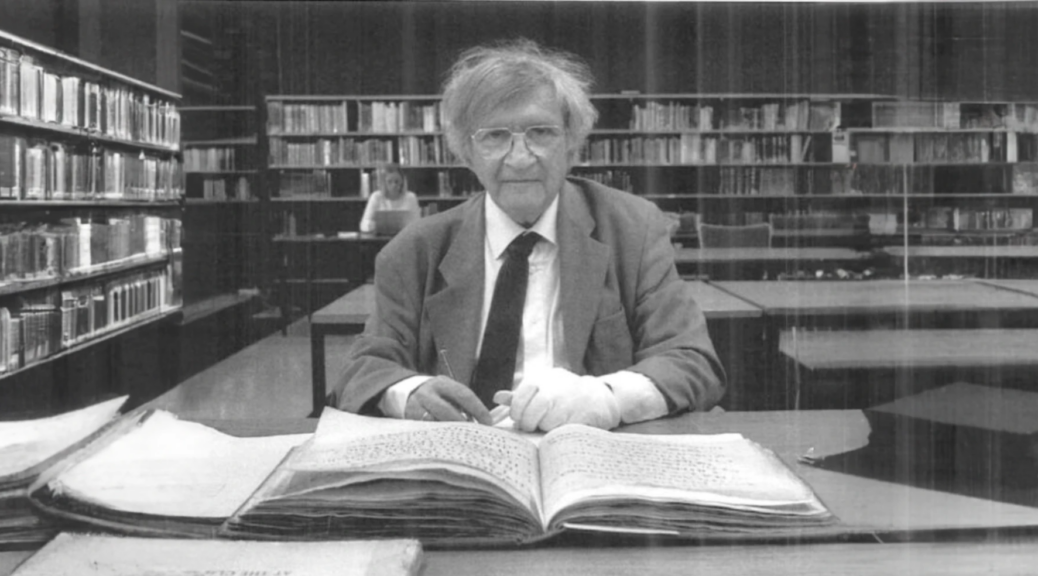
Louis Holtz, grande figure des études latines, spécialiste des grammairiens de l’Antiquité tardive et du haut Moyen Âge, fut professeur des universités de Rennes, Nantes, Angers et Lyon, et directeur de l’Institut de recherche et d’histoire des textes (IRHT) de 1986 à 1997. Sa méthode et ses objectifs dans le domaine de la grammaire consistaient à rendre sensible le lien essentiel entre le texte antique, les circonstances de sa tradition et sa réception médiévale. Selon lui, ce programme peut – et doit – s’appliquer non seulement aux textes techniques, mais aussi à tout autre texte, quel qu’en soit le genre littéraire. Inspirés par la contribution scientifique de Louis Holtz et afin de garder ouvert le dialogue entre une ancienne et une nouvelle génération de chercheurs, nous souhaitons ouvrir la discussion sur les apports scientifiques qui peuvent naître de la rencontre entre grammairiens, matérialité des sources et humanités numériques. Nous souhaitons par la même occasion questionner les enjeux que cette rencontre ne manque pas de soulever.
Illa circa grammaticam… : vers une définition
Pour cette journée d’études, nous avons entrepris d’examiner la grammatica non seulement en l’envisageant comme un genre littéraire véhiculant un contenu intellectuel spécifique, mais aussi en reconsidérant la fonction de la grammaire en tant qu’ars, ou instrument de pratique intellectuelle. Nous souhaitons également examiner les effets qu’elle exerce sur la transmission des savoirs. Nous entendons la grammatica dans le sens de la “grammatical culture”, terme introduit par M. Irvine (1994), qui considère le type de culture lettrée et littéraire soutenue et reproduite par la grammatica non seulement comme une discipline dotée d’un corps de connaissances circonscrit, mais aussi comme un modèle de culture textuelle qui s’étend au-delà du contenu objectif apparent d’une discipline. Concernée par l’étude des objets linguistiques dans deux divisions connexes composantes de la langue et de la littérature (d’une part la scientiarecte loquendi scribendique, d’autre part l’enarratio ou scientia interpretandi), la grammatica offre des outils d’analyse et d’interprétation. Chacune des divisions méthodologiques de la grammatica (à savoir lectio, enarratio, emendatio, iudicium) faisant partie de l’arsenal méthodologique du grammaticus, compris ici au sens large de savant. En tant que discipline revendiquant à la fois l’objet linguistique et textuel comme sa sphère spéciale de connaissance, la grammatica n’est pas simplement transitive et descriptive, isolant et étiquetant les parties de son objet. Elle est aussi constitutive de connaissances. Elle fournit un réseau de présuppositions, de stratégies discursives et de règles d’argumentation qui régissent l’enquête et fournissent les bases de la possibilité et de la création même de la connaissance.
La journée d’études s’articulera autour de trois volets qui constituent le cœur de notre programme.
1. Histoire des textes. Les grammatici, gardiens de la latinité
Les traités de grammaire ou artes grammaticae, souvent décriées pour leur style normatif et aride ainsi que leur « manque d’inspiration », occupent une place centrale dans le trivium et constituent, tout au long de l’Antiquité et du Moyen Âge, une pratique continue et fondamentale du cursus éducatif.
L’œuvre des grammatici, au premier rang desquels les grammatici Graeci comme Apollonios Dyscole, Hérodien et Denys le Thrace, et les grammatici Latini comme Charisius, Priscien, Servius, Donat, suivis de l’ensemble des auteurs connus et anonymes qui figurent dans l’édition monumentale de Keil, a contribué à l’évolution de la doctrine grammaticale et à la survie de la littérature antique (Keil H., 1857). Les grammairiens latins, qualifiés par Sénèque de custodes Latini sermonis, jouent un rôle important à la fois dans la préservation et l’évolution de la langue au fil des siècles, ainsi que dans la survie des textes antiques, pour lesquels les textes grammaticaux sont parfois notre seule source (par exemple les fragmenta des poètes archaïques). Cette survie doit également beaucoup au Moyen Âge – et tout spécialement à l’interprétation des textes par leurs commentateurs du haut Moyen Âge et de l’époque carolingienne. Des personnalités comme Sedulius Scottus, Jean Scot Érigène, Bède, Alcuin, Guillaume de Conches ont contribué à la tradition et au renouveau du savoir par le croisement des sources anciennes. Cette confrontation constitue un véritable continuum, qui va jusqu’à l’humanisme et au-delà, dont le dénominateur intellectuel commun, garant de l’accès à la connaissance, est la grammaire.
Des travaux importants dans le domaine de la grammaire antique ont été menés au cours des dernières décennies, avec un renouvellement important de ce champ d’études. Ainsi, le premier axe est consacré aux nouvelles recherches sur les grammatici et leurs grammaires ou sur leur contribution à la transmission des textes, de l’Antiquité à la modernité.
2. Paléographie. La grammaire en tant qu’instrument textuel
La théorie littéraire tout au long de la période médiévale présuppose la forme manuscrite du texte, une forme avec ses propres caractéristiques distinctives telles que la variation textuelle d’une copie à l’autre, l’encodage de l’écriture et de la mise en page dans un système total de significations verbales et visuelles. Dans l’introduction de la traduction française du livre d’Ann Blair, Too much to know, Roger Chartier rappelle que « en s’attachant aux objets, les livres, bien sûr, mais aussi les notes manuscrites, […] en portant l’attention sur les pratiques les plus humbles (copier, découper, coller, classer, relier), elle rappelle, à distance, une histoire des idées réduite aux concepts, que les intellectuels pensent aussi avec leurs mains » (Blair A., 2020, p. 10.). Les sources textuelles représentent à la fois une unité matérielle et intellectuelle, particularité inhérente qui a joué un rôle essentiel pour la transmission des textes au fil des siècles.
Plus particulièrement, la grammatica était responsable de certaines des caractéristiques importantes du format des manuscrits. Par exemple, la lectio grammaticale, ensemble de règles pour lire un texte à haute voix et établir le premier niveau d’intelligibilité, était intrinsèquement associée au format physique et visuel de la page du manuscrit : la division des mots, la ponctuation des clauses et des unités de sens, les gloses interlinéaires et les marques d’accent pour aider à construire le sens du texte. De même, l’enarratio grammaticale est méthodologiquement liée au développement du format « texte et glose » des manuscrits littéraires et grammaticaux dans lesquels les pages d’un livre étaient conçues pour inclure une glose ou un commentaire transcrits dans les marges en même temps que le texte principal. Les textes produits dans la culture grammaticale, indépendamment de leur contenu, étaient rarement fixes et clos dans l’état figé et codifié attendu des éditions imprimées modernes, et il est clair que pour le lecteur médiéval, tout ce qui se trouvait sur une page – mise en page, changements d’écriture, gloses, marques de contraction, notes, corrections – était perçu comme une caractéristique intégrale du système de signification qui constituait le livre (Irvine M., 1994, p. 17). L’écriture et la mise en page créent un langage secondaire, cette fois visuel, conférant à un texte une signification sociale.
Ainsi, la grammaire constitue le carrefour entre paléographie, codicologie et édition de textes. Les contributions sur les manuscrits glosés et annotés, les marginalia, avec un accent sur leur fonction de transmission de savoirs, sont les bienvenues.
3. Humanités numériques.
Ce troisième axe vise à permettre une réflexion sur les pratiques modernes de transmission et de survie des sources. La gestion, l’analyse et le stockage des informations ne constituent pas une approche méthodologiquement nouvelle, mais une approche récurrente, étroitement liée aux avancées technologiques. À l’ère du numérique, le changement (ou l’évolution ?) du modèle impose le passage du matériel au virtuel, du manuscrit au numérique, quelles que soient ses implications.
Ces dix dernières années, d’importantes questions méthodologiques ont été posées tant par les paléographes que par les spécialistes des humanités numériques pour faire avancer le champ et pour réconcilier les méthodes traditionnelles avec des approches novatrices (Pierazzo E. & Stokes P. A., 2011). De ces discussions, des questionnements importants émergent : comment traduire les outils traditionnels de gestion et de transmission du savoir dans l’environnement numérique, où l’édition, la structuration et l’analyse des sources anciennes constituent une sorte de métadonnée, de « méta-transmission » des sources ? Le concept d’édition numérique a été au centre des débats académiques et des outils de plus en plus complexes ont été développés et optimisés. Quelles sont les stratégies mises en place, les choix, les avantages et/ou les inconvénients de ces approches ? Quelles sont la grammaire et la syntaxe du paradigme numérique ? Construire des outils pour les éditions critiques est un défi, surtout lorsqu’il s’agit de plusieurs niveaux d’information et de paratexte, de mise en page complexe, etc. Comment y faire face (Kuhry E., 2020) ?
Cette journée d’étude sera l’occasion pour les jeunes chercheurs de différents horizons disciplinaires de se rencontrer et de discuter de l’importance de la grammaire dans la transmission des textes et des savoirs, ainsi que de son rôle dans les humanités numériques. Nous espérons favoriser avec un tel événement de nouveaux échanges et collaborations entre chercheurs issus d’horizons divers, et stimuler de nouvelles réflexions sur les enjeux actuels de l’étude de la grammaire et de la transmission des textes.
Cet appel à communication s’adresse à tou·te·s les jeunes chercheurs et chercheuses, masterant·e·s, doctorant·e·s ou post-doctorant·e·s, issu·e·s de toutes les disciplines des sciences humaines et sociales, de la littérature ou des langues, sans restriction temporelle ou géographique. Nous vous invitons à soumettre vos propositions de communication en précisant les thématiques dans lesquelles elles s’inscrivent. Pour chaque proposition, un titre, un résumé de 300 à 500 mots (français ou anglais), un bref CV ainsi qu’une bibliographie restreinte et un éventuel exposé de vos travaux sont attendus. Le comité d’organisation répondra aux propositions envoyées avant le 15 mai 2023, à l’adresse suivante :
Une aide financière peut être proposée aux participants afin de couvrir les frais de voyage et d’hébergement, dans la mesure des fonds disponibles. La publication d’un volume des actes est prévue.
Partenaires institutionnels : École Nationale des Chartes – PSL ; Centre Jean-Mabillon ; Institut de Recherche et d’Histoire des Textes – CNRS ; Laboratoire Histoire des Théories Linguistiques – CNRS ; Comité International de Paléographie Latine.
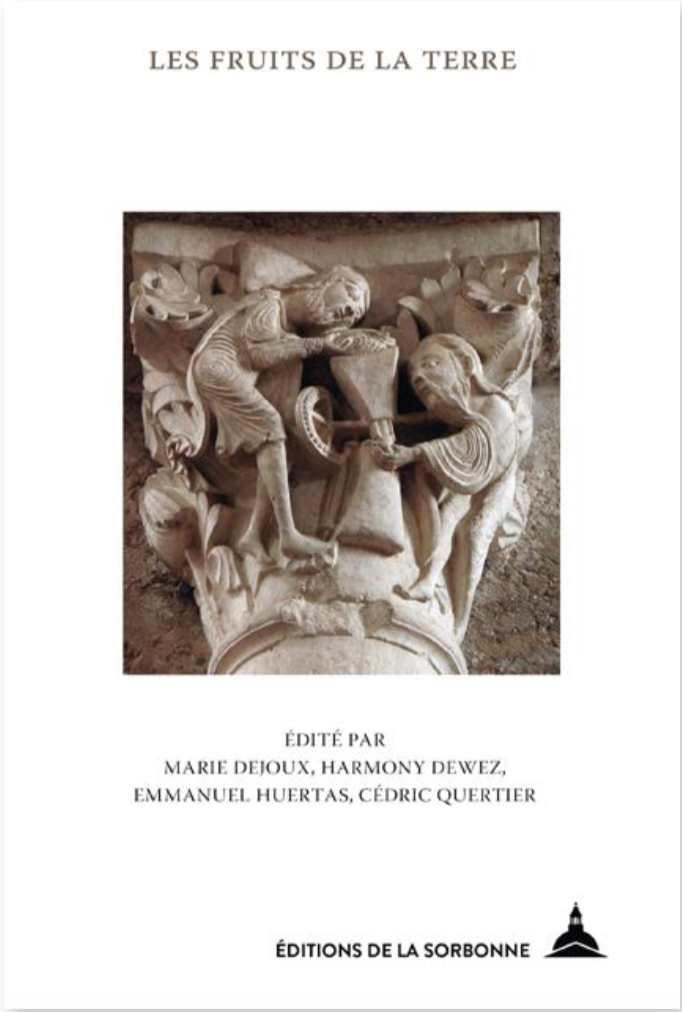
Retracer la longue et riche carrière de Laurent Feller, professeur d’histoire médiévale à l’université Paris1 Panthéon Sorbonne, peut sembler une gageure tant ses productions scienti ques sont nombreuses et tant il a contribué à renouveler en profondeur l’approche de l’économie médiévale, en nourrissant constamment ses recherches des apports les plus neufs des sciences sociales. C’est pourquoi le présent volume commence par lui donner la parole dans un entretien liminaire limpide, avant de réunir une cinquantaine de contributeurs qui tentent, chacun à leur manière, de reprendre ses thématiques de prédilection : l’histoire de l’Italie et des campagnes, les rationalités pratiques, économiques et scripturaires, la culture matérielle et la valeur des choses ainsi que la domination des hommes et la distinction économique et sociale dans les sociétés médiévales.
Couvrant un large arc chronologique, du haut Moyen Âge à l’époque moderne (voire contemporaine), dans un espace européen souvent méditerranéen, cet ouvrage collectif, qui réunit plusieurs générations de chercheurs, permet également de mesurer la diversité et l’ampleur des réseaux scientifiques internationaux tissés par Laurent Feller tout au long de son parcours d’historien. Partant, il se veut un instantané de la recherche en histoire économique et sociale actuelle.
Les fruits de la terre. Études d’histoire médiévale offertes à Laurent Feller, éd. Marie Dejoux, Harmony Dewez, Emmanuel Huertas, Cédric Quertier, Paris, Éditions de la Sorbonne, 2023 ; 1 vol. Prix de souscription : € 14,00 + frais de port.
En 2024, Queeste fêtera ses 30 ans ! C’est pour cette raison que l’équipe éditoriale de Queeste travaillera sur la composition d’un numéro spécial anniversaire à partir de l’année 2023. Et vous pouvez y contribuer !
Depuis presque 30 années déjà, Queeste offre une plateforme multilingue pour les publications sur la littérature médiévale des Pays-Bas jusqu’en 1600, quelle que soit la langue dans laquelle cette littérature a été écrite. À partir de 1994, de nombreux chercheurs de différentes disciplines ont publié dans Queeste, cela dans le cadre d’un domaine de recherche en constante évolution. Ce ne sont pas seulement les nouvelles possibilités technologiques en termes de numérisation et d’accessibilité qui ont changé le domaine, mais de nouvelles orientations telles que les recherches sur les émotions, le genre et la performance ont également élargi et modifié le champ et offrent constamment de nouvelles perspectives.
Afin de mettre à la lumière la portée et la richesse des approches de la littérature médiévale aux Pays-Bas, l’équipe éditoriale de Queeste vous invite à réfléchir, dans le cadre de ce numéro thématique anniversiare, sur une pièce de théâtre spécifique, écrit en moyen néerlandais : Vanden Winter ende vanden Somer. Cette pièce est une des abele spelen du manuscrit Van Hulthem. Nous vous invitons à partager vos réflexions à partir de votre propre expertise. Tous types d’approches de la pièce sont possibles : d’une analyse textuelle plus traditionnelle sur une évaluation du contexte historique dans lequel la pièce a fonctionné à l’étude d’une réinterprétation médiévaliste, par exemple dans le contexte du changement climatique. Nous vous encourageons également à adopter un point de vue comparatif, qui considère la pièce en moyen néerlandais par rapport à des textes issus d’autres aires linguistiques (voir également ci-dessous pour les éditions et les traductions). Avec Vanden Winter ende vanden Somer comme fil conducteur de ce numéro, nous espérons compiler un volume collectif cohérente pour Queeste.
Planning
Les abstracts (300 mots au maximum) pour les articles (écrits en néerlandais, anglais, français ou allemand) peuvent être envoyés par mail à b.j.m.caers@hum.leidenuniv.nl avant le 1er Mai 2023, accompagnés d’une courte biographie de l’auteur (200 mots au maximum). Vous serez ensuite contacté.e le 30 mai au plus tard par l’équipe éditoriale de Queeste. Pour les articles complets, le calendrier suivant sera respecté :
1er novembre : soumission des articles par les auteurs à l’équipe éditoriale de Queeste pour une évaluation par les pairs
15 décembre : les auteurs reçoivent l’évaluation par les pairs
15 janvier : les auteurs soumettent la version révisée de leur article à l’équipe éditoriale de Queeste
janvier 2024 : rédaction finale du numéro spécial anniversaire ‘Perspectives sur Vanden Winter ende vanden Somer’
Editions et traductions
Néerlandais : Abele spelen. Publié sous la direction de Gerrit Komrij. Groningue : Éditeur Kleine Uil, 2021.
Anglais : Medieval Dutch Drama : Four Secular Plays and Four Farces from the Hulthem Manuscript. Traduit et édité par Johanna C. Prins. Asheville : Pegasus Press, 1999.
Deutsch : Die Abele Spelen und ihre Sotternien. Mittelniederländisch Neuhochdeutsch. Herausgegeben und übersetzt von Carla Dauven-van Knippenberg, Elke Huwiler, Joris Reynaert. Münster : Agenda Verlag, 2017.
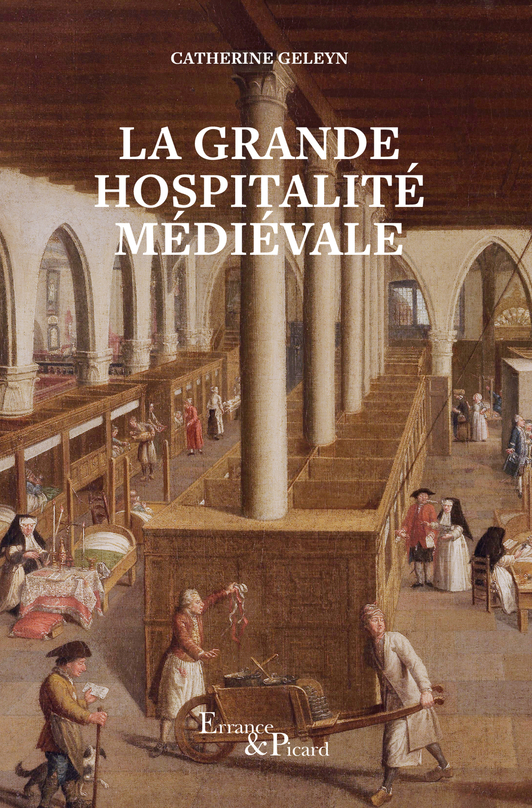
L’histoire étant faite de déplacements et de rencontres de populations issues de différents horizons, cet essai souhaite comprendre les manières dont les migrations anciennes ont pu être prises en compte en Occident. Les voyageurs poussés par la nécessité ont-ils pu, selon les circonstances et les périodes considérées, bénéficier de facilités d’hébergement ou d’asile au cours de leurs pérégrinations ? Et, si oui, cet accueil a-t-il été fondé sur des usages et coutumes communs aux divers membres de la société traditionnelle occidentale et comment peut-on les interpréter d’un point de vue symbolique ?
Informations pratiques :
Catherine Geleyn, La Grande Hospitalité médiévale. Hôpitaux et hôtels-Dieu du Moyen Âge central, Paris, Errance & Picard, 2023 ; 1 vol., 220 p. ISBN : 978-2-330-17694-5. Prix : € 18,00.
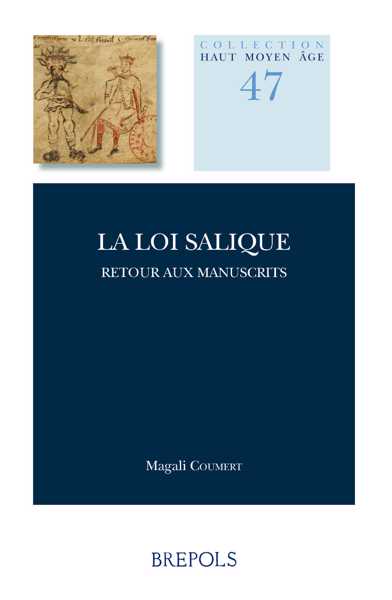
La loi salique a été l’objet d’une attention approfondie à la fin du Moyen Âge, où elle fut utilisée par les partisans du roi de France pour justifier les successions royales et l’éviction du roi d’Angleterre, aussi bien qu’à l’époque moderne et contemporaine, car les érudits y ont cherché l’expression des coutumes germaniques originelles. Pour autant, elle n’a fait l’objet que d’une édition partielle et les manuscrits qui la comportent, copiés à ‘époque carolingienne, n’ont encore jamais fait l’objet d’une étude systématique. L’étude revient sur les conditions de l’échec d’une édition scientifique de la loi salique, au milieu du XXe siècle, puis se consacre aux témoins manuscrits, copiés après 750. La comparaison détaillée des différentes versions du texte et des différents recueils manuscrits jette un nouvel éclairage sur l’histoire compliquée de ce texte.
La loi salique constituait, au VIIIe, un ensemble d’articles aux contours flous, dont l’association à l’autorité royale mérovingienne n’empêchait la liberté de composition de chaque copiste, qui élaborait son propre assemblage des articles juridiques. Toutes les versions de la loi salique étaient considérées comme valables et ce n’est qu’à partir du règne de Louis le Pieux que la version la plus récente du texte fut préférée aux autres, probablement en raison de sa clarté. Le nombre important de copies de petit format du texte, dans la première moitié du IXe siècle, semble montrer le recours courant à la loi salique par les détenteurs de l’autorité dans l’ensemble de l’empire carolingien.
Magali Coumert est professeur d’histoire médiévale à l’université de Tours. Ses travaux portent sur le Haut Moyen Âge occidental, et plus particulièrement sur les lois, barbares et romaines, les identités ethniques, l’écriture de l’histoire et l’historiographie.
Table des matières :
Table des matières Liste des illustrations et des tableauxRemerciements
Liste des manuscrits de la loi salique
Introduction
Chapitre 1 : Éditer la loi salique au XXe siècle Le jeune rival de Bruno Krusch L’ascension de Karl August Eckhardt La course à l’édition Les éditions perdues de la seconde guerre mondiale Les éditions de l’après-guerre Conclusion
Chapitre 2 : L’absence de manuscrits mérovingiens L’impasse des déductions philologiques La version B de la loi salique La recherche d’une version en 65 chapitres Les fluctuations de la version C Conclusion
Chapitre 3 : La loi salique à la fin du VIIIe siècle Un corpus juridique en cours de constitution Les manuscrits de la version D Conclusion
Chapitre 4 : Les origines de la loi salique La datation de la loi salique Le petit prologue et le Liber Historiae Francorum Les autres introductions de la loi salique du IXe siècle Un règlement militaire du IVe siècle ? Conclusion
Chapitre 5 : Écrire des ajouts aux lois (744-819) La législation franque au VIIIe siècle Des lois aux capitulaires Un espace de liberté Ajouts et reprises des lois barbares Une nouvelle préoccupation : le copiste Conclusion
Chapitre 6 : Une première version carolingienne La version E, une rédaction carolingienne de la loi salique Les caractéristiques de la version E Conclusion
Chapitre 7 : Une nouvelle version sous Charlemagne La Lex Salica Karolina Les manuscrits de la loi salique K copiés durant le règne de Charlemagne
Chapitre 8 : Les différentes versions de la loi salique au IXe siècle Sous les premiers rois carolingiens, Pépin et Charlemagne Le manuscrit A 1 et le modèle biblique Copier la loi salique version K entre 814 et 850 La baisse de la diversité des versions de la Loi salique Conclusion : L’idéal de conservation de la loi
Conclusion générale
Bibliographie
Index des manuscrits cités
Informations pratiques :
Magali Coumert, La loi salique Retour aux manuscrits, Turnhout, Brepols, 2023 : 1 vol., 430 p. (Haut Moyen Âge, 47). ISBN: 978-2-503-59986-1. Prix : € 75,00.
Avec le soutien du FNRS, du CRHiDI (UCLouvain – Saint-Louis, Bruxelles), d'INCAL (UCLouvain), de PraME (UNamur), de sociAMM (ULB) et de Transitions (ULiège)










Vous devez être connecté pour poster un commentaire.