Colloque – From Digital to Distant Diplomatics

As early as the 1970s, diplomatics, i.e. research on mediaeval documents, noticed the benefits of the computer for the indexing and editing of mediaeval charter collections. In the following decades, numerous relevant research projects were initiated that explored and clarified the potential of a connection between digital humanities and the methods of historical auxiliary sciences. They have found expression in the series of conferences on the topic of “Digital Diplomatics” (in particular Munich 2007, Naples 2011 and Paris 2013), in which the digitisation of charters, their publication on the web, and the digital analysis of document corpora in cooperation between archives, diplomatics, historians and computer scientists were discussed.

The ERC Advanced Grant project “From Digital to Distant Diplomatics” takes up this tradition and wants to take stock of the different projects and approaches to the topic of “digital diplomatics” with the conference “Digital Diplomatics 2022”.

The international conference in Graz is intended to offer all scholars interested in this complex of topics the opportunity for discussion and exchange, from questions about digital support in the formal and content analysis of documents, to the planning and implementation of digitisation projects in archives and libraries, to the future direction of this new research field.
Programme :

Wednesday 28.9.:

09:30 Opening (Michael Walter, Dean of the Humanities Faculty; Joachim Reidl, Vice Rector for Research and Career Development; Georg Vogeler )

10:00-11:00 Moderation: Michael Gervers

Serena Ammirati and Paolo Merialdo, Roman medieval documents meet Machine learning: a great opportunity for research and teaching (Abstract) (online)

Jan Burgers and Rik Hoekstra, The Digitale Charterbank Nederland (DCN): a digital portal to 200.000 charters in Dutch archives (Abstract) (online)

11:30-12:30 Moderation: Michael Gervers

Žarko Vujošević, Diplomatarium Serbicum Digitale – Eine Wiederaufnahme zwischen Datenbank und digitaler Edition (Abstract)

Miguel Calleja-Puerta, Modelling notarial charters for diplomatic analysis: the experience of the NotFor project (Abstract) (online)

14:00-15:30 Moderation: Tamás Kovács

Pia Geißel, Chancen und Möglichkeiten computergestützter stilometrischer Verfahren für Urkundentexte (Abstract)

Zsolt Hunyadi, Charter-calendars of the Angevin period (1301-1387) of Hungary: digital images, editions, calendars, toponyms, seals (Abstract)

Filipa Roldão, Joana Serafim and João Paulo Silvestre, The electronic edition of Portuguese municipal charters (12th – 15th centuries): challenges on Diplomatics and Digital Humanities (Abstract)

16:00-17:30 Moderation: Daniel Luger

Juraj Šedivý and Balázs Csiba, Klassische und digitale Editionen der mittelalterlichen Quellen in der Slowakei / Printed and digital editions of mediaeval sources in Slovakia (Abstract)

Steffen Krieb, Distant Diplomatics avant la lettre. The Regesta Imperii as data for Digital Diplomatics (Abstract)

Clemens Radl, Dealing with diplomata: The digital MGH and beyond (Abstract)

18:00 Keynote (Moderation: Georg Vogeler):

Michael Gervers and Gelila Tilahun, Patterns of Change. The DEEDS Database, Topic Modeling and Network Analysis in English Medieval Charters, and the Future of Digital Diplomatics (Abstract) (partially online)

19:30:  Reception

Thursday 29.9.

9:00-10:30 Moderation: Anguelos Nicolaou

Jeroen Deploige and Marijke Beersmans, Recent developments in the Diplomata Belgica-project. Case study: NER applied to a corpus of Middle Dutch charters (Abstract)

Amable de Sablon du Corail, Des fonds d’archives aux corpus numériques : l’impact des nouvelles technologies sur les services d’archives en France (Abstract)

Christian Domenig, Quellen zur Geschichte des Alpen-Adria-Raumes. Eine digitale Urkundenedition auf Basis von MediaWiki (Abstract)

11-12:30 Moderation: Steffen Krieb

Mark Bell and John Stell, Qualitative space in Digital Diplomatics (Abstract)

Stefan Bröhl, Charters of the Counts Palatine of the Rhine 1449-1508: A project of cooperative description and presentation in Archivportal-D. (Abstract)

Marlene Ernst and Alina Ostrowski, Big Data Diplomacy. Information extraction on delegated jurisdiction in the Iberian peninsula of the 12th century (Abstract)

14:00-15:30 Poster Session (fingerfood & drinks served from lunchtime on) (Moderation: Nicolas Renet)

16:00-17:30 Moderation: Sébastien Barret

Timo Korkiakangas, Distant Diplomatics: new chances for “Distant Linguistics” on medieval charters? (Abstract)

Joanna Tucker and John Davies, Digitising Scottish charters, 1100–1250: building and using a sustainable digital research tool for charter research (Abstract) (online)

Eveline Leclercq, Chancery, aristocracy and chapter – the assessment of a stylometric approach in studying the Cambrai bishop’s diplomatic landscape (12th c.) (Abstract) (online)

19:30 Social Event

Friday 30.9.

9-10:30 Moderation: Dominique Stutzmann

Adam Zapala, The use of digital tools for the processing of late medieval papal letters (Abstract)

Oliver Schallert, Carsten Becker, and Helmut Schmid, Areal variation in Middle High German: Methodological and quantitative aspects (Abstract)

Francesco Leotta, Image processing and semantic technologies in digital humanities: The NOTAE experience (Abstract) (online)

11-12:30 Moderation: Žarko Vujošević

Julien Théry, APOSCRIPTA. A database and text corpus of papal charters: towards a unified evolutive and collaborative research tool (Abstract)

Peter A. Stokes, Looking forward and looking back on some projects in Digital Diplomatics (Abstract)

Nicole Bergk-Pinto, Jacqueline Schindler and Niklas Tscherne, BeCoRe – Between Composition and Reception (Abstract)

14:00-15:30 Short Paper Session (Moderation: Peter A. Stokes)

Torsten Hiltmann and Philipp Schneider, Charters in Context. Integrating the metadata of medieval and early modern heraldic charters with those of other historical sources (Abstract)

Marguerite Dallas, Documents et analyses linguistiques de la Galloromania médiévale (GallRom) – a new potential for interpretive research (Abstract) (online)

John McEwan, From archives to archaeology via machine learning: exploring the history of sealing practices in the British Isles (Abstract)

Bence Peterfi and Krisztina Arany, “In search of lost time”: The databases of the Hungarian National Archives (Abstract) (partially online)

16:00-17:00 Moderation Georg Vogeler

Tobias Hodel, Combining Automatic Text Recognition with Digital Paleography: New trajectories for Digital Diplomatics (Abstract) (online)

Ádám Novák and Sándor Ónadi, Database of diplomatic sources and 3D scanning of wax seals – Observations (Abstract)

Informations pratiques :

Date: September, 28th-30th, 2022

Location: Hörsaal: 15.06, ReSoWi (Universitätsstraße 15, Bauteil F, EG) 8010 Graz https://www.google.at/maps/@47.0779468,15.4510632,19z/data=!5m1!1e4

Registration: for participation in presence please register via mail to didip@uni-graz.at. If you want to participate online, please let us know. We will provide you with a link to the video conference system.

Source : DiDip

Publié dans Colloque | Laisser un commentaire

Publication – « Notre-Dame de Paris, la science à l’œuvre », dir. Philippe Dillmann, Pascal Liévaux, Aline Magnien, Martine Regert

Au lendemain de l’incendie de Notre-Dame du 15 avril 2019, la mobilisation succède instantanément à l’émotion. Une formidable aventure scientifique démarre alors. Son objectif : recueillir un maximum de données sur les centaines de tonnes de matériaux qui jonchent le sol. Bois de charpente, pierres, métaux, etc. sont ainsi triés, répertoriés, stockés en vue d’être sauvegardés, étudiés, analysés et parfois réemployés. Une véritable auscultation du monument blessé est menée par neuf groupes composés de scientifiques issus d’une cinquantaine de laboratoires – historiens, archéologues, anthropologues, acousticiens, informaticiens et spécialistes des matériaux. Leur mission est double : réaliser un travail de recherche sur la mémoire de la cathédrale et accompagner le grand chantier de restauration mené par les architectes et compagnons sous la supervision du maître d’ouvrage.

Ce livre, illustré d’images exceptionnelles, permet de comprendre comment Notre-Dame a été pensée, bâtie, rénovée en revisitant notre connaissance du monument à chaque période de son histoire. L’ouvrage revient aussi sur l’épisode traumatique de l’incendie et sur la formidable mobilisation nationale et internationale qu’il a suscitée. Il nous plonge enfin dans sa mémoire foisonnante, jalonnée de rencontres avec les plus grands noms de la culture, de la technique, de la littérature et de l’art en général. Un voyage dans le temps au cœur de ce chef-d’œuvre architectural unique pour tous les amoureux du patrimoine de l’humanité.

Un livre collectif avec les contributions des plus grands spécialistes du CNRS et du ministère de la Culture, en partenariat avec l’Établissement public chargé de la conservation et de la restauration de la cathédrale Notre-Dame de Paris.

Informations pratiques :

Notre-Dame de Paris, la science à l’œuvre, dir. Philippe Dillmann, Pascal Liévaux, Aline Magnien, Martine Regert, Paris, Perrin, 2022 ; 1 vol., 180 p. ISBN : 978-2-74917-431-0. Prix : € 35,00.

Source : Lisez !

Publié dans Publications | Laisser un commentaire

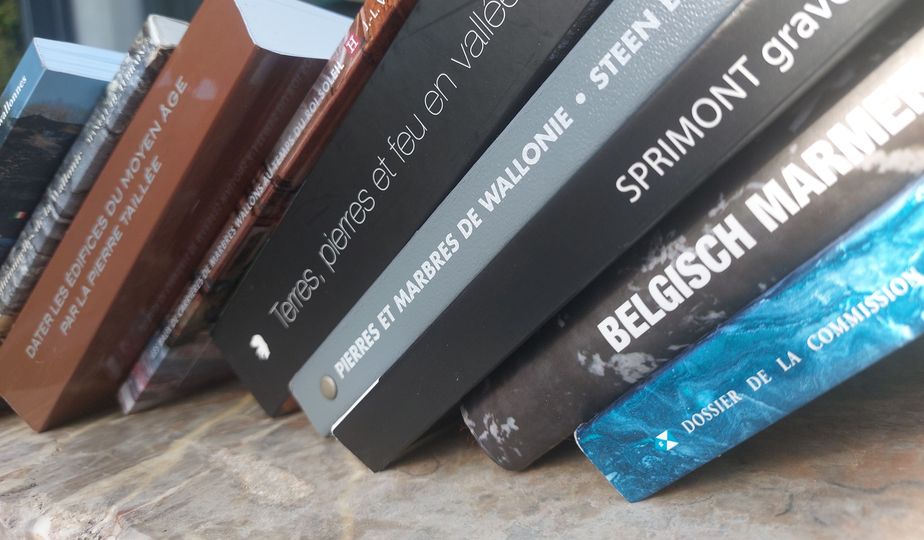
Web – Pierres et marbres de Wallonie

! Avis aux étudiant(e)s, chercheur(se)s, architectes, conservateurs, passionné(e)s, …

Notre asbl Pierres et Marbres de Wallonie vous met à disposition toutes ses archives : livres, brochures, revues sur nos pierres, notre patrimoine, notre architecture, nos usages et coutumes…

Vous retrouverez cette précieuse collection sur les bibliothèques du Service Public de Wallonie : ici

Les Fonds ‘Pierres et Marbres’ sont en cours d’encodage. Nous remercions le SPW pour cette belle collaboration.

Publié dans Web | Laisser un commentaire

Publication – Brigitte Buettner, « The Mineral and the Visual. Precious Stones in Medieval Secular Culture »

Opulent jeweled objects ranked among the most highly valued works of art in the European Middle Ages. At the same time, precious stones prompted sophisticated reflections on the power of nature and the experience of mineralized beings. Beyond a visual regime that put a premium on brilliant materiality, how can we account for the ubiquity of gems in medieval thought?

In The Mineral and the Visual, art historian Brigitte Buettner examines the social roles, cultural meanings, and active agency of precious stones in secular medieval art. Exploring the layered roles played by gems in aesthetic, ideological, intellectual, and economic practices, Buettner focuses on three significant categories of art: the jeweled crown, the pictorialized lapidary, and the illustrated travel account. The global gem trade brought coveted jewels from the Indies to goldsmiths’ workshops in Paris, fashionable bodies in London, and the crowns of kings across Europe, and Buettner shows that Europe’s literal and metaphorical enrichment was predicated on the importation of gems and ideas from Byzantium, the Islamic world, Persia, and India.

Original, transhistorical, and cross-disciplinary, The Mineral and the Visual engages important methodological questions about the work of culture in its material dimension. It will be especially useful to scholars and students interested in medieval art history, material culture, and medieval history.

Brigitte Buettner is Louise I. Doyle ’34 Professor of Art at Smith College. She is the author of Boccaccio’s “Des cleres et nobles femmes”: Systems of Signification in an Illuminated Manuscript.

Table des matières :

List of Illustrations

Acknowledgements

Part I: Jeweled Crowns, Mineralized Kingship

1. The Politics of Precious Stones

2. Inventing Mineral Sovereignty

3. Gothic Regal Materiality

Part II: Lapidary Knowledge in Word and Image

4. A Royal Pursuit

5. Optical Mineralogy and Lithic Magic

6. Of Stones, Sigils, and Stars

Part III: Geographies of Mineral Marvels, Economies of Mineral Assets

7. Edenic Geology and Surplus

8. Mineral Realism in the Global Thirteenth Century

9. Networks of Gem Trade

Epilogue

Notes

Selected Bibliography

Index

Informations pratiques :

Brigitte Buettner, The Mineral and the Visual. Precious Stones in Medieval Secular Culture, State College, Penn State University, 2022 ; 1 vol., 272 p. ISBN : 978-0-271-09250-8. Prix : USD 99,95.

Source : Penn State University Press

Publié dans Publications | Laisser un commentaire

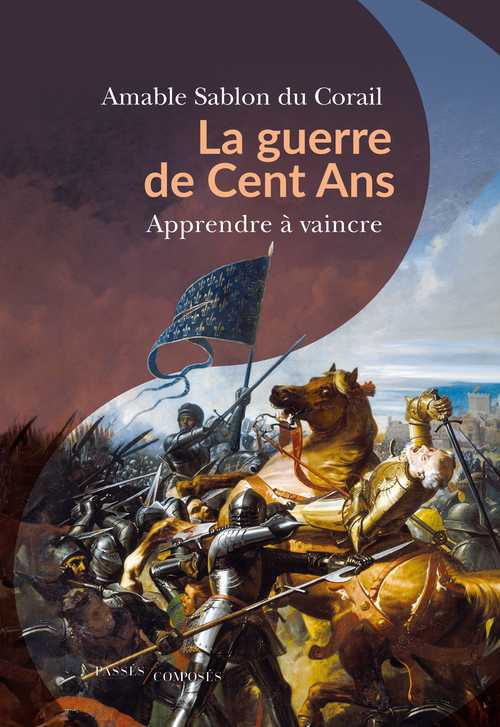
Publication – Amable Sablon du Corail, « La guerre de Cent Ans. Apprendre à vaincre »

Deux siècles durant, deux dynasties françaises, les Plantagenêts et les Valois, placées l’une à la tête de l’Angleterre, l’autre sur le trône des fleurs de lys, se sont livré une lutte à mort. Comment les rois de France, qui font figure de besogneux, tandis que leurs flamboyants adversaires récoltaient les lauriers de Crécy, Poitiers et Azincourt, ont-ils in fine remporté la victoire ?

Ce n’est certes pas le seul effet du hasard ou de la Providence. Les Valois ont gagné, parce que, mieux que leurs adversaires, qui ne manquaient pourtant ni de volonté ni d’intelligence, ils ont su concevoir et mettre en œuvre une stratégie globale, diplomatique et militaire, mais aussi politique, fiscale, sociale et idéologique. C’est ce que démontre avec brio Amable Sablon du Corail à travers le passionnant récit de cette confrontation totale, dont l’objet était tout autant la conquête des cœurs et des âmes que celle de territoires, de villes ou de forteresses.

Informations pratiques :

Amable Sablon du Corail, La guerre de Cent Ans. Apprendre à vaincre, Paris, Passés/Composés, 2022 ; 1 vol., 464 p. ISBN : 978-2-3793-3216-6. Prix : € 25,00.

Source : Passés/Composés

Publié dans Publications | Laisser un commentaire

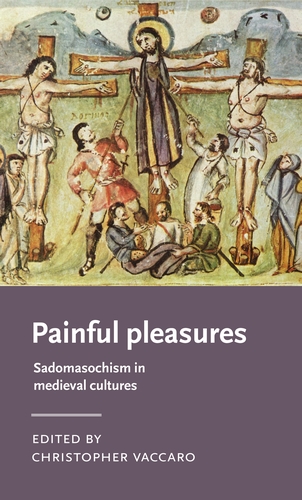
Publication – « Painful pleasures. Sadomasochism in medieval cultures », dir. Christopher Vaccaro

This timely volume ventures into the subject of sadomasochism in varied aspects of medieval life. Saint’s Lives and mystical treatises provide evidence of failed sadism and empowering masochism. Literary culture in the form of epics and courtly tales preserve stories of eroticised power. These exciting chapters join together to form a picture of medieval culture that is kinky in its practice and deeply psychological at its core.

Table des matières :

Introduction: the jouissance of medieval kink – Christopher Vaccaro

Part I: Spiritual and penitential (con)texts
1 Humiliation as penance in some early penitentials – Erin Abraham
2 Land of saints and sadists: the S&M scene(s) in medieval Ireland – Phillip A. Bernhardt-House
3 Failed sadism and masochistic martyrdom in Christine de Pizan’s Livre de la Cité des Dames – Tina-Marie Ranalli
4 The monastic pleasures of frustrated knowledge – Karmen MacKendrick
5 The pains of being pure at heart: sadomasochism in Richard of St. Victor’s On the four degrees of violent love – Christopher Michael Roman
6 Negotiating power and pleasure in the Book of Margery Kempe – Nicole Slipp

Part II: Courtly and secular (con)texts
7 I am not having what she’s having: female sexual (un)pleasure medieval and modern – Juliana Dresvina
8 Queer consolation: BDSM in Chaucer’s The Clerk’s tale, sadistic epistemology and the ends of suffering – Masha Raskolnikov
9 Ideological sadism or cultural enhancement: thirteenth-century Mongols in Kievan Rus and Baghdad – Vicky Panossian
10 Fetishizing the past: Troilus and Criseyde, sadomasochism, and the historophilia of modern BDSM – Kersti Francis
11 ‘My warlike grip broke his beating heart’: masochism and the deadly embrace in Beowulf ll. 2501-2508a – Christopher Vaccaro
12 Death drive and the maiden: the queerness of Hrotsvit of Gandersheim – Philip Liston-Kraft
Index

Informations pratiques :

Painful pleasures. Sadomasochism in medieval cultures, dir. Christopher Vaccaro, Manchester, Manchester University Press, 2022 ; 1 vol., 400 p. (Manchester Medieval Literature and Culture). ISBN : 978-1-5261-5333-3. prix : GBP 90,00.

Source : Manchester University Press

Publié dans Publications | Laisser un commentaire

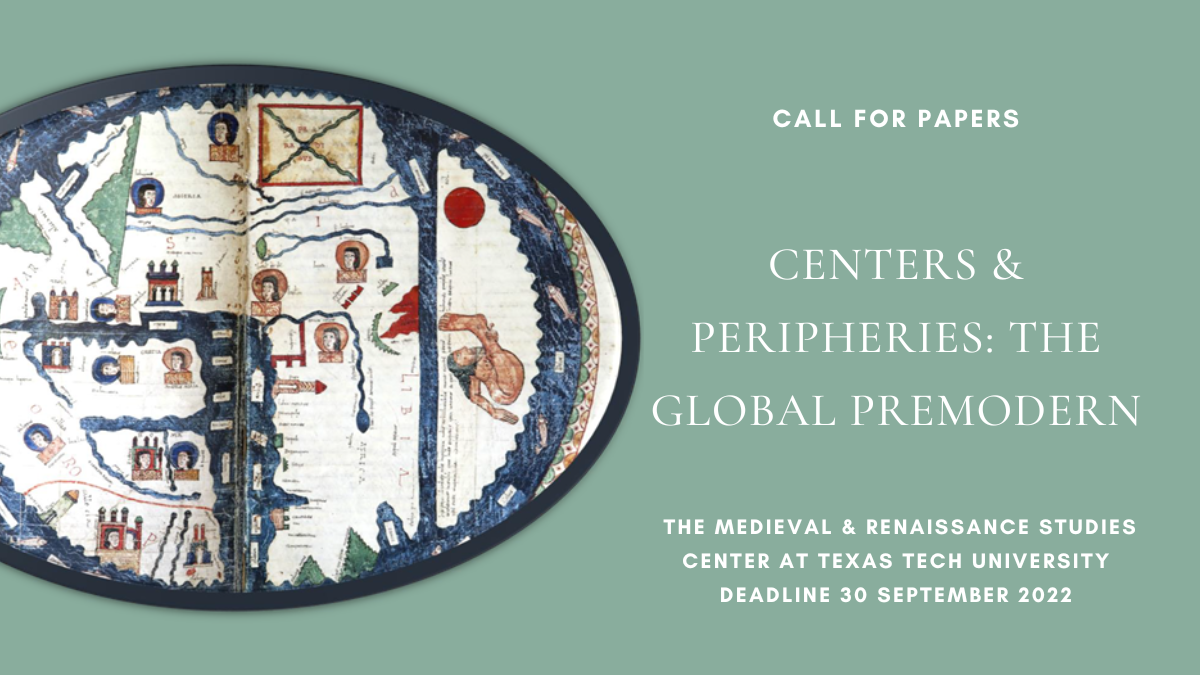
Appel à contribution – Centers and Peripheries: The Global Premodern

Medieval and Renaissance Studies Center at Texas Tech University
Deadline September 30 2022

The Medieval and Renaissance Studies Center at Texas Tech University invites proposals for papers and sessions for an international conference on “Centers and Peripheries: The Global Premodern.” Recent decades have seen the study of the premodern past expand to include diverse geographies, peoples, objects, and texts, revealing parallels and interconnections across the globe, and challenging people to re-think how the more distant past continues to inform the present. These developments have challenged the assumed centrality of Europe and Western cultural norms in narratives of the premodern past by foregrounding interconnection and exchange with constituencies historically viewed as peripheral or subaltern.


Featuring keynote speakers Jonathan Hsy (George Washington University) and Ulinka Rublack (University of Cambridge), this conference will gather scholars in person from across disciplines and across the world to reconsider the spatial and temporal borders of the premodern past (here understood broadly as the period before approximately 1800 CE). The Medieval and Renaissance Studies Center encourages scholars working on premodern topics in any geographical domain, from any disciplinary perspective, to submit proposals for full panels or individual papers.

Papers are invited on topics including but not limited to:
• the movement of people, things, and ideas across premodern spaces
• intersections of race, ethnicity, gender, and dis/ability
• race and religions
• health and the human body
• borders & border-crossings
• materiality & material culture
• travel: pilgrimages or crusades in literature and/or history
• environmental & animal studies
• translation studies
• manuscript studies
• mapping
• public premodern studies: making the distant past speak to the present

For individual papers, please submit a 200-word abstract with name and professional affiliation. For full panels, please submit a 300-word abstract that describes the scope and aims of the complete panel and identifies the titles of the individual papers that constitute the panel, along with names and professional affiliations for each panel participant. Full panel submissions must include at least three papers and no more than four. Panels with four papers must limit papers to 15-minutes.

Submissions should be directed to: mrsc@ttu.edu. We particularly welcome submissions from graduate students, early career scholars, and postgraduate students, as well as collaborative abstract submissions. Please direct any questions to Jacob Baum, Interim Director, TTU Medieval and Renaissance Studies Center [email: jacob.m.baum@ttu.edu.]

The deadline for submissions is September 30, 2022. Acceptance notices will be sent no later than 15 November 2022.

Source : Medieval Art Research

Publié dans Appel à contributions | Laisser un commentaire

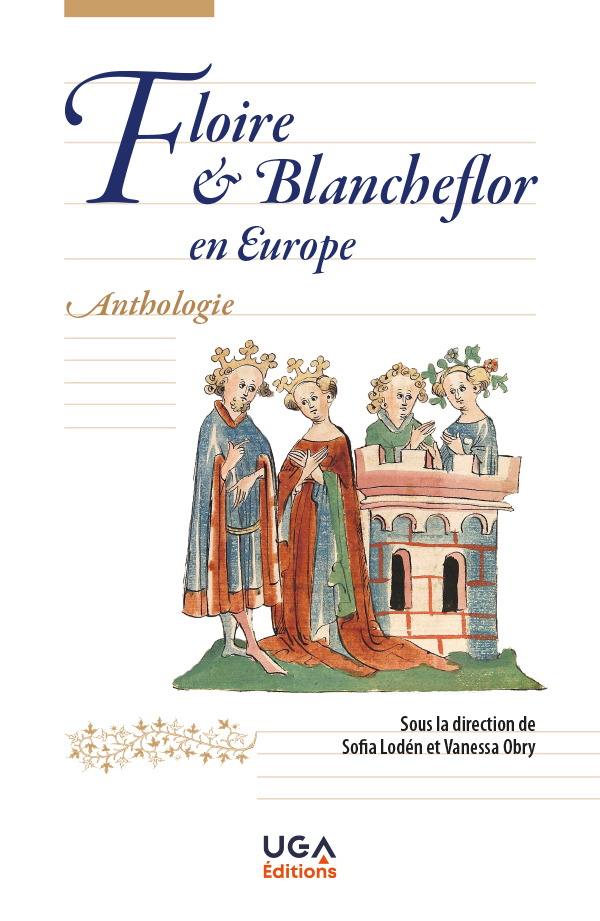
Publication – « Floire et Blancheflor en Europe. Anthologie », dir. Sofia Lodén et Vanessa Obry

Le récit des aventures des amants Floire et Blancheflor a remporté un grand succès au Moyen Âge, ce dont témoigne son adaptation dans de nombreuses langues : français, bas et haut allemand, anglais, norrois, suédois, danois, néerlandais, espagnol, italien, grec. Cette intense circulation se poursuit après l’époque médiévale et il est même adapté en yiddish au XVIIIe siècle. Sont réunis ici pour la première fois quatorze extraits représentant chacune des versions médiévales conservées, ainsi que cinq extraits d’œuvres ultérieures. Les textes sont accompagnés d’une notice les situant dans leur contexte historique et culturel, ainsi que d’une traduction en français. Cette anthologie donne ainsi accès à des œuvres qui n’étaient jusqu’à maintenant disponibles que dans leur langue originale, parfois même inédites.

Sofia Lodén est chercheuse à l’Université de Stockholm et au Swedish Collegium for Advanced Study, Uppsala, Suède.

Vanessa Obry est maître de conférences en langues et littérature françaises médiévales à l’Université de Haute-Alsace (Mulhouse).

Informations pratiques :

Floire et Blancheflor en Europe. Anthologie, dir. Sofia Lodén et Vanessa Obry, Grneoble, UGA Éditions, 2022 ; 1 vol., 370 p. (Moyen Âge européen). ISBN : 978-2-37747-320-5. Prix : € 24,00.

Source : UGA Éditions

Publié dans Publications | Laisser un commentaire

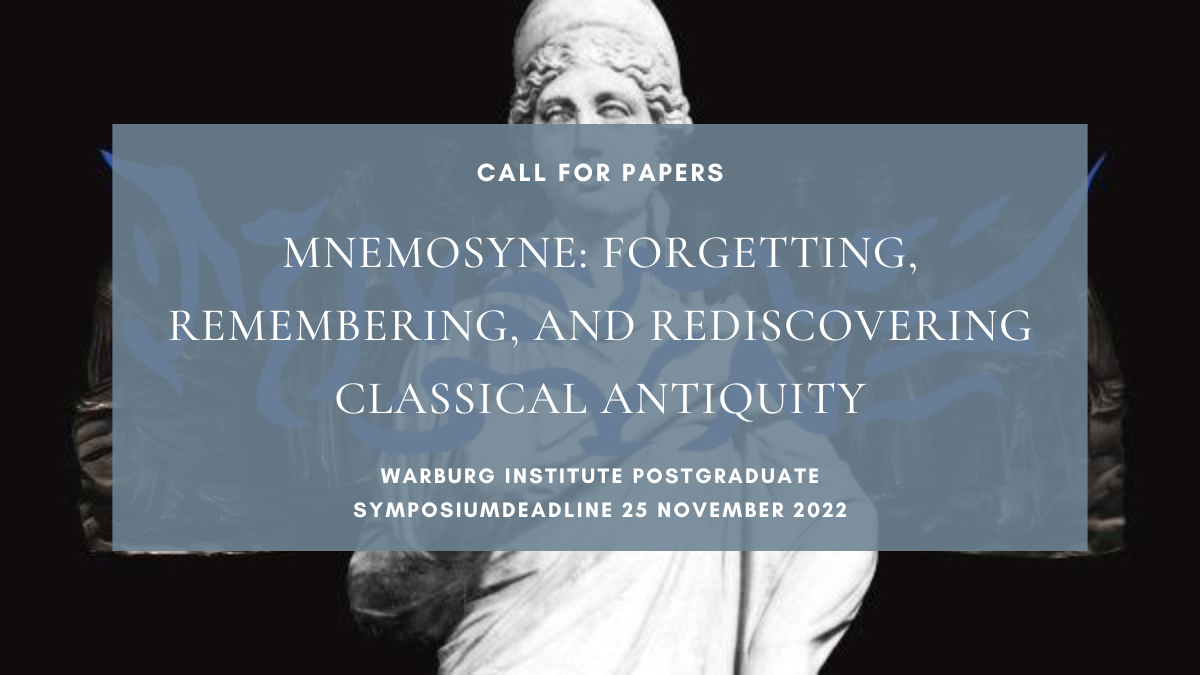
Appel à contribution – Mnemosyne: Forgetting, Remembering, and Rediscovering Classical Antiquity

The Warburg Institute, in collaboration with the Institute of Classical Studies, is hosting its fourth Postgraduate Symposium, Mnemosyne: Forgetting, Remembering, and Rediscovering Classical Antiquity. This is an in-person event for postgraduate students and early-career researchers held in central London.

The Symposium aims to explore the role of memory in the survival of classical culture across the centuries. Themes include:

  • arts and heritage
  • psychological and religious narratives
  • sites of preservation and transmission

We invite papers from the fields of art history, history of ideas, cultural history, psychology and psychoanalysis, and related disciplines.

Call for Papers Deadline: Friday 25 November 2022

Conference dates: Thursday-Friday 4-5 May 2023

Please send paper proposals to mnemosyneconference@gmail.com. You can find more information in the attached flyer and through the symposium website: https://mnemosyneconferenc.wixsite.com/mnemosyne-conference  

Source : Medieval Art Research

Publié dans Appel à contributions | Laisser un commentaire

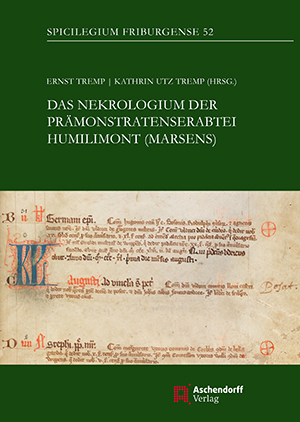
Publication – « Das Nekrologium der Prämonstratenserabtei Humilimont (Marsens) », éd. Ernst Tremp et Kathrin Utz-Tremp

Das Prämonstratenserkloster Humilimont im Greyerzerland ist heute praktisch in Vergessenheit geraten. Dabei hat die 1137 gegründete und 1580 zugunsten des Jesuitenkollegiums in Freiburg i. Ü. aufgehobene Abtei während viereinhalb Jahrhunderten als geistliches und wirtschaftliches Zentrum im mittleren Saanetal eine bedeutende Rolle gespielt. Davon zeugt das Nekrolog, das heute im Staatsarchiv Freiburg aufbewahrt wird. Seine gegen tausend Einträge enthalten eine Fülle von Nachrichten zur Totenmemoria und zum Jahrzeitwesen, zu den Stiftungen des Adels und der ländlichen Bevölkerung. Darüber hinaus erfahren wir viel über die Chorherren und ihren Alltag, über die Beziehungen der Abtei zu anderen Abteien im Ordensverband, zu den Geistlichen des Umlandes, zur Stadt Freiburg sowie zu den Adelsfamilien, die sich in ihrem Hauskloster bestatten liessen. Die Edition des Nekrologs erschliesst diese für die Erforschung der Landesgeschichte wichtige Quelle.

Ernst Tremp war Titularprofessor für Geschichte des Mittelalters an der Universität Freiburg/Schweiz und Direktor der Stiftsbibliothek St. Gallen. Kathrin Utz Tremp war Dozentin für Geschichte des Mittelalters an der Universität Lausanne und wiss. Mitarbeiterin am Staatsarchiv Freiburg/Schweiz.

Informations pratiques :

Das Nekrologium der Prämonstratenserabtei Humilimont (Marsens), éd. Ernst Tremp et Kathrin Utz-Tremp, Münster, Aschendorff Verlag, 2022 ; 1 vol., XIV–185 p. (Spicilegium Friburgense, 51). ISBN : 978-3-402-13821-2. Prix : € 39,00.

Source : Aschendoff

Publié dans Publications | Laisser un commentaire