Publication – Francesco Barbaro, « De Re Uxoria », a cura di Claudio Griggio e Chiara Kravina

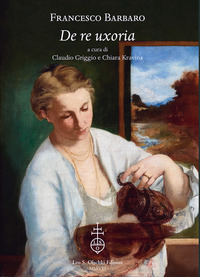
Il De re uxoria fu donato nel 1416 a Lorenzo de’ Medici il Vecchio per le nozze fiorentine con Ginevra Cavalcanti. Il trattato può essere assunto a simbolo precoce dei rapporti politici e culturali tra Firenze e Venezia in età umanistica. Divenuto una sorta di best seller, si diffuse in tutta Europa, reinterpretato fino ai nostri giorni alla luce dei diversi ambiti storici e letterari. L’opera svolge un ruolo importante nel recupero massiccio degli auctores, greci in particolare, operato dal Barbaro in coerenza con il nuovo programma di studi umanistici avviato in area veneta da Guarino Veronese. Lo scritto armonizza sapientemente l’aneddotica classica con la contemporaneità veneziana, risultando gradevole anche per un lettore ‘curioso’ dei nostri giorni.

Informations pratiques :

Francesco Barbaro, De Re Uxoria, a cura di Claudio Griggio e Chiara Kravina, Olschki, 2021 (Istituto nazionale di studi sul Rinascimento. Studi e testi, vol. 53). 17 x 24 cm, xiv-426 pp. con 7 tavv. col. ISBN: 9788822267283. Prix : 55 euros.

Source : Olschki

Publié dans Publications | Laisser un commentaire

Publication – « The Byzantine Platonists, 284-1453 », dir. Frederick Lauritzen et Sarah Klitenic Wear

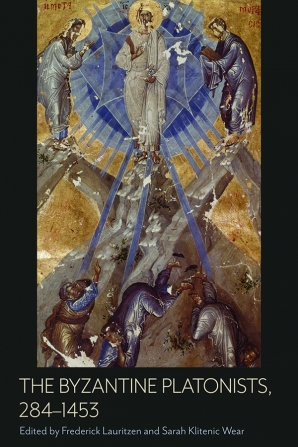
This volume brings together articles by sixteen leading scholars on a cross-section of Platonists authors—Christian and non-Christian—from early through late Byzantium philosophy, including the Capaddocians, Cyril, Proclus, Damascius, Dionysius, George of Pisidia, Nicetas Stethatos, Nikephoros Choumenos, Psellos, and George Palamas. The reception of Byzantine thought in the Latin tradition is also considered. The articles collectively show development in the Greek East on ontological issues such as the doctrine of the soul, as well as theological concepts of the One/God and Trinity within a hierarchical universe. The volume considers exegetical questions relating to the use of Plato and the Platonists by Byzantine Christian authors.

Frederick Lauritzen is Historian at the Scuola Grande di San Marco, Venezia. Sarah Klitenic Wear is professor of classics, Franciscan University of Steubenville.

Informations pratiques :

The Byzantine Platonists, 284-1453, dir. Frederick Lauritzen et Sarah Klitenic Wear, The Catholic University of America Press, 2021. ISBN : 9781736656105. Prix : USD 65.

Source : The Catholic University of America Press

Publié dans Publications | Laisser un commentaire

Bourse – Allocations de recherches doctorales à la Frick Collection

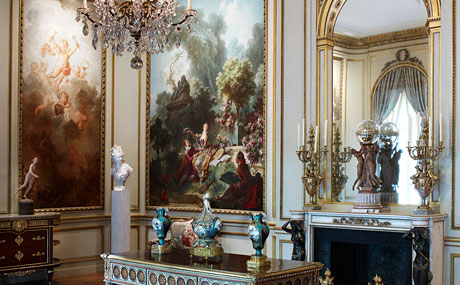
The Frick Collection is pleased to announce the availability of a two-year predoctoral fellowship for an outstanding doctoral candidate who wishes to pursue a curatorial career in an art museum. The fellowship offers invaluable curatorial training and provides the scholarly and financial resources required for completing the doctoral dissertation. Internationally renowned for its exceptional collection of western European art from the early Renaissance through the end of the nineteenth century, The Frick Collection—complemented by the equally significant resources of the Frick Art Reference Library—offers a unique opportunity for object-based research. The fellowship is best suited to a student working on a dissertation that pertains to one of the major strengths of the collection and library.

Please see more details at https://www.frick.org/careers/anne-poulet-curatorial-fellowship-2022.

The deadline for submissions is January 30, 2022.

Interested candidates should contact pouletfellowship@frick.org with any questions.

Source : Blog de l’ApAhAu

Publié dans Bourse | Laisser un commentaire

Publication – Paroma Chatterjee, « Between the Pagan Past and Christian Present in Byzantine Visual Culture. Statues in Constantinople, 4th-13th Centuries CE »

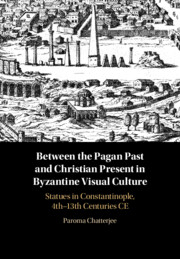
Up to its pillage by the Crusaders in 1204, Constantinople teemed with magnificent statues of emperors, pagan gods, and mythical beasts. Yet the significance of this wealth of public sculpture has hardly been acknowledged beyond late antiquity. In this book, Paroma Chatterjee offers a new perspective on the topic, arguing that pagan statues were an integral part of Byzantine visual culture. Examining the evidence in patriographies, chronicles, novels, and epigrams, she demonstrates that the statues were admired for three specific qualities – longevity, mimesis, and prophecy; attributes that rendered them outside of imperial control and endowed them with an enduring charisma sometimes rivaling that of holy icons. Chatterjee’s  interpretations refine our conceptions of imperial imagery, the Hippodrome, the Macedonian Renaissance, a corpus of secular objects, and Orthodox icons. Her book offers novel insights into Iconoclasm and proposes a more truncated trajectory of the holy icon in medieval Orthodoxy than has been previously acknowledged.

Paroma Chatterjee is associate professor of art history at the University of Michigan. She is the author of Living Icons: The ‘Vita’ Image in Byzantium and Italy, 11th-13th Centuries (Cambridge University Press, 2014).

Informations pratiques :

Paroma Chatterjee, Between the Pagan Past and Christian Present in Byzantine Visual Culture. Statues in Constantinople, 4th-13th Centuries CE, Cambridge, Cambridge University Press, 2022. 350 p., 26 x 18,5 cm. ISBN : 9781108833585. GBP 75.

Source : Cambridge University Press

Publié dans Publications | Laisser un commentaire

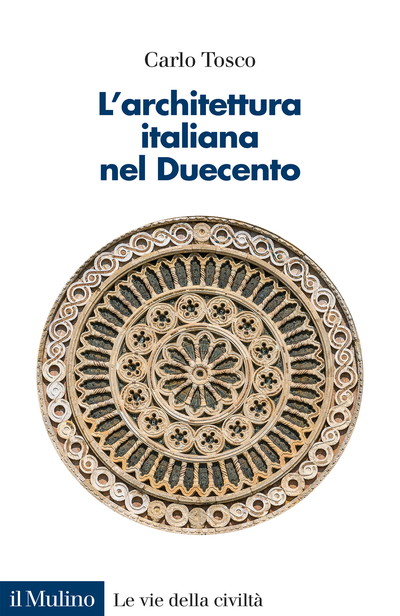
Publication – Carlo Tosco, « L’architettura italiana nel Duecento »

Il Duecento è stato forse il secolo di maggiore sperimentazione nella storia dell’architettura medievale italiana. Il suo racconto è avventuroso, perché include edifici straordinari come la basilica di Assisi, il battistero di Parma, i castelli di Federico II nel Mezzogiorno, i palazzi pubblici delle città, le grandi cattedrali di Siena, di Firenze e di Orvieto. Politicamente instabile e frammentata, dal punto di vista artistico l’Italia è un mosaico che racchiude tessere multiformi: sperimentazioni, ibridazioni, flussi di committenze. Nel Duecento, fanno la loro comparsa fenomeni che trovano proprio in Italia la loro origine, come l’architettura degli ordini mendicanti e la promozione pubblica dei palazzi comunali. Con Federico II e la committenza dei papi l’arte diventa manifestazione di autorità contrapposte che utilizzano gli edifici come un veicolo di propaganda e di affermazione. L’architettura si fa strumento potente nelle mani di chi detiene il potere.

Carlo Tosco insegna Storia dell’architettura al Politecnico di Torino. Con il Mulino ha pubblicato anche «Il paesaggio come storia» (20172), «I beni culturali» (2014), «L’architettura medievale in Italia. 600-1200» (2016), «Andare per abbazie cistercensi» (2017) e «Storia dei giardini» (2018).

Informations pratiques :

Carlo Tosco, L’architettura italiana nel Duecento, Bologne, Il Mulino, 2021 (Le vie della civiltà). pp. 376, Brossura, 978-88-15-29421-0. Prix : 25 euros.

Source : Il Mulino

Publié dans Publications | Laisser un commentaire

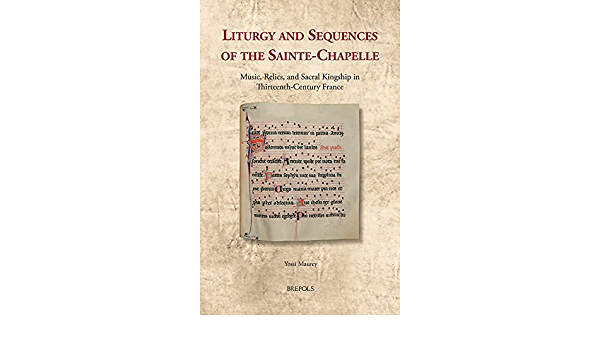
Publication – Yossi Maurey, « Liturgy and Sequences of the Sainte-Chapelle. Music, Relics, and Sacral Kingship in Thirteenth-Century France »

The book revolves around some of the most important relics of Christendom — chief among them the Crown of Thorns — and the ways in which they became, effectively, personal objects of devotion, notwithstanding their ostensibly universal appeal. It was France that laid claim to the Passion and other relics in the middle of the thirteenth century in a campaign that involved the construction of a new magnificent chapel — the Sainte-Chapelle — designed specifically to display the relics, and the composition of new liturgies to celebrate and focus attention on them. As inert objects, relics could not accomplish much without being ‘activated’ one way or the other, whether in prose, poetry, paintings, statues, or in music. It is these modes of activation that endowed the substance of relics with identity and meaning that made them so powerful and effective. The liturgies studied in this book were some of the most critical mechanisms of activation; they enabled the power of the Sainte-Chapelle relics, articulated the nature of that power, and proclaimed it far and wide. Nowhere is this more evident than in the sequences memorializing these relics, which were chiefly cultivated and championed at the Sainte-Chapelle. This book examines these sequences, and the ways in which they give prominence to the underlying agenda of the French monarchy by promoting and naturalizing the notion of sacral kingship, rooted in biblical kingship.

Table des matières :

List of Illustrations, Acknowledgements, List of Manuscript Sigla, Abbreviations, A Note on the Transcriptions and Translations

IntroductionPart I. The Crown of Thorns Historia susceptionis coronae spinaeThe Liturgy for the Crown of Thorns Sequences for 11 August and its OctaveEpilogue: Dyadema salutare – A Dominican Addition and its ImportConclusionsPart II. The Reception of Relics

  • Relics in Motion
  • The Liturgy for the Reception of the Relics
  • Sequences for 30 September and its Octave
  • Conclusions

Appendices

  1. The Main Sources for the Sainte-Chapelle Liturgy
  2. Manuscript Sources of the Crown Mass Propers
  3. Manuscript Sources of the Crown Sequences
  4. Manuscript Sources of the Relics Sequences
  5. Synopsis of the Crown Sequences
  6. Synopsis of the Relics Sequences
  7. The Historia Susceptionis Coronae Spineae:Text and Translation
  8. Lessons for the Reception of Relics

Bibliography

Index

Informations pratiques :

Yossi Maurey, Liturgy and Sequences of the Sainte-Chapelle. Music, Relics, and Sacral Kingship in Thirteenth-Century France, Turnhout, Brepols, 2021 (Cultural Encounters in Late Antiquity and the Middle Ages, 35). 252 p., 4 colour ill. + 21 Musical Examples, 27 b/w tables, 156 x 234 mm. ISBN: 978-2-503-59105-6. Prix : 80 euros.

Source : Brepols

Publié dans Publications | Laisser un commentaire

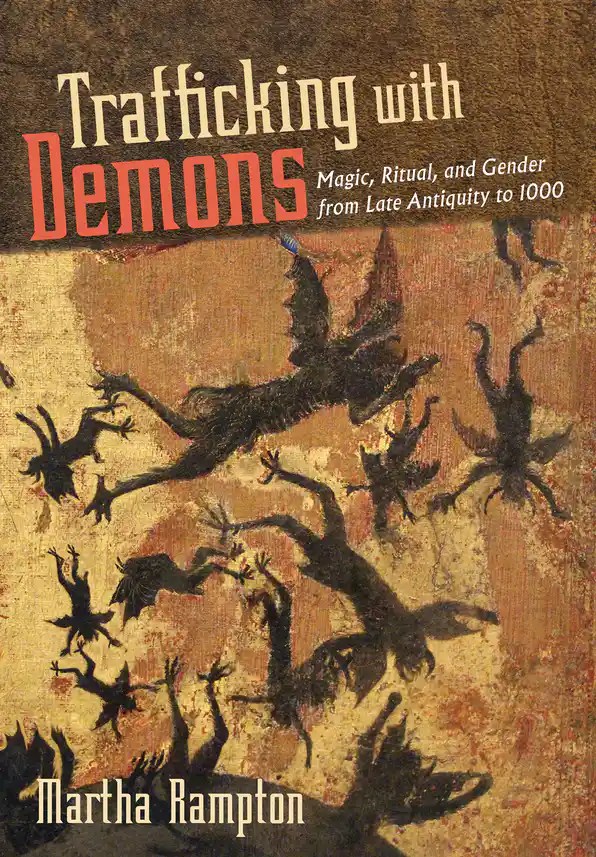
Publication – Martha Rampton, « Trafficking with Demons. Magic, Ritual, and Gender from Late Antiquity to 1000 »

Trafficking with Demons explores how magic was perceived, practiced, and prohibited in western Europe during the first millennium CE. Through the overlapping frameworks of religion, ritual, and gender, Martha Rampton connects early Christian reckonings with pagan magic to later doctrines and dogmas. Challenging established views on the role of women in ritual magic during this period, Rampton provides a new narrative of the ways in which magic was embedded within the foundational assumptions of western European society, informing how people understood the cosmos, divinity, and their own Christian faith.

As Rampton shows, throughout the first Christian millennium, magic was thought to play a natural role within the functioning of the universe and existed within a rational cosmos hierarchically arranged according to a « great chain of being. » Trafficking with the « demons of the lower air » was the essense of magic. Interactions with those demons occurred both in highly formalistic, ritual settings and on a routine and casual basis. Rampton tracks the competition between pagan magic and Christian belief from the first century CE, when it was fiercest, through the early Middle Ages, as atavistic forms of magic mutated and found sanctuary in the daily habits of the converted peoples and new paganisms entered Europe with their own forms of magic. By the year 1000, she concludes, many forms of magic had been tamed and were, by the reckoning of the elite, essentially ineffective, as were the women who practiced it and the rituals that attended it.

Informations pratiques :

Martha Rampton, Trafficking with Demons. Magic, Ritual, and Gender from Late Antiquity to 1000, Ithaca, Cornell UP, 2022 (Culture & Cultural Studies, Medieval & Renaissance Studies). 480 p. ISBN : 9781501702686. Prix : USD 65,00.

Source : Cornell University Press

Publié dans Publications | Laisser un commentaire

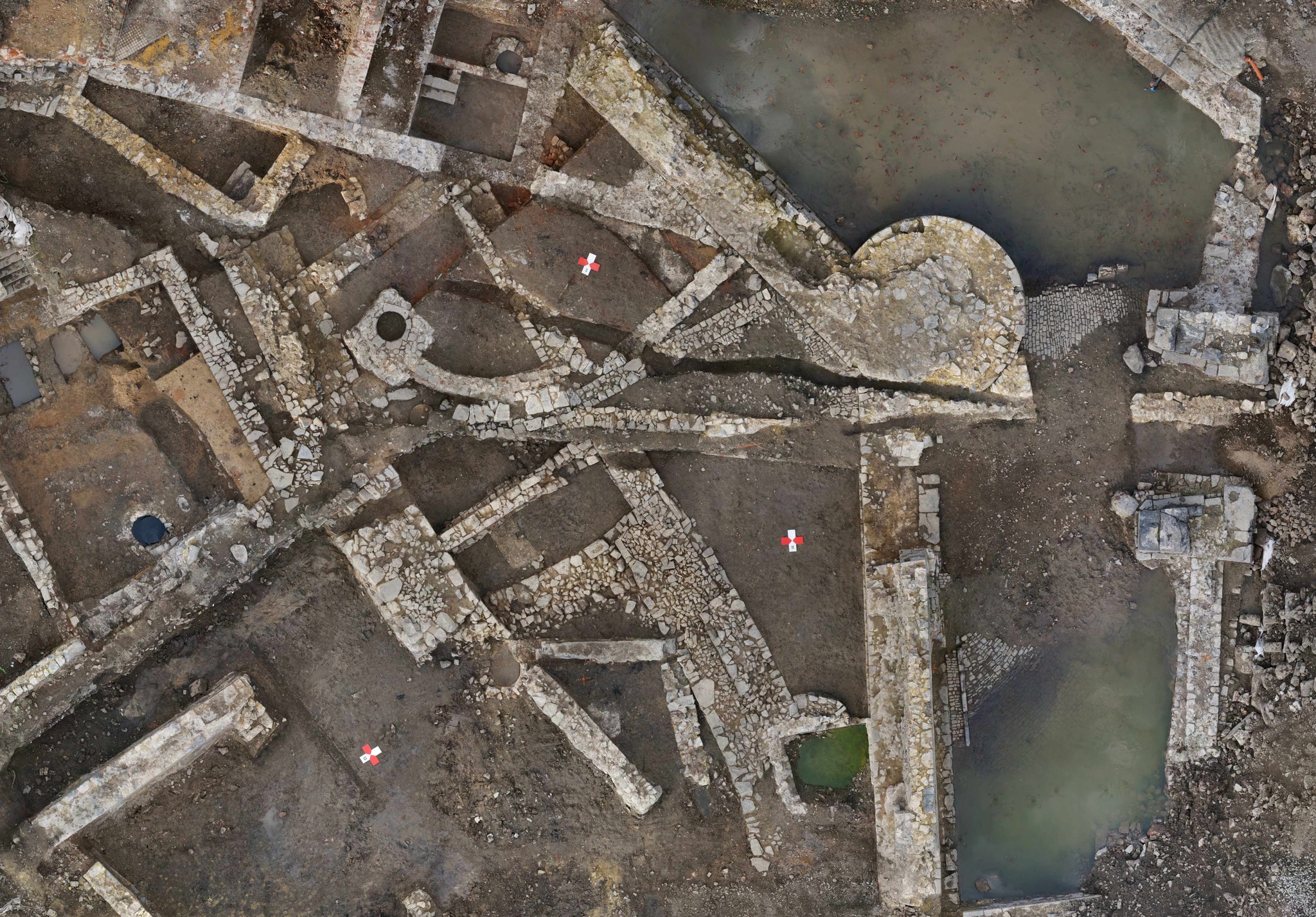
Conférence – « Le confluent Sambre-et-Meuse, à Namur. Bilan de l’opération archéologique du Grognon », par Dominique Bosquet et Raphaël Vanmechelen

Conférence de Dominique Bosquet et Raphaël Vanmechelen.

Le site du Grognon, au confluent de la Sambre et de la Meuse, a récemment fait l’objet d’une opération d’archéologie préventive de grande ampleur, menée par l’AWaP préalablement à la construction d’un parking souterrain et au réaménagement du site. Cette ultime opération clôture 50 années d’enquête archéologique sur le berceau présumé de la ville Namur. Les résultats de ces recherches permettent aujourd’hui de définir les grandes étapes de développement de ce site emblématique, à la remarquable continuité d’occupation. Campements saisonniers, puis installations sédentaires, durant la Préhistoire, sanctuaire et lieu public au Haut-Empire romain, portus puis quartier comtal au Moyen Âge, quartier urbain, populaire et dynamique jusqu’à sa démolition récente, et maintenant siège des institutions de Wallonie : le Grognon a de tout temps incarné les ambitions et préoccupations de l’Homme.

Informations pratiques :

Mardi 18 février, 18h30-21h00.

Société royale d’Archéologie de Bruxelles – SRAB

7, Place Royale, 1000 Bruxelles, Belgique

Source : Société royale d’Archéologie de Bruxelles – SRAB

Publié dans Colloque | Laisser un commentaire

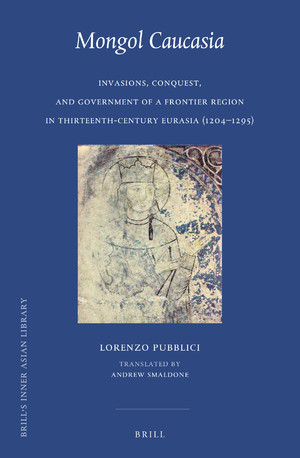
Publication – Lorenzo Pubblici, « Mongol Caucasia. Invasions, Conquest, and Government of a Frontier Region in Thirteenth-Century Eurasia (1204-1295) »

The work focuses on the Mongol conquest and domination of Caucasia in the 13th century, from the Sea of Azov in the north to present-day Georgia and Armenia.

While sedentary civilizations and nomadic cultures had a long history of interaction in this region, the Mongol conquest made it into a frontier in which Medieval Europe and Asia became more intensely integrated and interconnected. The Mongols made Caucasia into a coherent power based on both European and Asian experiences and traditions. The genesis of this deeply transformational process constitutes the central theme of this book.

Lorenzo Pubblici, Ph.D. (2005, University of Florence), is Full Professor of History and Anthropology and Chair of the Department of Humanities and Liberal Arts (DHLA) of the Santa Reparata International School of Arts (SRISA) in Florence where he has been a faculty member since 2006. He is the scientific director of CeSecom (Center for Studies on Central and Eastern Europe in the Middle Ages) and the editor in chief of the book series Europe in between. Histories, cultures and languages from Central Europe to the Eurasian Steppes published by the Florence University Press. Prof. Pubblici has published monographs and is author of numerous articles on the Mongol history, especially on the history of the Golden Horde in the 13th and 14th centuries.

Table des matières : ici

Informations pratiques :

Lorenzo Pubblici, Mongol Caucasia. Invasions, Conquest, and Government of a Frontier Region in Thirteenth-Century Eurasia (1204-1295), Leiden–Boston, 2022 (Brill’s Inner Asian Library, 41). 225 p., 24 x 16 cm. ISBN : 978-90-04-50352-6. Prix : € 100.

Source : Brill

Publié dans Publications | Laisser un commentaire

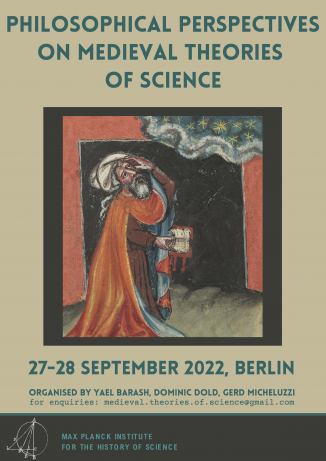
Appel à contribution – Philosophical Perspectives on Medieval Theories of Science

CFP: Philosophical Perspectives on Medieval Theories of Science
Max Planck Institute for the History of Science, Berlin
27–28 September 2022

„Medieval science“ is a fascinating object of study, both when viewed as a historical precondition of the rise of „modern science“, and when studied because its instances provide important examples of significantly different, yet highly sophisticated ways of thinking. However, those who wish to study particular instances of „medieval science“ in light of general philosophical reflections on science from the Middle Ages will not find much help in the recent literature: no general history of developments and shifts in medieval „theories of science“ is available, a state of affairs lamented already more than 50 years ago by Laurens Laudan, and again recently by Ana María Mora-Márquez.

Detailed and systematic studies on medieval „theories of science“ are, thus, scarce. This is regrettable as a robust evaluation of „medieval science“ will, at least in its details, depend on the precise shape which „theories of science“ took in the Middle Ages. We adopt here a very broad and inclusive working definition of a theory of science as a combination of both „scientific methods“ and of the ways in which these „methods“ relate to philosophical background assumptions (stemming, for instance, from metaphysics or natural philosophy). Moreover, we understand scientific methods as „the different ways in which it was possible for (medieval scholars) to produce knowledge that is rational, objective, and based on evidence“, following a working definition proposed by Mora-Márquez. Such scientific methods clearly include logical tools and mathematical techniques, but also those procedural rules and practical guidelines that were upheld as rational.

We want to bring together scholars with an interest in these kinds of theories of science in the Middle Ages. Our perspective is philosophical: we focus on the (epistemological and ontological) reasons behind, the arguments for, and the rational concepts within particular methodological views. While our focus is narrow in this sense, we do not want to impose restrictions on the material studied. In particular, our „Middle Ages“ include the Arabic, Greek, Hebrew, and Latin traditions of medieval philosophy. Moreover, case studies need not be limited to the canon of the history of philosophy and logic, and we also welcome and encourage contributions from a wide range of disciplines, including theology, intellectual history, the history of science, and the history of art.

Contributing papers will consider medieval theories of science and its philosophical implications, and might consist in particular case studies, or reflect more broadly on theoretical issues. Questions addressed by the papers might include but are not restricted to:

– Where can explicit discussions of theories of science be found? Are these limited to logical writings? Which issues were particularly scrutinized in the medieval philosophical debate?
– What is the place of methodologies that were constructed analogically, i.e., practices (e.g., artistic practices) structured in analogy to philosophical or scientific methods?
– Can the interpretation of philosophical, (proto-)scientific, religious, or artistic practices in the Middle Ages benefit from a better understanding of medieval theories of science? Do such practices, in turn, illuminate the ideals behind the methods themselves?
– Are medieval theories of science abstract catchalls, or is there room for domain-specificity? Is the notion of „domain“ itself part of discussions in the Middle Ages? If so, can the concept of „domain“ be fruitfully applied to other branches of medieval culture such as art?
– Are medieval theories of science valuable interlocutors for more recent philosophy of science? To what extent can they provide transformative contrasts to contemporary philosophical assumptions?
– To what extent do answers to all these questions depend on the methodologies employed by us (as philosophers, theologians, intellectual historians, historians of science, or historians of art)? Can our answers benefit from a critique of these (historiographical or exegetical) methodologies?

Over the course of two days, we aim to hold several panels with two to three twenty-minute papers each, as well as keynote lectures of forty minutes each.

Submission:

We are inviting proposals for papers of twenty-minute length. Please send abstracts of up to 500 words with CVs (as well as any inquiries) to medieval.theories.of.science@gmail.com by 14 February 2022.

Organisers:

Yael Barash (Cohn Institute for the History of Science and Ideas, Tel Aviv)
Dominic Dold (Max Planck Institute for the History of Science, Berlin)
Gerd Micheluzzi (Department of Art History, University of Hamburg)

Updates and confirmed speakers:

For updates and a list of confirmed speakers, please consult the even website: https://www.mpiwg-berlin.mpg.de/event/philosophical-perspectives-medieval-theories-science.

Source : Max Planck Institute for the History of Science

Publié dans Appel à contributions | Laisser un commentaire