Publication – « The Materiality of Sound in Chant Manuscripts in the East », éd. Elsa De Luca, Ivan Moody, Jean-François Goudesenne

The two books of Scriptor, Cantor & Notator present an innovative multi-author project dealing with the complex interconnections between learning, writing and performing chant in the Middle Ages. A number of different methodological approaches have been employed, with the aim of beginning to understand the phenomenon of chant transmission over a large geographical area, linking and contrasting modern definitions of East and West. Thus, in spite of this wide geographical spread, and the consequent variety of rites, languages and musical styles involved, the common thread of parallels and similarities between various chant repertoires arising from the need to fix oral repertories in a written form, and the challenges involved in so doing, are what bring this wide variety of repertoires and approaches together. This multi-centric multi-disciplinary approach will encourage scholars working in these areas to consider their work as part of a much larger geographical and historical picture, and thus reveal to reader and listener more, and far richer, patterns of connections and developments than might otherwise have been suspected. 

The Materiality of Sound in Chant Manuscripts in the East brings together articles on ancient Greek, Byzantine, Coptic and Armenian music scripts in the East. Together with the collection of essays published in The Materiality of Sound in Chant Manuscripts in the West, these books discuss local scribal peculiarities and idiosyncrasies beyond the cultural and geographical contexts of production and uses of their manuscript sources.

Elsa De Luca (cesem-fcsh NOVA University, Lisbon) is an early music scholar pursuing research on medieval chant notations; she is also engaged in developing tools for computer-assisted research in early music.

The late Ivan Moody (cesem-fcsh– NOVA University, Lisbon) was a composer, musicologist and Orthodox priest. At the time of his passing, he was actively involved in several research projects dealing with music in the Mediterranean and the Balkans.

Jean-François Goudesenne is a researcher at the Institut de Recherche et d’Histoire des Textes (CNRS), in the musicology section, founded by Michel Huglo in 1979. His most important contribution is the discovery of the Western dialect of Gregorian Chant in Neustria.

Introduction

The Early History of Notation

Writing music on Greek texts during the first Christian millennium (Alexandru, Maria)

La notation musicale grecque, une affaire d’artistes ou d’artisans ? (Perrot, Sylvain)

Prescriptive Notations

Les tableaux de signes ekphonétiques : nouvelles considérations à partir des signes prosodiques (Zographos, Anastasios)

La notazione ecfonetica bizantina: chaos e kosmos nel cosiddetto «sistema degenerato» (Tessari, Silvia)

Exegete and Cantor

A Kalophonic Verse from the Second Psalm composed by John Koukouzeles: From Manuscript to Performance (Chaldaeakes, Achilleas G.)

Le chantre dans les communautés juives médiévales (Cerveux, Alexandre)

Regional Scripts and Repertories

The Asmatikon Notation. New Evidence (Kritikou, Flora)

Scriptor, Cantor, Notator. The Case of the Armenian Neumes (Utidjian, Haig)

No Notation, No Problem. Modern Mnemonic Movement in Ancient ‘Pharaonic’ Singing (Hanna, Mena Mark)

The last ‘scriptor cantilenae’. Composing and anthologizing on the eve of music typography in the Balkans (1820) (Plemmenos, John)

List of Manuscripts

List of Relevant Names

List of Places

The Materiality of Sound in Chant Manuscripts in the East, éd. Elsa De Luca, Ivan Moody, Jean-François Goudesenne, Turnhout, Brepols, 2025 ; 1 vol., 280 p. (Musicalia Antiquitatis & Medii Aevi, 3). ISBN : 978-2-503-61009-2. Prix : : € 99,00.

Source : Brepols
Publié dans Publications | Commentaires fermés sur Publication – « The Materiality of Sound in Chant Manuscripts in the East », éd. Elsa De Luca, Ivan Moody, Jean-François Goudesenne

Publication – Roger Collins, « From Clovis to Charlemagne: Frankish History and Historians »

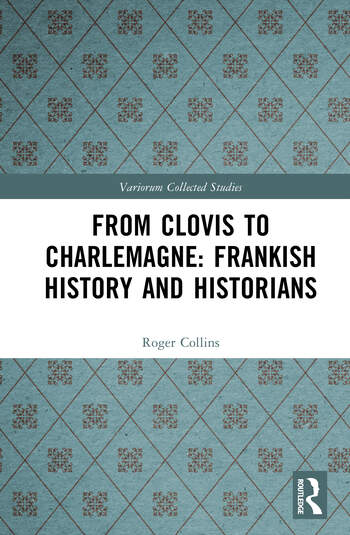
This book is a collection of papers on Frankish historiography in the Merovingian and early Carolingian periods, from the late sixth to early ninth centuries, and studies numerous individual texts, evaluating their witness to the events they describe. It also includes hitherto unpublished items on the so-called Chronicle of Fredegar, in both its original and eighth-century versions, and also an entirely new article on the Merovingian dynastic crisis of 613, along with a general introduction and a bibliography of its author’s writing.

Particular attention is focused on the element of deception, deliberate or otherwise, in the narrative accounts of some of the Frankish histories and chronicles and on the way they were written in order to promote specific interpretations of certain individuals and events, or in some cases to conceal their very existence. Certain central episodes such as the imperial coronation of Charlemagne are examined to detect the ways in which they were interpreted and presented in contemporary texts.

From Clovis to Charlemagne: Frankish History and Historians will appeal to academics and students interested in the history of early medieval France, the processes of historical composition in that period, the study of manuscripts relating to it and the wider questions about historical understanding and the interpretation of evidence.

Roger Collins is an historian and author. He studied at the University of Oxford (The Queen’s and St Cross Colleges) under Peter Brown and Michael Wallace-Hadrill. He was a fellow of the Institute of Advanced Studies at the University of Edinburgh from 1994 to 1998. Since then, he has been an honorary fellow in the School of History, Classics and Archaeology. Initially, his books concerned Late Antiquity and the early Middle Ages, but his studies of the Basques and of the papacy have extended to the present day. He has also written a memoir, Chased by Bulldogs. A Historian’s Tale (2025).

Table des matières :

Introduction: The Evolution of Early Frankish Historiography from Gregory of tours to Einhard

Chapter 1

Gregory of Tours and Spain

in Alexander Callendar Murray (ed.), A Companion to Gregory of Tours (Leiden: Brill, 2016), pp. 498-515

Chapter 2

The Continuator of Marius of Avenches, ‘Fredegar’, and the Merovingian dynastic crisis of 613

Previously unpublished

Chapter 3

Deception and Misrepresentation in Eighth Century Frankish Historiography: Two Case Studies

in Jörg Jarnut, Ulrich Nonn & Michael Richter (ed.), Karl Martel in zeiner Zeit (Sigmaringen: Beihefte der Francia 37, 1994), pp. 227-247

Chapter 4

Pippin III as Mayor of the Palace: The Evidence

in Matthias Becher & Jörg Jarnut (ed.), Der Dynastiewechsel von 751: Vorgeschichte, Legitimationntrategie und Erinnerung (Munster, 2005), pp. 75-91

Chapter 5

The Lorsch Annals and Charlemagne’s imperial coronation

in Joanna Story (ed.), Charlemagne: Empire and Society (Manchester U.P, 2005), pp. 52-70

Chapter 6

The Frankish Past and the Carolingian Present in the Age of Charlemagne

in Peter Godman, Jörg Jarnut & Peter Johanek (ed.), Am Vorabend der Kaiserkrönung (Berlin, 2002), pp. 301-322

Chapter 7

Charlemagne and His Critics, 814-829

in Régine LeJan (ed.), La royauté et les élites dans l’Europe carolingienne (Lille, 1998), pp. 193-211

Chapter 8

The Reviser Revisited: Another Look at the Alternative Version of the Annales Regni Francorum

in Alexander Callendar Murray (ed.), After Rome’s Fall: Narrators and Sources of Early Medieval History (Toronto: University Press, 1998), pp. 191-211

Chapter 9

In the Footsteps of Fredegar: the Based, Dillingen and Munich Fragments

Previously unpublished, deriving from a lecture to the Early Medieval Seminar in the Institute for Historical Research, in the University of London in 2005.

Chapter 10

A Gift for Charles the Bald? MS Vienna, Österreichische Nationalbibliothek 473

Previously unpublished, deriving from a presentation to a seminar in Vienna

Publications of Roger Collins

Informations pratiques :

Roger Collins, From Clovis to Charlemagne: Frankish History and Historians, Londres, Routledge, 2025 ; 1 vol., 226 p. (Variorum Collected Studies). ISBN : 9781032880525. Prix : GBP 145,00.

Source : Routledge

Publié dans Publications | Commentaires fermés sur Publication – Roger Collins, « From Clovis to Charlemagne: Frankish History and Historians »

Séminaire – Pouvoirs, culture et pratiques politiques à la fin du Moyen Âge (2025-2026)

Séminaire de recherche 2025-2026
Première séance le mardi 4 novembre 2024 – Dernière séance le mardi 5 mai 2025
Mardi, 15 h 00-17 h 00, centre Sorbonne, salle Perroy, 1 rue Victor Cousin

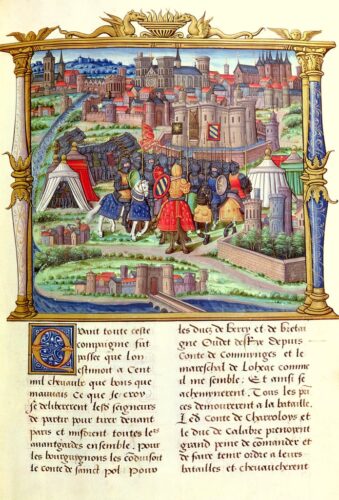
Argumentaire. Le séminaire de cette présente année continue de réfléchir aux enjeux et aux pratiques du pouvoir à la fin du Moyen Âge. Il sera plus précisément articulé autour de la recherche personnelle de l’animateur du séminaire consacrée, cette présente année, à la Ligue du Bien public. Trois séances seront consacrées à ce sujet. Les autres interventions traiteront des rapports entre le roi et les princes, dans l’optique de continuer, comme les années précédentes, à mieux appréhender et comprendre les constructions princières tardo-médiévales, dans une démarche comparative entre France et espaces politiques européens. Elles exposeront des recherches en cours (Élisabeth Schmit, François Foronda), des recherches qui ont fait l’objet d’une habilitation récente (interventions de Francesco Montorsi et Olivier Canteaut) ou d’une publication passée ou à venir (interventions de André Vitória, Mathieu Deldicque, Corinne Leveleux-Teixeira, Sylvain Parent, Françoise Vieillard). Enfin le séminaire accueillera deux conférences de Georg Jostkleigrewe, de l’Université de Halle, professeur invité de l’École d’histoire de la Sorbonne, en février 2026.

Mardi 4 novembre 2025.Olivier MattéoniRecherches sur la Ligue du Bien public (1)

Mardi 18 novembre 2025. Élisabeth Schmit, maîtresse de conférences à l’université Paris 1 Panthéon-Sorbonne. Représenter le temps et l’espace judiciaires. À propos des images du procès de Robert III d’Artois (BnF, ms fr. 18437)

Mardi 2 décembre 2025. Olivier MattéoniRecherches sur la Ligue du Bien public (2)

Mardi 16 décembre 2025. François Foronda, professeur d’histoire du Moyen Âge à l’Université Paris 1 Panthéon-Sorbonne.1465 en Castille, une autre guerre du Bien public ?

Mardi 27 janvier 2026. André Vitória, Instituto de Estudos Medievais, Faculdade de Ciências Sociais e Humanas, Universidade Nova de Lisboa. Chose publique et souveraineté royale au parlement de Paris au xve siècle

Mardi 10 février 2026Georg Jostkleigrewe, professeur à l’université de Halle (Allemagne), professeur invité de l’université. Les factions françaises des xiiie et xive siècles. Contours d’un sujet peu connu

Mardi 17 février 2026Georg Jostkleigrewe, professeur à l’université de Halle (Allemagne), professeur invité de l’université. Littérature engagée ? Perspectives d’une lecture factionnelle de la littérature française des xiiie et xive siècles (Attention : le séminaire se déroulera à l’Institut historique allemand)

Mardi 24 février 2026. Mathieu Deldicque,conservateur en chef du patrimoine,directeur du Musée Condé, Chantilly, commissaire d’exposition. Retour sur « Les très riches Heures du duc de Berry (Chantilly, 7 juin-5 octobre 2025) » : enjeux patrimoniaux, muséographiques et scientifiques d’une exposition d’exception

Mardi 10 mars 2026Francesco Montorsi, maître de conférences HDR en littérature médiévale à l’université Lyon II Lumière. Seigneur rebelle, auteur oublié : le cas de Jacques d’Armagnac

Mardi 31 mars 2026. Corinne Leveleux-Teixeira, professeure d’histoire du droit à l’Université d’Orléans, directrice d’étude à l’École pratique des Hautes Études. Blasphème et radicalité confessionnelle. La répression du sacrilège verbal comme prélude aux guerres de religion 

Mardi 7 avril 2026Sylvain Parent, maître de conférences HDR à l’ENS de Lyon. Le tyran comme hérétique. Les papes et l’accusation de tyrannie dans l’Italie du xive siècle

Mardi 14 avril 2026. Olivier Canteaut, maître de conférences à l’École nationale des chartes. D’ouest en est : transferts de techniques scripturaires à la chancellerie de Jean de Luxembourg (1321-1346)

Mardi 21 avril 2026Olivier MattéoniRecherches sur la Ligue du Bien public (3)

Source : LAMOP

Publié dans Séminaire | Commentaires fermés sur Séminaire – Pouvoirs, culture et pratiques politiques à la fin du Moyen Âge (2025-2026)

Offre d’emploi – Assistant Professor, Medieval Art History, Southern Methodist University

Assistant Professor, Medieval Art History, Southern Methodist University

The Department of Art History in the Meadows School of the Arts at Southern Methodist University seeks a specialist in the art and architecture of the Medieval period, broadly defined. Applications are welcome from scholars specializing in any period from AD 400-1400, whose research focuses on Europe, the Mediterranean, and/or culturally interconnected artistic traditions (Jewish, Islamic, African/Indian Ocean traditions).

The successful candidate will demonstrate a commitment to interdisciplinarity, strong visual analytic skills, theoretical fluency, and a broad knowledge of Medieval visual culture. Potential research interests may address questions of art and thought; institutional and social/historical critiques of artistic production and reception; history and theories of vision, artistic media, and spatial practice; ritual performance and sacrality; interconfessional relations and exchanges; cultural poetics of gender and sexuality, social identity, and the political imaginary; cross-cultural exchange and interculture. We encourage candidates whose teaching would engage the resources and programs of cultural institutions on campus and in the area, including the art collections at the Meadows Museum, Bridwell and DeGolyer Libraries, Dallas Museum of Art, and the Kimbell Art Museum. We particularly encourage applications from candidates whose work crosses disciplinary/methodological boundaries, engages with emerging fields, and leverages or enhances the department’s existing strengths.

We are a collaborative department built around innovative faculty research and teaching. Our faculty and our undergraduate, MA, and PhD programs pursue critical reassessment of historical and new media, a broad understanding of visual/cultural/somatic technologies, and a particular interest in race, gender, and class. We seek a colleague who will play an important role in shaping the future of research, curriculum, and pedagogy in department and the university.

All applicants must be able to teach introductory and upper-level undergraduate courses, as well as lecture courses and undergraduate and graduate seminars in their area of specialization. The standard departmental teaching load is 2/2; the successful candidate will also advise graduate research at the MA and PhD levels. Faculty in the Department of Art History receive leaves, research and travel support. In collaboration with colleagues in allied specialties in the Department of Art History, the candidate will assume an important role in shaping the future of research, curriculum, and pedagogy at the institution.

Position starting date: August 1, 2026. Salary commensurate with experience.

Minimum Qualifications
– Ph.D. in-hand by August 2026

Applications must include:
– Cover Letter
– CV
– one or more publications
– Names and contact information for three letters of reference/support.

Applications must be submitted electronically via Interfolio at the following link: https://apply.interfolio.com/170791. To ensure full consideration for the position, the application must be received by November 17, 2025, though the committee will continue to accept applications until the position is filled. Hiring is contingent upon the satisfactory completion of a background check.

About the Meadows School:
Founded in 1969, the Meadows School of the Arts at Southern Methodist University is one of the foremost arts education institutions in the United States. The Meadows School offers undergraduate and graduate degrees in advertising, art, art history, arts management and arts entrepreneurship, creative computation, music, theatre, dance, film and media arts, public affairs & corporate communication, journalism and fashion media. The goal of the Meadows School of the Arts, as a comprehensive educational institution, is to prepare students to meet the demands of professional careers. The Meadows School is a leader in developing innovative outreach and community engagement programs, challenging its students to make a difference locally and globally by developing vital connections between art, entrepreneurship and change. The Meadows School of the Arts is also a convener for the arts in North Texas, serving as a catalyst for new collaborations and providing critical industry research.

About SMU:
SMU, a private nonsectarian university of roughly 12,000 students, is an inclusive and intellectually diverse community of teachers and scholars that values diverse research and creative agendas and is dedicated to academic excellence. The Dallas/Fort Worth metroplex is a culturally rich arts and global business center and home to over eight million people, offering exceptional museums, diverse cultural attractions and a vibrant economy.

SMU is an equal opportunity employer. All qualified applicants will receive consideration for employment without regard to race, color, religion, national origin, sex, age, disability, genetic information, veteran status, sexual orientation, or gender identity and expression.

Source : Blog de l’ApAhAu

Publié dans Offre d'emploi | Commentaires fermés sur Offre d’emploi – Assistant Professor, Medieval Art History, Southern Methodist University

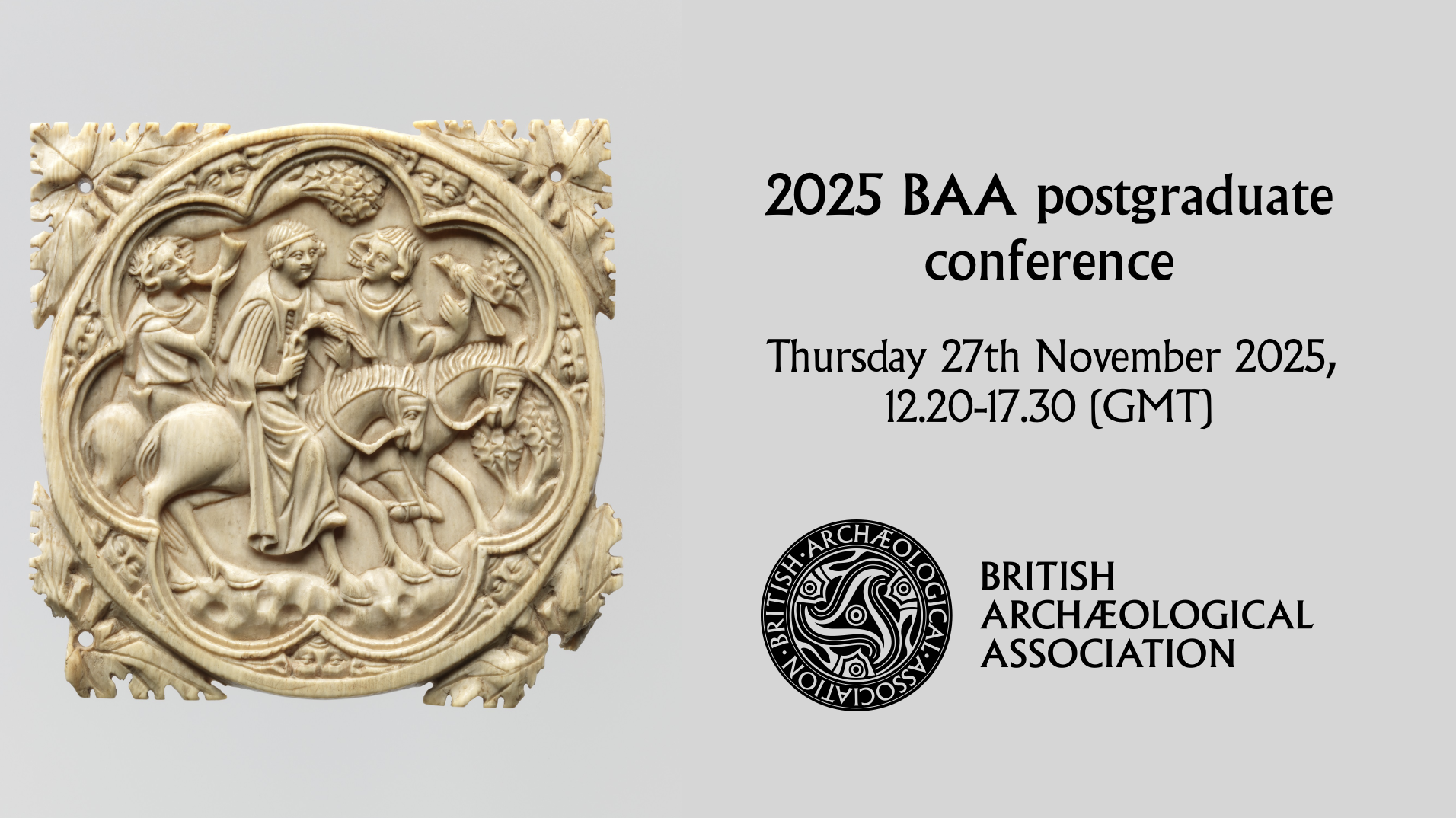
Colloque – British Archaeological Association Post-Graduate Online Conference

27 Nov 2025
12.20pm-17.30pm

The British Archaeological Association are excited to present a diverse conference which includes postgraduates and early career researchers in the fields of medieval history of art, architecture, and archaeology. The British Archaeological Association postgraduate conference offers an opportunity for research students at all levels from universities across the UK and abroad to present their research and exchange ideas.

The conference will take place online via Zoom. Register to attend the conference using this link.

12.20pm (GMT) Welcome

Panel 1: Artists and Creation

12.30 – 13.50 (GMT)

Chair: Professor Lindy Grant (University of Reading)

  • Camilla Marraccini (IMT Lucca) – Choreographed Creation:  Gesture, Touch, and Theology in the Dogmatic Sarcophagus 
  • Irene Bruzzone (University of Udine) – Interplays and  Intersections in Siena Cathedral: The Architrave of the Main Portal
  • Stéphane Vrablik (Charles University) – Woe Exported. Vienna  as an Export Centre around 1400

13.50 – 14.05 (GMT) Break 


Panel 2: Devotional Objects and Personalised Practices

14.05 – 15.45 (GMT)

Chair: Dr Lucy Wrapson (Hamilton Kerr Institute, University of Cambridge)

  • Molly Judd (University of Cambridge) – The Anglo-Norman  Pulpitum at Ely Cathedral 
  • Blanche Darbord (University of Cambridge) – The Tomb of  Lazarus in Autun: Pilgrimage, Architecture, and Experiencing the Sacred
  • Isabelle Ostertag (University of Virginia) – A Local, Parochial  Walsingham: The Lady Chapel of Holy Trinity Church at Long Melford
  • Agnese Sartor (University of Udine) – Some Unusual Paintings  on the Reverse Side of Rood Screens and the Significance of Grisaille

15.45 – 16.00 (GMT) Break


Panel 3: Manipulating Memory and Death in Art and Architecture

16.00 – 17.20 (GMT)

Chair: Dr Alexandrina Buchanan (University of Liverpool)

  • Louise Williams (Bangor University) – Land, Power, and  Memory: The Symbolic Landscape of Castles in Medieval Wales 
  • Vittoria Magnoler (University of Genoa) – Silent Words and  Sacred Echoes: The Memorial Role of Image and Text in a Late Medieval  Liturgical Folio 
  • Mathilde Mioche (The Courtauld) – Donning Death: Memento  Mori Ivories as Fashion Accessories

17.20 – 17.30 (GMT) Closing remarks

Source : Medieval Art Research

Publié dans Colloque | Commentaires fermés sur Colloque – British Archaeological Association Post-Graduate Online Conference

Journée d’étude – Faire l’amour : des pratiques affectives au service du lien social

15 novembre 2025 | 9h30-16h30
Sorbonne, salle des Actes
17, rue de la Sorbonne, 75005, Paris

Entrée sur inscription avant le 11 novembre 2025 (jedoctorantscrm@gmail.com)

Les doctorales du Centre Roland Mousnier — Comité d’organisation et scientifique : Matthieu Bayle, Borromée Cavro, Alexandre Getenet, Camille Hamon, Zoé Plaza Leroux, Eric Védrenne

9h30 : Accueil

10h00 : Introduction

Session 1 : Mariage et normes conjugales
Présidente : Cécile Caby (Sorbonne Université, CRM)

Tatiana Hugo (Université de Lorraine, CRULH) – Pratiques matrimoniales et concubinages en Norvège à l’époque d’Harald Ier Hárfagri (872-932/933)

Marcos Marinho Fernandes (Aix-Marseille Université, TELEMMe) – Princesses en quête d’amour : modèles matrimoniaux et de pouvoir en tension (1490-1520)

Auriane Hernandez (Sorbonne Université, CRM) – Montrer l’amour plutôt que le dire ? Relire les marques de l’affection conjugale dans les sources du XVI siècle

Discussion transversale

11h50 : Repas

Session 2 : Déviances amoureuses
Président : Adrien Carbonnet (Sorbonne Université, CRM)

13h30 : Inès Rieille (Université de Neuchâtel, IHAM) – Combattre l’hérésie par les images : représentations du désordre social par les sexualités « déviantes » dans le Codex Vindobonensis 2554

Chloé de la Barre (conservatrice des bibliothèques, Bibliothèque nationale de France) – (Non) sexualité et pratiques affectives au XIVe siècle, le mariage virginal de Delphine de Puimichel et Elzéar de Sabran

Discussion transversale

Session 3 : Amour et recomposition des liens sociaux
Président : Nicolas Le Roux (Sorbonne Université, CRM)

15h00 : Audrey Gôme Constanti (Université de Rouen, GRHis) – Famille subie, famille choisie : les liens d’ affection dans des conflits d’héritage vénitiens du XVIe siècle

Léonard Barbulesco-Vesval (Sorbonne Université, CRM) – Idéal et expérience charitable des officières et officiers de l’Hôpital général au XVIIIe siècle

Discussion transversale

Pause

Conclusion

Publié dans Colloque | Commentaires fermés sur Journée d’étude – Faire l’amour : des pratiques affectives au service du lien social

Appel à contribution – Black Presence and Influence in Europe Before the Atlantic Slavery

This workshop has the mission of bringing together scholars who are engaged in Black diasporic histories, in particular on the early presence and influence in Europe prior to the Atlantic slavery. The central focus is on the prehistoric, classical and medieval periods. By relying on empirically grounded, critically engaged, and methodologically rigorous findings, the workshop seeks to spark more discussions about Africa-Europe historical connections before the 15th century. In essence, the goal is to broaden the field of Black diasporic studies beyond the traditional focus on Atlantic slavery.

There is an increasing scholarly acknowledgement of the deep and complex history of Black presence and influence in Europe prior to the Atlantic slavery. Historians like Runoko Rashidi, who foregrounded the presence of Black figures in classical antiquity, medieval courts, and early Christian iconography, laid the groundwork for challenging dominant historical narratives that relegated Blackness to the margins of European history. However, these efforts – along with several others, remain fragmented and insufficient in both scope and analysis. As a result, there has been a persistent distortion and marginalization of the role of Black individuals in Europe’s early history. It is little wonder, then, that there remains a significant lacuna in both academic and public knowledge about the Black experience in Europe.

As far as the prehistoric period is concerned, evidence of hominins and early Homo sapiens from Africa – such as the Grimaldi remains found in Italy – is often excluded from dominant narratives of European origins. The classical period, although it recorded a significant number of Black traders, soldiers, philosophers, and diplomats in Greco-Roman societies, is rarely subjected to analytical scrutiny beyond symbolic or tokenistic reference. In the medieval period, despite the enduring contributions of Black Muslims in Al-Andalus and across the wider Mediterranean, these legacies continue to be marginalized, exoticized, or remembered only in selective terms.

This workshop invites participants to critically interrogate these historiographical patterns and to offer new readings that recover and reframe the complexity of Black-European entanglements before 15th century. Scholars employing diverse methods and approaches to uncover and interpret early Black histories in Europe are especially encouraged to contribute. Of particular interest are decolonial approaches and methodological innovations that challenge dominant epistemologies and offer more inclusive frameworks for writing African-European history. Complementing the presentations will be two keynote addresses by Dr. Paul Kaplan, Professor and Chair of Art History, State University of New York (SUNY) and Dr. Olusegun Morakinvo, specialist in African heritage studies and museum and heritage studies as well as Visiting Research Fellow, Department of History, Trinity College Dublin.

To guide these conversations, we encourage submissions that engage with the following questions:
1. What forms of evidence can allow us to trace the presence and significance of Black populations in Europe across prehistoric, classical, and medieval contexts?
2. How do current efforts to retrieve these histories intersect with broader intellectual projects aimed at decolonizing knowledge and reimagining Europe’s past through the lens of Africa’s historical presence?
3. Which methodological approaches can best uncover and reconstruct these early histories from archives and records marked by fragmentation, distortion, or erasure?
4. In what ways did religion, empire, migration, and trade shape how Black individuals were received, integrated, and remembered in various regions of Europe?

By revisiting these underexplored trajectories, the workshop seeks to reposition early Black histories as vital components of Europe’s development. In doing so, it contributes to the ongoing work of rethinking Black diasporic history, while advocating for a more historically grounded and globally interconnected understanding of the European past

Submission Guidelines
Scholars, researchers, artists, activists, and other related practitioners engaged with the central theme of the workshop are invited to submit abstracts of a maximum of 300 words for consideration. Submissions with clear indications of aims, methodology and correlation with the workshop themes will be highly considered.

Abstract Deadline: October 30, 2025
Notification of Acceptance: November 15, 2025
Submission Email: temitope.fagunwa@leuphana.de

Source : H-Soz-Kult

Publié dans Appel à contributions | Commentaires fermés sur Appel à contribution – Black Presence and Influence in Europe Before the Atlantic Slavery

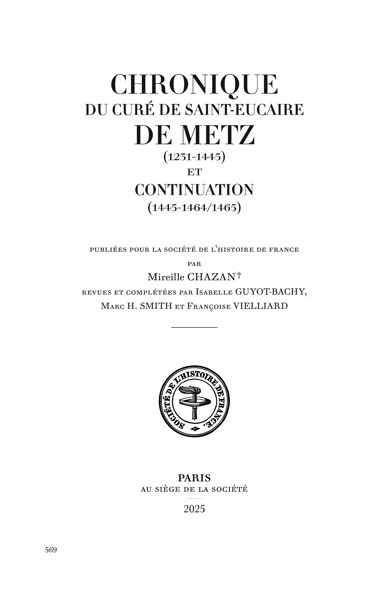
Publication – « Chronique du Curé de Saint-Eucaire de Metz (1231-1445) et Continuation (1445-1464/1465) », éd. Mireille Chazan

Dès le XIVe siècle, la communauté urbaine de Metz a donné une première base écrite à sa mémoire officielle, sous la forme de listes de maîtres-échevins bientôt étoffées en annales. La mise en récit de plus en plus complexe d’un passé aux raciens lointaines, voire mythiques, fonda l’identité de la cité.

Au-delà de chroniqueurs connus, comme Philippe de Vigneulles, d’autres sont restés dans l’ombre, dont Pierre de Saint-Dizier, curé de la paroisse Saint-Eucaire. Son récit figurait pourtant en bonne place dans le corpus messin : publié dès 1728 par dom Augustin Carmet – « Nous n’avons guères de monumens historiques plus historiques ni plus intéressans » –, il fut exploité en 1775 par Jean François et Nicolas Tabouillot dans leur Histoire générale de Metz comme une source essentielle pour les XIVe et XVe siècles. En 1926, Marthe Marot en procurait une édition critique dans sa thèse d’École des chartes, qui ne fut jamais publiée.

Mireille Chazan (1938-2023), historienne de Metz et spécialiste des chroniques médiévales, a remis à son tour sur le métier l’édition qui paraît à titre . Elle l’a accompagnée d’une riche introduction qui éclaire la genèse de l’œuvre dans son contexte événementiel et socio-culturel, analysant avec finesse cette « histoire du temps présent » que proposait le Curé de Saint-Eucaire. Le travail a enfin été achevé en révisant l’ensemble de la tradition manuscrite. La publication est enrichie d’un important appareil de notes historiques, de cartes et d’un index recensant près de deux mille personnes et lieux.

Chronique du Curé de Saint-Eucaire de Metz (1231-1445) et Continuation (1445-1464/1465), éd. Mireille Chazan (†), Isabelle Guyot-Bachy, Marc H. Smith, Françoise Vielliard, Paris, 2025 ; 1 vol., CXX–292 p. (Publications de la Société de l’Histoire de France). ISBN : 978-2-35407-161-5. Prix : € 71,09.

Source : Brepols

Publié dans Publications | Commentaires fermés sur Publication – « Chronique du Curé de Saint-Eucaire de Metz (1231-1445) et Continuation (1445-1464/1465) », éd. Mireille Chazan

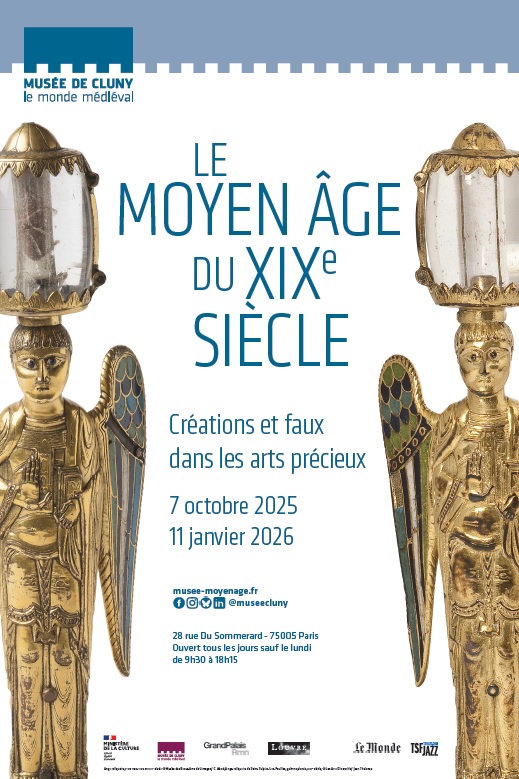
Exposition – Le Moyen Âge du 19e siècle. Créations et faux dans les arts précieux

 Après les événements révolutionnaires, le 19e siècle redécouvre le Moyen Âge, tout en le réinterprétant. Ce siècle, qui cultiva une rêverie romantique et connut d’importants progrès technologiques et la constitution de grandes collections, s’est inspiré du Moyen Âge en produisant des copies, des pastiches, des oeuvres composites et des faux. L’exposition permet des confrontations, mettant en regard certains objets médiévaux avec leurs « résonances » du 19e siècle.

Le propos est centré sur les arts précieux, dans leur acception médiévale : pièces d’orfèvrerie et d’émaillerie, ivoires, tissus précieux. Ces domaines ont en effet connu au 19e siècle un foisonnement de redécouvertes techniques. Ces phénomènes culturels et artistiques émergent dès les années 1820-1830 jusqu’à la veille de la Première Guerre mondiale, soit pendant un siècle environ. Collectionneurs, ateliers de création et de restauration, mais aussi faussaires, en sont les principaux acteurs, autour d’un marché de l’art en pleine expansion, focalisé sur Paris, qui apparaît alors comme la capitale des arts précieux.

Musée de Cluny (Paris)
Du 7 octobre 2025 au 11 janvier 2026

Retrouvez toutes les dates des visites guidées de l’exposition ici

  • Droit d’entrée plein tarif : 12€
  • Droit d’entrée tarif réduit : 10€

Source : Musée de Cluny

Publié dans Exposition | Commentaires fermés sur Exposition – Le Moyen Âge du 19e siècle. Créations et faux dans les arts précieux

Publication – Philip Daileader, « Time and Governance in Fifteenth-Century Perpignan »

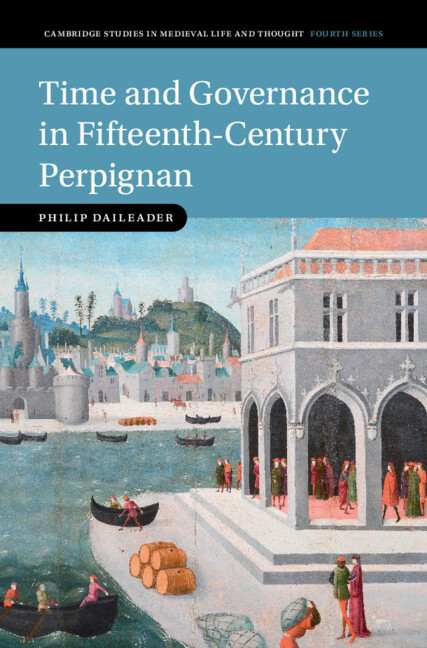
In the fifteenth century, Renaissance humanists were not the only ones to think about time differently from previous generations. Time and Governance examines how and why late medieval townspeople – those who bought, sold, and manufactured for a living – reconceptualized time and applied their new understanding of it to politics and to economics. In doing so, this book reconstructs and analyses a place and time both unexpectedly familiar and deeply alien. Blending institutional history with the history of mentalities, Philip Daileader engages with issues of state building, finance, production, social conflict, national identity, and demography. He addresses the question of whether late medieval Europe deserves its often-grim reputation by recapturing and prioritizing the life experiences, thoughts, and opinions of those who lived then and there.

  • Shows that burghers, merchants, and tradespeople adopted a relativistic view of time during the fifteenth century and demonstrates its application in the areas of government and economics
  • Sheds light on what tradespeople did with political power acquired not through insurrection, but through political manoeuvre
  • Blends traditional institutional history with the history of mentalities

List of tables
Acknowledgments
A note on names
List of abbreviations
Introduction
1. Depopulation, debt, and distrust
2. Representation, choice, and rule
3. Production and prosperity
4. Municipal citizens, royal subjects, and Catalans
5. Conquest and repatriation
Conclusion

Philip Daileader, Time and Governance in Fifteenth-Century Perpignan, Cambridge, Cambridge University Press, 2025 ; 1 vol., 258 p. (Cambridge Studies in Medieval Life and Thought: Fourth Series). ISBN : 978-1-00960-180-1. Prix : GBP 95,00.

Source : Cambridge University Press

Publié dans Publications | Commentaires fermés sur Publication – Philip Daileader, « Time and Governance in Fifteenth-Century Perpignan »