Publication – « Éthiques de la nouvelle dans la première modernité (XIVe-XVIIe siècles). L’exemplarité en question », éd. Teresa Nocita, Nora Viet, Enrica Zanin

Comment lire les nouvelles de la première modernité ? Peut-on assigner un sens moral aux recueils de récits brefs ? À la fois proche de la tradition de l’exemplum, mais aussi du fabliau et de la facétie, la nouvelle vient incarner, mais aussi discuter, détourner ou éluder la réflexion morale. Si l’histoire de la nouvelle a longtemps été conçue comme une progressive crise de l’exemplarité, où l’on passerait de récits moralisés à des formes amorales, la grande diversité des récits brefs montre que cette histoire est à revoir. De Boccace à Madame de Lafayette, de Chaucer à Maria de Zayas, en passant par Marguerite de Navarre, Bandello, Belleforest et d’autres, le sens éthique des nouvelles change au gré des mutations idéologiques, mais aussi selon l’évolution du contexte éditorial, des pratiques d’écriture, des contraintes de la traduction, des exigences de la censure et du goût du public. Se dessine alors une histoire plus fragmentée et plus complexe, qui révèle la grande richesse d’une réflexion éthique dont la nouvelle, et plus largement le récit de fiction, restent un terrain d’expérimentation privilégié.

TABLE DES MATIÈRES

INTRODUCTION

PREMIÈRE PARTIE EXEMPLARITÉS PROBLÉMATIQUES : LE DECAMERON ET SON HÉRITAGE

Renzo BRAGANTINI, Esemplarità del quotidiano: la lezione del racconto; Teresa NOCITA, La donna di Guascogna (Decameron I 9). Anatomia di uno scandalo; Maria Cristina FIGORILLI, «Sé medesimo vincere». La virtù regale della continenza dalla novella di re Carlo (Dec. X 6) alle riscritture quattro-cinquecentesche; Fosca MARIANI ZINI, La morale dans tous ses états : du Decameron à L’Heptaméron; Enrica ZANIN, Qu’en est-il de la crise de l’exemplarité dans les nouvelles ?

DEUXIÈME PARTIE CHEMINS DE L’EXEMPLARITÉ : LES MÉTAMORPHOSES D’UN MODÈLE

Ullrich LANGER, Personnage, personnalité et personne dans la nouvelle (Boccace, Marguerite de Navarre; Laurent BAGGIONI, De la morale à la politique : la dénonciation du mal dans les Trecento Novelle de Sacchetti; Antonio SOTGIU, Exempla misogini e perplessità morale: Boccaccio, Alberti, Rabelais; Klaus KIPF, The 101st Novella. Exemplarity in the First German Translation of Boccaccio’s Decameron and its Printing History; Paola CIFARELLI, Motto et exemplarité de la nouvelle. À propos des premières éditions imprimées des Cent Nouvelles Nouvelles; Nora VIET, L’art du récit exemplaire dans L’Heptaméron de Marguerite de Navarre. Choix stylistiques, enjeux éthiques

TROISIÈME PARTIE L’EXEMPLARITÉ AU DÉFI DE LA PLURALITÉ DES FORMES NARRATIVES

Alastair MINNIS, Imposing exemplarity: Chaucer’s ethical framing of the pear tree novella; Elisabetta MENETTI, Il mistero della contessa di Challant; Cathy SHRANK, The use of novellas in civil conversations and moral dialogues; Tiphaine ROLLAND, Le Passetemps honneste (1579) : comment et pourquoi rendre exemplaires des récits facétieux ?; Thibault CATEL, Déclamations et controverses : modèles alternatifs d’exemplarité pour le récit bref; Christian ZONZA, Problématiques de l’exemplarité dans les nouvelles historiques

RÉSUMÉS. ABSTRACTS. RIASSUNTI

BIBLIOGRAPHIE GÉNÉRALE

INDEX DES NOMS D’AUTEURS ET D’IMPRIMEURS

Informations pratiques :

Éthiques de la nouvelle dans la première modernité (XIVe-XVIIe siècles). L’exemplarité en question, éd. Teresa Nocita, Nora Viet, Enrica Zanin, genève, Droz, 2025 ; 1 vol., 456 p. (Cahiers d’Humanisme et Renaissance, 209). ISBN : 978-2-600-06597-9. Prix : CHF 37,00.

Source : Droz

Publié dans Publications | Commentaires fermés sur Publication – « Éthiques de la nouvelle dans la première modernité (XIVe-XVIIe siècles). L’exemplarité en question », éd. Teresa Nocita, Nora Viet, Enrica Zanin

Appel à contribution – The Sale of Governance in Pre-Modern Europe and the Mediterranean (1100-1600)

Vom – Bis : 19.06.2026 – 20.06.2026
Deadline : 15.10.2025
University of Vienna

Beginning in the High Middle Ages, rulers in Europe and the Mediterranean put governance on offer. From Crete (purchased by the Venetians in 1204) to the Canary Islands (bought by the Spanish nobleman Enrique Pérez de Guzmán y de Castilla in 1418) to Iceland (offered first to the Dutch, then to Henry VIII of England in 1518) to countless examples in the Holy Roman Empire, late medieval/early modern secular and religious authorities priced, pawned, mortgaged, bought, and sold offices, bishoprics, titles, fiefs, cities, and entire regions in what became an active market for governance that ultimately totaled many millions of pounds, florins, ducats, hyperpyron, and guilders.

Selling governance meant more than just accepting a bribe in exchange for appointing an official; it involved temporarily or permanently transferring authority over land and people to those who would pay for it.

In the past decade, numerous studies of public finance and taxation have taken note of this phenomenon. While richly detailed and important, these works typically approach the market for pre-modern governance from the perspective of either diplomatic or economic history. This workshop aims to build from this excellent work by exploring the market for pre-modern governance in its broadest and most ambitious geographical and methodological terms. It aspires to bring together scholars working across all of pre-modern Europe and the Mediterranean. It further encourages contributions drawing on a wide range of archival, visual, and literary sources including legal decisions, private letters, chronicles, funeral orations, civic rituals, poetry, prose, manuscript illuminations, frescoes, and mosaics, among others. We also invite scholars working beyond political and economic elites to explore how all levels of premodern European and Mediterranean society from rulers to ruled came to imagine governance as monetizable. Ultimately, the organizers wish to promote scholarship that examines vendible governance outside merely the financial and economic by addressing how the market for governance intersected with questions of class, race, gender, politics and society.

Questions the workshop aims to address include:
– How and why did selling and mortgaging rights of governance arise in the High Middle Ages and become commonplace in later centuries?
– Did the sale of secular and ecclesiastic governance differ across Latin Christendom? Can we speak of one culture of vendible governance or many?
– How do the selling and mortgaging of governance require us to rethink historical grand narratives on state formation and capitalism?
– What role did the Commercial Revolution play in promoting the market in governance? How did political actors borrow technologies, practices, and routines from the commercial world?
– Given that recent research has begun to draw attention to women who bought and sold governance, what roles did gender and gendered language play in shaping these practices?
– How did contemporary chroniclers, annalists, and other historical writers narrate the sale of governance? What economic, legal, religious, and spatial exempla from the classical, Christian, and commercial worlds did they draw upon?
– How did contemporary artists render visual the sale of governance in various media including mosaic, manuscript illustration/illumination, tapestry, etc.?
– What role did the sale of governance play in the expansion of Latin Christian rule in the Baltic, the Levant, and the Aegean (e.g. the Frankokratia)?
– How did local populations respond to the sale of their communities or rights? How did they articulate their resistance or cooperation? How should historians integrate the sale of governance into our narratives of pre-modern colonialism, imperialism, and race?

Workshop Details
– We welcome proposals based on new research from scholars at any stage in their career.
– Proposals should include a 250-word abstract. Please include a two-page vita.
– Submit proposals by 15 October 2025 to either Prof. Michael Martoccio (martoccio@wisc.edu) or Prof. Jonathan Lyon (jonathan.lyon@univie.ac.at) with the subject line “2026 Vienna Conference.” Acceptances will be sent by 1 November.
– The organizers will offer to cover presenters’ travel and lodging expenses.

Kontakt

Michael Martoccio: martoccio@wisc.edu
Jonathan Lyon: jonathan.lyon@univie.ac.at

Source : H-Soz-Kult

Publié dans Appel à contributions | Commentaires fermés sur Appel à contribution – The Sale of Governance in Pre-Modern Europe and the Mediterranean (1100-1600)

Publication – Lionel Germain, « Écrit et fabrique du gouvernement urbain en Rouergue (XIIe-XIVe siècle) »

En Rouergue, dans le Midi de la France, des archives exceptionnellement bien conservées éclairent une réalité essentielle et pourtant mal connue du Moyen Âge : la façon dont émergent et se construisent, aux XIIe-XIIIe siècles, des gouvernements municipaux dans le dense maillage des petites villes de l’Occident latin.

Du XIIe au XIVe siècle dans l’Occident latin, le phénomène de la « révolution de l’écrit » accompagne la naissance et le développement des gouvernements municipaux. S’ils sont bien étudiés pour les XIVe-XVe siècles, les mécanismes de leur émergence et de leur construction aux XIIe-XIIIe siècles demeurent mal connus, en particulier dans les petites villes qui constituent pourtant l’essentiel du tissu urbain de l’Occident médiéval. Celles du Rouergue, dans le Midi de la France, ont laissé des archives d’une rare richesse. Dès la seconde moitié du XIIe siècle, les petites sociétés urbaines y apparaissent comme des laboratoires des innovations sociales, politiques, juridiques et scripturaires de leur temps. Formées en communautés autoreprésentées, elles construisent progressivement des institutions municipales légitimes – des « consulats » – afin de gouverner la ville en relative autonomie et de participer au jeu des pouvoirs seigneuriaux et royal.

Informations pratiques :

Lionel Germain, Écrit et fabrique du gouvernement urbain en Rouergue (XIIe-XIVe siècle), Villeneuve d’Ascq, Presses universitaires du Septentrion, 2025 ; 1 vol., 388 p. (Histoire et civilisations). ISBN : 978-2-7574-4445-0. prix : € 25,00.

Source : Presses universitaires du Septentrion

Publié dans Publications | Commentaires fermés sur Publication – Lionel Germain, « Écrit et fabrique du gouvernement urbain en Rouergue (XIIe-XIVe siècle) »

Publication – « A Companion to Byzantine Law. From the Foundation of Constantinople (330) until the End of the Macedonian Dynasty (1056) », éd. Eleftheria Papagianni, Daphne Penna

The so-called Byzantine Empire, which existed for more than a thousand years with Constantinople as its capital, demonstrates the birth of a new world with the wedding of Western and Eastern traditions. This study of Byzantine legal texts, mainly from the 6th to the 11th centuries, illustrates this clearly, following the evolution of Roman law into Byzantine law. By outlining and analysing the influence of various historical, social, and religious factors on this progression, the present handbook not only presents a condensed picture of the evolution of law in the area beyond the Adriatic Sea, but also indirectly sheds light on Byzantine society more broadly.

Table des matières : ici

Eleftheria Papagianni is Professor Emerita of Legal History at the National and Kapodistrian University. She participated in an international research project at the Max Planck Institute for European Legal History to republish the Byzantine legal sources of the Göttingen Academy of Sciences and served as the project’s director from 2008 to 2011. She is the author of numerous books and articles, mainly on Byzantine civil law.

Daphne Penna is Assistant Professor of Legal History at the University of Groningen and Associate Professor of Roman Law at KU Leuven. She is the author of The Byzantine Imperial Acts to Venice, Pisa and Genoa, 10th-12th Centuries: A Comparative Legal Study (The Hague, 2012) and co-author of A Sourcebook on Byzantine Law: Illustrating Byzantine Law through the Sources (Leiden, 2022). She has published extensively on Roman and Byzantine law, and especially on their influence on the European legal tradition.

A Companion to Byzantine Law. From the Foundation of Constantinople (330) until the End of the Macedonian Dynasty (1056), éd. Eleftheria Papagianni, Daphne Penna, Boston–Leyde, Brill, 2025 ; 1 vol., XXI–392 p. (Brill’s Companions to the Byzantine World, 15). ISBN : 978-90-04-73191-2. Prix : € 236,00.

Source : Brill

Publié dans Le réseau | Commentaires fermés sur Publication – « A Companion to Byzantine Law. From the Foundation of Constantinople (330) until the End of the Macedonian Dynasty (1056) », éd. Eleftheria Papagianni, Daphne Penna

Prix – The Marjorie Chibnall Essay Prize 2026. The Battle Conference on Anglo-Norman Studies

The Marjorie Chibnall Essay Prize, offered in memory of the former director of the Battle Conference on Anglo-Norman Studies and co-founder of the Allen Brown Memorial Trust, is awarded for an unpublished scholarly paper based upon original research and relating to the study of the Anglo-Norman world, broadly defined, between c. 850 and c. 1250.

Candidates for the Prize are normally expected to be doctoral students in a recognised institution of Higher Learning, or within two years of having completed a doctorate (from the date the degree was awarded).

The winning paper will be awarded a place at the 2026 Battle Conference on Anglo-Norman Studies, to take place in Swansea from the 15-18 July; the conference registration fee and expenses to a certain level will be covered. It is a condition of the Prize that the paper should be delivered at the conference following its award, and be submitted for exclusive publication in Anglo-Norman Studies.

The paper should be written in English, up to 8000 words in length (including footnotes), and be prepared to a consistent form of citation.

Candidates should send a covering letter, an abstract (between 200 and 250 words) of their paper, and their entry itself, to the Hon. Secretary of the Allen Brown Memorial Trust, Prof. Leonie Hicks, via an email attachment with the three documents combined into one file. The letter should make a statement as to the originality of the work; an indication of how the candidate qualifies for entry to the competition; agreement to the terms of the Prize competition; and name, postal address, email address, and institutional details.

Entries must be submitted by 31 January 2026. Previously unsuccessful candidates may reapply, but must address a new topic.

The winner will be announced after mid-March, the work having been judged by a selection committee made up of representatives of the Trust; their decision will be final and no correspondence will be entered into. The Trustees reserve the right not to make an award should no essay of sufficient quality be entered.

Poster session

In addition, the 2026 conference will include a poster session sponsored by Boydell and Brewer with a prize for the best postgraduate poster. We would also welcome posters from those who are now postdoctoral (whether for a short time of who have been for many years), but these will not be eligible for the prize. Those who wish to present a poster should contact Prof. Laura Cleaver by 1 June 2026.

Source : The Battle Conference

Publié dans Prix | Commentaires fermés sur Prix – The Marjorie Chibnall Essay Prize 2026. The Battle Conference on Anglo-Norman Studies

Colloque – Usages du récit historique dans la prédication médiévale (XIIe-XVe siècle)

Le topos de l' »histoire maîtresse de vie » (historia magistra vitae), hérité de Cicéron, témoigne du caractère moral et exemplaire que doit revêtir l’histoire aux yeux de nombre d’historiographes médiévaux. Il explique aussi que, vice versa, et de manière assez naturelle, les discours cherchant à proposer des modèles, comme le furent les sermons médiévaux, aient fait usage de la narration historique.

L’objectif de cette rencontre est donc d’interroger les usages de ces récits historiques au cours du second Moyen Âge, leur construction et leur interprétation en fonction des objectifs poursuivis. À travers l’analyse des instruments de travail des prédicateurs — recueils d’exempla, artes praedicandi, ouvrages historiques —ainsi que de la formation reçue dans les studia, écoles ou universités, on cherchera à cerner comment cette culture historique fut mise au service de l’encadrement des fidèles.

Cécile Barluet et François Wallerich – Introduction.

Alexander Marx (Institute for Medieval Research, Austrian Academy of Sciences) – “The Roman Conquest of Jerusalem in 70 A.D.: A Pivotal Historical Episode in Medieval Sermons (c.800-c.1200)”.

Christian Grasso (Istituto storico Italiano per il Medioevo) – “Histoire sainte et histoire profane dans la prédication de la croisade”.

Cécile Caby (Sorbonne Université) – « L ’histoire au secours de la réforme des ordres religieux : sondages dans les sermons capitulaires au XVe siècle ».

Maxime Arcelin (Université de Fribourg – Sorbonne Université) – “À la recherche de récits historiques dans les sermons-modèles. Le cas des dominicains siennois de la fin du XVe siècle”.

Alexis Charansonnet (Université Lumière Lyon II) – “Bible et histoire : l’exégèse politique dans la prédication d’Eudes de Châteauroux”.

Sophie Delmas (Université Lumière Lyon II) – “Pierre Bersuire et les leçons de l’histoire”.

Présidence de sessions : Matthieu Rajohnson, Cédric Giraud, Franck Collard

Jussi Hanska (Tampere University) – “Good Emperor and Bad Emperor: Augustus and Nero as exemplary figures in medieval preaching“

Antoine Brix (Université Grenoble Alpes) – “L’urgence du passé dans le sermonnaire de Jean Bernier de Fayt : histoires païenne et chrétienne chez un bénédictin du XIVe siècle”

Ralf Lützelschwab (Freie Universität Berlin) – “Les fourmis au service de l’observance dominicaine : Johannes Niders Formicarius et ses Exempla”.

Pietro Delcorno (Università di Bologna) – « Francis, Dominic and the three spares: an exemplum between history and eschatology ».

Rosa Maria Dessi (Université Côte d’Azur) – “Nicolas de Cues et le conflit avec l’abbesse Verena de Stuben : prédication et images”

Pavel Soukup (Centre for Medieval Studies, Institute of Philosophy, Czech Academy of Sciences) – “Bohemian History in Sermons from the Hussite Period”

Nora Berend (Cambridge University) – “Sermons et discours de Nicolas de Cues et de Pie II dans le contexte du conflit avec Sigismond, duc d’Autriche, et l’abbesse Verena de Stuben”.

Nicole Bériou (Académie des Inscriptions et Belles-Lettres) – Conclusion.

Présidence de sessions : Xavier Hermand, Paul Bertrand, Svetlana Yatsyk

Publié dans Colloque | Commentaires fermés sur Colloque – Usages du récit historique dans la prédication médiévale (XIIe-XVe siècle)

Publication – « The Politics of Interpretation: The Bible and the Formation of Legal Authority in the Early Middle Ages », éd. Gerda Heydemann, Rosamond McKitterick

Early medieval political thought was profoundly influenced by scripture. This included law and legal culture: the Bible provided early medieval elites with the concepts and vocabularies to write about social relations and their regulation. Scriptural citations could be directly adopted as law, or cited to explain, legitimize or criticize norms. This recourse to biblical authority was not straightforward: The application of biblical models to current social problems created tensions and the need for interpretation and translation, resulting in debates about the salience and authority of biblical law. This volume brings together papers by specialists in early medieval law as well as biblical exegesis, addressing the impact of biblical thought on early medieval legal cultures from early medieval Ireland to Spain and Carolingian Francia.

Gerda Heydemann is Professor of Late Antique and Early Medieval History at Freie Universität Berlin.

Rosamond McKitterick is Professor Emerita of Medieval History in the University of Cambridge and a fellow of Sidney Sussex College.

Table des matières : ici

Informations pratiques :

The Politics of Interpretation: The Bible and the Formation of Legal Authority in the Early Middle Ages, éd. Gerda Heydemann, Rosamond McKitterick, Sigmaringen, Jan Thorbecke Verlag, 2025 ; 1 vol., 320 p. (Quellen und Forschungen zum Recht im Mittelalter, 17). ISBN : 978-3-7995-6097-9. Prix : € 42,00.

Source : Jan Thorbecke Verlag

Publié dans Publications | Commentaires fermés sur Publication – « The Politics of Interpretation: The Bible and the Formation of Legal Authority in the Early Middle Ages », éd. Gerda Heydemann, Rosamond McKitterick

Publication – Colette Sirat, « Teaching and Studying Philosophy in Jewish Culture during the Middle Ages »

This book offers the first survey of philosophical pedagogy in Jewish culture during the Middle Ages, with a focus on Northern France, the Provence, Italy and Spain. By examining not only the discourse of renowned philosophers such as Maimonides and Gersonides, but also oft-neglected manuscript evidence of educational practices and students’ notes, the book offers a nuanced understanding of the medieval Jewish intellectual landscape and shows how Jewish educators brought intricate debates on metaphysics, ethics, and epistemology into the classroom. The book also sheds light on the broader societal and cultural contexts that influenced these philosophical pursuits.

An essential read for anyone interested in the history of philosophy, Jewish studies, or medieval intellectual culture, this book celebrates the enduring legacy of Jewish philosophical thought and its pivotal role in shaping the intellectual currents of the Middle Ages.

Colette Sirat taught Medieval Hebrew Philosophy for many years at the École Pratique des Hautes Études in Paris and in Be’erSheva. She was also the director of the Hebrew Section of the Institut de Recherche et d’Histoire des Textes. She is the author, contributor and editor of a range of publications concerning philosophy and manuscript culture, in such series as Bibliologia and Monumenta Palaeographica Medii Aevi.

Table des matières :

Introduction
Chapter 1. The Twelfth Century
Chapter 2. The Thirteenth Century
Chapter 3. Encyclopaedic Learning in the Thirteenth Century
Chapter 4. The Fourteenth Century in Provence and Spain
Chapter 5. The Fifteenth Century
Example 1. London, British Library, Add. 14763 (1242)
Example 2. Paris, BnF Hebr. 956 (middle of the 14th cent.)
Example 3. Paris, BnF Hebr. 1005 (middle of the 14th cent.)
Example 4. Modena, Bibl. Estense III, 4 (Middle of the 15th c.)
Bibliography

Informations pratiques :

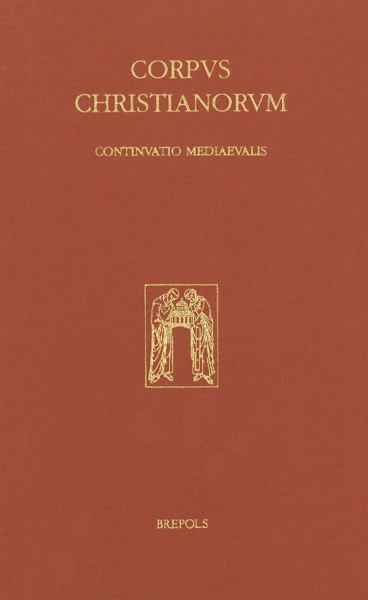
Colette Sirat, Teaching and Studying Philosophy in Jewish Culture during the Middle Ages, Turnhout, Brepols, 2025 ; 1 vol., 134 p. (Studies on the Faculty of Arts. History and Influence, 5). ISBN : 978-2-503-61491-5. Prix :€ 55,00.

Source : Brepols

Publié dans Publications | Commentaires fermés sur Publication – Colette Sirat, « Teaching and Studying Philosophy in Jewish Culture during the Middle Ages »

Séminaire – Séminaire d’études médiévales ibériques (2024-2025). Actualités de la recherche sur le Moyen Âge ibérique

Les lundis de 10h à 12h (sauf 2 octobre et 7 novembre)

UNIVERSITÉ BORDEAUX-MONTAIGNE
les 1/12, 19/1, 2/2, 9/2 et 18/5

UNIVERSITÉ TOULOUSE – JEAN JAURÈS
les 17/11, 24/11, 15/12, 9/3, 16/3 et 13/4

UNIVERSITÉ DE P AU ET DES P A YS DE L’ADOUR
les 2/10 et 7/11

Contacts :
À Toulouse : florian.gallon@univ-tlse2.fr
À Bordeaux : yann.dejugnat@u-bordeaux-montaigne.fr
À Pau : veronique.lamazou-duplan@univ-pau.fr

Format hybride

Lien de connexion sur demande

*2 octobre (jeudi),14h-16h
Université de Pau et des Pays de l’Adour, Institut Claude Laugénie, salle Chadefaud
Pascual Martínez Sopena,Universidad de Valladolid
Le Chemin de Saint-Jacques, parmi les chemins de l’Espagne médiévale

* 7 novembre (vendredi), 14h-16h
Université de Pau et des Pays de l’Adour, salle du Conseil DEG
Eloísa Ramírez Vaquero, Universidad Pública de Navarra
Las élites de Olite: medios de vida de un pequeño centro urbano de la Navarra media

17 novembre
Université Toulouse – Jean Jaurès, Maison de la Recherche, salle E412
João Alves,Universidade Nova de Lisboa, Université Toulouse-Jean Jaurès
El ejercicio de la justicia señorial en Portugal durante la Baja Edad. Media: el papel de las órdenes militares de Avis y Santiago

24 novembre
Université Toulouse – Jean Jaurès, Maison de la Recherche, salle E412
Matthieu Bayle, Sorbonne Université, Université Toulouse-Jean Jaurès
L’entourage des comtes marémontains. Servir et gouverner dans l’ancienne Marche Hispanique postcarolingienne (897-1020)

1er décembre
Université Bordeaux-Montaigne, Maison de l’Archéologie, salle des Directeurs (ACH047)
Sergi Sancho Fibla,Université Clermont-Auvergne
Les lieux d’éducation pour jeunes filles : initiatives privées, couvents et institutions charitables (Tolède, XVe-XVIe siècles)

15 décembre
Université Toulouse – Jean Jaurès, Maison de la Recherche, salle E412
Marina Forte, Universidad Complutense de Madrid
L’histoire en moellons : l’architecture haut-médiévale de la vallée du Gallego comme source pour l’étude des sociétés frontalières

19 janvier
Université Bordeaux-Montaigne, Maison de l’Archéologie, salle des Directeurs (ACH047)
Chloé Bonnet, Université de Perpignan-Via Domitia
Retracer les vies de populations mobiles à travers les sources notariales : les femmes juives d’un côté et de l’autre des Pyrénées

2 février
Université Bordeaux-Montaigne, Maison de l’Archéologie, salle des Directeurs (ACH047)
Wilfrid Tannous, Université de Strasbourg
Histoire de la caixa dels mariners del Regne de Mallorques. Approche pragmatique d’une organisation professionnelle maritime en Méditerranée (XIIIe-XVe siècle)

9 février
Université Bordeaux-Montaigne, Maison de l’Archéologie, salle des Directeurs (ACH047)
Stephen Lewis,Université Bordeaux-Montaigne, Université de Caen-Normandie
Vikings in Catalonia, Septimania and Provence in the context of the Scandinavian expedition to the Iberian Peninsula and the Mediterranean in the late 850s to early 860s

9 mars
Université Toulouse – Jean Jaurès, Maison de la Recherche, salle D30
Alejandro Peláez Martín,Universidad Autónoma de Madrid
La ceremonia de la bay‘a en el Occidente islámico (siglos VIII-XV) : planteamientos, problemas y perspectivas

16 mars
Université Toulouse – Jean Jaurès, Maison de la Recherche, salle E412
Rafael Narbona, Universitat de València
Historiografía y fuentes respecto a la integración y discriminación de los conversos en las ciudades hispanas del siglo XV

13 avril
Université Toulouse – Jean Jaurès, Maison de la Recherche, salle D30
Ana Echevarría,Universidad Nacional de Educación a Distancia
Los mudéjares y el sultanato de Granada: miles de facetas de una relación

18 mai
Université Bordeaux-Montaigne, Maison de l’Archéologie, salle des Directeurs (ACH047)
Amaia Arizaleta, Université Toulouse Jean-Jaurès
Une association de matériaux chrétiens et islamiques : le manuscrit Bibliothèque Mazarine 780

Publié dans Séminaire | Commentaires fermés sur Séminaire – Séminaire d’études médiévales ibériques (2024-2025). Actualités de la recherche sur le Moyen Âge ibérique

Journée d’étude – L’évêque dans l’espace méditerranéen : modèles, pratiques et ambitions (XIIe-XVe siècle)

Sans même remonter à un ensemble de travaux qui ont fait date (Vincent Tabbagh, Bruno Lemesle, Florian Mazel, Thierry Pécout…), les recherches sur le gouvernement et la sociologie de l’épiscopat médiéval ont connu un important renouvellement, spécialement pour le Midi de la France. Si le 60e colloque de Fanjeaux (7-10 juillet 2025) sur L’épiscopat du Midi : gouverner un peuple chrétien (XIIe-XIVe siècle) en a offert un large panorama, celui-ci est loin d’avoir épuisé le sujet.

À l’initiative de Damien Carraz (Université Toulouse 2 – Jean Jaurès) et d’Alessia Trivellone (Université de Montpellier Paul-Valéry), les laboratoires FRAMESPA (Université Toulouse 2/CNRS ; thématique 5 « Dynamiques méditerranéennes ») et CEMM (Université de Montpellier Paul-Valéry) organisent deux journées d’études dont la seconde se tiendra à Montpellier, le vendredi 10 avril 2026.

L’ambition n’est autre que d’offrir un espace de discussion à la recherche en train de se faire, en invitant doctorants et chercheurs confirmés à croiser leurs points de vue, tout en proposant un bilan des recherches au plus long cours.

10h00-10h15 — accueil et introduction (Damien Carraz et Alessia Trivellone)

10h15-10h45 — Marjolaine Raguin (maître de conférences, Université Toulouse 2 – Jean Jaurès), La critique des évêques dans la poésie de Guillem de Berguedà (fin XIIe s.)

10h45-11h15 — Léa David (doctorante, Université de Montpellier Paul-Valéry), Les évêques face aux violences anti-épiscopales : les assassinats de Guillaume de Rocozels (1198-1205) et de Pierre Frotier (1201-1207)

11h15-11h30 : pause

11h30-12h00 — Giovanni Ziggiotto (docteur, Aix-Marseille Université), Des modèles incompatibles ? Évêques et société urbaine à Marseille à l’époque communale (fin du XIIe siècle – milieu du XIIIe siècle)

12h00-12h30 : discussion sur les communications de la matinée

14h30-15h00 — Clara Lenne (doctorante, Université Lumière Lyon 2/Université Toulouse 2), Sauver les âmes. Punir les clercs défaillants sous l’épiscopat de Jacques Duèze à Fréjus (1300-1310)

15h00-15h30 — Marie-Anna Chevalier (maître de conférences, Université de Montpellier Paul-Valéry), Les relations entre évêques et ordres militaires en Grèce latine au XIIIe siècle : une question de personnes et d’enjeux territoriaux

15h30-16h15 : discussion et pause

16h15-17h15 — Thierry Pécout (professeur, Université Jean Monnet – Saint-Étienne), Les évêques du Midi au second Moyen Âge, quoi de commun ? Un bilan du 60e colloque de Fanjeaux

17h15-17h30 : discussion finale et clôture

Journée d’études : L’évêque dans l’espace méditerranéen :  modèles, pratiques et ambitions (XIIe-XVe siècle)

Le mardi 19 octobre 2025  de 10h00 à 17h30 à la Maison de la Recherche – Salle E411

Renseignements : damien.carraz@univ-tlse2.fr

Source : Framespa
 

Publié dans Colloque | Commentaires fermés sur Journée d’étude – L’évêque dans l’espace méditerranéen : modèles, pratiques et ambitions (XIIe-XVe siècle)