Offre d’emploi – Assistant/Associate Professor of Medieval History (1100-1500). The University of Tennessee, Knoxville

The Department of History at the University of Tennessee, Knoxville, invites applications for a tenure-track professor of medieval history (1100-1500) at the rank of Assistant or Associate Professor, to begin August 1, 2026. The teaching load is 2/2. The candidate’s teaching responsibilities include the Western Civilization survey as well as upper-level and graduate courses that complement the department’s current offerings.

Candidates must have a Ph.D. at the time of appointment. The position requires an active research agenda and evidence of teaching effectiveness. While all subfields and methodologies are eligible, training and/or experience in digital history is particularly welcome. Incoming Assistant Professors must have plans for the publication of their first book. Associate Professors must have a book published with a suitable press, demonstrable teaching excellence in their area(s) of specialization, and a strong record of service.

This position will include interdisciplinary exchange on campus related to our partnership with affiliated departments through the Marco Institute for Medieval and Renaissance Studies. The Marco Institute is an internationally acclaimed center for the study of the history and culture of the premodern world, from roughly 300 to 1700 C.E., drawing on a community of over fifty faculty from around the College of Arts and Sciences and the University of Tennessee more broadly. With its rich schedule of lectures, workshops, and symposia; multiple fellowship opportunities for faculty and graduate students; graduate certificate and Summer Language Program; and undergraduate major and minor, the Marco Institute pursues the research and teaching of the early periods at the highest levels.

Source : The Medieval Academy of America

Publié dans Offre d'emploi | Commentaires fermés sur Offre d’emploi – Assistant/Associate Professor of Medieval History (1100-1500). The University of Tennessee, Knoxville

Publication – « Metalla. Textes et mots latins du métal (production, fabrication, usages) », éd. Jean-Marie Pailler, Valérie Gitton-Ripoll, Paul François, Marie-Pierre Coustures

e premier ouvrage d’une série intitulée Metalla, portant sur le métal dans l’Antiquité, s’attache au domaine latin, du Ve s. av. J.‑C. (Lois des Douze Tables) au VIIIe s. apr. J.‑C. (Isidore de Séville).
Reposant sur un dépouillement aussi complet que possible des textes, en tenant également compte des inscriptions et des toponymes latins, ce premier tome, richement illustré, comporte un lexique de plus de 300 mots (le second tome étant consacré à des études par auteur). Chacune des entrées du lexique propose une traduction française appuyée sur des éléments scientifiques, et, autant que possible, l’étymologie du terme latin et son équivalent grec.

De très nombreuses citations, traduites et commentées, développent le sens des mots du métal. Le classement des significations, qui tient le plus grand compte des données archéologiques de terrain et de laboratoire, faisant coïncider les textes et les objets, s’efforce de refléter la diversité des emplois du mot ainsi que leur chronologie. L’ensemble permet une approche inédite des mots de l’exploitation minière, de l’industrie métallurgique, et de l’utilisation des métaux dans le monde romain.

Ouvrage publié avec le soutien du ministère de la culture, direction générale des patrimoines et de l’architecture, service patrimoine, sous-direction de l’archéologie et avec la participation des laboratoires TRACES et PLH-CRATA.

Jean-Marie Pailler est professeur émérite à l’université Toulouse – Jean Jaurès, membre du laboratoire TRACES.
Valérie Gitton-Ripoll est professeur de latin à l’université Toulouse – Jean Jaurès, membre du laboratoire PLH-CRATA.
Paul François est maître de conférences à l’université Toulouse – Jean Jaurès.
Marie-Pierre Coustures est ingénieur d’études en archéométrie à l’université Toulouse – Jean Jaurès (laboratoire TRACES).

Table des matières : ici

Informations pratiques :

Metalla. Textes et mots latins du métal (production, fabrication, usages), éd. Jean-Marie Pailler, Valérie Gitton-Ripoll, Paul François, Marie-Pierre Coustures, t. 1, Lexique, Toulouse, Presses universitaires du Midi, 2025 ; 1 vol., 706 p. (Tempus). ISBN : 978-2-8107-1306-6. Prix : € 35,00.

Source : Presses universitaires du Midi

Publié dans Publications | Commentaires fermés sur Publication – « Metalla. Textes et mots latins du métal (production, fabrication, usages) », éd. Jean-Marie Pailler, Valérie Gitton-Ripoll, Paul François, Marie-Pierre Coustures

Journée d’étude – Making the Medieval Archive: Celebrating Elizabeth A. R. Brown at Penn

On September 12, 2025, the Kislak Center for Special Collections, Rare Books and Manuscripts will host a day-long symposium commemorating Elizabeth (Peggy) A. R. Brown’s extraordinary legacy in the field of Medieval Studies. The event will also mark the official launch of the Elizabeth A. R. Brown Medieval Historians’ archive, a new initiative at Penn Libraries to collect the professional papers of scholars of the Middle Ages and of associated professional organizations. The goal of the symposium is to honor Peggy’s legacy and gift by celebrating research on her area of specialty, namely Medieval France.


The symposium will consist of three panels of short papers devoted to subjects featured in Peggy’s work: source and archive; politics and kingship; and liturgy and sacred image.

The day will also include an introduction to the research possibilities and historical interest of the medievalists’ archive at Penn, presented by the Elizabeth A.R. Brown Archivist, an endowed position in the Kislak Center for Special Collections, Rare Books and Manuscripts. The day will conclude with reminiscences by friends, students, and mentees, and a reception for all attendees.

Co-organized by Nicholas Herman (Schoenberg Institute for Manuscript Studies) and Ada Kuskowski (Department of History). Closing reception generously sponsored by the New York Medieval Society.

Click here to make a donation to the Elizabeth A. R. Brown Medieval Historians’ Archivist Fund.

Click here to leave a public message honoring Elizabeth A. R. Brown’s contributions to the field of medieval studies. 

September 12, 2025, 10:00am – 7:00pm

Kislak Center for Special Collections, Rare Books and Manuscripts (Class of 1978 Orrery Pavilion, 6th Floor, Van Pelt Library, University of Pennsylvania) & Online

Open to the Public

Source : Penn Libraries

Publié dans Colloque | Commentaires fermés sur Journée d’étude – Making the Medieval Archive: Celebrating Elizabeth A. R. Brown at Penn

Colloque – Serielle Produktion und standardisierte Produkte vor der industriellen Revolution

Seit dem Ende des Mittelalters kamen zunehmend seriell hergestellte Produkte auf den Markt, die ein standardisiertes Aussehen vorweisen konnten. Dazu zählten Alltagsgegenstände wie Kämme, Würfel oder Rosenkränze genauso wie Brakteaten. Im Bereich der spätmittel–alterlichen Frömmigkeit wurden nun Pilgerzeichen in großer Zahl hergestellt. Bestimmte Materialen (keramische Werkstoffe, Metallbleche, bedruckbare Textilien und Papier) sowie bestimmte Verfahren (Drucken, Prägen, Gießen, Abformen) waren besonders für die serielle Produktion geeignet, um standardisiert Produkte zu fertigen.

Aber auch Luxusgegenstände wie gedruckte Bücher gab es nun in größerer Zahl. Selbst bewunderte Gemälde, die als Kupferstiche reproduziert wurden, konnten in dieser seriellen Form größeren Käuferkreisen angeboten werden.

Die Tagung wendet sich zentralen Themen der materiellen Kultur- und Konsumforschung zu. Im Mittelpunkt stehen Fragen nach serieller Produktion in Werkstätten sowie im Verlagswesen, aber auch nach globalen Einflüssen auf Produkte und Geschmack. Außerdem drängen sich Fragen nach kostbaren und preiswerten Rohstoffen, nach Original und Replik auf – wobei unsere heutigen Zuschreibungen nicht den zeitgenössischen Vorstellungen von Wertigkeit entsprechen müssen.

9:00-9:30 Sabine von Heusinger (Köln): Begrüßung und Einführung ins Thema
9:30-10:15 Ralph Röber (Konstanz): Das Konstanzer Hafnerhandwerk zwischen Innovation und Stagnation (13.-17. Jahrhundert)
10:15-11:00 Zuzanna Sarnecka (Bern): Hardly a Serial Production. Failed Ceramics in Sixteenth-Century Central Europe
11:30-12:30 Natascha Mehler (Tübingen) Marion Roehmer und Valentina Wolke (Bonn): Bartmann-Krüge: serielle Produktion und globaler Handel
13:30-14:15 Karina Pawlow (Florenz/Köln): Mechanische Replikation als Strategie: Glasguss in der französischen Kunstproduktion des 17. Jahrhunderts
14:15-15:00 Julie Hartkamp (The Hague): Dirk Valkenburg: Standardised Production in Early Eighteenth-Century Workshops

9:00-9:45 Kathrin Borgers (Dortmund): Reliefs in Serie – Der Abdruck als ökonomisches und religiöses Reproduktionsphänomen
9:45-10:30 Ulfert Tschirner (Lüneburg): Bild und Klischee. Serielle Bibelillustration und transnationale Bildzirkulation der Holzschnitte von Jakob Mores
10:30-11:15 Reinhold Reith (Salzburg): Produkte, Produktinnovationen und Technologietransfer in der Habsburger-Monarchie im späten 18. Jahrhundert
11:45-12:30 Susanne Wittekind (Köln): Vom Geld zum Schmuck. Münztechnologie als Modell für die serielle Produktion von Metall-Applikationen im Hoch- und Spätmittelalter
12:30-13:15 Fabian Brenker (Konstanz): Gewusst wie: Hauptsache schnell, viel und günstig. Serielle und standardisierte Produktion von Harnischen um 1500
13:15-14:00 Abschlussdiskussion
Um Anmeldung wird gebeten unter sekretariat-svh@uni-koeln.de

07.11.2025 – 08.11.2025
Erich Auerbach Institute for Advanced Studies im Wienand Haus, Weyertal 59 (Rückgebäude: dritter Stock)

Kontakt : s.vonheusinger@uni-koeln.de

Source : H-Soz-Kult

Publié dans Colloque | Commentaires fermés sur Colloque – Serielle Produktion und standardisierte Produkte vor der industriellen Revolution

Appel à contribution – Hors de l’atelier. L’artisan acteur des sociétés prémodernes

Dans le cadre d’un colloque qui se déroulera à l’Université Laval (Québec), les chercheurs et chercheuses sont invité·e·s à soumettre des propositions de communications portant sur les artisans hors de leur atelier et leur rôle dans les sociétés prémodernes.

Depuis le XIXe siècle, l’historiographie de l’artisan est marquée par le paradigme de l’artisan-producteur, c’est-à-dire de l’artisan confiné, comme sujet historique, à son activité productrice. À ce titre, l’historiographie récente a mis l’accent sur l’étude des ateliers, qu’ils soient permanents ou temporaires, ainsi que, plus largement, sur les lieux de production (Balmelle, 1986 ; Vivier, 1992 ; Poursat, 1996 ; Blondé & Muller, 1998 ; Chapelot, 2015 ; Phialon, 2016 ; Denti & Villette, 2019 ; Leroy, 2014 & 2019 ; Beghelli & Gil, 2019). Ces recherches ont permis d’explorer le monde artisanal sous divers angles, comme l’interaction entre l’atelier et son environnement (Sanidas, 2013), les réseaux de diffusion du savoir-faire ou des objets eux-mêmes (Beghelli, 2023), les dynamiques relationnelles au sein même des lieux de production (Bernardi, 2009 ; Flohr, 2013), la spécialisation du travail (Costin, 1998 ; Harris, 2002 ; Spielmann, 2002 ; Loveluck, 2015 ; La Salvia, 2020 ; Lewis, 2020) ou encore les rapports de production (Freu, 2022 ; Beaudet, 2024).

Lorsque l’artisan est envisagé comme acteur social, il demeure toutefois marqué par son activité productrice et par les préconceptions, parfois négatives, qui y sont associées, héritées des représentations aristocratiques de leur société. Dès lors qu’ils quittaient leurs ateliers, les Anciens ne manquaient pas de les dépeindre comme des fauteurs de troubles (Diodore, I, 74, 7 ; Actes 19, 24-42). Cette perception péjorative a été reprise par certains historiens du début du XXe siècle en lien avec les préoccupations de leur temps (Guiraud, 1900, 211-12) et continue d’imprégner certaines études actuelles, qui soulignent le mépris ou le rejet des artisans dans les sociétés prémodernes (Le Goff, 1977 ; Ferdière, 2001 ; Fossier, 2002 ; Wright, 2019). Selon les approches historiographiques et documentaires, l’artisan bénéficie néanmoins d’une relecture plus nuancée et positive (Burford, 1972 ; Coatsworth & Pinder, 2002), qui permet de l’envisager au sein du « monde du travail » (Tran, 2013 ; Hawkins, 2016 ; Freu, 2018).

Ces perspectives ont donné lieu à une grande diversité d’études sur les artisans et artisanes. Qu’il s’agisse de leurs pratiques religieuses, tant dans l’atelier qu’en dehors (Gillis, 2021 ; Bendeguz, 2021), de leurs mobilités (Coulié, 2000 ; Feyel, 2006 ; Pinar Gil, 2017 ; Beghelli, 2014), de leur place dans leur communauté (Brumfield, 1998 ; Casier, 2007 ; Costin, 1998 ; Castagnetti, 2015 ; Beaudet, 2025) ou encore de leurs relations mutuelles (Vincent, 1994 ; Liu, 2016 ; Flohr, 2016 ; Verboven, 2011 ; Racine, 1985 ; Arnaoutoglou, 2011 & 2021), les études récentes montrent un intérêt croissant pour ces thématiques. C’est dans cette dynamique que s’inscrit ce colloque, dont l’objectif est de se recentrer sur l’artisan – et sur l’artisane – et de s’interroger sur sa place dans son environnement social, en dehors du prisme des espaces et des rapports à la production.

Envisager l’artisan en dehors de son activité professionnelle, de son savoir-faire et de sa créativité permet de le reconnaître comme un acteur social à part entière, dont le champ d’activité ne se limite pas aux tâches dites artisanales, mais recouvre un ensemble plus large de pratiques sociales, caractéristiques de chaque société. Nous invitons donc les propositions à explorer la place des artisans au sein des pratiques suivantes :

  • La vie religieuse
  • Les transferts fonciers
  • Les prêts monétaires
  • La participation à la vie publique
  • Les relations sociales et familiales
  • La médiation des conflits
  • L’évergétisme
  • La participation militaire
  • L’exercice de fonctions administratives

Par souci d’inclusion, nous adoptons une définition large de l’« artisan », englobant toute personne identifiée par un titre d’occupation ou par sa technè/ars, c’est-à-dire son savoir-faire (forgeron, tuilier, tisserand, poète, médecin), par la possession ou l’usage d’outils spécifiques (pinces, pesons, moules), ou encore par sa proximité avec un lieu de production (chantier, atelier, zone de fabrication). Cette approche transdisciplinaire s’adresse aux historiens, archéologues, anthropologues et spécialistes des sociétés prémodernes, quelle que soit leur aire géographique d’étude. Nous encourageons les recherches portant sur les régions non-occidentales, notamment les mondes musulmans, mésoaméricains, l’Inde ou la Chine.

Les propositions de communication (350 mots maximum) devront présenter clairement la problématique, la méthode et les documents mobilisées. Elles seront accompagnées d’une courte biographie (200 mots maximum) mentionnant l’affiliation institutionnelle, les principaux axes de recherche et les publications majeures le cas échéant. Les propositions sont à envoyer à alexandre.beaudet.2@ulaval.ca & jordan.monaci.1@ulaval.ca,

avant le 15 octobre 2025.

  • Anne-Catherine Gillis (indépendante)
  • Anna Kelley (University of St Andrews)
  • Robert Marcoux (Université Laval)
  • Nicolas Tran (Université de Poitiers)

Source : Calenda

Publié dans Appel à contributions | Commentaires fermés sur Appel à contribution – Hors de l’atelier. L’artisan acteur des sociétés prémodernes

Offre d’emploi – Professor – Late Antiquity U of T Department of Classics / Centre for Medieval Studies

Date Posted: 08/05/2025
Closing Date: 11/06/2025, 11:59PM ET
Req ID: 43545
Job Category: Faculty – Tenure Stream (continuing)
Faculty/Division: Faculty of Arts & Science
Department: Dept of Classics
Campus: St. George (Downtown Toronto)

Description:

The Department of Classics and the Centre for Medieval Studies in the Faculty of Arts and Science at the University of Toronto invite applications for a full-time, tenure-stream position in Late Antiquity. This will be a joint appointment between the Department of Classics (75%) and the Centre for Medieval Studies (25%). The successful candidate will also be eligible to be named the Jackman Professorship in the Arts. This endowed chair appointment would be for a five-year term and is renewable following a favourable review. The appointment will be at the rank of Professor, with an anticipated start date of July 1, 2026. 

Applicants must have earned a PhD degree in Classics, Medieval Studies, or a related area, with a clearly demonstrated record of excellence in research and teaching. Candidates will have an established international reputation and will be expected to sustain and lead innovative and independent research, and to maintain an outstanding, competitive, and externally funded research program.

We seek candidates whose research and teaching interests will be in some field of the history and culture of Late Antiquity up to 600 CE, and will complement and enhance existing strengths in Classics and Medieval Studies. The successful applicant will be expected to teach courses at all levels in the original language(s) of their sources and in translation, and to contribute to the undergraduate programme in Classics and the graduate programmes in both units.


Candidates must provide evidence of research excellence which can be demonstrated by a record of sustained high-impact contributions and publications in top-ranked and field relevant journals, the submitted research statement, presentations at significant conferences, awards and accolades, and other noteworthy activities that contribute to the visibility and prominence of the discipline, as well as strong endorsements from referees. Applicants must also articulate a clear research agenda that they will undertake as a faculty member in Classics and Medieval Studies.

Evidence of excellence in teaching will be provided through teaching accomplishments, the teaching dossier submitted as part of the applications (with required materials outlined below), as well as strong letters of reference.

Salary will be commensurate with qualifications and experience.

Located in vibrant downtown Toronto, the Department of Classics at the University of Toronto is one of the largest and most diverse in North America. Committed to a capacious and pluralistic understanding of Classics, the Department encompasses all aspects of, and approaches to, Greco-Roman antiquity and is recognized for its excellence across the full chronological and methodological scope of the field. The Centre for Medieval Studies hosts one of the leading interdisciplinary medieval studies programmes in the world and offers a unique depth of focus in Late Antiquity. The Department of Classics and the Centre for Medieval Studies, along with the Department of Philosophy, run the internationally renowned graduate Collaborative Specialization in Ancient and Medieval Philosophy. These academic units, along with several others, are currently collaborating to design a new Collaborative Specialization in Premodern Global Studies.

All qualified candidates are invited to apply online by clicking the link below. Applicants must submit 1) a cover letter; 2) a current curriculum vitae; 3) a brief statement of current and future research interests; 4) a sample of recent scholarly work (approx. 10,000 words or fewer) and 5) a teaching dossier which includes a teaching statement, sample course materials, and representative teaching evaluations.

Equity, diversity and inclusion are essential to academic excellence as articulated in University of Toronto’s Statement on Equity, Diversity and Excellence. We seek candidates who share these values and who demonstrate throughout the application materials their commitment and efforts to advance equity, diversity, inclusion, and the promotion of a respectful and collegial learning and working environment. Candidates are expected to articulate in their applications the ways in which they can promote equity, diversity, inclusion, and a respectful and collegial learning and working environment, through their research, teaching, and service

Applicants must provide the name and contact information of three referees. The University of Toronto’s recruiting tool will automatically solicit and collect letters of reference from each referee within 48 hours after an application is submitted. Applicants remain responsible for ensuring that referees submit recent letters (on institutional letterhead, dated, and signed, by the closing date. More details on the automatic reference letter collection, including timelines, are available in the candidate FAQ.

Submission guidelines can be found at http://uoft.me/how-to-apply. Your CV and cover letter should be uploaded into the dedicated fields. Please combine additional application materials into one or two files in PDF/MS Word format.

If you have any questions about this position, please contact Professor George Boys-Stones at chair.classics@utoronto.ca.
 
All application materials, including recent reference letters, must be received by November 6, 2025.

The University of Toronto has adopted the AAU Principles on Preventing Sexual Harassment in Academiaincluding the requirement that applicants release personnel information from prior employers regarding sexual misconduct. Full details and requirements can be found here.

All qualified candidates are encouraged to apply; however, Canadians and permanent residents will be given priority.

Diversity Statement
The University of Toronto embraces Diversity and is building a culture of belonging that increases our capacity to effectively address and serve the interests of our global community. We strongly encourage applications from Indigenous Peoples, Black and racialized persons, women, persons with disabilities, and people of diverse sexual and gender identities. We value applicants who have demonstrated a commitment to equity, diversity and inclusion and recognize that diverse perspectives, experiences, and expertise are essential to strengthening our academic mission.

As part of your application, you will be asked to complete a brief Diversity Survey. This survey is voluntary. Any information directly related to you is confidential and cannot be accessed by search committees or human resources staff. Results will be aggregated for institutional planning purposes. For more information, please see http://uoft.me/UP.

Accessibility Statement
The University strives to be an equitable and inclusive community, and proactively seeks to increase diversity among its community members. Our values regarding equity and diversity are linked with our unwavering commitment to excellence in the pursuit of our academic mission.

The University is committed to the principles of the Accessibility for Ontarians with Disabilities Act (AODA). As such, we strive to make our recruitment, assessment and selection processes as accessible as possible and provide accommodations as required for applicants with disabilities.


If you require any accommodations at any point during the application and hiring process, please contact uoft.careers@utoronto.ca.

Source : University of Toronto

Publié dans Offre d'emploi | Commentaires fermés sur Offre d’emploi – Professor – Late Antiquity U of T Department of Classics / Centre for Medieval Studies

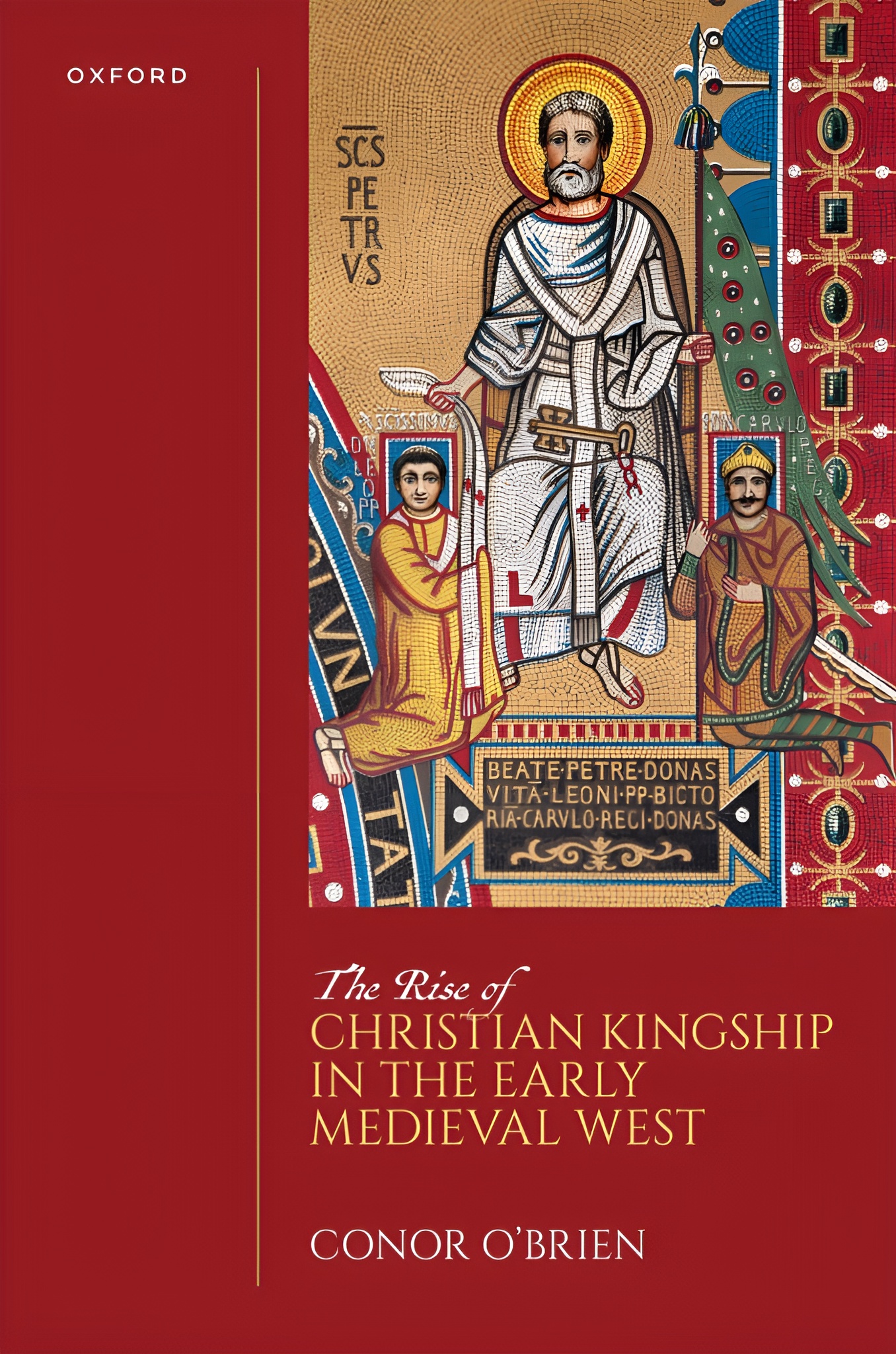
Publication – Stephanos Efthymiadis, « The Hagiography of Byzantine Cyprus. Saints, Hagiographers and Texts (Fourth to Thirteenth Century) »

In an empire such as Byzantium, where the large urban centres monopolised cultural activity and literary creation, writing texts in praise of local saints offered a noteworthy incentive for literary expression on the periphery. Between the establishment of Christianity on the island in the fourth century and its passing from Byzantine to Frankish rule in the thirteenth, Cyprus saw a significant number of hagiographical texts dedicated to its bishop saints and defending the claims and privileges of its Church. This book offers the first systematic study of this body of texts, inquiring into their literary background and engagement both with contemporary Mediterranean history and with issues specifically affecting Cyprus. It also draws attention to hagiographical texts written in later times as reflecting the enduring interest of Byzantine Christianity in the saints of Cyprus, whose cult had by then acquired a universal appeal.

STEPHANOS EFTHYMIADIS is a professor of Byzantine Studies in the Hellenic Culture Programme at the Open University of Cyprus. He has published numerous studies on Byzantine hagiography, historiography, and prosopography, and critical editions of several hagiographical texts. He is the editor of the two-volume The Ashgate Research Companion to Byzantine Hagiography (2011 and 2014) and is currently preparing a monograph on the social history of Hagia Sophia of Constantinople.

Preface Abbreviations Introduction 1. Sanctity and hagiographic literature on Cyprus 2. In the footsteps of the Apostles: the hagiography of the Apostle Barnabas and the first bishops of Cyprus 3. The hagiography of the fourth-century bishops of Cyprus 4. St Ioannes the Almsgiver (d. 620): the Cypriot patriarch of Alexandria and his hagiographical tradition (BHG 886–888e) 5. A special case: St Artemon and his Life or Passio (BHG 175) 6. Two more seventh-century Cypriot hagiographers 7. The hagiography of Cyprus after late antiquity 8. An end and a beginning: Cypriot hagiography in the hundred years of Latin rule Epilogue Map and toponymy of Byzantine Cyprus Appendix References Index of manuscripts cited Index.

Stephanos Efthymiadis, The Hagiography of Byzantine Cyprus. Saints, Hagiographers and Texts (Fourth to Thirteenth Century), Camrbidge, Cambridge University Press, 2025 ; 1 vol., 360 p. ISBN : 978-1-00935-560-5. prix : GBP 90,00.

Source : Cambridge University Press

Publié dans Publications | Commentaires fermés sur Publication – Stephanos Efthymiadis, « The Hagiography of Byzantine Cyprus. Saints, Hagiographers and Texts (Fourth to Thirteenth Century) »

Bourse – Bourses de l’École française de Rome – sélection pour le premier semestre 2026

Date limite de candidature : 30 septembre 2025 à 12 h (heure de Rome)

Bourses de l’École française de Rome en histoire, archéologie et sciences sociales

L’École française de Rome propose chaque année année un dispositif de bourses mensuelles destiné à assurer l’accueil temporaire de jeunes chercheurs dont les travaux nécessitent un séjour en Italie.


Ces bourses ont pour mission principale d’accompagner les jeunes chercheurs afin de leur permettre de mener à bien leurs travaux dans de bonnes conditions et de compléter leur formation à la recherche.

Deux dispositifs sont proposés :

  • Des bourses sont ouvertes à des doctorantes et des doctorants : elles sont destinées à soutenir leurs recherches, en priorité au cours des premières années de thèse ;
  • Des bourses dites « sénior » s’adressent aux titulaires d’un doctorat des pays du Maghreb et des pays du Sud-Est européen proches de la mer Adriatique.

Les domaines concernés par cet appel à candidature sont les suivants : l’histoire, l’archéologie, la géographie, l’urbanisme, la sociologie, l’anthropologie, le droit, l’histoire de l’art, les lettres, la philosophie et plus généralement les sciences humaines et sociales.

Pour un séjour de bourse au premier semestre 2026, la réception des dossiers de candidature est ouverte. Les dossiers seront à envoyer via la plateforme en ligne jusqu’au 30 septembre 2025 à 12 h (heure de Rome).

Source : École française de Rome

Publié dans Bourse | Commentaires fermés sur Bourse – Bourses de l’École française de Rome – sélection pour le premier semestre 2026

Bourse – Résidence scientifique pour jeunes chercheurs (École française de Rome)

Périodes Préhistoire, Antiquité, Moyen Âge, Époque moderne, Époque contemporaine

Date limite d’envoi des dossiers 30-09-25

Date de prise de fonction 01-11-25

L’Unione internazionale degli Istituti di Archeologia Storia e Storia dell’Arte in Roma propose un programme de résidence coordonné par l’EFR pour de jeunes chercheurs ou des maîtres de conférences des université françaises.


L’Unione internazionale degli istituti di archeologia, storia e storia dell’arte in Roma réunit 38 instituts (10 italiens et 28 non italiens dont 2 internationaux). Créés par les pays qu’ils représentent à Rome, les instituts non italiens promeuvent les relations culturelles et scientifiques que leurs pays entretiennent avec l’Italie. Ils ont aussi une mission commune : l’étude de l’histoire et de l’expression de la culture européenne dans la ville qui, plus que toute autre, a joué un rôle fondamental dans sa formation et sa diffusion.

À cette fin, chaque institution étrangère dispose d’équipements scientifiques et documentaires mis en place par son pays sur le territoire romain. En partenariat avec les universités, les musées et d’autres structures scientifiques et culturelles locales, chaque institution propose à la communauté internationale à Rome un riche programme d’activités scientifiques. Ces instituts contribuent aussi à la formation des jeunes générations en leur ouvrant les portes des archives, bibliothèques et musées de Rome et de l’Italie, et en les immergeant dans un environnement scientifique et culturel international unique en Europe.
Les pays représentés dans l’Unione internazionale sont les suivants : Allemagne, Autriche, Belgique, Cité du Vatican, Danemark, Espagne, États-Unis, Finlande, France, Hongrie, Italie, Norvège, Pays-Bas, Pologne, Roumanie, Royaume-Uni, Slovaquie, Suède, Suisse, Tchéquie.

Sous la conduite de l’École française de Rome, l’Unione internazionale degli istituti di archeologia, storia e storia dell’arte in Roma lance un appel à candidatures pour une résidence scientifique de 12 mois, 9 mois ou 6 mois à Rome. Cette résidence se fera auprès de l’EFR et d’au moins deux des autres instituts membres de l’Unione, afin de développer les collaborations scientifiques entre ces instituts.

Ce programme vise à favoriser le développement de projets de recherche à dimension européenne, portés par des chercheurs en début de carrière, et susceptibles de déboucher sur des candidatures à des financements européens (MSCA, ERC Starting Grant, etc.). Il s’inscrit dans une dynamique de coopération renforcée entre les instituts membres de l’Unione internazionale, dans une perspective résolument internationale.


À qui s’adresse cet appel à candidature ?


1. Jeunes chercheurs, titulaires d’un doctorat d’un établissement français, dont la soutenance s’est tenue entre le 1er janvier 2019 et le 31 août 2025. 
La résidence de 9 mois est assurée par un contrat à durée déterminée de droit privé italien.
1er novembre 2025-31 juillet 2026.
Rémunération : 2 500 € bruts mensuels.
Employeur : École française de Rome, Rome (Italie)
Non cumulable avec un autre emploi.


2. Maître de conférences des universités françaises, nommé à partir du 1er septembre 2020.
Résidence de 6 à 12 mois, à effectuer entre le 1er novembre 2025 et le 31 décembre 2026.
Modalités : prise en charge du logement, soit par l’attribution d’un hébergement au sein d’une des résidences des instituts de l’Unione internazionale, soit par le versement d’indemnités de nuitées correspondant environ à 2 000 € pour un mois ; prise en charge d’un voyage aller/retour du lieu du domicile à Rome. Le cas échéant, en accord avec l’université de rattachement, il sera envisageable de mettre en place une délégation (un semestre ou une année) de l’enseignant-chercheur concerné.

→  Date limite de candidature : 30 septembre 2025, à 12 heures (heure de Rome)

  • Pour télécharger l’appel à candidature, cliquer ici
  • Pour télécharger le formulaire de dépôt de candidature, cliquer ici.

Source : École française de Rome

Publié dans Bourse | Commentaires fermés sur Bourse – Résidence scientifique pour jeunes chercheurs (École française de Rome)

Base de données – Datenbank der Mitarbeiter und Mitarbeiterinnen der MGH seit ihrer Gründung 1819

Accès : ici

Dem Bayerischen Archivgesetz entsprechend, sind persönliche Daten ausschließlich von Mitarbeiterinnen und Mitarbeitern aufgenommen, deren Todesjahr mehr als 10 Jahre zurückliegt (BayArchivG Art. 10 Abs. 3). Mitarbeitende, für die das nicht zutrifft, werden mit ihren MGH-Veröffentlichungen aufgeführt.

Die in dieser Datenbank veröffentlichten Daten von freien – im 19. und 20. Jahrhundert war das der überwiegende Teil – sowie fest angestellten Mitarbeiterinnen und Mitarbeitern der MGH wurden nach bestem Wissen auf der Grundlage von MGH-Jahresberichten und Archivalien, Nachrufen, Publikationen, Professorenkatalogen, NDB, ADB, ÖBL u. ä. recherchiert. Der Fokus der Datenbank liegt auf der Dokumentation der wissenschaftlichen Mitarbeit für die MGH, insbesondere der Beteiligung an den Editionen der MGH. Die biografischen Daten erheben keinerlei Anspruch auf Vollständigkeit, sondern sollen einen groben Überblick bieten. Korrekturen und Ergänzungen sind willkommen (per Mail an annette.marquard-mois@mgh.de).

Zur weiteren Nutzung finden Sie hier die zu den Datensätzen gehörende GND-Beacon-Datei.

Source : Monumenta Germaniae Historica

Publié dans Banque de données, Web | Commentaires fermés sur Base de données – Datenbank der Mitarbeiter und Mitarbeiterinnen der MGH seit ihrer Gründung 1819