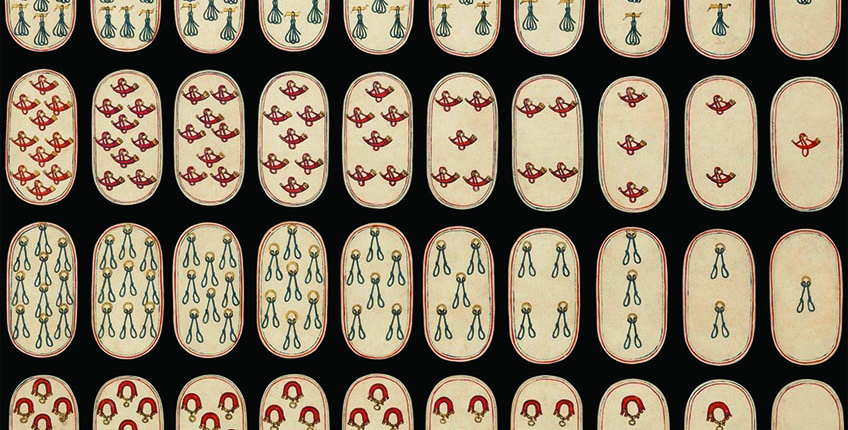
Journée d’étude – Quand les objets comptent. Cultures matérielles et quantification


Why did Italy produce so much art during the Renaissance ? We are so conditioned to regard these products as art that a question about mere quantity seems irrelevant if not irreverent. » Richard Goldthwaite

Cet extrait de « Wealth and the demand for art in Italy, 1300-1600 » de Richard Goldthwaite (1993) met en évidence la rupture manifeste entre la représentation de l’art et la quantification de ses objets, pouvant être perçue comme non pertinente (irrelevant), si ce n’est irrévérencieuse (irreverent), en particulier pour les partisans d’un idéal d’unicité de l’art pour qui l’individualité du chef d’œuvre est diluée dans sa mise en série. Depuis Goldthwaite, la sérialité des objets a été mise en lumière et liée à l’organisation des ateliers, par exemple dans les travaux de Michele Tomasi. Par ailleurs, les usages historiens des méthodes quantitatives se sont développés de façon inégale, selon les outils et les approches, depuis l’apogée de celles-ci dans les années 1960-1970, et leur critique (C. Ginzburg). Elles dépassent aujourd’hui largement l’histoire économique et s’adossent à d’autres approches, notamment par l’analyse de réseaux (C. Lemercier, C. Zalc) ou l’introduction d’outils quantitatifs en histoire de l’art (M. O’Malley, A.-S. Radermecker, L. Saint-Raymond…). L’usage de ces méthodes pose d’abord la question de la construction des données depuis des documentations variées, mais aussi celle des conditions de leur mise à disposition, sous la forme de bases de données, qui a profondément renouvelé notre relation aux corpus disponibles et constitués. L’approche quantitative invite à un recul critique sur notre rapport aux « sources », sur les questions d’échantillonnage – subi ou choisi – et de représentativité, sur les échelles d’analyse et sur les formes d’articulation possible entre le quantitatif et le qualitatif, entre la série et l’individu. Il s’agit aussi de s’interroger sur la combinaison des données hétérogènes, sur les choix opérés quant aux critères d’agrégabilité et sur la valeur donnée à l’incertitude dans la construction de nos corpus. Aussi, par ces méthodes, que quantifie-t-on exactement et comment ? L’objectif de cet atelier est de réfléchir collectivement à ces questions, en présentant des études de cas relevant principalement de l’art des périodes médiévales et modernes et intégrant notamment l’évolution des questions de recherche, le développement d’outils computationnels et de grands entrepôts de données.

Vendredi 23 janvier

9h30-10h : Accueil des participants (Salon Gustave Berger)

10h-10h15 : Introduction

  • Diane Baustert (Cergy Université/EHESS)
  • Quentin Bernet (EHESS/ISP ENS Paris-Saclay)

10h15-11h15 : Compter sans se laisser conter : les méthodes quantitatives en sciences humaines et la maîtrise du processus de recherche

  • Sébastien de Valeriola (ULB)

11h15-11h30 : Pause café

11h30-12h10 : Qualifier des séries d’objets médiévaux, des tombes allemandes aux manuscrits provinois (XIIIe-XVIe siècles). Pour une micro-histoire quantitative

  • Marie Fontaine-Gastan (Institut historique allemand, Université Gustave Eiffel)

12h10-12h50 : En quête d’objectivité : les bases de données sémantiques en histoire de l’art médiéval

  • Quentin Bernet (EHESS/ISP ENS Paris-Saclay)

12h50-14h20 : Déjeuner (Salon Gustave Berger)

14h20-15h :Faire l’histoire d’un objet sans chiffres : le cas des búcaros

  • Sofia Navarro-Hernandez (EHESS)

15h-15h40 : Réseaux d’objets, faisceaux d’usages : le cas de l’émail parisien au XIVe siècle

  • Diane Baustert (Cergy Université/EHESS)

15h40-16h : Pause café

16h-16h40 : Le marché de la peinture de genre en Italie (1600-1725) : méthodes quantitatives et perspectives d’analyse

  • Flavie Tordeur (ULB)

16h40-17h20 : Knowledge Gaps and Methodological Asymmetries in the Study of Low-End Antiques

  • Roberta Raccomandato (ULB)

17h20-18h : Conclusions et discussion générale
Publié dans Colloque | Commentaires fermés sur Journée d’étude – Quand les objets comptent. Cultures matérielles et quantification

Appel à contribution – Circulation of Knowledge in the Ottoman World: c. 1500-1900

Madrid
17.09.2026 – 18.09.2026

We are pleased to invite applications for the upcoming International Conference on Early Modern and Modern Ottoman History, to be held in Madrid, organized jointly by the Department of Contemporary History of the Autonomous University of Madrid and the Institute of History at Spanish National Research Council (CSIC). The primary goal of the conference is to bring international scholars working on different aspects of the circulation of knowledge in the Ottoman Empire together to foster interdisciplinary approaches and to provide a platform for dialogue across geographical, disciplinary, and chronological boundaries. Firstly, this conference will serve as a platform to reflect on the circulation of knowledge, particularly focusing on places, actors, and practices of such a circulation. Secondly, it examines how the modes of circulation changed, evolved, or transformed from the 15th century until the demise of the Ottoman Empire in the early 20th century.

Theme and Scope
The conference prioritizes the idea of circulation of knowledge in the Ottoman Empire, without concrete time and geographical focus. For that, we welcome proposals that fit, or are closely related to, one of the themes of the conference:
1. Circulation of scientific knowledge (Science, technology, and military knowledge)
2. Circulation of political knowledge (Diplomacy, politics, and public opinion)
3. Circulation of cultural knowledge (Religion and religious communities, missionary activities, music and arts, social behavior)

Confirmed Participants:
1. Prof. Giancarlo Casale (European University Institute)
2. Prof. Kent F. Schull (Binghamton University)
3. Prof. Joshua M. White (University of Virginia)
4. Prof. Isa Blumi (Stockholm University)

Eligibility
The conference is open to all scholars at all stages, from advanced doctoral candidates to senior scholars. The working language of the conference will be English and Spanish. The conference does not require a participation fee; however, the participants will need to make necessary arrangements for travel and accommodation.

Submission Guidelines:
Please submit the following materials, in a single PDF document to ottoman.circulation@gmail.com, by February 15, 2026:
– Title and abstract of your presentation (max. 300 words)
– A short bio (max. 350 words)
– Institutional affiliation and department

Kontakt

ottoman.circulation@gmail.com

Publié dans Appel à contributions | Commentaires fermés sur Appel à contribution – Circulation of Knowledge in the Ottoman World: c. 1500-1900

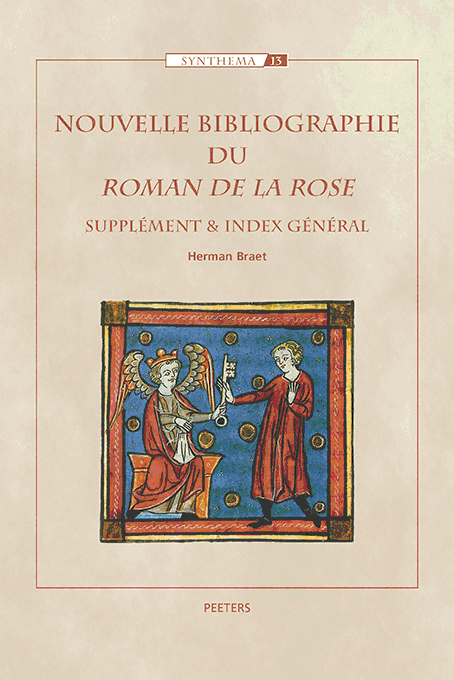
Publication – Herman Braet, « Nouvelle bibliographie du ‘Roman de la Rose’. Supplément et Index général »

Le Roman de la Rose est devenu pour la critique le texte paradigmatique de l’allégorie profane. Au cours des trente dernières années, cette œuvre multiple a fait l’objet d’une pléthore de publications.
Une nouvelle bibliographie était requise; elle a vu le jour en 2017. Depuis, de nombreux travaux importants ont pu être enregistrés: un nouvel instantané de la recherche s’imposait, enrichi de mises à jour et de corrections. Un index cumulatif couvre non seulement l’ensemble, mais signale encore l’occurrence de lemmes correspondants dans la compilation anglophone de 1993, dont les notices ont été dépouillées à nouveaux frais.

Table des matières : ici

Informations pratiques :

Herman Braet, Nouvelle bibliographie du ‘Roman de la Rose’. Supplément et Index général, Louvain, Peeters, 2025 ; 1 vol., X–122 p. (Snthema, 13). ISBN : 978-9-04295-329-1. Prix : € 57,00.

Source : Peeters

Publié dans Publications | Commentaires fermés sur Publication – Herman Braet, « Nouvelle bibliographie du ‘Roman de la Rose’. Supplément et Index général »

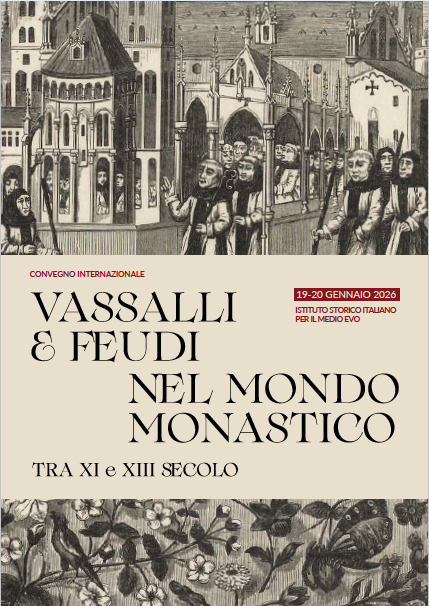
Colloque – Vassalli e feudi nel mondo monastico tra XI e XIII secolo

19-20 GENNAIO 2026
ISTITUTO STORICO ITALIANO PER IL MEDIO EVO
Piazza dell’Orologio, 4 – Roma

LUNEDÌ 19 GENNAIO, ORE 14.30

Introduzione: Nicolangelo D’Acunto

I SESSIONE – Chair: Tiziana Lazzari

Paolo Tomei – La parte dei benefici. Milites, monasteri e servitium regis in Italia fra X e XI secolo, a partire dal caso di Bobbio
Attilio Stella – Vassi, vasalli, fideles. Clientele monastiche nella Marca Veronese tra prassi feudale e realtà sociali (secoli X–XII)
Alessio Fiore – L’abate come leader militare della vassallità monastica (Italia centro-settentrionale, XI-XII secolo)
Antonio Berardozzi – I milites di Farfa e Subiaco. La provenienza sociale e la natura e la trasmissibilità delle concessioni in beneficio

MARTEDÌ 20 GENNAIO, ORE 9.00
II SESSIONE – Chair: Simone Collavini

Francesco D’Angelo – Hominium, fidelitas, feudum. Caratteristiche ed evoluzione dei rapporti vassallatico-beneficiari a Farfa tra XI e XII secolo
Enrico Veneziani – Montecassino e i suoi vassalli. Alcune riflessioni
Giacomo Campagna – Vassalli del monastero di Sant’Ambrogio di Milano. Primi appunti
Hélène Débax – Fiefs et vassaux dans les sources monastiques du Languedoc (XIe-XIIe siècle)
Glauco M. Cantarella – Cluny e i suoi vassalli. Le fonti documentarie

III SESSIONE, ORE 14.30 – Chair: Sandro Carocci

Elisabetta Filippini – Vassallità a confronto. Acquisizioni e nuove prospettive dal contesto monastico lombardo
Guido Cariboni – Feudi e vassalli nella normativa cistercense
Anna Rapetti – Vassalli cistercensi: giuramenti di fedeltà e amministrazione della terra a Chiaravalle di Fiastra
Luca Fois – Fidelitas e feudum, procedura e memoria. Osservazioni su un vademecum notarile
vassallatico-feudale del monastero di S. Ambrogio di Milano (tardo sec. XIII)

Conclusioni: Umberto Longo

Publié dans Colloque | Commentaires fermés sur Colloque – Vassalli e feudi nel mondo monastico tra XI e XIII secolo

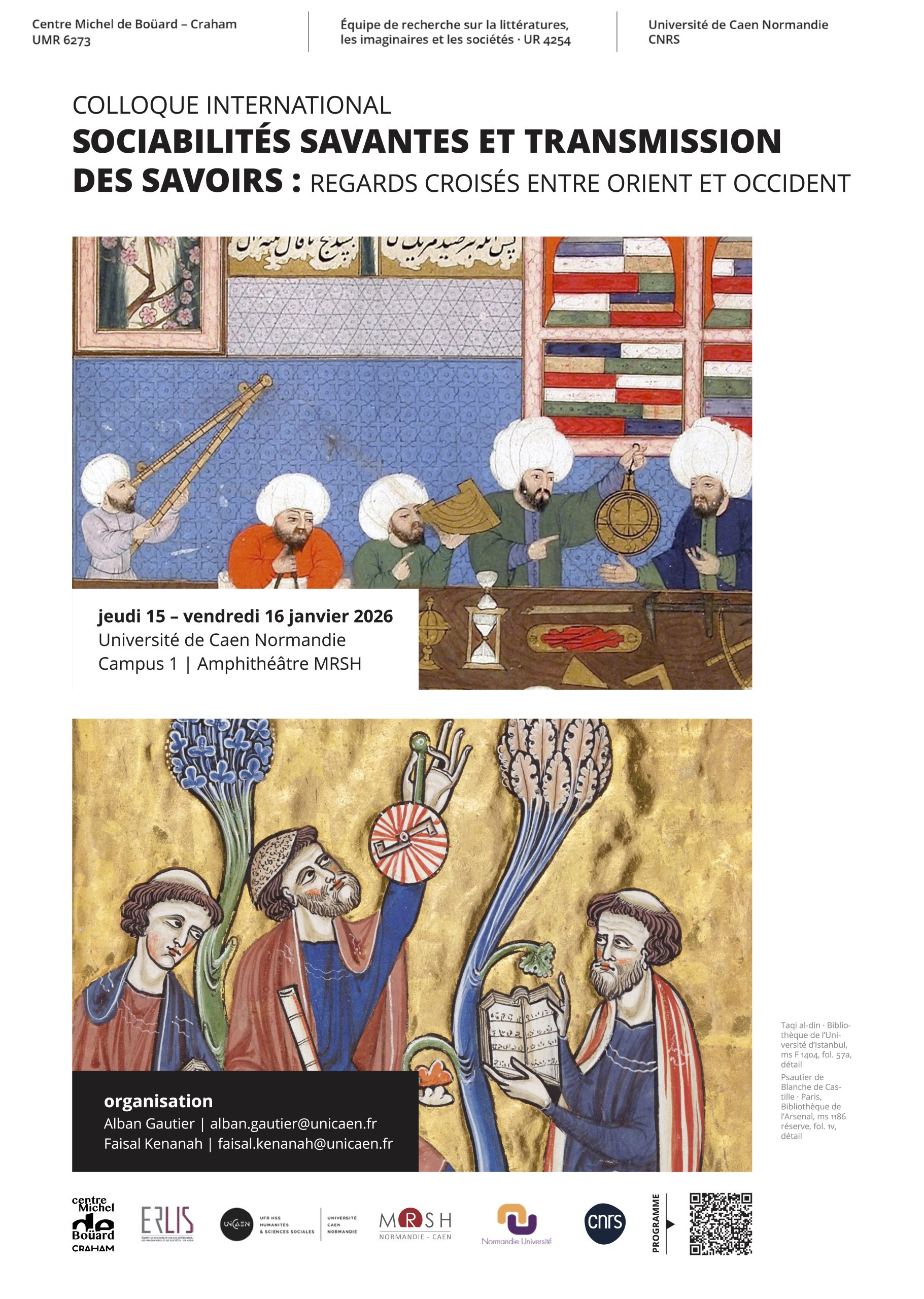
Colloque – Sociabilités savantes et transmission des savoirs : regards croisés entre Orient et Occident

15 janvier 2026 · 9h00 – 16 janvier 2026 · 18h00

Centre de recherches archéologiques et historiques anciennes et médiévales (Craham) – UMR 6273
ERLIS UR Université de Caen

Caen – campus 1 – amphithéâtre MRSH

Université de Caen campus 1 MRSH Esplanade de la Paix
Caen, 14000 France

Jeudi 15 janvier

8h45 Accueil des participants

9h20 Mot de bienvenue | Ouverture officielle | Introduction

Séance 1 | Président : Alban Gautier

9h40 Sylvain Destephen (UMR Craham · Unicaen), L’univers en réduction des rhéteurs et des philosophes au Bas-Empire

10h10 Fouad Mlih (Université de Lorraine | American University of Paris), L’état du débat dialectique dans le Kitāb al-Ğadal d’Avicenne : un nouvel horizon épistémique

10h40Discussion et pause

Séance 2 | Président : Faisal kenanah

11h00 Mona Mouawad (Creemo · Université Saint-Joseph de Beyrouth), Du mağlis aux pratiques d’aujourd’hui : transmettre le patrimoine autrement

11h30 Sümeyye Ulu (Cespra · EHESS), Du mağlis au sohbet : transmission informelle des savoirs islamiques dans les cercles féminins turcs contemporains

Discussion et pause déjeuner

Séance 3 | Présidente : Monica Balda-Tillier

14h30 Jean-Charles Ducène (PSL · EPHE), Le mağlis dans la formation de Yāqūt al-Ḥamawī (m. 626/1229) : esclave, libraire et lettré

15h00 Kaouthar Lamouchi Chebbi (UMR Sphere · Université Paris-Cité | Université de la Manouba · Tunisie), Sociabilités savantes dans Uyūn al-Anbā fī Ṭabaqāt al-A ṭibbā҆d’Ibn Abī Uṣaybi҅a

15h30 Discussion et pause

Séance 4 | Président : Jean-Charles Ducène

16h05 Monica Balda-Tillier (UR Luhcie · Université Grenoble-Alpes), L’échange épistolaire entre ‘Imād al-Dīn al-Kātib (m. 1201) et al-Qāḍī al-Fāḍil (m. 1199) : entre sociabilité élitiste et revendication d’appartenance

16h35 Guilhem Panaye (UR Chad · Université de Paris Nanterre), Dictamen et droit romain dans les lettres anglo-normandes du XIIe siècle

17h05 Discussion

Vendredi 16 janvier

9h00 Accueil des participants

Séance 5 | Président : Giulio Merlani

9h25 Alban Gautier (UMR Craham · Unicaen), Le « brain trust » du roi Alfred : le roi et ses savants à la cour de Wessex à la fin du IXe siècle

9h55 Éléonore Venturelli (Université de Poitiers | Université Catholique de Louvain), Des savants au concours de la commémoration des défunts dans les rouleaux mortuaires (Occident latin, XIIe siècle)

10h25 Discussion et pause

Séance 6 | Présidente : Kaouthar Lamouchi Chebbi

11h10 Faisal Kenanah (UR Erlis · Unicaen), Espaces de savoir, formes de sociabilité : le rôle des mağālis dans la transmission intellectuelle

11h40 Basma Lotfi (UR Crulh · Université de Lorraine), Le rôle des Nestoriens dans le développement des savoirs abbassides

12h00 Discussion et pause déjeuner

Séance 7 | Président : Sylvain Destephen

14h30 Francesca Samorì (Universiteit Gent), Entre philologie et patristique. Les intellectuels byzantins face à la polémique religieuse vis-à-vis des Latins (fin du XIIIe siècle)

15h00 Giulio Merlani (Sapienza Università di Roma), Exilés grecs, cardinaux et Papauté. Entre érudition, patronage et stratégies politico-religieuses dans l’Europe de la Renaissance

15h30 Discussion et clôture du colloque

Source : CRAHAM

Publié dans Colloque | Commentaires fermés sur Colloque – Sociabilités savantes et transmission des savoirs : regards croisés entre Orient et Occident

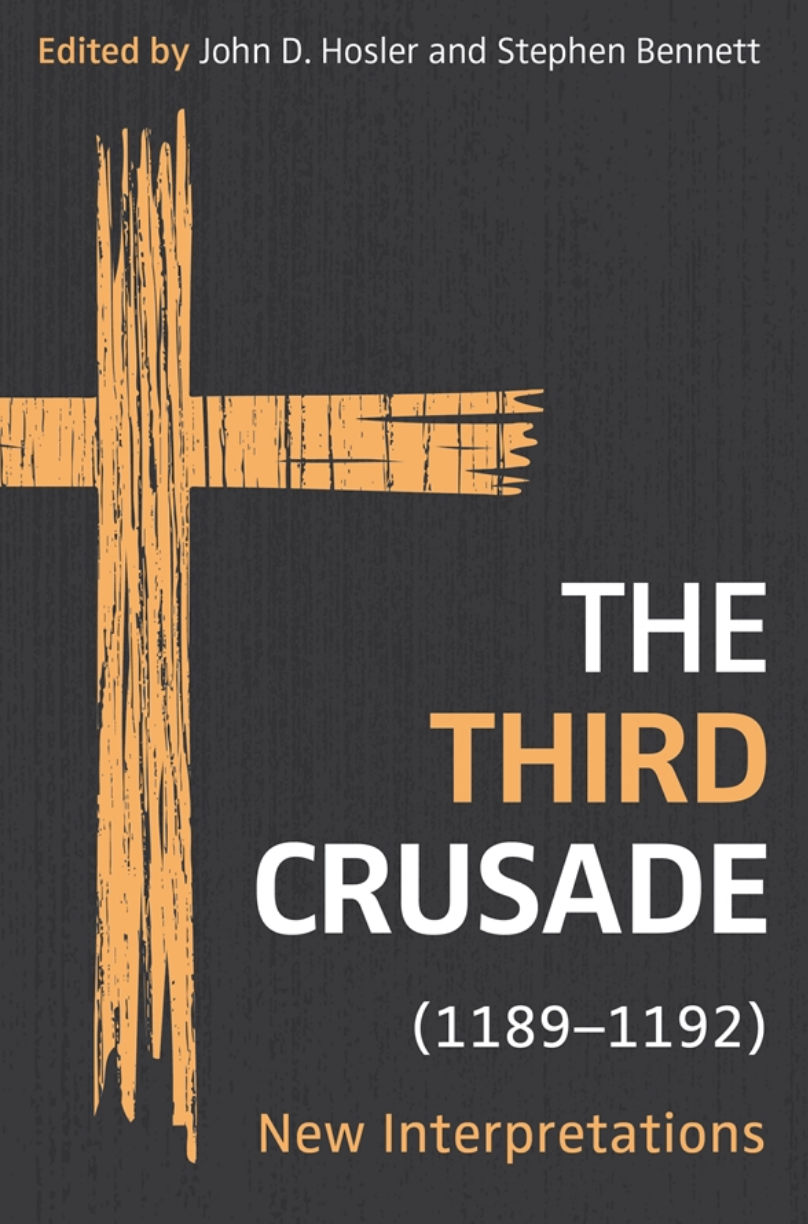
Publication – « The Third Crusade (1189-1192). New Interpretations », éd. John D. Hosler, Stephen Bennett

Fresh perspectives on one of the largest and most complex crusades ever launched, covering all aspects of the expeditions – from preparation and commencement to results and consequences.

Saladin’s victory at the Battle of Hattin in 1187 produced three profound results: a shattered Jerusalem army, a pope falling dead from the news, and the launching of the Third Crusade in response. Under the banners of renowned rulers like Richard the Lionheart, Philip Augustus, and Frederick Barbarossa, men and women from across Latin Christendom took the Cross and joined in the largest western military expedition since Urban II’s call to arms in 1095 for the First Crusade.

Long dormant in the renewal of crusade studies in the twenty-first century, the Third Crusade has in recent years begun to attract increased scholarly attention. Adopting a cross-cultural focus that examines both western and eastern societies, this book offers a substantial and timely reappraisal. Chapters shed light on the crusade’s causes, context, organization, participants, preparations, commencement, military progress, and short and long-term consequences, and scrutinise well-known sources through new lenses. They also engage with communication theory, the history of emotions, textual criticism and textuality, historiography, archaeology, and topography. Together, they provide both a fresh view of this complex and multifaceted war and a useful survey of its major contours.

JOHN D. HOSLER is a Professor of Military History at the Command and General Staff College at Fort Leavenworth, Kansas, and the author of Jerusalem Falls: Seven Centuries of War and Peace.

STEPHEN BENNETT is a historian of medieval warfare with a special interest in the history of the crusades and the crusader states, the military orders, and military practice in North West Europe.

Table des matières :

List of Illustrations
Contributors
Acknowledgements
List of Abbreviations
The Third Crusade: Major Events

Introduction

Part I: Writing the Third Crusade
Katrine Funding Højgaard, ‘Past in the Present: Temporal Discontinuity and the Loss of Jerusalem in Western Historical Writing’
Helen J. Nicholson, ‘An Embarrassment of Riches? The Sources for the Third Crusade’
Thomas W. Smith and Stephen J. Spencer, ‘The Imprint of the Third Crusade in the Manuscript Traditions of Western Europe’
Part II: Preparing for the Third Crusade
Ane Bysted, ‘A Call to Defend the Inheritance of Christ: Developments in Crusade Rhetoric at the Third Crusade’
Jonathan P. Phillips, ‘Saladin’s Preparations for the Third Crusade’
James Naus, ‘Philip Augustus and the Decision to Join the Third Crusade’
Part III: Fighting the Third Crusade
Daniel P. Franke, ‘The Last March to Jerusalem: Manuscripts and Eyewitness Testimony in the Crusade of Frederick Barbarossa’
Stephen Bennett, ‘On the Ramparts: a Commoners’ View of the Siege of Acre, 1189-91′
John D. Hosler, ‘Saladin’s Loss of Initiative at Montgisard, Acre, and Arsuf: an Applied History Approach’
Part IV: The Third Crusade in Context
Jonathan Rubin, ‘Outremer in the Time of Richard and Philip’s Landing in Acre: a Socio-Cultural Survey’
Jessalyn Bird, ‘Aftermath in the East (and West) of the Third Crusade’
John France, ‘The Place of the Third Crusade in the History of the Crusades’
Bibliography
Index

Informations pratiques :

The Third Crusade (1189-1192). New Interpretations, éd. John D. Hosler, Stephen Bennett, Woodbridge, The Boydell Press, 2025; 1 vol., 288 p. (Crusading in Context, 9). ISBN : 978-1-83765-332-4. Prix : GBP 120,00.

Source : Boydell and Brewer

Publié dans Publications | Commentaires fermés sur Publication – « The Third Crusade (1189-1192). New Interpretations », éd. John D. Hosler, Stephen Bennett

Publication – Philippe Maupeu, « L’iconographie du Séjour d’Honneur d’Octovien de Saint-Gelais »

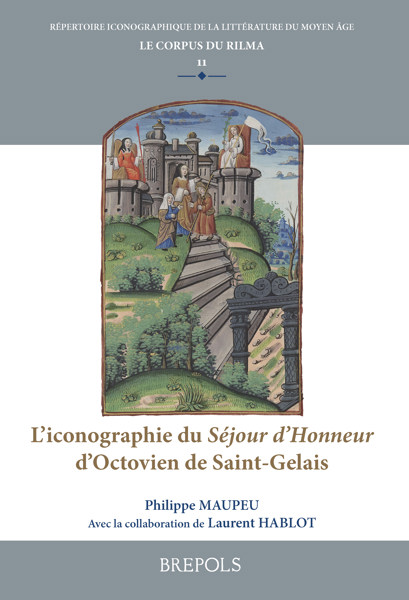
Le Séjour d’Honneur, écrit par Octovien de Saint-Gelais (c. 1468-1502) entre 1489 et 1494, au moment de son intronisation comme évêque d’Angoulême, est un prosimètre allégorique mêlant vers et prose, chef-d’œuvre de la « Grande rhétorique ». Le récit conte l’errance d’un pèlerin dévoyé, sous l’emprise de sa fausse guide Sensualité, qui parvient à la cour (le « séjour ») de Charles VIII, représenté par la figure d’Honneur, avant de trouver refuge en l’ermitage d’Entendement. Auparavant, le pèlerin aura parcouru le sentier de Fleurie Jeunesse, traversé la mer Mondaine, gagné l’île de Vaine Espérance et parcouru la forêt des Aventures où se lit un condensé de l’histoire du monde. Ce texte, s’il puise dans des modèles littéraires son invention et ses cadres formels – la Consolation de Philosophie de Boèce et le Pèlerinage de vie humaine de Guillaume de Deguileville en premier lieu – en renouvelle d’une manière originale et personnelle les conventions. La forme hybride du prosimètre permet d’articuler l’éloge politique du Souverain avec le propos édifiant de la conversion au bien et à la religion.

Le texte n’a été conservé que dans deux manuscrits dont un seul est illustré, et dans un petit nombre d’éditions imprimées. Le manuscrit BnF fr 12783, commandé par Edmond de Prie Buzançais et son épouse Avoye de Chabannes entre 1506 et 1510, présente une illustration abondante (56 miniatures) et riche, fidèle au texte, reproduite dans son intégralité ici, ainsi qu’un programme héraldique particulièrement élaboré. Il est probable que ce manuscrit soit la copie du manuscrit original de dédicace à Charles VIII, perdu, et que son programme iconographique, ait été conçu par l’auteur lui-même. On s’attache ici à mettre au jour ces relations complexes entre texte et image dans le programme iconographique et héraldique du manuscrit.

Philippe Maupeu est Professeur à l’Université Bordeaux 3-Montaigne en Littérature et Langue Médiévales. Ses travaux portent principalement sur l’allégorie et sur une approche rhétorique des rapports entre texte et image à la fin du Moyen Âge. Il a publié L’intention et l’empreinte. Rhétorique du manuscrit d’auteur à la fin du Moyen Âge (Paris, Champion, 2022), et a édité le Livre du Pèlerin de vie humaine de Guillaume de Deguileville en collaboration avec Robert G. Edwards (Livre de Poche, « Lettres gothiques », 2015).

Laurent Hablot, spécialiste d’héraldique, est Directeur d’études à l’École Pratique des Hautes Études où il occupe la chaire d’emblématique occidentale. Il enseigne à l’École nationale des Chartes et à l’École du Louvre. Il a publié, entre autres nombreux travaux, le Manuel d’héraldique et d’emblématique médiévale (PUFR, 2019).

Le Séjour d’Honneur : un pèlerinage allégorique
– Argument du Séjour d’Honneur
– Octovien de Saint-Gelais, évêque et poète
– Le Séjour d’Honneur et le genre du pèlerinage allégorique
– Autobiographie et allégorie
– Octovien de Saint-Gelais, écrivain et concepteur du programme iconographique ?
– Poétique de l’illustration
– Le manuscrit BnF fr. 12783 : attribution et programme iconographique
– Le programme héraldique du manuscrit BnF fr. 12783 (par Laurent Hablot)

Le cycle iconographique
– Avertissement au lecteur

Bibliographie
Index général
Planches

Informations pratiques :

Philippe Maupeu, L’iconographie du Séjour d’Honneur d’Octovien de Saint-Gelais, Turnhout, Brepols, 2025 ; 1 vol., 170 p. (Répertoire Iconographique de la Littérature du Moyen Âge, 11). ISBN : 978-2-503-61964-4. Prix : € 80,00.

Source : Brepols

Publié dans Publications | Commentaires fermés sur Publication – Philippe Maupeu, « L’iconographie du Séjour d’Honneur d’Octovien de Saint-Gelais »

Publication – Luis Almenar Fernández, « The Power of Peasant Consumers. The Material Culture of Food in the Late Medieval Kingdom of Valencia »

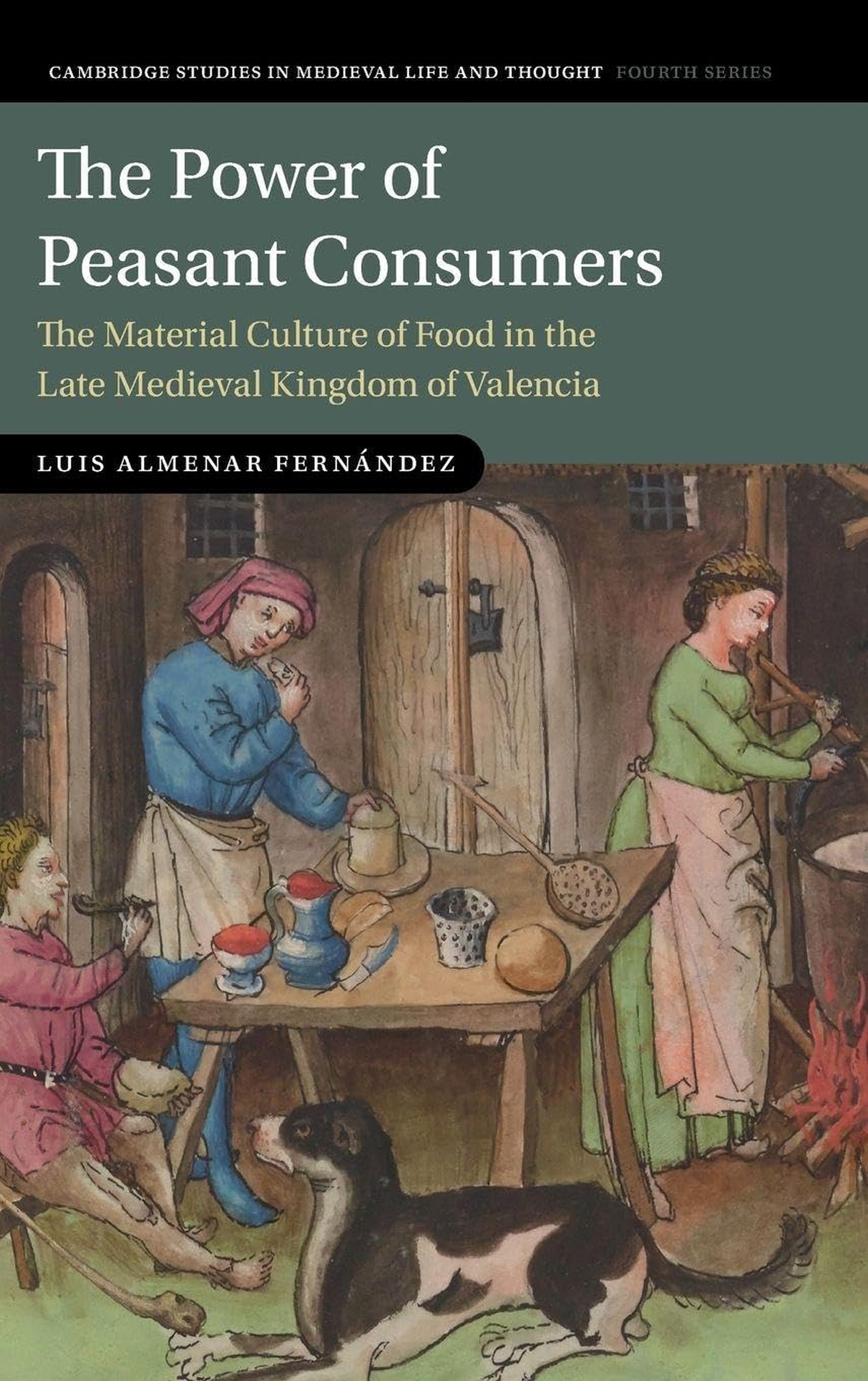
The long-held view of the peasantry as a passive social group has gradually been replaced by a positive narrative that stresses peasant agency in economic, social, and even political terms. Contributing to this shift, Luis Almenar Fernández explores the objects that peasants used to store, cook, and serve their food in late medieval Valencia. Drawing on a range of archival, visual, material, and literary evidence from c. 1280 to c. 1460, the book examines the materiality of food to shed light on the consumer behaviour of agriculturalists during pivotal economic, social, and material transformation. It builds on discussions about changes in living standards, consumption patterns, and material culture in pre-industrial European societies. The materiality of food improved significantly among Valencian peasants during this period. This phenomenon had widespread implications for the economy and underpinned the development of new industries, contributing to the economic growth of this prominent Mediterranean polity.

Table des matières : ici

Informations pratiques :

Luis Almenar Fernández, The Power of Peasant Consumers. The Material Culture of Food in the Late Medieval Kingdom of Valencia, Cambridge, Cambridge University Press, 2025 ; 1 vol. ISBN : 9781009602440. Prix : 104,90.

Source : Cambridge University Press

Publié dans Publications | Commentaires fermés sur Publication – Luis Almenar Fernández, « The Power of Peasant Consumers. The Material Culture of Food in the Late Medieval Kingdom of Valencia »

Publication – Thierry Gregor, Bertrand Riba, « De la trace à l’outil »

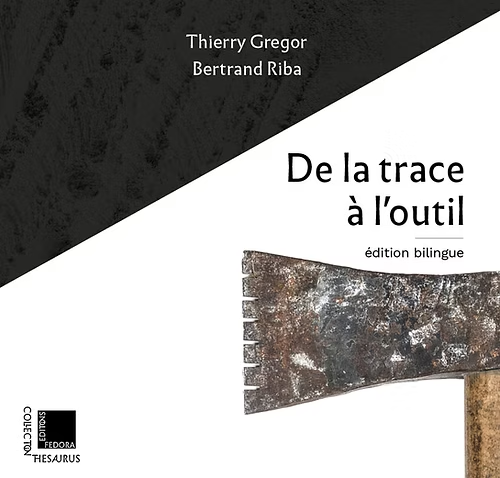
Les pierres des monuments racontent à leur manière les techniques de construction du passé. Encore faut-il savoir déchiffrer les marques laissées, il y a des siècles, par des artisans restés anonymes.
Ce manuel vous invite à lire ces empreintes du passé et à les relier aux outils qui les ont façonnées. Retrouver l’outil, c’est retrouver le geste, comprendre la chaîne opératoire qui a permis d’élever aussi bien les édifices les plus modestes que les constructions les plus imposantes.

Proposé en version bilingue français-anglais pour en faciliter l’accès, cet ouvrage présente les principaux outils employés durant l’Antiquité et le Moyen Âge. Richement illustré de photographies, il s’adresse autant aux spécialistes qu’aux passionnés d’histoire et d’archéologie, curieux de découvrir le savoir-faire et l’ingéniosité des bâtisseurs d’autrefois.

Informations pratiques :

Thierry Gregor, Bertrand Riba, De la trace à l’outil, Talence, Éditions Fedora, 2025 ; 1 vol., 180 p. (Thesaurus). ISBN : 979-10-96137-28-2. Prix : € 15,00.

Source : Éditions Fedora

Publié dans Publications | Commentaires fermés sur Publication – Thierry Gregor, Bertrand Riba, « De la trace à l’outil »

Publication – « The Werden A Glossary. Edition and Commentary », éd. Alger N. Doane

This is an edition of a key eighth century glossary, traditionally called « Werden A » after the abbey in Germany where its unique manuscript was probably written about 810, incorporating English materials of earlier date, It is one of an important set of early English glossaries usually associated with the school of Canterbury under Archbishop Theodore in the last quarter of the seventh century; this was the first important center of learning in England after the conversion to Christianity from ca. 600 and its alumni and scholarship spread out not only over England in the subsequent century but to north-east France and Germany in the so-called « Anglo-Saxon Mission » with the aim of bringing  Christianity to semi-pagan lands. Such glossaries played a big part in these campaigns and strongly influenced Old High German glossaries and literature for several centuries more. Werden A shows ample signs of its career on the continent with many entries that must have originated in Frisia, France, Saxony and the Rhineland.  Moreover, Werden A presents many difficult editorial challenges: it is very fragmentary, preserved as several mutilated and dispersed parts, most of which were destroyed in World War II and are only preserved in poor nineteenth century transcripts, and beyond that the text is often obscure and corrupt. This edition undertakes to reconstruct the codicology and contents of the original book before its dispersal, retrieval of the remaining text as originally written, establishment of the sources of the various items, and the deciphering and interpretation of individual entries that are often highly original and unparalleled in other glossaries.

Alger N. Doane is Professor of English, University of Wisconsin-Madison, Emeritus. His numerous contributions to Old English and Old Saxon language, literature and reception were the subject of a celebratory volume: The Genesis of Books: Studies in the Scribal Culture of Medieval England in Honour of A. N. Doane, ed. Matthew T. Hussey, John D. Niles (Brepols, 2012).

Introduction

Appendix 1. Index to Vernacular Interpretants

Appendix 2. Sources of Vernacular Items

Critical Edition of Werden A Glossary

Commentary

Bibliography

Indices

Informations pratiques :

The Werden A Glossary. Edition and Commentary, éd. Alger N. Doane, Turnhout, Brepols, 2025 ; 1 vol., 324 p. (Corpus Christianorum, Lexica Latina Medii Aevi, 8). ISBN : 978-2-503-61248-5. Prix : € 185,00.

Source : Brepols

Publié dans Publications | Commentaires fermés sur Publication – « The Werden A Glossary. Edition and Commentary », éd. Alger N. Doane