Journée d’étude – L’apport des études archéo-métallurgiques aux objets anciens : la vaisselle de bronze aux périodes antique et médiévale

L’HALMA UMR 8164 ULille et le Centre de Recherche et de restauration des musée de France (C2RMF) proposent le jeudi 26 juin 2025 une journée d’étude interdisciplinaire sur l’apport des études archéo-métallurgiques aux objets anciens : la vaisselle de bronze aux périodes antique et médiévale.

Programme : ici

Comité organisateur : 
Christine Hoët-Van Cauwenberghe, Professeur d’Histoire romaine, HALMA – UMR 8164, Université de Lille
Benoît Mille, Ingénieur de recherche, Centre de recherche et de restauration des musées de France (C2RMF), Paris
Delphine Nicolas, Doctorante contractuelle, ULille/Région Hauts-de-France, HALMA – UMR 8164, Université de Lille

Comité scientifique : 
Elsa Lambert, Ingénieure d’étude, Centre de recherche et de restauration des musées de France (C2RMF), Paris
Ingrid Proriol Serre, Directrice de recherche CNRS, Équipe Métallurgie physique et génie des matériaux, UMT – UMR 8207, Université de Lille

Source : Nordoc’Archéo

Publié dans Colloque | Commentaires fermés sur Journée d’étude – L’apport des études archéo-métallurgiques aux objets anciens : la vaisselle de bronze aux périodes antique et médiévale

Appel à contribution – 11th Conference of the Medieval Chronicle Society

The 11th international conference on the Medieval Chronicle will be held in Munich, Germany, in the week of July 27th to 30th 2026.

The 11th international conference on the Medieval Chronicle will be held in Munich, Germany, in the week of July 27th to 30th 2026. Papers in English, French or German are invited on any aspect of the medieval chronicle. These can for example be related to form, function, questions regarding historiography or images. However, we especially encourage papers related to our special focus “Chronicle in Danger”. Themes to be addressed may include, but are not limited to:
– Use and abuse of the chronicle, both in the Middle Ages and thereafter
– Creation of crisis narratives in chronicles. Including questions regarding blaming, scapegoating, hate, compassion, and cohesion during crises
– Gender, race, class and religion in the chronicle: Concepts of othering and exclusion
– Materiality of the chronicle and future perspectives concerning preservation and digitization
– Challenges of ‘outdated’ editions and of editing chronicles in the 21st century

We welcome submissions for individual papers and sessions. Each session will be 90 minutes and consist of three papers. For a session proposal please include three papers and a chair. Conference papers will be strictly limited to 20 minutes in length. Please note that the conference will take place in-person and no hybrid access can be provided.

The submission deadline for abstracts (maximum length 200 words per paper) and sessions is Monday, November 10th, 2025. Please submit abstracts through our online platform: https://doo.net/de-de/widget/189361/buchung?booking_widget_config_name=booking-18400-84682&organizerId=18400&locale=de-dele=de-de

Notifications of acceptance will be given by the end of January 2026 and the registration will follow in spring 2026. We are estimating a conference fee of €90 (reduced rate €60 for PhD/graduate students) and additional fees for excursions on Thursday, July 30th and a conference dinner. Travel and accommodation have to be covered and organized individually.

Contact: Florian Datz (florian.datz@lmu.de)

Organizers: Prof. Julia Burkhardt, Florian Datz, M.A., Prof. Eva Haverkamp-Rott, Dr. Paul Schweitzer-Martin (LMU Munich)

Source : H-Soz-Kult

Publié dans Appel à contributions | Commentaires fermés sur Appel à contribution – 11th Conference of the Medieval Chronicle Society

Appel à contribution – Marc Bloch au Brésil. Histoire et sciences sociales

Colloque international “Marc Bloch au Brésil. Histoire et sciences sociales”
São Paulo – 6, 7 et 8 mai 2026
Date limite de soumission des propositions : 1er septembre 2025

Pourquoi un colloque sur Marc Bloch au Brésil ?

Dans un pays où l’enseignement universitaire de l’histoire est profondément influencé par les études historiographiques et où l’École des Annales, parmi d’autres courants des sciences humaines et sociales, a exercé et exerce encore un rôle central, Marc Bloch (1886-1944) demeure une référence essentielle. Par ailleurs, le champ des études médiévales au Brésil a connu un développement remarquable et pluriel au cours des dernières décennies, rendant d’autant plus pertinent de revisiter de manière critique l’œuvre de Marc Bloch, médiéviste et cofondateur de la revue Annales, ainsi que d’évaluer historiquement et historiographiquement les répercussions, critiques et transformations de ses thèmes de prédilection dans la recherche historique au Brésil et au-delà.

Cependant, l’importance de Marc Bloch dépasse les frontières disciplinaires et géographiques. Son œuvre constitue un exemple de la circulation internationale des idées, des méthodes et des débats historiographiques, tout en reflétant intensément les flux transnationaux d’intellectuels et de chercheurs. Son parcours académique et personnel fut marqué par des échanges avec diverses traditions historiographiques, et par une pensée construite dans le dialogue constant avec différentes disciplines. Son approche interdisciplinaire, qui articule histoire, sociologie, anthropologie et économie, reste une référence pour les études des sociétés du passé et du présent.

L’actualité de Marc Bloch ne se limite pas à l’étude de sa production historiographique. Sa pensée, profondément ancrée dans le contexte intellectuel et politique de son époque, son engagement en tant que soldat et résistant lors des deux guerres mondiales, et son exécution tragique par les nazis le 16 juin 1944, confèrent à son parcours une dimension intellectuelle et humaine singulière. De plus, la réception et l’appropriation de son œuvre dans différents contextes nationaux mettent en évidence la dynamique globale des idées historiographiques et leur adaptation aux spécificités locales.

Ce colloque scientifique a pour objectif de susciter de nouvelles réflexions et recherches sur les multiples facettes de l’œuvre de Marc Bloch et sur ses objets d’étude, ainsi que sur son influence et sa réception dans le champ des sciences humaines et sociales jusqu’à nos jours. Il s’agit d’explorer sa contribution en tant qu’historien du Moyen Âge, théoricien de l’histoire et des sociétés, et intellectuel engagé, témoin actif de son temps. L’événement vise à promouvoir un débat interdisciplinaire et international autour de son œuvre, en mettant en lumière à la fois les dialogues historiographiques qu’elle a inspirés et les défis contemporains que pose son héritage.

Les propositions de communication devront s’inscrire dans l’un des axes thématiques suivants :

Historiographie et théorie de l’histoire

  • Les contributions de Marc Bloch à la méthode historique et à la science historique ;
  • La construction d’un modèle d’histoire comme science sociale ;
  • La relation entre l’histoire et les autres sciences sociales telles que la sociologie, l’anthropologie et l’économie ;
  • Le concept d’“histoire-problème” et l’approche comparative en analyse historique ;
  • Marc Bloch et Lucien Febvre : les Annales et autres courants historiographiques ;
  • Marc Bloch et la qualité formelle de ses ouvrages : un modèle d’écriture historiographique ;
  • L’histoire comme science du présent, Marc Bloch et l’histoire contemporaine ;
  • Les erreurs, falsifications, méprises et hallucinations comme matériau historique ;
  • La pertinence de la pensée de Bloch face aux défis contemporains de la désinformation et de la manipulation du passé.

Histoire économique et sociale du Moyen Âge

  • Le concept de féodalisme et les structures sociales et économiques médiévales ;
  • Les dynamiques de la terre, de la production et du travail au Moyen Âge ;
  • Le rôle du christianisme, de l’Église et des représentations mentales dans la compréhension de l’organisation sociale médiévale ;
  • Les relations de classe entre seigneurs et paysans et la formation des liens de dépendance ;
  • L’approche interdisciplinaire dans l’analyse des sociétés médiévales ;
  • Les autres objets de recherche de Marc Bloch : l’art « populaire », les « inventions médiévales », etc.

L’historien et le citoyen

  • L’histoire comme outil de compréhension du présent et la responsabilité sociale de l’historien ;
  • Le rôle de l’historien dans la société et l’engagement intellectuel de Marc Bloch ;
  • La circulation des intellectuels et les impacts des expériences de guerre sur l’écriture de l’histoire ;
  • L’influence de L’Étrange Défaite comme témoignage et analyse historique de son époque ;
  • L’expérience de Bloch lors des Première et Seconde Guerres mondiales et sa participation à la Résistance française.

La réception de l’œuvre de Marc Bloch

  • La réception interdisciplinaire de son œuvre et ses dialogues avec d’autres champs du savoir ;
  • La relation entre Bloch et l’école sociologique française comme paradigme de coopération transdisciplinaire ;
  • L’influence de sa méthodologie et de ses approches dans le développement de l’historiographie ;
  • Les appropriations, critiques et relectures de Bloch dans les études universitaires nationales et internationales ;
  • L’introduction et la diffusion des idées de Marc Bloch au Brésil, dans les Amériques et en Europe ;
  • Les traductions de ses œuvres et leur impact dans l’enseignement de l’histoire.

Ce colloque est une initiative portée par Suzette Bloch, petite-fille de Marc Bloch, et s’inscrit dans le cadre de son entrée au Panthéon, annoncée par le Président de la République française en novembre 2024.

Nous invitons les chercheurs et chercheuses à contribuer à ce débat académique, en réaffirmant l’actualité de la pensée de Marc Bloch et son importance pour l’histoire comme science et comme engagement envers la société.

Soumission des propositions

Les propositions de communication doivent comporter un titre, un résumé de 300 mots maximum, ainsi qu’une brève biographie de l’auteur(e) (environ 150 mots). Elles doivent présenter une base scientifique solide. Les propositions doivent être envoyées avant le 1er septembre 2025 à l’adresse e-mail du comité d’organisation : mbb2026sp@gmail.com

Langues : portugais, français, anglais, espagnol

Conditions matérielles

Les frais de voyage et d’hébergement à São Paulo seront à la charge des communicants. Toutefois, l’organisation du colloque attribuera trois bourses d’aide à de jeunes chercheurs et chercheuses : doctorants et doctorantes, ainsi qu’aux docteur(e)s ayant soutenu leur thèse depuis 2019. La demande de bourse doit être soumise avec la proposition de communication et inclure la date d’inscription en doctorat, la date de soutenance, l’université et le sujet de recherche.

Dates importantes

  • Date limite de soumission des propositions : 1er septembre 2025
  • Notification d’acceptation : novembre 2025
  • Tenue du colloque : 6, 7 et 8 mai 2026

Lieu : Campus de l’Université de São Paulo (USP)

Conférenciers invités

Conférences et participations spéciales de Suzette Bloch, Marc-Louis Bloch-Dos Santos, Mário Sérgio Conti, des professeur.e.s  Hilário Franco Jr., Marieta de Moraes Ferreira, Joseph Morsel, Serge Paugam, Lilia Schwarcz…

Pour plus d’informations veuillez contacter : mbb2026sp@gmail.com

Source : LAMOP – Hypothèses

Publié dans Appel à contributions | Commentaires fermés sur Appel à contribution – Marc Bloch au Brésil. Histoire et sciences sociales

Publication – « Medieval Livonia. History, Society and Economy of a Territory on the Baltic Frontier », éd. Anti Selart, Alan V. Murray

The territory known as Livonia, on the eastern shore of the Baltic Sea, emerged as a result of the Baltic Crusades in the twelfth and thirteenth centuries. It was a region of multiple nations, languages and cultures, and the scene of their mutual interaction, connected to the Holy Roman Empire, the papal curia, Scandinavia and Lithuania, and mediating the Hanseatic trade with Russia. This book is a significant new study of the multiple facets of Baltic history, taking in social history, urban and rural culture, peasant economy and literacy, with novel perspectives on crusading, political history and the chief agents of power, notably the Teutonic Order. This first comprehensive treatment of Livonian history in English will serve as a valuable source of information for undergraduate and postgraduate students as well as a resource for studying the Baltic Crusades and crusader territories in general.

Anti Selart (PhD 2002, University of Tartu) is Professor of Medieval History at the University of Tartu. His research topics include the Baltic crusades and interconfessional relations in East Central Europe in the Middle Ages and in the sixteenth century. He has recently published the edited volume Baltic Crusades and Societal Innovation in Medieval Livonia, 1200–1350 (Brill, 2022).

Alan V. Murray (PhD 1988, University of St Andrews) is Professor of Medieval European History at the University of Leeds. He is the author of numerous studies on crusade and mission in the Baltic region and on medieval German language and literature, and is the editor of the essay collections Crusade and Conversion on the Baltic Frontier, 1150–1500 (Ashgate, 2001), The Clash of Cultures on the Medieval Baltic Frontier (Ashgate, 2009) and The North-Eastern Frontiers of Medieval Europe: The Expansion of Latin Christendom in the Baltic Lands (Ashgate, 2014).

1. Introduction
Anti Selart and Marek Tamm 

2. The Crusades and the Conquest of Livonia
Anti Selart, Ivar Leimus, Linda Kaljundi and Heiki Valk 

3. Continuity and Change in the Thirteenth Century
Heiki Valk and Anti Selart 

4. Bishoprics and Cathedral Chapters
Tiina Kala 

5. The Teutonic Order in Livonia
Juhan Kreem 

6. The Nobility and Its Corporations
Juhan Kreem 

7. The Towns
Juhan Kreem, Anu Mänd and Tiina Kala 

8. The Struggle for Dominance, 1300‒1400
Anti Selart 

9. The Fragile Balance of Power, 1400‒1550
Juhan Kreem 

10. Population
Anti Selart, Heiki Valk, Inna Põltsam-Jürjo and Ivar Leimus 

11. The Rural Economy and Village Life
Inna Põltsam-Jürjo, Anti Selart and Ivar Leimus 

12. Trade and Finance
Ivar Leimus 

13. Crafts and Industry
Anu Mänd and Erki Russow 

14. The Church and Religious Life
Tiina Kala, Marek Tamm, Anu Mänd, Heiki Valk and Inna Põltsam-Jürjo 

15. Written Culture
Tiina Kala and Marek Tamm 

16. Urban Culture
Anu Mänd, Inna Põltsam-Jürjo, Erki Russow and Kersti Markus 

17. The Rural World
Heiki Valk and Kersti Markus 

Appendix
Bishops, Masters of the Sword Brethren and Livonian Masters of the Teutonic Order 

Bibliography 

Informations pratiques :

Medieval Livonia. History, Society and Economy of a Territory on the Baltic Frontier, éd. Anti Selart, Alan V. Murray, Turnhout, Brepols, 2025 ; 1 vol., 412 p. (Outremer. Studies in the Crusades and the Latin East, 18). ISBN : 978-2-503-57806-4. Prix : € 95,00.

Source : Brepols

Publié dans Publications | Commentaires fermés sur Publication – « Medieval Livonia. History, Society and Economy of a Territory on the Baltic Frontier », éd. Anti Selart, Alan V. Murray

Journée d’étude – L’ailleurs et l’étranger dans les images médiévales. 16e rencontres GRIM-IMAGO

INHA. 2 rue Vivienne, 75002 (Salle Vasari)
Métro : Ligne 3 : Bourse Lignes 1 et 7 : Palais Royal – Musée du Louvre Lignes 7 et 14 : Pyramides

Accueil INHA : 01 47 03 89 00 –  www.inha.fr

10h Introduction

10h15 – Maud Pérez-Simon (Université Sorbonne Nouvelle), Les vrais monstres sont parmi nous. Le manuscrit BnF fr. 15106, le premier inventaire de monstres en langue française.

11h – Thomas Guglielmo (Université de Poitiers), Aux frontières de l’humain : questionner l’altérité du lépreux dans la production visuelle du second Moyen Âge.

11h30 – Pause

 11h45 – Camille Grandpierre (Sorbonne Université), Iskandar et ses voyages dans les manuscrits peints du monde persan.

12h15 – Amal Azzi (Université de Poitiers), D’ici et d’ailleurs : circulations et transferts des représentations funéraires entre Flandres et Aunis à la fin du Moyen Âge.

12h45 – Déjeuner

14h15 – Mikhail Maizuls (EHESS / CNRS), Les chapeaux juifs : transferts et transformations dans l’art de la fin du Moyen Age.

15h – Marie Métraud (Université de Poitiers), Imager et imaginer l’autre : étude iconographique de la conversion des païens dans deux exemples manuscrits de la Vie de Saint-Amand (Valenciennes, BM, ms 500 et 502).

15h30 – Pause

15h45 – Ulysse Ecard (Université Paul Valéry – Montpellier), Le coffret de Perceval : le parcours d’un marginal vers la chevalerie.

Source : Carnets du CESCM

Publié dans Colloque | Commentaires fermés sur Journée d’étude – L’ailleurs et l’étranger dans les images médiévales. 16e rencontres GRIM-IMAGO

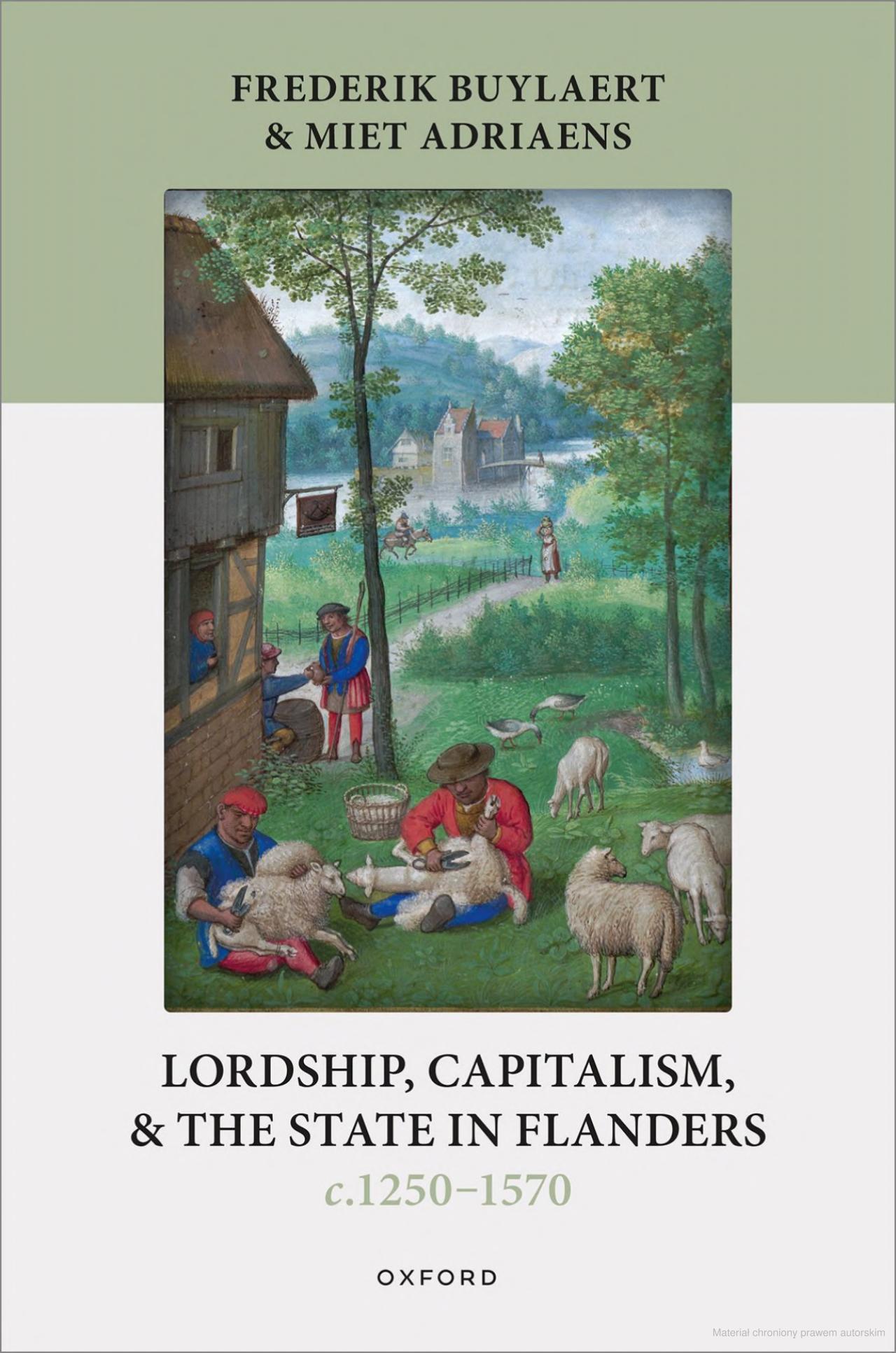
Publication – « Lordship, Capitalism, and the State in Flanders (c. 1250–1570) », éd. Frederik Buylaert, Miet Adriaens

This is an open access title available under the terms of a CC BY-NC-ND 4.0 International licence. It is free to read at Oxford Scholarship Online and offered as a free PDF download from OUP and selected open access locations.

Until recently, historians tended to assume that in the late medieval period local lordship was effectively crushed between strong cities and states. Developing recent debates to the contrary, Lordship, Capitalism, and the State in Flanders draws on qualitative and quantitative evidence from the county of Flanders to reconsider the ways in which lordship continued to be a cornerstone of life in rural Europe across this period. Flanders is an extreme example of a scenario in which seigneuries were not so much vehicles for the elite interests of lords, but dynamic instruments for village communities; and lordship here was as important, if not moreso, at the start of the Dutch Revolt in 1567 than it was around the mid-thirteenth century, where this study begins.

As a forerunner in the commercialization and urbanization of society, Flanders saw the rise of mighty towns who provided the inhabitants of their hinterlands with a shield against seigneurial oppression, up to the point that the seigneurial administration could only continue to function if it was closely aligned with the interests of peasants. Next to this, the Low Countries, including Flanders, became part of the mighty Burgundian-Habsburg polity. Rather than undermining seigneurial lordship, however, the princely administration increasingly relied on the peasant aldermen of seigneuries to provide justice and governance to villages. The self-rule of Flemish peasantries through lordship meant that the seigneurie was the forum in which contemporaries made a critical decision, that being how to respond to the new and all-encompassing phenomenon of agrarian capitalism, a mode of agricultural production that first emerged in the Low Countries and Flanders before spreading to the rest of the globe.

The persistence and transformation of seigneurial lordship into what might be called ‘middle-class lordship’ thus had great consequences for Flemish society across the late medieval period and beyond-and this story helps scholars to understand more generally how power relations between lords and peasants differed from one region to the next, in dialogue with different trajectories in urbanization, economic change, and state formation.

Introduction
1:Seigneuries, Seigneurial Rights, and Seigneurial Landscapes
2:Lords, Peasants, and Agrarian Capitalism
3:Considering the Seigneurie from Within
4:Lordship, Chivalry, and Urban Society
5:Lords, Ladies, and Families
6:Seigneuries and State Formation
Conclusion

Lordship, Capitalism, and the State in Flanders (c. 1250–1570), éd. Frederik Buylaert, Miet Adriaens, Oxford, Oxford University Press, 2025 ; 1 vol., 368 p. (Oxford Studies in Medieval European History). ISBN : 978-0-19894-572-7. Prix : GBP 99,00.

Source : Oxford University Press

Publié dans Publications | Commentaires fermés sur Publication – « Lordship, Capitalism, and the State in Flanders (c. 1250–1570) », éd. Frederik Buylaert, Miet Adriaens

Appel à contribution – « Voces ». Le Moyen Âge latin à travers ses mots-clés

Le cycle de conférences « Voces. Le Moyen Âge à travers ses mots-clés » se propose d’examiner attentivement les mots qui ont joué un rôle important dans l’Europe latine médiévale. Tous les deux ans, nous nous concentrons sur un concept central pour le Moyen Âge latin et ses expressions linguistiques. L’édition de cette année est consacrée aux limites et frontières.

Dans cette édition, nous nous intéresserons plus particulièrement au concept de « frontière », un thème fondamental qui imprègne la pensée, la langue et la société médiévales. Les frontières se manifestent sous diverses formes : limites territoriales, frontières linguistiques (latin, langues vernaculaires), écarts conceptuels dans le discours scientifique et religieux, démarcations sociales entre communautés et individus. Le vocabulaire employé pour parler de ces frontières permet d’approcher la façon dont les femmes et les hommes du Moyen âge appréhendaient leur monde et ses complexités.

Ces frontières, rarement fixées, fonctionnaient plutôt comme des zones fluides et perméables à la négociation, à la transgression et à l’échange culturel. Leur terminologie a évolué à mesure que les idées, les textes et les pratiques traversaient les espaces géographiques et intellectuels. Cette fluidité remet évidemment en question les catégorisations modernes, qu’il s’agisse de distinguer le vocabulaire latin médiéval de celui de la Renaissance, de délimiter les genres textuels ou de cartographier les limites poreuses entre les discours spécialisés. Les humanités numériques ont récemment transformé la façon dont nous appréhendons cette terminologie liée aux frontières, permettant des explorations plus nuancées de la façon dont la société médiévale organisait le savoir, le pouvoir et l’identité à travers le langage.

Nous invitons les auteurs à présenter des communications portant sur des mots ou des concepts isolés, ou sur des champs lexicaux ou des domaines conceptuels entiers. Les contributions interdisciplinaires, combinant l’analyse linguistique et historique, sociologique, anthropologique, ou offrant une perspective interculturelle et interlinguistique, sont particulièrement appréciées.

  • Représenter les frontières au Moyen Âge : terminologie latine et vernaculaire ; limites physiques et abstraites (propriété, inclusion et exclusion, hommes et femmes, etc.) ; transgression littérale et métaphorique (crime et péché, sacré et profane, orthodoxie et hérésie) ; vocabulaire et catégories médiévales (temps, espace)
  • Délimiter les limites : variations géographiques ; porosité entre latin et vernaculaires ; Moyen âge ou Renaissance ?
  • Le vocabulaire au-delà des frontières : transfert lexical interlinguistique ; échanges entre les communautés ; domaines lexicaux et domaines de connaissance
  • Théories et méthodes : traitement de l’ambigu et du flou ; méthodes numériques pour l’étude du vocabulaire médiéval ; emprunts lexicaux et changements sémantiques 

Deux types de contributions sont proposés :

  • les communications longues (20 min. + 10 min. de discussion) ne se limitent pas à un seul texte ou un seul auteur, et fournissent un contexte assez large (historique, social, culturel) pour la discussion, ou posent des questions théoriques importantes (changement historique, problèmes méthodologiques) ;
  • les communications courtes (10 min. + 5 min. de discussion), plus limitées dans leur portée, mettent en avant les liens entre le vocabulaire ou la conceptualisation et la réalité socioculturelle du Moyen Âge.

Langues de la conférence : allemand, anglais, castillan, français, italien.

Les soumissions sont déposées sur : https://easychair.org/conferences/ ?conf =voces2025

avant le 15/06/2025 minuit

  • communications longues : résumé de 300-500 mots (références incluses)
  • communications courtes : résumé de 200-250 mots (références incluses) 

Les soumissions doivent présenter clairement la problématique, discuter brièvement les recherches existantes et expliquer en quoi l’analyse du terme ou du champ proposé est importante pour la compréhension des pratiques sociales médiévales.

  • soumissions : jusqu’au 15/06/2025
  • notifications : 30/06/2025 
  • inscriptions : à partir du 01/09/2025 
  • conférence : 16-17/10/2025 
  • Renaud Alexandre (IRHT-CNRS)
  • Krzysztof Nowak (IJP-PAN)

Source : Calenda


Publié dans Appel à contributions | Commentaires fermés sur Appel à contribution – « Voces ». Le Moyen Âge latin à travers ses mots-clés

Colloque – Samouraïs et chevaliers à l’écrit et l’écran. Enjeux historiques, mythologiques, esthétiques

Dates : Jeudi 16 & vendredi 17 octobre 2025
Lieu : CESCM, Hôtel Berthelot, 24 rue de la Chaîne, salle Crozet

Jeudi 16 octobre 2025

13h / Accueil des participants

13h30 / Ouverture du colloque par Anne-Cécile Guilbard(Assesseure à la Recherche de l’UFR Lettres & Langues) et Cécile Voyer (Directrice du CESCM, de l’UFR Sciences Humaines et Arts)

13h45-14h / Introduction par Pascale DROUET (Université de Poitiers-CESCM) et Anne-Marie COSTANTINI-CORNÈDE (Sorbonne Nouvelle-PRISMES)

1. Chevaliers, samouraïs : tournants historiques, enjeux culturels et ambiguïtés éthiques

Présidente de séance : Pascale Drouet

14h-14h30 / Marion BRACQ (Université de Lille 3) : « Quand la Sword and Sorcery italienne revisitait l’Orlando furioso de l’Arioste : I Paladini, storia d’armi et d’amori de Giacomo Battiato (1984) »

14h30-15h / Pierre LEVRON (Chargé de recherches au CNRS (UMR 7302, CESCM) : « Existe-t-il un droit de la chevalerie, ou : la littérature servirait-elle à l’enseignement de la coutume ? Enquête dans le Roman de Tristan en Prose »

15h-15h30 / Anne-Marie COSTANTINI-CORNÈDE (Université Sorbonne Nouvelle, Paris Cité) : « Visions of Samurai and Knighthood: Kurosawa’s and Other Jidaigeki, Intercultural Perspectives »

Questions (15mn) & pause (15 min)

2. Samouraïs et Japon féodal : enjeux historiques et mythologiques

Président de séance : Claire Guéron

16h-16h30 / Delphine MULARD (Université de Strasbourg) : « Évolution de la figure du guerrier chasseur de démon : étude de la représentation du récit Shutendôji (le Jouvenceau buveur) »

16h30-17h / Natalia DOAN (University of Tennessee, Knoxville) : « The 1860 Japanese Embassy and the Transnational Influence of Tokugawa Japan » 

17h-17h30 / Jean DU VERGER (ENSMM Besançon, VALE) : « The Woman as Spider in Early Modern Japan in Tanizaki’s “Shisei” (1909) and Masumura’s Irezumi (1966) »

Questions (15mn)

Apéritif de bienvenue au CESCM, salle Berger (18h)

19h30-22h30 / Soirée cinéma : Présentation du film Yojimbo (110mn) de Akira Kurosawa par Anne-Marie COSTANTINI-CORNÈDE et Gilles Menegaldo, modération par Jean-Luc Terradillos, suivie d’une discussion avec le public (temps d’ouverture grand public)

Vendredi 17 octobre 2025

3. Enjeux médiévaux culturels : études comparatives

Présidente de séance : Anne-Hélène Miller

9h30-10h / Marta AÑORBE MATEOS (University of Zaragoza) : « The Self-questioning Hero: A Comparative Study of the Heroic Model of Taira no Shigemori and Perceval »

10h-10h30 / Claire GUÉRON (Université de Bourgogne) : « La notion de “geste juste” dans le bushido et chez le guerrier shakespearien »

10h30-11h / Matthew Bryan GILLIS (University of Tennessee, Marco Institute) : « Beautiful Weapons and Bloody, Bloody Wounds: The Aesthetics of Warfare in Medieval Epic »

Questions (15 mn) & pause (15mm)

Président de séance : Matthew Gillis

11h30-12h / Malgorzata K. CITKO-DU PLANTIS (University of Tennessee, Marco Institute), « The Softer Side of Warrior Culture – Medieval Samurai and Knights Who Wrote Poetry »

12h-12h30 / Anne-Hélène MILLER (University of Tennessee, Marco Institute) : « Re-inventing the Warrior Image in Time of Peace: Survival or Nostalgia? »

Questions (15mn)

12h45-14h15   déjeuner sur place (salle Berger)

4. Samouraïs et chevaliers : cinéma et histoire, enjeux artistiques

Présidente de séance : Anne-Marie Costantini-Cornède

14h30-15h / Jessica X. DABOUIN (Université de Paris 1, ACTE) « Way of the Scissor-shears: Tadanori Yokoo’s depiction of samurai from the 1960s to today »

15h-15h30 / Minh VU CONG (Université de Lille 3), « Macbeth, de l’invraisemblable Moyen-Âge écossais à la fable baroque chez les samouraïs »

15h30-16h / Gilles MENEGALDO (Université de Poitiers, Professeur émérite), « Deux avatars cinématographiques du mythe arthurien : Excalibur (John Boorman, 1981) et Lancelot du lac (Robert Bresson, 1974) : entre spectaculaire et minimalisme »

Questions (15mn) & pause (15 minutes)

Président de séance : Gilles Ménégaldo

16h30-17h / Sergio BOFFA (Conservateur de Musée Nivelles, Belgique), « Une interprétation divergente du film Hara-kiri (Seppuku) de Kobayashi Masaki »

17h-17h30 / Andrea GRUNERT (Université de Bochum, Allemagne), « Critique du bushidō dans cinq jidai geki des années 1960 »

17h30-18h / Pascale DROUET (Université de Poitiers / CESCM), « Rulers and Counterfeiters: from Shakespeare’s 1 Henry IV to Welles’s Chimes at Midnight (1965) and Kurosawa’s Kagemusha (1980) »

Questions (15mn)

18h30 Clôture du colloque

Dîner de clôture en ville 19h30

Source : Carnets du CESCM


Publié dans Colloque | Commentaires fermés sur Colloque – Samouraïs et chevaliers à l’écrit et l’écran. Enjeux historiques, mythologiques, esthétiques

Publication – « Byzantine Liturgical Books. An Introduction », éd. Stefanos Alexopoulos, Stig Simeon R. Frøyshov, Stefan Royé, Andrew Wade

The world of Byzantine liturgical book types is fascinating but also confusing. While they are central to the study and celebration of Byzantine Liturgy, no one work offers an overview of their history, contents, and structure. This volume offers for the first time an introduction to the major types of Byzantine liturgical books, their taxonomy, origins, development, and contents.

Table des matières :

Preface

The Typikon: An Overview
Job GETCHA

The Ensemble of Liturgical Books in a Byzantine Liturgical Context: The Case of the Evergetis Typikon
Joan LENA

The Typikon of Mâr Sâbâ and its Interactive Function in the Byzantine Liturgical Context,
Diego R. FITTIPALDI

Liturgical Gospel Codices of the Byzantine Church
Chris JORDAN

The Impact of Byzantine Lectionary Readings on the Selection of Texts for Illustration in Two Byzantine Gospel Books: Athos, Iviron 5 and Paris, BnF, gr. 54
Kathleen MAXWELL

The Byzantine Apostolos in Codico-Liturgical Context
Samuel GIBSON

Prophetologion
Sysse G. ENGBERG

Perspectives on the History and Theology of the Prophetologion
Alexandru MIHĂILĂ

Psalters, Georgi
R. PARPULOV

Euchologion
Michael ZHELTOV

The Palestino-Byzantine Horologion: A First Attempt at Historical Overview and Typology
Stig Simeon R. FRØYSHOV

Triodion and Pentekostarion: Liturgical Books for the Paschal Cycle,
Damaskinos OLKINUORA

Menaion
Apostolos SPANOS

The Liturgical Book of the Oktoechos: Function, Forms and Manuscript Tradition
Luigi D’AMELIA

Byzantine Musical Manuscripts: A Chrono-Typological Overview
Christian TROELSGÅRD

The Panegyrikon as a Liturgical Book: a General View through the Lens of the Evergetis Typikon and the Saviour’s Typikon, with a New Typology
Joan LENA

Menologia and Synaxaria: Hagiographical Collections in Byzantium
Christian HØGEL

Toward a Taxonomy of Liturgical Codices
Stefano PARENTI and Gabriel RADLE

Towards a History of Printed Liturgical Books in the Modern Greek State: An Initial Survey
Stefanos ALEXOPOULOS and Dionysios BILALIS ANATOLIKIOTES

Informations pratiques :

Byzantine Liturgical Books. An Introduction, éd. Stefanos Alexopoulos, Stig Simeon R. Frøyshov, Stefan Royé, Andrew Wade, Turnhout, Brepols, 2025 ; 1 vol., VI–451 p. (Catalogue of Byzantine Manuscripts in their Liturgical Context. Subsidia, 2). ISBN : 978-2-503-60757-3. Prix : € 110,00.

Source : Brepols

Publié dans Publications | Commentaires fermés sur Publication – « Byzantine Liturgical Books. An Introduction », éd. Stefanos Alexopoulos, Stig Simeon R. Frøyshov, Stefan Royé, Andrew Wade

Publication – « The Book of Raymond of Aguilers. Historia Francorum qui Ceperunt Iherusalem », trad. James Currie

The Book of Raymond of Aguilers, also called the Historia Francorum qui Ceperunt Iherusalem, is one of a handful of eyewitness accounts of the First Crusade, the name given to an armed expedition called for by Pope Urban II at the Council of Clermont in 1095 that journeyed and fought its way to the Holy Land, culminating in the conquest of Jerusalem in July 1099. Raymond’s account primarily follows the journey of Count Raymond IV of Toulouse, also called the count of St. Gilles, which makes it a useful counterpart to the anonymously written Gesta Francorum, another eyewitness account that focuses on the Italian Normans that followed Bohemond. Raymond became the count of St. Gilles’ chaplain during the crusade, and through that proximity to one of the crusade’s leaders, Raymond’s account offers a ringside seat to the leadership dynamics of the crusade. Furthermore, his deliberate focus on the contingent from Provençe provides insight into their social dynamics and the concerns of some of the common people, which is a rarity among medieval narratives.

This new translation is the first to be based on the critical edition of the Latin text produced by John France and is intended primarily for the benefit of undergraduates and to make Raymond more accessible in the classroom. It especially aims to improve access to the text for students who, until this translation, have found it difficult to read the text in full and uninterrupted.

James Currie completed his PhD thesis on the influence of concepts of knightly honour on crusading at Royal Holloway, University of London in 2024.

Table des matières :

1 Introduction

2 The Need for a New Translation

3 The Life and Character of Raymond of Aguilers

4 Raymond’s Book as a Historical Source

5 Raymond and Other First Crusade Accounts

6 Notes on Translation

7 Translation of the Book of Raymond of Aguilers

Bibliography

Index

Informations pratiques :

The Book of Raymond of Aguilers. Historia Francorum qui Ceperunt Iherusalem, trad. James Currie, Londres, Routledge, 2025 ; 1 vol., 126 p. (Crusade Texts in Translation). ISBN : 978-1-03232-570-5. Prix : GBP 145,00.

Source : Routledge

Publié dans Publications | Commentaires fermés sur Publication – « The Book of Raymond of Aguilers. Historia Francorum qui Ceperunt Iherusalem », trad. James Currie