Publication – « I Lussemburgo in Italia nel Trecento », éd. Solal Abélès, Michel Margue, Timothy Salemme

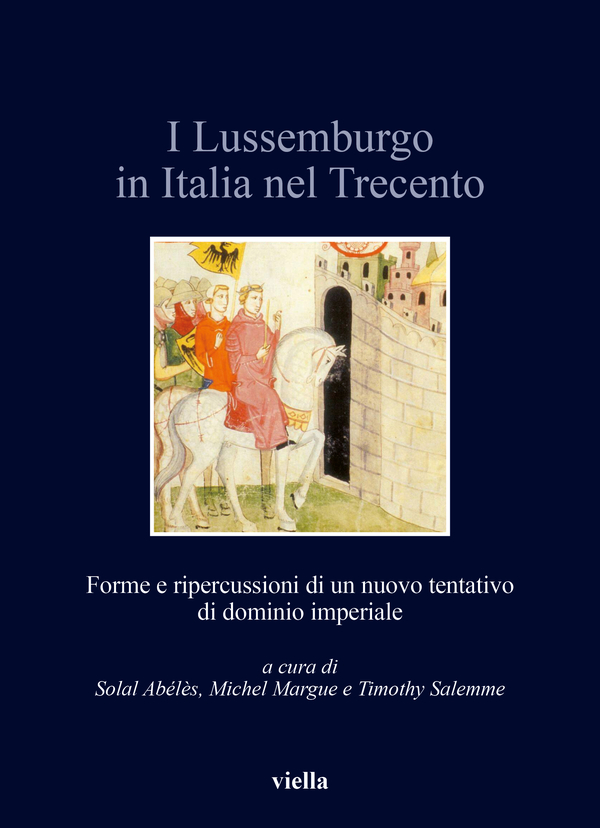
Le spedizioni italiane dei sovrani lussemburghesi – Enrico VII, Giovanni di Boemia e Carlo IV – sono state a lungo considerate parentesi episodiche prive di effetti duraturi degni di interesse. Tuttavia, il confronto tra i risultati delle recenti ricerche italiane e gli studi condotti a nord delle Alpi nell’ambito del progetto LUXDYNAST ha portato a un cambiamento di prospettiva e alla messa in discussione di questa visione. Osservate dal punto di vista degli attori politici italiani, dalle città ai signori locali, gli interventi dei re e degli imperatori lussemburghesi si rivelano essere spazi di sperimentazione politica fondamentali in tema di governo, di ricerca della legittimità, di nomina dei vicari e di forme della scrittura. Abbracciando diverse regioni dell’Italia settentrionale e centrale, questo nuovo approccio permette di riesaminare in profondità la questione della presenza e del ruolo dell’Impero in Italia nel XIV secolo.

  • Solal Abélès, Éloïse Adde, Introduzione
  • Paolo Buffo, Guido Castelnuovo, I poteri locali fra Savoia e Piemonte di fronte alle spedizioni italiane della dinastia dei Lussemburgo
  • Stefania Giraudo, Giovanni di Boemia: sperimentazioni per un regno in Lombardia tra iniziative cittadine e progetti sovrani
  • Daniele Dibello, Tra caute collaborazioni e molte diffidenze: Venezia e i Lussemburgo nel Trecento
  • Antonio Musarra, «Ianuenses non amant naturaliter segnoriam». Percorsi di legittimazione nella Genova del Trecento
  • Alma Poloni, Quando l’imperatore è in città. Carlo IV di Lussemburgo e i suoi vicari a Pisa, Siena e Lucca
  • Christina Abel, Della difficoltà di non governare: i Lussemburgo nelle terre della Chiesa
  • Pierluigi Terenzi, Angiò e Lussemburgo nell’Italia centro-settentrionale (secoli XIII-XIV)
  • Michel Margue, Timothy Salemme, L’Italia dei primi sovrani lussemburghesi. Riflessioni conclusive dalla prospettiva del progetto LUXDYNAST
  • Indice dei nomi di persona
  • Indice dei nomi di luogo

I Lussemburgo in Italia nel Trecento, éd. Solal Abélès, Michel Margue, Timothy Salemme, Rome, Viella, 2025 ; 1 vol., 316 p. (Italia comunale e signorile, 18). ISBN : 979-1-25469-593-7. Prix : € 32,00.

Source : Viella

Publié dans Publications | Commentaires fermés sur Publication – « I Lussemburgo in Italia nel Trecento », éd. Solal Abélès, Michel Margue, Timothy Salemme

Publication – « Vivre et faire vivre le Moyen Âge », éd. Sylvie Sagnes, Patrick Fraysse

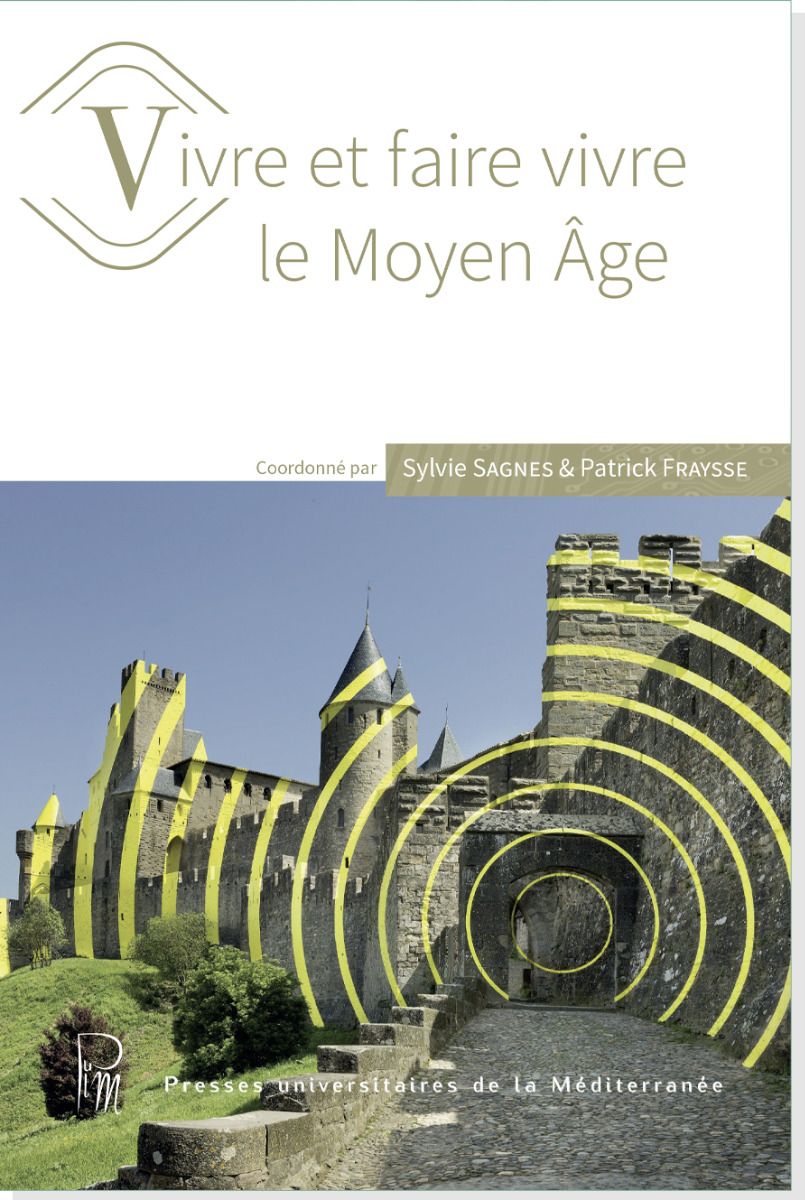
L’objectif de ce volume collectif est de questionner, à partir des sciences humaines et sociales, les circulations, réceptions et appropriations dont font aujourd’hui l’objet les savoirs, les imaginaires et les représentations relatifs à la période médiévale. Loin d’être absolument nouvelles, les formes que revêt le Moyen Âge dans le présent doivent à l’actuelle diversification de l’offre dans les musées, les monuments, les bibliothèques, les fêtes médiévales et dans d’autres lieux de médiévalité, d’être au cœur des problématiques actuelles de l’histoire vivante et de la médiation culturelle. Dans le sillage des heritage studies, les auteurs présentent des études situées, privilégiant des angles d’approche encore peu usités, comme la place faite aux femmes, le rôle assigné aux enfants, la mise en œuvre et l’usage des dispositifs participatifs, ou encore la manière dont ces Moyen Âge ressuscités animent les traces médiévales et agissent sur leur perception. Le Moyen Âge est vécu au présent par des amateurs qui le reconstituent, l’évoquent ou le détournent dans des dispositifs de médiation ou de communication qui naviguent entre histoire historienne et médiévalismes.

Informations pratiques :

Vivre et faire vivre le Moyen Âge, éd. Sylvie Sagnes, Patrick Fraysse, Montpellier, Presses universitaires de la Méditerranée, 2025 ; 1 vol. (Nos ouvrages numériques). ISBN : 978-2-36781-537-4. Prix : € 9,99.

Source : Presses universitaires de la Méditerranée

Publié dans Publications | Commentaires fermés sur Publication – « Vivre et faire vivre le Moyen Âge », éd. Sylvie Sagnes, Patrick Fraysse

Publication – « Sermons, Saints, and Sources. Studies in the Homiletic and Hagiographic Literature of Early Medieval England », éd. Thomas N. Hall, Winfried Rudolf

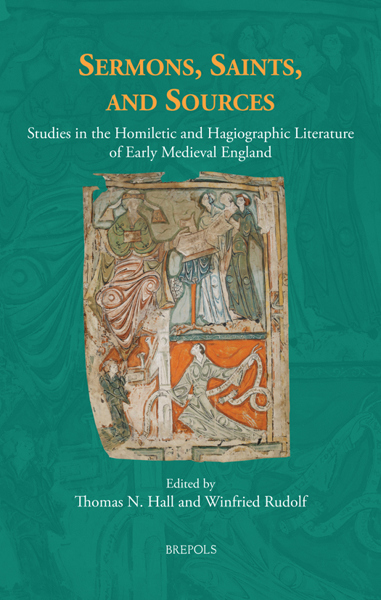
The corpus of sermons and saints’ lives from early medieval England, in English and Latin, is the largest and most varied of its kind from a contemporary European perspective. In recent years this extraordinary body of literature has attracted increasing attention, as witnessed by an efflorescence of new editions, translations, commentaries, essay collections, dissertations, and amply funded research projects such as the Electronic Corpus of Anonymous Old English Homilies (ECHOE) project based at the University of Göttingen.

The present collection of thirteen essays grew out of a 2022 conference sponsored by the ECHOE project on Old English anonymous homilies and saints’ lives and their sources and reflects the best of current scholarship on early medieval homiletic and hagiographic literature from England. This literature is central to an understanding of the spiritual imagination and social practices of non-élite audiences. Together, they introduce new discoveries, identify new sources, edit new texts, make new claims about authors, revisers, and textual relationships, revise previous arguments about aspects of literary history, and provide new interpretations of Old English and Latin sermons and saints’ lives. These studies show vividly how European learning influenced the liturgical practices and peripheral education of early medieval England.

Contributors include Helen Appleton, Aidan Conti, Claudia Di Sciacca, R. D. Fulk, Thomas N. Hall, Christopher A. Jones, Leslie Lockett, Rosalind Love, Hugh Magennis, Stephen Pelle, Jane Roberts, Winfried Rudolf, and Charles D. Wright.

Introduction — THOMAS N. HALL AND WINFRIED RUDOLF

Our Spiritual Meeting Places: Regulating Liturgical Processions in Old English Homilies for Rogationtide — HELEN APPLETON

Rogationtide, Doomsday, and Communitas in Bazire-Cross Homily iii — CHARLES D. WRIGHT

The Rogationtide Homily In vigilia Ascensionis in Cambridge, Corpus Christi College, MS 303: an Eschatological Hodgepodge for Post-Conquest England — CLAUDIA DI SCIACCA

‘Quoting’ the Bible in Times of Trouble: Wulfstan and the Story of Saul and Jonathan in Napier Homily xxxvi — WINFRIED RUDOLF

Revisiting Some ‘Stock Descriptions of Heaven and Hell’ in the Old English Anonymous Homilies — STEPHEN PELLE

The Old English Phoenix Homily and Its Congeners — R. D. FULK

What’s in a Name? Negotiating the Everyday Exegesis of the Homiliary of Angers — AIDAN CONTI

Early English Homiletic Treatments of Christ’s Passion: Generic and Liturgical Influences — CHRISTOPHER A. JONES

The Earliest Latin Sermon for the Virgin’s Conception at the Annunciation — THOMAS N. HALL

Domesticating Translation in the Old English Legend of the Seven Sleepers — HUGH MAGENNIS

Some Differences between the Vercelli and Vespasian Prose Guthlac Texts — JANE ROBERTS

Starting to Write about the Saints of Kent — ROSALIND LOVE

The ‘Sanctification’ of Agustinus in the Old English Soliloquies — LESLIE LOCKETT

Manuscript Index

Sermon Index

Hagiography Index

General Index

Sermons, Saints, and Sources. Studies in the Homiletic and Hagiographic Literature of Early Medieval England, éd. Thomas N. Hall, Winfried Rudolf, Turnhout, Brepols, 2025 ; 1 vol., 442 p. (Studies in Old English Literature, 6). ISBN : 978-2-503-61054-2. Prix : € 120,00.

Source : Brepols

Publié dans Publications | Commentaires fermés sur Publication – « Sermons, Saints, and Sources. Studies in the Homiletic and Hagiographic Literature of Early Medieval England », éd. Thomas N. Hall, Winfried Rudolf

Publication – « Le corps au Moyen Âge », éd. Daniel Le Blévec, Laurence Moulinier-Brogi

L’histoire du corps est aujourd’hui un domaine privilégié de la recherche. Si elle est redevable à d’autres sciences sociales, en premier lieu l’anthropologie, l’ethnologie et la sociologie, elle a existé bienavant d’être identifiée en tant que telle et certaines manières de faire l’histoire l’ont irriguée sans le savoir : elle apparaît donc comme un organisme encore en développement et doué d’un appétit qui lui fait franchir les barrières consacrées entre périodes ou disciplines, en attirant à elle des sources de plus en plus diverses. Sa relative jeunesse peut se mesurer à sa capacité d’osmose avec d’autres branches de l’histoire, avec qui elle a un objet central en partage qu’aucune n’épuise. Ses intersections sont évidentes avec l’histoire de la médecine et celle de l’alimentation, mais la littérature et l’iconographie sont aussi des observatoires potentiels de représentations, de même que les textes philosophiques offrant force matière à l’exploration des conceptions du corps, notamment de ses relations avec l’âme.

Les dernières synthèses sur l’histoire du corps n’accordant qu’une part limitée au Moyen Âge, malgré l’influence tutélaire de Marc Bloch et de Jacques Le Goff, un volume consacré à cette période s’impose comme une nécessité. On rend donc ici compte des origines et des développements de cette histoire, en envisageant la question du corps au Moyen Âge dans toutes ses dimensions, physiques, mais aussi physiologiques, artistiques, religieuses et spirituelles, sociales et politiques.

Daniel Le Blévec, professeur émérite d’histoire du Moyen Âge à l’Université Paul-Valéry – Montpellier 3, est spécialiste de l’histoire des institutions religieuses et culturelles dans le Midi médiéval. Il s’intéresse plus particulièrement à l’assistance aux pauvres et aux malades entre le XIIe et le XVe siècle et poursuit ses recherches sur l’histoire sociale des hôpitaux et de la médecine, ainsi que sur les ordres religieux.

Laurence Moulinier-Brogi est Professeure d’Histoire du Moyen Âge à l’université Paris Nanterre. Elle a consacré de nombreux travaux à Hildegarde de Bingen, à Guillaume l’Anglais, à l’histoire des textes et des savoirs, à celle de la médecine et à celle du corps. Elle poursuit actuellement ses recherches dans deux principales directions, l’histoire des femmes et l’histoire culturelle des ordres religieux, notamment mendiants.

Chapitre 1 : Introduction générale
Daniel Le Blévec et Laurence Moulinier-Brogi
Chapitre 2 : Le corps et ses fonctions
Laurence Moulinier-Brogi
Chapitre 3 : Corps affamé, corps nourri
Bruno Laurioux
Chapitre 4 : Le corps vêtu
Nadège Gauffre Fayolle
Chapitre 5 : Corps en beauté
Laurence Moulinier-Brogi
Chapitre 6 : Corps et sexualité. Un regard historiographique
Jacques Rossiaud
Chapitre 7 : Corps souffrant, corps soigné
Geneviève Dumas et Daniel Le Blévec
Chapitre 8 : Corps meurtri, corps mutilé, corps déformé, corps empêché
Franck Collard
Chapitre 9 : Le corps en procès
Claude Gauvard
Chapitre 10 : Corps en action, corps en jeu
Sébastien Nadot
Chapitre 11 : Le corps en image
Jean Wirth
Chapitre 12 : Corps vénérés, corps adoré : les saints, la Vierge Marie, le Christ
Catherine Vincent
Chapitre 13 : Les ascètes et leur corps
Patrick Henriet
Chapitre 14 : Le corps du roi
Élisabeth Lalou
Chapitre 15 : Corpus, cadaver. Le corps mort au Moyen Âge
Cécile Treffort

Liste des illustrations

Informations pratiques :

Le corps au Moyen Âge, éd. Daniel Le Blévec, Laurence Moulinier-Brogi, Turnhout, Brepols, 2025 ; 1 vol., 678 p. (L’atelier du médiéviste, 16). ISBN : 978-2-503-61340-6. Prix : € 80,00.

Source : Brepols

Publié dans Publications | Commentaires fermés sur Publication – « Le corps au Moyen Âge », éd. Daniel Le Blévec, Laurence Moulinier-Brogi

Publication – Hans Jacob Orning, « Constant Crisis. Deconstructing the Civil Wars in Norway, ca. 1180–1220 »

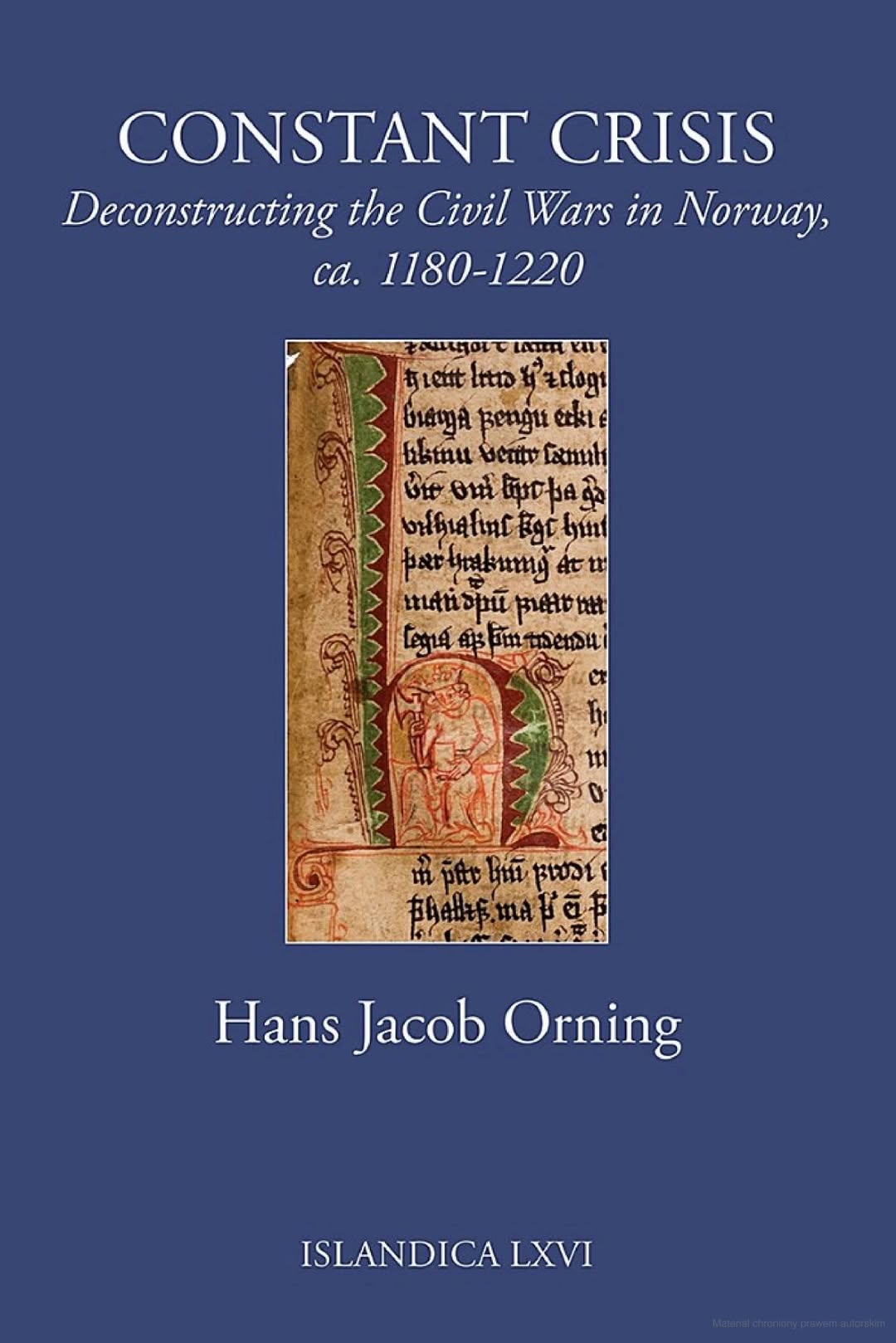
Constant Crisis focuses on the culmination of struggles in the medieval Norwegian kingdom to examine whether these conflicts underscored a breakdown of society and polity or whether they created an equilibrium among factions that in fact « served to contain violence. » Applying the term « constant crisis » for its deliberate « dissonance, » Hans Jacob Orning observes that two properties were manifest in Norwegian political and social structures of the twelfth and thirteenth centuries: a systemic balance achieved in an environment of « endemic power struggles, » and a normalization of these conflicts that made it « possible to maneuver and make plans and strategies. »

The kings’ sagas Sverris saga and Böglunga sögur are virtually indispensable sources of information on this period of Norwegian history, and Orning relies extensively on them, as well as on other medieval sources, to depict this era and its protagonists, including the major rival armed groups (the Birchlegs and the Croziers); and among kings, bishops, and earls, the person of King Sverre himself.

Hans Jacob Orning is Professor of History in the Department of Archaeology, Conservation and History, University of Oslo. His primary research field is the Nordic Middle Ages. His books include Unpredictability and Presence: Norwegian Kingship in the High Middle Ages (2008); The Reality of the Fantastic: The Magical, Political and Social Universe of Late Medieval Saga Manuscripts (2017); and with Øyvind Østerud, Krig uten stat: Kriger i middelalderen og i dag (2020, English version forthcoming). He has led or co-led several research projects, including one on medieval and modern civil war in collaboration with Jón Viðar Sigurðsson and funded by the Norwegian Research Council and the Center for Advanced Research, as well as Legitimation of the Elites in Medieval Poland and Norway funded by Norway Grants in Poland.

Informations pratiques :

Hans Jacob Orning, Constant Crisis. Deconstructing the Civil Wars in Norway, ca. 1180–1220, Ithaca (NY), Cornell Unievrsity Press, 2025 ; 1 vol., 276 p. (Islandica, 66). ISBN : 978-0-93599-531-2. Prix : USD 65,00.

Source : Cornell University Press

Publié dans Publications | Commentaires fermés sur Publication – Hans Jacob Orning, « Constant Crisis. Deconstructing the Civil Wars in Norway, ca. 1180–1220 »

Appel à contribution – L’espace, le temps, la personne. Les approches actuelles des sciences fondamentales de l’histoire

L’Institut historique allemand de Paris (IHA) lance un appel à candidatures, en collaboration avec la TU Darmstadt, l’Institut de recherche et d’histoire des textes (IRHT) et l’École nationale des chartes (ENC), pour une université d’automne du lundi 27 au vendredi 31 octobre 2025 à Paris sur les «Sciences fondamentales de l’histoire de l’espace, du temps et de la personne». 

L’accent sera mis sur la chronologie, l’héraldique, la sphragistique, la généalogie et l’histoire de la cartographie, qui seront abordées dans le cadre d’unités d’enseignement bilingues animées par des expertes et des experts reconnus. En plus de la transmission de connaissances théoriques et d’approches de recherche actuelles, des exercices pratiques sont prévus. De plus, les participantes et participants seront encouragés à réfléchir et à discuter des aspects liés à l’espace, au temps et à la personne dans leurs projets de recherche. 

L’événement s’adresse aux étudiantes et aux étudiants avancés et aux doctorantes et aux doctorants, principalement des universités et grandes écoles allemandes et françaises, qui voient des liens de connexion avec les disciplines fondamentales mentionnées ci-dessus dans leurs projets de recherche. Une bonne maîtrise de l’allemand et du français est requise, des connaissances en latin sont un atout. 

Les frais de voyage (par défaut en train, 2e classe, dans la limite forfaitaire de 200 € max.) et d’hébergement (auberge de jeunesse) seront pris en charge par l’IHA, sous réserve de l’approbation du financement demandé. Un certificat de participation pourra être délivré. 

Les candidatures doivent inclure un CV ainsi qu’une lettre de motivation rédigée dans la langue maternelle. De plus, une brève esquisse de projet (max. 500 mots) doit être soumise dans la langue étrangère respective, démontrant la motivation et une adéquation claire.

Les candidates et candidats intéressés doivent envoyer les documents demandés (CV, lettre de motivation, certificats de langue, esquisse de projet) au plus tard le 15 juillet 2025, sous la référence «université d’automne à l’IHA», dans un seul document PDF à: herbstuni@dhi-paris.fr

Source : IRHT

Publié dans Appel à contributions | Commentaires fermés sur Appel à contribution – L’espace, le temps, la personne. Les approches actuelles des sciences fondamentales de l’histoire

Publication – Marco Papasidero, « Thefts of Relics in Italy. From Late Antiquity to the Central Middle Ages, 300–1150 »

With the birth of the cult of the saints, their relics became valuables whose possession would guarantee prestige, protection, and spiritual benefits to a town, church, or monastery. For this reason—at first with the aim of preserving the bodies of newly-executed martyrs from destruction and later of increasing the power of a particular faction or community—, the relics began to be stolen, with numerous cases documented throughout Europe. At the same time, a rich hagiographic literature flourished to describe the contexts in which the thefts occurred and to demonstrate their authenticity. Justifications, legitimations, ordeals, and supernatural interventions are dotted throughout the stories of hagiographers over the centuries. This book seeks to reconstruct the cultural history of the theft of relics in the specific context of Italy, from Late Antiquity to the Central Middle Ages, availing itself of an interdisciplinary perspective.

Marco Papasidero is Assistant Professor in History of Christianity and Churches at the University of Palermo, Italy. From 2019 to 2023, he was a Postdoctoral Fellow at the University of Turin, as part of the ERC StG project NeMoSanctI. He has also been Research Fellow at the Edward Worth Library in Dublin and at the Irish Cultural Centre in Paris, as well as Visiting Professor at the University of Southern Denmark in Odense.

Table des matières :

Abbreviations
Acknowledgements
List of figures
Introduction

  1. Relics and Thefts: A Preliminary Approach
  2. Thefts of relics in Late Antiquity (300–600)
  3. Thefts of relics in the Early Middle Ages (600–950)
  4. Thefts of relics in the Central Middle Ages (950–1150)
  5. The accounts of translation: historical, literary, and visual representations
  6. Anthropology of the thefts of relics
  7. Dreams, Rituals, and Spaces
    Conclusions. Thefts of relics: a never-ending story
    Appendix
    Map of the thefts of relics
    Bibliography
    Primary sources
    Secoundary sources

Marco Papasidero, Thefts of Relics in Italy. From Late Antiquity to the Central Middle Ages, 300–1150, Amsterdam, Amsterdam University Press, 2025 ; 1 vol. (Italy in Late Antiquity and the Early Middle Ages). ISBN : 978-9-46372-387-9. Prix : € 141,00.

Source : Amsterdam University Press

Publié dans Publications | Commentaires fermés sur Publication – Marco Papasidero, « Thefts of Relics in Italy. From Late Antiquity to the Central Middle Ages, 300–1150 »

Offre d’emploi – (Junior) Curator of Old and Modern Art

Rijksmuseum Twenthe in Enschede is looking for a (junior) curator for 24 hours a week for a period of one year. The (junior) curator’s work consists mainly of preparing and realizing exhibitions, as well as conceiving and supervising changes in the semi-permanent presentations. The vacancy is in Dutch.

Over Rijksmuseum Twenthe & De Museumfabriek

Bij Rijksmuseum Twenthe en De Museumfabriek geloven ze in de kracht van kunst en erfgoed om te verbinden, verrassen en verdiepen. De collectie en programma’s dragen bij aan een levendig en toekomstbestendig cultureel landschap in heel Nederland en versterken de culturele aantrekkingskracht van Enschede en de regio Twente.

Rijksmuseum Twenthe biedt een podium aan kunstenaars en maakt kunst toegankelijk voor kunstkenner én kunstwenner. Met een diverse collectie van meer dan 9.000 rijksobjecten en vele bruiklenen maken zij tentoonstellingen en organiseren ze activiteiten waar je van kunt genieten en die je aanzetten tot denken en ontdekken. Gevestigd in een rijksmonument, wordt er gewerkt aan een toekomst waarin kunst voor iedereen dichtbij voelt – laagdrempelig en verweven met het dagelijks leven.

Jouw rol

Als (junior) conservator werk je nauw samen binnen de afdeling Publiek, evenals een aantal andere gespecialiseerde afdelingen van het museum. De functie van de (junior) conservator bestaat allereerst uit het voorbereiden en realiseren van tentoonstellingen en het uitdenken en begeleiden van wijzigingen in de semipermanente presentaties. Daarnaast gaat hij/zij/hen (gast)conservatoren op dat gebied ondersteunen. De (junior) conservator rapporteert aan het Hoofd Publiek.

Taken

  • Het ontwikkelen van tentoonstellingen en ondersteunen in de uitvoering daarvan, in samenwerking met de conservator moderne en hedendaagse kunst, gastconservatoren, projectleiders en het Hoofd Publiek, en in afstemming met collega’s op het gebied van vormgeving, facilitaire zaken en marketing.
  • Het (mede) opstellen en bewaken van budgetten en planningen.
  • Het leveren van inhoudelijke bijdragen aan onderzoek ten behoeve van de collectie, tentoonstellingen en publicaties.
  • Het werken aan en bijhouden van een professioneel netwerk.

Vereisten

  • Een afgeronde universitaire master kunstgeschiedenis op het gebied van oude en/of moderne kunst.
  • Enige ervaring met het maken van tentoonstellingen, bij voorkeur op het gebied van oude en moderne kunst.
  • Ervaring met het schrijven van publieksvriendelijke teksten.
  • Kennis van projectmatig werken en enige ervaring met het leiden van projecten.
  • In staat collega’s te enthousiasmeren over de inhoud van tentoonstellingen.
  • Organisatorische kwaliteiten en resultaatgerichte instelling.
  • Initiatiefrijke en flexibele werkhouding.
  • Aantoonbare bedrevenheid op het gebied van schrijven van teksten.
  • Goede mondelinge en schriftelijke beheersing van de Nederlandse en Engelse taal.
  • Je bent een teamplayer die zich betrokken voelt bij de (publieks)activiteiten van het museum en af en toe bereid is aanwezig te zijn tijdens events buiten kantooruren (in weekenden en avonden).

Wat kun je verwachten?

  • Een bruto maandsalaris tussen € 3.346 – € 4.348 (schaal 9 van de Museum-cao) op fulltime basis (36 uur) afhankelijk van kennis, ervaring en opleiding.
  • Een contract voor een jaar.
  • 8% vakantiegeld en 3,4% eindejaarsuitkering over het bruto jaarsalaris.
  • Je komt te werken in een veelzijdige functie waarin je wordt aangemoedigd om zelf met initiatieven te komen om jouw functie en de organisatie verder te ontwikkelen.
  • Ontwikkel- en opleidingsmogelijkheden, alsook de mogelijkheid tot aangepaste werktijden, een rust-, kolf- of gebedsruimte.
  • Een gezamenlijke lunch, regelmatige bijeenkomsten met het hele personeel om elkaar bij te praten en voor iedereen is er het eindejaarsfeest.
  • Een inclusieve organisatie waarin ieder welkom is, er wordt gewerkt aan beleid voor een divers Publiek, Programma, Partners en Personeel.
  • Een gratis Museumjaarkaart met onbeperkte toegang tot 450 musea in Nederland.
  • Een goede pensioenvoorziening.

Interesse? Stuur je CV en motivatiebrief vóór 28 mei op naar hrm@rijksmuseumtwenthe.nl o.v.v. Vacature (junior) conservator samen met een recente publicatie, dit kan bijvoorbeeld een scriptie zijn of tentoonstellings- of catalogustekst.

De eerste gesprekken staan gepland op donderdag 12 juni, de tweede ronde vindt plaats op maandag 17 juni. Voor inhoudelijke vragen over de functie kan je contact opnemen met Julia Wolters, via j.wolters@rijksmuseumtwenthe.nl en telefonisch via 0532012004.

Closing date : 28 May 2025

Source : Codart

Publié dans Offre d'emploi | Commentaires fermés sur Offre d’emploi – (Junior) Curator of Old and Modern Art

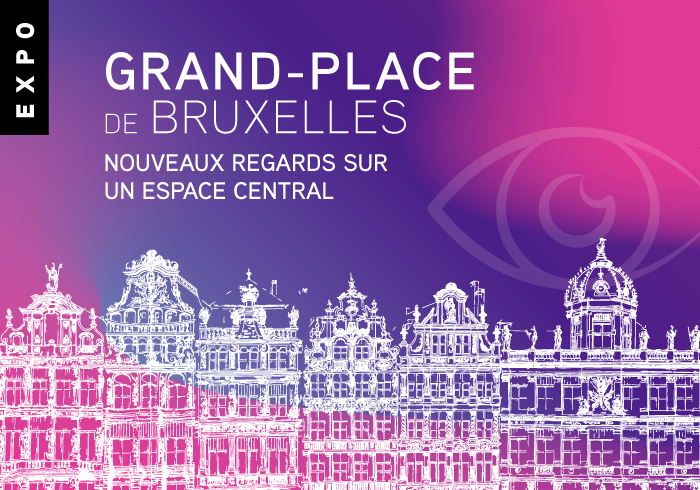
Exposition – Grand-Place de Bruxelles | Nouveaux regards sur un espace central

Le CReA-Patrimoine (ULB) et urban.brussels ont le plaisir de vous inviter à l’exposition  » La Grand-Place de Bruxelles. Nouveaux regards sur un espace central « .

  • Lieu : Faculté d’architecture La Cambre Horta, Rue du Lombard 34-42, 1000 Bruxelles
  • Dates : du 15 mai au 27 juin 2025
  • Heures d’ouverture : du lundi au samedi, de 8h à 18h
  • Entrée libre

Quels secrets se cachent sous les pavés de la Grand-Place ? L’exposition dévoile les résultats inédits de recherches menées sur ce lieu emblématique de Bruxelles. Une invitation à redécouvrir son histoire, de ses origines médiévales aux multiples transformations qui ont façonné son visage actuel.

Au cœur de Bruxelles, la Grand-Place fascine par son éclat architectural et son animation perpétuelle. Lieu emblématique de la ville depuis le Moyen Âge, elle est aujourd’hui encore un espace de rassemblement, de célébrations et de vie urbaine. Pourtant, au-delà de son apparence actuelle, elle cache une histoire bien plus profonde, révélée peu à peu par les recherches archéologiques et historiques. Comprendre la Grand-Place exige de dépasser l’image figée que nous en avons pour l’envisager comme un lieu d’importantes transformations, où passé et présent s’entrelacent. 

La Grand-Place, souvent vantée pour son harmonie, est le fruit de constructions, de reconstructions et de transformations successives. Ce que l’on admire aujourd’hui n’est pas une simple image du passé, mais une synthèse de projets, d’influences et d’adaptations. L’archéologie nous rappelle que sous la surface pavée que nous foulons chaque jour ou derrière les façades baroques, pour certaines reconstruites au 19e ou au 20e siècle, subsiste un passé enfoui auquel il faut redonner vie.

C’est dans cette optique, que le Centre de Recherches en Archéologie et Patrimoine de l’ULB, en collaboration avec l’administration régionale urban.brussels et la Ville de Bruxelles, organise l’exposition La Grand-Place de Bruxelles : Nouveaux regards sur un espace central.

Elle a pour objectif de faire connaître au grand public les résultats de la prospection géophysique menée sur l’esplanade bruxelloise et les rues adjacentes en mai 2018, ainsi que l’apport des études archéologiques sur les bâtiments du quartier. Elle offre une plongée saisissante dans l’histoire de la ville en montrant l’évolution riche et complexe de cet espace central, depuis le Moyen Âge jusqu’au bombardement de la ville en 1695.

Source : CReA – ULB

Publié dans Le réseau | Commentaires fermés sur Exposition – Grand-Place de Bruxelles | Nouveaux regards sur un espace central

Publication – Profili del secolo XI (Spoleto, 4-10 aprile 2024)

Profili del secolo XI (Spoleto, 4-10 aprile 2024), Spolète, Centro italiano di studi sull’alto medioevo, 2025 ; 2 vol., 1298 p. (Atti delle settimane di studio, 71). ISBN : 9788868094508. Prix : € 190,00.

Table des matières :

C. Wickham, Nuovi approcci ai cambiamenti dell’XI secolo in Europa e nel Mediterraneo, pp. 1-22 – Discussione, 23-26

É. Doublier, Declinazioni dell’autorità regia e imperiale a Nord e a Sud delle Alpi. Tra spazi sociali e spazi regionali, 27-54 – Discussione, 55-56

G. M. Cantarella, La Penisola iberica in un’età di trasformazione: frammenti di un discorso?, 57-96 – Discussione, 97-100

B. Pohl, Norman Monasteries and Cultural Capital in Eleventh-Century Europe, 101-126 – Discussione, 127-128

D. Barthélemy, Guerres féodales et usages chevaleresques en France de l’Ouest au XIe siècle, 129-180 – Discussione, 181-182

M. E. Cortese, Aristocrazie e incastellamento: il regno italico nel contesto europeo, 183-208 – Discussione, 209-212

A. Fiore, La signoria: l’esercizio del potere locale tra continuità e rotture, 213-240 – Discussione, 241-244

E. Faini, I consoli: incunaboli del Comune?, 245-282 – Discussione, 283-284

W. Verbaal, «Con le armi della poesia»: The Loire Poets and the Politics of Poetry, 285-300 – Discussione, 301- 304

A. Wilkin, The North-Western European Economy in the Eleventh Century: A Crucible of Change?, 305-340 – Discussione, 341-344

A. Molinari, Produzioni e consumi contadini nell’XI secolo: mondi rurali a confronto attraverso i dati archeologici, 345-370 – Discussione, 371-372

T. Lazzari, Risorse contese: patrimonio e diritti del fisco regio, 373-398 – Discussione, 399-402

B. Callegher, Eredità bizantine nella monetazione dell’Italia dell’XI secolo, 403-434 – Discussione, 435-438

T. Kohl, Comparing conflicts: Control of churches and secular lords in Germany and France, 439-460 – Discussione, 461-462

N. D’Acunto, Le riforme della Chiesa nel secolo XI tra sistemi in conflitto e processi di ricomposizione, 463-488 – Discussione, 489-492

C. Ciccopiedi, Immunità vescovili. Tra ingiudicabilità e territorializzazione, 493-516 – Discussione, 517- 518

K. G. Cushing, Rethinking the libelli de lite: Law in Practice, Disputation and the Public Sphere in the eleventh century, 519-532 – Discussione, 533-534

E. Destefanis, Il monachesimo occidentale nel secolo XI: idealità e materialità, 535-586 – Discussione, 587-594

B. Crostini, The Evergetis Monastery between Schism and Reform (second half of the 11th cent.), 595-640

J.-C. Cheynet, Les mutations de la société byzantine au xie siècle (986-1118): une révolution?, 641-668 – Discussione, 669-670

M. Lauxtermann, The Grottaferrata version of Kalīla wa-Dimna, 671-694 – Discussione, 695-698

N. Zorzi, I rapporti tra Venezia e Bisanzio nel secolo XI nel riflesso delle fonti letterarie bizantine, 699-730 – Discussione, 731-732

A. Bucossi, La costruzione del mito del 1054: fonti medievali e riletture contemporanee, 733-760 – Discussione, 761-764

V. Prigent, Bisanzio e l’Occidente nell’XI secolo: nuove sfide, nuove opportunità, 765-808 – Discussione, 809-810

D. Jacquart, Sciences et médecine au XIe siècle en Occident: la rencontre des cultures, 811-830 – Discussione, 831-832

C. Storti, Giustizia imperiale e scuola di Pavia, 833-900 – Discussione, 901-902

B. Brasington, Pro nostrae Ecclesiae necessitate fecerim. Canonical Collections from Burchard of Worms to Ivo of Chartres: Continuities, Challenges, Opportunities, 903-926 – Discussione, 927-928

E. M. Tyler, Writing History and the Politics of Language in Eleventh- Century England: Latin, English, Norse, French, Welsh and Irish, 929-966 – Discussione, 967-970

E. D’Angelo, Maudits Normands. L’epopea normanna nella letteratura storiografica in latino, 971- 1008 – Discussione, 1009-1012

A. Degl’Innocenti, «Nunc vere monachi estis»: antiche e nuove forme di santità nell’agiografia monastica di area italiana, 1013-1036 – Discussione, 1037-1038

P. Henriet, Ermites, moines et évêques, entre tradition et réforme. La sainteté au XIe siècle, 1039-1080 – Discussione, 1081-1086

M. Bottazzi, L’evoluzione dell’epigrafia. L’XI secolo, 1087-1126 – Discussione, 1127-1130

M. C. Somma, Società di pietra: le rappresentazioni del potere attraverso l’edilizia, 1131-1172 – Discussione, 1173-1174

H. A. Klein, Byzantine Art in/and/beyond the West during the Long Eleventh Century: Infusing the ‘Byzantine Question’ with a ‘Global’ Perspective, 1175-1208 – Discussione, 1209-1212

S. Lomartire, Il rapporto tra scultura e architettura nell’XI secolo in area occidentale: la progressiva estensione dell’arredo scultoreo all’esterno degli edifici, 1213-1260 – Discussione, 1261-1266

W. Jacobsen, Le trasformazioni dell’architettura nell’XI secolo, 1267-1286

A. Rusconi, The Musical Reform of Guido of Pomposa/Arezzo in the Age of the Ecclesiastical Reforms, 1287-1298.

Source : CISAM

Publié dans Publications | Commentaires fermés sur Publication – Profili del secolo XI (Spoleto, 4-10 aprile 2024)