
29.09.2027 – 01.10.2027
Deadline : 01.10.2026
Herzog August Bibliothek
The question of what criteria determine whether items that appear together actually belong together arises in the case of medieval miscellaneous manuscripts already at the level of their materiality. The coexistence of heterogeneous elements on the same folio, within the same quire, or between the same set of book covers constitutes a material fact that calls for interpretation. Are the pragmatically motivated practices of writing into previously blank space and assembling loose materials into codicological units merely strategies for the efficient use of writing materials and the preservation of texts? Or do they also reflect intentional attempts to generate intertextual and intermedial meaning? More fundamentally, how can we methodologically determine whether the relationship between such elements is purely material or also constitutes semantic coherence? In recent years, the relationship between individual components and their integration into larger wholes has increasingly been studied from the perspective of structural relationality, with particular attention to the conditions that produce cohesion and coherence. Originating in textual linguistics and the study of textual unity, the concept of coherence has, above all in German medieval studies, increasingly been explored from a narratological perspective. Discussions have focused on the relationships between heterogeneous textual elements of different provenance and on the coherence of narratives, thereby addressing processes of narrative meaning making. Particular attention has been paid to gaps, omissions, and contradictions in medieval narrative literature and lyric poetry.
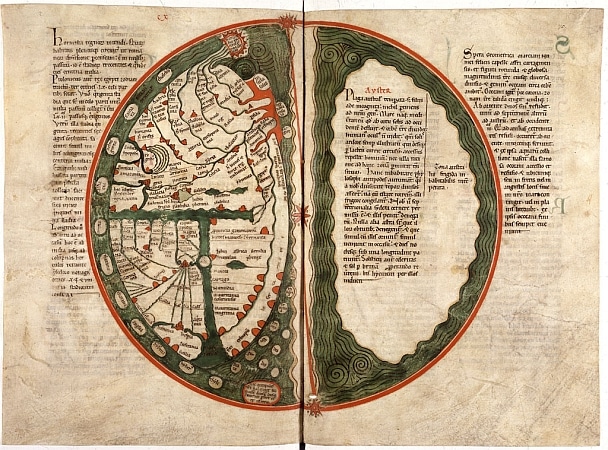
The conference, organised by the Medieval Studies Working Group, proposes a shift in perspective. Rather than concentrating on the so-called « irritation phenomena » (Christian Schneider), it seeks to explore the interdisciplinary potential of the concept of coherence by examining its transferability and applicability to questions of textual transmission and transmission contexts in medieval miscellaneous manuscripts. The conference invites an exploratory discussion of the extent to which the concept of coherence can be fruitfully applied to relationships between texts (both within transmission clusters and within seemingly self-contained sub collections), between text and image, text and paratext, text and musical notation, as well as to codicological units themselves.
The relationship between coherence and contingency in medieval miscellaneous manuscripts presents a methodological challenge in three respects. First, there is a terminological problem inherent in the conceptually ambiguous notion of the « miscellaneous manuscript. » Depending on the context, the term may refer either generally to any manuscript transmitting more than one text (a multiple-text manuscript) or, more specifically, to a deliberately planned collection of texts. Matters are further complicated by the subsequent combination of codicological units that may—or may not—have originally belonged together. Second, the historicity of coherence itself must be taken into account, since phenomena of coherence are inseparable from the historical development of the manuscript as an object. The involvement of multiple agents in the compilation, copying, deliberate rearrangement, and accidental rebinding of different codicological units gives rise to a range of distinct—and at times competing—notions of coherence, all of which must themselves be historicised. By what means are individual texts, text-image ensembles, and intermedial constellations connected within miscellaneous manuscripts, and from whose historical perspective do these relationships appear coherent? At what stage in the manuscript’s history such connections were established, and at what stage they were recognised, interpreted, or reshaped by later users? Third, any historically oriented research into the coherence of miscellaneous manuscripts—whether understood as units of textual transmission or as containing internally coherent sub-collections—must address the persistent problem of confirmation bias. Although this conference deliberately shifts the focus, in the spirit of the principle of charitable interpretation, away from inconsistency and towards coherence, it also calls for methodological reflection on the conditions under which patterns of coherence identified by modern scholarship may legitimately be regarded as historical features of medieval manuscripts, and where contingency provides the more convincing explanation. A conference devoted to the coherence of medieval miscellaneous manuscripts must therefore also engage in fundamental methodological reflection.
We welcome both theoretically informed contributions and case studies from all areas of medieval studies. Possible questions include, but are not limited to:
– How can relationships of coherence and equivalence within groups of texts be described?
– How is coherence established in intermedial constellations within manuscripts, especially in text-image relationships?
– To what extent can external and internal forms of coherence be distinguished?
– What functions do paratextual elements perform in their various verbal, non-verbal, and pictorial forms (e.g. headings, rubrication, chapter and section divisions, initials, or the division of texts into books)?
– Which elements provide structure across textual boundaries and thereby create connections between texts? What role codicological units do play in this process?
– Which strategies for creating coherence can be identified, including those related to processes of understanding and cognitive models?
– To what extent is it meaningful—or even possible—to distinguish between principles of external coherence (e.g. structural and paratextual features, episodicity, organisation principles, etc.) and internal coherence (e.g. repetition, doubling, equivalence, analogy, or correspondences on the textual and visual surface)?
Papers may be presented in either German or English. Please submit proposals of approximately 300 words (c. one page) by 1 October 2026 to: Tobias Daniels (Tobias.Daniels@mg.fak09.uni-muenchen.de)
Source : H-Soz-Kult




Vous devez être connecté pour poster un commentaire.