
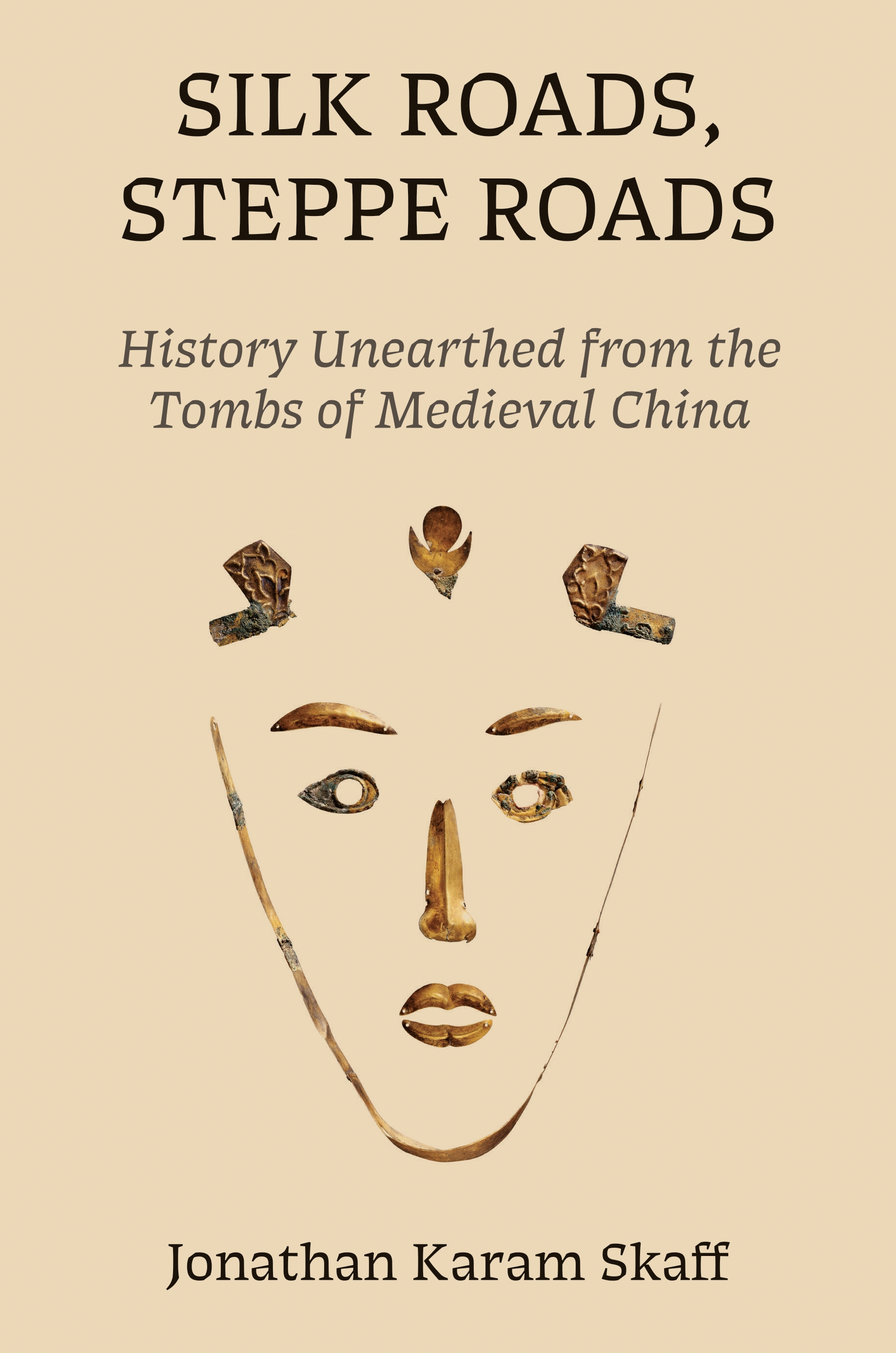
Silk Roads, Steppe Roads takes the reader on a journey to three sites in northwestern China and Mongolia to investigate medieval Chinese tombs containing evidence of Eastern Eurasian cultural contacts and exchanges. The construction, artifacts, and texts on paper and stone found at these tombs of the Sui (581–618) and early Tang (618–907) dynasties reveal glimpses of people, rituals, and objects that were in motion on the Silk and Steppe roads until being laid to rest over a millennium ago.
Jonathan Karam Skaff shows how the major transit hubs of the Silk and Steppe roads were particularly active sites of cultural contestation, experimentation, and mutual influence that had an impact on the historical development of China and Inner Asia. Challenging the idealized image of the Silk Road, he also examines travel permits and sales contracts that document the trade of enslaved people over the route.
Innovatively drawing on both textual and archaeological sources, Silk Roads, Steppe Roads shows how Eurasian peoples, despite believing their societies to be unique, spun overlapping and entangled webs of culture.
Jonathan Karam Skaff is professor emeritus of history at Shippensburg University of Pennsylvania. He is the author of Sui-Tang China and Its Turko-Mongol Neighbors: Culture, Power, and Connections.
Informations pratiques :
Jonathan Karam Skaff, Silk Roads, Steppe Roads. History Unearthed from the Tombs of Medieval China, Princeton, Printeton University Press, 2026 ; 1 vol., 336 p. (The Rostovtzeff Lectures). ISBN : 978-0-69117-698-7. Prix : USD 45,00.
Source : Princeton University Press





Vous devez être connecté pour poster un commentaire.