
Haec quicumque legis is a remarkable window onto the intellectual world of tenth-century Europe, offering a rich etymological lexicon compiled within the notebooks of the monastic polymath Ademar of Chabannes. This glossary, preserved in the Leiden manuscript VLO 15, blends Latin, Greek, and Old High German to illuminate the meanings, origins, and nuances of hundreds of words. Drawing from classical authors like Priscian, Isidore, Juvenal, and Persius, it reflects a pedagogical intent. The lexicon’s structure, commentary, and multilingual glosses reveal a vibrant scholarly exchange between French and German monastic traditions. With its encyclopedic scope and focus on etymology, it stands as a precursor to later medieval lexicography. This edition, meticulously edited and annotated, is an essential resource for scholars of medieval studies, historical linguistics, and the transmission of classical knowledge.
Ad van Els is author of A Man and His Manuscripts: The Notebooks of Ademar of Chabannes (989–1034) (Bibliologia, 56), Brepols Publishers, 2020.
Franck Cinato ((laboratoire Histoire des Théories Linguistique, HTL – UMR 7597) is author of Priscien glosé: L’Ars grammatica de Priscien vue à travers les gloses carolingiennes (Studia Artistarum, 41), Brepols Publishers, 2015.
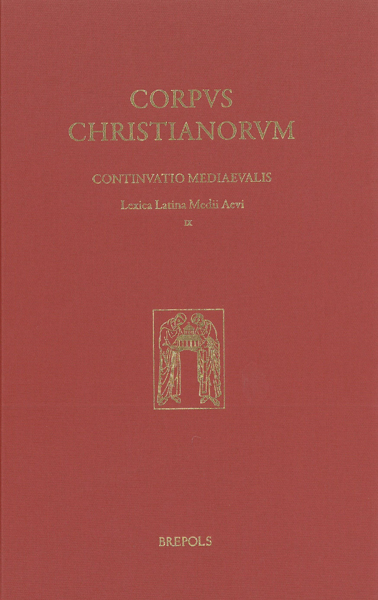
Table des matières :
Introduction
Conspectus siglorum
Edition
Commentary
Appendix 1: Old High German Words
Appendix 2: Glosses on Priscian
Bibliography
Index of Lemmata
Informations pratiques :
Haec quicumque legis. A Tenth-Century Etymological Lexicon, éd. Ad van Els, Franck Cinato, Turnhout, Brepols, 2026 ; 1 vol., 300 p. (Lexica Latina Medii Aevi, 9). ISBN : 978-2-503-60931-7. Prix : € 200,00.
Source : Brepols





 L'Agenda des Médiévistes
Vous devez être connecté pour poster un commentaire.