
Aimed at students, educators, librarians, and collectors, this volume explores the discipline of Fragmentology—the study of medieval manuscript fragments ranging from the smallest initials to substantial remnants. Like the medieval books they come from, fragments are unique cultural artifacts offering opportunities for innovative teaching and research. The introduction conveys the history of manuscript fragmentation and its motivations: obsolescence, scholarship, and commerce. Individual chapters focus on fragment theory and the practical skills required to study fragments: forensic description, textual identification, provenance research, and palaeographical and codicological analyses. Digital tools are presented as complementary means to traditional approaches. Through case studies, the authors focus on the medieval genres most commonly encountered, such as bibles, books of hours, and liturgical books.
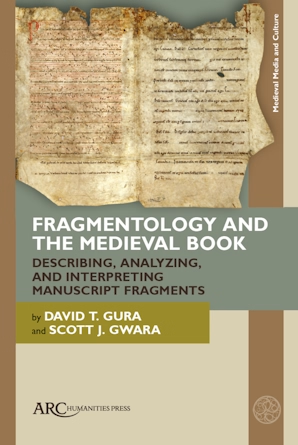
Table des matières :
List of Illustrations
Acknowledgements
Abbreviations
General Introduction
Part 1. Fragment Theory and Theories of Fragmentation
Chapter 1. What is a Fragment?
Chapter 2. Types and Stages of Fragmentation
Chapter 3. Motivations for Fragmentation
Chapter 4. Cultural Value of Fragments
Chapter 5. Reunification of Fragments
Part 2. The Fragment Trade: A Case Study of Collectors and Breakers
Chapter 6. Manuscript Markets: Two American Collectors
Chapter 7. Two Breakers
Chapter 8. A Biblioclast’s Legacy
Part 3. Forensic and Technical Skills: Fragment Description
Chapter 9. Getting Started
Chapter 10. The Basics of “Basic Information”
Chapter 11. Collecting Complex Forensic Data
Chapter 12. Contents and Their Contexts
Chapter 13. Ownership and Provenance
Part 4. Advanced Applications: Identifying and Describing Genres
Chapter 14. Calendars
Chapter 15. Liturgical Fragments
Chapter 16. Books of Hours Fragments
Chapter 17. Bible and Scriptural Fragments
Chapter 18. Legal Fragments
Part 5. Advanced Provenance Research Skills: Databases, Deep Provenance, Network Theory
Chapter 19. Using the Schoenberg Database
Chapter 20. Sorting and Managing Results
Chapter 21. Deep Provenance
Chapter 22. Connoisseurship and Network Theory
Part 6. Putting It All Together: A Case Study of a Broken Book of Hours
Chapter 23. The “Before Times” and Biblioclasty of a Breton Book of Hours
Chapter 24. A Complex Provenance and Continuity of Misinformation
Chapter 25. Forensics and Contexts
Chapter 26. Reconstructed Contents
Chapter 27. Afterlife
Appendix 1. Data Collection Worksheet for Fragments
Appendix 2. Additional Data Fields for Books of Hours
Bibliography
Index of Manuscripts Cited
General Index
Informations pratiques :
Fragmentology and the Medieval Book. Describing, Analyzing, and Interpreting Manuscript Fragments, éd. David T. Gura, Scott J. Gwara, Leeds, ARC Humanities Press, 2027 ; 1 vol., 372 p. (Medieval Media and Culture). ISBN : 978-1-80270-282-8. Prix GBP 166,00.
Source : ARC Humanities Press






Vous devez être connecté pour poster un commentaire.