
3–5 July 2015
The Ioannou Centre for Classical and Byzantine Studies
University of Oxford
 Programme : ici
Conference Organisers :
Rod Thomson
Ilya Afanasyev
Emily A.
Winkler
Emily Dolmans
Source : TORCH
3–5 July 2015
The Ioannou Centre for Classical and Byzantine Studies
University of Oxford
Programme : ici
Conference Organisers :
Rod Thomson
Ilya Afanasyev
Emily A.
Winkler
Emily Dolmans
Source : TORCH
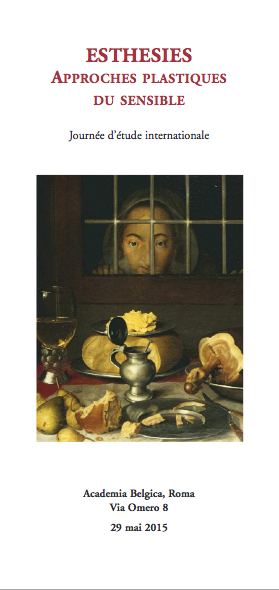
La peinture semble révéler, avant toute chose, l’expérience sensible du voir. Mais ne peut-elle pas, aussi, dans certains cas, faire percevoir par l’œil quelque chose qui relèverait d’un autre ordre sensoriel ? Peut-on goûter, sentir, entendre, toucher avec les yeux ? Si les spécialistes se sont beaucoup interrogés sur le passage du sensible à l’art – notamment sur la place de la nature dans les œuvres d’art anciennes, où on sait l’importance culturelle qu’y exerçait la mimesis –, le passage de l’art au sensible est, quant à lui, plus rarement considéré. Les recherches antérieures sur le sujet tendent à privilégier une analyse que nous pourrions qualifier de sémiotique (qui donne à lire un sens), portant sur des images qui rassemblent un ensemble d’éléments visuels dotés d’une valeur symbolique. Il semble toutefois qu’il existe un autre type de regard possible, interrogeant différemment la peinture où le sensible est mis en jeu, et qui prendrait appui sur le concept d’esthésie. Les images esthésiques (qui donnent à percevoir une sensation) seraient ainsi celles qui semblent traduire l’expérience sensorielle elle-même. Il s’agira d’envisager tant la production que la consommation des images, c’est-à-dire la nature de l’effet sensible produit sur le spectateur par la contemplation d’une œuvre d’art. Comment l’art traduit-il non seulement le visuel, mais également le tactile, l’olfactif, l’auditif, le gustatif ? Comment, en somme, s’opère le passage secret qui conduit du visible à l’esthésique ?
 Programme :
9h Accueil
9h15 Ouverture : Charles Bossu (Academia Belgica,Roma)
Sybille Ebert-Schifferer (Bibliotheca Hertziana/Institut Max Planck pour l’histoire de l’art, Rome), Carl Havelange (F.R.S.-FNRS/Université de Liège) et Viktoria von Hoffmann (Université de Liège) : Introduction
Séance 1 : Les Sens
Présidence: Ralph Dekoninck
09h50 Wietse de Boer (Miami University) : Ethics and Aesthetics: Sense Experience as a Key Problem in the Italian Renaissance
10h30 François Quiviger (Warburg Institute, London) : Aspects of Empathy in Renaissance Art, from Christian Imagery to Pagan Mythology
11h10 Pause café
Séance 2 : L’Invisible
Présidence: Carl Havelange
11h40 : Ralph Dekoninck (Université catholique de Louvain), Ressentir la peinture. L’application des sens à la peinture religieuse des anciens Pays-Bas (1585-1640)
12h20 : Emilie Corswarem (F.R.S.-FNRS/Université de Liège), Esthésies et musique
13h : Pause
Séance 3 : La Chère
Présidence : Viktoria von Hoffmann
14h00 : Florent Quellier (CNRS/Université de Tours), Figurer la bonne chère au XVIIe siècle, le recours à l’esthésie
14h40 : Jérémie Koering (CNRS/Centre André Chastel), L’image à la bouche : quelques réflexions sur les images que l’on mange
15h20 Pause café
Séance 4 : Les Arts
Presidence : Sybille Ebert-Schifferer
15h50 : Karin Leonhard (Universität Konstanz), Silence and Stillness in Still Life Painting
16h30 : Frédérique Desbuissons (Institut National d’Histoire de l’Art, Paris), Voir, sentir, toucher, goûter : la nature morte moderne et la question des frontières sensorielles
17h10 : Carl Havelange (F.R.S.-FNRS/Université de Liège), Mouvements de l’âme, Mouvements du Corps. Indéterminations du portrait à l’époque moderne et contemporaine
17h50 : Sybille Ebert-Schifferer (Bibliotheca Hertziana/Institut Max Planck pour l’histoire de l’art, Rome) et Viktoria von Hoffmann (Université de Liège), Conclusions
Informations pratiques :
Academia Belgica, Roma Via Omero 8
29 mai 2015
Information :
Ornella Rodengo Anna Paulinyi (+39) 06 69 99 32 27 rodengo@@biblhertz.it paulinyi@biblhertz.it http://www.biblhertz.it Charles Bossu info@academiabelgica.it (+39) 06 20 39 86 305
Source : Université de Liège
TEMPLA is a permanent workshop of Medieval Studies composed of specialists from universities, museums and archives from different parts of Spain, Europe and in particular Catalonia. The members of this team share common interests as well as complementary areas of expertise. The impact of its research and interactions with experts from other disciplines are reflected in its specific research projects and academic activities, which in turn are disseminated in annually organised scientific meetings and resulting publications.
TEMPLA members actively seek to collaborate with different research groups and scientific institutions. They aim to facilitate exchanges among researchers and to stimulate scientific debates relating to visual programs and spatial organization from the Middle Ages. Particular attention is devoted to the liturgical influences and architectural scenery and to reflection on the social and academic status of research into Middle Ages art and culture.
Topics and Aims
TEMPLA invites international researchers into medieval art history and related disciplines to debate the concept and expression of “dynamic episcopal and canonical commemoration” which occurred in European episcopal sees during the medieval period. The concept of commemoration goes beyond the funerary to include all those works, activities and uses of space that transmit through time a record of bishops and canons, their institutions, and important lay people. These commemorative works, however, were grafted onto a common setting that was in use over a long period of time. Thus, each cathedral setting witnessed the emergence of different dynamics in terms of the interactions and intersections between individual and/or collective memory.
We have abundant artistic and non-artistic testimonies in which commemorative actions aim to keep alive the memory of certain individuals after their deaths; in these instances, memory is most frequently channelled through works of a funereal nature. Although there have been many studies (mainly monographs) that have studied the commemoration of the dead from a static perspective, we propose that these individual commemorative acts be revised and presented in a new context: the general dynamics of memory in each cathedral setting.
Nevertheless, episcopal and canonical commemoration may also be connected to other activities such as liturgical and devotional practices, or it may be linked to circumambulation in and around cathedral spaces. Uncovering and analysing these diverse elements through multidisciplinary research is one ofthe principalaims of this workshop.
Scientific objectives of the TEMPLA Summer School 2015
1. To identify the diverse resources (such as art, architecture and liturgy, among others) that were used to foster the commemoration of bishops and canons (individually or collectively) in European medieval cathedrals.
2. To propose new forms of dynamically contextualising commemoration that combine the results of artistic patronage with other non-artistic forms such as liturgy, devotion, circumambulation or even ecclesiastical policy. This emphasis on “action” and “framework for action” will assist us in arriving at a novel understanding of the “dynamic” experience of commemoration in cathedrals that goes beyond the funerary.
3. To establish, on the basis of the results of the two previous objectives, new approaches and forms of multidisciplinary research into European cathedrals.
Target Attendees and Participation
This scientific meeting is intended for a small number of participants; the application procedure allows for 12 researchers to be invited to present their research. Participants will be expected to take an active role in the debates that will follow each presentation. Every researcher must benefit from the contributions of the other specialists. The presentations and debates may be take place in Spanish, French, Italian or English.
Format: The debates will take place on the first two days. On the third day there will be a visit to a Catalan cathedral to highlight in situ its particular specificities regarding episcopal and canonical commemoration.
Submission guidelines
The workshop is principally aimed at young pre- and postdoctoral researchers in the ambits of history of art, history and liturgical studies. Those who are interested in participating in the TEMPLA Summer School 2015 must submit:
These documents may be in Spanish, French, Italian or English.
The deadline for submitting this documentation is 25 May 2015.
It must be sent to: gerardo.boto@udg.edu, isabel.escandell@uib.es, elozano@tortosa.uned.es
Applicants will receive a response before 14 June. The successful candidates must provide the organizers with a description of the ideas that they wish to present, any images relating to their presentation and a brief bibliography by 28 June 2015. This documentation will be used to create a dossier to be handed out to the other attendees. The aim of this initiative is to encourage participants to submit proposals of direct interest to the planned debates.
Venue and Accommodation:
The workshop will take place in the “Nicolau d’Olwer i Pere i Joan Coromines” room of the Institut d’Estudis Catalans. Carrer del Carme 47. 08001 Barcelona
Accommodation and other activities will be covered by the organisers. Participants must pay the cost of their journeys to the workshop.
Collaborators in the TEMPLA Barcelona Summer School 2015:
Financial support: Research Group recognized by the Catalan Government: 2014 SGR 110 “EDIFICIOS Y ESCENARIOS RELIGIOSOS MEDIEVALES EN LA CORONA DE ARAGÓN”.
Scientific Host: Amics de l’Art Romànic and Institut d’Estudis Catalans.
Scientific committee
Gerardo Boto Varela, Facultat de Lletres, Institut de Recerca Històrica, Universitat de Girona (Spain)
Vincent Debiais, Centre d’études supérieures de civilisation médiévale, Université de Poitiers- CNRS (France).
Isabel Escandell Proust, Facultat de Filosofia i Lletres, Universitat de les Illes Balears, Institut de Recerca Històrica -Universitat de Girona- (Spain)
Justin E. A. Kroesen, Faculty of Theology and Religious Studies, Institute for Christian Cultural Heritage, University of Groningen (Netherlands).
Esther Lozano López, Universidad Nacional de Educación a Distancia, Institut de Recerca Històrica -Universitat de Girona- (Spain)
Source : Calenda
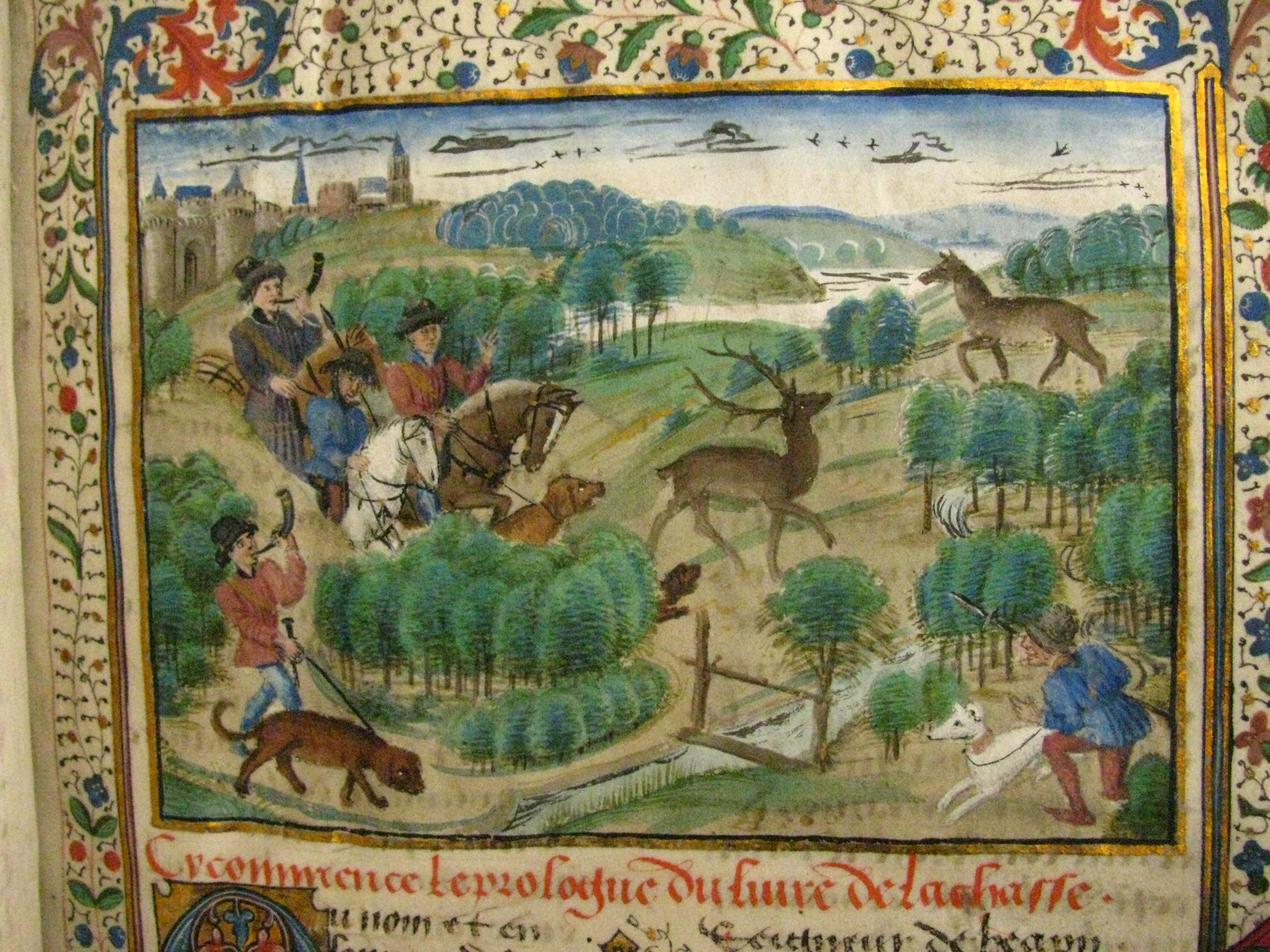
Le Centre International de Codicologie (CIC) ASBL, éditeur responsable du Bulletin codicologique de la revue Scriptorium, organise le 8 juin prochain, à 13h30, une conférence sur le thème Les manuscrits médiévaux de chasse en mains privées : un gibier élusif. L’orateur sera Baudouin Van den Abeele, professeur à l’UCL et Maitre de recherche du FNRS. La conférence aura lieu à la Bibliothèque royale de Belgique (Salle du Conseil, niveau +2).
Informations pratiques :
Lundi 8 juin 2015
à 13 h 30
Bibliothèque Royale de Belgique – Koninklijke Bibliotheek van België
4, Bd de l’Empereur – 1000 Bruxelles – SALLE DU CONSEIL (niveau + 2)
Entrée libre
Source : Scriptorium
National Ancient Art Museum, Lisbon
Official languages: portuguese, spanish, french and english
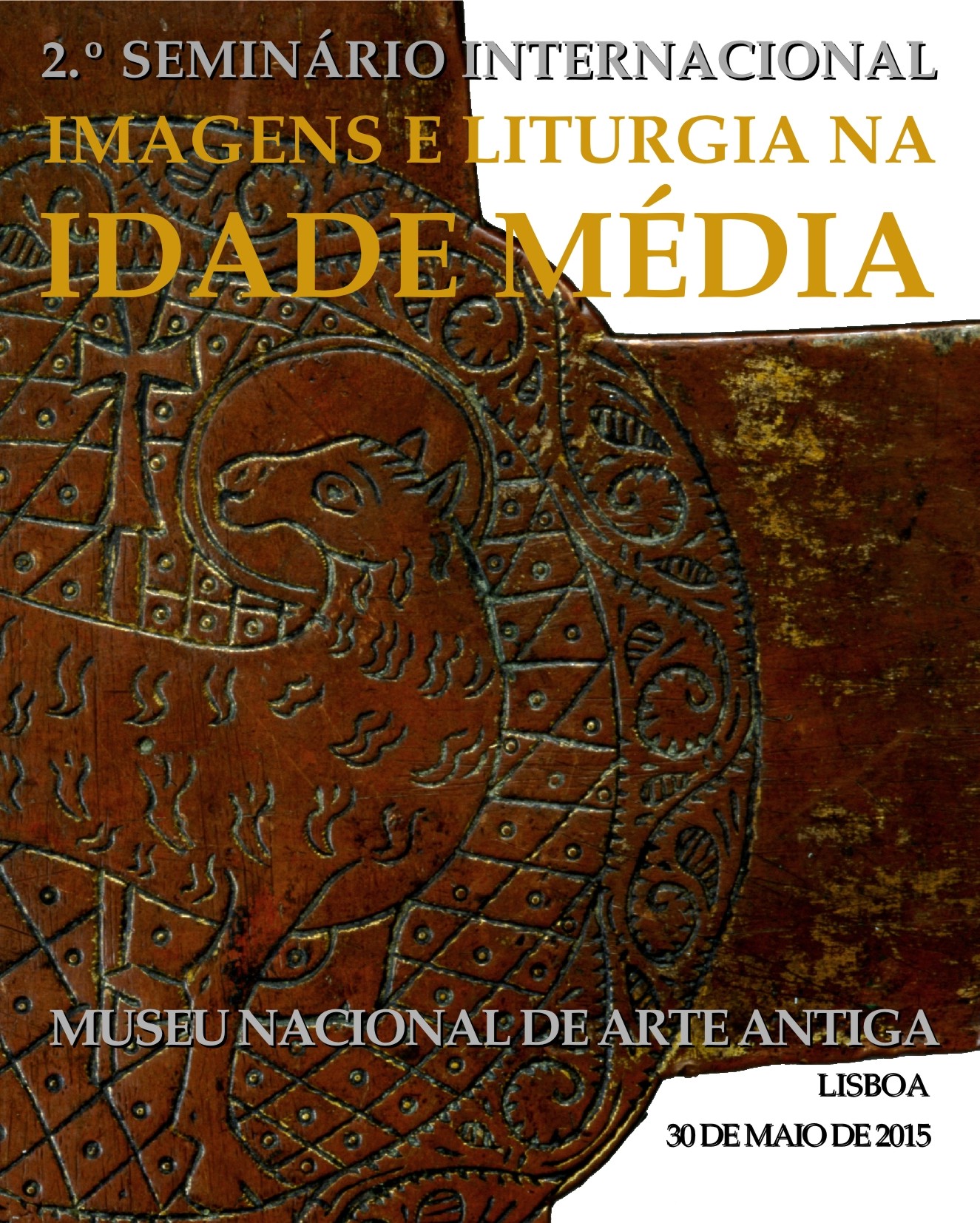
The 2th seminar Images and Liturgy in the Middle Age, organized by the CEAACP Multidisciplinary Group Study in Arts (University of Coimbra), the National Ancient Art Museum (DGPC), and National Department for Church Cultural Heritage part of the set of project initiatives of Carla Varela Fernandes’ Postdoc (2ª fase) dedicated to study Portuguese figurative sculpture from the 12th to 14th centuries, knowledge transfers, « know how » and artistic itinerancy.
Focusing on a wider chronological and geographical context, this 2nd seminar aims the presentation and discussion of recent studies and reflections on works of medieval art. It is intended to address the medieval images as part of the buildings they were designed for and the liturgical rituals. On the other hand, we’ll try to provide advances in the knowledge on the means as an iconographic innovation or aesthetic generated at a given location « moves » and appears in other geographies, serving similar liturgical/devotional purposes.
 Programme :
09h00 Registo / Entrega de documentação
09h30 Abertura | Welcome
1ª SESSÃO Moderador/Chair: Francisco de Macedo (CEAACP-Universidade Coimbra)
09h45 Uma colecção de escultura para uma arquitectura perdida: o núcleo altimedieval de Sines
Paulo Almeida Fernandes (CEAACP-Universidade Coimbra | FCT)
10h15 El arquetipo de los beatos: reflexiones sobre la cultura figurativa altomedieval en la Península Ibérica
Alícia Miguélez Cavero (Universidad de León| IEM-FCSH|Universidade Nova de Lisboa | FCT)
10h45 Debate | Discussion
11h15 Pausa | Coffee Break
2ª SESSÃO Moderador/Chair: António Filipe Pimentel (Museu Nacional de Arte Antiga/DGPC)
11h45 El Apóstol está presente: la estatua de Santiago y sus peregrinos en el siglo XIII
Manuel Castiñeiras González (UAB-Universidad Autònoma de Barcelona)
12h15 Uma imagem românica de S. Bartolomeu do MNAA: questões em torno da estética, iconografia e importância do culto do apóstolo nos anos do Românico
Carla Varela Fernandes (CEAACP-Universidade Coimbra | FCT)
12h45 Debate | Discussion
13h00 Almoço | Lunch
3ª SESSÃO Moderador/Chair: Maria Adelaide Miranda (IEM-FCSH/Universidade Nova de Lisboa | FCT)
14h30 L’iconographie du travail et la culture de l’alimentation : élaborations figuratives dans la production enluminée liturgique de Émilie-Romagne au XIIe siècle
Maria Alessandra Bilotta (IEM-FCSH/Universidade Nova de Lisboa | FCT)
15h00 Questões em torno dos Ordinários do Ofício Divino de Alcobaça
Catarina Fernandes Barreira (IEM-FCSH/Universidade Nova de Lisboa | FCT)
15h30 A arte do livro e a liturgia judaica em Portugal no final da Idade Média
Tiago Moita e Luís Urbano Afonso (IHA-Faculdade de Letras da Universidade de Lisboa)
16h00 Debate | Discussion
16h30 Pausa | Coffee-break
4ª SESSÃO Moderador/Chair: Maria de Lurdes Craveiro (CEAACP-Universidade Coimbra)
17h00 L’image monumental et le texte. Remarques sur la mécanique épigraphique à la fin du Moyen Âge
Jean-Marie Guilloët (Université de Nantes / Membre de l’Institut Universitaire de France, IUF)
17h30 A colecção de arte medieval no discurso museológico das novas salas de exposição permanente
Maria João Vilhena de Carvalho e Anísio Franco (Museu Nacional de Arte Antiga/DGPC)
18h00 Debate e palavras finais / Final discussion and concluding remarks
Informations pratiques :
Organização | Organization
GEMA/CEAACP – Grupo Multidisciplinar em Artes/Centro de Estudos de Arqueologia, Artes e Ciências do Património/Universidade de Coimbra
MNAA/DGPC – Museu Nacional de Arte Antiga/Direcção Geral do Património Cultural
SNBCI – Secretariado Nacional para os Bens Culturais da Igreja
Comissão organizadora
Carla Varela Fernandes
Miguel Soromenho
Sandra Costa Saldanha
Inscrições
O valor da inscrição é de 5€, devendo ser efectuada através do formulário abaixo disponível.
Informações | Information
Rui Almeida (SNBCI)
Tel.: 218 855 481
Fax: 218 855 461
E-mail: imagenseliturgia@bensculturais.pt
Local
Museu Nacional de Arte Antiga
Rua das Janelas Verdes, Lisboa
Source : Conferencia Episcopal Portuguesa
CFP Panel on ‘Hierarchies and Inequalities in Urban Europe, 1250-1750’
ESSHC Valencia
30 March – 2 April 2016
The development of urban hierarchies in medieval and early modern Europe has been predominantly charted on the basis of demographic and fiscal data. More recently, historians have used other documentary and archeological evidence to rank cities and towns from alternative perspectives, such as consumption patterns, economic centralization and specialization, urban-rural relations, administrative and political functions, or cultural and ecclesiastical services. In this session it will be explored to what extent these different hierarchies overlapped and how the relative position of individual cities and towns developed over time. How did cities and towns within a network or system compete with and complement each other at the same time by performing different types of functions? More importantly, it will be asked how urban hierarchies (and of changes therein) shaped political and socio-economic inequalities between and within cities and towns. How did the dominance of major cities, for example, affect the political institutions and/or economic possibilities of smaller-sized towns within the same network or system? And, in what ways can changes in the ranking of individual cities and towns be related to the evolution of their internal urban political relations and socio-economic structures? Departing from functionalist theories of urban networks and systems, the session aims to broach a debate on the interrelatedness of urban hierarchies and urban inequalities in pre-modern Europe.
If you are interested in participating in this conference session, please send a short abstract (c. 200 words) to Dr Mario Damen (m.j.m.damen@uva.nl) before 14 May 2015.
For more information about ESSHC 2016: https://esshc.socialhistory.org/esshc-valencia-2016
Si les manuscrits méridionaux ont souvent occupé une place importante dans les Cahiers de Fanjeaux – notamment lorsqu’il s’est agi d’étudier le gothique méridional (Cahier 9), la religion populaire (11), la liturgie (17), les prophéties (27), les livres et les bibliothèques (31) – le colloque de 2015 les met pour la première fois au premier plan, en s’intéressant à leur décor et à leur contexte artistique. Un contexte en mouvement, entre la Catalogne, le Midi et l’Italie, grâce aux mécènes et aux artistes en déplacement ; un contexte varié, défini par leurs détenteurs ou leurs commanditaires : les prélats, les membres des ordres religieux, les milieux juifs ou encore des anonymes. La typologie des livres décorés distinguera les manuscrits liturgiques, dont certains sont notés, les livres de prière chrétiens et juifs, les livres juridiques et des textes spécifiquement méridionaux tels le commentaire du Beatus ou le Breviari d’amor. On n’oubliera pas que de nombreux manuscrits ont été victimes de destruction pour ne survivre qu’à travers des fragments. La qualité du décor peint et sa quantité font des manuscrits méridionaux, comme partout ailleurs, des objets d’une valeur culturelle éminente. Parmi les questions qui seront abordées, on s’interrogera sur la possibilité de reconnaître des centres de production et d’identifier des artistes, ainsi que sur les facteurs qui ont gouverné le mouvement et la transmission des manuscrits, en proposant de nouvelles pistes de recherche sur le sujet.
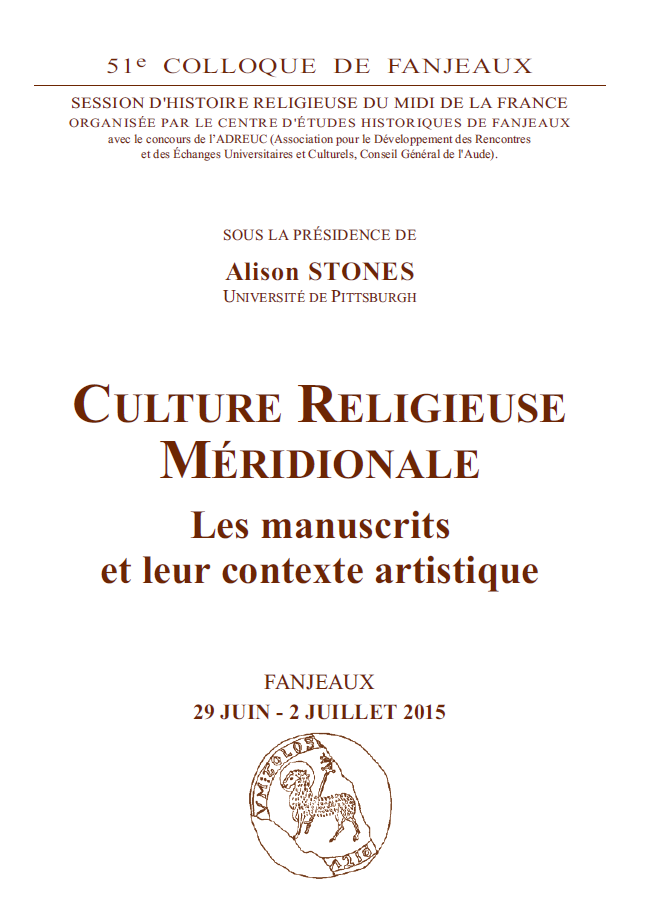
Programme :
Lundi 29 juin
9h15 : Michelle Fournié et Alison Stones – Ouverture du colloque
9h45 : François Avril (Bibliothèque Nationale de France, Paris) – Eléments nouveaux relatifs à la production avignonnaise du temps du pape Jean XXII.
I. Typologie
10h30 : Peter Klein (Université de Tübingen) – Le Beatus de Saint-Sever dans son contexte méridional historique et artistique.
11h15 : Maria Alessandra Bilotta (Universidade Nova, Lisbonne) – Les manuscrits juridiques enluminés du Midi de la France (XIIIe – XIVe siècles) : nouveaux exemplaires retrouvés.
14h30 : Hiromi Haruna-Czaplicki (Université de Toulouse – Le Mirail) – Les manuscrits enluminés du Breviari d’amor.
15h15 : Gisèle Clément (Université Paul-Valéry Montpellier) – Manuscrits musicaux méridionaux.
16h00 : Jean-Loup Lemaitre (École pratique des hautes Études, Paris) – L’illustration du Livre du chapitre de Solignac (c. 1151-1157), un exemple unique dans la France méridionale.
Mardi 30 juin
II. Manuscrits et société
9h00 : Béatrice Beys (Université Paul-Valéry Montpellier) – La Vierge à l’Enfant, réceptrice du livre dans les manuscrits méridionaux (XIIIe s – XIVe s)
9h45 : Emilie Nadal (Université de Toulouse – Le Mirail) – Les manuscrits enluminés des prélats méridionaux au XIVe siècle.
10h30 : Paul Payan (Université d’Avignon et des Pays de Vaucluse) – Images du pouvoir pontifical dans les livres de Clément VII et Benoît XIII.
11h15 : Thomas falmagne (Bibliothèque Nationale du Luxembourg) – Le déclassement des manuscrits médiévaux provenant de la province ecclésiastique de Toulouse
14h00 : Départ pour Carcassonne
.
15h00 : Visite commentée de l’exposition de manuscrits présentée par les Archives départementales de l’Aude.
18h30 : Notre-Dame de l’Abbaye. Conférence publique de Jean-Louis Biget : « Les Cahiers de Fanjeaux : 50 ans d’histoire religieuse méridionale ».
Mercredi 1er juillet
9h30 : Sophie Cassagnes-Brouquet (Université de Toulouse – Le Mirail) – L’évangéliaire de Carcassonne.
III. Mobilité et échanges
10h15 : Isabel Escandell Proust (Université des Iles Baléares) – Livres, enluminures et enlumineurs : du Midi à la Catalogne.
11h00 : Katrin Kogman-Appel (Université Ben-Gurion, Israël) – Une Haggada de Pâques provenant du Midi. Le programme des images, dans le ms Londres, BL Add. 14761.
14h30 : Francesca Manzari (Université de Rome 1) – Manuscrits liturgiques réalisés à Avignon dans la première moitié du XIVe siècle : nouvelles découvertes dans les collections du Vatican.
15h15 : Marie-Claude Léonelli (Avignon) – Les manuscrits exécutés à Avignon pour Juan Fernandez de Hérédia
16h00 : Conclusion, par Alison Stones (Université de Pittsburgh)
Jeudi 2 juillet
Excursion à Albi (cathédrale Sainte-Cécile et manuscrits enluminés conservés à la bibliothèque municipale).
Informations pratiques :
Fanjeaux
29 juin – 2 juillet 2015
Centre d’études historiques
Mairie – Place des halles
f – 11270 – Fanjeaux
Tél. 00 33 (0)4 68 24 70 02
E-mail : cahiers-de-fanjeaux@wanadoo.fr – Site : http://www.cahiersdefanjeaux.com
Les actes de ce colloque constitueront le volume N° 51 des Cahiers de Fanjeaux (à paraître en juillet 2016).
Source : Cahiers de Fanjeaux
Avec la naissance des universités, à la fin du XIIe et au début du XIIIe siècle, une nouvelle catégorie d’individus apparaît, faisant profession d’étudier, de penser et d’enseigner. Grâce à cette étude à la croisée de l’histoire, de l’anthropologie et de la sociologie se dévoilent les stratégies mobilisées par cette communauté intellectuelle nouvelle pour s’affirmer en tant que catégorie autonome dans le paysage social et politique des derniers siècles du Moyen Âge.
En observant les nombreuses manifestations rhétoriques et gestuelles de l’idée médiévale d’honneur, l’auteur s’attache ainsi à décrire la formation d’une identité professionnelle propre aux maîtres, écoliers et officiers de l’université de Paris jusqu’à la fin du XVe siècle. Cet examen de conscience de l’Université médiévale permet ainsi de mettre en évidence quelques-uns des principes fondateurs d’une institution pluriséculaire.
Agrégé d’histoire et docteur de l’université Paris 1 Panthéon-Sorbonne, Antoine Destemberg est maître de conférences en histoire du Moyen Âge à l’université d’Artois.
Table des matières :
Introduction
Première partie – Honor et fama. Les universitaires dans le système de communication médiéval
Chapitre 1 : L’honneur d’une relation privilégiée : les universitaires et le pouvoir
Figures tutélaires et concurrence des honneurs
Le « moment Charles V » : une relation par l’image
Chapitre 2 : Paris, théâtre des honneurs royaux
Aux fondements d’une identité royale et savante
L’Université et les entrées dans la ville
La mort du prince
Chapitre 3 : Qu’est-ce qu’être universitaire ? Discours moral et fonctionnalisme social
La sphère publique de la pastorale
Du maître : statut magistral et substance sociale
Littérature politique et honorabilité universitaire sous Charles V et Charles VI
Deuxième partie – De la bona fama à l’honor magistralis : production et expressions d’un honneur communautaire
Chapitre 4 : L’intégration des béjaunes : une diffamatio initiatique
Caractères originaux d’un rituel initiatique médiéval
Rite d’inversion et célébration de la communitas
Chapitre 5 : Le cursus honorum universitaire
Genèse et enjeux d’une économie des grades
Le passage des grades comme système rituel
La concurrence des honneurs
Chapitre 6 : La parole intégratrice
Arengae et commendationes : ritualité d’une rhétorique de l’éloge
Serments et réseau juré
Chapitre 7 : Les processions universitaires : une liturgie de l’auctoritas
L’activité processionnelle universitaire : essai de typologie
Créer, en marche, l’universitas
L’honneur en marche : une notion spatialisée
Chapitre 8 : La memoria comme mémoire collective ?
Une memoria sous concurrence aux XIIIe et XIVe siècles
Une nouvelle conscience mémorielle (1370-1490)
De l’honor magistralis à la fama sanctitatis ?
Troisième partie – L’honneur en conflits : la domination de soi et des autres
Chapitre 9 : « Émouvoir à justice » : défense et restauration de l’honneur blessé
Des « armes de guerre spirituelle » : les censures ecclésiastiques
Les cessationes ou l’invention de la « grève »
Les réparations d’honneur
Chapitre 10 : L’image singulière du maître : iconographie d’une posture sociale
Magistère ou majestas ?
Images de la dérision : la majesté égratignée
Chapitre 11 : La présentation de soi : conscience universitaire et principes d’individuation
Sous le sceau magistral
Signature et sémiotique du soi
Chapitre 12 : Le « souci de soi » : la masculinité d’un honneur universitaire
L’idéal du célibat intellectuel
Genre et institutions : le paradoxe de la masculinité universitaire
Sexe et reproduction : la révolte des clercs ?
Conclusion générale
Sources et bibliographie
Table des figures et tableaux
Index
Informations pratiques :
Antoine Destemberg, L’honneur des universitaires au Moyen Âge, Paris, 2015 (Le Nœud gordien). 276 pages. ISBN : 978-2-13-059431-4. Prix : 32.00 €
Source : Presses Universitaires de France
Op de doctorandidag biedt de VWM aan jonge onderzoekers de kans om hun onderzoek voor te stellen en hierop feedback te krijgen van specialisten. Dit jaar ligt de klemtoon op het onderzoek naar de politieke en economische geschiedenis van de late middeleeuwen en de overgang naar de vroegmoderne periode.
Van de doctorandi wordt verwacht dat ze op voorhand (een deelaspect van) hun onderzoek in een discussiestuk uitwerken, waarbij ze bijzondere aandacht besteden aan hun onderzoeksopzet (methode, bronnen). Deze discussiestukken worden op voorhand onder alle deelnemers verspreid. Op de dag zelf krijgen de doctorandi elk een slot van 30 minuten toebedeeld. Tijdens de eerste 10 minuten kunnen zij nog eens bondig de krachtlijnen van hun betoog toelichten. Dat mag – maar hoeft niet – aan de hand van een powerpoint-presentatie of handout. Daaropvolgend krijgen de referenten telkens gedurende tien minuten het woord. Daarna is er gedurende tien minuten
ruimte voor een plenaire discussie.
Deze dag staat ook open voor andere mediëvisten die geïnteresseerd zijn in de thematieken die de doctorandi zullen presenteren. Aan hen wordt wel gevraagd om op voorhand hun aanwezigheid door te geven aan het secretariaat van de VWM.
 Deelnemende doctorandi:
Andrea Bardyn, KULeuven/UA
Doctoraatsproject: Women’s fortunes. Female agency, property and investment in the urban space of late medieval Brabant (15th century)
Ben Eersels, KULeuven
Doctoraatsproject: Words and Deeds. Peaceful subversion in late medieval Brabant and Liège (14th-15th century)
Janna Everaert, VUB
Doctoraatsproject: Power in the Metropolis. Urban elite formation during the demographic and commercial expansion of Antwerp (c. 1450 – c. 1550)
Tineke Van de Walle, UA
Doctoraatsproject: The ‘horizontal city’ in the middle ages. Suburban settlement in the Southern Low Countries (late 15th-16th centuries)
Jim Van der Meulen, UA
Doctoraatsproject: Textile production and town-countryside relations in the Flemish West Country (15th-16th centuries)
Referenten:
Jan Dumolyn, UGent
Wouter Ryckbosch, VUB
Programma:
13.30-14.00 : Tineke Van de Walle
14.00-14.30 : Janna Everaert
14.30-15.00 : Andrea Bardyn
15.00-15.30 : koffiepauze
15.30-16.00 : Jim Van der Meulen
16.00-16.30 : Ben Eersels
Na afloop wordt de deelnemers een drankje aangeboden in een nabijgelegen gelegenheid.
Praktisch :
Locatie : Museumzaal (MSI 02.08) – Monseigneur Sencie Instituut. Erasmusplein 2, Leuven
(kaartje op https://www.clt.be/Afbeeldingen/MSI_PSI_AV_AP.pdf)
Deadlines
Aan de doctorandi wordt gevraag hun discussiestuk aan het secretariaat van de VWM te bezorgen ,via sara.moens@ugent.be, die de teksten dan onder de deelnemers zal verspreiden, en dit ten laatste op 27 mei 2015.
Aan geïnteresseerden die de dag willen bijwonen wordt gevraagd hun deelname te laten weten aan sara.moens@ugent.be, en dit ten laatste op 20 mei 2015.
Source : Vlaamse Werkgroep Mediëvistiek
Thinkers in medieval France constantly reconceptualized what had come before, interpreting past events to give validity to the present and help control the future. The long-dead saints who presided over churches and the ancestors of established dynasties were an especially crucial part of creative memory, Constance Brittain Bouchard contends. In Rewriting Saints and Ancestors she examines how such ex post facto accounts are less an impediment to the writing of accurate history than a crucial tool for understanding the Middle Ages.
Working backward through time, Bouchard discusses twelfth-century scribes contemplating the ninth-century documents they copied into cartularies or reworked into narratives of disaster and triumph, ninth-century churchmen deliberately forging supposedly late antique documents as weapons against both kings and other churchmen, and sixth- and seventh-century Gallic writers coming to terms with an early Christianity that had neither the saints nor the monasteries that would become fundamental to religious practice. As they met with political change and social upheaval, each generation decided which events of the past were worth remembering and which were to be reinterpreted or quietly forgotten. By considering memory as an analytic tool, Bouchard not only reveals the ways early medieval writers constructed a useful past but also provides new insights into the nature of record keeping, the changing ways dynasties were conceptualized, the relationships of the Merovingian and Carolingian kings to the church, and the discovery (or invention) of Gaul’s earliest martyrs.
 Constance Brittain Bouchard is Distinguished Professor of Medieval History at the University of Akron and author of many books, including Those of My Blood: Creating Noble Families in Medieval Francia, also available from the University of Pennsylvania Press
Table des matières :
List of Illustrations
Preface
Notes on Terminology
Introduction
Chapter 1. Cartularies: Remembering the Documentary Past
Chapter 2. The Composition and Purpose of Cartularies
Chapter 3. Twelfth-Century Narratives of the Past
Chapter 4. Polyptyques: Twelfth-Century Monks Face the Ninth Century
Chapter 5. An Age of Forgery
Chapter 6. Remembering the Carolingians
Chapter 7. Creation of a Carolingian Dynasty
Chapter 8. Western Monasteries and the Carolingians
Chapter 9. Eighth-Century Transitions: The Evidence from Burgundy
Chapter 10. Great Noble Families in the Early Middle Ages
Chapter 11. Early Frankish Monasticism
Chapter 12. Remembering Martyrs and Relics in Sixth-Century Gaul
Conclusion
Appendix I. Monasteries in Burgundy and Southern Champagne
Appendix II. Churches in Auxerre
List of Abbreviations
Notes
Bibliography
Index
Acknowledgments
Informations pratiques :
Constance Brittain Bouchard, Rewriting Saints and Ancestors. Memory and Forgetting in France, 500-1200, Philadelphie, University of Pennsylvania Press, 2014 (Middle Ages series). 384 pages, 7 illus. ISBN : 978-0-8122-4636-0. Prix : $79.95.
Source : University of Pennsylvania Press






Vous devez être connecté pour poster un commentaire.