Colloque – L’eau autour du château

Après le colloque sur « l’eau dans le château » d’octobre 2013, le Centre de Castellologie de Bourgogne accueillera au château de Bellecroix le second volet de ces rencontres, intitulé « l’eau autour du château ». Ce colloque, qui concerne l’histoire et l’archéologie des habitats aristocratiques médiévaux et modernes, ne s’arrêtera pas aux fossés en eau, mais explorera tout l’environnement aquatique et hydraulique du château : fleuves et transports, moulins et forges, pêcheries, lacs et mers, inondations défensives et offensives, bassins, ports et canaux… Les chercheurs seront particulièrement attentifs au rôle moteur des étangs et des moulins dans l’installation des seigneuries châtelaines.
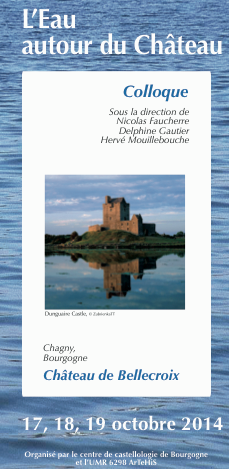
L'eau autour du châteauProgramme :

Vendredi 17 octobre

14h00 : Accueil des participants
14h30 : Introduction Hervé Mouillebouche
15h00 : Gilles Rollier – L’habitat aristocratique de Collonges-lès-Premières (Xe-XIIe-siècle) et son contexte hydrographique
15h30 : Lucie Jeanneret – La maîtrise de l’eau autour du château breton : un critère essentiel dans la structuration des seigneuries en Vannetais et Porhoët du Xe au XVe siècle ?
16h15 : Pause

17h00 : René Kill – Sources extérieures, portage de l’eau et conduites en relation avec les châteaux forts de montagne alsaciens
17h45 : Alain Kersuzan – La dérivation de l’Ain en 1334 au pied du château de Pont-d’Ain
19h00 Verre de l’amitié au château

Samedi 18 octobre

09h00 : Patrick Kernevez – Les châteaux et la mer : l’exemple breton
09h45 : Victorien Leman – Un château des ducs de Bourgogne au bord de la mer : la forteresse de l’Écluse à la fin du Moyen Âge
10h15 : Pause

11h00 : Daniel de Raemy – Y a-t-il de l’eau dans les fossés ? Stratégies hydrauliques sur le site d’Estavayer-le-Lac
11h30 : Jean-Jacques Schwien – Les sources aménagées au pied des châteaux : le cas de la Franche-Comté
Déjeuner
14h30 : Christian Rémy – Le château mis en eau : Limousin, Périgord et Angoumois
15h15 : Bruno Morel – Le domaine de la Combe en Creuse : une protection accordée pour les étangs, biefs et moulins
15h45 : Brigitte Colas – Deux châteaux sur l’eau (Drée et Bussy-la-Pesle en Côte-d’Or) : un choix d’implantation original ?
16h15 : Pause

17h00 : Bernard Haquette – Le château comtal d’Aire-sur-la-Lys, ses viviers et ses moulins
17H30 : Annie Renoux – Gestion des eaux vives et stagnantes aux châtel et seigneurie de Brugny (Marne, XIIIe-XVe siècle)
19h00 : Verre de l’amitié au château

Dimanche 19 octobre

09h00 : Yves Roumegoux – Le siège de Condé en 1676. Un exemple d’art obsidional amphibie à l’âge classique
09h45 : Philippe Bragard – L’eau défensive, du fossé castral passif à l’inondation défensive active des remparts bastionnés
10h15 : Pause

11h00 : Nicolas Morelle – L’approvisionnement en eau dans les forts du Deccan en Inde : le cas de Naldurg (XIVe-XVIIe siècle)
11h30 : Alain Salamagne – Des viviers aux inondations défensives (XIIe-XVIe siècle) : le rôle des châteaux à travers quelques exemples des anciens Pays-Bas
Déjeuner

14h30 : Laurent Paya – Les « jardins-îles » de la Renaissance : état de la question
15h00 : Bruno Bentz – Avant la Machine, l’alimentation en eaux de source du château de Marly (Yvelines)
15h30 : Pause

16h15 : Virginie Malherbe – Châteaux et canaux : maîtres de l’eau, maîtres du territoire (le passage des canaux de Bourgogne)
16h45 : Sylvie Le Clech, Frédéric Aubanton – Problématiques patrimoniales et continuité écologique sur les ouvrages et aménagements hydrauliques : quelques cas d’école
17h30 : Conclusions – Nicolas Faucherre

Informations pratiques :
Château de Bellecroix
20, chemin de Bellecroix
71150 Chagny

Sous la direction de Nicolas Faucherre Delphine Gautier Hervé Mouillebouche

Inscriptions (avant le 5 octobre) :
Delphine GAUTIER Château de Bellecroix 20, chemin de Bellecroix 71150 Chagny
Tel : 06 07 33 77 50
Mail : gautier.delphine@wanadoo.fr
L’hébergement pour les nuits est libre. Il est possible de réserver des chambres d’hôtel à Chagny et dans les environs.

Le château de Bellecroix est une ancienne commanderie de l’ordre de Malte, qui a désormais une activité d’hôtellerie- restauration de charme.
Depuis 2010, le château de Bellecroix accueille le siège du centre de castellologie de Bourgogne.
Le colloque se tiendra dans sa chapelle du XIIe siècle, autrefois hospitalière, dont la récente mise en valeur a été récompensée par l’académie des inscriptions et belles-lettres.
Publié dans Colloque | Laisser un commentaire

Offre d’emploi – Historien/Archiviste (CPCP asbl / Région Bruxelles-Capitale)

Nombre de postes demandés : 1
Catégorie de métier : Documentaliste (3221401)
[PROFESSIONNELS DE L’INFORMATION ET DE LA COMMUNICATION]
Secteur d’activité : Formation permanente et autres activités d’enseignement
Lieu(x) de travail : REGION BRUXELLES-CAPITALE
Votre fonction :

L’archiviste aura pour missions :

A. Politique d’archivage : en collaboration avec le directeur du CPCP et la responsable du centre d’archives, vous participez à la définition et à la mise en œuvre de la politique de gestion et d’archivage du centre :

  • Vous prenez part à la programmation et à la priorisation en matière de traitement et de conservation des archives ;
  • Vous participez à la définition des champs prioritaires de la politique de prospection et d’accroissement des fonds ;
  • Vous participez au traitement des archives déposées au centre par les mouvements sociaux-chrétiens et/ou démocrates humanistes en ce compris : la réalisation des bordereaux de versements, les inscriptions au registre d’entrées, le classement, le suivi de l’évolution des normes applicables au traitement et à la rédaction des instruments de recherches et inventaires, le suivi de la politique d’archivage électronique du centre, etc.

B. Communication et valorisation des archives :

  • Vous assurez l’accès aux archives aux membres du personnel, aux organismes versants ainsi qu’au public ou aux chercheurs intéressés dans le respect des restrictions définies par les conventions de don ou de dépôt et des législations relatives, notamment, aux archives et à la protection de la vie privée ;
  • Vous communiquez les archives et répondez aux demandes de recherches ou de prêts ;
  • Vous participez aux démarches de sensibilisation à la question des archives menées par le centre auprès de divers publics, y compris les déposants ;
  • Vous aidez à la préparation d’actions de valorisation des archives ou du patrimoine : réalisation d’expositions, d’ouvrages, d’articles, etc.
  • Vous assurez les contacts avec les associations et les déposants ou donateurs potentiels de manière à continuer le travail de sauvetage et de rassemblement des fonds de la mouvance démocrate humaniste, etc. ;

Source de l’information : Le Forem

Publié dans Offre d'emploi | Laisser un commentaire

Colloque – Erasmus’ Edition des griechischen Neuen Testaments, Basel 1516

Vor bald 500 Jahren gab Erasmus in Basel bei Froben das Neue Testament in griechischer Sprache heraus. Diese Ausgabe von 1516 sollte sich für die Wissenschafts- und Buchgeschichte als äußerst bedeutsam erweisen und die allgemeine Vorstellung vom neutestamentlichen Text nachhaltig prägen. An der hiermit angekündigten wissenschaftlichen Tagung wird im Vorfeld der Jubiläumsfeierlichkeiten von 2016 der neuste Forschungsstand zu dieser epochalen Edition repräsentativ vorgestellt.

Programme :

Donnerstag, 11.9.14
Ort: Hotel Rochat, Petersgraben 23

Bibelphilologie des 15. und frühen 16. Jahrhunderts

9:00 : August den Hollander (VU Amsterdam/Universiteit Antwerpen) – The Bible and Modern Devotion
10:00 : Erika Rummel (University of Toronto) – Biblical Humanism
11:00 : Kaffeepause

11:15 : Ignacio García Pinilla (Universidad de Castilla-La Mancha) – The Complutensian Polyglot Bible
12:15 : Mittagspause

Entstehungsgeschichte des Novum Instrumentum 1516 und der folgenden Auflagen

14:00 : Ueli Dill (Universität Basel) – Das Novum Instrumentum 1516 und die im selben. Jahr erschienene Gesamtausgabe des Hieronymus
15:00 : Valentina Sebastiani (Universität Basel) – The Impact of the New Testament over the European Market. Production, Distribution, and Circulation of an Editorial Success 1516-1527

Der griechische Text (I)

16:00 : Andrew Brown (London) – The Manuscript Sources and Textual Character of Erasmus’ 1516 Greek New Testament
18:15 : Öffentlicher Abendvortrag, Ort: Kollegienhaus, HS 115
Mark Vessey (University of British Columbia) – Basel, 1516: Crisis of a Writer’s Life-Work?

Alain Claude Sulzer (Schriftsteller, Basel/Berlin) – Bücher und Basel. Reflexionen eines Schriftstellers

Freitag, 12.9.14 – Ort: Hotel Rochat, Petersgraben 23

Der griechische Text (II)

9:00 : Patrick Andrist (Universität Fribourg) – The « mise en livre » of the biblical manuscripts and its influence on the edition of Erasmus: some examples from the Praxapostoloi
10:00 : Martin Wallraff (Universität Basel) – Paratexte der Bibel: Was Erasmus edierte außer der Bibel
11:00 : Kaffeepause

Lateinische Übersetzung, Vorreden, Annotationes

11:15 : Jan Krans (VU Amsterdam) – Deconstructing the Vulgate. Erasmus’ philological work in the Capita and the Solecismi
12:15 : Mittagspause

14:00 : Miekske van Poll-van de Lisdonk (Huygens ING, Den Haag) – Die Annotationes in Novum Testamentum im Rahmen von Erasmus’ Werken zur Bibel

Samstag, 13.9.14, Ort: Theologisches Seminar, Nadelberg 10

Rezeption/Kommunikation

9:00 : Marie Barral-Baron (Université Paris-Sorbonne) – Innovation and subversion in the New Testament
10:00 : Greta Kroeker (University of Waterloo CA) – Erasmus’ Readers: Humanistic and Theological Legacies in the Age of Reform
11:00 : Kaffeepause

11:15 : Silvana Seidel Menchi (Università di Pisa) – Discovering the New Testament, Constructing Its Readership: Erasmus 1516-1536
12:15 : Mittagspause

14:00 : Sundar Henny (Universität Basel) – Das Novum Testamentum und seine Auswirkung auf den französischen Protestantismus des 16. und 17. Jahrhunderts
15:00 : Christine Christ-von Wedel (Universität Basel) – Zur Nachwirkung von Erasmus’ Neuem Testament und seiner Einleitungschriften in reformatorischen Kirchen. Von der ersten Reformatorengeneration über Hugo Grotius und Jean Le Clerk bis zu Johann Salomo Semler

16:00 : Schlussdiskussion

Informations pratiques :
Veranstalter: Universität Basel, Lehrstuhl Kirchengeschichte
Datum, Ort: 11.09.2014-13.09.2014, Basel

Die Tagung steht unter der wissenschaftlichen Verantwortung von Prof. Dr. Silvana Seidel Menchi, Prof. Dr. Kaspar von Greyerz und Prof. Dr. Martin Wallraff.

Kontakt:
Dr. des. Sundar Henny
Universität Basel
Lehrstuhl Kirchengeschichte
Heuberg 33
CH – 4051 Basel
sundar.henny@unibas.ch

Source de l’information : H-Soz-u-Kult

Publié dans Colloque | Laisser un commentaire

Appel à contribution – Mysticism and Materiality

50th International Medieval Congress
Kalamazoo, MI
May 15-17, 2015

A number of different scholarly organizations have come together for the 50th Medieval Congress to pose questions about Materiality in the Middle Ages. While each panel represents a different issue and/or approach, at the core of these many inquiries is the question, « what about the MATTER of the Middle Ages? »

This panel invites papers to explore the ways in which medieval mystics and visionaries experienced the divine in and through their bodies and by way of other material encounters. Magistra’s sponsored session will focus on the role of bodies and objects in the experience and expression of desire in medieval female spirituality. What is at stake is not only the question of the « bodiliness » of female spirituality, but the way in which spiritual experience and expression was facilitated by and experienced within a corporeal or even « thingy » framework or interaction.

We seek papers that interrogate what “knowing” meant in the context of medieval heterodoxy, erotic mysticism, and the sacramental mediation of bodies. Additionally, we are interested in the way in which the practice of female spirituality was constituted through embodied, intellectual, and meditative encounters with things: beads, books, walls, clothes, food, and myriad other bodies or things. We are particularly interested in attracting papers that use both continental theologians and mystical writers to explore the relationships between sacraments and rituals and human bodies attempting to touch the untouchable. We ask: what constituted mystical knowledge and how was its ecstasy experienced?

Papers and abstracts can address the issues of mysticism, materiality and female spirituality in any of the following veins, or others occurring to individual submissions:

  • The embodied experience of mystical visions/ecstasy
  • The materialization of the mystical
  • Writings (by men or women) describing or proscribing practices of female mysticism/piety/devotion
  • Material or embodied practices of mysticism or mystical devotion
  • The making manifest of mystical experience (in books, art, writing, re-telling, etc.)
  • The role of objects in mystical experience, expression, or practice
  • Human and/or non-human bodies in mysticism, mystical practice, or visions
  • Bodily or corporeal experiences of mystical or divine ecstasy
  • Sacraments in female mysticism—in practice, theology or visionary experience
  • The role of touching in women’s mystical experience and/or practice
  • The regulation of female bodies and/or materialities in mystical practice
  • The policing of mysticism and heterodoxy in and through women’s bodies and material circumstances
  • Etc.

Please submit abstracts (for paper proposals) of 250-400 words to medmaterialism@gmail.com with “Magistra” in the subject line. (This e-mail is receiving proposals for multiple panels, so please do not skip this step!) Please ATTACH your abstract as a Word (or other text) document, and include your name, contact information and the panel to which you are submitting (Magistra) IN THE TEXT OF THE DOCUMENT.

Deadline: September 15, 2014

Given that this panel is devoted to exploring religion or spirituality of any kind relating to women’s bodies and experiences, we ask that papers on GENDER (more broadly defined) and materiality and/or mysticism be re-directed to the Society for Medieval Feminist Scholarship.

Source de l’information : UPenn.edu

Publié dans Appel à contributions | Laisser un commentaire

Appel à contribution – Meanings of Erasure

Session at the 50th International Congress on Medieval Studies

Kalamazoo, 14-17 May 2015

Deadline: 15 September 2015

Recent scholarly interest in whiteness, emptiness, and material destruction that pervade medieval visual culture demonstrate a shift in focus: where art historians have historically focused on figuration, they now turn to the instances of material absence. This session will explore the notion of erasure and its function in transforming the object being partially or completely defaced, expunged, rubbed out. How does erasure augment and subvert the meanings of the original image? What does it tell us about the process of engagement with medieval material culture? Does erasure ever equal silence, or does it announce itself as a loud presence on manuscript pages, stone exteriors, and wood and canvas surfaces? And what of the erased word: how does that compromise or transmute the complex text-image relationships? Submissions from scholars in any discipline are welcomed.

Please send your abstract, along with the paper proposal form (which can be found here: http://www.wmich.edu/medieval/congress/submissions/index.html), to Elina Gertsman at exg152@case.edu, by September 15, 2014.

Source de l’information : Medieval Art Research

Publié dans Appel à contributions | Laisser un commentaire

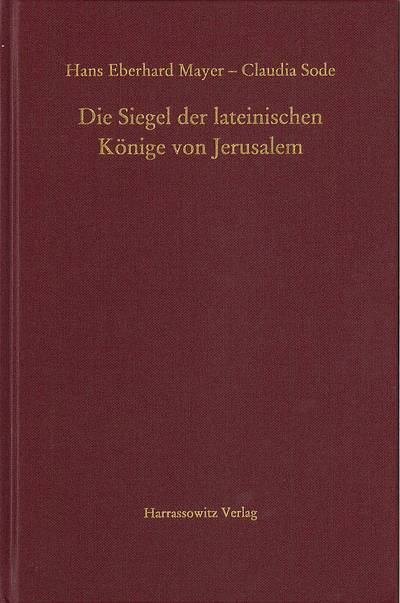
Publication – Hans Eberhard Mayer et Claudia Sode (éd.), « Die Siegel der lateinischen Könige von Jerusalem »

Der vorliegende Band entstand parallel zur Bearbeitung der Urkunden der lateinischen Könige von Jerusalem (MGH – Die Urkunden der Lateinischen Könige von Jerusalem, 4 Bände, Hannover 2010) und ergänzt diese Edition. Er beschreibt die Siegel der lateinischen Könige und Königinnen von Jerusalem aus der Kreuzzugszeit, sowohl die original erhaltenen, die heute über drei Kontinente verstreut sind, wie auch die frühneuzeitlichen Nachzeichnungen und die mittelalterlichen Beschreibungen. In der Einleitung werden neben dem Stand der Forschung, der Statistik, der Herstellung der Siegel und der Prozedur der Besiegelung Einzelfragen behandelt. So kommen bis 1225 mit einer Ausnahme (Nr. 1) nur zweiseitige Bleibullen vor, danach in der Zeit der landfremden Könige, die vor allem über Sizilien oder Zypern herrschten, auch ein- und zweiseitige Wachssiegel sowie zweiseitige Goldbullen. Die Zuordnung der vor 1225 einander sehr ähnlichen Bleibullen an einzelne Siegelführer spielt ebenso eine Rolle wie die Unterscheidung der Sigel der fünf Könige namens Balduin, von denen nur Balduin II. seine Ordnungszahl II auf seinem Siegel angab. Zudem gibt es auf den Namen Balduins I. neun Metallkopien des 19. Jahrhunderts, eine auch auf den Namen Balduins III. Drei der ersteren lagern in Rußland und sind in der russischen Literatur schon behandelt, teilweise auch als moderne Fälschungen erkannt worden. Die Kriterien, die für eine Fälschung sprechen, werden hier vertieft. Im Katalogteil werden dann 111 Siegel behandelt, worunter sich neun Inedita befinden. Hier wird auch angegeben, wo die Siegel bisher publiziert wurden, und durch genaue Beschreibungen können sogar einzelne Siegelstempel identifiziert werden. Alle original erhaltenen oder nachgezeichneten Siegel werden schließlich im Tafelteil abgebildet.

25fc8550c0

Table des matières : ici

Informations pratiques :
Hans Eberhard Mayer et Claudia Sode (éd.), Die Siegel der lateinischen Könige von Jerusalem, Wiesbaden, 2014 (Schriften 66). XXVI und 232 S. sowie 44 Tafeln, 8°. 2014. ISBN 978-3-447-10156-1 Ln. EUR 64.

Source de l’information : Monumenta Germaniae Historica

Publié dans Publications | Laisser un commentaire

Appel à contribution – The Myth of Origins. The (Re-)Making of Medieval Sacral Space through Liturgical Reform

Call for Papers for three joint sessions to be submitted for the International Medieval Congress, Institute of Medieval Studies, Leeds 6-9 July 2015 (special thematic strand: Reform & Renewal)
The Myth of Origins. The (Re-)Making of Medieval Sacral Space through Liturgical Reform
Deadline: 10 September 2014

Organizers:
Ivan Foletti, Universities of Brno and Lausanne
Elisabetta Scirocco, Kunsthistorisches Institut in Florenz–Max-Planck-Institut
Sponsor: Center for Early Medieval Studies, University of Brno

The Myth of Origins. The (Re-)Making of Medieval Sacral Space through Liturgical Reform
i. The Second Vatican Council and Twentieth-Century Historiography
ii. Reformation and Counter-Reformation
iii. Gregorian Reform

Divided into three sections, this proposal aims to reflect the ways in which the sacred space of late antiquity is constructed in a retrospective manner, through the most important reforms in the two millennia of the Western Church. Following a diachronic process in reverse, from the twentieth century to the Middle Ages, the stages identified are: The Second Vatican Council; The Council of Trent and the Protestant Reformation; the so-called Gregorian Reform. All coincide with significant moments of crisis for the Latin Church. In each of these historical phases, the answer to the crisis is found in the mythical past, in the origins of the Early Church. In the liturgical field, this is realized in an attempt to restore some of the distinctive elements of the old liturgy, or elements that were presumed to be so. The changes are associated with a critical rhetorical frame, which legitimized the process by virtue of emphasizing the importance of its supposed “authentic” origins. Thus, the innovative dimension of the reform was often denied: in the words of the reformers, what was being done was not to create a new solution, but going back to original ideals, to a Church fair and immaculate.

The search for “antique” elements and the discourse that accompanied their introduction inevitably ended up building a new past, which is reflected heavily in objects and spaces of the sacred, and in the following historiography.

The proposed sessions focus on the manner in which these “denied” reforms actually build history. The sessions will follow a reverse chronology: (i.) the Second Vatican Council and its historiographical premises, which have their roots in the nineteenth and twentieth centuries; (ii.) the Protestant Reformation and the Catholic Counter-Reformation; and (iii.) the so-called Gregorian Reform of the eleventh century.

Participants are invited to reflect on such issues as: the methods used by the reformers to learn about the past; the manner in which the past is reconstructed and modified (consciously and unconsciously) in the texts and monuments; the impact of the “new past” on studies and on the perception of the ancient liturgy.

Papers from a historiographical and a diachronic art historical perspective are especially welcome.

Paper proposals of no more than one page, accompanied by a short CV, can be submitted by 10 September 2014 to: ivan.foletti@gmail.com and escirocco@gmail.com.

Source de l’information : Medieval Art Research

Publié dans Appel à contributions | Laisser un commentaire

Appel à contribution – Sharing the Holy Land Perceptions of Shared Sacred Space in the Medieval Eastern Mediterranean

Following from the symposium to be held at the Warburg Institute (12-13 June 2015), these sessions seek to address how both Western pilgrims, and the indigenous Christian, Jewish, and Muslim Levantine populations perceived the sharing of religious shrines with other faiths. Of particular interest is how this sharing was described and explained in contemporary accounts and how this influenced the knowledge of other faiths among the Semitic religions. These sessions will focus on the period from c.1000 to c.1500, addressing the changing political context in the Levant and its influence on the sharing of sacred space.Please send proposals for papers (title & 100 words abstract) to Jan Vandeburie at sharingtheholyland2015@gmail.com before 31 August 2014.

Source de l’information : Academia.edu
Publié dans Appel à contributions | Laisser un commentaire

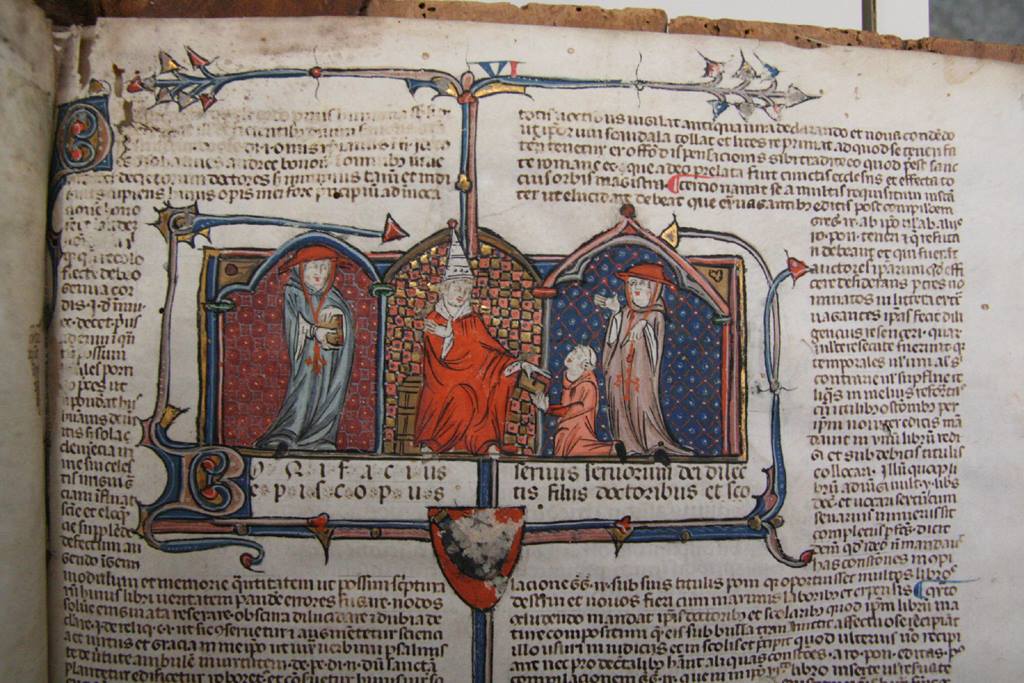
Web – Southern France Illuminated Juridical Manuscript Production

This page has been created to share contents, especially publications, news, events, discoveries, related to the academic study of the southern France illuminated juridical manuscript production (13th-14th centuries) and it’s directly linked to the current postdoctoral research project of Dr. Maria Alessandra Bilotta (IEM-FCSH-UNL) on «Portuguese juridical manuscripts production and illumination between 14th and 15th centuries and theirs connections with manuscripts production and illumination in the French “Midi” (specially Toulouse, Avignon and Montpellier) and in the North-Mediterranean regions (Italy and Cataluña)», carried out within the Institute of Medieval Studies (IEM: http://iem.fcsh.unl.pt/) of the Nova University of Lisbon and funded by the FCT (SFRH / BPD / 74298 / 2010)

Southern France Illuminated Juridical Ms. prod.The post-doctoral research of Maria Alessandra Bilotta involves, since 2007, the southern France illuminated juridical manuscript production, especially in Toulouse, Montpellier and Avignon between the late 13th and the first half of the 14th century . She has developed a research methodology that aims to consider these manuscripts and their illustration as the result of an original and creative process based on travels, exchanges and interactions of illuminators; on the circulation of objects, manuscripts, patrons and patterns, as well as on the sharing of common knowledge in the north Mediterranean geographical areas (Italy, Southern France, Iberian Peninsula; (http://www.univ-avignon.fr/fr/actualites/singleview/article/7/histoire-medievale-publication.html).

Accès : ici

Publié dans Web | Laisser un commentaire

Appel à contribution – Fluctuating Networks: The Constructive Role of Broken Bonds in the Medieval Mediterranean and Beyond

Fluctuating Networks: The Constructive Role of Broken Bonds in the Medieval Mediterranean and Beyond
Kalamazoo, MI, 50th International Congress on Medieval Studies, 14-17 May 2015
Deadline: September 15, 2014

The Medieval Studies Research Group at the University of Lincoln (UK), seeks papers for one sponsored panel at the 50th International Congress on Medieval Studies at Western Michigan University, May 14-17, 20145. The theme is: Fluctuating Networks: The Constructive Role of Broken Bonds in the Medieval Mediterranean and Beyond

The aim of this session is to re-consider theories and approaches to the study of medieval social, political, economic and cultural networks from multidisciplinary perspectives. The medieval Mediterranean, as a space of interaction and communication, offers a myriad of possibilities to explore, which increase even more when considering its connections with Europe and the rest of the known world.

In particular, we would welcome studies which examine how agents and circumstances, which in principle undermined and destroyed pre-existing bonds, in reality generated parallel structures and alternative webs of relatedness. Political conspiracy is a case in point. Similarly, betrayal could be read as an alteration of a system of trust, which simply shifted toward other individuals with whom new connections were established.

Through the analysis of textual and material sources, as well as visual art and architecture, this panel seeks to explore ideas and narratives of exclusion as potential seeds for new or renewed types of private and public networks. Ethnic, religious, political, economic, legal and cultural aspects were all at stake when de-constructing, while re-constructing, bonds between individuals and entire communities.

Possible areas of discussion include, but are not limited to:

  • Conspiracy and alternative networks
  • Revolt and rebellion
  • Exile and excommunication
  • Treason and betrayal (multiple interpretations)
  • Trade, boycott and commercial agreements/disagreements
  • Criminal associations
  • ‘Otherness’ within and outside ethnic and religious communities
  • Changing networks and legal practices
  • Marital and familial connections
  • Secular and monastic bonds
  • Diplomacy and the role of ambassadors, spies, etc.
  • Breaking bonds in historical writing and the construction of memory
  • Comparative views and socio-anthropological perspectives

Please, submit an abstract for a 15-20 minute paper (300 words maximum) and a completed Congress Participant Information Form (available at: http://www.wmich.edu/medieval/congress/submissions/index.html#PIF) by September 15, 2014, to: aliuzzoscorpo@lincoln.ac.uk

Dr Antonella Liuzzo Scorpo
Lecturer in Medieval History
School of History and Heritage,
University of Lincoln,
Brayford Pool,
Lincoln LN6 7TS
Office: MC2139
Email: aliuzzoscorpo@lincoln.ac.uk
Tel.: +44(0)1522 886340
Website:http://staff.lincoln.ac.uk/aliuzzoscorpo

Source de l’information : Medieval Art Research

Publié dans Appel à contributions | Laisser un commentaire


