Appel à contribution – The Sixth Symposium on Crusade Studies

The Symposium on Crusade Studies, April 10 – 11, 2026, St. Louis, MO Saint Louis University, Missouri Campus.

​In celebration of the Twentieth Anniversary of the Crusade Studies Forum, the Sixth Symposium on Crusade Studies(April 10-11, 2026) hosted by Saint Louis University will take place on its Missouri campus in St. Louis, MO. Meeting in the vibrant city on the Mississippi River, the Symposium offers scholars the opportunity to present research, visit cultural locations, and engage in historical discussion. The goal of the Symposium is to promote serious scholarly investigation into all topics and disciplines associated with crusading and the Latin East. 

The Symposium invites proposals for papers, complete sessions, and roundtables. Any topics regarding the scholarly investigation of medieval crusading are welcome. Papers are normally twenty minutes each and sessions are scheduled for ninety minutes. 

Submissions are currently open and the deadline for all proposals is December 31st, 2025. Late submissions will be considered if space is available. Decisions will be made by the end of January and the program will be published in February.

Individual papers are expected to be 20 minutes in length. You should submit a title and abstract of no more than 250 words.  Session proposals have much more latitude regarding paper times and structure. Note: All sessions, round-tables, or seminars are required to have participants from at least two or more institutions.

Source : Crusade Studies

Publié dans Appel à contributions | Commentaires fermés sur Appel à contribution – The Sixth Symposium on Crusade Studies

Appel à contribution – Kaisertochter und Klosterstifterin: Mathilde – Leben und Wirken in Brauweiler

LVR-Kulturzentrum Abtei Brauweiler
25.11.2025

Anlässlich des tausendsten Todestages von Mathilde, Stifterin der Abtei Brauweiler und Tochter von Kaiser Otto II. und Kaiserin Theophanu, möchte das LVR-Kulturzentrum Abtei Brauweiler den Rahmen für einen oder mehrere Vorträge bieten, die sich mit dem Leben und Wirken von Mathilde auseinandersetzen. Dieser Call for Papers richtet sich primär an Nachwuchswissenschaftler:innen (Masterstudierende, Promovierende und Postdocs).

Der Landschaftsverband Rheinland (LVR) arbeitet als Kommunalverband mit rund 22.000 Beschäftigten für die etwa 9,8 Millionen Menschen im Rheinland. Mit seinen 41 Schulen, zehn Kliniken, 20 Museen und Kultureinrichtungen, vier Jugendhilfeeinrichtungen, dem Landesjugendamt sowie dem LVR-Verbund für WohnenPlusLeben erfüllt er Aufgaben, die rheinlandweit wahrgenommen werden.

Das LVR-Kulturzentrum Abtei Brauweiler befindet sich in den Räumlichkeiten der ehemaligen Benediktiner Abtei Brauweiler. Das Kulturzentrum hat es sich zur Aufgabe gemacht hat, die Geschichte und das kulturelle Erbe des Ortes aufzuarbeiten und zu vermitteln.

Mathilde – Tochter Kaiser Ottos II. und der Byzantinerin Theophanu – und ihr Ehemann Pfalzgraf Ezzo stifteten im 11. Jahrhundert die Abtei Brauweiler. Der Legende zufolge offenbarte sich Mathilde im Traum eine göttliche Vision, die sie dazu inspirierte, auf dem Brauweiler Hofgut ein Kloster zu stiften. Angetrieben durch diese Vision, pilgerten Mathilde und ihr Mann nach Rom und erhielten im Jahr 1023 durch den römischen Papst Reliquien sowie ein Kreuz für eine Klostergründung. Die Wahl des Standortes Brauweiler wird in der vor 1100 verfassten Fundatio monasterii Brunwilarensis, der Gründungsgeschichte des Klosters Brauweiler, mit Mathildes Vision begründet.

Anlässlich Mathildes Tod im November 1025, der sich in diesem Jahr zum tausendsten Mal jährt, möchte das LVR-Kulturzentrum Abtei Brauweiler am 25. November 2025 einen Vortragsabend zu Ehren der Klosterstifterin ausrichten. Die Veranstaltung findet in klösterlichem Ambiente, in den Räumlichkeiten der Abtei statt. An den Kölner Westen grenzend, spricht der Standort Brauweiler insbesondere die Universitäts- und Wissenschaftsstandorte Köln, Bonn und Düsseldorf an.

Mögliche Vortragsthemen:
Mathilde soll im Mittelpunkt des Vortrags stehen. Hinsichtlich der Einbettung dieses Themas in größere Zusammenhänge gibt es bei sinnvoller Argumentation keine Beschränkungen. Interdisziplinäre Ansätze sowie Verbindungen zwischen Ihrer eigenen Forschung und dem gesetzten Thema des Vortrags sind willkommen.

Mögliche Fachrichtungen:
Geschichtswissenschaften (mit mittelalterlichem Schwerpunkt); Germanistische Mediävistik; Kunstgeschichte (mit mittelalterlichem Schwerpunkt); Theologie bzw. Kirchen- und Theologiegeschichte

Wir freuen uns über Vorschläge im Umfang von maximal einer Seite (500 Wörter) mit einem Titel und kurzen biografischen Angaben. Diese senden Sie bitte bis zum 21. September 2025 an Lina Zwania (Lina.Zwania@lvr.de).

Source : H-Soz-Kult

Publié dans Appel à contributions | Commentaires fermés sur Appel à contribution – Kaisertochter und Klosterstifterin: Mathilde – Leben und Wirken in Brauweiler

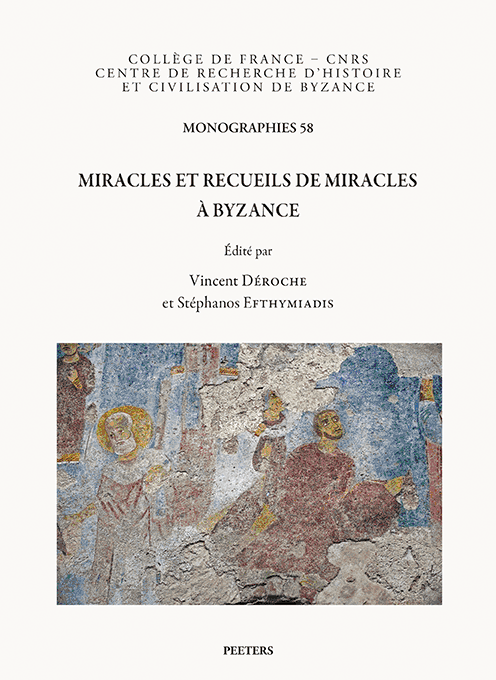
Publication – « Miracles et recueils de miracles à Byzance », éd.Vincent Déroche, Stéphanos Efthymiadis

Les récits de miracles dans la littérature hagiographique en général et les recueils de miracles en particulier ont toujours été à Byzance un indicateur privilégié de l’évolution des cultes, des représentations et même de la société dans son ensemble, à travers un foisonnement d’indices parfois inattendus: le récit de miracle a beau avoir ses règles propres, il est souvent plus proche des realia que les constructions hagiographiques des Vies de saints. Les études rassemblées ici, tantôt dans le temps long, tantôt sur un texte ou un dossier particulier, tantôt transversalement sur une thématique commune à plusieurs textes, illustrent les riches possibilités de ces sources.

Tales of miracles in hagiographical literature in general and in collections of miracles more specifically were always at Byzantium an outstanding testimony on the evolution of the cults, and even of the whole society itself, through a plenty of cues, sometimes unexpected: although the tale of miracle has its own rules, it is often closer to realia than the hagiographical constructions in the Lives of saints. The studies collected here, aiming at the “temps long”, or at a specific text or dossier, or transversally at a theme common to a group of texts, give a hint of the rich potential of those sources.

Table des matières : ici

Informations pratiques :

Miracles et recueils de miracles à Byzance, éd.Vincent Déroche, Stéphanos Efthymiadis, Paris–Louvain, Collège de France–Peeters, 2025 ; 1 vol., VIII–151 p. (Monographies du Centre de Recherche d’Histoire et Civilisation de Byzance – Collège de France, 58). ISBN : 978-9-04295-520-2. Prix : € 38,00.

Source : Peeters

Publié dans Publications | Commentaires fermés sur Publication – « Miracles et recueils de miracles à Byzance », éd.Vincent Déroche, Stéphanos Efthymiadis

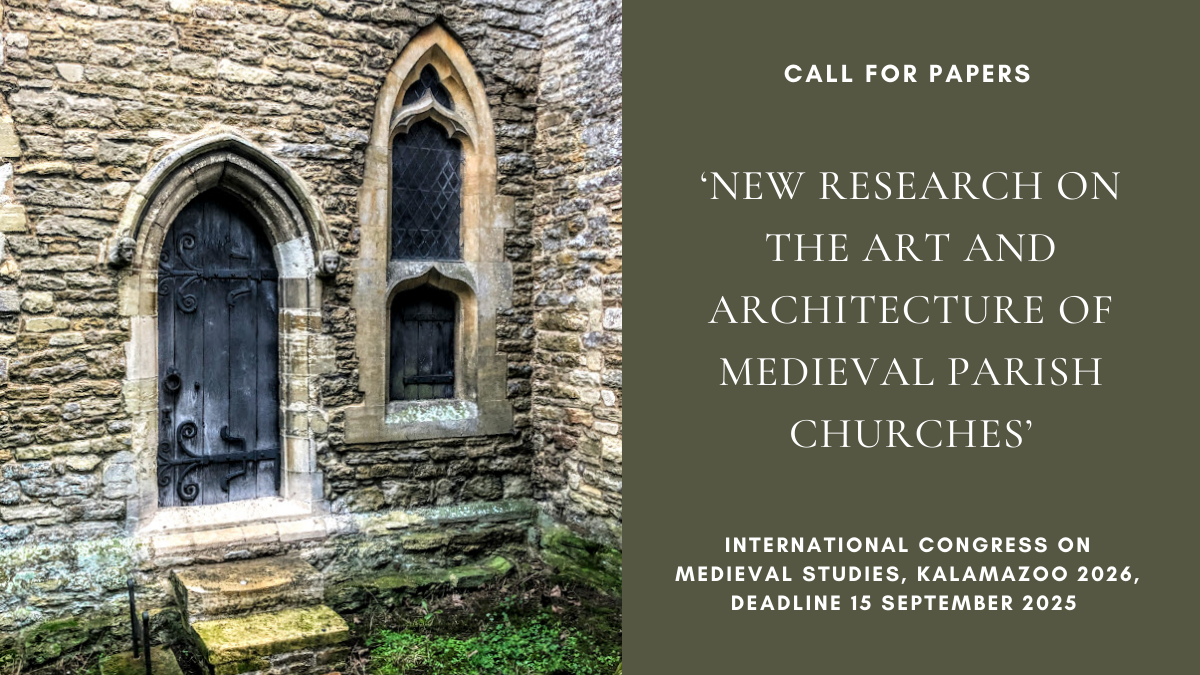
Appel à contribution – New Research on the Art and Architecture of Medieval Parish Churches

Scholars are invited to propose presentations on any aspect of the art and architecture of the medieval parish church. Possible research questions include, but are not limited to: How did the architecture, art, or visual culture of the parish define the medieval worship experience? How did individual churches change over time—and what can these changes reveal about each parish community? How can in-depth study of a local parish church expand or contradict broader national narratives? What new methodologies can twenty-first century scholars use to tell the story of the medieval parish?

To submit a proposal for the in-person session: https://icms.confex.com/icms/2026/prelim.cgi/Session/7517.

To submit a proposal for the virtual session: https://icms.confex.com/icms/2026/prelim.cgi/Session/7653.

Proposals should consist of a title, an abstract (300 words or less), and a short description (50 words or less) which may be made public if the proposal is accepted. Please also include the author’s name, affiliation and contact information.

For general information on the International Congress on Medieval Studies CFP process, see https://wmich.edu/medievalcongress/call

For questions related to this panel, contact the session presider, Catherine E. Hundley: chundley[at]wesleyseminary.edu.  

Proposals are due September 15, 2025.

Source : Medieval Art Research

Publié dans Appel à contributions | Commentaires fermés sur Appel à contribution – New Research on the Art and Architecture of Medieval Parish Churches

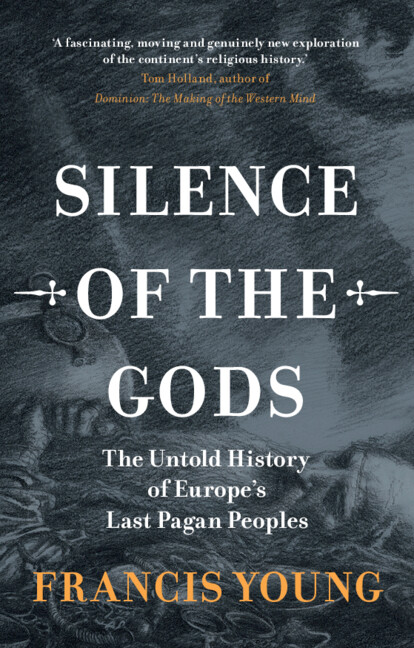
Publication – Francis Young, « Silence of the Gods. The Untold History of Europe’s Last Pagan Peoples »

The formal conversion to Christianity in 1387 of the Grand Duchy of Lithuania seemingly marked the end of Europe’s last ‘pagan’ peoples. But the reality was different. At the margins, often under the radar, around the dusky edgelands, pre-Christian religions endured and indeed continued to flourish for an astonishing five centuries. Silence of the Gods tells, for the first time, the remarkable story of these forgotten peoples: belated adopters of Christian belief on the outer periphery of Christendom, from the Sámi of the frozen north to the Estonians, Latvians and Lithuanians around the Baltic, as well as the Finno-Ugric peoples of Russia’s Volga-Ural Plain. These communities, Dr Young reveals, responded creatively to Christianity’s challenge, but for centuries stopped short of embracing it. His book addresses why this was so, uncovering stories of fierce resistance, unlikely survival and considerable ingenuity. He revolutionises understandings of the lost religions of the last pagans.

  • The first book in English about the late survival of pre-Christian religion in northern and eastern Europe, even after the climacteric Battle of Grunwald in 1410
  • Francis Young is an established and internationally acclaimed authority on the history of pre-Christian belief and the intersection between history and myth: both his previous CUP books were academic bestsellers
  • Brings entirely new and surprising perspectives to the interpretation of pagan religions in Europe in the period post–1387
  • The history of paganism is a subject of considerable appeal and fascination, to readers in several fields: history, religion, myth and folklore, and the history of ideas

Francis Young grew up in Bury St Edmunds, England, and holds a doctorate in history from the University of Cambridge. He has written over twenty books in the fields of folklore and the history of religion and supernatural belief, including Pagans in the Early Modern Baltic (2022), Magic in Merlin’s Realm (Cambridge University Press, 2022) and Twilight of the Godlings (Cambridge University Press, 2023). His work has also appeared in History Today, BBC History Magazine and The Catholic Herald, as well as other periodicals. A regular podcaster, and broadcaster on BBC Radio, he is a Fellow of the Royal Historical Society, a lay canon of St Edmundsbury Cathedral, and teaches courses in religious history and folklore for the Department for Continuing Education in the University of Oxford.

  • Introduction
  • 1. Europe’s unchristianised edge: who were the ‘Pagans’?
  • 2. Mere Christianisation: curiosity and ethnography in the fifteenth century
  • 3. (Counter-)reformation in unchristianised Europe: the sixteenth century
  • 4. Antiquarians and witch-hunters: the seventeenth century
  • 5. Darkness in light: pre-Christian religion in enlightenment Europe
  • 6. Folklore and fantasy: the nineteenth-century reinvention of paganism
  • Epilogue: pre-Christian, post-Christian?

Francis Young, Silence of the Gods. The Untold History of Europe’s Last Pagan Peoples, Cambridge, Cambridge UNiversity Pres, 2025 ; 1 vol. ISBN : 978-1-00958-657-3. Prix : GBP 25,00.

Source : Cambridge University Press

Publié dans Publications | Commentaires fermés sur Publication – Francis Young, « Silence of the Gods. The Untold History of Europe’s Last Pagan Peoples »

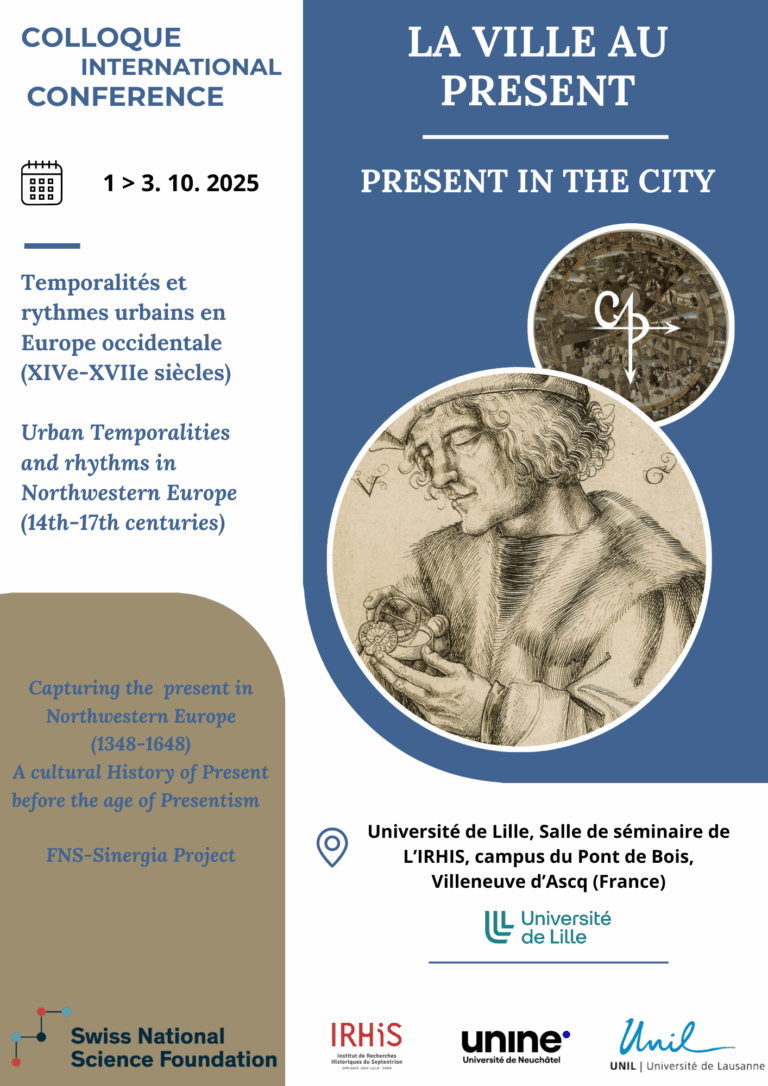
Colloque – La ville au présent. Temporalités et rythmes urbains en Europe occidentale (XIVe-XVIIe siècles)

Cette rencontre permettra de saisir la mesure du temps présent dans les sociétés urbaines médiévales et prémodernes, mais aussi le ressenti de son écoulement. L’objectif du colloque est d’observer les citadins pris dans le jeu des multiples temporalités qui les traversent et nourrissent leur sentiment d’appartenance ou d’exclusion à différents groupes sociaux, tels les cercles marchands, artistiques, mais aussi familiaux et intimes. La crise et le sentiment d’accélération que peut induire une situation de trouble ou un événement soudain, sont d’autres facteurs qui influencent la perception du temps des individus. En somme, il s’agira de se demander comment les habitants de villes (mais aussi celles et ceux qui les traversent) habitent le temps présent, cette question permettant de remettre en perspective la notion de « présentisme » forgée par François Hartog, conçue à l’origine pour la période contemporaine.

Cette rencontre permettra de saisir la mesure du temps présent dans les sociétés urbaines médiévales et prémodernes, mais aussi le ressenti de son écoulement. L’objectif du colloque est d’observer les citadins pris dans le jeu des multiples temporalités qui les traversent et nourrissent leur sentiment d’appartenance ou d’exclusion à différents groupes sociaux, tels les cercles marchands, artistiques, mais aussi familiaux et intimes. La crise et le sentiment d’accélération que peut induire une situation de trouble ou un événement soudain, sont d’autres facteurs qui influencent la perception du temps des individus. En somme, il s’agira de se demander comment les habitants de villes (mais aussi celles et ceux qui les traversent) habitent le temps présent, cette question permettant de remettre en perspective la notion de « présentisme » forgée par François Hartog, conçue à l’origine pour la période contemporaine.

Programme : ici

1er-3 octobre 2025

IRHiS-UMR 8529 (Univ. Lille, CNRS)

Salle de séminaire (A1.152)
Université de Lille
Site du Pont-de-Bois
59653 Villeneuve d’Ascq 

Source : Capturer le temps

Publié dans Colloque | Commentaires fermés sur Colloque – La ville au présent. Temporalités et rythmes urbains en Europe occidentale (XIVe-XVIIe siècles)

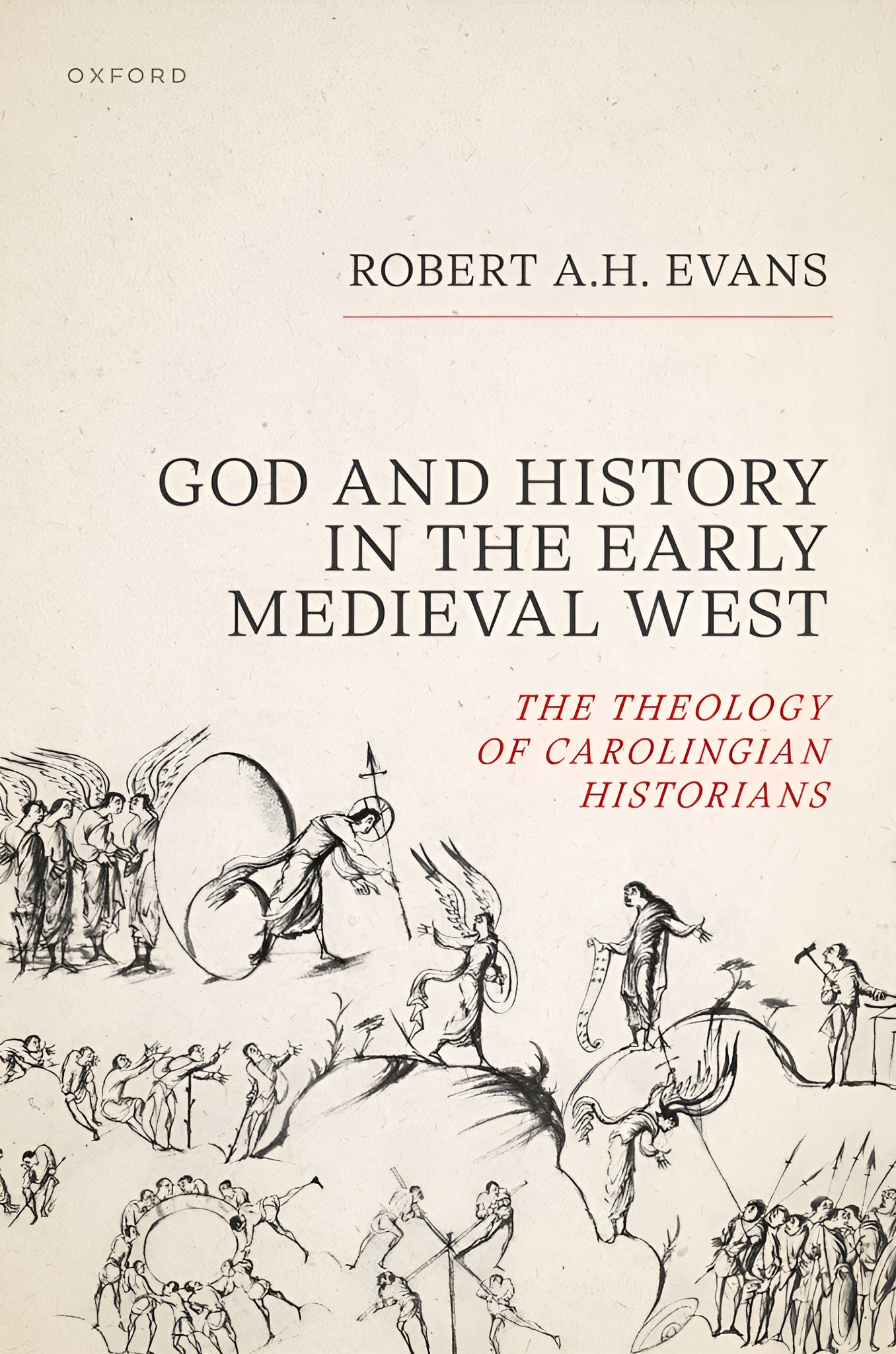
Publication – Robert A.H. Evans, « God and History in the Early Medieval West. The Theology of Carolingian Historians »

While virtually all early medieval historians wrote about God, they did not do so in the same way. Rather than taking their comments about God at face value then, as has been the case in much work on medieval history-writing, they are deserving of closer scrutiny, with implications not simply for how we understand the key narrative sources for early medieval history, but also the cultures in which they originated.

Seeking to fill this historiographical gap, this book explores, through the prolific writing of historians in the Carolingian Empire, how historians in early medieval societies thought about God and what this meant for themselves and their audiences. It argues that although Carolingian historians wrote about God’s agency with tremendous literary subtlety, while reflecting complex theological ideas and attempting to intervene into challenging political realities, in many respects they also broke with the example of early Christian historians from Late Antiquity, which demonstrates that writing about God was neither a uniform nor inevitable part of early medieval history writing.

As well as yielding new insights into the nature of these crucial primary sources, this analysis helps to provide an overdue examination of the complex relationship between religion and history writing in early medieval societies. The book demonstrates that comments about God cannot be reduced to mere political propaganda or even moralistic encouragements for early medieval Christians to lead better lives. Instead, it argues that these historians sought to communicate a robust theology of divine activity which was relevant and useful for those involved in the often-threatening world of Carolingian public life.

Introduction
Part I. The Context of Carolingian History Writing
1:God’s Agency in Carolingian Culture
2:Early Medieval Theologies of God’s Agency
3:The Historiographical Inheritance
Part II. God in Carolingian History Writing
4:The Rise of the Carolingians
5:The Reign and Legacy of Louis the Pious
6:The Later Ninth Century
Part III. Theology and its Implications
7:The Theology of Carolingian Historians
8:Theology and the Reader

Robert A.H. Evans, God and History in the Early Medieval West. The Theology of Carolingian Historians, Oxford, Oxford University Press, 2025 ; 1 vol., 304 p. ISBN : 978-0-19895-724-9. Prix : GBP 99,00.

Source : Oxford University Press

Publié dans Le réseau | Commentaires fermés sur Publication – Robert A.H. Evans, « God and History in the Early Medieval West. The Theology of Carolingian Historians »

Appel à contribution – Staging nobility in urban space. Noble commemoration and representation in medieval towns

Organisers: Julia van Leeuwen (University of Amsterdam) and Sieben Feys (Ghent University)
Sponsors: Dutch Research Council (NWO); Bijzonder Onderzoeksfonds (BOF), Ghent University

This session explores the ways in which noble families used urban space to represent their lineage, propagate the legitimate continuation of their authority and consolidate their seigneurial rule. It builds upon scholars such as Henri Lefebvre, who have shown that space is never a fixed given but is constantly being reshaped by an interplay of physical characteristics, conceptual visions, and subjective experiences. This session explores the strategic use of urban space in Medieval Europe.

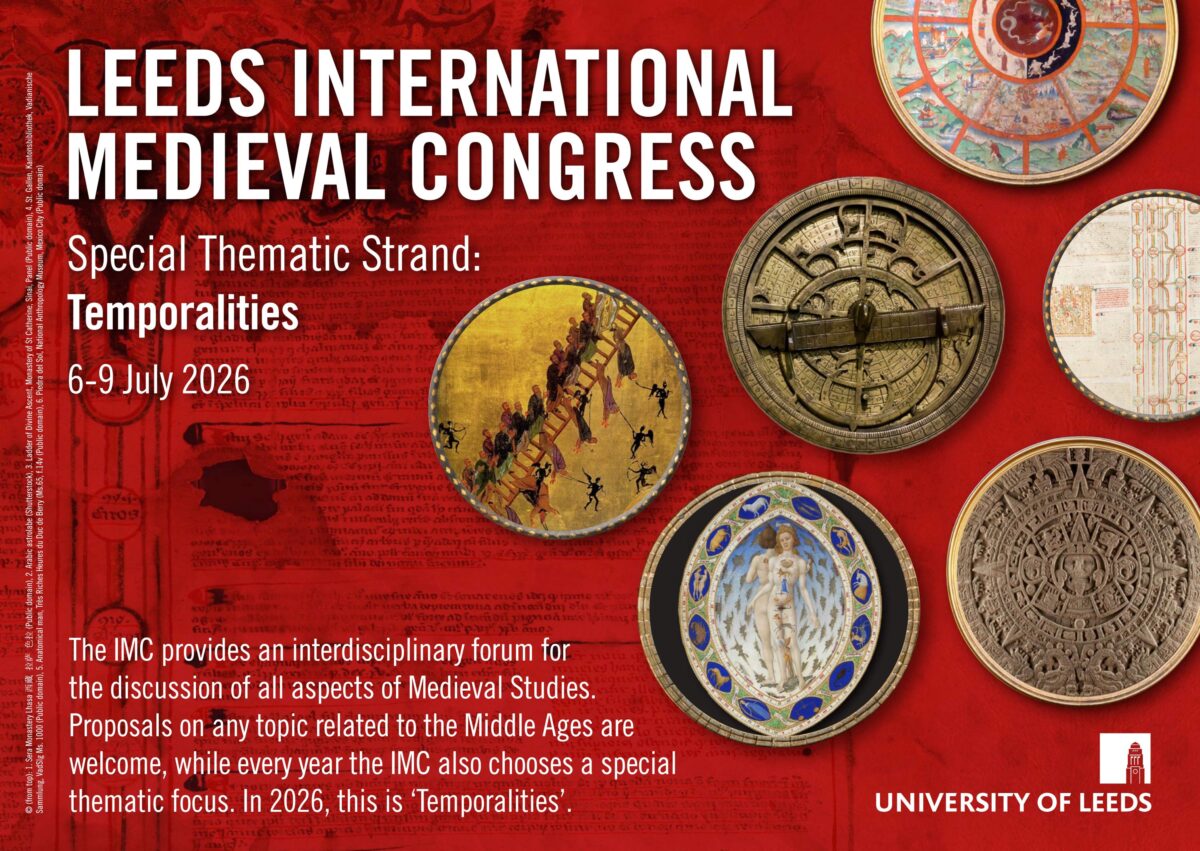
It focuses on how the noble families’ commissions and building practices physically shaped and redefined public space, in relation to underlying visions and ideas that were inextricably linked to an awareness of time. This session perfectly fits the special thematic focus of the IMC in 2026, ‘Temporalities’, and the IMC suggested key topics such as ‘Temporality in political, economic, and socio-cultural relations’, ‘Time, memory, and commemoration’ and ‘Artistic representations of time and temporality’.

We invite proposals for papers for one or multiple sessions at the International Medieval Congress, bringing together historians, architectural and art historians working on case studies in different European regions, with a variety of sources and in an interdisciplinary context. Scholars are encouraged to engage with questions of memorial culture, female agency in commemorative practices and foundations, representation of noble identity, seigneurial rule and dynastic continuity, and in particular urban space as a site of political performance. We welcome topics including (but not limited to):

• Material representation of status and power, such as heraldic symbols, the building of suitable noble residences and the commissioning of luxury objects for churches and urban institutions

• Intergenerational commemorative practices

• Religious foundations in urban space by noble men and women

• Objects and written sources related to the remembrance of noble families

• Objects used in public spaces to propagate the continuity of rule (from funerary monuments and stained-glass windows to statues on the façades of town halls)

Discussant and panel chair: Mario Damen, University of Amsterdam

To apply, please send a title and abstract (100 words max.) for your paper proposal to Julia van Leeuwen (j.vanleeuwen2@uva.nl) or Sieben Feys (s.feys@uva.nl) by September 15th, 2026. We aim to inform you before September 22.

Publié dans Appel à contributions | Commentaires fermés sur Appel à contribution – Staging nobility in urban space. Noble commemoration and representation in medieval towns

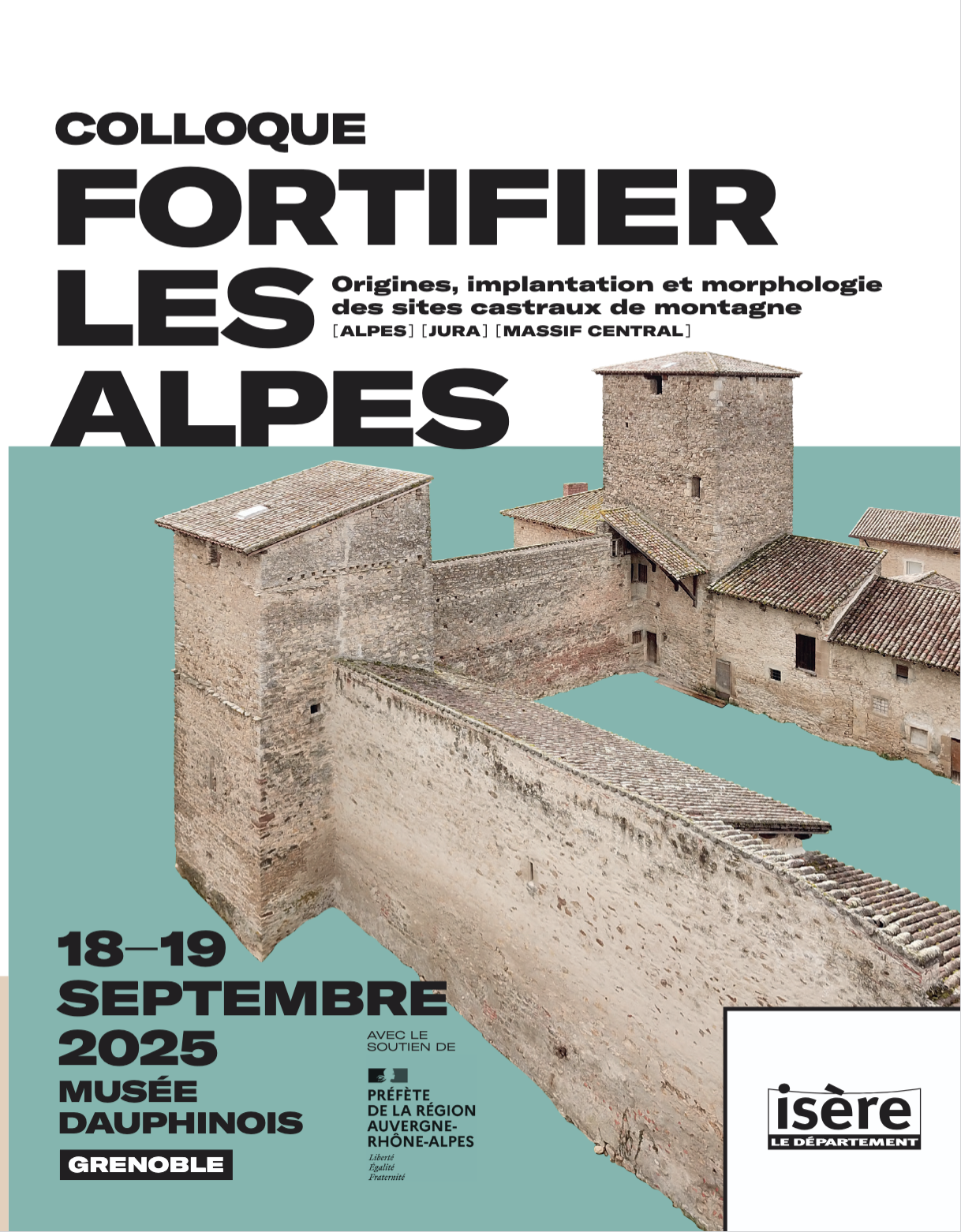
Colloque – Fortifier les Alpes : Origines, implantation et morphologie des sites castraux de montagne (Alpes, Jura et Massif Central)

Jeudi 18 et vendredi 19 septembre 2025
Musée dauphinois (Grenoble)

Programme : ici

Colloque organisé par le projet collectif de recherches (PCR) « Fortifier les Alpes au Moyen Âge (Ve–XVIe s.), du Rhône à la Durance », en collaboration avec le service du Patrimoine culturel du Département de l’Isère.

Ce colloque s’inscrit dans une dynamique interdisciplinaire réunissant archéologues, historiens, spécialistes de la conservation du patrimoine et jeunes chercheurs. L’objectif est de dynamiser la recherche en castellologie alpine et de proposer une synthèse des connaissances sur les édifices de montagne. Les travaux du PCR couvrent un large éventail chronologique, depuis les occupations de hauteur du haut Moyen Âge jusqu’aux transformations architecturales liées à l’avènement de l’artillerie à poudre à l’orée de la Renaissance.

Il se tiendra en marge de l’exposition À l’assaut des châteaux forts ! Les archéologues racontent  présentée au Musée de l’Ancien Évêché, jusqu’au 21 septembre. Cette exposition met en lumière cinquante ans de recherches archéologiques sur les fortifications en Isère, offrant une perspective renouvelée sur l’histoire des châteaux forts.

Les communications aborderont principalement l’aire géographique du Dauphiné et de la Savoie, tout en élargissant le champ d’étude à l’ensemble de l’arc alpin occidental et à la vallée du Rhône. Des approches comparatives avec d’autres massifs montagneux seront également proposées.

Ce colloque constitue une étape majeure dans la valorisation du patrimoine fortifié alpin et dans la consolidation des connaissances scientifiques sur les fortifications médiévales des Alpes.

Source : INRAP

Publié dans Colloque | Commentaires fermés sur Colloque – Fortifier les Alpes : Origines, implantation et morphologie des sites castraux de montagne (Alpes, Jura et Massif Central)

Offre d’emploi – Research Start Scholarship: Academy-funded Research Project Forming Europe by Overcoming Schism in the Twelfth Century

Forming Europe by Overcoming Schism in the Twelfth Century The research project Forming Europe by Overcoming Schism in the Twelfth Century welcomes applications for a four-month research start scholarship at the research centre based at Aachen (start of fellowship: between 1 December 2025 and 1 February 2026).

With its focus on the Alexandrine Schism (1159-1177) and its overcoming as a significant test for Latin Christendom and the entire European continent, this long-term project identifies and systematically analyses the mechanisms that turned this schism into a formative influence on the development of Europe. The papal schism thus serves as a model case for overarching questions about phenomena of division and crisis and the dynamics and reorganisation of universal unity. For the first time since 1888, all sources relating to the schism (charters, letters, historiography, etc.) will be systematically collected, catalogued and made accessible in the form of digital regesta. The differentiated examination and evaluation of diverse research questions (e.g. tactics and strategies of papal self-assertion or the acquisition of supporters or fundamental communication structures in the conflict) will be rendered possible.

Two departments of history at the universities of Würzburg and Aachen are working closely together in the project, recording, processing and analysing the source material. Furthermore, a digital research platform is also being developed in cooperation with the Cologne Centre for eHumanities (CCeH) which facilitates modern source analysis and in which regesta, key documents and their images are made available to researchers, academic teaching staff, and the interested public.

Your position

The purpose of the scholarship is to support you develop and find a topic for a project-related PhD thesis. It is divided into two phases of two months each. Within the initial phase (weeks 1-8) of the scholarship, you will explore and develop a viable PhD topic. This phase will conclude with an intermediate evaluation. If the evaluation is successful, you will enter the second scholarship period (weeks 9-16), preparing an exposé of the PhD project as a base for obtaining third-party funding.

The scholarship

The 4-month scholarship amounts to €5,000 and will be paid in two instalments (with a dividing line upon successful interim evaluation). The position is located at the Institute of History at RWTH Aachen University, under the direction of Prof. Dr. Harald Müller. Temporary telecommuting is possible upon request.

Your profile

The scholarship is intended for graduates who have recently completed a Master’s degree or an equivalent qualification in History (e.g. Staatsexamen) or students who have submitted their final thesis. Candidates should intend to do a doctorate matching the thematic focus of the project (i.e. (the history of the Church and the Papacy in twelfth century Western Europe with a particular focus on the history of schisms).

Requirements

As scholarship holder you ought to be willing and motivated to research autonomously while actively contributing to the project by occasionally giving a paper or completing a smaller thematic task.

Foreign language skills in English and Latin are a prerequisite. Skills in other modern European foreign languages are welcome.We offer you

– a vibrant, intellectually stimulating environment, professional guidance, and academic exchange with two experienced research teams at the Aachen and Würzburg locations

– insights into the close collaboration with the Cologne Center for eHumanities as a cooperation partner for Digital Humanities

– participation in project-specific workshops, summer schools, and research colloquia, as well as a broad international network and opportunities to support your research activities

– a broad focus and the project’s connections to international academia

– the attractive international flair of the border city of Aachen with its proximity to universities and research institutions in the Netherlands, Belgium, and France

Application

Closing date for applications: 31 October 2025

Please email the following documents in a single PDF file to the coordinator at the Aachen office, Isabel Blumenroth (blumenroth@histinst.rwth-aachen.de):

Covering letter

CV (including a list of publications, where applicable)

Rough outline of the dissertation project with basic literature (max. 3 pages). Please feel free to contact us for a brief consultation on the compatibility of the research idea with the focus of the project.

Graduation certificate (incl. final grade) or proof of the submission of the Master’s thesis (or equivalent)

Certificate of enrollment, if applicable

Language certificates

Text sample (e.g. introductory chapter of the Master’s thesis or equivalent)

Applications can be submitted in German or English. The prerequisite for starting the scholarship is a Master’s degree or an equivalent qualification in History (e.g. Staatsexamen). Applicants who are about to complete their studies can apply, provided they can submit their official graduation certificate no later than 1 March 2025.

Applications from doctoral students already doing their doctorate at other universities will not be considered.

Please contact

Dr. Isabel Blumenroth, blumenroth@histinst.rwth-aachen.de, +49 241 80 26 128
Scholarship announcement (project website)

Source : RWTH Aachen

Publié dans Offre d'emploi | Commentaires fermés sur Offre d’emploi – Research Start Scholarship: Academy-funded Research Project Forming Europe by Overcoming Schism in the Twelfth Century