Appel à contribution – Personal Influence on the Rulers of Imperial Rome and the Early Middle Ages

Veranstalter: Dr. Fabian Schulz, Universität Tübingen / Heidelberger Akademie der Wissenschaften
Datum, Ort: 09.10.2014-10.10.2014, folgt
Deadline: 31.03.2014
Since rulers of the Imperial Roman Period and the Early Middle Ages occupied the highest (secular) position, individuals who exerted influence on them enjoyed a great extent of power. As a consequence, there was bitter rivalry between the various agents, which is reflected in discourses on legitimate and illegitimate influence.

The protagonists who exerted influence on rulers, i.e. who could influence or even initiate decisions, have not been investigated thoroughly yet, as they formed a heterogeneous group of people that can neither be understood entirely in terms of institutions nor grasped by their proximity to the emperor. Furthermore, certain agents of influence were stereotyped so heavily, that searching the written sources for historical “reality” may appear pointless or impossible. Finally, neither in Classics nor in Medieval History there is a tradition of studying interpersonal influence.

By employing approaches of the social sciences, this conference aims to better recognize and describe the resources and strategies of influencing agents as well as the modes and conditions of influence attempts. At the same time, the influence that agents claimed, condemned, and exerted, shall be scrutinized with the instruments of source criticism and discourse analysis. The proposed period of investigation is to allow approaching the subject either in the longue duree or in terms of disruptions.

The goal of the conference is to establish interpersonal influence as a subject of historical research. Furthermore the study of influence on rulers is to make a contribution towards political history as well as the history of mentalities and discourse.

Contributions should focus on the following and related topics: 
  • Ancient and modern theories of influence 
  • Prosopography of influencing agents 
  • Typology of influence attempts 
  • Influence and discourse

Proposals and abstracts should be sent by 31 March to Fabian.Schulz@adw.uni-heidelberg.de

Kontakt: 
Dr. Fabian Schulz 
Heidelberger Akademie der Wissenschaften 
Forschungsstelle « Historisch-philologischer Kommentar zur Chronik des Johannes Malalas » 
Eberhard Karls Universität Tübingen, Seminar für Alte Geschichte 
Wilhelmstr. 36 
72074 Tübingen 
Tel. 07071/2977679

Source de l’information : H-Soz-u-Kult
Publié dans Appel à contributions | Laisser un commentaire

Offre d’emploi – Lecturer in History c.1200-1600, University of Glasgow

Job Purpose
To undertake high-quality research and research supervision, to make an active and high level contribution in the School of Humanities in the College of Arts to teaching at undergraduate and postgraduate level in History, with a focus on the social/cultural history of Britain and/or Europe c.1200-1600, and to undertake administration as requested by the Head of School. Applications from scholars whose research demonstrates congruence with areas of research excellence within History and the School are especially welcome.
Main Duties and Responsibilities
  1. To develop and sustain individual / joint research projects of international standard and demonstrable in the School, Centre or relevant Unit of Assessment and to pursue and secure external funding for the same through successful grant applications to Research Councils and other funding bodies.
  2. To contribute fully to developing and enhancing the research profile of the Unit of Assessment, School and College, including maintaining a track record of high quality publications and demonstrable impact.
  3. To participate fully in the School, College and University’s research culture and to attend and participate in appropriate research seminars/conferences.
  4. To be responsible for the supervision and training of postgraduate, Masters and doctoral students and to ensure their effective development in line with University and (where relevant) funder guidelines
  5. To participate in the design, review, organisation, delivery and assessment of undergraduate and postgraduate teaching activities in accordance with the School’s programmes, including the delivery and development of cross teaching and employability initiatives.
  6. To participate fully in the assessment process (using a variety of methods and techniques) and provide effective, timely and appropriate feedback to students to support their learning.
  7. To undertake School/College level administration as directed and supported by the Head of School or VP Head of College.
  8. To work effectively in co-operation with colleagues in the School, College and University as a whole.
  9. To provide student support at College level, normally through acting as an adviser.
  10. To develop research and where appropriate teaching initiatives, which support the School and College Knowledge Exchange agendas.
  11. To engage in professional development as appropriate.
  12. To contribute to the enhancement of the University’s international profile in line with the University’s Strategic Plan, Glasgow 2020 – A Global Vision http://www.gla.ac.uk/media/media_180610_en.pdf
Standard Terms & Conditions
The salary will be on the Research and Teaching Grade, level 7, £32,590 – £36,661 per annum.
This post is a fixed term post for three years.

Interviews and presentations for this position are likely to be held on 13 May 2014.

The successful applicant will be eligible to join the Universities’ Superannuation Scheme. Further information regarding the scheme is available from the Superannuation Officer, who is also prepared to advise on questions relating to the transfer of Superannuation benefits.

All research and related activities, including grants, donations, clinical trials, contract research, consultancy and commercialisation are required to be managed through the University’s relevant processes (e.g. contractual and financial), in accordance with the University Court’s policies.

Probation Period
The University is currently in the process of implementing a new development programme, the Early Career Development Programme (ECDP). This will provide for you as an early career academic staff member to be developed and supported over a specified timeframe to facilitate the advancement of your academic career.

A pilot will commence at the start of academic sessions 2013/14 and it is anticipated that this appointment will include participation in this programme.

Ref: 007787; Closing date: 6 April 2014.

Source de l’information : Medieval Art Research
Publié dans Offre d'emploi | Laisser un commentaire

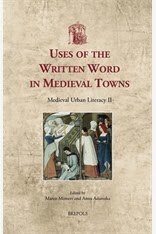
Publication – M. Mostert et A. Adamska (eds.), "Uses of the Written Word in Medieval Towns. Medieval Urban Literacy II"

In medieval towns, examples of personal writing appear more prevalent than in non-urban spaces. Certain urban milieus participating in written culture, however, have been the focus of more scholarship than others. Considering the variety among town dwellers, we may assume that literacy skills differed from one social group to another. This raises several questions: Did attitudes towards the written word result from an experience of the urban educational system? On which levels, and in which registers, did different groups of people have access to writing? The need and the usefulness of written texts may not have been the same for communities and for individuals. In this volume we will concentrate on the town dwellers’ personal documents. These documents include practical uses of writing by individuals for their own professional and religious ends, including testaments and correspondence. Besides written records belonging to the domain of ‘pragmatic literacy’, other kinds of texts were also produced in town. Was there any connection between practical literacy, literary (and historical) creativity and book production?


Informations pratiques : 
M. Mostert et A. Adamska (eds.), Uses of the Written Word in Medieval Towns. Medieval Urban Literacy II, Turnhout, Brepols, 2014 (Utrecht Studies in Medieval Literacy, 28). XX+453 p., 25 b/w ill., 9 b/w line art, 156 x 234 mm. ISBN: 978-2-503-54960-6. Prix : 100 euros.

Source de l’information : Brepols
Publié dans Publications | Laisser un commentaire

Colloque – Romanesque art : patrons and processes

The British Archeological Association Third International Romanesque Conference
Date:7-9 April 2014
Romanesque art : patrons and processes
A Three-Day International Conference concerned with Patronage in Romanesque Art and Architecture. There is also an opportunity to stay on for two days of visits to medieval sites around Barcelona from 10-11 April.
Following earlier conferences on Romanesque and the Past (London, 2010), andRomanesque and the Mediterranean (Palermo, 2012), the British Archaeological Association is collaborating with the Museu Nacional d’Art de Catalunya and the Research project Magistri Cataloniae to stage the third in a biennial series of international conferences concerned with Romanesque art and architecture. This conference, Romanesque: Patrons and Processes, is concerned with patronage – and agency – in their broadest senses during the Romanesque period. Thus, in addition to more traditional prosopographical approaches, and examinations of individual patrons, there will be papers on various forms of institutional patronage. The conference will also address the processes involved in commissioning buildings or works of art – the mechanics of design – authorship – intermediaries and agents – and the extent to which patrons are designers. Are there limits to patronal influence?
Speakers include: Claude Andrault-Schmitt, Maria Bonet, Eduardo Carrero, Manuel Castiñeiras, Hugh Doherty, Eric Fernie, Alexandra Gajewski and Stephanie Seeberg, Ludovico Geymonat, Richard Gem, Dorothy Glass, Colum Hourihane, Armen Kazaryan, Wilfried Keil, Bruno Klein, Esther Lozano, Nathalie Le Luel, Javier Martínez de Aguirre, Géraldine Mallet, Robert Maxwell, John McNeill, Christopher Norton, Anna Orriols, Carlo Quintavalle, Jens Rüffer, Carles Sánchez, Marta Serrano, Neil Stratford and Rose Walker.
Programme : here
Conference
The conference will open at 9:30 on Monday, 7 April with lectures at the Museu Nacional d’Art de Catalunya (Palau Nacional, Parc de Montjuïc, 08038 Barcelona). Teas, coffees and lunch will be provided on all three days, in addition to dinners on two evenings and a drinks reception on the third. The conference will also include a late afternoon visit to the Romanesque collections at MNAC, and a visit to the complex of early medieval and Romanesque churches at Terrassa. More information will be provided in the Joining Instructions. Participants will need to organize travel and accommodation. For information on accommodation in Barcelona one might consult the link attached to the application form for the Conference.
Conference fee (7-9 April): 325,00 €. Includes all lectures teas/coffees, lunches, two dinners and one reception.
Visits
The BAA-MNAC will also organise two days of visits to Romanesque buildings for those who wish to stay on. These include Sant Pere de Rodes, Girona (Cathedral and San Pere Galligants), Tarragona (Cathedral and Santa Maria del Miracle) and Santes Creus, and will take place on Thursday, 10 and Friday, 11 April.
Visits fee (10-11 April): 100,00 €. Includes admission charges, donations and coaches to Sant Pere de Rodes and Girona (10 April), Tarragona and Santes Creus (11 April).
Scholarships
A limited number of scholarships for students are available to help cover the cost of the conference. Please apply by 10 November 2013, attaching a short CV along with the name and contact details of one referee. Applications should be sent to the conference convenors on baa2014bcn@mnac.cat
Conference Convenors: Jordi Camps and Manuel Castiñeiras
Organisation
British Archaeological Association and Museu Nacional d’Art de Catalunya
In collaboration with the Research project Magistri Cataloniae
An electronic Conference Booking Form is available on the attached file or on the BAA website, www.archaeologyuk.org/baa under Conferences
Source de l’information : Museu Nacional d’Art de Catalunya
Publié dans Appel à contributions | Laisser un commentaire

Appel à contribution – Church reforms and the cult of saints. 5th Hagiotheca conference

Event Date: 17-21 September 2014
Event Location: University of Zadar, Croatia
Submission Deadline: 25 April 2014

The question of church reforms has been repeatedly emerging in recent scholarship, from the early medieval monastic reform movements to the reforms promulgated by the Tridentine Council. While exploring the processes and effects of various ecclesiastical reforms, former studies did not specifically focus on a comparative analysis of the reforming actions and strategies. To this purpose, seeing the vast scholarly field covering the ecclesiastical reform movements, we have considered it necessary to establish certain parameters or comparative points that would serve as a basis for precise analysis. As one of the most important aspects of church history in general, the cult of saints could provide an adequate foothold for exploring the similarities and differences between various reformist strategies.

Following the already established tradition of Hagiotheca’s previous conferences exploring the relationship between the cult of the saints and diverse social, cultural, and political phenomena, the upcoming conference aims at juxtaposing the ways in which the church reformers approached the cult of the saints and used them in order to achieve their reformist goals. We propose to address three main problems: the creation of new cults, the suppression of new/old cults, and the transformation of the existing cults.

These problems can be tackled with the following, as well as any other subquestions:
  • What was the place of the saints’ cults in the chronology of a church reform? Were the cults involved in the reformist actions from the beginning, or strategically tackled at a later phase?
  • What were the actual strategical moves regarding the cults?
  • Was the creation/suppresion/transformation of the cults spreading from the top of the ecclesiastical hierarchy or was it rather capillary?
  • What was the role of popular devotion in these actions? What was the attitude of the reformed church towards the popular veneration of the reformist saints?
  • What was the role of the ˝future saints“ in these reforms, and in what ways did their own engagement eventually contribute to their canonisation?
  • Finally, how important was the cult of saints as a means of promoting of the reformist ideas?

We invite papers discussing the role of the saints’ cults in major church reforms, as well as their minor reflections, including, but not limited to:
  • Reforms and reform-like phenomena in Late Antiquity
  • Monastic refoms in the early Middle Ages (8th – 11th c.)
  • Gregorian and post-Gregorian reform of clerical life
  • Observant reforms – Mendicant orders, Benedictine Observance (Congregation of St Justine)
  • Reformation (including all the related late medieval movements)
  • Counter-Reformation (notably the Tridentine Council)

Proposals :

We welcome 300-word abstracts of papers (20 minutes) and poster presentations (display requirements will be given later), with an additional short CV. The working language of the conference is English. All proposals will be reviewed by an international scientific commitee. Proposals should be sent by e-mail to reformsaints@gmail.com before 15 April 2014. Notification of acceptance will be sent by 25 April 2014. Publication of the proceedings in the series Bibliotheca Hagiotheca – Colloquia is planned for 2016 (for the previous proceedings, see http://www.leykam international.hr).

Conference Travel Info
The conference will take place at the University of Zadar, and will include keynote lectures (to be announced) and a guided visit to the medieval churches, museums and art collections of Zadar. A half-day excursion is planned for Sunday. The organisers offer accommodation for the participants at Hotel Kolovare (http://www.hotel kolovare.com/en/) at 40% discount. Alternative accommodation for a limited number of participants will be available at the University campus.

The participants are responsible for their own travel arrangements.

The registration fee is 60 EURO (40 EURO for doctoral students and independent researchers).

Conference organized by Croatian Hagiography Society Hagiotheca, University of Zadar, University of Turku -Centre for Medieval and Early Modern Studies, University of Tampere – Hagiographica Septentrionalia

Scientific committee:
Mladen Ančić (University of Zadar)
Marjo Kaartinen (University of Turku – Centre for Medieval and Early Modern Studies)
Sari Katajala Peltomaa (University of Tampere – Hagiographica Septentrionalia)
Gábor Klaniczay (Central European University)
Ana Marinković (University of Zagreb – Hagiotheca)
Marika Räsänen (University of Turku – Centre for Medieval and Early Modern Studies)
Trpimir Vedriš (University of Zagreb – Hagiotheca)

Organising committee:
Teemu Immonen (University of Turku – Centre for Medieval and Early Modern Studies)
Ines Ivić (University of Zagreb – Hagiotheca)
Jenni Kuuliala (University of Bremen – Hagiographica Septentrionalia)
Ana Marinković (University of Zagreb – Hagiotheca)
Matko Matija Marušić (University of Zagreb – Hagiotheca)
Ana Mišković (University of Zadar)
Marika Räsänen (University of Turku – Centre for Medieval and Early Modern Studies)
Trpimir Vedriš (University of Zagreb – Hagiotheca)
Source de l’information : Episcopus
Publié dans Appel à contributions | Laisser un commentaire

Journée d’étude – Le récit de guerre comme source d’histoire, de l’Antiquité à la période moderne

Le projet « le récit de guerre comme source d’histoire » est né de la collaboration entre six laboratoires : CeTHiS, GRHis, Orient & Méditerranée, HeRMA, POLEN et ANHIMA. Il regroupe près de quarante chercheurs de toutes périodes et de toutes disciplines historiques. Après la première journée d’étude (Blois, 10 octobre 2013) consacrée à la place des civils dans les récits de guerre, cette seconde journée abordera les récits de guerre, comme sources mais aussi comme genre. Sera interrogé l’éventail des méthodes permettant de constituer les récits de guerre en sources d’histoire pertinentes, méthodes qui vont de la contextualisation, y compris culturelle, jusqu’à l’analyse des processus de reconstruction et de réécriture des faits. Pour l’exploitation des récits de guerre en tant que caractéristiques d’un groupe social ou d’une forme particulière de conflit, sera discutée la valeur comparée de l’approche quantitative par mise en série et de l’approche par événement-type. Il sera enfin tenu compte du caractère générique du récit de guerre, un genre dont les conventions et la réception informent la production. On s’interrogera tout particulièrement sur la fonction et la crédibilité des données chiffrées livrées dans les récits de guerre, et sur la possibilité de confronter les différents supports d’un même récit (écrits, images).

Programme :

Mardi 25 mars

13h30 : Accueil des participants
14h00 : Michèle Virol (GRHis) – Introduction

Thème 1 : réécritures et reconstructions des faits dans le récit de guerre

14h30 : Mathieu Engerbeaud (HeRMA) – Masquer la défaite ? L’interruption des combats par les éléments naturels dans le récit des guerres romaines (Ve-IIIe siècle av. J.-C.)
15h00 : Françoise Michaud-Fréjaville (POLEN) – De Christine de Pizan à Anatole France : embellissements des récits des campagnes de Jeanne d’Arc
15h30 : Discussion et pause

16h15 : Sergio Boffa (Musée communal de Nivelles) – Raconter le combat singulier au Moyen Âge : un défi impossible ?
16h45 : Michel Biard (GRHis)  – Une guerre qui ne tue pas, ou si peu… Les blessures et la mort dans le Recueil des actions héroïques et civiques des républicains français (1794)
17h15 : discussion
17h30 : clôture de la première journée
Mercredi 26 mars

09h30 : Accueil des participants

Thème 2 : les libertés du récit et les faits de guerre

10h00 : Pierre Cosme (GRHis) – Les silences des récits de guerre autour d’Actium
10h30 : Margarida Maria de Carvalho (Université d’Etat de Sao Paulo – Campus de Franca) – La mort de l’empereur Julien dans la guerre contre les Perses : qualité des témoignages d’Ammien Marcellin et de Libanios
11h00 : Marino Vigano (Archivio Storico Civico, Milan) – Guerre, violence, « composition » dans les sources manuscrites sur Jean-Jacques Trivulce, maréchal de France (Crema 1442 – Chartres 1518)
11h30 : Gilles Grivaud (GRHis) – L’oeil du militaire, l’oeil du civil : regards divergents dans les récits de la guerre de Chypre (1570-1571)
12h00 : Discussion
12h30 : Déjeuner

Thème 3 : le récit de guerre comme genre

14h30 : Jean-Michel Carrié (ANHIMA) – Conventions narratologiques et schémas actantiels dans le récit de guerre romain : permanences et écarts
15h00 : Eric Durot (Académie de Créteil) – Le récit du siège de Metz (1552) par le duc de Guise ou la valorisation de soi
15h30 : Fadi El Hage (Académie de Créteil) – Construire la source : le récit de guerre dans les Mémoires et Souvenirs d’officiers à l’époque moderne

16h00 : Discussion et pause
16h45 : Hervé Drévillon (Centre de Recherches d’histoire moderne-EA 127) – Le récit de guerre et ses échelles
17h15 : Sylvie Crogiez-Pétrequin (CeTHiS) – Conclusions

Renseignements et inscription :
GRHis – Université de Rouen, UFR des Lettres et Sciences Humaines Rue Lavoisier – 76821 Mont-Saint-Aignan cedex

Tél. 02 35 14 71 00

Source de l’information : Calenda
Publié dans Colloque | Laisser un commentaire

Offre d’emploi – Postdoctoral Researcher, University of Oxford

Ioannou Centre for Classical and Byzantine Studies
66 St Giles, Oxford
Grade 7: £29,837 – £36,661 p.a. (pro rata)
The Faculty of Classics is seeking to appoint a part-time Postdoctoral Researcher for the Classics in Communities Outreach Project.
You will be a member of a research group with responsibility for carrying out research for the Fell-funded Classics in Communities project and will report to the Schools’ Liaison Officer.
You will manage academic research and administrative activities for the Classics in Communities project on the impact of ancient language teaching on the cognitive development of young people. This involves small-scale project management to co-ordinate multiple aspects of work to meet deadlines. You will adapt existing and develop new research methodologies and materials; prepare working theories and analyse qualitative and/or quantitative data from a variety of sources, reviewing and refining theories as appropriate; and develop ideas for generating research income, and present detailed research proposals to senior researchers.
The ideal candidate will hold a relevant PhD/DPhil/doctoral level qualification, together with relevant knowledge of Latin and/or Greek; possess sufficient specialist knowledge in the discipline to work within established research programmes. It would also be beneficial to have teaching experience at primary or secondary level.
Applications for this vacancy are to be made online. You will be required to upload a CV and supporting statement as part of your online application and to send your two references to the email address below by the closing date.

The closing date for this position is 12.00 midday on Monday 24 March 2014.

Source de l’information : Medieval Art Research
Publié dans Offre d'emploi | Laisser un commentaire

Journée d’étude – Seeing the author at work: challenges of editing an autograph

Seeing the author at work: challenges of editing an autograph Although autograph manuscripts of the Middle Ages are potentially an important source of information about an author at work and the genesis of his/her text, these aspects have not yet been sufficiently studied because of a lack of adequate editing techniques. 
This round table wants to address the following questions: how must a medieval autograph precisely be defined, and what types of autograph can be distinguished? What can we learn from medieval autographs with respect to the circumstances in which they were produced, the way in which the author’s text or translation was created and what choices the author made (syntactically, lexically)? What specific edition methods are necessary to provide the modern reader/researcher with the necessary elements that can grasp these aspects? Can modern techniques help us in this? 
Programme :
10.30 : Opening 
10.40 : Olivier Delsaux (FRS-FNRS – UC Louvain) – What is a Medieval Autograph Manuscript ? Definition and Typology in Text, Codex and Context 
11.30 : Tania Van Hemelryck (FRS-FNRS – UC Louvain) – A Companion to the Study of Middle French Autograph Manuscripts. The Research Opportunities 
Lunch 
14.00 : Luc De Coninck (KU Leuven) en Shari Boodts (KU Leuven) – Une collection d’extraits qui devient un commentaire, une copie devenant un autographe: l’Expositio Augustiniana in epistolas beati Pauli de Florus de Lyon 
14.50 : Michèle Goyens (KU Leuven) en Françoise Guichard-Tesson (KU Leuven) – Editing a translation of a translation : the challenge of Evrart de Conty’s “Problemes” 
15.40 : Anne Schoysman (Università di Siena) – Éditer un brouillon de chronique autographe de 1507: la chronique de Jean Lemaire de Belges 
16.30 : Dirk Van Hulle (U Antwerpen) – Modern Manuscripts and the Challenges of Digital Genetic Editing 
Chair: Michèle Goyens 
Abstracts : here 
Informations pratiques :
Monday 24 March 2014, 10:30 AM—5:30 PM 
Venue: Museumzaal Mgr. Sencie Institute MSI 02.08, Erasmusplein 2, 3000 Leuven 
Participation is free, but registration is required before 20 March 2014 
lectio@kuleuven.be 
Organisation : Michèle Goyens, Marleen Reynders
Source de l’information : KULeuven – Lectio
Publié dans Colloque | Laisser un commentaire

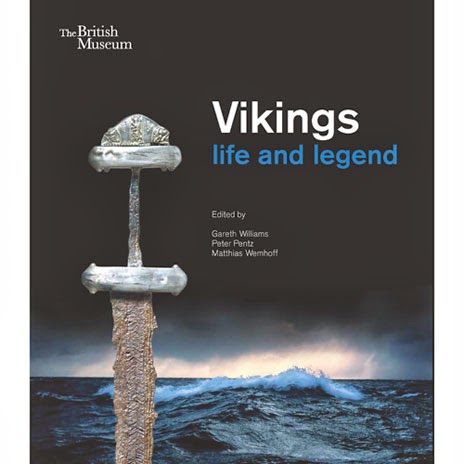
Exposition – Vikings : life and legend

Discover the world of the Vikings in this major exhibition – the first at the British Museum for over 30 years.

The Viking Age (800–1050) was a period of major change across Europe. The Vikings expanded from their Scandinavian homelands to create an international network connecting cultures over four continents, where artistic, religious and political ideas met.

The Vikings’ skill in shipbuilding and seafaring was central to their culture and achievements, and at the heart of the exhibition will be a 37-metre-long warship. Found in 1997, and dating to around 1025, it is the longest Viking ship ever discovered. Many other new discoveries, including part of a mass grave of Viking warriors, will be on display for the first time showing how our understanding of the Vikings is still being changed by new excavations and recent research.

The exhibition will also present personal objects, including jewellery, amulets and idols, which help to reveal more about how the Vikings saw themselves and their world. Exquisite objects, including the magnificent Vale of York Hoard, demonstrate the global reach of the Viking network of trade, plunder and power – a network that left a lasting legacy in countries from Ireland and the UK to Russia and Ukraine.

Enter a world of warriors, seafarers and conquerors to discover the many fascinating aspects of a history that is both strangely alien yet remarkably familiar.
Informations pratiques :
6 March – 22 June 2014
Sainsbury Exhibitions Gallery, British Museum, Great Russell Street, London, WC1B 3DG

Opening hours :
Open daily 10.00–17.30
(last entry 16.10)

Open late* on Fridays until 20.30
(last entry 19.10)

Supported by BP

Source de l’information : British Museum
Publié dans Exposition | Laisser un commentaire

Colloque – Orfèvrerie gothique en Europe. Production et réception

Université de Lausanne – Site de Dorigny
Bâtiment Amphimax, salle 414
26-28 mars 2014
La participation au colloque est gratuite.
Il est conseillé d’utiliser l’arrêt du Métro m1 UNIL- Sorge.
Pour davantage d’informations concernant l’accès au site de l’UNIL, consultez le site : http://www.unil.ch/acces/page36432_fr.html#2
Organisation : Élisabeth Antoine-König (Musée du Louvre) et Michele 
Tomasi (UNIL)
Renseignements : 
Michele Tomasi
Université de Lausanne 
Section d’histoire de l’art
bâtiment Anthropole 
CH 1015 LAUSANNE 
Tél. : ++41.21.692.35.74
Fax : ++41.21.692.29.35
Courriel : michele.tomasi@unil.ch
Programme : 
Mercredi 26 mars 2014
14h00 : Accueil des participant-e-s
Ouverture des travaux, par Élisabeth Antoine-König (Musée du Louvre, Paris) et Michele Tomasi (Université de Lausanne)
Entre villes et cours
14h30 : Sophie Cassagnes-Brouquet (Université de Toulouse) – Riches et puissants, la domination d’un groupe artistique au sein d’une société urbaine à la fin du Moyen Âge : l’exemple de Toulouse
15h10 : Marie-Claude Léonelli (DRAC, Avignon) – L’orfèvrerie à la cour pontificale d’Avignon et sa diffusion outre Rhône au XIVe siècle
Pause 
16h10 : Jörg Richter (Université de Berne) – Goldschmiedearbeiten in den Rechnungen der Grafen von Tirol
16h50 : Élise Banjenec (Université Paris IV-Sorbonne) – Philippe le Bon et les orfèvres : statuts des fournisseurs et répartition des commandes d’orfèvrerie du duc de Bourgogne
Jeudi 27 mars 2014
Ateliers et foyers
9h00 : Élisabeth Antoine-König (Musée du Louvre, Paris) – Thème et variations dans l’Œuvre de Limoges : la question des modèles
9h40 : Gerhard Lutz (Dom-Museum, Hildesheim) – Hildesheim as a centre of goldsmiths’ work in the 14th and 15th century
Pause 
10h40 : Evelin Wetter (Fondation Abegg, Riggisberg) – ‘Networking’ among Transylvaninan Goldsmiths in the Late Middle Ages
11h20 : Philippe Trélat (Université de Rouen) – D’or et d’argent : l’orfèvrerie chypriote entre Orient et Occident (XIIe-XVe siècle)
Figures d’orfèvres
14h30 : Stefano Riccioni (Université de Venise) – Le ‘firme’ degli orafi nel Trecento senese : autocoscienza d’artista o marketing di bottega ?
15h10 : Glyn Davies (Victoria and Albert Museum, Londres) – Siena and the Chalice Trade, 1250-1500 : creativity and standardization
Pause 
16h10 : Elisabetta Cioni (Université de Sienne) – Per l’oreficeria senese della seconda metà del Trecento. Un’ulteriore proposta per la bottega ‘dei Tondi’
16h50 : Anna Molina Castellà (Université de Barcelone) – Pere Bernés, platero de Valencia y de la casa del rey de Aragón
Vendredi 28 mars 2014
La production sacrée et sa réception
9h00 : Christine Descatoire (Musée de Cluny, Paris) – Des reliquaires à succès des régions septentrionales : phylactères et croix staurothèques (fin du XIIe – première moitié du XIIIe siècle)
9h40 : Daniela Mondini (Accademia di Architettura, USI, Mendrisio) – Pierre et Paul sous les insignes de la monarchie française. Encore sur les reliquaires des Capita apostolorum au Latran
Pause 
10h40 : Clario di Fabio (Université de Gênes) – L’arca processionale del Battista nella cattedrale di Genova. Le ‘radici’ internazionali e il ‘cantiere’ di una micro-cattedrale gotica
11h20 : Sara Minelli (Museo del Tesoro del Duomo e Archivio Capitolare, Verceil) – Reliquiari parlanti e attivi : stato delle ricerche
La production profane et sa réception
14h30 : Sarah Zingraff (Université d’Aix-Marseille) – Les objets de parure orfévrés en Italie du nord entre la seconde moitié du XIVe et la fin du XVe siècle : l’apport de l’iconographie
15h10 : Joan Domenge i Mesquida (Université de Barcelone) – Caballería y orfebrería. El collar emblemático en los reinos hispánicos en torno a 1400
Pause 
16h10 : Michele Tomasi (Université de Lausanne) – L’orfèvrerie dans la Chronique du règne de Charles VI
16h50 : John Cherry (Londres) – Patronage and Purpose : the silver seal matrices of Colleges in late medieval England
Source de l’information : ArtHist
Publié dans Colloque | Laisser un commentaire