Ecole d’été – Old and Middle French

Summer School in Historical Languages 2012
Old and Middle French
24 – 26 September 2012 Ghent

This Summer School is designed for two groups of students:

– Firstly, it is aimed at MA and PhD-students in art history, history and philosophy who are required to work with documents in medieval languages. Libraries and archives preserve a huge amount of material written in Old and Middle French for the territories that were once conquered by France, or that had a French speaking elite. As a consequence, many art historians, historians and philosophers worldwide experience difficulty in reading and interpreting their source material; yet very few universities worldwide offer courses of help to such researchers.

– Secondly, this specialist course welcomes postgraduate students in French Studies who want to learn more about the medieval history of the language they are studying. Indeed, we have observed that a medieval component is often altogether absent from programmes of French Studies worldwide.
 
The Summer School starts with two days of courses in Old and Middle French taught by a leading expert in the field and ends with the presentation of different case studies on the use of Old and Middle French during the third and final day. During this time, students will acquire a basic knowledge of Old and Middle French — enough to grasp the meaning of historical documents — and they will learn the elementary skills needed to work through historical documents.
 
No previous knowledge of Old or Middle French is required; a basic working knowledge of Modern French is highly recommended. The course and lectures are given in English.
 
Organizing committee 
Prof. dr. Jan Dumolyn (Department of History, Ghent University) 
Dr. Helen Swift (Faculty of Medieval and Modern Languages, University of Oxford) 
Prof. Dr. Wim Verbaal (Department of Literature, Ghent University) 
Dr. Martine De Reu (Secretary for the MA in Historical Linguistics and Literature, Ghent University).
Programme
MONDAY 24 SEPTEMBER 2012
Ghent, Blandijnberg 2, Faculty Council Room
 
Thelma Fenster (Fordham University, NY) with the collaboration of Marieke Van Acker (Ghent University)
 
8.30 – 9.00: registration 
9.00 – 10.45: session 1 
10.45 – 11.00: coffee break 
11.00 – 12.45: workshop 1
 
lunch
 
13.45 – 15.30: session 2 
15.30 – 15.45: coffee break 
15.45 – 17.30: workshop 2
 
Evening session, open to all 
18.00 – 19.00: Julia Szirmai, University of Leiden
Transmission of profane elements in Old French Bible adaptations
 
TUESDAY 25 SEPTEMBER 2012
Ghent, Blandijnberg 2, Faculty Council Room
 
Thelma Fenster (Fordham University, NY) with the collaboration of Marieke Van Acker (Ghent University)
9.00 – 10.45: session 3 
10.45 – 11.00: coffee break 
11.00 – 12.45: workshop 3

lunch

13.45 – 15.30: session 4 
15.30 – 15.45: coffee break 
15.45 – 17.30: workshop 4
 
Evening session, open to all 
18.00 – 19.00: Marc Van Uytfanghe, Ghent University
Entre le latin et le roman: les prétendus premiers textes français (lecture in French)

WEDNESDAY 26 SEPTEMBER 2012
Ghent, Koningstraat 18, KANTL
 
9.15 – 9.30: registration for those not attending the classes on Monday and Tuesday
9.30 – 9.40: Wim Verbaal, Ghent University Welcome
 
SESSION I – Chair: Wim Verbaal 
9.40 – 10.20: Thérèse de Hemptinne, Ghent University, Paleography of Middle French archival records 
10.20 – 11.00: Jelle Koopmans, University of Amsterdam, What can administrative sources tell us, and what do they hide?
 
coffee break
 
11.20 – 12.00: Jan Dumolyn, Ghent University, Medieval French and Problems of Diplomatics
12.00 – 12.40: Jelle Koopmans, University of Amsterdam, Variations in a language that wasn’t

lunch (not provided by the organizers)
 
SESSION II – Chair: Helen Swift, University of Oxford 
14.00 – 14.40: Rika Van Deyck, Ghent University, The scripta of the charters of Hainault (13th-14th centuries): a composite language 
14.40 – 15.20: Leah Tether, Anglia Ruskin University Cambridge & Chelmsford The importance of medieval French literary traditions
coffee break
 
15.40 – 16.20: Graeme Small, Glasgow University History, prose and the growth of the vernacular in northern France, 14th-15th centuries
 
16.20 – 17.00: Leah Tether, Anglia Ruskin University, Cambridge & Chelmsford Medieval French Manuscripts and the Digital Humanities
 
17.00 – 17.40: Jan Dumolyn, Ghent University Medieval French and Chronology and Historical Metrology
 
Each paper includes a presentation (30 min) and a discussion (10 min)
 
17.45 – 19.00: informal drinks reception
PRACTICAL INFORMATION
APPLICATION
 
The application deadline for the entire course (three days) is June 30, 2012. There will be a maximum of 20 partici- pants. Applications should be sent to Martine.DeReu@UGent.be and must contain the following information: university where the MA or PhD will be obtained, mother tongue, level of English, level of French, research topic for the master’s or doctoral thesis.

Interested students and scholars can attend the sessions on Wednesday for free; they are kindly asked to register before September 10, 2012 with Martine.DeReu@UGent.be.

ACCOMMODATION AND TRANSPORT
 
Participants need to provide for their own lodging and transport. Useful information can be found on the following websites:
 
for accommodation:

MEALS
Lunches on Monday and Tuesday will be organized by the H. Pirenne Institute for Medieval Studies. Evening meals and lunch on Wednesday are not provided by the organizers.

REGISTRATION FEE
There is a registration fee of 50 EUR for those who want to attend the entire course (three days). This fee is to be paid 
– after confirmation has been received of a place on the summer school – into the account of Ghent University, Sint-Pietersnieuwstraat 25, B-9000 GHENT. Account details: IBAN: BE59-3900-9658-0026 – SWIFT: BBRU BE BB 900. The VAT-number of Ghent University is BE 0248.015.142. The bank transfer should mention “Historical Languages 2012”. Payment of this fee is considered as confirmation of registration.
The registration fee is waived for MA and PhD students from Ghent University, from the Onderzoeksschool Mediëvistiek (Netherlands) and from the University of Oxford. Students and scholars attending only the sessions on Wednesday are not required to pay a registration fee.
Publié dans Colloque, Stage | Laisser un commentaire

Stage – CNRS, Stage de diplomatique médiévale

Le Groupe de recherche 3177 « Diplomatique » du CNRS organise un stage de diplomatique médiévale sur trois jours, du 12 au 14 novembre 2012. Cette formation est destinée aux étudiants de master (1 et 2) et de doctorat dont les recherches portent sur la diplomatique médiévale ou comportent un volet important d’analyse de documents qui en relèvent (chartes, diplômes, cartulaires, registres, comptabilité…) Elle aura lieu aux Archives nationales et accueillera quinze stagiaires au maximum. Sous réserve de disponibilité des places, pourront éventuellement être admis des auditeurs libres issus de spécialités autres qui justifieraient de leur intérêt à suivre le stage.

Outre les interventions thématiques données par divers spécialistes, des séances d’atelier seront consacrées à la présentation et à la discussion en commun de dossiers documentaires présentés par les stagiaires, correspondant à tout ou partie des sources employées pour leurs travaux. Ils seront priés de faire parvenir leurs dossiers à l’organisation deux semaines avant le début de la formation, afin que l’organisation puisse procéder aux reproductions nécessaires. Il est attendu des stagiaires qu’ils participent à toutes les séances ; en cas d’accord pédagogique et administratif des établissements et des enseignants concernés – question à régler individuellement –, la présentation du dossier associée à la participation au stage pourra éventuellement donner lieu à validation dans les cursus concernés. En tout état de cause, un certificat de participation sera remis aux stagiaires et auditeurs à l’issue des trois jours.

Les frais de déplacement des stagiaires (mais non des auditeurs libres) seront pris en charge par l’organisation du stage dans les limites d’un plafond forfaitaire d’environ 100 € ; il leur reviendra d’acheter leurs titres de transport (en se basant sur un tarif de train en seconde classe) et de réserver leur hébergement. Nous invitons les candidats à faire éventuellement appel, en cas de besoin, à des financements complémentaires, par le biais de leur école doctorale par exemple.Les candidats intéressés sont priés de faire parvenir les pièces suivantes avant le 10 juin 2012 à l’organisation du stage, soit par voie électronique, à sebastien.barret [auxbonssoinsde] cnrs-orleans.fr, soit par voie postale en adressant leur dossier à : Sébastien Barret, CNRS-IRHT, stage de diplomatique médiévale, 3B avenue de la Recherche Scientifique, 45071 Orléans cedex 2 :
  • le formulaire de candidature dûment rempli.
  • une lettre de recommandation de leur directeur ou directrice de mémoire.
  • une présentation de leurs recherches et un état critique du dossier qu’ils comptent présenter, le tout devant compter un maximum de cinq pages, en précisant à part le gain qu’ils attendent de la formation proposée ainsi que leur expérience éventuelle (recherches, mais aussi cours, stages…) en matière de diplomatique médiévale ; pour les auditeurs libres, une lettre de motivation présentant leur cursus et les raisons pour lesquelles ils souhaitent suivre la formation.
Le choix des candidats retenus aura lieu fin juin ; les postulants seront informés aussi vite que possible des résultats de leur démarche.

Vous trouverez sur le site du GDR « Diplomatique » des informations plus détaillées ainsi que le formulaire de préinscription. N’hésitez pas à vous adresser à l’organisation du stage pour tout renseignement complémentaire.
Publié dans Stage | Laisser un commentaire

Appel à contribution – Monuments ou documents ? Les comptabilités, sources pour l’histoire du contrôle social (XIIIe-XVIIIe s.)

Bruxelles, Archives générales du Royaume, 13-14-(15) décembre 2012

Qu’elles soient médiévales ou modernes, les comptabilités font actuellement l’objet d’un renouveau historiographique sous plusieurs angles : celui de la source elle-même, dans le cadre d’approches d’une culture de l’écrit ou d’une approche de la matérialité de la source (codicologie, vocabulaire, etc.) – Monuments -, celui des institutions productrices de ces sources, ou encore celui de l’exploitation des données – Documents -. Mais d’autres perspectives sont également possibles, notamment pour l’étude de la justice. 

Comptes d’officiers de justice, comptes urbains, comptes de droit du sceau autorisant des mesures des pratiques de grâce, comptes de confiscation permettant d’approcher les révoltes contre le pouvoir ou la répression religieuse, ou encore comptes des officialités ; autant de sources qui permettent d’étudier le contrôle social dans l’Europe d’Ancien Régime. Par contrôle social, nous entendons toute forme d’encadrement des populations, aussi bien préventif (législation, police) que répressif (poursuites, répression) ou restaurateur (grâce, pardon). Il peut être étudié à travers l’analyse des crimes et des délits, des peines, des procédures (judiciaires et infra-judiciaires), des mesures d’encadrement des populations dites « à risques », ou encore des infrastructures judiciaires (personnel, prison, appareils d’exécution, etc.). 

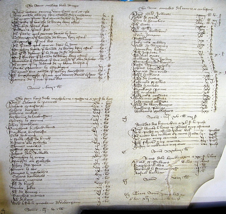
Bruxelles, Archives générales du Royaume, Chambre des comptes, comptes en rouleaux, n°2726, comptes du maire de Nivelles, 1390–1391. 


L’objectif de ce colloque est de mieux saisir ce contrôle social dans ses différentes facettes. Plusieurs angles d’approche pourront ainsi être envisagés (liste non limitative) : 
  • approche typologique des sources comptables ayant un lien avec la justice (état matériel des séries, contexte de production de la source, etc.) 
  • démarche d’exploitation des sources comptables pour une histoire du contrôle social
  • possibilités de croisement des sources comptables entre elles ou avec d’autres types de sources
  • analyse du vocabulaire et des techniques comptables
  • ressources informatiques pour la mise à disposition digitale des comptabilités (une session sera consacrée aux aspects méthodologiques et techniques de l’approche digitale des comptabilités). 
Tout l’espace européen pourra être envisagé. 

Les propositions de communication (max. 500 mots) sont à soumettre pour le 31 mai 2012, par courriel, aux trois adresses suivantes : nathalie.demaret@uclouvain.be, aude.musin@uclouvain.be, aude.wirth@uclouvain.be. 

Les communications pourront être présentées en français ou en anglais. Une publication des actes est prévue.
Comité d’organisation : 
Paul Bertrand (Université catholique de Louvain – Facultés Universitaires Notre-Dame de la Paix) 
Emmanuel Bodard (Archives de L’État) 
Nathalie Demaret (Université catholique de Louvain) 
Aude Musin (Université catholique de Louvain) 
Xavier Rousseaux (Université catholique de Louvain) 
Aude Wirth-Jaillard (Technische Universität Dresden – Université catholique de Louvain) 
Jean-François Nieus (Facultés Universitaires Notre-Dame de la Paix) 
Comité scientifique (en cours de constitution) : 
Erik Aerts (Katholieke Universiteit Leuven) 
Patrice Beck (Université Lille 3) 
Marc Boone (Universiteit Gent) 
Eric Bousmar (Facultés universitaires Saint-Louis) 
Benoît Garnot (Université de Bourgogne) 
Olivier Mattéoni (Université Paris 1 Panthéon-Sorbonne) 
Michel Porret (Université de Genève) 
Bertrand Schnerb (Université Lille 3) 
Gerd Schwerhoff (Technische Universität Dresden) 
Andrea Zorzi (Università degli Studi di Firenze)

Call for papers (PDF) : here
Publié dans Appel à contributions | Laisser un commentaire

Colloque – 75 jaar na Hoogewerff. Een inventarisatie van onderzoek naar Noordnederlandse kunst voor 1420

Tussen 1936 en 1947 verschenen de vijf volumes van Godfridus Johannes Hoogewerffs De Noord­Nederlandsche Schilderkunst. Wat hebben kunsthistorici met zijn publicatie gedaan? En – belangrijker – wat hebben kunsthistorici sinds zijn publicatie met onderzoek naar Noord-­‐Nederlandse kunst gedaan?
Twee jaar geleden zijn de voorbereidingen gestart voor een congres in 2010 waarbij een inventarisatie van het onderzoek naar de middeleeuwse Nederlandse kunst sinds Hoogewerffs monumentale publicatie De Noord-­Nederlandsche Schilderkunst centraal zou staan. Ik heb de organisatie van dit congres opgepakt waarmee het nu zal gaan plaats vinden op 22 en 23 mei 2012 in de Doelenzaal in de Universiteitsbibliotheek van de Universiteit van Amsterdam.

Het idee voor dit congres is voortgekomen uit de nieuwsgierigheid naar wat driekwart eeuw onderzoek ons gebracht heeft. De nadruk zal komen te liggen op nieuw onderzoek naar de Noordelijke Nederlanden vóór Jan van Eyck. Waar Hoogewerff zich uitsluitend richtte op de schilderkunst boven de rivieren, is hier gekozen voor de huidige landsgrenzen, en beperken we ons niet alleen tot de schilderkunst: ook beeldhouwkunst, kunstnijverheid en middeleeuwse archeologie komen aan bod.

Programme :


Voorlopig programma dinsdag 22 mei


10:00-10:30 : Ontvangst met koffie/thee 
10:30-11:00 : Prof. dr. Claudine Chavannes-Mazel – We kijken nu anders. Hoogewerff versus vandaag
11:00-11:45 : Prof. dr. Frans Theuws, Universiteit Leiden – Met zilver ingelegde gordel-elementen uit de Merovingische tijd in Nederland
11:45-12:30 : Dr. Elizabeth den Hartog, Universiteit Leiden – Gotische bouwsculptuur in de Noordelijke Nederlanden
12:30-13:15 Lunch 

13:15-14:00 : Drs. Diderik Groen, Rijksuniversiteit Groningen – Het daar en niet elders. De samenhang tussen de thematiek van schilderingen en hun plaats in de kerk
14:00-14:45 : Dr. Kees van der Ploeg, Rijksuniversiteit Groningen – Een vernieuwend concept, maar geen waardering: de muurschilderkunst in Hoogewerffs Geschiedenis der Noord-Nederlandsche Schilderkunst
14:45-15:15 Koffie/thee 

15:15-16:00 : Prof. dr. Wim van Anrooij, Universiteit van Leiden – Wapenboeken, herauten en heraldiek rond 1400
16:00-16:45 : Drs. Anne-Maria van Egmond, Universiteit van Amsterdam – De relatie tussen archiefstukken en kunstwerken. De Domkruisiging in een nieuwe context 
16:45-17:30 : Dr. Friso Lammertse, Museum Boijmans van Beuningen Rotterdam – De aanloop naar de tentoonstelling De weg naar Van Eyck

Voorlopig programma woensdag 23 mei 


10:00-10:15 : Ontvangstmet thee en koffie 
10:15-11:00 : Ingmar Reesing MA MPhil – Tumbas sepulture. De graftombe van Jan II van Polanen in Breda
11:00-11:45 : Drs. Jitske Jasperse, Universiteit van Amsterdam – Artistieke saamhorigheid? Het praalgraf in de Munsterkerk in Roermond en de schilderkunst
11:45-12:30 : Lunch 
12:30-13:15 : Dr. Victor Schmidt, Universiteit Utrecht – Jan Maelwael en de schilderkunst uit Nederland voordat Nederland Nederland was
13:15-14:00 : Prof. dr. Arie Wallert, Rijksmuseum Amsterdam – Het Noord-Nederlands paneel, onderwerp van technisch onderzoek
14:00-14:30 Thee/Koffie 
14:30-15:15 : Dr. Wendelien van Welie, Universiteit van Amsterdam – Een product van eigen bodem? Atelierpraktijken in het Plenarium uit klooster Bethlehem bij Doetinchem
15:15-16:00 : Drs. Miranda Bloem, Universiteit van Amsterdam – Met de blik op het zuiden. Het 

gebruik van Franse voorbeelden door de Meesters van Zweder van Culemborg

16:00-16:45 : Drs. Sanne Frequin, Universiteit van Amsterdam – Hoogewerff herdacht. Onderzoek naar memoriecultuur toen en nu’. 

16:45 : Afsluiting en borrel

Inschrijven :


Plaats 

 Doelenzaal Universiteitsbibliotheek, Singel 425, 1012 WP Amsterdam. Een kwartiertje lopen van Centraal Station, vijf minuten mettrams 1, 2 of 5, halte Koningsplein. 

Tijd 

Dinsdag 22 en woensdag 23 mei 2012.
Dinsdag begint met koffie en thee om 10:00-10:30, de dag zal rond 17:30 eindigen; op woensdag is de ontvangst korter, van 10:00-10:15, en zal de dag worden afgesloten met een borrel die om 16:45 aanvangt. 

Deelname 

Dit congres is toegankelijk voor alle studenten en onderzoekers die zich interesseren voor de kunst van de Noordelijke Nederlanden voor 1420. 

Kosten 

Er is geprobeerd om de kosten voor de bezoeker zo laag mogelijk te houden. De kosten betreffen voor de dinsdag €20,- (koffie/thee – lunch* – koffie/thee) en voor de woensdag €25,- (koffie/thee – lunch* – koffie/thee – borrel). Voor studenten geldt een korting, zij betalen voor beide dagen, indien beide dagen worden bijgewoond, in totaal €40,-. Het is niet mogelijk om voor afzonderlijke dagdelen te betalen/ boeken. 

Inschrijving 

U kunt zich in schrijven door het juiste bedrag, onder vermelding ‘Hoogewerff’ en ‘dinsdag’, ‘woensdag’ of ‘dinsdag+woensdag’, over te maken naar Stichting Art, Books and Collections, rekeningnummer 27.02.59.821, van de bank Isinger de Beaufort, Den Haag. Indien student ook collegekaartnummer vermelden. Tevens dient u uw naam, universiteit/instituut en de bij te wonen dagen te mailen aan A.M.J.Egmond@uva.nl . 

Informatie 

Informatie over dit tweedaagse congres is te verkrijgen bij drs. Anne-Maria van Egmond ( A.M.J.Egmond@uva.nl ). * De lunch bestaat uit twee zachte witte/bruine broodjes belegd met vleeswaren en kaassoorten, een krentenbol, fruit, koffie/thee en melk/karnemelk.

Publié dans Colloque | Laisser un commentaire

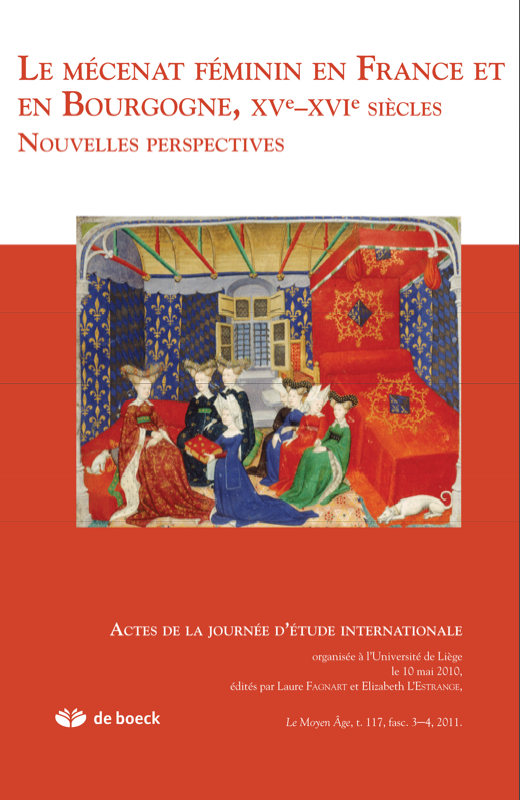
Publication – Le mécénat féminin en France et en Bourgogne, XIVe-XVIe siècles

sous la direction d’Elizabeth L’Estrange et de Laure Fagnart, 
Le mécénat féminin en France et en Bourgogne, XIVe-XVIe siècles. Nouvelles perspectives. Journée d’études tenue à l’Université de Liège le 10 mai 2010, dans Le Moyen Age. Revue d’histoire et de philologie, n° 117, 2011.

Table des matières :

E. L’Estrange,
Introduction

T. Adams, 
Isabeau de Bavière, le don et la politique de mécénat

S. Bourocher, 
La reine Marie d’Anjou : commanditaire des travaux réalisés au château de Chinon au milieu du XVe siècle ?

O. Karaskova,
Le mécénat de Marie de Bourgogne : entre dévotion privée et nécessité politique

G. Tranié, 
Un exemple d’articulation du féminin et du masculin à travers le mécénat. Les pratiques de Philippe de Gueldre (1467–1547) et d’Antoine de Lorraine (1489–1544)

M. Lebeaux, 
Jacquette de Montbron, femme architecte de la Renaissance entre Angoumois et Périgord

E. Kociszewska, 
La Pologne, un don maternel de Catherine de Médicis ? La cérémonie de la remise du Decretum electionis à Henri de Valois

K. Wilson-Chevalier
,
Patronnes et mécènes au cœur de la Renaissance française
Publié dans Publications | Laisser un commentaire

Colloque – Echternach – Au-delà de l’abbaye. Analyse critique de son rayonnement

La fondation «Forum des Civilisations – Journées d’Echternach» se voue à la promotion et à l’analyse du dialogue interculturel. Conscients du fait que dans un monde de plus en plus médiatisé, peu porté à une approche en profondeur des évolutions politiques, économiques et culturelles récentes, les membres et les collaborateurs de la fondation estiment qu’il est de la plus haute importance d’aborder de façon critique certaines notions qui servent de base au dialogue interculturel et qui ne sont pas toujours utilisées à bon escient.

C’est dans ce but que la fondation «Forum des Civilisations – Journées d’Echternach» se propose de soumettre tous les deux ans dans le cadre d’un symposium un thème à l’analyse et à l’approche critique de spécialistes de renom international. Selon le sujet retenu, ces spécialistes peuvent être des historiens, des économistes, des politologues, des théologiens, des philosophes, des sociologues, des créateurs, des juristes, des personnalités du monde politique. L’année qui précède ce symposium, deux forums préparatoires dégageront certains aspects intéressants du sujet.

2013: « Au-delà de la tolérance »
Les événements prévus en 2012 et 2013 constituent la première initiative prise par la fondation « Forum des Civilisations – Journées d’Echternach » en conformité avec ses statuts. La notion retenue par la fondation pour 2013 est la tolérance. « Au-delà de la tolérance » sera le thème d’un grand colloque qui examinera cette notion généralement acceptée quant à sa justification et ses différentes émanations.

Pour préparer ce symposium de 2013, deux forums de chaque fois une journée seront organisés en 2012. Après un premier forum examinant le 24 mai 2012 le rayonnement de l’abbaye d’Echternach sous l’aspect particulier du thème fédérateur de la tolérance, un deuxième forum analysera en octobre 2012 Al Andalus, cette période de l’histoire européenne généralement considérée comme un modèle de cohabitation culturelle et de tolérance.

Programme : ici

9h00 : Accueil
9h30 : Paroles de bienvenue – Jacques Santer, Président de la Fondation Forum des Civilisations
9h45 : Introduction – Simone Beck, Historienne à l’Athénée de Luxembourg
 
Les premiers moines d’Echternach – intrus ou bienvenus? Retombées religieuses, culturelles et économiques Modérateur: Jean-Paul Lehners, Professeur à l’Université du Luxembourg

10h00 : Wulfram et Willibrord: deux stratégies d’évangélisation à l’ombre du pouvoir franc – Bruno Dumézil, Maître de Conférences à l’Université Paris-Nanterre
10h35 : Moines, élites laïques et peuple. Réflexions sur leurs relations, des îles britanniques à Echternach (ca. 650 – ca. 750) – Hérold Pettiau, Chercheur à l’Université du Luxembourg

11h10 : Pause
11h30 : Discussion
12h30 : Déjeuner

Rayonnement culturel epternacien – régional ou européen? Un vivier d’érudits et de musiciens
Présentation des orateurs: Alain Meyer, Premier Vice-Président de la Fondation Forum des Civilisations

14h00 : Visite guidée d’une partie de la Basilique – Théophile Walin, Curé-doyen
14h30 : Moment de musique grégorienne – Chants grégoriens des manuscrits d’Echternach par l’ensemble grégorien ad cor altum sous la direction de Paul Breisch, Organiste titulaire de la Cathédrale de Luxembourg et Professeur au Conservatoire de Musique de la Ville d’Esch-sur-Alzette

15h00 : La bibliothèque de l’abbaye d’Echternach comme entrepôt culturel et intellectuel du VIIIe au XIe siècle – Thomas Falmagne, Chercheur à la Goethe Universität Frankfurt a. M.
15h35 : Das kulturelle Netzwerk der Abtei Echternach zwischen dem 10. und 12. Jh. – Myriam Heirendt, Chercheur en formation doctorale à l’Université du Luxembourg
15h55 : La procession dansante, origine, histoire, signification – Alex Langini, Professeur, Ministère de la Culture
16h30 : Pause
17h00 : Table-ronde

Echternach: Monachisme et monarchisme – Interférences bénéfiques ou maléfiques du religieux et du politique?
Modérateur: Rolf Tarrach, Recteur de l’Université du Luxembourg


Participants: 
Victor Conzemius, Professeur émérite à l’Université de Lucerne
Marc Rollinger, Historien
Henri Trauffler, Directeur du Lycée Classique d’Echternach
Frank Wilhelm, Professeur à l’Université du Luxembourg

18 :45 Réception
20 :00 Concert
Trifolion – Festival International Echternach
«Les Arts Florissants»

 
Informations pratiques
Le Jeudi 24 mai 2012
 
 Foundation Forum of Civilisations – The Echternach Days
c/o Trifolion Echternach a.s.b.l.
2, Porte Saint Willibrord
L-6486 Echternach/Luxembourg
BP 101 L-6402 Echternach
  
Phone: +352 . 26 72 39-414
info@forumofcivilisations.lu
Publié dans Colloque | Laisser un commentaire

Appel à communications – Illuminated Manuscripts and Their Users

Workshop at Durham

As part of the project to digitise some of the outstanding illuminated manuscripts in the British Library’s Royal collection, you are warmly invited to attend a workshop at Durham University on Wednesday, 6 June 2012 (beginning at 14.00).

The first session will focus on the use of digital resources in manuscript research, with a presentation by Dr Joanna Fronska (The British Library), ‘Behind the scenes process of digitisation’, followed by a roundtable discussion of the use and value of online digital resources.
The second session will consist of short panel presentations/discussion on illuminated manuscripts in the Royal collection, addressing one of the following questions:

  • How were the illuminated manuscripts in the royal library used and received by their owners? 
  • What are the characteristics of illustrated manuscripts collected by English monarchs?
  • How did monastic manuscripts enter the royal collection, or what was their function within the library?
  • How representative is what survives of the royal library, and why is there a relative lack of liturgical or private devotional books in the royal collection?

The content of the presentations (to be no more than 500 words) will be circulated before the workshop to enable participants to formulate questions/responses in advance. 
If you would like to be considered as a presenter, please submit a 500-word essay to Professor Richard Gameson (richard.gameson@durham.ac.uk) by Friday, 25 May 2012. A summary of the discussions will be published on the Medieval and Earlier Manuscripts Blog, and papers may be offered to the Electronic British Library Journal for publication.

Publié dans Appel à contributions | Laisser un commentaire

Séminaire – Étude et traduction des sources écrites régionales du haut Moyen Âge

Traduction des sources écrites concernant le monastère d’Hamage
Séminaire organisé par l’IRHIS (Université Lille 3)
Les dernières séances auront lieu  :

Vendredi 11 mai : 10h-12h
Jeudi 7 juin : 10h30-12h30 et 13h30-15h30

en la salle de l’équipe 3 de l’IRHIS

Contact : Michèle Gaillard, michele.gaillard@univ-lille3.fr

Publié dans Colloque | Laisser un commentaire

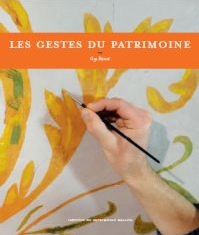
Exposition – Les Gestes du Patrimoine

Abbaye d’Orval, 1er avril – 17 juin 2012 
Accessible gratuitement
 
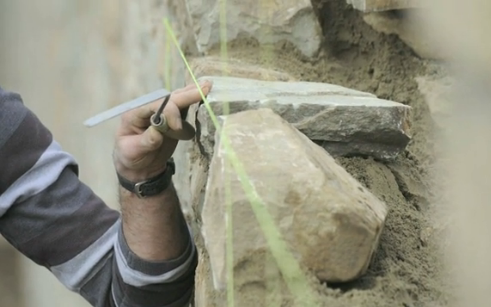
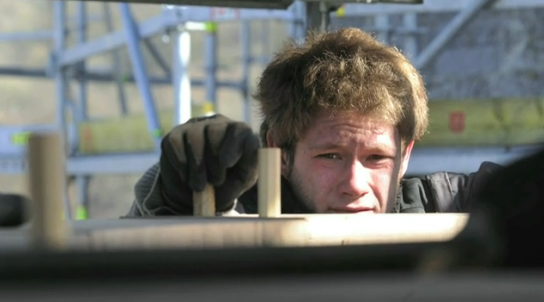
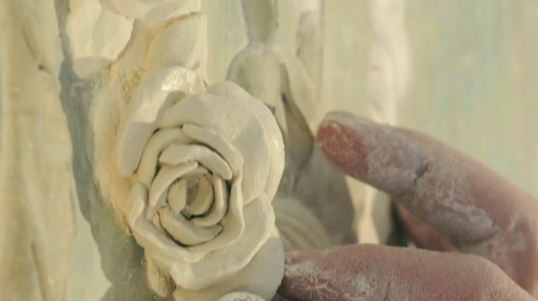
Guy Focant, photographe au département du Patrimoine de Wallonie depuis une petite vingtaine d’années, a poussé la porte de l’atelier des artisans et il s’est rendu sur les chantiers de ces hommes et de ces femmes de métier qui œuvrent chaque jour, avec compétence et passion, à la préservation du riche patrimoine de Wallonie, grâce à ses photographies de grande qualité, les gestes posés quotidiennement par ces professionnels semblent s’exécuter sous les yeux du visiteur, conférant du même coup à la matière patrimoniale la dimension humaine qui lui manque parfois. 
Tout en étant une histoire de vieilles pierres, de monuments prestigieux, d’oeuvres d’art et de réalisations somptueuses, discrètes, voire méconnues, le patrimoine est aussi une histoire d’hommes, d’hommes et de femmes; ceux qui ont commandité la réalisation et ceux qui y ont oeuvré avec autant de maîtrises techniques que d’art et de passion. De nos jours, si le patrimoine est toujours vivant, nous le devons aussi à tous les artisans du patrimoine qui poursuivent discrètement ce travail dans le but de le sauvegarder pour le léguer aux générations futures. Une exposition, accompagnée d’une publication, leur est dédiée, comme un hommage, en signe de respect.
Pour chaque métier, des artisans de référence ont été choisis ; sans leur participation active, ce travail n’aurait pu voir le jour. Conscients qu’ils sont un maillon dans la conservation et la transmission de notre patrimoine, ils ont grand ouvert la porte de leur atelier, ont donné accès à leurs chantiers et ont partagé leur passion. Les divers reportages qui illustrent cette exposition se veulent un témoin de ces gestes et de ce savoir et traduisent en image cette passion et ce goût du « bel ouvrage ».

Publié dans Exposition | Laisser un commentaire

Appel à contribution – The Key to Power ? The Culture of Access in Early Modern Courts, 1400-1700

8–9 November 2012 Antwerp, Belgium
Organized by ESF Research Networking Programme PALATIUM
Co-Organized by University of Antwerp Huygens Institute for the History of the Netherlands The Society for Court Studies
This colloquium is part of the ESF Research Networking Programme PALATIUM: Court Residences as Places of Exchange in Late Medieval and Early Modern Europe (1400–1700). The PALATIUM programme aims at creating a common forum for research on the late medieval and early modern European court residence or “palace” (palatium) with an interdisciplinary perspective. The world of the courts 1400–1700 constituted a network of truly European scale and international character, but its architecture is only rarely studied in its “connectivity”. Here the “palace” is seen as a place for cultural exchange. Human interaction in this space is regulated and codified by a set of rules, known as “ceremonial”. The interaction between palace architecture (tangible) and ceremonial (intangible, but known through a set of tangible testimonials of different types, written and visual) is one of the key questions the PALATIUM network aims to address.

The palace’s space and form carry multiple connotations. To the informed observer they represent power, lineage, and tradition versus innovation. The decoding of this system of signs necessitates input not only by architectural and art historians, but also by various other disciplines, such as archaeology, politics, literature, theatre and music. The PALATIUM programme wants to encourage theoretical and methodological debates in the field, and aims in particular at stimulating exchanges of knowledge and experience between historians, architectural historians, art historians, and researchers in related disciplines – thus building up a network of scholars, institutions and research groups across Europe which mirrors the international network of courts that is being examined.

The present colloquium belongs to section WPM1 of the PALATIUM programme: “‘Examples’, ‘Models’, ‘Influences’: the ‘Connectivity’ between the European Court Residences”. For further information on the various topics and working parties of PALATIUM, see http://www.courtresidences.eu.

The Aims of the Antwerp Colloquium

Over the past three decades, access to the monarch has emerged as an increasingly important theme in scholarship on early modern courts. In a society still highly dependent on the authority of a single ruler, and therefore subject to such volatile variables as princely favour and patronage, the ability to live, work or spend time in physical proximity to the monarch could become a vital asset in the struggle for individual and familial advancement and, in many cases, political power. In this perspective, different forms of access corresponded to different levels of political influence and favour. It is therefore scarcely surprising that the notion of access and its importance for our understanding of the court’s power system have been intensively debated. Control of access was long thought to have equated with control of power within the monarchy. More recently, others have contended that access was a lot more flexible, diffuse and transitory than is often accounted for. Although the notion has thus dominated historical writing on court politics, scholars have still not recovered the full meaning of access within court societies.

This colloquium aims to broaden the debate by consciously moving towards the more expansive notion of the culture of access. By taking into account palace architecture, spatial arrangements, court ceremonial, material culture and the arts, this approach enables us to achieve a much more nuanced and complete understanding of the ways in which access functioned in day‐to‐day court life. In this decidedly transdisciplinary perspective, the monarch’s accessibility is not merely interpreted as a set of ceremonial rules and conventions but as a constant interplay of spaces, strategies, personalities and events. Thus, one of the aims of this colloquium is to illuminate the relationship between the notion of access and the architecture (in the broadest possible sense of the term) of court residences. Another aim is to offer a comparative, transnational view that potentially covers the whole of Europe. We particularly welcome contributions that consider international exchanges between the various actors in Europe’s ‘network’ of courts. We also invite papers that discuss methodological issues involved in studying networks, including notions such as ‘examples’, ‘models’, and ‘influences’.

Contributions can address on one or more of the following themes :

I. Articulating Access
This theme aims to examine the ways in which the spatial arrangements of the princely residence contributed to the management of access. In most early modern courts, a sequence of entrances, courtyards, staircases, corridors and antechambers marked the walking route from the palace precincts into the ruler’s private apartments and served to pre‐sort visitors according to rank and status. How did palace architecture influence the accessibility or, by contrast, the isolation of the monarch? To what extent did court architects take these concerns into account when designing the palace? How were older residences adapted to new ideas about access, seclusion and/or openness? How was access articulated when rulers and their households were on the move because of warfare, hunting, or travel ?

II. Regulating Access

This theme seeks to explain how ceremonial culture facilitated or hampered the accessibility of the monarch. As a rule, spatial barriers in the palace were complemented by a sophisticated court ceremonial that served to regulate access. A detailed set of rules prescribed who was
allowed to approach the monarch and who was not. What were the ‘normal’ procedures concerning access (audiences, interviews, ambassadorial visits and receptions, etc.)? How could they be circumvented, and by whom? What about the security of the monarch and unanticipated, possibly even hostile, infiltrations ?

III. Visualizing Access

This theme aims to interpret the concept of access by looking at the way it was represented in visual and material culture. Whilst passing through the palace corridors, visitors were made visually aware of the privilege of gaining access to increasingly private spaces. How did works of art (paintings, murals, tapestries, etc.) and other objects (keys, halberds, doorknobs, etc.) contribute to the representation of access and/or accessibility? What was the aim of the visual messages conveyed across the enfilade of palace spaces? If certain symbolic schemes can be discerned, for whom were they intended, and how were they understood ?

IV. Theorizing Access
This theme seeks to address the correlation between a monarch’s style of government and his accessibility, as it was discussed in contemporary treatises. Some monarchs governed in ‘splendid isolation’, which made it virtually impossible for anyone but their closest confidants to see or talk to them. Others preferred a more open approach and deliberately invited their subjects to see them and engage in conversation. How was the notion of access discussed and theorized in treatises, histories and pamphlets? To what extent did monarchs take these ideas into account when presenting themselves to the public? What role did the residences play in affirming this image? Did this image correspond to reality ?

V. Monopolizing Access
This theme aims to study the ways in which certain individuals monopolized access to the ruler. To a number of people, access was unrestricted and assured (family members, favourites, secretaries, etc.). Their privileged status often enabled them to act as a screen for the ruler and to control the access of others. Which individuals enjoyed unlimited access, and how did they accomplish this? Which methods did they use to prevent others from doing the same? How did access relate to the establishment of friendship or intimacy with the monarch? What were the political consequences thereof? Where did the favourites themselves reside, in relation to the ruler ?

How to Apply ?


Abstracts are invited by 31 May 2012. We welcome proposals that are comparative and synthetic, as well as detailed studies of particular cases. Abstracts should be limited to 300 words, and are to be headed with the applicant’s name, professional affiliation, and title of the paper. All abstracts must be in English, which will be the working language of the colloquium. Submit with the abstract a one‐page curriculum vitae, with your full contact details.

Submit your proposal by e‐mail to the two conference chairs, Dries Raeymaekers (dries.raeymaekers@ua.ac.be) and Sebastiaan Derks (sebastiaan.derks@huygens.knaw.nl), with a copy to the PALATIUM coordinator Pieter Martens (pieter.martens@asro.kuleuven.be).

Abstracts should define the subject and summarize the questions to be raised in the proposed paper. All abstracts will be held in confidence during the selection process. Only one submission per author will be accepted. All applicants will be notified of the acceptance or rejection of their proposal by 1 July 2012.

Grants for Young Scholars

PALATIUM offers travel grants to junior researchers who want to participate in this event and briefly present their work in progress. The number of available grants is limited. The deadline for grant applications is 31 August 2012. All grant applications must be made online. See the PALATIUM website for more information (http://www.courtresidences.eu/index.php/grants/).

Convenors:    
Dries RAEYMAEKERS (University of Antwerp) 
Sebastiaan DERKS (Huygens Institute for the History of the Netherlands)
 
Scientific Committee: 
Monique CHATENET (Centre André Chastel, INHA, Paris) 
Krista DE JONGE (University of Leuven), PALATIUM Chair
Luc DUERLOO (University of Antwerp) 
Bernardo J. GARCÍA (Fundación Carlos de Amberes), PALATIUM co‐Chair 
Pieter MARTENS (University of Leuven), PALATIUM Coordinator 
Fabian PERSSON (Linneus University, Kalmar)
 
Coordination:    
Dries RAEYMAEKERS University of Antwerp, Department of History
Prinsstraat 13 / D.323 B–2000 Antwerp, Belgium 
E: dries.raeymaekers@ua.ac.be 
T: +32 (0)3 265 41 98
 
Venue:    Hof van Liere – University of Antwerp
Publié dans Appel à contributions | Laisser un commentaire