Publication – Justine Breton, « Power and Society in Terry Pratchett’s Discworld. Building a Fantasy Civilization »

A critical deep-drive into conceptions of power and society in Terry Pratchett’s Discworld novels, this book brings together experts in fantasy literature, political sciences, economics, philosophy, history, and journalism to consider the intricate social tapestry of one of the most intricate worlds in modern fantasy. Surveying the Discworld’s institutionalised power structures from government and police to civil services, banks and societies, it explores ideas such as language, translation, humour, crowds, community, justice and coercion in the series’ major works. Featuring analyses of novels such as Men at Arms, Equal Rites, Carpe Jugulum, Guards! Guards!, Jingo, Night Watch, Wyrd Sisters, Witches Abroad and many more, this collection illuminates how Pratchett juxtaposed his narratives with contemporary reflections on social constructs. Broken down into parts looking at social power dynamics, building and destroying worlds and the power of language, the book offers a much-needed corrective to the dearth of scholarship on one of fantasy literature’s worldbuilding titans.
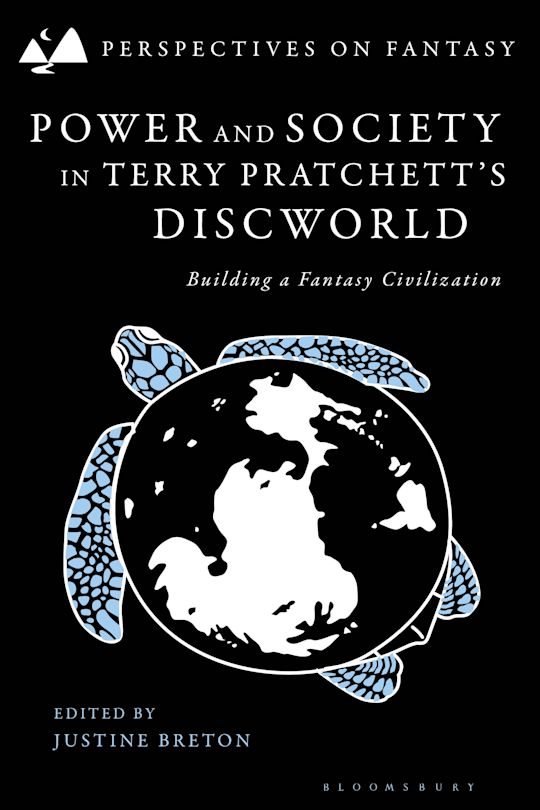
Table des matières :

Table of Contents

List of Figures
List of Contributors
Acknowledgements
Building a Fantasy Civilization. Introducing Power and Society in the Discworld
Justine Breton
Part 1: Social Power Dynamics
Chapter 1: Collective Strength, Collective Weakness: Crowds and their Uses on the Discworld
Bettina Juszak, York University
Chapter 2: Where the Streets Are Paved with Glod: The Role of Civil Society in Ankh-Morpork Community and Civic Life
Jon Dean, Sheffield Hallam University
Chapter 3: Freedom! Truth! and Justice! In the Big Wahoonie: Ankh-Morpork’s neo-Victorian Urbanity
Helena Esser, Independent Scholar
Chapter 4: (Imaginary) Genealogies of Power as Utopian Incitement: Reading Pratchett with Graeber (and vice versa)
Jann Kraus, Zurich University of Applied Science
Part 2: Tools for Building, Tools for Destroying
Chapter 5: Maps of the Future: Spatial Revolution in Terry Pratchett’s Discworld
Chris Lynch Becherer, University of Glasgow
Chapter 6: A ‘Vetinarian’ World Order: Diplomacy, Great Powers and Morals in Terry Pratchett’s Discworld series
Guilhem Jean, Independent Scholar
Chapter 7: Political Idealism in the Discworld Novels
Ruchira Mandal, Lady Bradbourne College
Chapter 8: King Carrot and Fantasy Tropes: Refusing Power to Build a Better Society
Justine Breton, University of Lorraine
Part 3: The Power of Language
Chapter 9: Greatness and Small Miseries: Journalism in the Discworld Novels
Jean-Christophe Piot, Independent Scholar
Chapter 10: ‘People listen to me when I’m screaming’: Language and Empowerment in The Amazing Maurice and his Educated Rodents
Anne Hiebert Alton, Central Michigan University
Chapter 11: ‘Let him be whoever he thinks he is’: Magic Conjuring Truth in Terry Pratchett’s Wyrd Sisters
Sarah Richardson, University of London
Chapter 12: The Power of Stories: Narrative Causality and Coercive Narratives in Pratchett’s Witches books
Yevheniia Orestivna Kanchura, Zhytomyr Polytechnic State University, and Jane Suzanne Carroll, Trinity College
Index

Informations pratiques :

Justine Breton, Power and Society in Terry Pratchett’s Discworld. Building a Fantasy Civilization, Londres, Bloomsbury, 2025 ; 1 vol., 240 p. (Perspectives on Fantasy). ISBN : 978-1-35046-531-2. Prix : GBP 85,00.

Source : Bloomsbury
Publié dans Publications | Commentaires fermés sur Publication – Justine Breton, « Power and Society in Terry Pratchett’s Discworld. Building a Fantasy Civilization »

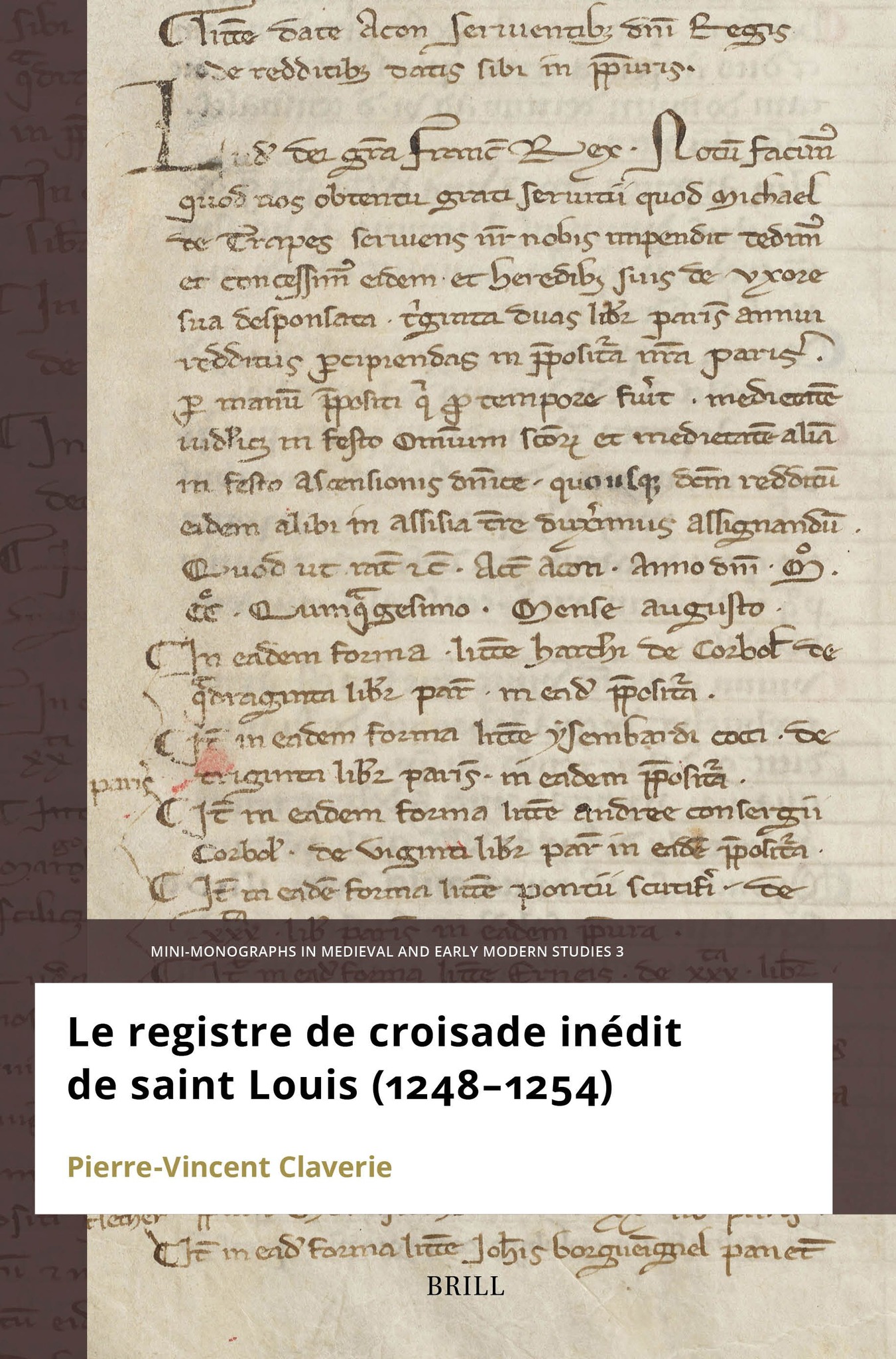
Publication – « Le registre de croisade inédit de Saint Louis (1248–1254) », éd. Pierre-Vincent Claverie

This volume publishes the content of 133 charters of Saint Louis, issued in the East during his first crusade. They come from the Latin manuscript 9778 of the National Library of France, which went overseas with the monarch. These documents from 1248 to 1254 shed light on the operation of the royal household in the Levant. In particular, they highlight two prosperous periods in 1250 and 1252, which saw the king granting a series of privileges from Acre and Caesarea of Palestine, and allow us to follow the early careers of new men coming from the Holy Land and France.

Ce volume publie le texte de 133 chartes de saint Louis, émises en Orient durant sa première croisade. Elles émanent du manuscrit latin 9778 de la Bibliothèque nationale de France, qui accompagna le monarque outre-mer. Ces documents des années 1248 à 1254 éclairent le fonctionnement de l’Hôtel du roi au Levant. Deux périodes fastes se détachent avec les années 1250 et 1252, qui virent le roi concéder des vagues de privilèges à partir d’Acre et de Césarée de Palestine. Le registre de croisade présente le mérite de suivre le début de carrière d’ homines novi de Terre sainte et de France.

Pierre-Vincent Claverie, Ph.D. (2004), University of Paris I, has been a research fellow at the Cyprus Research Centre since 2015. He has published eighty studies on the Templars and the Latin Church in the East, including Honorius III et l’Orient (1216–1227) (Brill, 2013).

Table des matières : ici

Informations pratiques :

Le registre de croisade inédit de Saint Louis (1248–1254), éd. Pierre-Vincent Claverie, Leyde–Boston, 2025 ; 1 vol., VIII–180 p. (Mini-Monographs in Medieval and Early Modern Studies, 3). ISBN : 978-90-04-72905-6. Prix : € 85,00.

Source : Brill

Publié dans Publications | Commentaires fermés sur Publication – « Le registre de croisade inédit de Saint Louis (1248–1254) », éd. Pierre-Vincent Claverie

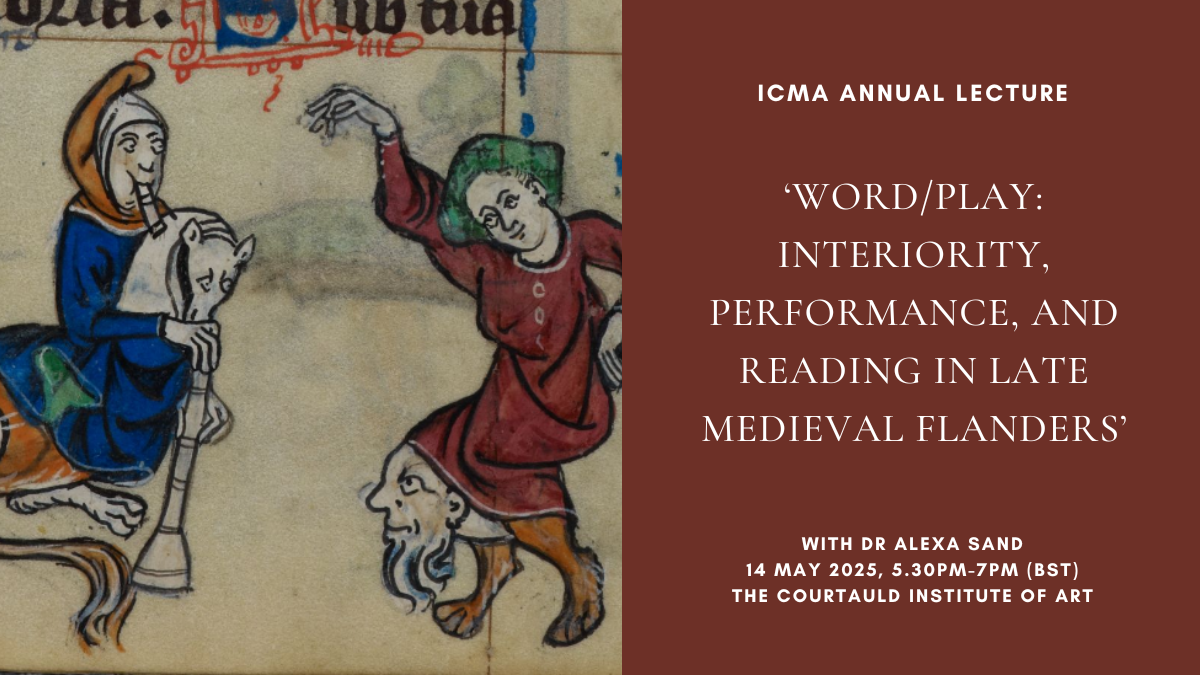
Conférence – Alexa Sand, « Word/Play: Interiority, Performance, and Reading in Late Medieval Flanders »

The Courtauld Institute of Art, Vernon Square Campus, Lecture Theatre 2
14 May 2025, 5.30pm-7pm (BST)

Book your place and find out more on the Courtauld’s website.

A small group of devotional, literary, and spiritually instructional texts from late thirteenth and early fourteenth century Flanders and Northern France contain a remarkable array of marginalia depicting performance practices and play, ranging from puppet shows to violent ball sports. In the environment that produced these books, reading, especially in a devotional vein, was not merely transactional or functional, and the books are part of a performance culture in which engaging in various outward behaviours, especially those associated with “play” in all its aspects was critical to creating the awareness of and experience of inwardness, including a heightened sense of one’s spiritual visibility to the divine. Drawing on scholarship in dance history, performance studies, and the history of sports, and responding to recent work by fellow art historians focusing on the nexus of sensory experiences – haptic, visual, aural, gustatory, and olfactory – that constitute what is sometimes characterised as “medieval somaesthetics,” this work situates the illuminated manuscripts and the acts of reading they engendered as indices of a much larger realm of experience and practice that constituted the prima materia of late medieval selfhood.  Understanding how these particular objects, images, and performances constituted the field of its enactment, is pertinent to twenty-first-century phenomena of self-formation and self-perception within the relentlessly performative realm of media culture.

Alexa Sand is Professor of Art History and Associate Vice President for Research at Utah State University, where she has taught since 2004. She earned her Ph.D. in art history from UC Berkeley, with an emphasis on medieval French art and literature. Her book, Vision, Devotion, and Self-Representation in Late Medieval Art appeared with Cambridge University Press in 2014. Her most recent work has focused on medieval puppetry, including her 2021 essay in Gesta, “Puppets, Manuscripts, and Gendered Performance in the Hortus deliciarum.”  She is cohost of the podcast Real Fantastic Beasts.

Organised by Dr Jessica Barker, Senior Lecturer in Medieval Art History, The Courtauld. This event is kindly supported by the International Center of Medieval Art (ICMA), and the drinks reception sponsored by Sam Fogg. This Series made possible through the generosity of William M. Voelkle.

Source : Medieval Art Research

Publié dans Colloque | Commentaires fermés sur Conférence – Alexa Sand, « Word/Play: Interiority, Performance, and Reading in Late Medieval Flanders »

Publication – Bernard Ribemont,  » ‘Corpus medievale’. Propos sur le corps au Moyen Âge »

Ce recueil de « propos » est un ensemble de réflexions sur l’appréhension du corps au Moyen Âge (VIIe-XVe siècle), un corps conçu à la fois comme physique et comme « être social ». Les analyses se veulent interdisciplinaires, la fiction étant mise en contexte historique et en regard des textes savants.

Table des matières : ici

Informations pratiques :

Bernard Ribemont, Corpus medievale. Propos sur le corps au Moyen Âge, Paris, Classiques Garnier, 2025 ; 1 vol., 690 p. (Recherches littéraires médiévales, 45). ISBN : 978-2-406-17591-9. Prix : € 59,00

Source : Classiques Garnier

Publié dans Publications | Commentaires fermés sur Publication – Bernard Ribemont,  » ‘Corpus medievale’. Propos sur le corps au Moyen Âge »

Journée d’étude – Inauguration du corpus principal du projet « Fabliaux »

Le 25 juin 2025 aura lieu la Journée Fabliaux, à l’occasion de l’ouverture au public de la base de données contenant l’ensemble des fabliaux français du Moyen Âge, soit environ cent-quatre-vingt-dix textes.

Seront présentés le corpus primaire, les critères sur lesquels il a été établi et les fonctionnalités de recherche offertes par la Base de Français Médiéval. L’accès à cet évènement est libre et gratuit. Il est également possible de participer à distance aux débats de l’après-midi, de 14h à 17h, en demandant le lien de visioconférence à pierre.dimoyat@univ-lyon2.fr

Salle Marc Bloch – MSH Lyon Saint Etienne 14, avenue Berthelot
Lyon, France (69007)
Mercredi 25 juin 2025

14h à 17h : Présentation du corpus Fabliaux V0-5 au public, en présence de l’équipe scientifique – Salle Marc Bloch

  • Corinne Pierreville, Professeur d’université en langue et littérature du Moyen Âge chez Université Jean Moulin Lyon 3 : Historique ; Résultats au 25.06.2025 : le corpus Fabliaux V0-5; Perspectives pour les années 2025-2027
  • Céline Guillot, maîtresse de conférence à l’ENS de Lyon et Alexey Lavrentev, ingénieur de recherche à l’ENS Lyon : Les fonctionnalités de la base de données : démonstration

Questions diverses

Source : Calenda

Publié dans Colloque | Commentaires fermés sur Journée d’étude – Inauguration du corpus principal du projet « Fabliaux »

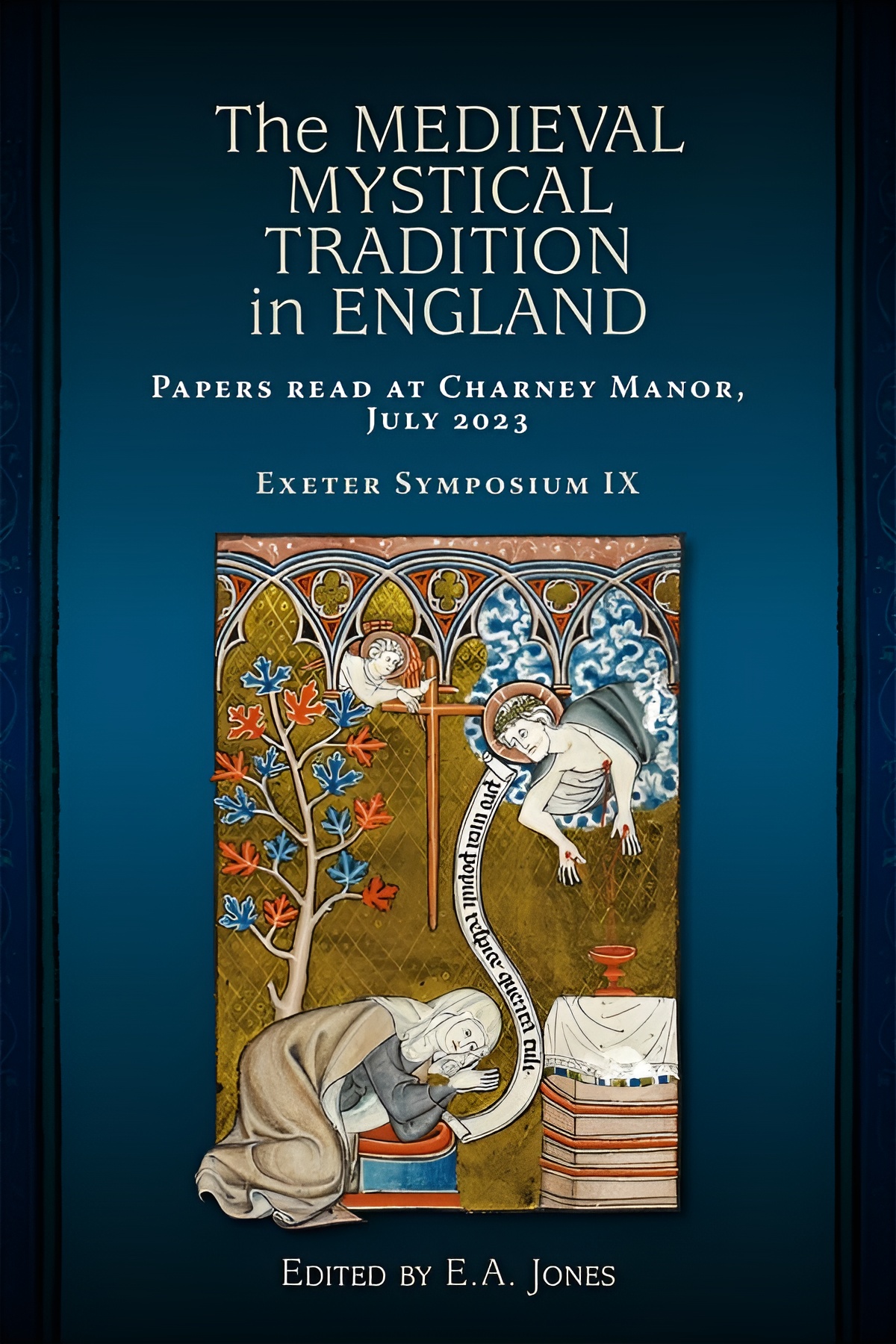
Publication – « The Medieval Mystical Tradition in England. Papers read at Charney Manor, July 2023 [Exeter Symposium IX] », éd. E.A. Jones

The rich tradition of pre-modern mystical writing from England is explored in this collection of essays from the ninth Exeter Symposium. The twelve chapters include studies of Richard Rolle, Walter Hilton, Julian of Norwich, Margery Kempe and the author of The Cloud of Unknowing. There is work, too, on less familiar authors and texts, from the thirteenth-century Wooing Group to the sixteenth-century Carthusian Richard Methley; the English reception of continental mystics such as Bridget of Sweden and Mechthild of Hackeborn; and writers treading (and sometimes crossing) the line between mysticism and heresy. The authors employ a range of approaches, from detailed manuscript study to mystical theology, and from material culture to comparative mysticism.

E.A. JONES is Professor of English Medieval Literature and Culture in the Department of English at the University of Exeter.

Table des matières :

Editor’s Preface – E. A. Jones
On Loving God: Richard Rolle and the Spiritual Classics – Andrew Kraebel
Richard Rolle and the Heresy of the Free Spirit – Timothy Glover
Thirteenth-Century Passion Meditation: Embracing Christ in Cotton Nero A. XIV – Annie Sutherland
The Systems of Chapter Division of Walter Hilton’s Scale of Perfection, Book I – Michael G. Sargent
Reflective Moons: Christian and Islamic Traditions in Medieval Europe – Ayoush Lazikani
Julian of Norwich’s Contemplative Poetics of Nought – Raphaela Rohrhofer
‘An Hayr in thin Hert’: Hairshirts, Cilices, and The Book of Margery Kempe – Christine Cooper-Rompato
Compiling Conversations: Women, Textuality and Orality in England in the Later Middle Ages – Liz Herbert McAvoy and Naoë Kukita Yoshikawa
Locating the Omniferous at Helfta – Laura Kalas
Mirroring The Cloud in Cambridge, MS Pembroke 221: Richard Methley’s Glosses to the Divina Caligo Ignorancie and Speculum Animarum Simplicium – Denis Renevey
The Cloud-Author and Hendrik Herp: Aspiratory Prayer in MS Douce 262 – Christiania Whitehead
Mysticism, Misattribution, and the Fifteen Oes – Jennifer N. Brown

Informations pratiques :

The Medieval Mystical Tradition in England. Papers read at Charney Manor, July 2023 [Exeter Symposium IX], éd. E.A. Jones, Woodbridge, D.S. Brewer, 2025 ; 1 vol., 218 p. (Medieval Mystical Tradition, 9). ISBN : 978-1-84384-742-7. Prix : GBP 85,00.

Source : Boydell and Brewer

Publié dans Publications | Commentaires fermés sur Publication – « The Medieval Mystical Tradition in England. Papers read at Charney Manor, July 2023 [Exeter Symposium IX] », éd. E.A. Jones

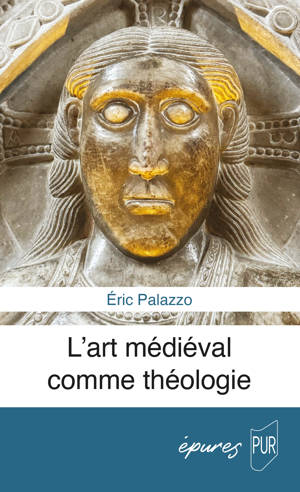
Publication – Éric Palazzo, « L’art médiéval comme théologie »

Durant la longue période du Moyen Âge, les liens entre l’art et la théologie sont si intimes que l’histoire de l’art médiéval nous apparaît tout à fait étrange. Pour éclaircir cette étrangeté, le livre présente une première synthèse destinée à un large public : au lieu d’étudier, comme de l’extérieur, les formes et les styles de l’art du Moyen Âge, il tente de nous mettre dans le regard et dans l’esprit même de cette longue époque. Comment ? À partir de la présentation et de l’analyse de dix oeuvres prises dans des formes artistiques variées (enluminure, sculpture, vitrail, architecture…), il tente de percer la nature profonde des pensées qui lient indissociablement les théologiens et les artistes du Moyen Âge. Chaque oeuvre est étudiée dans son contexte historique. Chacune d’elles est décrite et interprétée de façon à immerger le lecteur au coeur de la richesse et de la complexité de la théologie chrétienne faite image : une image d’un Dieu qui s’est incarné.

Table des matières : ici

Informations pratiques :

Éric Palazzo, L’art médiéval comme théologie, Rennes, Presses universitaires de Rennes, 2025 ; 1 vol., 128 p. (Épures). ISBN : 979-1-04130-339-7. Prix : € 10,00.

Source : Presses universitaires de Rennes

Publié dans Publications | Commentaires fermés sur Publication – Éric Palazzo, « L’art médiéval comme théologie »

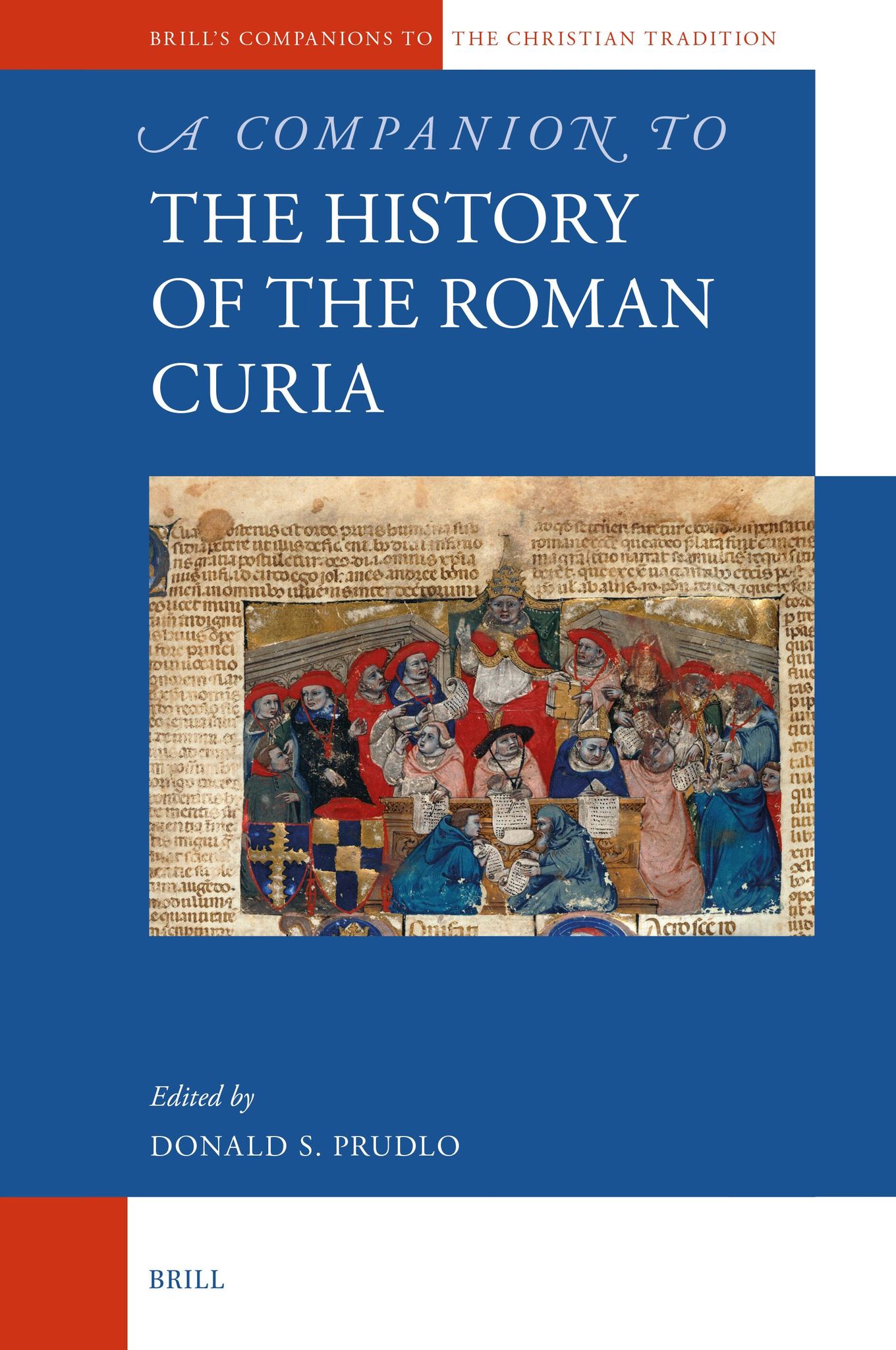
Publication – « A Companion to the History of the Roman Curia », éd. Donald S. Prudlo

The Roman Curia is the oldest extant body of institutional administration in the world. Indeed, it was the prototype for the development of centralized government in the monarchies of the Middle Ages. Further, it was the administrative backbone of the first worldwide organization in human history. It developed policies, laws, and procedures that continue to affect the entire world. This book offers scholarly contributions from the origins of the Curia to the early modern period.

Contributors include Barbara Bombi, Elena Bonora, Bruce Brasington, Sandro Carocci, Peter D. Clarke, Maria Teresa Fattori, Massimo Carlo Giannini, Anthony Lappin, Rita Lizzi Testa, Rosamond McKitterick, Dominic Moreau, Bronwen Neil, Miles Pattenden, Giovanni Pizzorusso, Donald Prudlo, Kirsi Salonen, Cesare Santus, and Danica Summerlin.

Table des matières : ici

Informations pratiques :

A Companion to the History of the Roman Curia, éd. Donald S. Prudlo, Leyde–Boston, Brill, 2025 ; 1 vol., XVI–390 p. (Brill’s Companions to the Christian Tradition, 107). ISBN : 978-90-04-18462-6. Prix : € 237,00.

Source : Brill

Publié dans Publications | Commentaires fermés sur Publication – « A Companion to the History of the Roman Curia », éd. Donald S. Prudlo

Appel à contribution – Urban Property Prices in the Middle Ages – Data, Methods, Insights

Call for Papers for a workshop at the Freie Universität Berlin on urban property prices in the Middle Ages (February 19-20, 2026)
Conveners: Colin Arnaud and Thomas Ertl

How much was a house in a good urban location in the Middle Ages? Who could afford which type of house? How much did prices vary between different cities? ChatGPT suggests the following: In Regensburg, a house in a good location cost around 100–300 pounds of Regensburg pfennigs in the 14th century. In Cologne (one of the largest cities of the Roman Empire), prices for centrally located houses could be significantly higher — sometimes exceeding 1,000 gulden in the late Middle Ages. In Paris or Florence, prices were especially high — Florence, for example, was a major center of trade and banking. At the workshop, we aim to bring this AI-generated estimate to life with empirical substance and to place it on solid and comprehensive foundations.

There are numerous Late Medieval sources, particularly land registers, deeds, tax records, and other registries, that provide detailed information about property transactions and values. However, despite the impressive amount of data, comprehensive analyses remain scarce. The reason lies in the complexity of the subject: Price developments must always be considered in the context of inflation, mortgage debts, real wages, currencies, house sizes, plot sizes, and furnishing. These factors complicate the ability to make comparable statements and reliably categorize price levels. On the other hand, thanks to digital methods, new possibilities are emerging. Large amounts of data can now be systematically collected and analyzed. However, comparing different data sets to each other remains a challenge. At the conference, we aim to explore and discuss critical questions concerning the development of prices over time in single locations and the varying price levels across European cities during the late Middle Ages (up to the 16th century), seeking to identify patterns, causes, and broader implications.

We invite scholars from various disciplines, including economic history, urban history, social history, historical geography, and digital humanities, to contribute to this workshop. We welcome papers focusing on:

– Comparative studies between different cities or regions
– The evolution of property prices in one or more cities
– The influence of economic, political, social or spatial factors on property prices
– Methodological challenges in analyzing historical property prices
– Digital tools and techniques for processing historical data
– Interdisciplinary approaches to understanding the medieval property market

Please submit an abstract of no more than 300 words along with a short CV to arnaud@uni-muenster.de by May 31. Notifications of acceptance will be sent by July 1. We are confident that we will be able to cover the costs for travel and accommodation. We look forward to receiving your contributions and engaging in stimulating discussions.

Kontakt : arnaud@uni-muenster.de

Source : H-Soz-Kult

Publié dans Appel à contributions | Commentaires fermés sur Appel à contribution – Urban Property Prices in the Middle Ages – Data, Methods, Insights

Colloque – L’épiscopat du Midi : gouverner un peuple chrétien (XIIème – XVème siècle)

Le 60ème colloque de Fanjeaux envisage l’évêque, son milieu et son cursus, les contours mouvants de l’officium episcopi et ses dimensions juridictionnelles, liturgiques et pastorales, les réseaux et la fonction sociale ou politique de ce dignitaire de l’Église, ainsi que ses représentations, dans un Midi (provinces ecclésiastiques d’Auch, Toulouse, Narbonne, Aix, Arles, Embrun et en partie de Bourges) qui connaît plusieurs recompositions entre les lendemains de la réforme dite grégorienne, le développement des seigneuries et des pouvoirs urbains, l’accroissement d’emprises extérieures, tant celles des princes que celles du pape. Alors que l’épiscopat est régulièrement évoqué au long de la plupart des volumes de la collection, depuis le 7ème colloque en 1972 (Les évêques, les clercs et le roi, 1250-1300) aucun autre ne lui avait été consacré, même si plusieurs rencontres ont envisagé divers aspects de ce milieu et de son pouvoir, tout particulièrement La cathédrale, XIIe-XIVe s. (Cahiers de Fanjeaux 30, 1995), Livres et bibliothèques, XIIIe-XVe s. (Cahiers de Fanjeaux 31, 1996), Les justices d’Église dans le Midi, XIe-XVe s. (Cahiers de Fanjeaux 42, 2007) et La réforme « Grégorienne » dans le Midi, milieu XIe-début XIIIe s. (Cahiers de Fanjeaux 48, 2013). Le 60ème colloque s’attache aux divers aspects du gouvernement de l’évêque, aussi bien à partir d’exemples ou de cursus individuels que dans le cadre d’une histoire sociale de l’épiscopat, entre le début du XIIe siècle et les années 1370. Il considère ses fondements et ses moyens tant matériels, documentaires que canoniques et juridictionnels, ses archives, ses agents, sa maison et sa cour, les contours de sa mission pastorale et liturgique, les modalités de la seigneurie d’Église qu’exercent les prélats, dans leurs relations avec les autres pouvoirs, avec le peuple chrétien ou encore les juifs ainsi qu’avec l’environnement urbain, et enfin ses représentations et expressions (iconographie, architecture, discours, y compris hagiographique). Il interroge en définitive les formes et la finalité de ce gouvernement ainsi que le rôle de l’épiscopat dans l’élaboration et la normalisation d’une société chrétienne.

Lundi 7 juillet
9h15. Ouverture de la session.
9h30. Introduction, Thierry Pécout.

I. Un dominium épiscopal

10h15. Martin de Framond (Le Puy-en-Velay),
L’évêque-comte du Puy, le pallium et les « deux bras ».

11h. Thierry Pécout (Université Jean Monnet, UMR LEM-CERCOR),
L’archevêque d’Arles et le gouvernement de son diocèse, XIIe – début XIVe siècle.

14h. Laurent Vallière (CNRS, UMR CIHAM),
Avec ou sans évêque : le diocèse d’Avignon au XIVe siècle.


II. Mise en scène et en lieux de l’autorité épiscopale

14h45. Maria Alessandra Bilotta (IEM-NOVA/FCSH, Lisbonne),
L’évêque, son rôle et sa représentation dans les enluminures des manuscrits juridiques et liturgiques languedociens (XIIIe-XIVe siècles).

15h30. Émilie Nadal (IRHT, CNRS),
Une Bible glosée d’Amanieu d’Armagnac, archevêque d’Auch.

16h15.Kshanti Gamage (Université Paris 1, EA HiCSA),
Pouvoir et parures épiscopales : l’exemple des pièces gothiques du trésor de Saint- Bertrand-de-Comminges (XIIIe-XIVe siècles).

Mardi 8 Juillet
9h. Isabelle Cartron et Maëlle Métais (Université Bordeaux Montaigne, UMR Ausonius),
La représentation du pouvoir des évêques dans la mort : de la restitution des funérailles à la mémoire des tombeaux. Le cas de la province de Bordeaux (XIIe-XIVe siècle).
9h45. Andreas Hartmann-Virnich (Aix-Marseille Université, UMR LA3M) et Yves Esquieu (Aix-Marseille Université, UMR LA3M)
Le palais de l’évêque et la cathédrale en Provence (XIIe-XIVe siècle) : réflexions sur un dossier archéologique fragmentaire.

III. Se donner un pasteur
10h30. Sébastien Fray (Université Jean Monnet, UMR LEM-CERCOR),
L’hagiographie au service du gouvernement épiscopal: Le Puy et Mende (XIIe s.)

11h15.
Fabrice Delivré (Université Paris 1, UMR LAMOP),
Les élections épiscopales dans le Libellus de Guillaume de Mandagout († 1321).

14h. Clara Lenne (Université de Lyon 2, UMR CIHAM),
Se déplacer pour gouverner : la visite pastorale, un instrument du pouvoir épiscopal. La visite de Jacques Duèze, évêque de Fréjus, en 1306.

14h45. Benoît Alix (Université Rouen Normandie, UMR IHD),
Jacques Fournier, évêque de Pamiers et inquisiteur (1317-1326) : un modèle pastoral ?

IV. Du magistère à la juridiction : l’évêque, son peuple et les autres

15h30. Anne Massoni (Université de Limoges),
L’évêque de Limoges et les communautés régulières au XIIe siècle.

16h15. Julien Théry (Université de Lyon 2, UMR CIHAM),
L’évêque et l’inquisition de l’hérésie dans le Midi.

Mercredi 9 Juillet
Excursion à Albi : cathédrale, palais épiscopal, collégiale Saint-Salvi

Jeudi 10 Juillet
9h. Corinne Leveleux-Teixera (Université d’Orléans et EPHE),
Pouvoir et juridiction de l’évêque au travers de l’Inventarium juris canonici de Bérenger Fredol.

9h45. Francesco Lo Faro (Université Jean Monnet, UMR LEM-CERCOR),
Le Tractatus fidei contra diversos errores de Benoît d’Alignan, évêque de Marseille.

10h30. Morgane Fortin (Université Paris Nanterre et Université hébraïque de Jérusalem),
Protéger les juifs, préserver la christianitas : les évêques du Toulousain et les juifs autour de l’an 1200.

11h30. Conclusion, Rolf Grosse (directeur honoraire de l’Institut historique allemand, Paris).

60ème COLLOQUE DE FANJEAUX
7 – 10 juillet 2025

Sous la direction de Thierry Pécout (Université Jean-Monet, Saint-Étienne)

Inscriptions : cahiersdefanjeaux@gmail.com ou 04 68 24 70 02

Source : Cahiers de Fanjeaux

Publié dans Colloque | Commentaires fermés sur Colloque – L’épiscopat du Midi : gouverner un peuple chrétien (XIIème – XVème siècle)