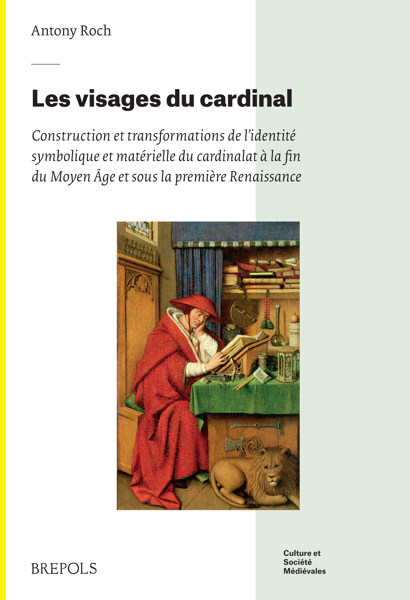
Publication – Antony Roch, « Les visages du cardinal. Construction et transformations de l’identité symbolique et matérielle du cardinalat à la fin du Moyen Âge et sous la première Renaissance »

Le cardinalat, depuis la fin du XIVème siècle jusqu’au début du XVIème siècle, est une entité en transformation, rythmée par les crises successives que traverse l’Eglise d’Occident. Ces crises et les transformations socio-culturelles du Quattrocento ont amené les théoriciens du cardinalat – qu’ils soient juristes, théologiens ou diplomates – à reconsidérer à la fois la place et les modes représentation des cardinaux, influençant également leur incarnation matérielle, et en nous laissant de riches témoignages sur leur réflexion. L’étude présente entend analyser le développement, les transformations, et les perceptions des représentations symboliques et matérielles de l’identité cardinalice idéale depuis le Moyen Âge tardif jusqu’à l’orée de la Réforme. Les éléments mis à jour sur la construction et les mutations de l’identité cardinalice idéale correspondent parfaitement au phénomène transitionnel associé à ce siècle. Le cardinalat apparaît, à travers l’ensemble des sources, comme un palimpseste sur lequel se réécrit constamment les empreintes de sa construction symbolique, matérielle et théorique, chaque couche laissant des traces visibles à celui qui en fait la lecture. Les formes de représentations pérennes qui définissaient le cardinalat et qui apportaient à la fois une justification sacrée et politique par la revendication d’origines prestigieuses finissent au Quattrocento par s’étioler ou se transformer pour laisser place à de nouvelles formes. Ces « couches successives » forment tout entières cette identité cardinalice, qui ne peut se concevoir que de façon multiple par la diversité et la richesse de son développement.
Né en 1989, Antony Roch a suivi des études en Histoire (spécialisation antique et médiévale) et en Sciences des religions à l’Université de Fribourg (Suisse). Spécialisé dans l’étude de la papauté et de l’Eglise médiévale, il a réalisé sa thèse de doctorat sous la direction du Professeur Hans-Joachim Schmidt sur le phénomène des représentations théoriques et matérielles du cardinalat à la fin du Moyen Âge. Le présent ouvrage en est la publication.

Introduction

Première Partie : Contexte général
Le cardinalat au Bas Moyen Âge : essor politique d’une institution romaine
Aux origines de l’ecclésiologie cardinalice au Moyen Âge : fondements canoniques et culturels

Deuxième partie : constructions et mutations de la représentation symbolique du cardinalat au XVème siècle dans les sources textuelles
Les théoriciens du cardinalat de la fin du Moyen Âge et de la première Renaissance
Champs symboliques et métaphoriques médiévaux développés au Quattrocento
L’investissement de symboliques traditionnelles et nouvelles : les métaphores du prestige cardinalice de la première Renaissance
L’identité dans l’appartenance et le nombre : proportionnalité, représentation géographique et taille du Sacré-Collège

Troisième partie : Evolutions de l’incarnation matérielle dans la construction de l’identité cardinalice
Iconographie et application des modèles symboliques du cardinalat
Transitions vestimentaires
 La pourpre cardinalice : la fixation progressive de la couleur rouge

Quatrième partie : Saint-Jérôme et le cardinalat : construction du cardinal idéal ?
Le cardinalat de Saint-Jérôme : constructions médiévales
Représentations hiéronymiennes : un phénomène grandissant
Le modèle cardinalice hiéronymien dans les débats ecclésiologiques du Quattrocento
La postérité en demi-teinte du Saint-Jérôme cardinal

Cinquième Partie : portées et résultats
Mutations et continuité du cardinalat à la fin du Moyen Âge et dans la première Renaissance

Conclusion générale

Antony Roch, Les visages du cardinal. Construction et transformations de l’identité symbolique et matérielle du cardinalat à la fin du Moyen Âge et sous la première Renaissance, Turnhout, Brepols, 2024 ; 1 vol., 292 p. (Culture et société médiévales, 41). ISBN : 978-2-503-59823-9. Prix : € 80,00.

Source : Brepols
Publié dans Publications | Laisser un commentaire

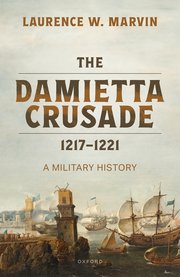
Publication – Laurence W. Marvin, « The Damietta Crusade, 1217-1221. A Military History »

The Damietta Crusade, which is often referred to as the ‘Fifth Crusade’, was the first of the numbered crusades to be targeted against Egypt. Rather than directly targeting Jerusalem, its architects believed that by threatening the economic hub of Cairo the Ayyubid sultan would gladly give up Jerusalem in exchange.

Here Laurence Marvin offers the first book-length treatment of the Damietta Crusade in almost 40 years. Written in accessible language and driven by a narrative and analysis firmly grounded in the primary sources in multiple languages, Marvin emphasizes what made this campaign unique, from its planning, choice of target, « brown-water » or amphibious nature, course, and result. He presents a multi-sided perspective by amply describing and analyzing the Egyptians and other groups in the eastern Mediterranean who played an important role in mounting a successful defense against Latin Christian forces. Marvin contends that the crusade in Egypt failed not because it derived from an unachievable or flawed grand strategy, but because of shifting operational goals, leadership issues, the social dynamics within the army, arrivals and departures of participants, and the effective defense led by Egypt’s sultan, al-Kamil. This detailed analysis of an understudied event of thirteenth century history brings the latest methodologies of military history to bear on a wide range of primary sources, raising important questions about the complex nature of warfare and crusade in the medieval Mediterranean.

Laurence W. Marvin is professor of history at Berry College, in Mt. Berry, GA, USA. A specialist in western European medieval military history of the twelfth and thirteenth centuries, his previous monograph, The Occitan War, was published in 2008 by Cambridge University Press. In 2018 he co-edited Louis VII and His World (Brill, 2018). He is the author of articles in The Journal of Military History, War in History, War & Society, The Journal of Medieval Military History, The Journal of Medieval History, Viator, and other journals, in addition to numerous book chapters and encyclopedia articles.

1:Introduction: Preparations and Background
2:From Europe to the Holy Land, 1217â18
3:The Siege Tower before Damietta, 1218
4:Winter 1219 through the Battle of Fariskur, August 29, 1219
5:Truce, Negotiations, and Damiettaâs Fall, SeptemberâNovember 1219
6:Cracks, 1220â21
7:The Failed Campaign, Negotiations, and the End of the Crusade
8:Conclusion

Informations pratiques :

Laurence W. Marvin, The Damietta Crusade, 1217-1221. A Military History, Oxford, Oxford University Press, 2024 ; 1 vol., 272 p. ISBN : 978-0-19891-617-8. Pirx : GBP 76,00.

Source : Oxford University Press

Publié dans Publications | Laisser un commentaire

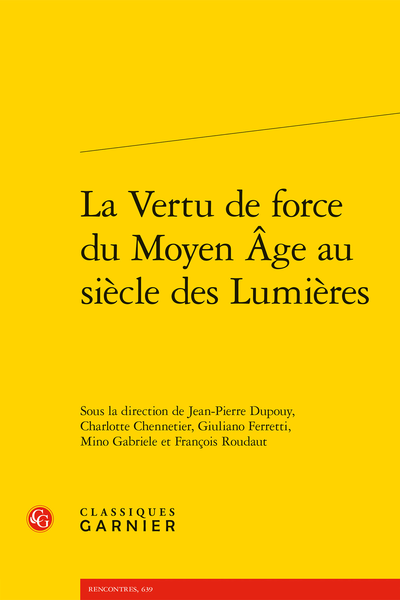
Publication – « La Vertu de force du Moyen Âge au siècle des Lumières », éd. Jean-Pierre Dupouy, Charlotte Chennetier, Giuliano Ferretti, Mino Gabriele, François Roudaut

Après les deux livres sur les vertus de Prudence et de Tempérance, le présent ouvrage est consacré à une autre vertu cardinale, la Force. Celle-ci est analysée suivant ses dimensions théologique, religieuse et philosophique, mais aussi politique et artistique. Une anthologie occupe la seconde partie, comme cela était le cas pour les volumes précédents.

Table des matières : ici

Informations pratiques :

La Vertu de force du Moyen Âge au siècle des Lumières, éd. Jean-Pierre Dupouy, Charlotte Chennetier, Giuliano Ferretti, Mino Gabriele, François Roudaut, Paris, Classiques Garnier, 2024 ; 1 vol., 949 p. (Rencontres, 639 ; Colloques, congrès et conférences sur la Renaissance européenne, 123). ISBN : 978-2-40617-242-0. Prix : € 59,00.

Source : Classiques Garnier

Publié dans Publications | Laisser un commentaire

Séminaire – Oxford Medieval Manuscripts Group : Trinity Term 2024

Organisers: Irina Boeru, Fergus Bovill, Ana Dias, Charly Driscoll, Antonia Delle Fratte, Elena Lichmanova, Mathilde Mioche, Celeste Pan, Klara Zhao For all queries: elena.lichmanova@merton.ox.ac.uk 

To subscribe to our mailing list, participate in library visits, propose a presentation of your research for work in progress meetings, or submit any queries, please write to: elena.lichmanova@merton.ox.ac.uk


Programme :

Week 1, 18 October 2024, 3pm, Weston Library
Andrew Honey (Bodleian Library), Cataloguing Medieval Bookbindings at the Bodleian: Manuscripts from Reading Abbey as a Case Study
Limited places, please write to the email below by 16/10/2024 

Week 3, 1 November 2024, Hawkins Room, Merton College
If you would like to present your work in progress and receive our feedback, please write to the email below by 28/10/2024

Week 4, 8 November 2024, Online
Reading Group: Audience and the Senses 

  • K. Rudy, ‘Introduction’, Touching Parchment (vol.2, 2024) 
  • E. Duffy, Ch.1, ‘A Book for Lay People’, Marking the Hours (2008)

Please write to the email below to join.

Week 5, 15 November 2024: The New College Archives Visit (Muniment Tower) 
Introduction to the collection with Michael Stansfield
Limited places, please write to the email below by 8/11/2024

Week 7, 29 November 2024, Mure Room, Merton College
Eleanor Jackson (British Library), Medieval Women in Their Own Words: Curating the British Library Exhibition 

Week 9, 14 December 2024, Saturday noon
Bonus: Casual trip to see the ‘Medieval Women in Their Own Words’ exhibition at the British Library together

Source : Medieval Art Research

Publié dans Séminaire | Laisser un commentaire

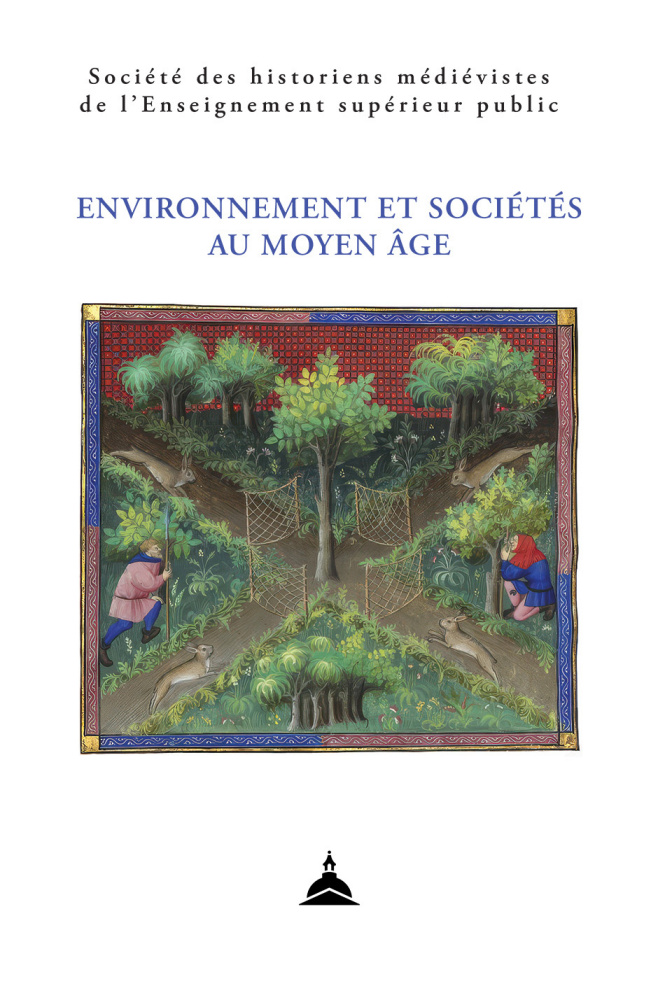
Publication – « Environnement et sociétés au Moyen Âge. LIVe Congrès de la SHMESP »

Ces dernières décennies, la prise de conscience des dérèglements climatiques, la menace de crises écologiques majeures et le débat sur le concept d’anthropocène ont renouvelé l’intérêt des sciences humaines et sociales pour l’étude des relations entre l’homme et son environnement. Les scientifiques anglo-saxons souvent mis en avant ne doivent pas faire oublier l’ancienneté et la vitalité de la recherche française en ce domaine. La Société des historiens médiévistes de l’Enseignement supérieur public (SHMESP) a souhaité rendre compte du dynamisme et des recherches transdisciplinaires de ce champ lors de son 54e congrès dédié aux rapports entre « environnement et sociétés au Moyen Âge » dans les espaces occidentaux, byzantins et arabo-musulmans, mais aussi nordiques et slaves non chrétiens (Poitiers, 11-14 mai 2023).

En moyen français du XIIIe-XIVe siècle, le mot « environnement » désigne l’action d’entourer, mais aussi ce qui se trouve tout autour des êtres vivants. Passé dans la langue anglaise, il est d’abord réintroduit dans ce sens et utilisé en français moderne au XIXe siècle. L’environnement a été défini par Robert Delort comme l’« ensemble des facteurs naturels, ou naturels modifiés par l’homme, voire artificiellement créés, qui conditionnent son existence (ou celle d’un autre organisme) ». Autrement dit, il résulte de la combinaison des facteurs physicochimiques, biologiques et socio-économiques qui forment le cadre de vie des groupes humains.

Les publications de ce congrès mettent en valeur la diversité des relations entre les sociétés médiévales et leur environnement permettant aux médiévistes, quel que soit leur espace d’étude, de se réapproprier et de reconsidérer sous un jour différent des thématiques anciennes, tout en faisant dialoguer les approches matérielles, textuelles et iconographiques afin de croiser les regards sur les représentations et les pratiques sociales médiévales.

Table des matières :

Avant-propos

Environnement et sociétés au Moyen Âge : vers de nouveaux terrains de recherche. Rapport introductif
Corinne Beck, Fabrice Guizard, Marie-Odile Rousset

Aménager

Les agroécosystèmes de la fin de l’Antiquité ont-ils survécu à l’Empire romain d’Orient ?
Adam Izdebski

D’Ely à l’Élysée : de l’enfer du Fenland au paradis des moines
Arnaud Lestremau

Le partage d’une ressource mouvante. Possession et exploitation des eaux de pêche dans le royaume de Suède à la fin du Moyen Âge (XIIIe-XVe siècle)
Tobias Boestad

Les ports médiévaux : artéfacts des transformations littorales de la France atlantique
Mathias Tranchant

Du vivier à la grande salle : pour une lecture environnementale du phénomène castral (Xe-XVe siècle)
Charles Viaut

Administrer, gérer, préserver

Représentations des espaces arides sahariens du Touat et ordre social dans le Maghreb du VIIIe/XIVe siècle
Jennifer Vanz

L’administration des Eaux et Forêts et les pêcheurs jurés : entre gestion du vivant et activité productrice aux XIVe et XVe siècles
Isabelle Bretthauer

Ad custodiendum cuniculos. L’environnement au prisme des communautés politiques dans la basse vallée du Rhône (mi-XIIIe-début XVe siècle)
Simon Rozanès

Entre envasement et pollution : la lagune de Venise menacée à la fin du Moyen Âge
Claire Judde de Larivière

Représenter et percevoir

L’élaboration d’un savoir sur les animaux au Moyen Âge. Le cas des auxiliaires de chasse dans deux traités cynégétiques en langue vernaculaire
Margot Constans, Marthe Czerbakoff

Par-delà l’hortus conclusus : figurations visuelles et textuelles du jardin fleuri (France, fin XIVe-début XVIe siècle)
Anaïs Blesbois

Environnement et cartographie à la fin du Moyen Âge : de l’exploitation à la préservation des ressources naturelles ?
Juliette Dumasy-Rabineau

La nature des îles grecques. Environnement et description géographique dans le Liber insularum de Cristoforo Buondelmonti (XVe siècle)
Emmanuelle Vagnon

Quand l’historien scrute le ciel. Observation et description des conditions climatiques à Damas par Ibn Ḥiǧǧī (fin XIVe-début XVe siècle)
Mathieu Eychenne

Exploiter : prélever, extraire et transformer

Restituer les interactions entre les sociétés médiévales et les forêts de montagne : une approche dendrochronologique
Lisa Shindo, François Blondel, Vincent Labbas

Les mines médiévales dans leur environnement. Interaction, contraintes et conséquences
Marie-Christine Bailly-Maître

La métallurgie du fer en Bretagne. Productions et interactions entre les sociétés et leur environnement, du VIe au XVe siècle
Étienne Clouin

L’exploitation évolutive des ressources fluviales dans le bassin atlantique de la Gaule franque
Nicolas Bernier

Produire, contrôler et échanger le sel de l’Atlantique au premier Moyen Âge
Adrien Bayard

Les « terres lagunaires » : extraction et exploitation des végétaux du pourtour lagunaire du Bas-Languedoc oriental au Moyen Âge (XIIe-XVe siècle)
Lucie Galano

Conclusions. L’histoire du Moyen Âge par-delà nature et culture
Laurent Feller

Informations pratiques :

Environnement et sociétés au Moyen Âge. LIVe Congrès de la SHMESP, Paris, Éditions de la Sorbonne, 2024 ; 1 vol., 412 p. (Histoire ancienne et médiévale). ISBN : 979-10-351-0992-9. Prix : € 30,00.

Source : Éditions de la Sorbonne

Publié dans Publications | Laisser un commentaire

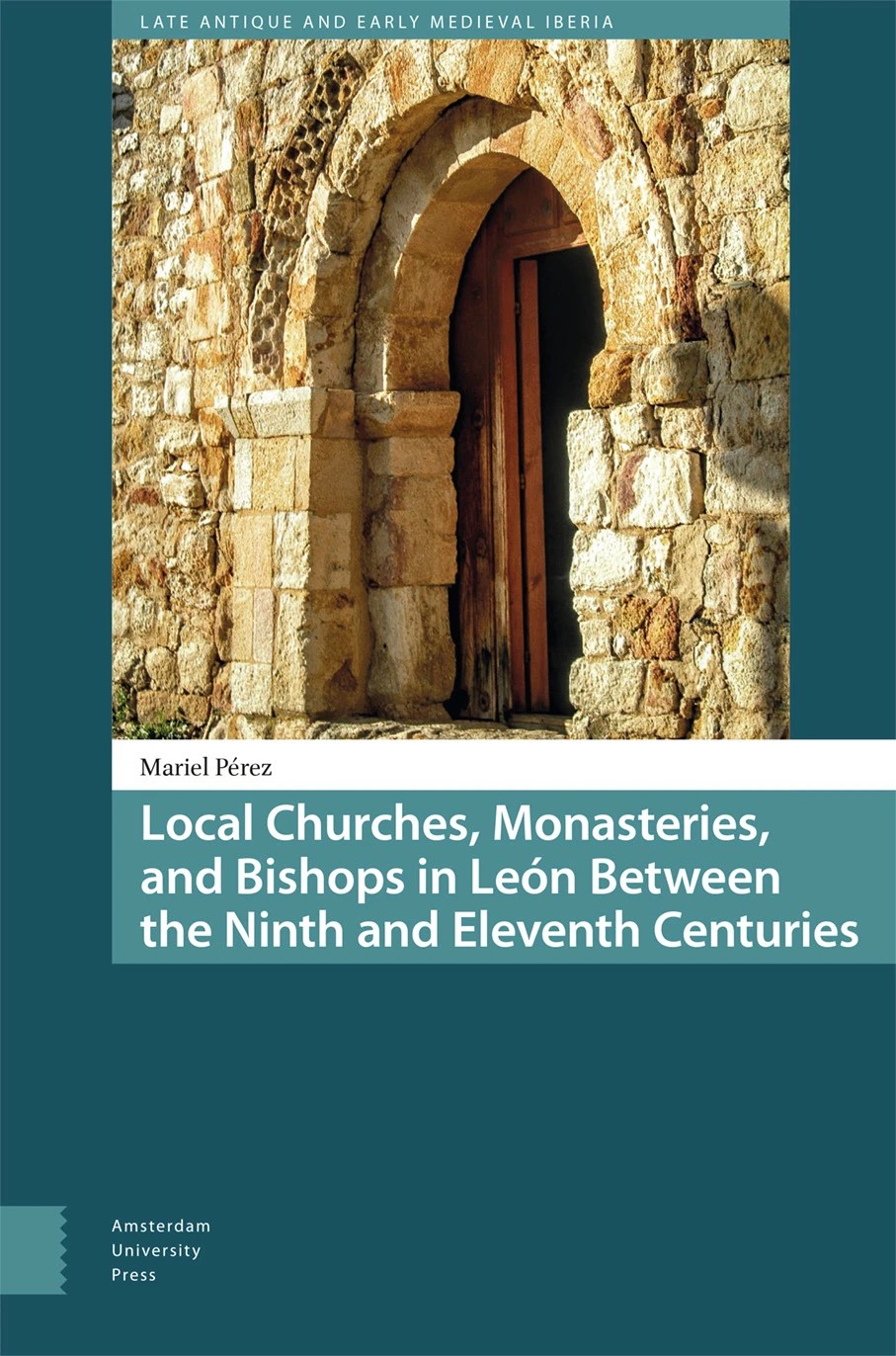
Publication – Mariel Pérez, « Local Churches, Monasteries, and Bishops in León Between the Ninth and Eleventh Centuries »

This volume contributes to a deeper understanding of the different forms of ecclesiastical articulation in early medieval Spain. While traditional studies have focused on higher instances of ecclesiastical power, this work offers a bottom-up perspective centred on the local churches and the bonds they established with monasteries and bishops. This approach engages in a reflection on the nature of the diocese in the Early Middle Ages, as well as furthering our knowledge of early medieval local societies and their social dynamics.

Mariel Pérez (PhD in History, University of Buenos Aires, 2012), is a Researcher at the National Scientific and Technical Research Council (CONICET, Argentina) and holds a teaching position in the Department of Philosophy and Literature at the University of Buenos Aires. She specialises in the ecclesiastical organization of the Kingdom of León in the early and late Middle Ages.

Abbreviations
Introduction
Chapter I: Local Churches
Chapter II: Monasteries and Ecclesiastical Organization
Chapter III: Bishops and the Origins of the Diocese
Conclusions

Informations pratiques :

Mariel Pérez, Local Churches, Monasteries, and Bishops in León Between the Ninth and Eleventh Centuries, Amsterdam, Amsterdam University Press, 2024 ; 1 vol., 192 p. (Late Antique and Early Medieval Iberia). ISBN : 978-9-04855-947-3. Prix € 117,00.

Source : Amsterdam University Press

Publié dans Publications | Laisser un commentaire

Colloque – Mit Urkunden an die Spitze Europas. Der Aufstieg des Papsttums im Spiegel der Regesta Imperii

Zum erfolgreichen Abschluss des Projekts der « Papstregesten 1181-1198 » veranstaltet das Akademievorhaben « Regesta Imperii » am Mittwoch, 6. November 2024, in der Akademie der Wissenschaften und der Literatur | Mainz eine Tagung zum Thema « Mit Urkunden an die Spitze Europas. Der Aufstieg des Papsttums im Spiegel der Regesta Imperii ». Gemeinsam mit Forschenden aus thematisch benachbarten Projekten zum Alexandrinischen Schisma und der Edition der Register Papst Innozenz III. wird die Geschichte des Papsttums im 12. Jahrhundert im Licht der enormen Steigerung der Schriftproduktion thematisiert.

In der Geschichte der Päpste steht das 12. Jahrhundert zugleich für die räumliche Ausweitung und die intensivierte Durchdringung ihres Handlungsraums. Davon zeugt die enorme Steigerung der Schriftproduktion der Kanzlei, die weniger auf den Willen der Päpste als auf die enorme Nachfrage aus allen Teilen der lateinischen Christenheit zurückzuführen ist. Es lohnte sich, Zeit und Geld in den Erwerb einer Urkunde in Rom zu investieren, da die auf der Grundlage schriftlicher und von Boten vorgetragener Bitten getroffenen Rechtsentscheidungen allgemeine Anerkennung genossen. Die Vielfalt der Anfragen und behandelten Materien machte die römische Kurie zum europäischen Kommunikationszentrum und einem Ort, an dem sich das Wissen über die politischen Zustände in allen Teilen des Kontinents konzentrierte. Das durch die Publikation der 6. Lieferung abgeschlossene Projekt der Papstregesten 1181-1198, das die Pontifikate Lucius III., Urbans III., Gregors VIII., Clemens III. und Coelestins III. umfasst, erschließt die kuriale Schriftproduktion in 8220 Regesten und bietet damit der Forschung zur Papstgeschichte eine zuverlässige Grundlage. Die Vorträge gewähren Einblicke in die Herausforderungen bei der Bearbeitung des Projekts und erste Einsichten in die Möglichkeiten, die damit für die Erforschung dieser entscheidenden Phase der Papstgeschichte geschaffen wurden. Die Präsentation der Projektergebnisse wird ergänzt durch Vorträge aus zwei benachbarten Forschungsvorhaben. Das gemeinsam von der Bayerischen Akademie der Wissenschaften und der Nordrhein-Westfälischen Akademie der Wissenschaften getragene Projekt über »Die Formierung Europas durch Überwindung der Spaltung im 12. Jahrhundert« untersucht die Zeit des Alexandrinischen Schismas (1159-1177) und arbeitet dessen Überlieferung in Form digitaler Regesten auf. Die am Institut für Österreichische Geschichtsforschung angesiedelte Edition der Kanzleiregister Papst Innozenz‘ III. (1198-1216) stellt die päpstliche Überlieferung hingegen als Volltexte in einer kritischen Edition zur Verfügung.

Programme :

Mittwoch, 6. November 2024

15.30 Uhr Begrüßung

15.45 Uhr Prof. Dr. Klaus Herbers (Erlangen)
Papstregesten im Rahmen der Regesta Imperii – die entscheidende Phase des Papsttums am Ende des 12. Jahrhunderts.

16.15 Uhr Dr. Viktoria Trenkle (Tübingen)
Vielfalt und Vielzahl – Herausforderungen und Chancen bei der Erarbeitung von Papstregesten des ausgehenden 12.
Jahrhunderts

17.00 Uhr Dr. Isabel Blumenroth (Aachen)
Wie viel Alexander III. steckt in den Cölestin III.–Regesten?

17.30 Uhr Dr. Rainer Murauer (Rom)
labore multo et … exacta diligentia. Kommentare Innocenz’ III. zu seinem Vorgänger Coelestin III.

18.15 Uhr Prof. Dr. Harald Müller (Aachen)
Das rettende Ufer? Die Fertigstellung der Regesten für die Jahre 1181 bis 1198 und ihre Bedeutung für die Erforschung der Geschichte des Papsttums im 12. Jahrhundert.

Informations pratiques :

Akademie der Wissenschaften und der Literatur | Mainz
Geschwister-Scholl-Str. 2
55131 Mainz

Wann findet diese Veranstaltung statt? Mi, 6. November 2024
Beginn: 15:30
Zum Kalender hinzufügen

Source : Regesta Imperii

Publié dans Le réseau | Laisser un commentaire

Séminaire – Archéologie des genres et des désirs au Moyen Âge

Une exposition et un cycle de conférences 

Archéologie des genres et des désirs au Moyen Âge

Mardi 5 novembre (18h30-20h), CESCM, hôtel Berthelot, salle Crozet
Fabienne POMEL (MCF en langue et littérature du Moyen Âge, Université Rennes 2)
« Une archéologie de la conscience de genre chez Christine de Pizan »

Mardi 12 novembre (18h30-21h), Espace Mendès France, salle de conférences
Martine CHARAGEAT (MCF en histoire médiévale, Université de Bordeaux-Montaigne)
« De la correction maritale à la violence conjugale au Moyen Âge : une histoire de seuils ! ».

La conférence est suivie de la diffusion du documentaire « Avec les vivantes : en finir avec les violences faites aux femmes » de Mélina Huet, 2020 (accord de la production et de la réalisatrice) et d’un échange avec Mélanie Voyer, Psychiatre et médecin légiste, Responsable du centre de psychotraumatologie, CH Laborit/ CRP Nord Nouvelle Aquitaine.

Voir le lien de l’Espace Mendès France pour inscription ICI

Jeudi 14 novembre (18h30-20h), UFR SHA, hôtel Fumé, Amphithéâtre Bourdieu
Damien BOQUET (PU en Histoire médiévale, Université d’Aix-Marseille)
« “Je viens te parler d’amourette” : les amours contrariées de Jeanne et Laurence (début XVe siècle) »

Mercredi 20 novembre (18h30-20h), CESCM, hôtel Berthelot, salle Crozet
Sophie ALBERT (MCF en Littérature Médiévale, Sorbonne Université)
« Amours mystiques médiévales et perspectives queer »

Jeudi 21 novembre (matinée), Espace Mendès France

En partenariat avec le festival Les Menstrueuses 2024, dans le cadre de la Journée d’Étude, » Quelles actualités des règles ? Recherches, avancées et règles au travail »

Nadia PLA (doctorante, Université Paris 10)
« Quand les femmes du Moyen Âge avaient leurs règles »
Voir le lien de l’Espace Mendès France pour inscription ICI

Mardi 26 novembre (18h30-20h), Médiathèque François-Mitterrand
Didier LETT (PU en Histoire médiévale, Université Paris Diderot Paris 7) : « Le désir d’enfant à la fin du Moyen Âge. Un garçon ou une fille ? »

En partenariat avec le festival Les Menstrueuses 2024 et avec le soutien du CVEC, de la MSHS, de l’espace Mendès-France et de Grand Poitiers

Source : CESCM

Publié dans Séminaire | Laisser un commentaire

Offre d’emploi – Research Fellowship in Environmental History in the medieval Islamic Mediterranean, c.650-1050CE

Closes: 12th November 2024

The Department of Humanities at Ca’ Foscari University of Venice (Dipartimento di Studi Umanistici dell’Università Ca’ Foscari Venezia) invites applications for a 24-month research fellowship in Environmental History in the medieval Islamicate Mediterranean, c.650-1050CE, starting in January 2025 or as soon as possible afterwards. The project is funded as part of the ERC COG project “SSE1K – Science, Society and Environmental Change in the First Millennium CE”, Grant Agreement no. 101044437, CUP: H73C22001720006, Principal Investigator Prof. Helen Foxhall Forbes.

The researcher will examine the history of water and the broader environment in the Islamic Mediterranean from the 7th century to the early 11th century, focusing on social and/or intellectual themes. They will conduct original research on Arabic sources, and may also use archaeological evidence, to examine human relationships with the environment, with particular attention to the role of water and climate fluctuations. They will collaborate with the SSE1K research team to make comparisons between different contexts and regions across the Mediterranean.

The researcher will define a topic of study and the most promising approach suited to their skills in discussion with the PI and the research team. Applicants should therefore outline their proposed area of research in the motivation letter (maximum 500 words). The research fellowship is particularly, but not exclusively, focused on water in terms of toponymy, ritual practices, resource management, reaction to climate events, and scientific knowledge. The geographical area of interest ranges from Mesopotamia to the Islamic West, with a particular focus on the latter.

Excellent knowledge of the Arabic language and research experience with premodern Arabic written sources is required. Knowledge of other languages relevant to this area, such as Syriac, Hebrew, or Greek, is desirable. In addition to preparing their own research for publication, the fellow will collaborate on various activities of the SSE1K project, including participating in team meetings and dissemination activities (conferences, seminars, workshops) on the project’s topics.

The research may be carried out in English. The fellowship is intended to provide the successful candidate with the opportunity to pursue his/her own research while benefiting from the range of expertise at Ca’ Foscari University of Venice.

Prospective candidates are expected to hold a Master’s degree (or equivalent), or equivalent title obtained outside Italy, in history or a related discipline, and should have a professional scientific curriculum suitable for carrying out the research activities.

Further particulars are available at:
https://apps.unive.it/domandeconcorso-en/accesso/2024-dsu-ar-14 (English) or https://apps.unive.it/domandeconcorso/accesso_cf/2024-dsu-ar-14 (Italian).

The deadline for receipt of applications is Tuesday 12th November, 12.00 (CEST).

The interview will be held online on Thursday 5th December 2024, 10.30 (CEST). The short-list of the candidates admitted to the interview, or any postponement, will be published on the University’s webpage on 20th November 2024 (link).

How to submit your application

Applications should be submitted by the online procedure, available on the notice webpage (link), or directly by clicking the ‘Apply’ button

Foreign citizens without an Italian Tax Code will need to generate a temporary code to proceed with the application: this can be done at https://apps.unive.it/utils/cf. The Department can be contacted for support needs until 13.00 (CEST), 11th November 2024.

Please note that the system takes some time to process applications, so it is suggested not to start the process close to the deadline.

Source : Jobs.ac.uk

Publié dans Le réseau | Laisser un commentaire

Appel à contribution – Colour in the Choir. Polychromy on Late-Medieval and Renaissance Church Furniture

Call for papers: deadline 2 December 2024

Colour in the Choir. Polychromy on Late-Medieval and Renaissance Church Furniture

12th Ards Annual Conference on Current Research in Medieval and Renaissance Sculpture and Conference Iconostalla Misericordia International Leuven (BE), M Leuven, 21-23 May 2025.

The call for papers for our upcoming conference, focusing on polychromy on late-medieval and Renaissance church furniture, is now open. You can find the call for papers and submission guidelines here.

For this conference ARDS and Iconostalla Misericordia International are joining forces to put the focus on choir stalls and church furniture. Choir stalls were integral components of medieval churches, often commissioned by the administration of cathedrals, monasteries, parishes or even city councils or guilds. Choir stalls were part of the fixed and permanent church furniture often adorned with intricate carvings. While the bench ends predominantly depicted religious scenes, the carvings on the misericords and knobs often feature profane themes, such as fantasy creatures, human figures, animals, proverbs, and fables. Positioned at the religious heart of the church, these carvings served as expressions of the medieval worldview and represented significant and intricate artistic endeavors.

Research on choir stalls has primarily delved into their iconographic aspects, formal and stylistic analyses, and the interplay of religious and profane themes. In recent years, there has been a greater interest in the technical and production aspects of choir stalls. For instance, the 2016 Iconostalla Misericorida International conference in Greifswald explored the workshops that produced choir stalls. In Rijeka in 2018, the relationship between patron and maker was the subject of a colloquium.

An underexplored topic regarding choir stalls is the use of colour.This is partly because evidence of polychromy is scarce and often ambiguous, with many stalls having lost their original colours due to restoration practices in the nineteenth and twentieth centuries. Nonetheless, there are instances of choir stalls that exhibit traces of their original polychromy. With regard to colour on choir stalls, as well as on other church furniture such as pulpits and rood screens, several questions arise. Where are examples of painted choir stalls (and/or other church furniture) known and what archival data are available? What materials and techniques were used? Who were the artist and craftsmen for applying the colours, what does recent research learn us about collaborations between craftsmen of different guilds, such as the joiners guilds, the sculptor or masons guilds and the painters guild? How did or does the complicated relationship between colour and form, manifest itself in the commissioning, production, perception and use of choir stalls? Did the colours have purely aesthetic purpose, or did the paintings have also a functional one? How should the remaining traces of colours on choir stalls be restored/preserved?

This call for papers welcomes specific case studies that touch upon one or more of the topics outlined above, as well as papers providing a broader view on the subject. Your proposal can be (art-)historical, anthropological, historiographical, archaeological, or technical in nature. Multidisciplinary approaches are encouraged.

Source : HNA News

Publié dans Appel à contributions | Laisser un commentaire